Most Perth homeowners choose paving by colour and pattern, then never think about what goes underneath. Yet the base decides whether a driveway stays flat for decades or starts dipping within a few years. Here is what should sit below the surface, and what to ask before signing a quote.
Walk down almost any street in Perth’s northern suburbs and the paving tells a story. Some older driveways are still dead level. Others, only a few years old, have a dip where the car turns in or a sunken patch by the downpipe. The pavers are often the same product. The difference is nearly always the work nobody sees.
Why Perth paves on sand
Perth has an unusual advantage. Suburbs across the northern corridor, including Wanneroo and Landsdale, sit on Bassendean sand: deep, pale grey and free draining. Coastal suburbs sit on Spearwood sand over Tamala limestone, where the limestone caprock can be close to the surface.
Because the ground drains so well, flexible paving laid on a sand bed is the local norm rather than pavers glued onto concrete. Sand laid paving can also be lifted and relaid when a pipe needs fixing or a tree root pushes up. That flexibility only works, though, when each layer underneath is done properly.
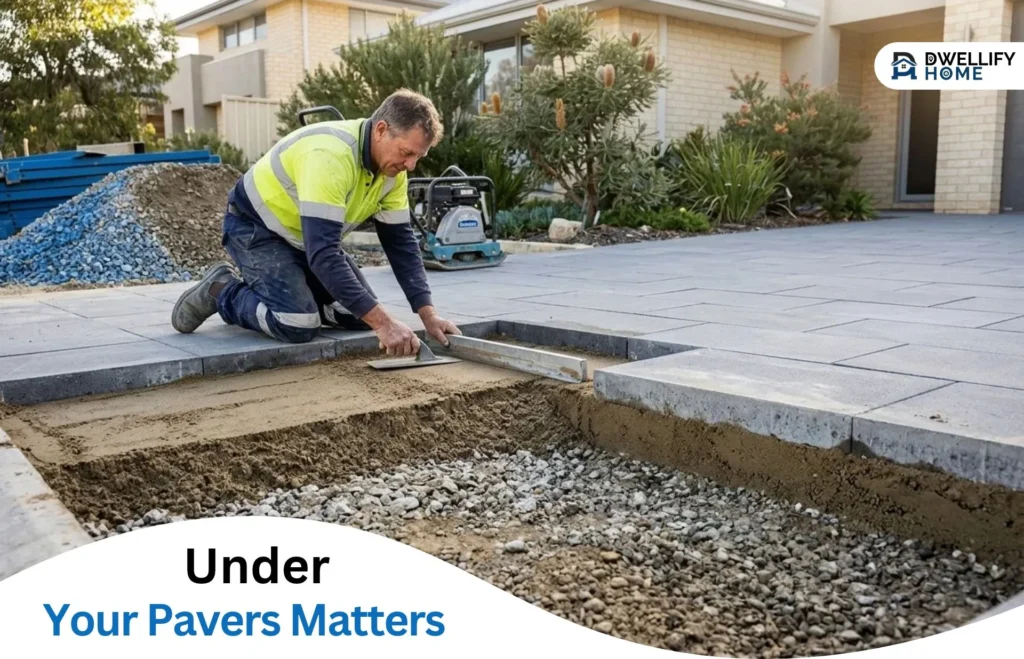
The layers, from the ground up
A properly built paved area has five or six distinct layers, and each has a job.
The natural ground. The existing sand is trimmed to level and compacted. On newer estates it is worth asking whether the block contains fill, because fill settles differently from natural sand.
Road base, where cars go. Driveways and anything else that carries vehicles need a compacted layer of road base under the bedding sand. Paths and patios on well compacted natural sand can usually skip this and go straight to the bedding layer.
Bedding sand. This should be washed yellow paving sand, not brickies sand. Brickies sand holds too much clay and fine material, so it stays soft and moves. The bedding layer is screeded to a fall of 1:60 to 1:80 away from the house, so water runs away from the walls rather than towards them.
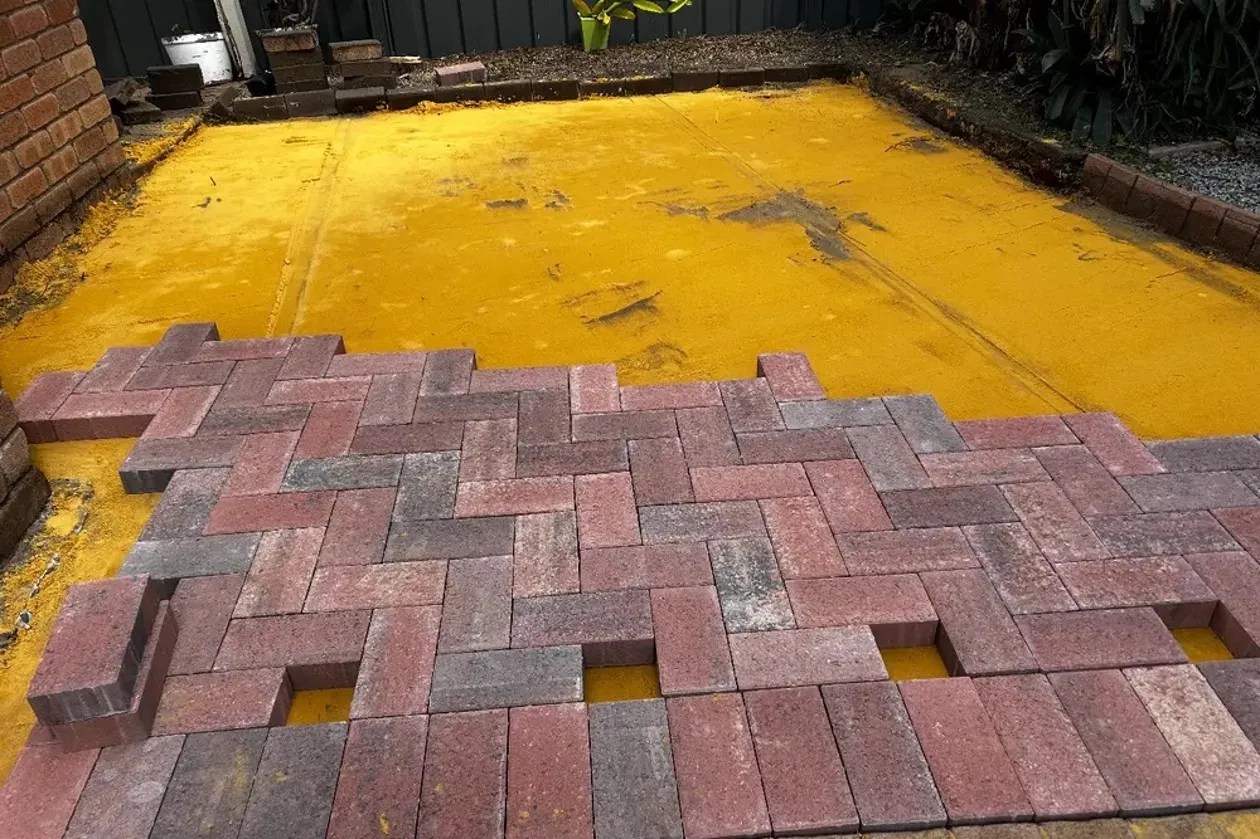
The pavers. They are laid with tight joints of about 2 to 3 mm. Thickness depends on the load: around 40 mm suits paths and patios, while driveways want 50 mm as a minimum and 60 mm by preference. Boats, caravans and trucks call for 80 mm.
Edge restraints. Every free edge needs something to stop the field spreading, usually a concrete haunch or a mortared border course. On a driveway this is critical. Without it, pavers at the edge creep outwards under tyres and the whole surface loosens.
Compaction and joint sand. The laid pavers are run over with a plate compactor, joint sand is swept in, and the area is compacted again. Polymeric or joint stabilising sand is an option where ants and weeds are a nuisance.
Where most sinking starts
When a section of sand laid paving drops, there are two usual suspects. The first is water. A downpipe or garden tap that empties onto the paving, or a missing soakwell, slowly washes bedding sand out from underneath. The second is ants, which nest in loose bedding sand on Perth’s sandy soils and gradually hollow it out.
A little settlement in the first year on a sand base is normal. Ongoing sinking is not, and it nearly always points back to water or ants. Fixing the surface without fixing the cause only buys time. Homeowners curious about the repair side can see how sunken pavers are lifted and re-bedded, which shows why the cause has to be dealt with before anything is relaid.
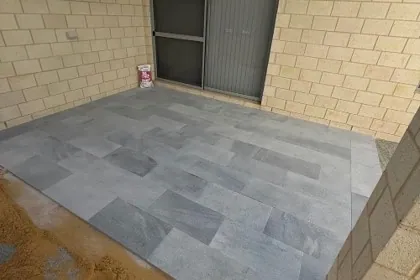
Water management belongs in the base plan from day one. Perth councils require stormwater to be kept on the property, so runoff from paving should be directed to lawn, garden beds or a soakwell, never across the boundary.
Questions worth asking before you sign
A quote that lists only the square metres and the paver name leaves a lot unsaid. A few questions sort the careful contractors from the rest:
- What goes under a driveway, and how deep is the road base?
- Which bedding sand will be used? The answer should be washed paving sand.
- Which way will the paving fall, and where does the water end up?
- How will the free edges be restrained?
- What thickness of paver is proposed for the area, and why?
- Will joint sand be compacted in, and is a stabilising sand an option?
Good contractors answer these without hesitation, because the answers are part of how they price the job. Published guides on brick paving laid on a compacted sand base set out a similar sequence, which gives homeowners a useful benchmark when comparing quotes.
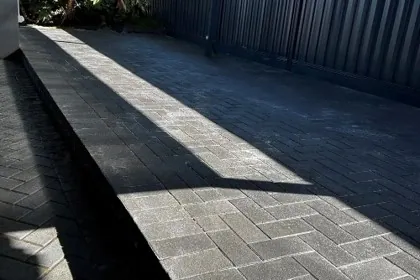
The cheap part and the expensive part
Pavers are the part everyone sees, so they get most of the attention and most of the budget conversation. The base is cheaper to get right than to fix. Lifting, rebedding and relaying a sunken driveway costs far more than an extra layer of compacted road base would have cost at the start.
For anyone planning new paving, the practical rule is simple. Choose the colour and pattern you love, then spend just as long asking about the layers underneath them.
Some links included in this article may lead to third-party websites through affiliate or sponsored arrangements. Dwellifyhome.com may receive compensation through these relationships, depending on the nature of each partnership.