Older homes have character, but comfort can be another story. Many were built with radiators, baseboard heaters, wall furnaces or wood stoves, and very few were designed with central air conditioning in mind. Retrofitting traditional ductwork into an older house is often disruptive, expensive and sometimes impossible without major renovation.
Ductless mini-split systems have become one of the most popular solutions. Here’s what homeowners need to know.
What Is a Ductless Mini-Split?
A ductless mini-split is a type of heat pump that delivers heating and cooling without ducts. It has two main components:
- An outdoor unit containing the compressor
- One or more indoor units, usually mounted high on a wall, that deliver conditioned air directly into the room
The units are connected by a small conduit carrying refrigerant lines, power and a condensate drain. That conduit typically needs only a small hole through an exterior wall, which is why installation is far less invasive than adding ductwork.
Why Mini-Splits Suit Older Homes
Minimal Disruption
No need to open walls, ceilings or floors to run ducts. That’s a major advantage in homes with plaster walls, original trim or limited attic and crawl space access.
Heating and Cooling in One System
Because mini-splits are heat pumps, they both heat and cool. Many homes in the Pacific Northwest that never had air conditioning are adding mini-splits as summers get warmer. Homeowners exploring this upgrade, whether with Precision Heating & Cooling in Vancouver, WA or another local installer, often find they can replace inefficient electric baseboard heat and gain cooling at the same time.
Room-by-Room Control
Each indoor unit can be controlled independently. You can keep bedrooms cooler at night, turn off unused rooms and avoid paying to condition spaces nobody’s using.
Efficiency
Heat pumps move heat rather than generating it, so they can be considerably more efficient than electric resistance heating. Ductless systems also avoid the energy losses that come from leaky ductwork.
Potential Drawbacks
Mini-splits aren’t perfect for every situation. Consider these factors:
- Upfront cost: Multi-zone systems with several indoor units can be a significant investment.
- Appearance: Wall-mounted units are visible. Some homeowners prefer ceiling cassettes, floor-mounted consoles or slim-duct units that hide more discreetly.
- Layout challenges: Homes with many small, closed-off rooms may need more indoor units to stay comfortable.
- Cold-climate performance: Modern cold-climate models perform well in low temperatures, but system selection matters in colder regions.
- Maintenance: Indoor unit filters need regular cleaning, and annual professional servicing is recommended.
Planning Your Upgrade
Get a Proper Load Calculation
A good installer should assess heat loss and gain room by room, accounting for insulation, windows, orientation and air leakage. Oversized or undersized units both lead to comfort problems and wasted energy.
Decide on Zones
Think about how you use your home. Open-plan living areas may need only one unit, while bedrooms, home offices and finished attics may each need their own.
Consider Weatherization First
Older homes often have air leaks and little insulation. Sealing gaps and adding insulation before installing a new system can reduce the size and cost of the equipment you need.
Plan Unit Placement
Indoor units work best when they can distribute air freely across a room. Placement also affects how visible units are, so think about furniture, window treatments and sightlines.
Ask About Backup Heat
In homes with existing heating, some owners keep their old system as backup for the coldest days. Others rely fully on the heat pump. Discuss which approach makes sense for your climate and budget.
What to Expect on Installation Day
One of the appeals of ductless systems is how quickly they can be installed. A simple single-zone system can often be completed in a day, while multi-zone systems may take longer.
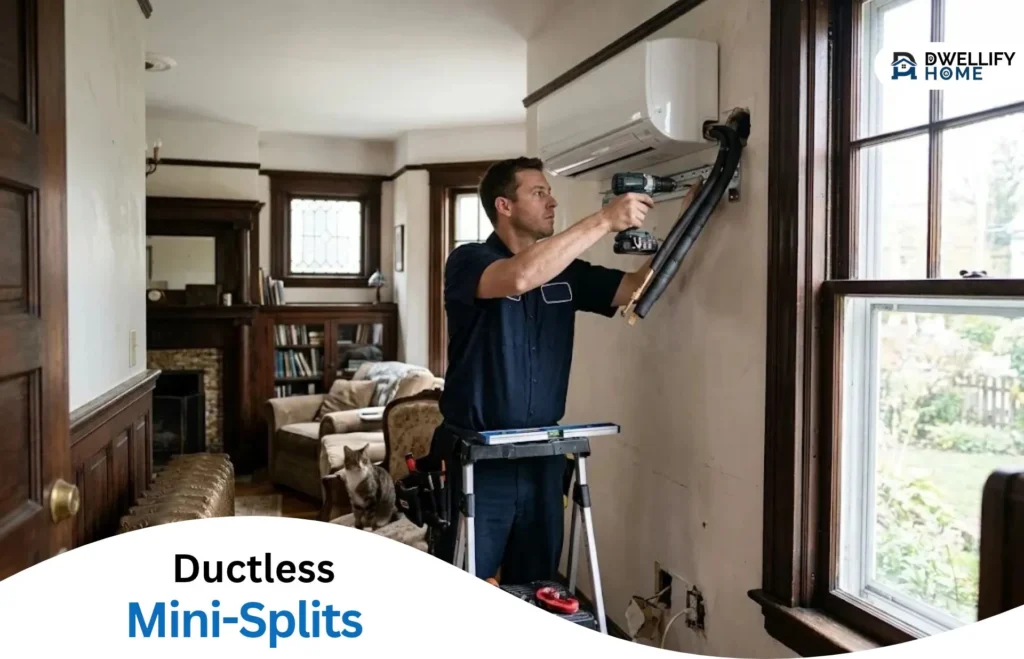
A typical installation involves mounting the indoor units, drilling a small opening through the wall for the line set, placing the outdoor unit on a pad or wall bracket, running refrigerant lines and electrical connections, and testing the system. Installers will usually walk you through the remote or app controls before they leave.
In older homes, it’s worth discussing in advance how line sets will be routed. Exterior line set covers can be painted to match siding, and careful planning keeps the installation tidy and protects the home’s character.
Questions to Ask Your Installer
- Will you perform a room-by-room load calculation?
- Which models do you recommend for our climate, and why?
- Where will the indoor and outdoor units go, and how will lines be routed?
- What warranties cover the equipment and labor?
- Do you offer maintenance plans?
- Which rebates or incentives might apply?
Incentives and Rebates
Heat pump installations may qualify for utility rebates and federal tax incentives, depending on the equipment and your circumstances. Programs change regularly, so check current eligibility with your utility and a tax professional before purchasing.
Caring for Your System
To keep a mini-split performing well:
- Clean or replace indoor unit filters regularly
- Keep the outdoor unit clear of leaves, snow and debris
- Schedule annual professional maintenance
- Watch for reduced airflow, unusual noises or water leaks
Final Thoughts
For older homes without ductwork, ductless mini-splits offer a practical way to add efficient heating and cooling without tearing the house apart. With careful planning, a proper load calculation and the right placement, they can make a period home far more comfortable year-round while preserving the character that made you fall in love with it.
Affiliate and sponsored partnerships help support the work behind Dwellifyhome.com. Certain links in this article may generate commissions from qualifying purchases or provide compensation through paid collaborations.