An outdoor picnic table seats 6 to 8 people at the standard 6-foot length, and the material you pick decides whether it lasts 5 years or 25: a wood table costs $150 to $400 and needs sealing every year, while a recycled HDPE table costs $600 to $1,200 and needs nothing but soap and water for 20 years or more. This guide compares wood, metal, plastic, and composite, shows real prices checked on November 16, 2026, and walks you through size, seating, and care, so the table you buy still hosts the family barbecue in ten summers.
One mistake on this list costs buyers more than any other, and it has nothing to do with the table. It is buying the wrong size for the yard, and the tape-measure check in the sizing section takes two minutes. Do it before you open a single product page.
What Is an Outdoor Picnic Table?
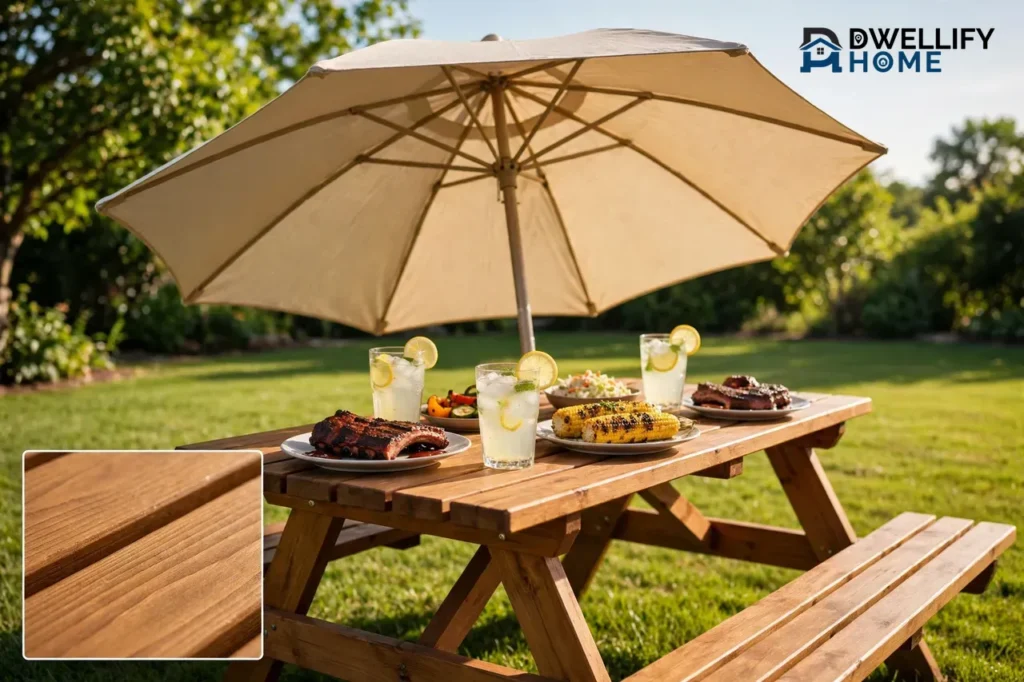
An outdoor picnic table is a fixed table with attached benches, built for eating outside, and the standard 6-foot model seats 6 to 8 people with about 2.5 feet of table edge per person. The benches are part of the table, so nobody drags chairs around, nobody loses a seat, and the whole thing stays put in wind that would scatter a dining set.
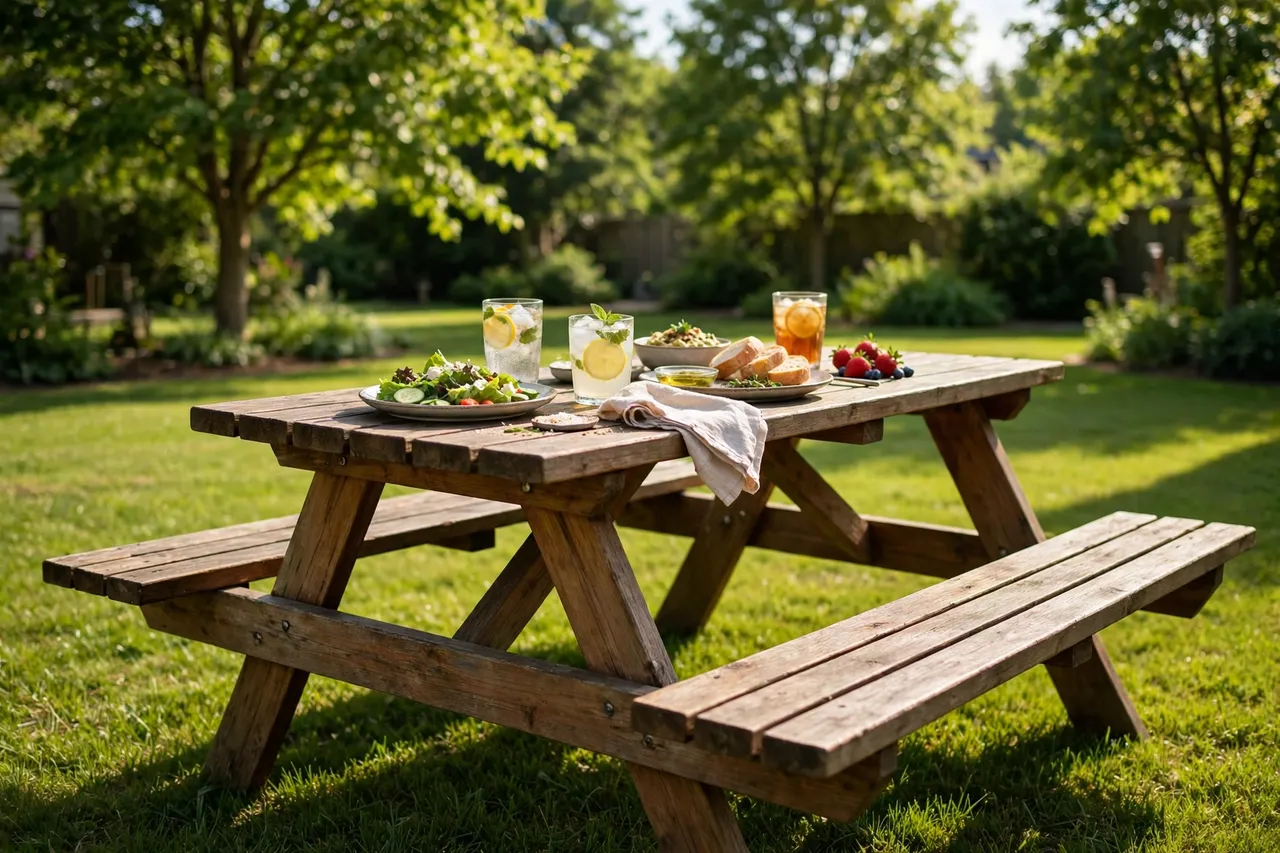
Picnic tables come in four shapes. The classic rectangular table is the workhorse: 6 or 8 feet long, seats 6 to 10, and fits a long narrow yard. The round table seats 4 to 6 around a 46-inch top and suits a small patio where corners waste space. The square table seats 4 and fits a tight corner. The kids’ table is a scaled-down 4-foot model, low enough for small children to climb onto alone.
The attached bench is both the charm and the trade-off. It makes the table sturdy and simple, and it makes getting in and out harder for older guests or anyone with sore knees, because you have to swing a leg over the bench. If your regular guests include grandparents or anyone with limited mobility, a picnic table with a separate bench on one side, or a pedestal table with chairs, is the kinder choice. For a family with kids, the classic attached bench is perfect, because children climb over it without a second thought.
Picnic tables live in backyards, parks, schools, and campgrounds, and the same design serves all of them. The difference is the material and the build: a backyard table can be light wood, while a park table needs commercial-grade steel or HDPE to survive daily use. This guide starts with the backyard buyer and flags the commercial differences where they matter.
What Size Picnic Table Do You Need?
You need a picnic table sized to your group and your yard: a 4-foot table seats 4, a 6-foot table seats 6 to 8, and an 8-foot table seats 8 to 10, and you need at least 3 feet of clear space on every side so people can sit down and walk past. Measure the yard before you shop, because a table that fits the photo rarely fits the patio.
| Table length | Seats | Best for | Space needed |
|---|---|---|---|
| 4 feet | 4 people | Small patios, kids | 10 × 8 feet |
| 6 feet | 6–8 people | Most families | 12 × 9 feet |
| 8 feet | 8–10 people | Big gatherings | 14 × 9 feet |
| Round, 46 inches | 4–6 people | Small square patios | 11 × 11 feet |
Count seats by the elbow rule, not by the bench length. Each person needs about 2.5 feet of table edge, and a 6-foot bench gives 6 feet per side, which is two to three adults per side, not four. A table that claims 8 seats honestly holds 6 adults and 2 children. If you host 8 adults regularly, buy the 8-foot table.
Seat height matters too. A standard bench sits 17 to 18 inches off the ground, and the tabletop sits about 30 inches high. That 12-inch gap is comfortable for most adults and too high for small children, who need a lower kids’ table or a booster. Accessible models give at least 27 inches of knee clearance on one side so a wheelchair user can pull up to the table, and they are worth asking about if anyone in your family uses a wheelchair.
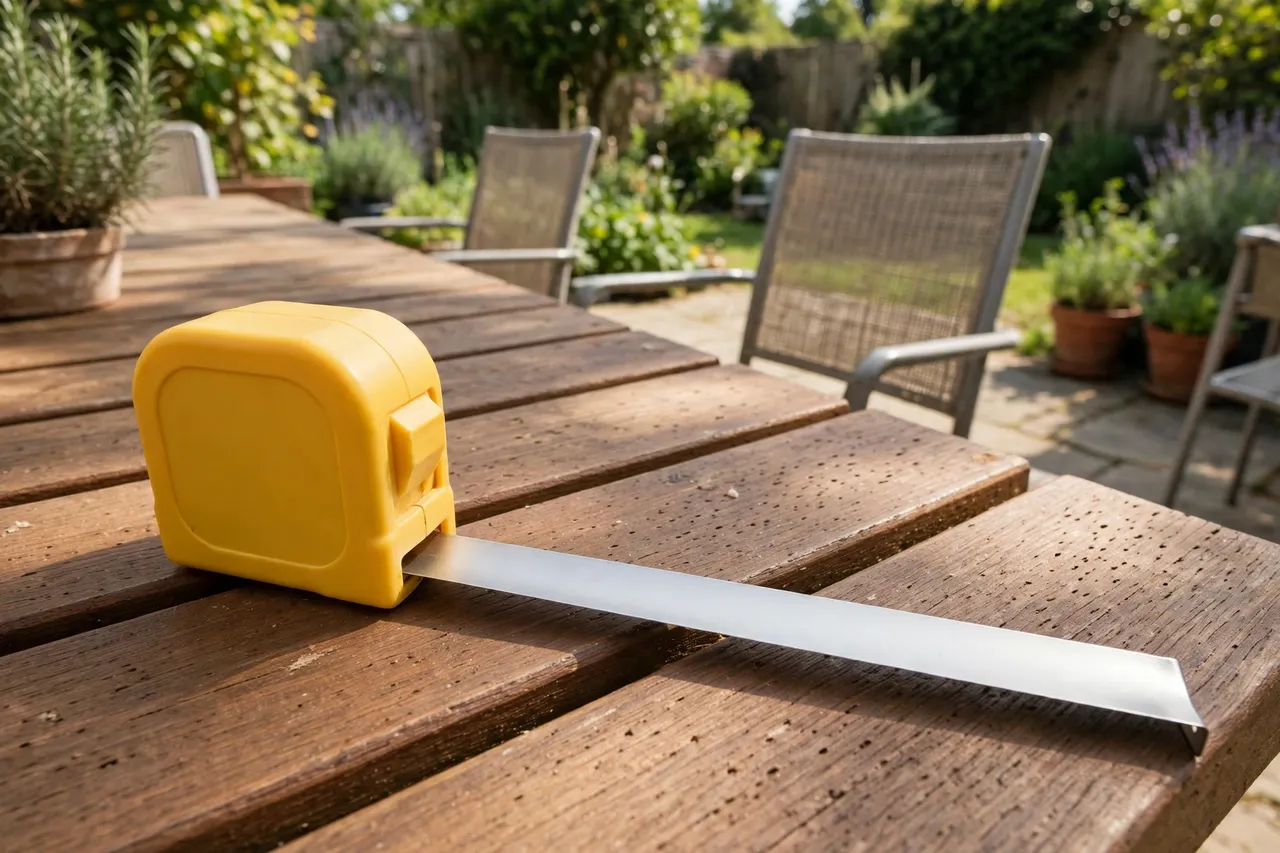
Now the tape-measure check. Mark the table’s footprint on the ground with tape or string, then add 3 feet on every side for sitting and walking room. Sit on a chair inside that outline and check that the door still opens, the grill lid still lifts, and two people can pass each other with plates. If the outline eats the walkway, go down a size. A 6-foot table that everyone can use beats an 8-foot table that blocks the back door. Our outdoor furniture for small spaces guide shows how a round table can save a tight patio.
Which Material Lasts Longest Outdoors?
Recycled HDPE lasts longest outdoors, at 20 to 25 years or more with no maintenance, because it cannot rot, rust, or splinter and it ignores rain, salt air, and sun. Wood lasts 5 to 10 years with yearly sealing. Galvanized steel lasts 15 to 20 years with rust checks. Aluminum lasts 8 to 12 years and wins on portability. The material decides the lifetime, not the price tag.
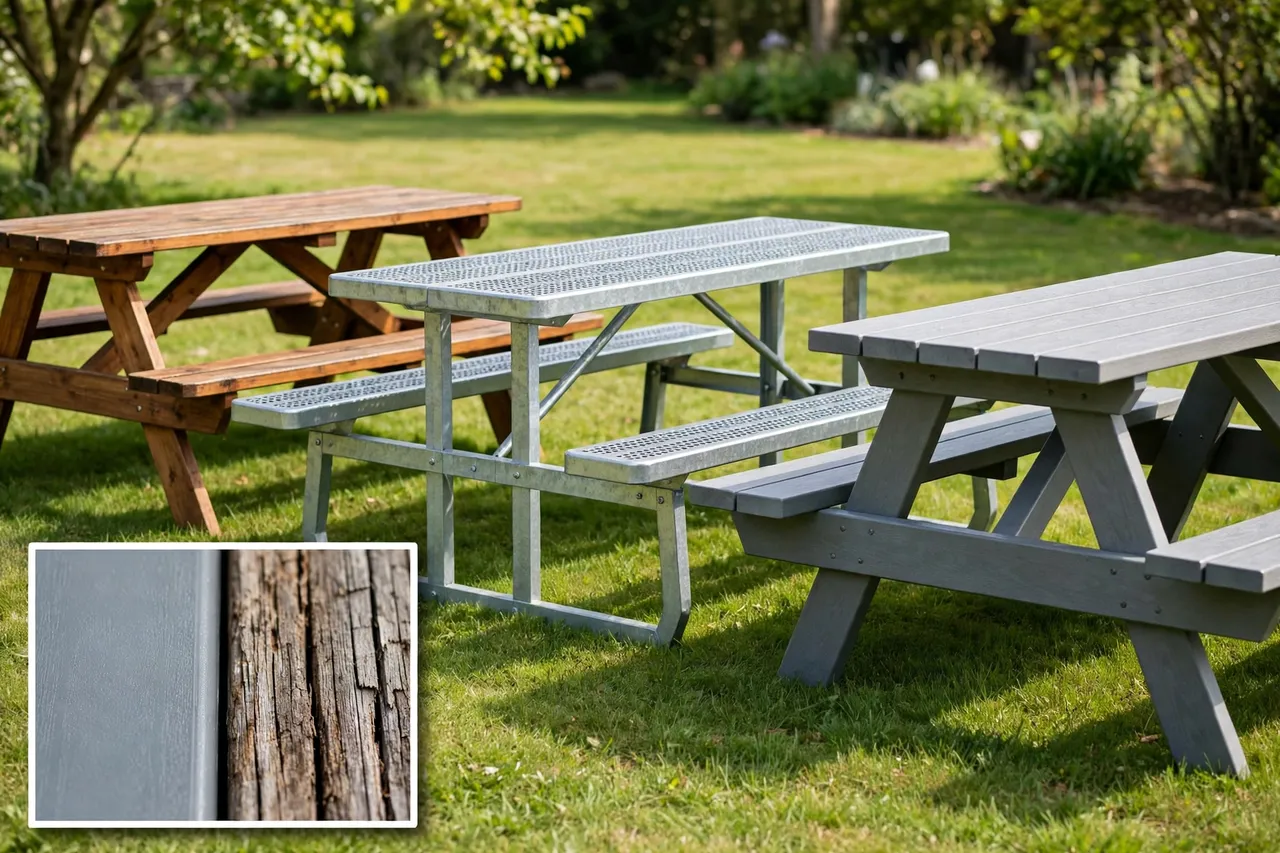
Wood is the classic choice and the cheapest way in. Cedar and pine tables run $150 to $400, look warm and natural, and feel solid under your elbows. But wood needs yearly sealing, and it cracks, warps, and splinters when sealing is skipped. A wood table that is sealed every spring lasts 8 to 10 years. A wood table that is never sealed can fail in 3 to 5. If you enjoy the maintenance, wood is lovely. If you will not seal it, do not buy it. Our outdoor wooden bench guide shows how wood care works on a smaller piece, and our acacia wood furniture guide covers the hardest-wearing wood of all.
Metal tables split into two kinds. Aluminum folding tables run $200 to $500, weigh little, and move easily, which suits camping and events, but they feel light and can tip in wind. Steel tables, especially galvanized or powder-coated steel, run $300 to $700 and are the park standard: heavy, steady, and strong enough for daily public use. A commercial steel table can weigh over 240 pounds, so it never moves, but it can get hot in full sun and it rusts wherever the coating chips. Our metal outdoor furniture guide compares steel and aluminum frames in detail.
HDPE, or recycled plastic lumber, is the long-life pick. It is made from recycled milk jugs and detergent bottles pressed into solid boards, and it resists rot, insects, salt air, chlorine, and fading, with a 20-year warranty on most quality brands. A $600 to $1,200 HDPE table costs more up front, but a $600 table that lasts 25 years costs less per year than a $200 wood table replaced every 5 years, as the picnic table buying guide from SportsSurge Alibaba shows in its cost table. The trade-offs are weight and looks: HDPE is heavy to move, and it feels like plastic because it is plastic. For a permanent backyard table, that trade is worth making, and our HDPE patio furniture guide covers the material in full.
Composite tables mix wood fiber and plastic. They look more like wood than HDPE and need no sealing, but they cost nearly as much and can fade or stain more than pure HDPE. They suit buyers who want the wood look without the wood work. Whatever the material, the next section shows what it actually costs to own one over a decade.
How Much Does an Outdoor Picnic Table Cost?
An outdoor picnic table costs $150 to $1,200, checked November 16, 2026, and the real price is the cost per year, not the price on the tag. A wood table at $150 to $400 lasts 5 to 10 years. An aluminum folding table at $200 to $500 lasts 8 to 12 years. A steel table at $300 to $700 lasts 15 to 20 years. An HDPE table at $600 to $1,200 lasts 20 to 25 years or more.
Work out the cost per year before you buy, because the cheapest table is rarely the cheapest to own. The BestReviews picnic table buying guide notes that a good 6-foot table like the Highwood Hometown seats six comfortably and supports up to 500 pounds, which is the build quality to look for at any price. A $200 wood table replaced every 5 years costs $40 a year plus sealer and sanding time. A $900 HDPE table that lasts 25 years costs $36 a year with no maintenance at all. The “expensive” table wins, and it wins while you do nothing to it.
Three things push the price up beyond the material. First, size: an 8-foot table costs about 30 percent more than a 6-foot table in the same material. Second, features: an umbrella hole, adjustable benches, and a coated steel frame each add cost, and the umbrella hole is the one feature worth paying for, because shade turns a table from a morning seat into an all-day seat. Third, build: commercial-grade tables with thicker boards and welded frames cost more and last longer than residential tables with bolted joints.
Watch for two hidden costs. Delivery on a 200-pound steel table can cost as much as a small wood table, so check the shipping charge before you order. And a wood table needs sealer, sandpaper, and a brush in the first year, about $30 to $50, which the tag never mentions. Add those to the price before you compare. Here is the problem with buying on price alone: the table that saves you $200 today can cost you $400 in replacements, and the next section shows you how to spot the build quality that prevents that.
What Most People Get Wrong About Picnic Tables
Most people get one thing wrong about picnic tables: they buy the table for the biggest party they might ever host, and then they live with a table that is too big for every normal day. A table that seats 10 takes up the whole patio, blocks the walkway, and makes a Tuesday dinner feel empty. Buy the table for the family you feed every week, and add a folding table for the two big parties a year.
The second wrong belief is that a picnic table needs no care because it is “outdoor furniture.” Every material needs something. Wood needs sealing. Steel needs rust checks at the joints and feet. Aluminum needs its bolts tightened. Even HDPE needs a wash, because pollen and bird droppings stain any surface left dirty all summer. The care is small, but skipping it is what kills tables early.
The third wrong belief is that all benches are the same height and it does not matter. It matters a lot. A bench that is too high leaves children’s feet dangling and adults’ knees cramped. A bench that is too low makes standing up hard for older guests. The standard 17 to 18 inches works for most adults, so measure it before you buy, and sit on the actual table if you can. A table you have sat on is a table you understand. The next section covers the one feature that turns a good table into the table everyone gathers around.
Umbrella Holes, Benches, and the Details That Matter
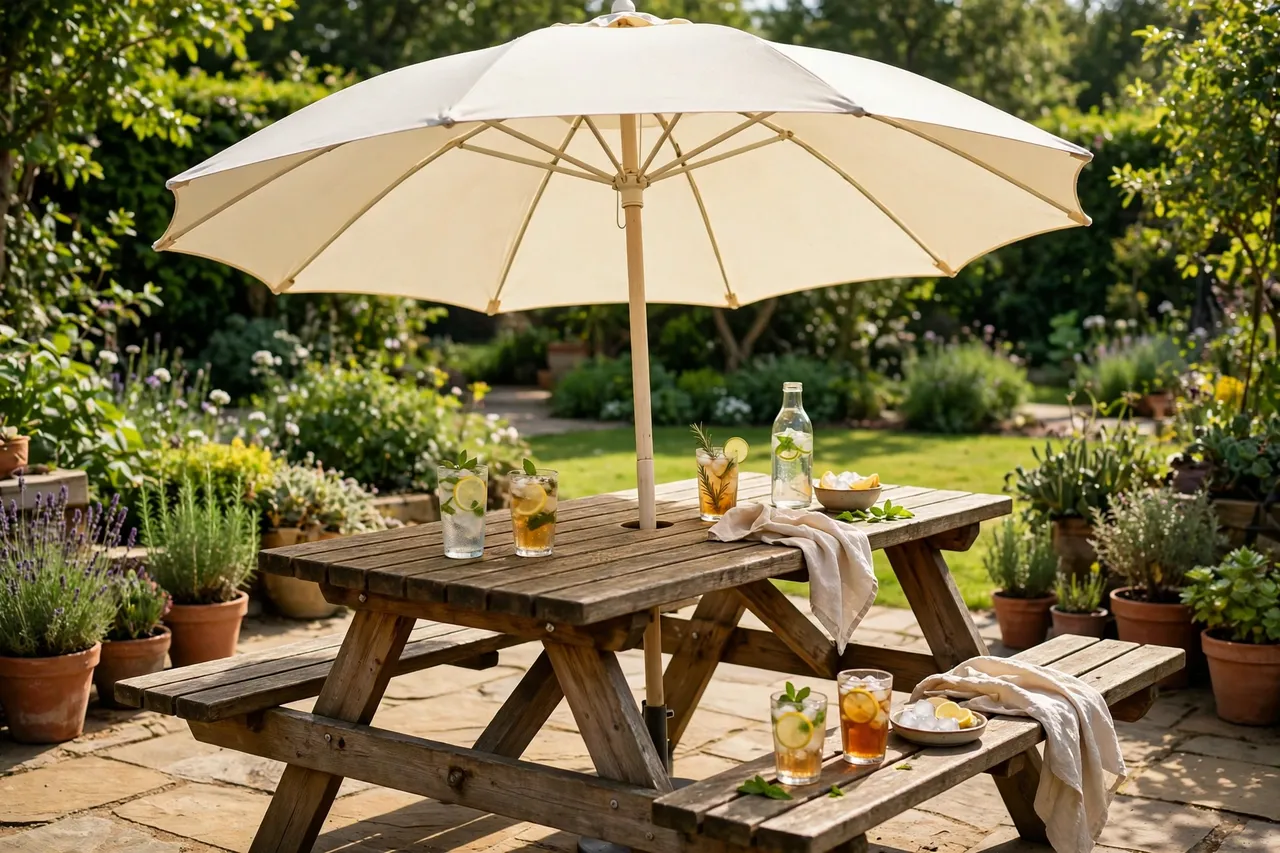
The details that matter on a picnic table are the umbrella hole, the bench design, and the joints. An umbrella hole in the center of the table, usually 1.5 to 2 inches wide, lets you add shade in seconds, and it is the single most-used feature on a sunny patio. If your table has no hole, you need a freestanding umbrella base, which takes up floor space and tips in wind.
Bench design decides comfort more than the tabletop does. A bench with a slight curve or a contoured edge feels better on the back of the knees than a sharp square edge. Benches with adjustable positions, which slide in or out, suit families with children of different ages, because small kids sit closer to the table. Detached benches are easier to get in and out of, but they wander, tip, and need storage. Attached benches stay put and hold the table steady, which is why parks use them.
Joints decide how long the table stays solid. Welded steel joints outlast bolted joints outdoors, because bolts loosen with every season of expansion and contraction, and water gets into the bolt holes. On a wood table, look for through-bolts with washers rather than screws, because screws pull out of wet wood. Tighten every bolt in spring, and replace any bolt that shows rust before it seizes.
One more detail: the feet. A table that sits on bare soil rots or rusts at the feet first, so set it on pavers, gravel, or a concrete pad. Our patio dining set guide covers the pedestal alternative if you want chairs instead of benches, and our fire pit tables guide covers the table that doubles as a heater on cool evenings.
How to Care for a Picnic Table
A picnic table needs about twenty minutes of care per season: wash it, check the joints, fix the finish, and protect the feet. That routine doubles the life of a wood table and keeps a metal or HDPE table looking new for decades.
Start with a wash every month in summer. Scrub the top and benches with mild dish soap and warm water, rinse with a hose, and let it dry in the sun. Food, sap, and bird droppings stain any surface if they sit for weeks, and they stain wood permanently. Never use a pressure washer on a wood table, because it tears the grain and opens the surface to water.
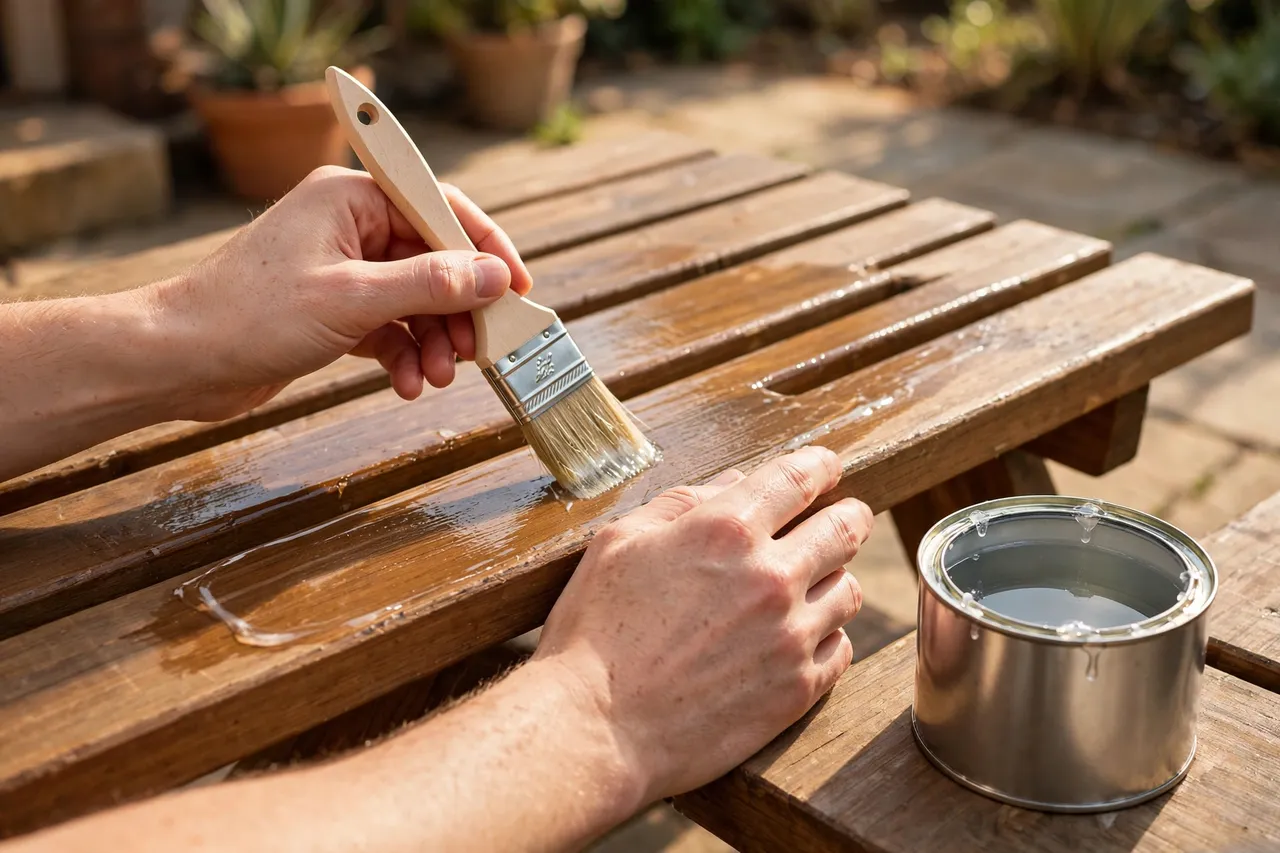
For wood, seal it every spring. Sand any rough or grey patches, brush on an exterior sealer or stain, and let it dry for a full day before anyone eats on it. A sealed table sheds rain. An unsealed table drinks it, and drinking water is what cracks boards and loosens joints. For steel, inspect the coating every spring, sand any rust spot, treat it with a rust converter, and repaint the same day. For HDPE, the wash is the whole routine, and that is the point of buying it.
For winter, the full routine lives in our guide on how to store outdoor furniture, and our outdoor covers for furniture guide covers which covers actually protect a table. The short version: clean the table, fix every chip and crack, dry it fully, and either cover it with a vented cover or move a light table under shelter. A table that goes into winter clean comes out of it ready for the first barbecue.
Picnic Table or Dining Set: Which One Wins?
A picnic table wins when you want one sturdy piece that seats the whole family, never needs chairs, and survives kids climbing on it. A dining set wins when you want comfort, flexibility, and chairs that move. The table you pick should match how your family actually eats outside, not how the photo looks.
A dining set gives each person a chair with a back, which is kinder to older guests and easier to get in and out of. Chairs move, so you can add two more for guests or push them aside for a game. But chairs blow over, cushions need storage, and a full set costs more than a picnic table. Our outdoor dining table and chairs guide and our outdoor dining sets for 6 guide cover the dining side, and our round outdoor dining table guide covers the shape that suits small patios best.
A picnic table gives you one piece that does everything: table, seats, and stability in one. It costs less, it never loses a chair, and children love it. It is harder to get in and out of, and it has no back support, so long dinners feel less comfortable. For a family with kids and a big yard, the picnic table is the right call. For a couple that hosts long dinners with older friends, the dining set is the better buy. Many yards end up with both: a picnic table on the lawn for the kids and a dining set on the patio for the adults, and that is not a waste, it is two tools for two jobs.
Related Guides
If a picnic table is on your list, these guides answer the next questions most owners ask. Start with our outdoor dining table and chairs guide to compare the chair alternative, then read our outdoor dining sets for 6 guide if you seat six regularly. Our outdoor wooden bench guide covers the wood care you will need, and our HDPE patio furniture guide covers the no-maintenance material. For the space around the table, see our patio dining set guide.
Frequently Asked Questions
What is the best material for a picnic table?
The best material depends on how much care you will do. Recycled HDPE is best if you want zero maintenance and a 20 to 25 year life, because it cannot rot, rust, or splinter. Wood is best if you love the natural look and will seal it every year. For most families, HDPE wins on lifetime cost, while wood wins on price and looks.
What size picnic table do I need?
You need a 4-foot table for 4 people, a 6-foot table for 6 to 8 people, and an 8-foot table for 8 to 10 people, with about 2.5 feet of table edge per person. Add 3 feet of clear space on every side for sitting and walking. Measure your yard with tape before you buy.
How many people does a 6-foot picnic table seat?
A 6-foot picnic table seats 6 to 8 people: three per side on the benches, or two adults and a child per side in comfort. The honest count is 6 adults, because each person needs about 2.5 feet of elbow room. If you regularly host 8 adults, buy the 8-foot table instead of squeezing everyone onto a 6-foot bench.
How much does a picnic table cost?
A picnic table costs $150 to $1,200, checked November 16, 2026. Wood tables run $150 to $400, aluminum folding tables $200 to $500, steel tables $300 to $700, and recycled HDPE tables $600 to $1,200. Judge the price by cost per year: a $900 HDPE table lasting 25 years costs less per year than a $200 wood table replaced every 5 years.
What is the standard size of a picnic table?
The standard picnic table is 6 feet long, 30 inches wide, and 30 inches tall, with benches about 17 to 18 inches high. That size seats 6 to 8 people and fits most family yards. Four-foot and 8-foot versions cover smaller patios and bigger gatherings, and round tables at 46 inches across seat 4 to 6 on a small square patio.
Can a picnic table stay outside all winter?
Yes, a picnic table can stay outside all winter if you clean it, fix chips and cracks, and cover it with a vented cover. HDPE and steel tables handle winter best. Wood tables need a fresh coat of sealer before the first frost, because water that soaks into unsealed wood freezes, expands, and cracks the boards by spring.
A picnic table is the simplest seat in the yard, and the simplest choice to get wrong by buying on looks. Measure the space, pick the material for the care you will honestly do, and work out the cost per year. Do those three things and the table you buy will still be hosting barbecues when the kids who climbed on it are grown.
Note: This guide gives general advice for choosing outdoor furniture. Check weight limits and seat heights before you buy, and supervise small children on bench seating.