The best chairs for elderly people outdoors raise the seat to 17 to 19 inches, add sturdy full-length armrests for a controlled sit-to-stand, and use a frame that stays put when someone pushes on it to stand, according to the senior outdoor seating guide from Senior Helpers. Most patio chairs sit only 12 to 15 inches off the ground with no real armrests, which forces an older adult to drop into the seat and struggle back up. The right chair fixes that one movement, and everything else about the chair follows from it.
One measurement matters more than the brand, the cushion, or the price, and most listings bury it in the spec table or leave it out entirely. It sits in the section below, and once you know it, you can rule out nine out of ten patio chairs in seconds. First, here is what a good elderly chair actually is, because it is not a special “senior” product at all.
What Makes a Chair Good for an Elderly Person Outdoors?
A good outdoor chair for an elderly person is a regular patio chair chosen with three criteria: a seat height of 17 to 19 inches, armrests strong enough to push off from, and a stable frame that does not tip or slide. It is not a medical device and it does not need to look like one. The fix is not “senior furniture.” It is regular outdoor furniture chosen with specific criteria, as the team at Terrace Haus puts it after testing 22 products with reviewers aged 62 to 78.
Seat height comes first because it decides whether standing up is easy or frightening. A seat at 17 to 19 inches lets most seniors sit with their feet flat on the ground and their knees close to hip level, which makes getting up much easier. Measure from the ground to the top of the cushion, not the frame, because a thick cushion can add 2 to 3 inches. Adjustable-height chairs help when more than one person will use the same seat, or when needs may change over time.
Armrests do more work than most people expect. They should reach close to the front edge of the seat, so a senior has something solid to push against when standing and something to hold while sitting down. Hard, flat armrests, usually wood or reinforced plastic, give a stable surface to press down on, while padded or fabric armrests feel softer but lack the rigid structure needed for pushing off, according to the camping chair guide for older adults from Home To Sight. Sling chairs, low couches, and deep loungers usually lack that support and are best avoided.
Back support matters just as much for comfort. A high back, built-in lumbar support, or an adjustable backrest keeps a senior sitting upright and helps prevent the back discomfort that cuts outdoor time short. Swivel chairs can also help, since they let someone turn toward a table or a conversation without twisting their spine. A mesh back breathes well in summer heat, which matters for seniors on blood pressure medications who overheat easily.
Weight capacity is the quiet fourth check. A chair rated for 250 pounds is the floor for most adults, and 300 to 350 pounds gives a real safety margin for bigger users and for the daily push-and-pull of standing up. Our guide to outdoor rocker chairs covers one of the best chair types for this job in detail, and our lounger guide shows which reclining seats to avoid when standing up is the hard part.
The 17 to 19 Inch Rule: Seat Height Decides Everything
The seat height rule is simple: 17 to 19 inches is the safe zone for an elderly person, because it matches a standard dining chair and lets older knees bend at roughly a 90-degree angle. Below 15 inches the chair becomes a fall risk on sit-to-stand, and above 21 inches shorter seniors struggle to sit down comfortably, according to the outdoor lounge chair guide for seniors from Muse It Up Publishing, which tested chairs with a 78-year-old with arthritis in both knees.
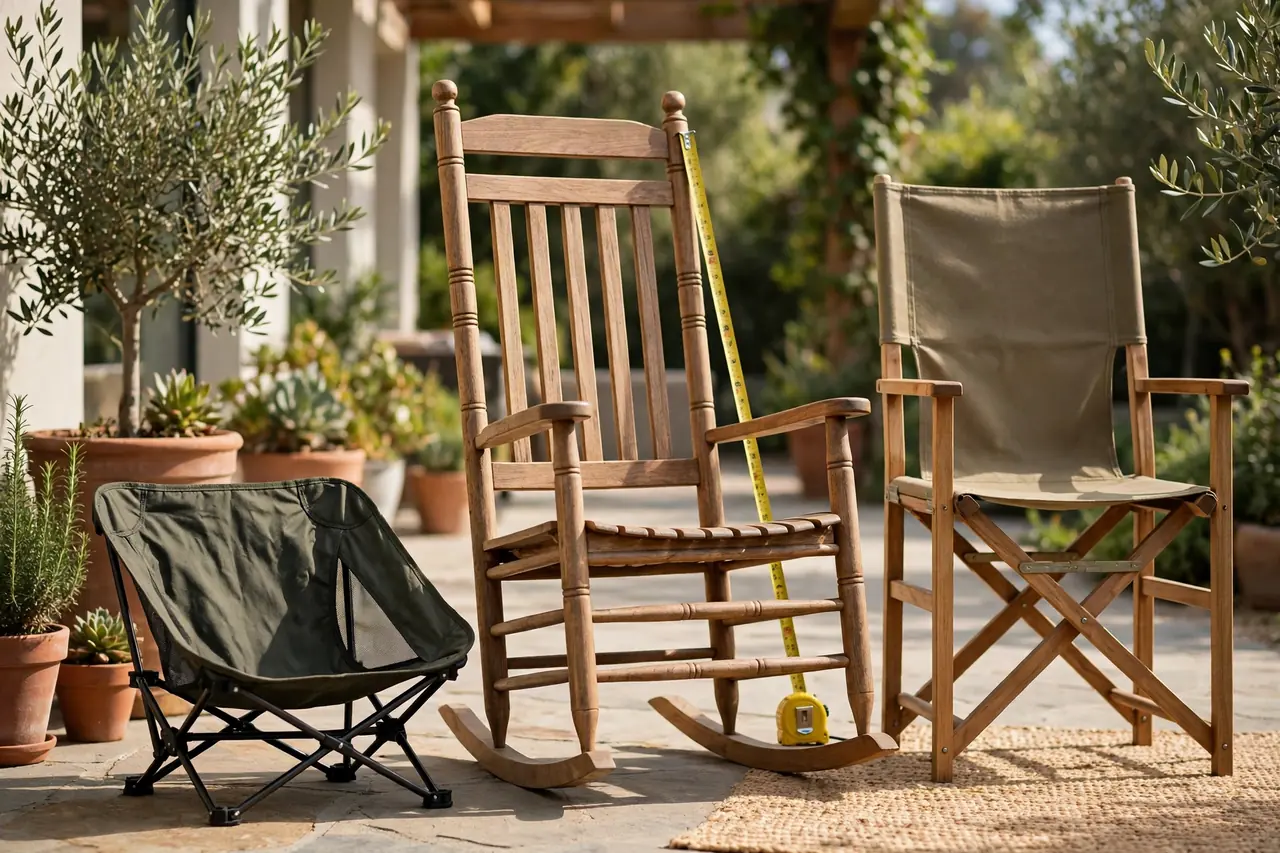
Standard camping chairs sit 15 to 18 inches low, which forces an elderly user to lower themselves almost to the floor and then generate enough leg strength to stand back up, often without sturdy armrests to help. Director-style chairs with side tables consistently offered the easiest sit-to-stand experience in one 15-chair comparison, because of their tall seat height and boxy, stable frames. That single difference, tall seat plus solid frame, was the biggest differentiator for elderly users in the whole lineup.
Here is how to measure before you buy. Sit in the chair with your feet flat on the ground and check that your knees sit at about hip level, not above it. If your knees rise above your hips, the seat is too low. If your feet dangle, it is too high. Bring a tape measure to the store, because the number on the listing is usually measured to the frame, not to the top of the cushion, and a thick cushion adds 2 to 3 inches that the listing never mentions.
The table below shows the seat heights of the chairs this guide recommends, all measured the same way, with the cushion counted. Any chair in the green zone works for most seniors. Any chair below 17 inches needs a very good reason to stay on your list.
Seat height of senior-friendly outdoor chairs
| Chair | Seat height | Weight capacity | Best for |
|---|---|---|---|
| GCI Outdoor Freestyle Rocker | 19.7 inches | 250 lb | Tallest easy stand-up |
| Portal Portable Zero Gravity Chair | 21 inches | 350 lb | Tall users, deep recline |
| Best Choice Products Zero Gravity Recliner | 17 to 19 inches upright | 250 lb | Recline with a tray |
| EVER ADVANCED Oversized Rocking Chair | 21.18 inches | 400 lb | Maximum back support |
| Standard camping chair | 12 to 15 inches | 225 lb | Avoid for seniors |
Two-pack budget sets are the weakest fit for elderly users specifically, because their seats sit lower and their frames flex more under load, which undermines confidence when standing up. A chair that flexes under you teaches you not to trust it, and a chair you do not trust is a chair you stop using. Spend the money on the seat height and the armrests, not on the extra chair in the box, and the next section shows the four chair types that pass the test.
The 4 Chair Types That Work Best Outdoors
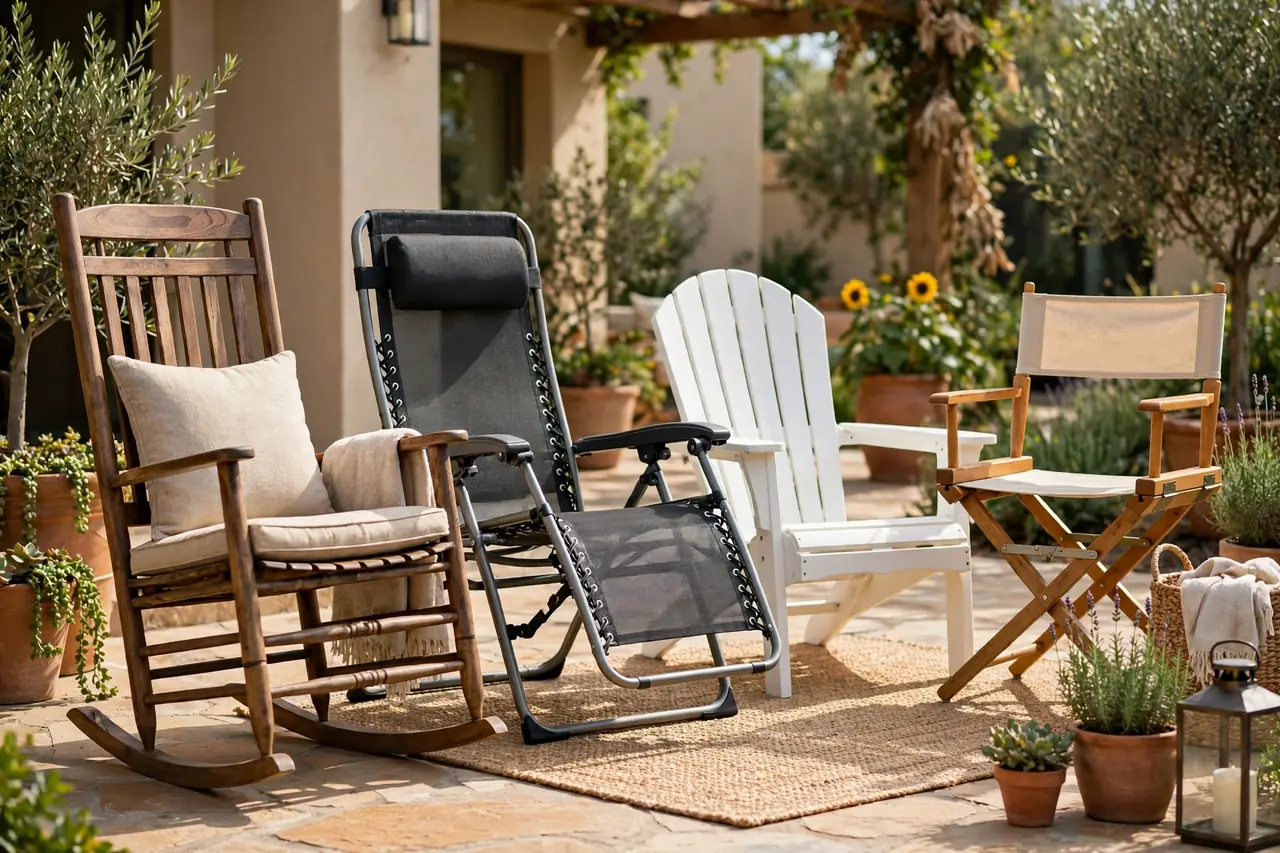
Four chair types work best for elderly people outdoors: a tall rocker, a lockable zero-gravity recliner, an HDPE Adirondack or rocker, and a high-back director chair. Each one passes the 17 to 19 inch test in its own way, and each one suits a different kind of outdoor time. Pick by how the person actually sits, not by how the chair looks in a photo.
1. Tall Rocker: The Easiest Stand-Up
The GCI Outdoor Freestyle Rocker is the standout pick for standing up, with a 19.7-inch seat height, a 250-pound capacity, solid full-length armrests, and a gentle spring-action rocking motion that will not tip backward. It weighs 11.8 pounds, folds in seconds with an Eazy-Fold design, and holds a 4.8-star rating across more than 46,000 reviews. It costs about $80 at Target, checked November 16, 2026. Owners consistently praise the tall seat and the easy fold, and the most common complaint is that the rocking mechanism can show wear after several seasons. The single recline position is the trade-off: this is an upright rocking chair, not a nap chair.
2. Lockable Zero-Gravity Recliner: Best for Naps and Sore Backs
The Best Choice Products Zero Gravity Recliner is the pick for seniors who want to relieve back pressure and nap outdoors. It holds 250 pounds, locks its recline in place, and comes with a padded headrest and a detachable tray that holds two cups plus a phone and tablet. It carries more than 66,000 reviews averaging 4.5 stars, the deepest review history of any chair in this guide. The catch is the one this whole guide warns about: in deep recline the seat sits very low, which makes it hard to exit without caregiver help. For independent seniors with reasonable arm strength, the upright position works fine. For anyone with significant balance issues, a tall rocker is the safer pick. Lock the recline before helping a senior out of it, and plan transfers from a seated upright position whenever possible.
3. HDPE Adirondack or Rocker: The Permanent Porch Seat
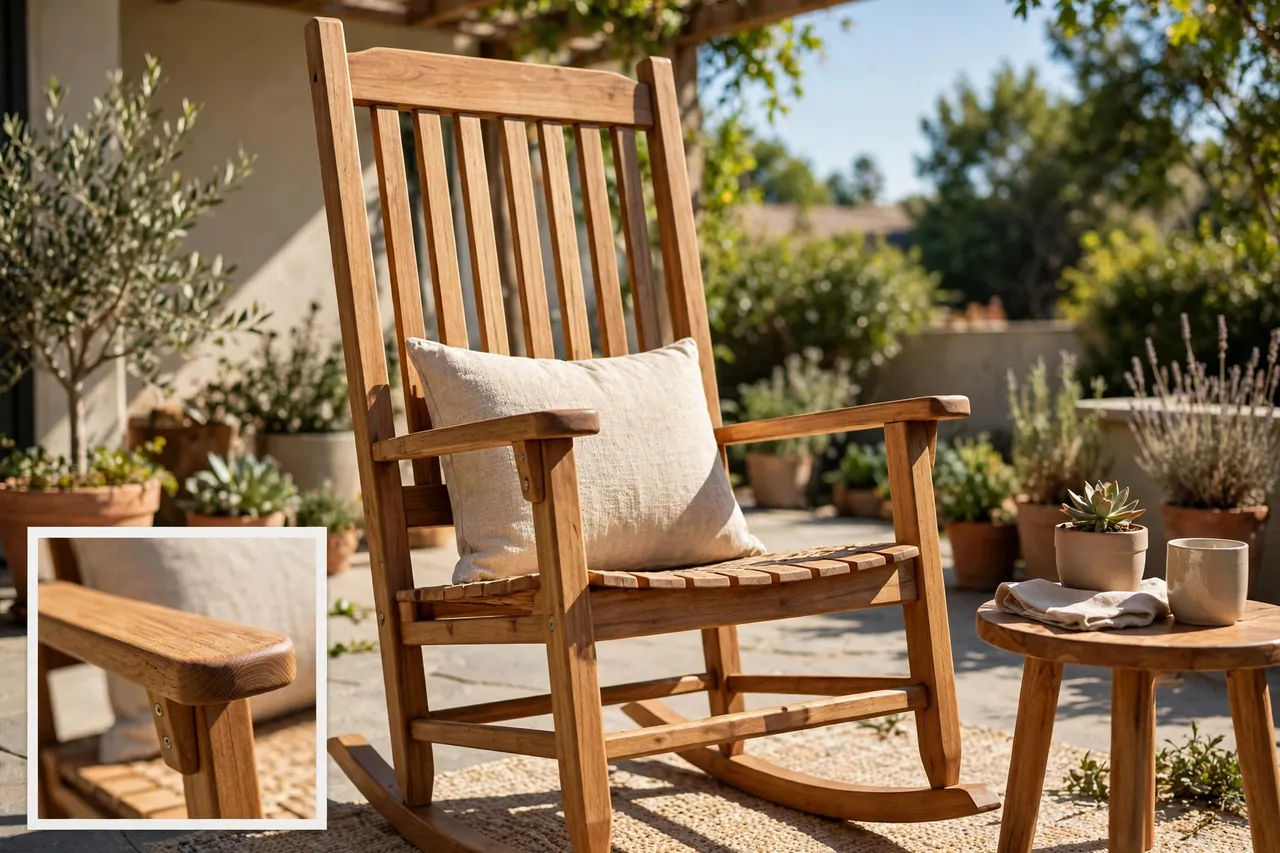
An HDPE Adirondack or rocking chair is the pick for a permanent porch seat that lasts a decade with almost no maintenance. The wide armrests give a confident grip for sit-to-stand, and HDPE versions need no painting, no sealing, and no rust care. The SERWALL HDPE rocker set holds 350 pounds, uses 304 stainless steel hardware, and works as a transfer pivot once positioned, because it is heavy enough to stay put when someone pushes on it. The downside is no recline and a wide footprint that takes up significant patio space. If the chair never moves, that weight is a feature. If it must move, pick the folding rocker above instead.
4. High-Back Director Chair: Best for Dining and Conversation
A high-back director chair is the pick for dining, conversation, and long sits at the table. Director-style chairs offer the easiest sit-to-stand experience of any portable chair, because of their tall seat height and boxy, stable frames. The EVER ADVANCED oversized rocking chair pairs a 21.18-inch seat with a 400-pound capacity and adjustable lumbar support, the tallest seat in this guide. The Portal Portable Zero Gravity Chair offers a 21-inch seat with a 350-pound capacity and a 0 to 170 degree recline. Both are heavier than a folding rocker, so they suit a patio that stays set up, not a chair that travels to the park every weekend. For the table itself, our patio dining set guide shows how to match chair height to table height, and our reclining patio chairs guide covers the reclining options in more depth.
How Much Do Good Elderly Chairs Cost?
A good outdoor chair for an elderly person costs $80 to $150 for a proven folding rocker or zero-gravity recliner, while a permanent HDPE Adirondack or rocker set costs more up front and lasts a decade with almost no maintenance. The GCI Outdoor Freestyle Rocker costs about $80 at Target, checked November 16, 2026, and it is the best value in this guide because it solves the hard problem, standing up, for the lowest price.
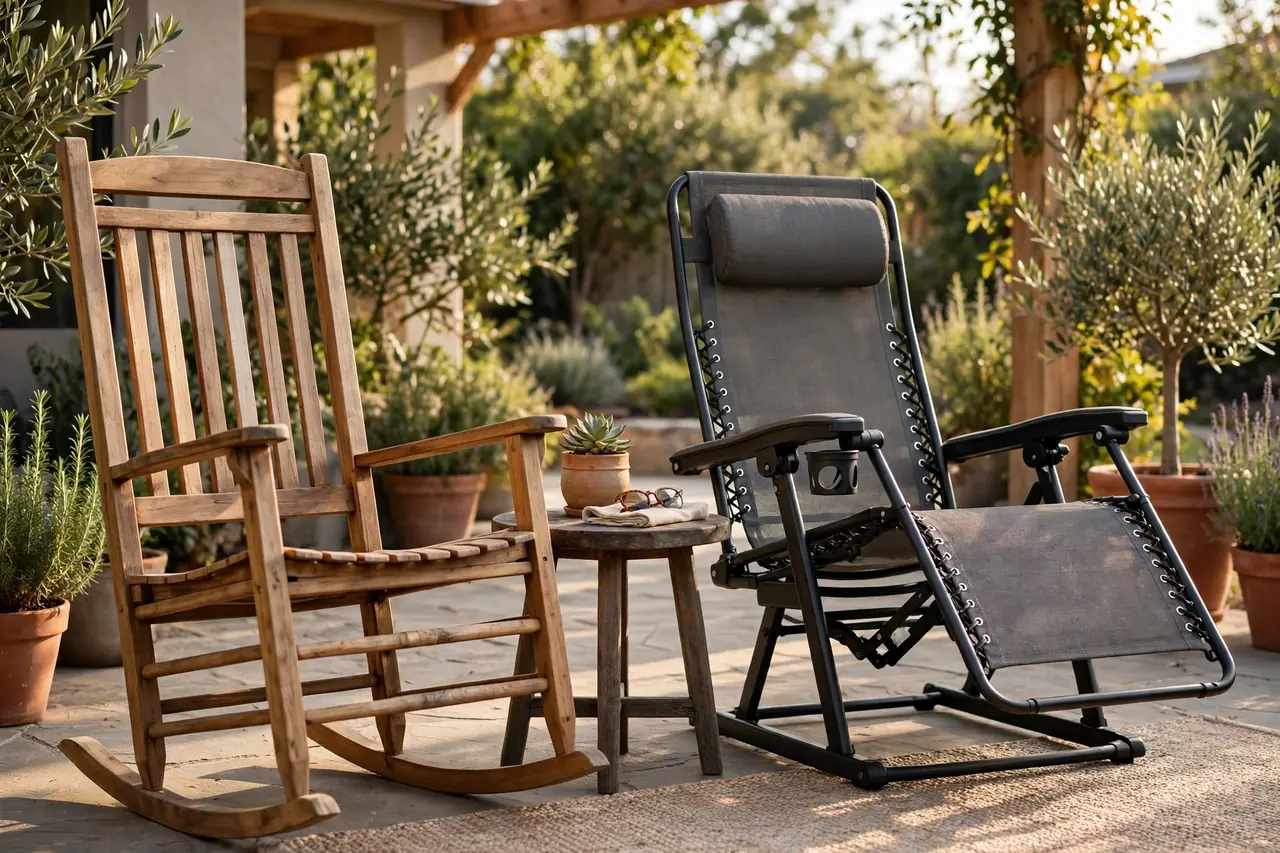
Do not judge a chair by its price alone. A $40 budget camping chair that sits 13 inches off the ground is not a bargain for a senior, because it is a chair they cannot stand up from, and a chair they cannot stand up from is a chair they will not use. A $90 chair with a 19-inch seat that gets used every day for five years costs about $18 a year. A $40 chair that sits in the garage costs $40 a year and buys nothing.
Check the warranty before you buy, and read what it actually covers. A frame warranty that excludes weather is worthless outdoors. Look for a maker that covers the frame for at least a year of outdoor use and sells replacement fabric, because the mesh back on a rocker can stretch after heavy use, and a replaceable part beats a replaced chair.
Buy one chair first, not a set. Let the person sit in it, stand up from it, and use it for a week before you buy the second one. Every body is different, and the 17 to 19 inch rule is a starting point, not a prescription. If the first chair works, buy the matching one. If it does not, you have learned something cheap instead of something expensive.
What Most People Get Wrong About Senior Chairs
Most people get three things wrong about chairs for elderly people: they buy the softest chair, they buy the cheapest set, and they assume a recliner is always safer than an upright chair. Each mistake feels like kindness, and each one makes standing up harder.
The first wrong belief is that soft means comfortable. It does not, not for standing up. A soft, deep seat swallows the sitter, and a padded armrest collapses under the hand that pushes on it. Hard, flat armrests and a firm seat are what make standing up possible, and comfort comes from the backrest and the seat height, not from sinking into the chair. A padded seat on a firm frame is the right combination, and that is why the best chairs in this guide pair firm support with a little padding on top.
The second wrong belief is that a two-pack is a bargain. Two-pack budget sets sit lower and flex more under load, which undermines confidence when standing up, and a chair that flexes teaches its user not to trust it. Buy one good chair before you buy two cheap ones.
The third wrong belief is that a recliner is always safer. It is not. A zero-gravity chair in deep recline becomes a low chaise lounge, and getting out of it without help is hard even for a strong adult. For a senior who stands often, or who needs a caregiver to help, a tall upright rocker or Adirondack outperforms a recliner every time. Here is the thing most guides skip: the chair that is easiest to sit in is not always the easiest to stand up from, and for an elderly person, standing up is the movement that matters. The next section shows how to set up the spot around the chair, because the chair alone is only half the answer.
How to Set Up a Safe Outdoor Sitting Spot
A safe outdoor sitting spot starts with the ground: a flat, hard surface under the chair, a clear path to the door, and nothing to trip over between the two. Place the chair on a patio, deck, or firm path, not on thick grass or soft soil, because a rocker needs a flat surface for its smoothest motion, and a chair leg that sinks is a chair that tips.
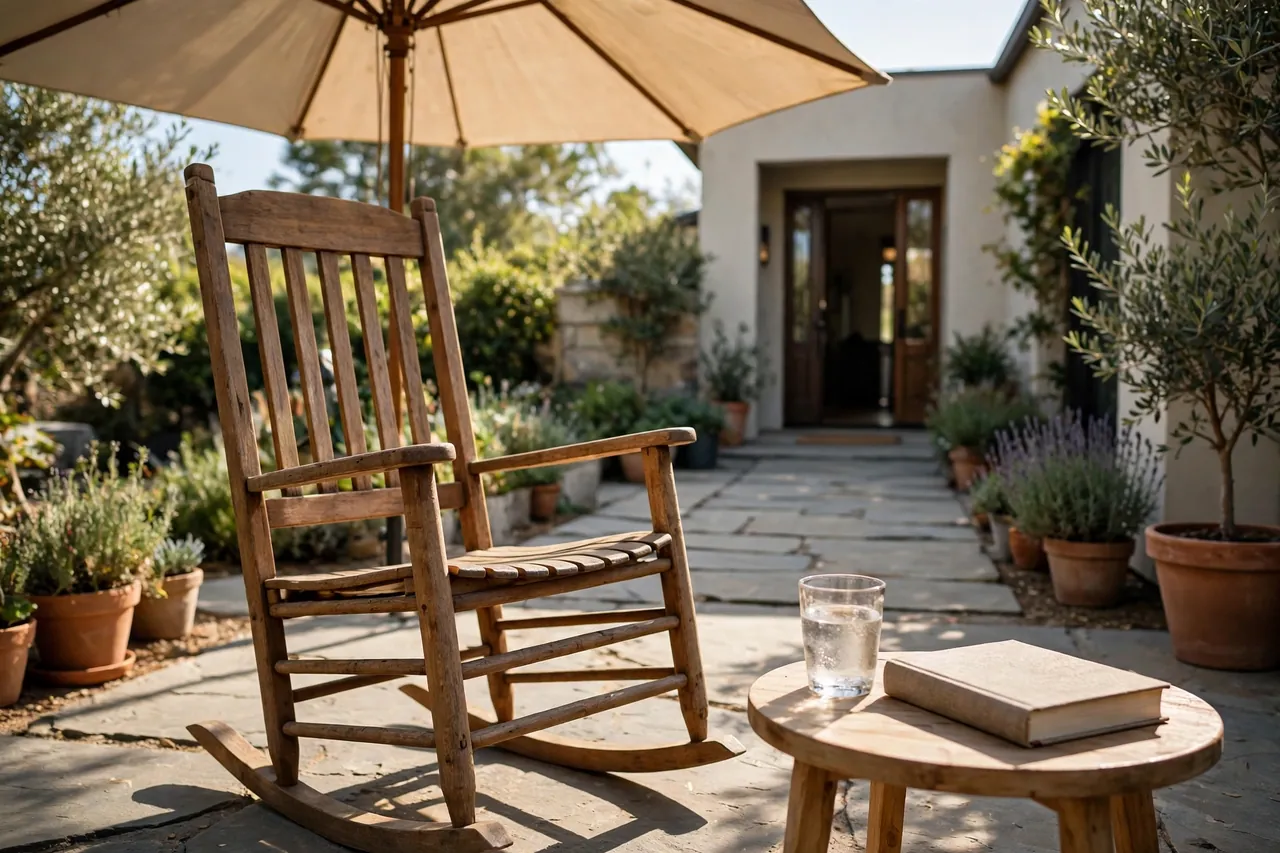
Keep a small side table within arm’s reach, so a drink, a phone, and a book sit where the person can reach them without leaning. A table that forces a lean is a table that causes a fall. Adjustable-height tables work well when different chairs, or a wheelchair, share the same spot. Our guide to outdoor side tables shows compact options that fit beside a single chair.
Add shade and sun safety to the setup. Many common senior medications increase sun sensitivity, and a mesh-back chair that breathes helps, but shade is what actually protects skin. A patio umbrella, a retractable shade, or a covered porch keeps the sitting spot usable through the afternoon. Keep water within reach, because older adults dehydrate faster than they feel thirsty, and a hot afternoon on a sunny patio is the wrong time to discover that.
Keep the path clear and the light good. Remove hoses, toys, and low planters from the route between the door and the chair, and make sure the evening path back inside is lit. A chair with wheels should stay off uneven patio surfaces, because wheels that roll on a slope are a documented fall risk. For the wider patio, our guide to outdoor furniture for small spaces shows how to lay out a compact seating area without crowding the walkway, and our guide on how to store outdoor furniture covers putting the chairs away safely for winter.
When to Choose a Lift Chair Instead
Choose a lift chair when a senior cannot stand up even from a tall chair with strong armrests, or when a caregiver must lift them every time they sit down. For seniors who need more help standing, outdoor lift chairs are available, and they can make the patio usable again when a regular chair no longer works. This is not a failure of the chair. It is the right tool for a different need.
A lift chair is worth considering when standing up takes more than one attempt, when the person grabs furniture or walls for balance on the way up, or when they have stopped going outside because the chair is too hard to leave. If any of those sound familiar, talk to the person’s doctor or an occupational therapist before buying, because the right lift chair depends on the person’s weight, height, and strength, and a wrong one can be worse than none.
Do not buy a lift chair as a first step. Try the tall rocker first, then the high-back director chair, and only then the lift chair. Most seniors do well with a 17 to 19 inch seat and solid armrests, and the lift chair is for the smaller group who need powered help. The goal is the same in every case: a chair the person can leave as easily as they sit in it.
Related Guides
If you are setting up outdoor seating for an older parent or for yourself, these guides answer the next questions. Start with our outdoor rocker chair guide for the chair type that stands up easiest, then read our reclining patio chairs guide and our lounger guide to compare the reclining options. For small patios, see our garden chairs small guide and our outdoor pouf ottoman guide for a footrest that doubles as a seat. For the full patio, our outdoor bench with storage guide and our weather-resistant outdoor furniture guide cover the rest of the setup.
Frequently Asked Questions
What is the best outdoor lounge chair for seniors?
The best outdoor lounge chairs for seniors pair a 17 to 19 inch seat height with sturdy full-length armrests, weather-resistant construction, and a supportive backrest. Top picks include the Best Choice Products Zero Gravity Recliner for its smooth recline, the GCI Outdoor Freestyle Rocker for its 19.7 inch tall seat, and an HDPE rocker set for permanent porch use.
Are zero gravity chairs good for elderly?
Zero gravity chairs are good for elderly users who want to relieve back pressure and nap outdoors, but they have one major caveat: in deep recline the seat sits very low, which makes them hard to exit without caregiver help. For independent seniors with reasonable arm strength, a zero gravity chair in upright position works fine.
Are Adirondack chairs good for seniors?
Adirondack chairs are good for seniors who want a tall, supportive upright seat and are willing to sacrifice the ability to recline. The wide armrests give a confident grip for sit-to-stand, and HDPE versions require almost no maintenance. The downside is no recline and a wide footprint that takes up significant patio space.
How tall should a chair be for an elderly person?
A chair for an elderly person should have a seat height of 17 to 19 inches, which matches a standard dining chair and lets older knees bend at roughly a 90 degree angle. Below 15 inches the chair becomes a fall risk on sit-to-stand, and above 21 inches shorter seniors struggle to sit down comfortably.
What is the best chair for elderly people to get out of?
The best chair for elderly people to get out of is a tall, upright chair with sturdy full-length armrests at 17 to 19 inch seat height. Rockers and Adirondacks outperform recliners here, because recliners drop the seat low when leaned back. Solid armrests let the user push up with their arms rather than relying on knee and hip strength alone.
What is the safest outdoor chair for elderly?
The safest outdoor chair for elderly combines a tall seat at 17 to 19 inches, solid armrests for sit-to-stand, a wide stable base that does not tip, non-slip feet, and weather-resistant construction that will not rot or rust. Add a mesh back for breathability in summer heat, and avoid chairs with wheels that roll on uneven patio surfaces.
The right chair for an elderly person is the one they can leave as easily as they sit in. Start with the 17 to 19 inch seat, add armrests strong enough to push on, and buy one chair to test before you buy the set. The patio is waiting, and the chair should never be the reason someone stays inside.
Note: This guide gives general advice for choosing outdoor chairs. Falls are a serious risk for older adults, so if the person has balance problems, a history of falls, or a medical condition that affects strength or mobility, talk to their doctor or an occupational therapist before choosing a chair, and never leave someone who needs help standing alone outdoors.