An outdoor rocker chair is a porch or patio chair on curved runners that rocks back and forth, and the one worth buying is made of HDPE poly lumber or teak, holds at least 300 pounds, and gives you a seat 18 to 20 inches deep with room to rock without hitting the wall behind you. The best overall outdoor rocker, the POLYWOOD Presidential, costs about $199 to $340, holds 325 pounds, and carries a 20-year warranty, checked November 16, 2026. This guide covers types, materials, sizing, prices, and care.
One measurement decides whether a rocker works on your porch at all, and it has nothing to do with the chair you buy. It sits in the sizing section below, and it is the reason so many rockers end up facing the wall instead of the view. Get that number right first, and the rest of the choice is easy.
What Is an Outdoor Rocker Chair?
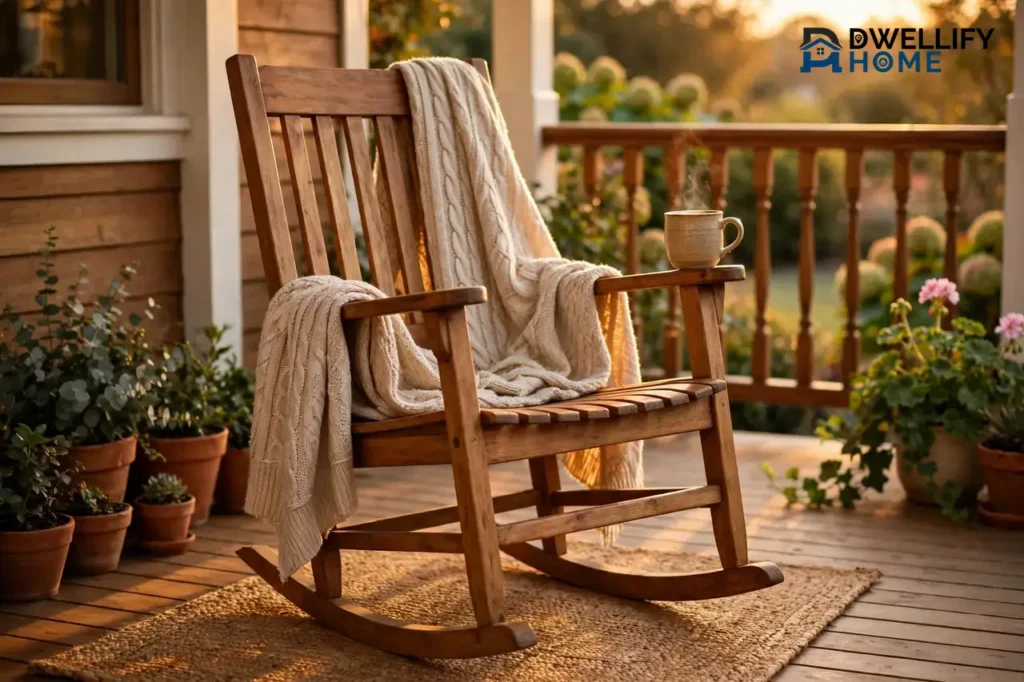
An outdoor rocker chair is a chair with curved runners under the legs that lets you rock gently back and forth, built for porches, patios, and decks, where the motion itself is the point: a slow rock for morning coffee, evening wind-down, and long conversations. A rocker differs from a glider, which moves on a flat track, and from a swivel chair, which spins instead of rocking.
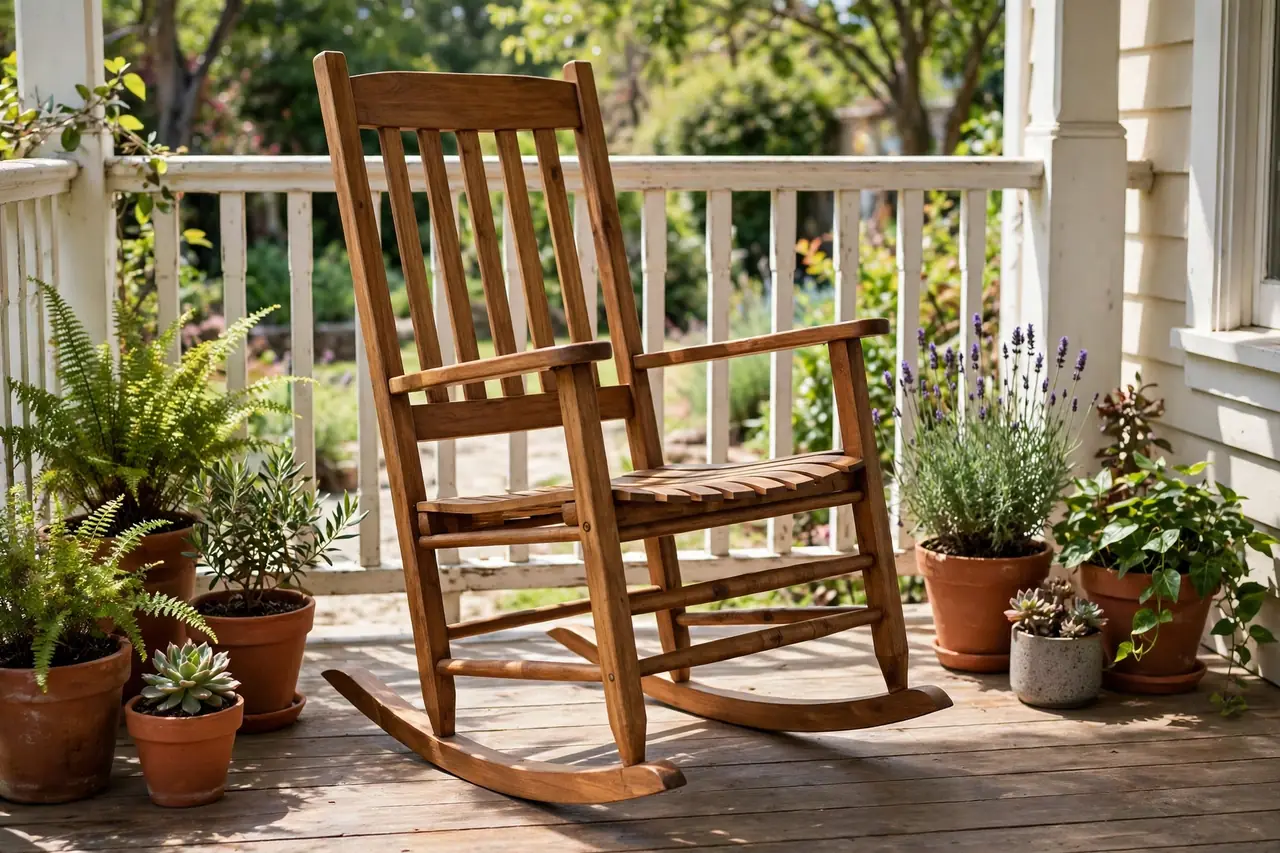
Rockers come in four kinds. The traditional porch rocker is a fixed wooden or HDPE chair with curved runners, heavy, silent, and built to stay in one spot for decades. The folding rocker collapses flat for camping and tailgating, weighs 10 to 14 pounds, and rocks on a spring or a folding frame. The oversized rocker is built for big and tall users, with a wider seat, a taller back, and a 400-pound capacity. The bistro rocker set pairs two small rocking chairs with a table for a balcony or a small patio.
The motion matters more than the look. A good rocker moves smoothly through its arc without squeaking, tipping, or needing a push to keep going, and it stops gently at the end of the arc instead of jerking. A cheap rocker squeaks in six months, wobbles on uneven boards, and tips backward when you lean. Test the motion before you test the price.
A rocker is a motion first and a chair second. If the rock feels wrong, the chair is wrong.
What Material Is Best for an Outdoor Rocking Chair?
HDPE, high-density polyethylene, is the best all-around material for an outdoor rocking chair, because it resists sun, salt air, rain, and snow, and it will not splinter, rot, crack, or peel. For covered porches where maintenance is not an issue, real wood like teak or eucalyptus is a premium alternative, and PE rattan wicker is the best wicker choice for outdoor use.
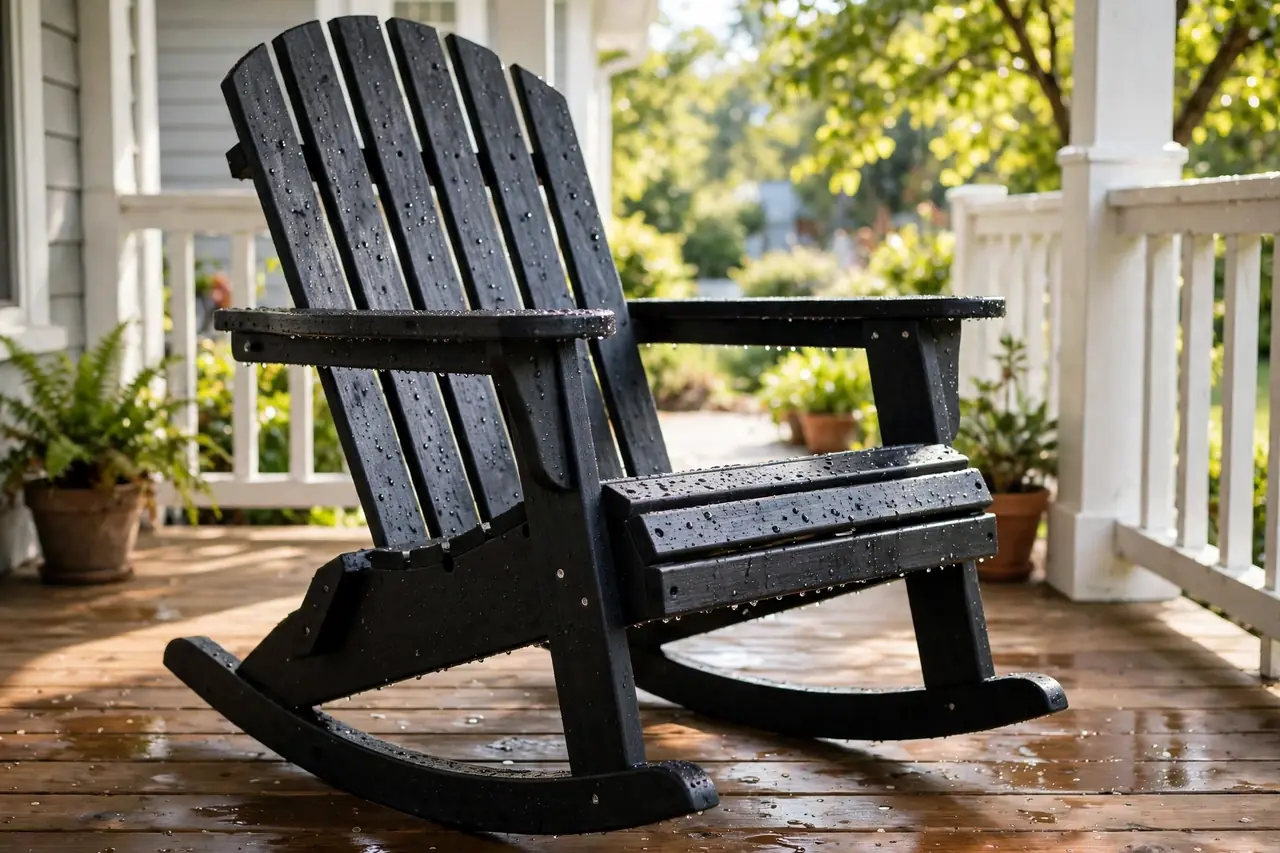
HDPE is recycled plastic molded into thick boards that mimic painted wood, and it is the single best material for a porch rocker that lives outside year-round. POLYWOOD, GREENVINES, SERWALL, and Kingyes all use HDPE for their premium porch rockers, and the 20-year POLYWOOD warranty is the proof point. HDPE is the right choice if your rocker will live outside year-round or if you live within 10 miles of the coast, where salt air destroys other materials. Read the full material comparison at Who Is McAfee’s 12 best outdoor rocking chairs, tested.
Real wood looks and feels premium, but it requires annual oiling or sealing to prevent weathering. Left untreated, wood splinters, warps, and grays. Wood is the right choice for covered porches where you want natural material and you are willing to maintain it. Teak is the best wood for a rocker, eucalyptus is the value wood, and cedar is the lightest wood but dents easily.
Powder-coated steel and aluminum work for portable rockers but can get hot in direct sun, and steel rusts the moment the coating chips. PE rattan wicker gives a soft woven look and handles weather well, but check the frame inside: aluminum lasts, steel rusts silently. Cheap plastic rockers are the ones to avoid entirely: they crack in the sun, flex under weight, and tip easily.
HDPE for year-round outside, teak for a covered porch, never cheap plastic. The material decides whether the rocker lasts 20 years or two seasons.
How Much Room Does an Outdoor Rocker Chair Need?
An outdoor rocker chair needs at least 3 feet of clear space behind it for a safe rocking motion, plus 2 feet on each side, because the runners sweep backward as you rock and the chair tips if the arc hits a wall, a railing, or a planter. A standard rocker is about 26 inches wide and 33 to 37 inches deep, and the full rocking footprint is roughly 3 by 4 feet per chair.
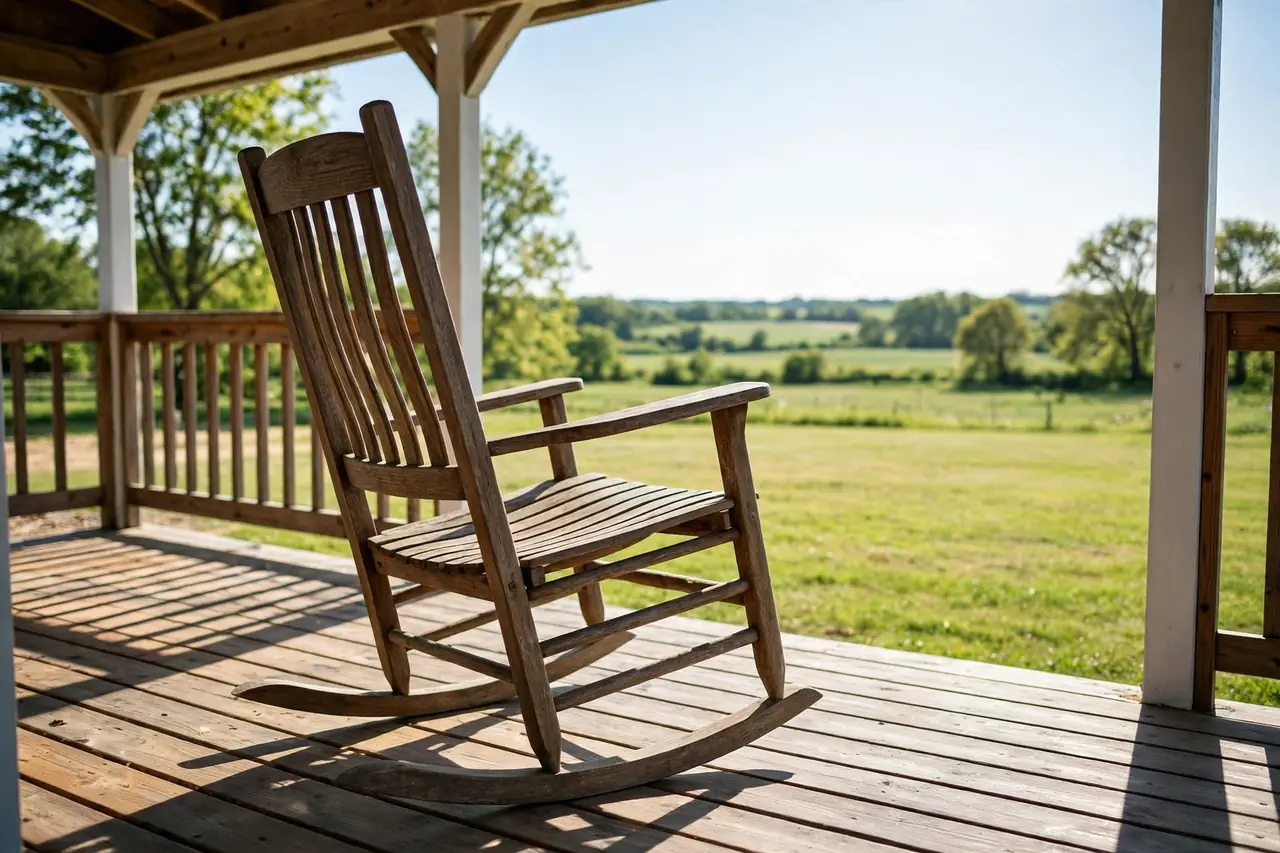
This is the measurement from the intro, and it is the one most buyers skip. A rocker placed 12 inches from the wall rocks twice and stops, because the runners hit the wall on the backswing. A rocker placed 3 feet from the wall rocks freely all evening. Oversized rockers need even more: a 30-inch-wide oversized rocker with a 37-inch depth needs at least 3 feet behind it and a full 4 feet of width, or the arms hit the furniture beside it.
Small rockers need less. A compact rocker under 26 inches wide and 30 inches deep fits a balcony under 40 square feet, and a folding rocker needs only its folded footprint when it is not in use. But even a small rocker needs the 3-foot arc behind it while it rocks, so measure the arc, not the chair. Place a level against the back of the chair and measure how far it moves during a full rock: that distance, plus a few inches of margin, is the clearance you must leave.
Rockers also demand flat, firm ground. They wobble on gravel, slope, and decking with gaps wider than an eighth of an inch, and they tip on soft grass. Put a rocker on a porch, a patio, or a deck, and never on a lawn unless the runners sit on a flat board or a paver.
Three feet behind, two feet beside, flat ground underneath. The arc decides the spot, not the chair.
How Much Does an Outdoor Rocker Chair Cost?
An outdoor rocker chair costs $80 to $680, checked November 16, 2026, with most good porch rockers landing between $150 and $450. Folding camp rockers run $80 to $150, mid-tier HDPE or marine-grade aluminum rockers run $220 to $320, and premium teak or recycled HDPE rockers with reinforced joints run $320 to $450 and more.
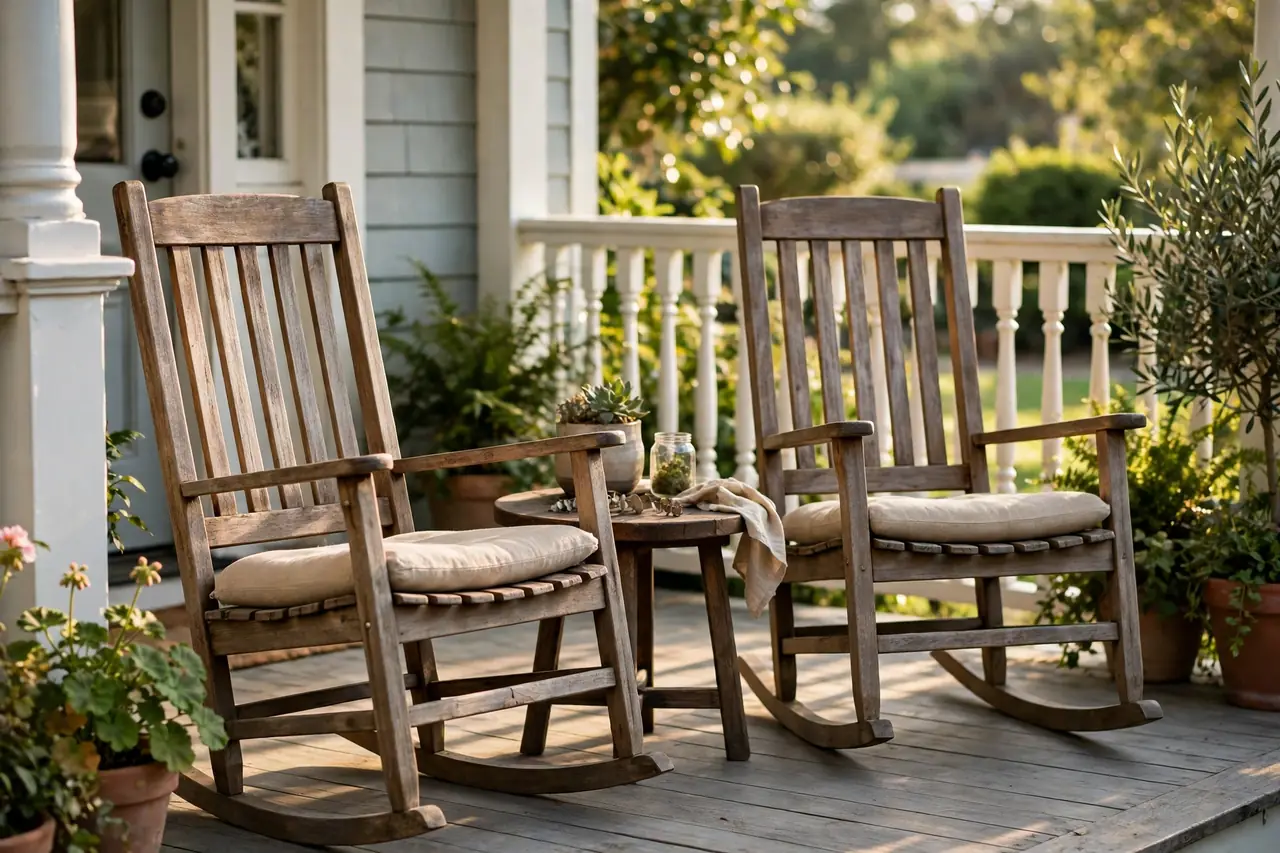
Real prices show the ladder. The POLYWOOD Presidential Rocking Chair lists at $199 on Amazon in the HomeTips Daily roundup, $229 to $249 at POLYWOOD’s own store, and $239 to $340 at Patio Productions, with a 325-pound capacity and a 20-year residential warranty. The POLYWOOD Chinoiserie rocking chair lists at $429 to $659. A GCI Freestyle Rocker XL, the 400-pound folding camp rocker, lists in the $100 to $150 range, and a GREENVINES oversized HDPE set of two lists in the $400 to $600 range. See the full price comparison at HomeTips Daily’s 10 best outdoor rocking chairs of 2026.
Price tracks material and engineering, not looks. A $150 to $220 entry-tier aluminum or resin wicker rocker gives two to three seasons of reliable use. A $220 to $320 mid-tier HDPE rocker gives a frame warranty of five years or more and a rocker motion that stays smooth through seasonal expansion. A $320 to $450 premium teak or recycled HDPE rocker gives reinforced rocker joints, UV-stabilized cushions, and often a lifetime hinge warranty. Spending $280 to $340 captures about 85 percent of the durability gains, and you need the premium tier only if you live in salt air or monsoon climates.
Weight capacity is the number that separates honest rockers from cheap ones. Most standard rockers support 250 to 300 pounds, heavier-duty models go up to 400 or 500 pounds, and oversized rockers are rated at 400 pounds or more. A 250-pound-rated chair that weighs only 22 pounds likely uses thin-wall tubing, so aim for a chair that weighs 30 pounds or more, even if the rating is lower.
Budget $220 to $340 for the real value zone. Under $150, you are renting the rocker, not buying it.
Outdoor Rocker Chair Prices and Materials at a Glance
The best-value outdoor rocker chair is the POLYWOOD Presidential at $199 to $340, because it holds 325 pounds, carries a 20-year warranty, weighs 37 pounds so it feels planted but moves easily, and costs less per year than any other rocker on the market. Go oversized HDPE only if you need a 400-pound capacity, and go teak only if the rocker lives under cover and you enjoy the oiling.
| Rocker type | Material | Weight capacity | Typical price |
|---|---|---|---|
| POLYWOOD Presidential | HDPE | 325 lbs | $199–$340 |
| Folding camp rocker | Steel + mesh | 250–400 lbs | $80–$150 |
| Oversized HDPE rocker | HDPE | 400 lbs | $300–$450 |
| Teak porch rocker | Solid teak | 300 lbs | $380–$680 |
| Wicker bistro rocker set | PE rattan | 250 lbs | $150–$300 |
Prices are Amazon, POLYWOOD, and Patio Productions listings checked November 16, 2026. The table’s lesson is that the $199-to-$340 HDPE rocker is the cheapest rocker per year you can buy, because a 20-year warranty means you buy it once. But the cheapest rocker on paper can still be the wrong rocker in practice, and the next section is about the mistake that turns a good rocker into a squeaking regret.
What Most People Get Wrong About Outdoor Rocker Chairs
Most people get outdoor rocker chairs wrong in three ways: they buy a rocker for a porch that cannot fit its arc, they buy a folding rocker for daily porch use, and they trust the weight rating instead of the chair’s weight. All three mistakes are cheap to avoid and expensive to learn.
The arc mistake is the big one. A rocker needs 3 feet behind it, and buyers measure the chair, not the arc. The rocker arrives, it hits the wall on the second rock, and it ends up facing the wall or folded in the garage. Measure the arc first, and buy the rocker only if the porch gives it room to move.
The folding mistake is the daily-use one. Folding rockers are brilliant for camping, because they fold flat and weigh 10 pounds, but their hinges wear faster, their motion feels less fluid, and their stability drops above 200 pounds. If you rock every morning, buy a fixed-base rocker with built-in curved runners: silent, stable, and built to stay in one spot for decades.
The weight-rating mistake is the quiet one. A 250-pound rating on a 22-pound chair means thin-wall tubing that flexes every time you sit down, and that flexing, not rust, is what cracks the frame. Aim for a chair that weighs 30 pounds or more, even if the rating is lower, because the weight tells you how much material is actually in the chair.
Measure the arc, buy fixed for daily use, trust the scale over the rating. The rock decides the chair, not the box.
How to Care for an Outdoor Rocker Chair
Care for an outdoor rocker chair with a 15-minute routine each season: hose off the frame, scrub with mild soapy water, rinse, and let it dry fully, then check the runners and joints for looseness and tighten what has worked free. HDPE needs nothing more, teak needs one oil coat a year, and steel needs a yearly check for paint chips before rust starts.
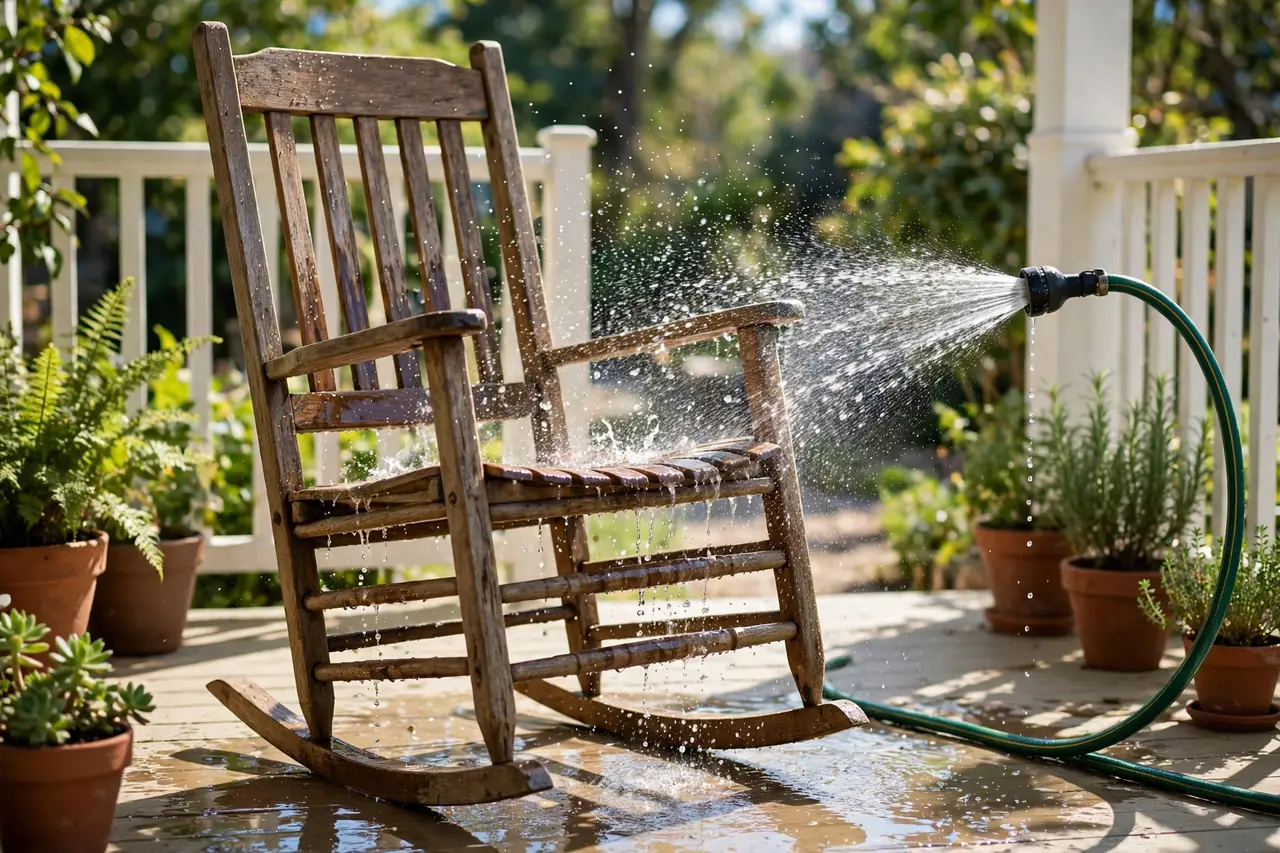
HDPE rockers are the easiest chairs on the porch: a hose and a soft brush, once a season, and they look new for 20 years. Teak rockers need a wash along the grain and one oil coat a year if you want the honey color, or nothing at all if you like the silver-gray patina. Wicker rockers need a brush through the weave to clear trapped dirt, and steel rockers need touch-up paint on any chip, because a single chip starts rust that spreads under the coating.
The runners deserve their own check. Rockers fail at the joints, not the seat, so tighten the bolts where the runners meet the legs, and check that the runners sit flat on the ground. A rocker that wobbles usually has a loose runner bolt, not a broken runner. If the rocker squeaks, a drop of outdoor lubricant on the joint, not on the runner, fixes it in seconds.
Winter storage is simple. A fixed HDPE rocker can stay outside all winter under a breathable cover, and a teak rocker can stay out too if you clean it first. Folding rockers fold flat and hang in the shed. Our how to store outdoor furniture guide covers the full winter routine, and if your rocker needs a cushion, our replacement cushions for patio furniture guide shows how to get the fit right. For the porch itself, our small patio decorating ideas guide shows how to finish the space, and our outdoor bench with storage guide covers the bench that sits beside the rockers.
Wash, tighten the runners, cover in winter. Fifteen minutes a season is the whole job.
Related Guides
If you are planning the whole porch or patio, these guides pick up where this one leaves off:
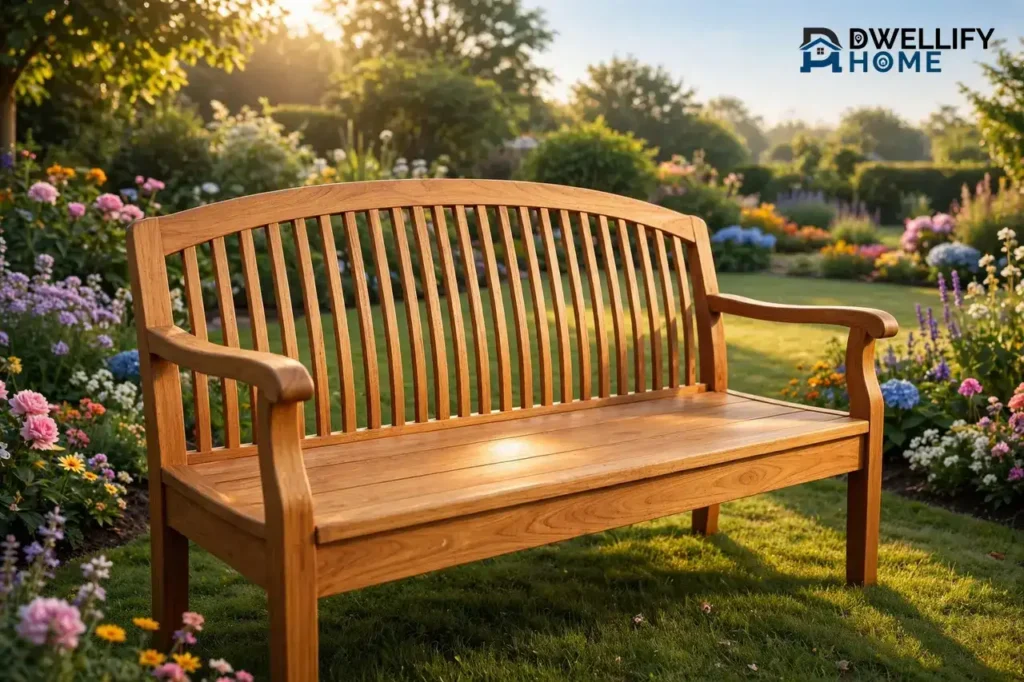
- Outdoor Bench With Storage — a bench that seats two beside your rockers and hides the clutter.
- Outdoor Sectional Couch — deep seating for the lounge corner beside the rockers.
- Replacement Cushions for Patio Furniture — get the fit, fabric, and price right the first time.
- How to Store Outdoor Furniture — keep it clean, dry, and ready for spring.
- Small Patio Decorating Ideas — finish the porch once the rockers fit.
- Balcony Cover Ideas — stay dry and cool on a small balcony.
- Patio Garden — pair your rockers with plants that earn their place.
- Patio String Lights Ideas — finish the evening glow around the porch.
- How to Choose Outdoor Patio Furniture: 5 Decisions That Save You From a $1,000 Regret — five decisions that keep a patio set from becoming a $1,000 regret.
Frequently Asked Questions
What is the most comfortable outdoor rocking chair?
The most comfortable outdoor rocking chair depends on your body and posture. For deep reclining and lumbar support, the SERWALL HDPE Rocker with its ergonomic curved back is a top pick, and for portable comfort, the GCI Freestyle Rocker XL has a higher and broader backrest plus a 400-pound capacity.
What material is best for an outdoor rocking chair?
HDPE, high-density polyethylene, is the best all-around material for an outdoor rocking chair. It resists sun, salt air, rain, and snow, and it will not splinter, rot, crack, or peel. For covered porches, real wood like teak or eucalyptus is a premium alternative.
Who makes the highest quality outdoor rocking chairs?
POLYWOOD is widely regarded as the highest quality outdoor rocking chair brand, with HDPE lumber, made in the USA, and a 20-year residential warranty. GCI Outdoor is the top brand for portable and camping rockers, and GREENVINES and Kingyes are strong performers in the value tier.
How long do outdoor rocking chairs last?
An HDPE outdoor rocking chair like the POLYWOOD Presidential is rated to last 20 or more years with a 20-year residential warranty. GCI folding rockers typically last 5 to 10 years, real wood rockers last 5 to 15 years with annual oiling, and PE wicker lasts 3 to 7 years.
Can outdoor rocking chairs get wet?
Yes, most outdoor rocking chairs are designed to get wet. HDPE is fully waterproof, powder-coated steel handles rain without rusting, and PE wicker is all-weather safe. Real wood and natural rattan should be protected or treated if left out in rain, and cushions should come inside during heavy rain.
What is the best outdoor rocking chair for the money?
The POLYWOOD Presidential is the best overall value for an outdoor rocking chair because its 20-year warranty amortizes the cost over decades. For under $100, the Amazon Basics Folding Rocker has the best balance of comfort, weight capacity, and zero assembly.
Disclaimer: This guide gives general advice for choosing outdoor rocking chairs, not professional design or structural instructions. Check weight limits before use, keep rockers on a level surface, leave 3 feet of clearance behind the chair, and move lightweight rockers inside before strong winds.
Measure the arc, buy HDPE or teak, and spend $220 to $340 for the rocker you will still love in twenty years. Do that, and the rocker becomes the seat where morning coffee tastes better and evening conversations last longer than anyone planned.