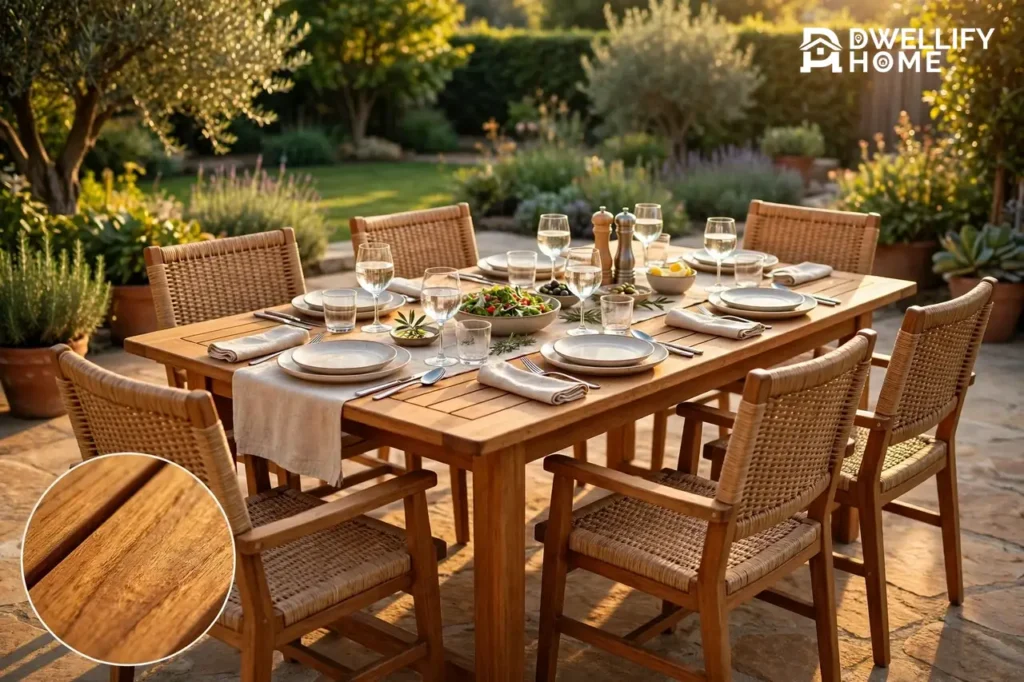
An outdoor dining table and chairs set is a matched table and chairs built to eat outside, and the size rule that decides whether it works is 24 inches of table edge per person: six people need a 72-inch rectangular table or a 54 to 60 inch round table, with 36 inches of clearance behind every chair. Get that right and dinner feels easy; get it wrong by six inches and elbows bump all evening. This guide covers sizing for 4, 6, and 8 people, materials, real prices, and the chair mistakes that ruin a good table.
One sizing mistake wastes more money than any other, and it happens before the set ever leaves the store. It sits in the mistakes section below, and most buyers make it because the table looks big enough in the showroom. Before that, you need the seat-count decision right, because no beautiful table fixes a table that seats four when six show up.
What Is an Outdoor Dining Table and Chairs Set?
An outdoor dining table and chairs set is a table and matching chairs sold together for eating outside, built from weather-resistant materials like teak, powder-coated aluminum, resin wicker, or HDPE, at a standard dining height of 28 to 30 inches. Sets come in 3-piece, 5-piece, and 7-piece configurations, and the piece count counts the table plus the chairs.
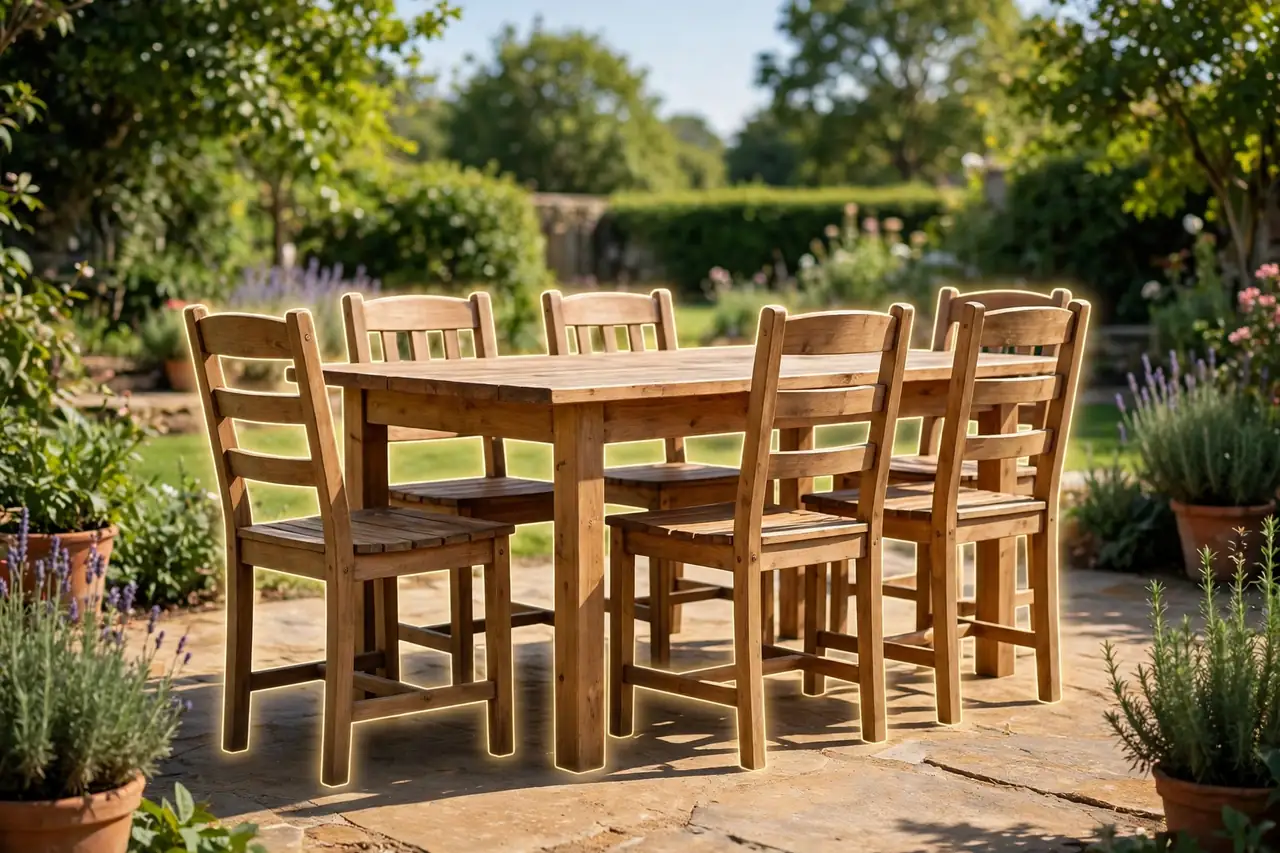
The piece count is the first thing to decode. A 3-piece set is usually a small table with two chairs, which suits a balcony or a two-person household. A 5-piece set is usually a table with four chairs, which suits a family of four. A 7-piece set is usually a table with six chairs, which is the most popular choice for families of four to six who host regularly, because it seats six without buying extra chairs. Count the seats, not the pieces: a “7-piece set” with a bench instead of two chairs seats differently than one with six chairs.
A matched set has one real advantage over mixing a table and chairs separately: the heights line up. A dining table at 28 to 30 inches needs chairs with a seat height of 16 to 18 inches, and even a 1-inch difference between chairs causes discomfort over a long dinner. Matched sets also guarantee the style matches and the chairs fit under the table when not in use, which matters on a small patio. If you mix brands, measure the chair seat height and the table’s leg clearance before you buy, because a chair that does not slide under the table eats a foot of patio space.
Sets also differ by shape. Rectangular tables seat the most people per foot and suit long patios, round tables suit small patios because there are no corners in the walking path, and square tables suit four people on a balcony. Some sets include an umbrella hole for shade, some have extendable tables that grow from 48 inches to 79 inches when guests arrive, and some pair the table with a bench on one side for flexible seating. If your patio also needs a lounge corner, our outdoor sectional couch guide shows how to place deep seating beside a dining set without crowding it.
Count seats, not pieces. The piece count hides the bench, and the bench changes everything.
What Size Table Do You Need for 4, 6, or 8 People?
Plan 24 inches of table edge per person: four people need a 48-inch round table or a 60-inch rectangular table, six people need a 60-inch round table or a 72-inch rectangular table, and eight people need a 72-inch round table or an 84 to 96 inch rectangular table. Leave 36 inches of clearance from the table edge to any wall or obstacle for chair pull-out and walking.
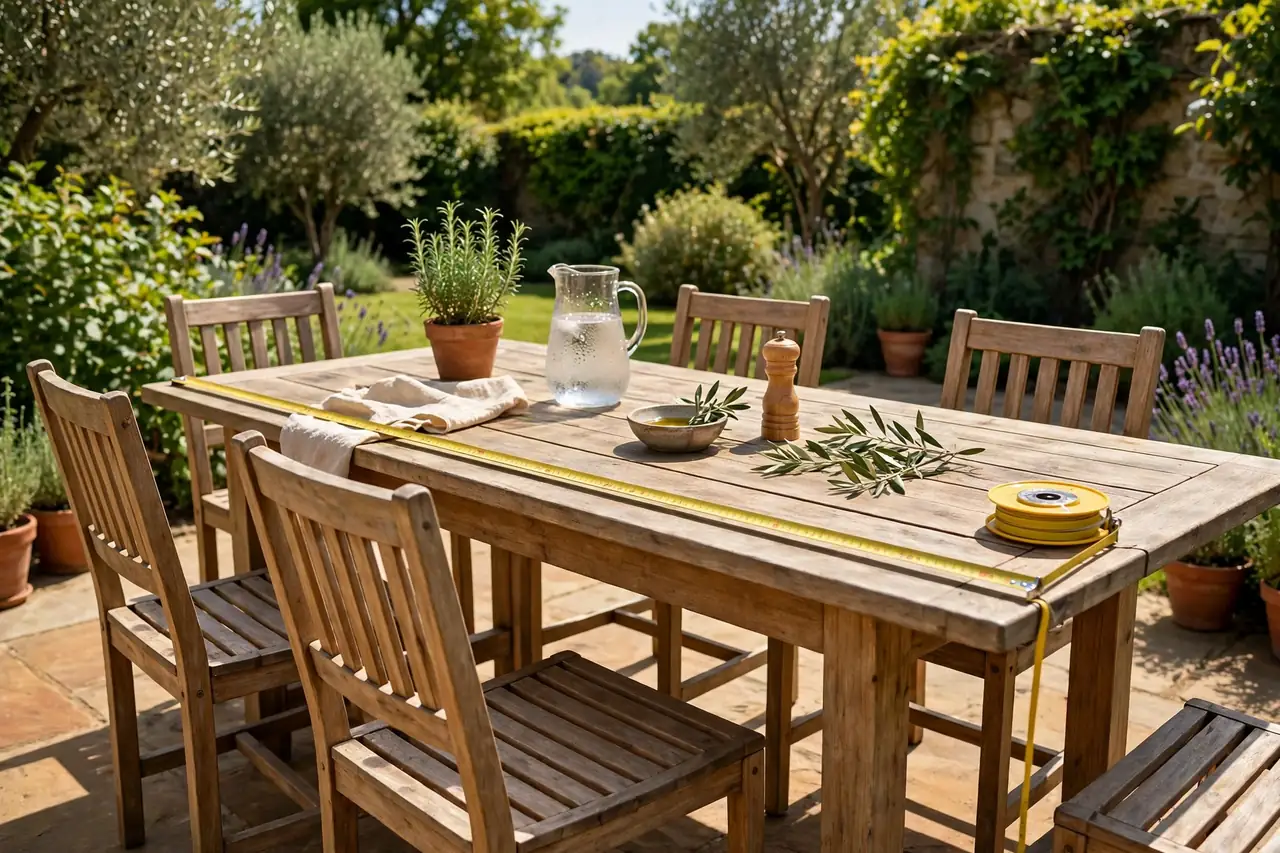
Size from the occupied chair, not the tabletop, because a 36 by 72 inch rectangle can swell to a 9 by 11 foot footprint once six chairs slide back. A 48-inch round table seats four, a 54-inch round seats six but feels tight with serving dishes, and a 60-inch round seats six comfortably with slim chairs. A 72-inch rectangular table seats six comfortably, an 84-inch seats eight, and a 36 by 84 inch rectangle seats six comfortably and eight with narrow chairs. Below 60 inches long, a table feels cramped at four seats.
Width matters as much as length. A rectangular table 36 to 42 inches wide gives room for centerpieces and serving platters in the middle, while a table narrower than 36 inches feels cramped once plates and glasses land. Round tables need a diameter of 54 to 60 inches for six adults, with 60 inches as the comfort size for family-style serving with platters, salad bowls, and bread baskets. If your patio is tighter and you prioritize easy movement, 54 inches is often the most practical.
Clearance is the number that breaks most patios. Leave 36 inches clear on every side for chair pullback, and widen to 42 inches if that side doubles as the path to a grill, door, or steps. A rectangular table for six needs a patio at least 2.5 meters by 1.8 meters to fit the table and comfortable chair movement, and a round table for six needs a 9-foot circle marked out on the floor before you buy. Our patio dining set guide covers sizing a table to your patio in detail, and our outdoor furniture for small spaces guide shows seven layouts where a right-sized set earns its footprint.
Table sizes at a glance
| People | Rectangular table | Round table | Clearance needed |
|---|---|---|---|
| 2 | 36–48 inches long | 30–36 inches | 36 inches all sides |
| 4 | 60 inches long | 48 inches | 36 inches all sides |
| 6 | 72 inches long | 54–60 inches | 36–42 inches all sides |
| 8 | 84–96 inches long | 72 inches | 42 inches all sides |
Size ranges in this table come from the dining guides at Ovios Home, Re-Design, and Outdoor Furniture Atlas, checked November 16, 2026. The rule behind every row is the same: 24 inches of edge per person minimum, 28 to 30 inches for elbows and serving platters. See real set dimensions at Tiny Space Picks’ outdoor table set roundup, which states full dimensions for the sets that actually list them, including a 67-inch HDPE set for six.
Size from the occupied chair. The tabletop is the small part of the footprint.
Which Material Lasts Longest Outdoors?
Teak and powder-coated aluminum last longest outdoors: teak lasts 20 years or more with minimal care, and aluminum lasts 10 to 15 years with almost no care at all. Resin wicker lasts 5 to 10 years and suits covered areas, while HDPE poly lumber lasts 10 to 15 years and never needs paint or oil.
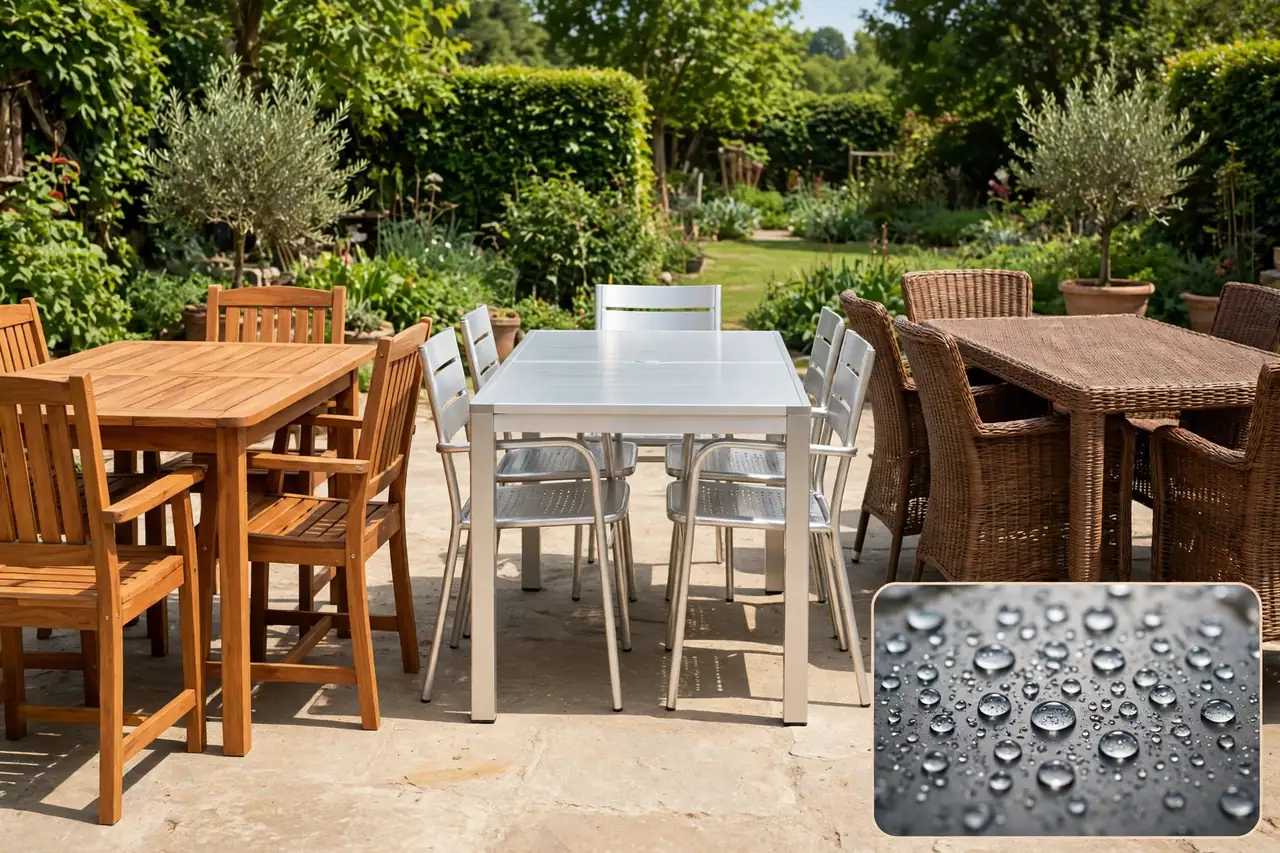
Material decides whether your set lasts five summers or twenty-five, so here is the honest comparison in one place. Guess which material costs the least per year: the $3,500 teak table that lasts twenty years, or the $600 aluminum table that lasts twelve? The answer is in the table, and it is closer than most buyers think.
Best outdoor dining set materials at a glance
| Material | Durability | Maintenance | Price, 6-seat set |
|---|---|---|---|
| Teak | Excellent (20+ years) | Low (occasional oiling) | $1,500–$3,500 |
| Powder-coated aluminum | Very good (10–15 years) | Very low (wipe clean) | $600–$1,800 |
| Resin wicker | Good (5–10 years) | Moderate (clean regularly) | $500–$1,500 |
| HDPE poly lumber | Very good (10–15 years) | Very low (hose clean) | $800–$2,000 |
| Wrought iron / steel | Good (8–12 years) | Moderate (touch-up paint) | $800–$2,500 |
Price and durability ranges in this table come from the round dining table guide at Outdoor Furniture Atlas, checked November 16, 2026. Teak is the best all-around material because it resists moisture, develops a handsome gray patina, and feels substantial without a fragile finish. Aluminum wins when the table needs to move often or sit near a pool, because it is light and rust-proof. Read the full material breakdown at Outdoor Furniture Atlas’s round dining table guide.
Wood needs the most honest look. Teak is the gold standard for outdoor wood because of its natural oils and resistance to rot and insects, and a round teak table for six offers warmth and timeless style. Acacia is the budget wood: it looks like teak at half the price, but it may warp if untreated, and it needs annual oiling. Finished pine and untreated softwood fail within a season, so avoid them no matter how cheap the set looks.
Metal and resin suit different patios. Powder-coated aluminum is lightweight, rust-proof, and ideal for windy areas or households that rearrange often, but thin frames can feel cheap, so check for welded frames and adjustable feet. Resin wicker adds texture and warmth and suits covered areas, but it needs regular cleaning and fades in full sun without UV stabilizers. HDPE poly lumber is the quiet winner for families: it never rots, never needs paint, and shrugs off spills, though it costs more than aluminum for the same size.
Teak for life, aluminum for ease. Everything else trades a lower price for a yearly habit.
How Much Does an Outdoor Dining Set Cost?
An outdoor dining table and chairs set costs $400 to $3,500, with budget HDPE and aluminum sets for six at $400 to $800, mid-range sets at $800 to $1,500, and premium teak sets at $1,500 to $3,500, all checked November 16, 2026. A quality six-seat set usually runs $600 to $1,200, and an eight-seat set runs $1,000 to $2,500.
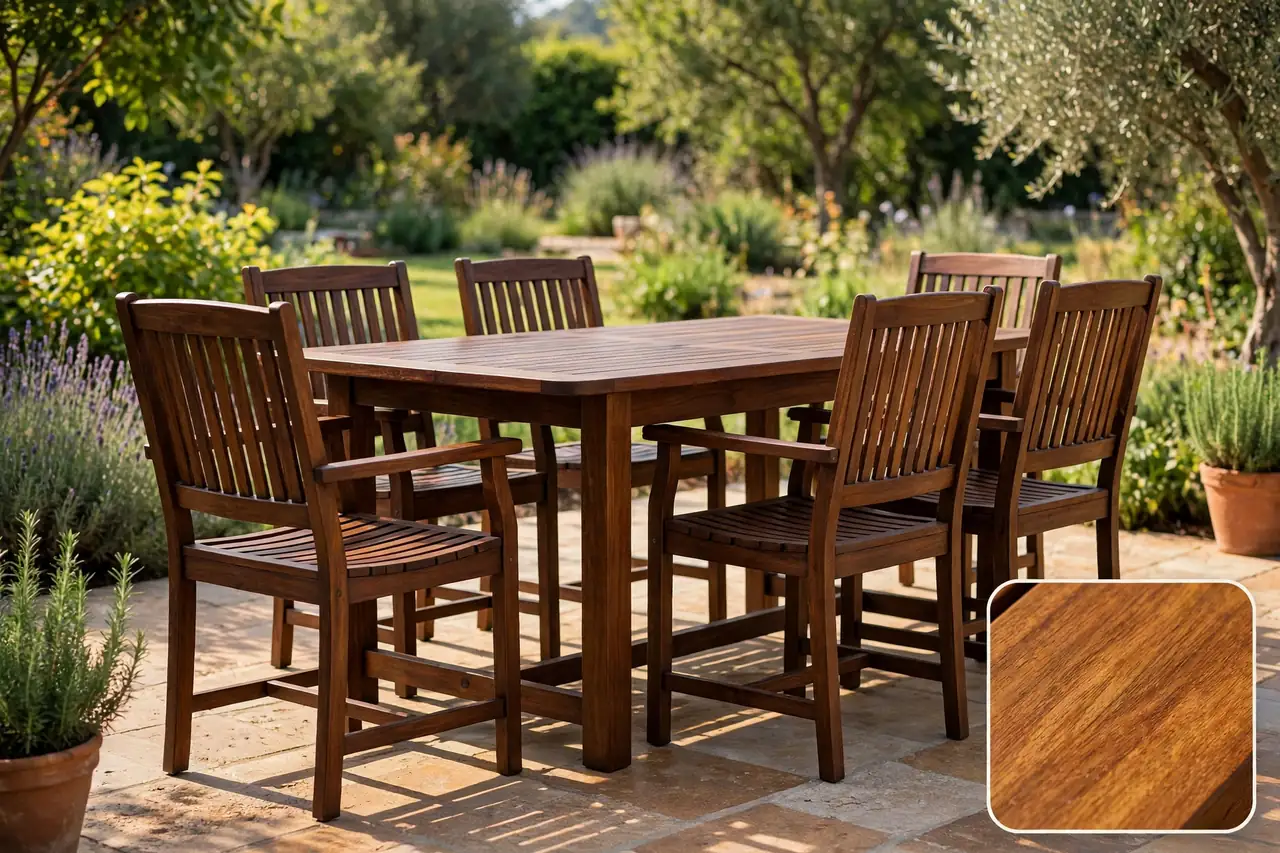
The price tracks the material table above, and the seat count matters as much as the material. A three-piece bistro set for two can cost $200 to $500, a five-piece set for four runs $400 to $1,200, and a seven-piece set for six runs $600 to $3,500. Extendable tables cost more: a table that grows from 48 inches to 79 inches, like the Vexwalx aluminum set for six, costs more than a fixed table the same size, but it replaces two tables when guests arrive.
Real listings show the spread. The SERWALL 7-piece HDPE dining set for six, with a 67-inch table and an umbrella hole, is the most complete budget dining option in its roundup, while a solid teak round table for six alone runs $1,500 to $3,500 before chairs. The gap between a $600 set and a $2,000 set is usually the frame: welded aluminum and mortise-and-tenon wood cost more to build and last far longer than bolted steel and pocket screws.
Three things push the price up beyond the material and the seat count. An umbrella hole and a matching umbrella add $100 to $300. Cushions add $100 to $400, and solution-dyed acrylic cushions cost more than polyester ones but last years longer. And a matching bench instead of two chairs costs less per seat but changes the seating: benches suit kids and flexible groups, while chairs suit long dinners. See the wood-set buying guide at Orange Casual’s wood outdoor dining set guide for how acacia, teak, and eucalyptus compare on price and care.
Compare the set, not the table. Chairs, cushions, and an umbrella are half the purchase.
What Most People Get Wrong About Dining Sets
Most people get outdoor dining sets wrong in three ways: they buy a table that seats four when six show up, they mix chairs with different seat heights, and they buy a set that does not fit through the gate. All three mistakes cost money, and the first one is the most common.
The too-small mistake is the big one. A 48-inch table marketed as seating six typically seats four with occasional extra seats, and six adults with serving dishes need 54 to 60 inches round or 72 inches rectangular. The fix is the 24-inch rule: count your usual dinner party, add two for guests, and buy the table that seats that number. The best outdoor dining table seats two more than your typical dinner count, because the night six people show up is the night the small table fails.
The mixed-chair mistake runs the other way: even a 1-inch difference between chair heights causes discomfort over a long dinner, and chairs from different brands rarely match. If you add chairs to a set later, buy the same model from the same maker, and check that the new chairs slide under the table the same way. Armchairs belong only at the heads of the table when space is tight: they are more comfortable for long periods, but they take up more width, so use armless chairs along the sides.
The gate mistake is the quiet killer. Most sets arrive in large boxes, and a table that fits your patio may not fit through your gate, your door, or your stairwell. Measure the doorway and the delivery path before you order, not after the box arrives. A table that needs assembly can come through in pieces, but a welded one-piece table cannot, and that is a return you do not want.
Buy for the biggest dinner, not the usual one. Two extra seats cost less than a second table.
How to Choose Chairs That Match Your Table
Choose dining chairs by matching three numbers to your table: seat height 16 to 18 inches for a 28 to 30 inch table, seat width at least 20 inches, and a weight capacity of at least 250 pounds. Then sit in the chair for a full minute, because a chair that feels fine for ten seconds can feel like a ledge after a two-hour dinner.
Start with arms versus no arms. Armchairs are more comfortable for long dinners and give guests somewhere to rest their elbows, but they take up more width, so use them only at the heads of the table when space is tight. Armless chairs slide fully under the table, save space, and let you fit an extra chair when guests arrive. High-back chairs provide better support for a full dinner, while slightly contoured seats feel better if you are not using thick cushions.
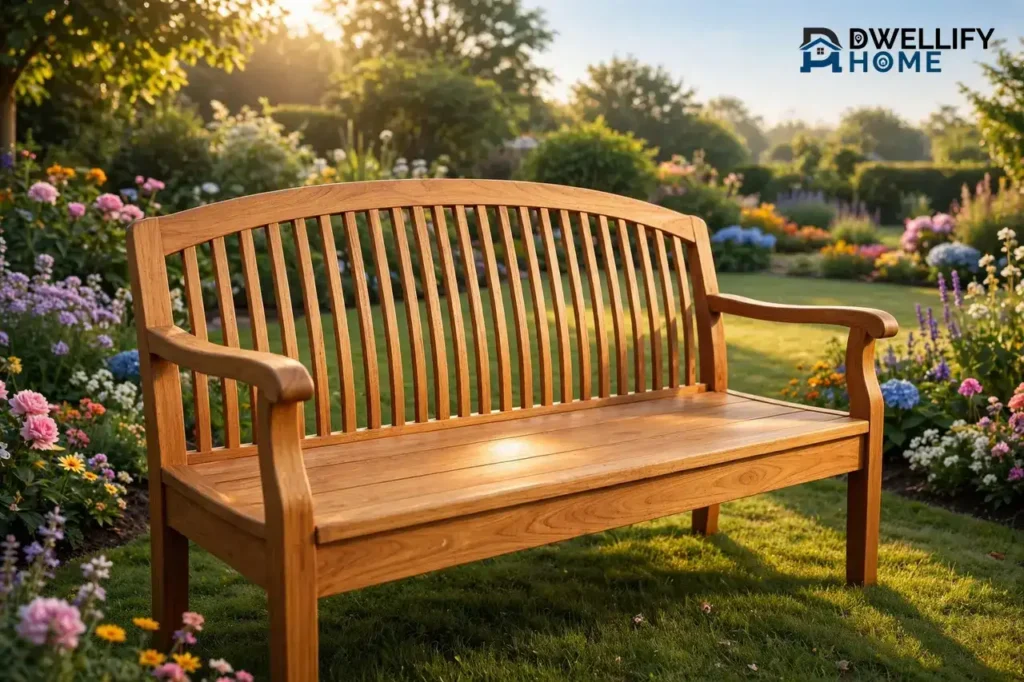
Then check the chair’s own specs. Stackable chairs save storage space between meals, and they suit patios where the dining set shares space with a lounge area. Cushions should use UV-resistant, water-repellent fabric, and quick-dry foam if they will live outside. If the cushions on your old set are the part that failed, our replacement cushions for patio furniture guide shows how to get the fit and fabric right. A bench on one side adds flexible seating for kids and extra guests, and our outdoor bench with storage guide shows how a bench can also hide cushions and covers.
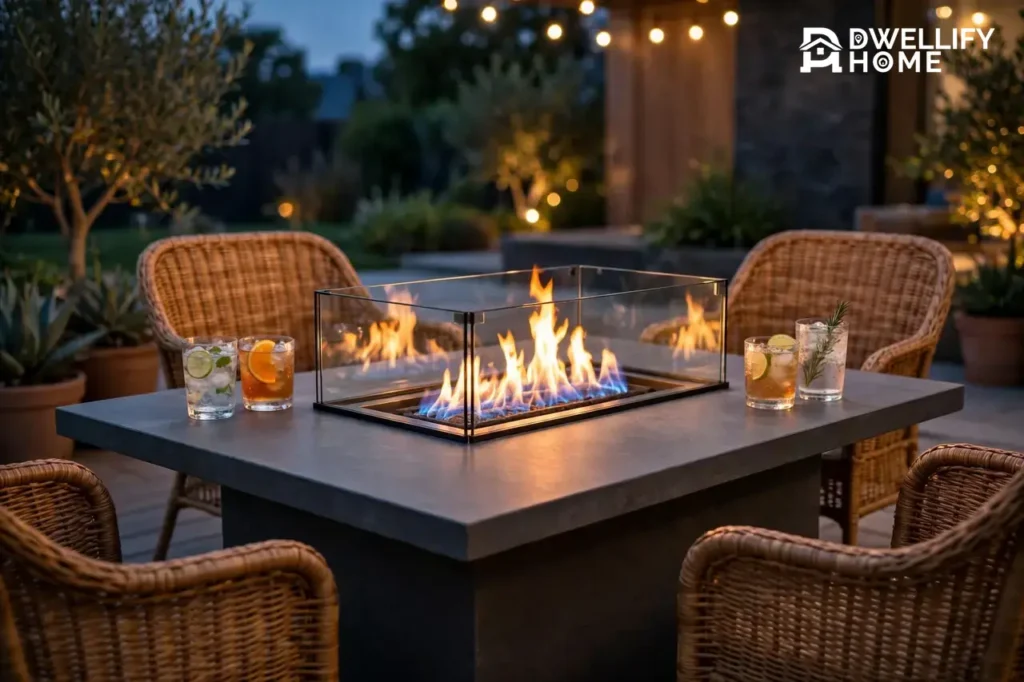
Test the chairs the way dinner tests them. Sit, lean back, stand up, and push the chair in: it should slide under the table without catching the apron, and it should not wobble on your patio pavers. Check the feet for adjustable glides, because a chair that rocks on uneven pavers will drive everyone mad by dessert. And if your evenings run late, pair the set with an electric patio heater so dinner does not end when the sun goes down.
Match three numbers, then sit in it. Specs pick the shortlist, but dinner picks the chair.
How to Care for a Dining Set
Care for an outdoor dining set with a weekly wipe, a monthly hardware check, a seasonal deep clean by material, and a cover or storage in winter: wipe the table after every meal, tighten loose bolts monthly, oil wood or touch up metal paint each season, and cover the set or store the chairs through harsh winters.
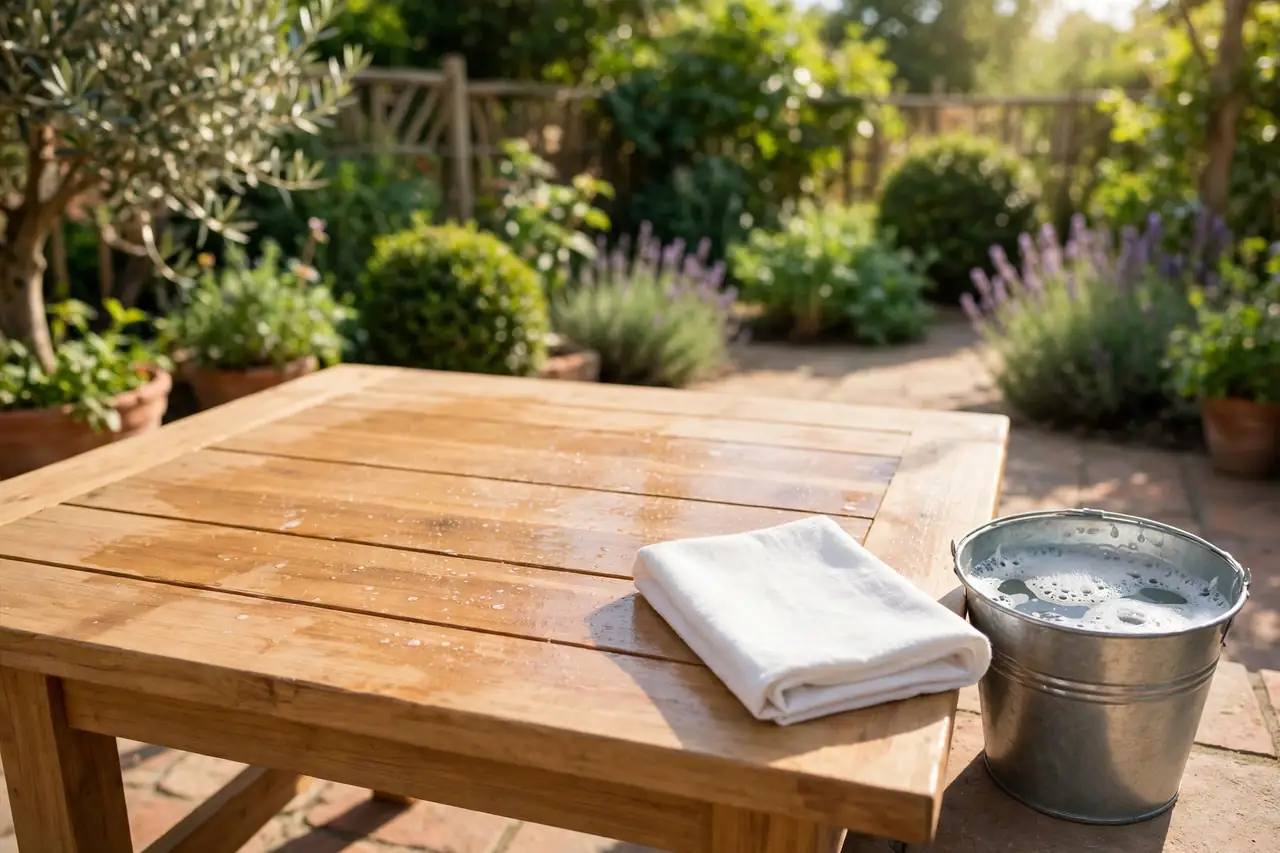
Weekly care takes five minutes. Wipe the table after every meal, because food acids and sunscreen stain wood and stone if left overnight, and brush crumbs out of wicker weave before they attract insects. Monthly, check the hardware: bolts loosen with use, screws chew out, and the frame almost always fails before the tabletop does, so tighten what is loose and replace any rusted fastener with stainless steel.
Seasonal care depends on the material. Oil teak and acacia once or twice a year with a penetrating oil, working along the grain. Touch up metal paint the moment you see a chip, because rust starts at the chip. Scrub resin wicker with a soft brush and soapy water, then rinse and let it dry. Seal porous stone or concrete every year or two. And clean the umbrella hole: debris in the hole holds water against the frame and rusts it from the inside.
Winter care is where sets live or die. Teak and aluminum can stay outside year-round with a breathable cover, but in harsh winters, storing the chairs or covering the whole set is recommended for every material. Never use a plastic tarp: it traps condensation underneath and grows mold exactly where you cannot see it. Follow the full seasonal routine in our how to store outdoor furniture guide, and if the set sits under a patio shade or a pergola, it will last years longer than the same set left in open weather.
Five minutes after dinner beats a new set every three years. Wipe, tighten, oil, cover.
Related Guides
If you are planning the whole outdoor space, these guides pick up where this one leaves off:
- Patio Dining Set — size a table to your patio so everyone fits.
- Outdoor Furniture for Small Spaces — seven layouts that make a tiny patio feel big.
- Outdoor Bench With Storage — sit down, stash the clutter, and reclaim your patio.
- Replacement Cushions for Patio Furniture — get the fit, fabric, and price right the first time.
- How to Store Outdoor Furniture — keep it clean, dry, and ready for spring.
- Outdoor Sectional Couch — deep seating for the lounge corner beside your dining set.
- Electric Patio Heater — stretch dinner past sunset.
- Patio Shade Ideas — keep the dining area cool at noon.
Frequently Asked Questions
What is the best diameter for a round outdoor dining table for 6?
For six adults, a diameter of 60 to 72 inches is ideal. A 60-inch table works well for smaller spaces but may feel tight for larger guests, while a 66–72 inch table provides ample elbow room. Always measure your space and allow 36 inches of clearance around the table.
Is teak or aluminum better for an outdoor dining table?
Both are excellent choices. Teak is naturally weather-resistant, beautiful, and can last decades with minimal care, but it is heavier and more expensive. Aluminum is lightweight, rust-proof, and requires almost no maintenance, making it ideal for windy areas or a modern look.
What chairs work best with a round outdoor dining table?
Almost any outdoor dining chair works well with a round table. Popular choices include woven outdoor dining chairs for texture and warmth, stackable chairs for easy storage, and armchairs at the heads of the table for long dinners, with armless chairs along the sides.
What size outdoor table do I need for 6 or 8 people?
For a group of six, a table should be at least 60 inches long, with 72 inches considered the standard comfortable size. For 8 people, look for a table at least 84 to 96 inches long. A round table at 60 inches fits 6 comfortably, while 72 inches is needed for 8.
How much space should I leave around the table for chairs and walking?
Aim for at least 36 inches (3 feet) of clearance from the table edge to the nearest wall or obstacle. Widen that to 42 inches if that side doubles as a path to a grill, door, or steps, so people can walk behind seated diners.
Disclaimer: This guide gives general advice for choosing and caring for outdoor furniture, not professional safety or structural instructions. Check weight limits before use, measure your delivery path before ordering, and follow the manufacturer’s care instructions for your set.
Count the diners, then buy the table. Twenty-four inches per person, 36 inches of clearance, chairs that match the table height, and a material that matches your weather. Do that, and the set you buy this year is still hosting the big dinners ten summers from now.