How Often Should I Check My Smoke Alarm?
Check your smoke alarm at least once a month by pressing the test button until it sounds. That is the rule from the National Fire Protection Association, and it is the single most important sentence in this guide. A monthly test takes less than a minute per alarm, and it catches the dead battery, the failed sensor, and the disconnected unit before a fire does.
Some fire services, including several in the UK, advise testing weekly, and weekly is never wrong. Monthly is the minimum. Around that monthly test sits a simple calendar: change replaceable batteries once a year, clean the alarm every six months, and replace the whole unit every 10 years. This guide gives you that calendar, the exact test steps, and what each sound means.
The Simple Answer: Once a Month, Once a Year, Once a Decade
The NFPA teaches a rhythm that is easy to remember: once a month, once a year, once a decade. Test once a month. Change the battery once a year. Replace the alarm once a decade. If you remember nothing else from this article, remember that line.
Test once a month by pressing the test button. The NFPA says to test all smoke alarms at least once a month, and the American Red Cross gives the same answer: use the test button and test smoke alarms every month, and if they are not working, change the batteries. A working alarm gives a loud set of three beeps, beep, beep, beep. If it stays silent, change the battery and test again. If it still stays silent, replace the alarm.
Change replaceable batteries once a year. The Red Cross advises replacing batteries at least once a year, and replacing them this often will not hurt. Pick a date you will remember, such as your birthday or the day clocks change, and do every alarm the same day. Alarms with sealed 10-year batteries have no battery to change; when they chirp at end of life, replace the whole unit.
Replace the whole alarm every 10 years. The NFPA states that all smoke alarms must be replaced 10 years after their manufacturing date. Count from the date printed on the back of the unit, not the day you installed it. A ten-year-old alarm can pass the button test and still fail to sense smoke.
How to Test a Smoke Alarm in 60 Seconds
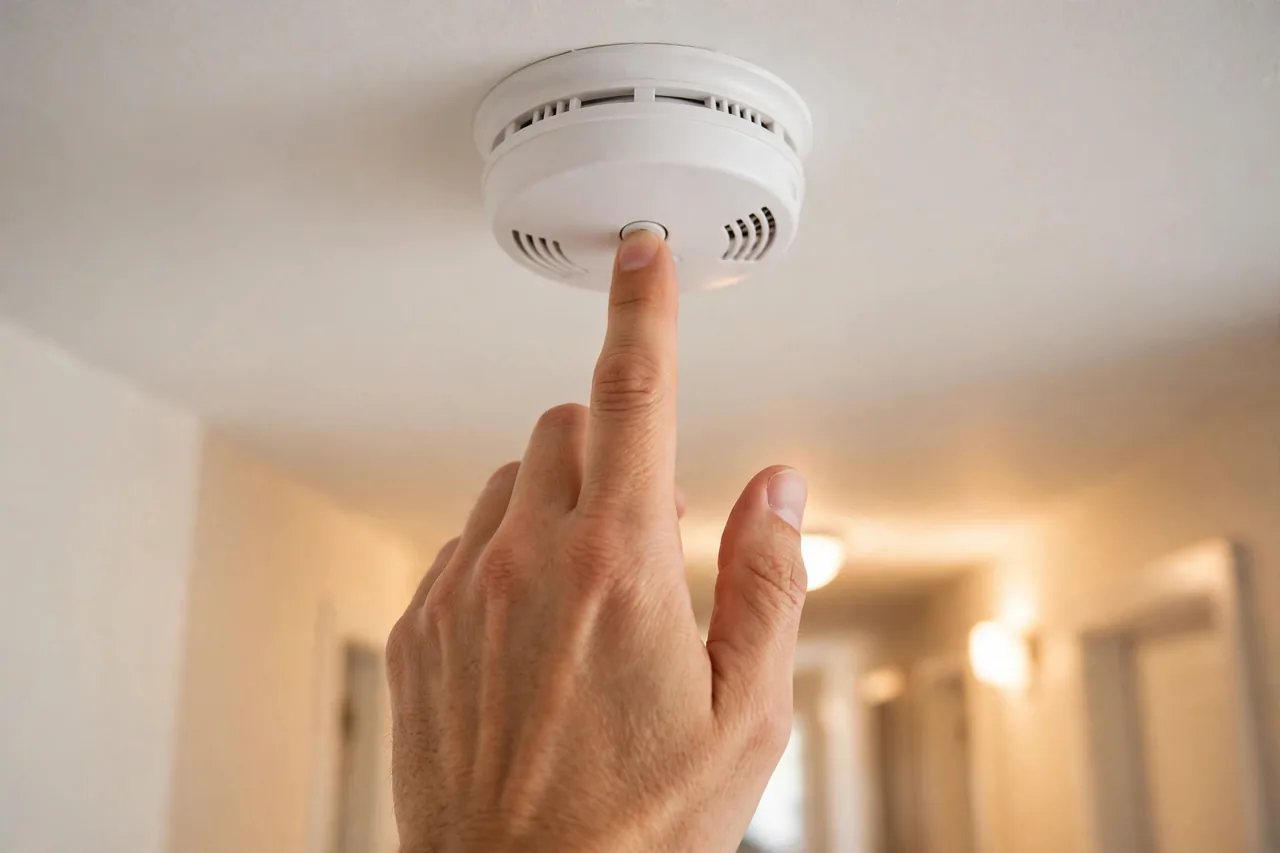
Testing is quick, and doing it right matters more than doing it often. Follow these steps once a month, and you will know for certain that each alarm works.
- Count your alarms first. Walk the house with the NFPA placement rule in mind: one inside every bedroom, one outside each sleeping area, and one on every level including the basement.
- Tell everyone in the house. The test sound is loud on purpose. Warn family members, especially children and pets, so nobody panics.
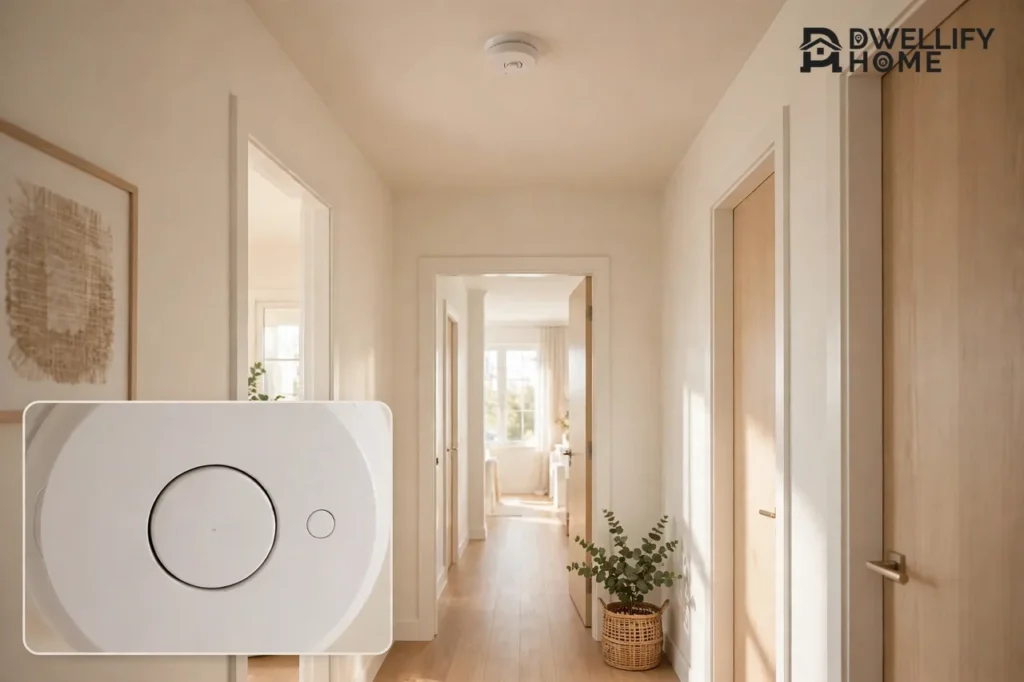
- Press and hold the test button. Hold it until you hear the loud beeps, usually a few seconds. On interconnected alarms, every alarm in the house should sound together.
- Listen for the right sound. A continued set of three loud beeps means the alarm works. A weak sound or silence means a problem.
- Fix a failure the same day. Change the battery and test again. If it still fails, replace the whole alarm. Never leave a failed alarm on the ceiling.
Pressing the test button checks the battery, the horn, and the alarm’s electronics, which is exactly what the NFPA and manufacturers ask for monthly. It does not fully simulate real smoke, and you should never test with real smoke or a flame. The button test is the safe test, and it is the only test you need.
If you cannot reach an alarm, use a broom handle to press the button, or ask for help. Never stand on a wobbly chair. If an alarm is too high or too hard to reach, that is a sign to plan a safer mounting spot or a remote test feature next time you replace it.
When to Test Outside the Monthly Routine
The monthly test is the baseline, not the whole story. Several moments call for an extra test, and each one takes less than a minute.
Test after installing a new alarm, so you know it works from day one. Test after replacing a battery, because a fresh battery can be dead and a wrong battery type can fail. Test after a power outage on hardwired models, because the outage can trip the breaker or drain the backup battery. Test after cleaning the unit, and after any remodeling or dusty project near the alarm, because dust can block the sensor.
Test before travel seasons or holidays when home activity rises, and test the day you move into a new home. The previous owner’s alarms are of unknown age, and a full alarm check belongs in your first week, not your first year. Check the manufacture date on the back of each alarm while you are there.
Also test after any alarm event. If an alarm sounded for real, or gave a false alarm, test it once the air is clear to confirm it reset properly. If it keeps sounding or chirping after a fresh battery, replace it. An extra test costs a minute; a missed failure can cost everything.
What the Different Sounds Mean
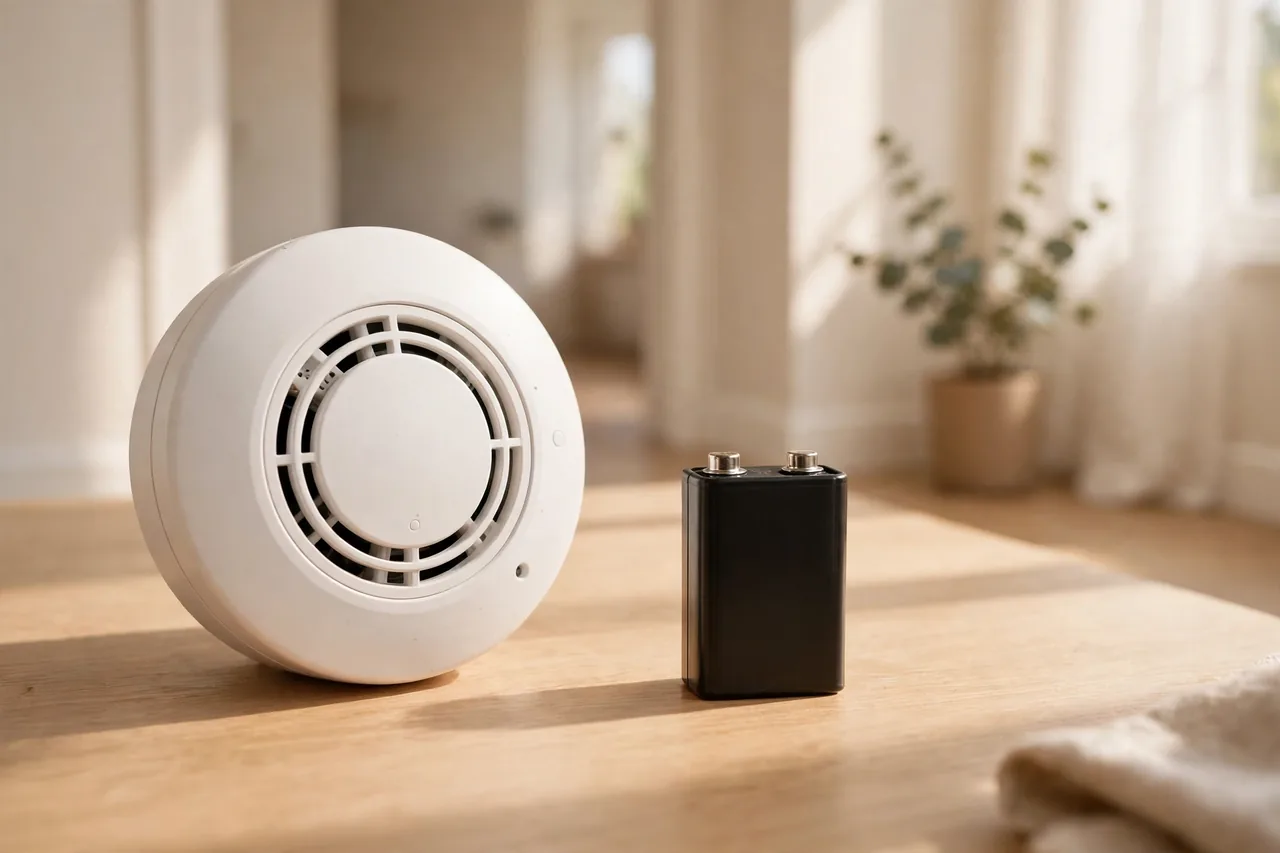
Your alarm talks to you in sounds, and each sound means something different. Learning them saves you from guessing at 3 a.m.
Three loud beeps, beep, beep, beep, repeated, means smoke or fire. Get out, call 911, and stay out. Do not stop to test, reset, or investigate. The NFPA is direct on this point, and so is every fire service.
A single chirp every 30 or 60 seconds means the battery is low and must be changed. Change it right away, and never pull the battery to stop the chirp and then forget to replace it. A chirp that continues after the battery has been replaced means the alarm is at the end of its life and the whole unit must be replaced.
Some alarms use different end-of-life patterns, such as three chirps or a voice message, so check your model’s manual. The pattern is printed in the manual and often on the unit itself. If you lost the manual, the manufacturer’s website has it by model number.
Carbon monoxide alarms have their own sounds and their own life, usually 5 to 10 years depending on the model, printed as a replace-by date. Test them monthly too, and replace them by the date the manufacturer prints on the unit. Never ignore a chirp, and never ignore an alarm.
The Full Maintenance Calendar
Testing is one job. Keeping alarms clean, powered, and current is the rest. Here is the full calendar, so nothing slips.
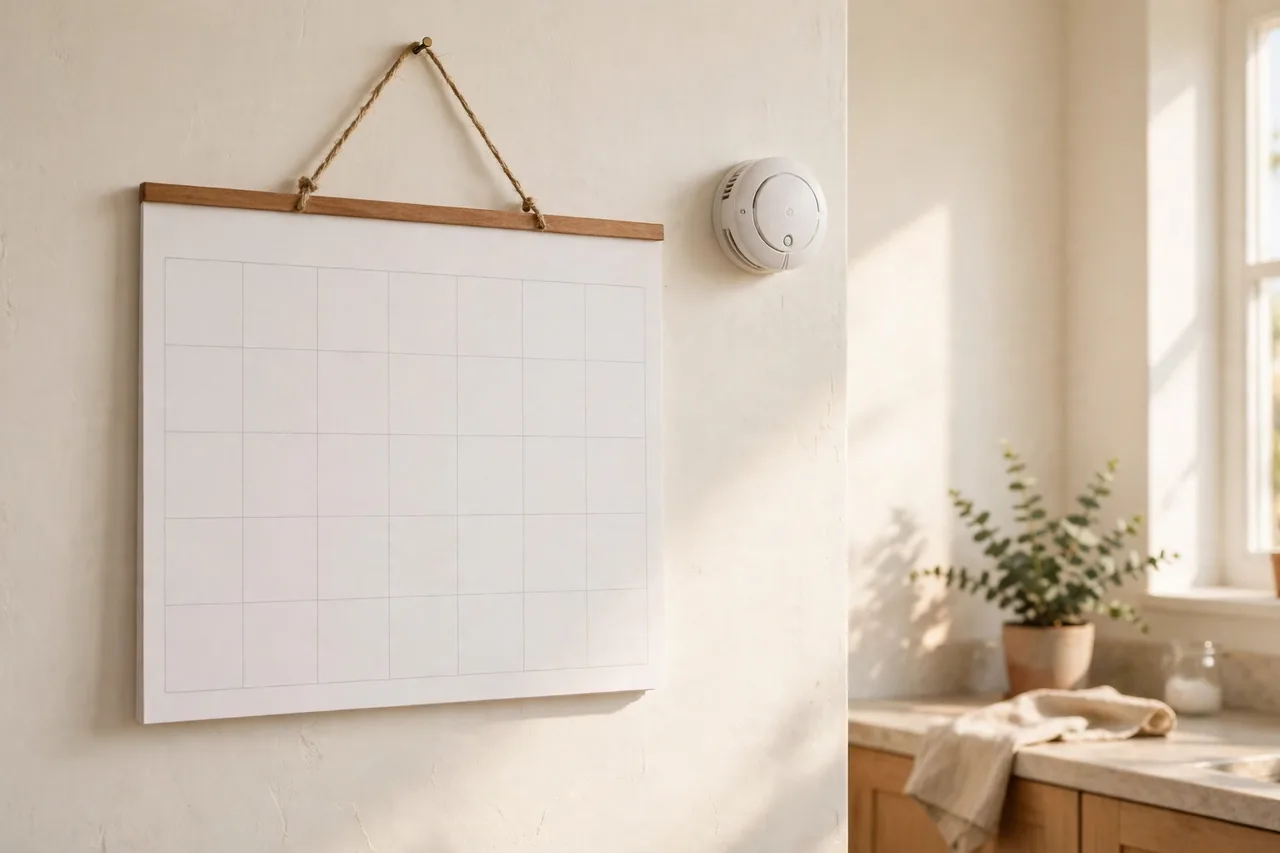
Your smoke alarm maintenance calendar:
| When | What to do | Why it matters |
|---|---|---|
| Every month | Press the test button on every alarm | Catches dead batteries and failed alarms |
| Every 6 months | Vacuum or dust each alarm gently | Dust blocks the sensor and causes false alarms |
| Every year | Replace batteries in alarms that take them | Fresh batteries last at least a year |
| Every year | Check the manufacture date on each alarm | Knows which alarms are near 10 years old |
| Every 10 years | Replace every smoke alarm | Sensors wear out even when the button works |
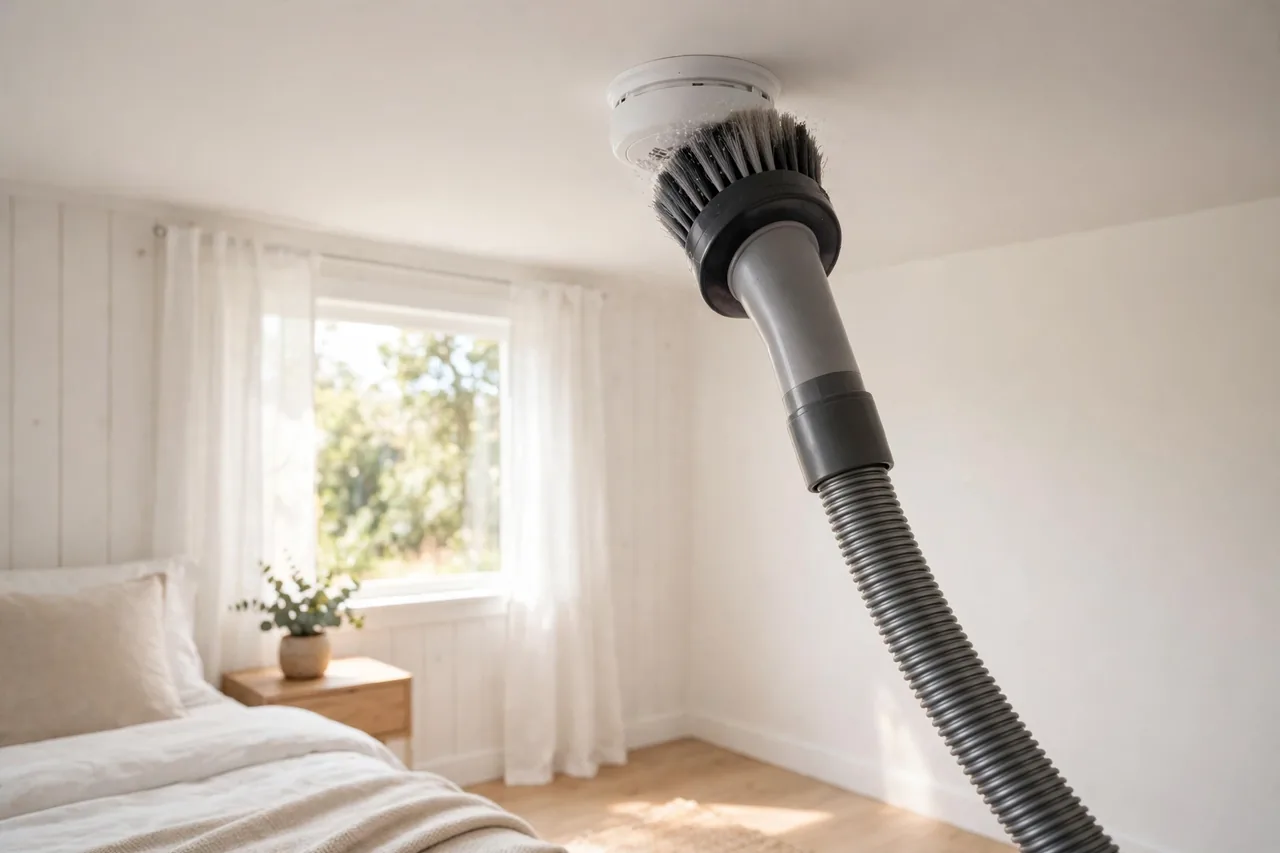
Clean every six months by vacuuming dust off the alarm with a soft brush attachment, following the manufacturer’s instructions. Fire and Rescue NSW advises vacuuming dust off smoke alarms every six months, and UK fire services give the same six-month cleaning advice. Never paint an alarm, never cover it, and never spray cleaner into it.
Check dates once a year. Look on the back of each alarm for the manufacture date and write it on a label or in your phone. When an alarm hits 10 years from that date, replace it, even if it still beeps when tested. The date on the back is the alarm’s real expiry date.
Smart Smoke Alarms: Do They Change the Schedule?
Smart smoke alarms add phone alerts, voice warnings, and self-checks, and many owners wonder whether the monthly button test still matters. It does. The schedule stays the same, but the smart features make it easier to keep.
A smart alarm still has a sensor that ages, a battery or mains supply that can fail, and a 10-year replacement date. The NFPA monthly test, yearly battery change, and 10-year replacement apply to smart alarms exactly as they apply to basic ones. The app cannot see a dying sensor, and a green light in the app is not a substitute for hearing the alarm sound in the room.
What smart alarms do add is useful. Many run automatic self-checks and send a phone alert when a battery is low or a sensor fails, so you learn about a problem the same day instead of at the next monthly test. Some tell you which room the alarm came from, which helps in a large home. Interconnected smart alarms can send the alert to your phone even when you are away, so you know about a problem at home before you get there.
Keep two habits with a smart alarm. First, still press the test button every month, because the app check and the button test check different things. Second, keep the alarm’s Wi-Fi or hub connection healthy, and test again after any router change or power outage, because a disconnected smart alarm is a quiet alarm. Smart features help you keep the schedule, but they never replace it.
When a smart alarm hits 10 years, replace it with a matching model so the interconnection still works. Mixing brands and generations can break the link between alarms, and a mixed system that does not sound together is worse than a simple system that does.
Where Your Alarms Should Be (and What to Check There)
A test only helps if the alarm is in the right place. The NFPA placement rule is simple: install alarms inside every bedroom, outside each sleeping area, and on every level of the home, including the basement. Interconnected alarms are best, so when one sounds, all of them do.
When you do your monthly walk, check placement as well as sound. Is there an alarm inside each bedroom? Is there one outside the sleeping area? Is there one on every level? A missing alarm is a failed test of a different kind, and it needs fixing just as fast.
Check the spots to avoid too. Do not put alarms in kitchens right next to the stove, in steamy bathrooms, or near drafty windows, because steam and cooking smoke cause false alarms that train people to ignore the real thing. If an alarm false-alarms often, move it to a better spot rather than removing it.
Check that hardwired alarms have battery backup and that the backup battery is fresh. A hardwired alarm without a working backup is silent in a power cut, which is exactly when you need it most.
Smoke alarms are life-safety devices, and this guide is general information, not a substitute for your alarm manufacturer’s instructions or your local fire code. Follow the manufacturer’s instructions for your exact model, and call your local fire department or a licensed electrician if an alarm keeps failing, if you are unsure about placement, or if you need help testing alarms you cannot reach. If an alarm sounds and you smell smoke or see fire, get out and call 911 first, and never go back inside.
What If You Rent Your Home?

Renters follow the same test schedule, but the responsibility for the alarm itself is often shared with the landlord. In most places, the landlord must provide working smoke alarms, and the tenant must test them and report problems. Check your lease and your local rules to see how it works where you live.
As a renter, test the alarms monthly just as a homeowner would, and tell your landlord in writing the same day an alarm fails, chirps after a fresh battery, or passes 10 years old. Keep a copy of the message. If the landlord does not act, contact your local housing authority or fire department for advice.
Never remove an alarm because it annoys you, and never let a landlord’s slow repair leave you unprotected. A battery-operated alarm costs little and can cover a bedroom while the proper repair is chased. Testing is your job even when the alarm is not yours.
Related Guides
For the next step after testing, read our guide to the best smoke alarm and carbon monoxide detector to pick a replacement when an alarm hits 10 years. Our Christmas tree safety guide covers seasonal fire risks, and how to winterize a house includes heating-season fire checks that pair well with your monthly alarm test.
Frequently Asked Questions
How often should I test my smoke alarms?
Test every smoke alarm at least once a month by pressing the test button, according to the National Fire Protection Association. Some fire services advise weekly testing, which is also fine. Replace the alarms every 10 years, and check the date on the back of each unit.
How often should I change smoke alarm batteries?
Replace the batteries at least once a year in any alarm that takes replaceable batteries. Replace them right away if the alarm chirps. Alarms with sealed 10-year batteries have no battery to change; replace the whole unit when it chirps at end of life.
How long do smoke alarms last?
Smoke alarms last 10 years from the manufacture date printed on the back of the unit. Replace every alarm at 10 years, even if it still sounds when tested, because the sensor wears out with age.
Does the test button really test the sensor?
The test button checks the battery, the horn, and the alarm’s electronics, which is what the NFPA and manufacturers ask for monthly. It does not fully simulate real smoke, so never test with smoke or flame. The button test is the safe and correct test.
What does it mean when my smoke alarm chirps?
A single chirp every 30 or 60 seconds means the battery is low. Change the battery right away. If the chirping continues after a fresh battery, the alarm is at the end of its life and the whole unit must be replaced.
Should I test my smoke alarm weekly or monthly?
Monthly is the NFPA minimum and the right baseline for most homes. Weekly testing is what several UK fire services advise, and it is a good habit if you can keep it. Either way, the habit matters more than the exact interval, so pick one and stick to it.
One minute a month is all it takes. Press the button, listen for the three beeps, change the battery once a year, and replace the alarm at 10 years. That small habit is the difference between an alarm that saves your family and one that only decorates the ceiling.