To baby proof a fireplace, build layers: a sturdy hardware-mounted gate around the whole hearth, a lock on the doors and controls, padding on the sharp hearth edges, and tools, matches, and lighters stored out of reach. How to baby proof a fireplace starts before your baby crawls, because a fireplace is a wall of hard stone, hot glass, and sharp tools that a baby can reach in seconds.
This guide covers every fireplace type, wood, gas, and electric, and shows you what to buy, what to skip, and the mistakes that leave babies at risk. Follow the steps in order, and test everything the way a determined toddler would.
Start at Your Baby’s Eye Level
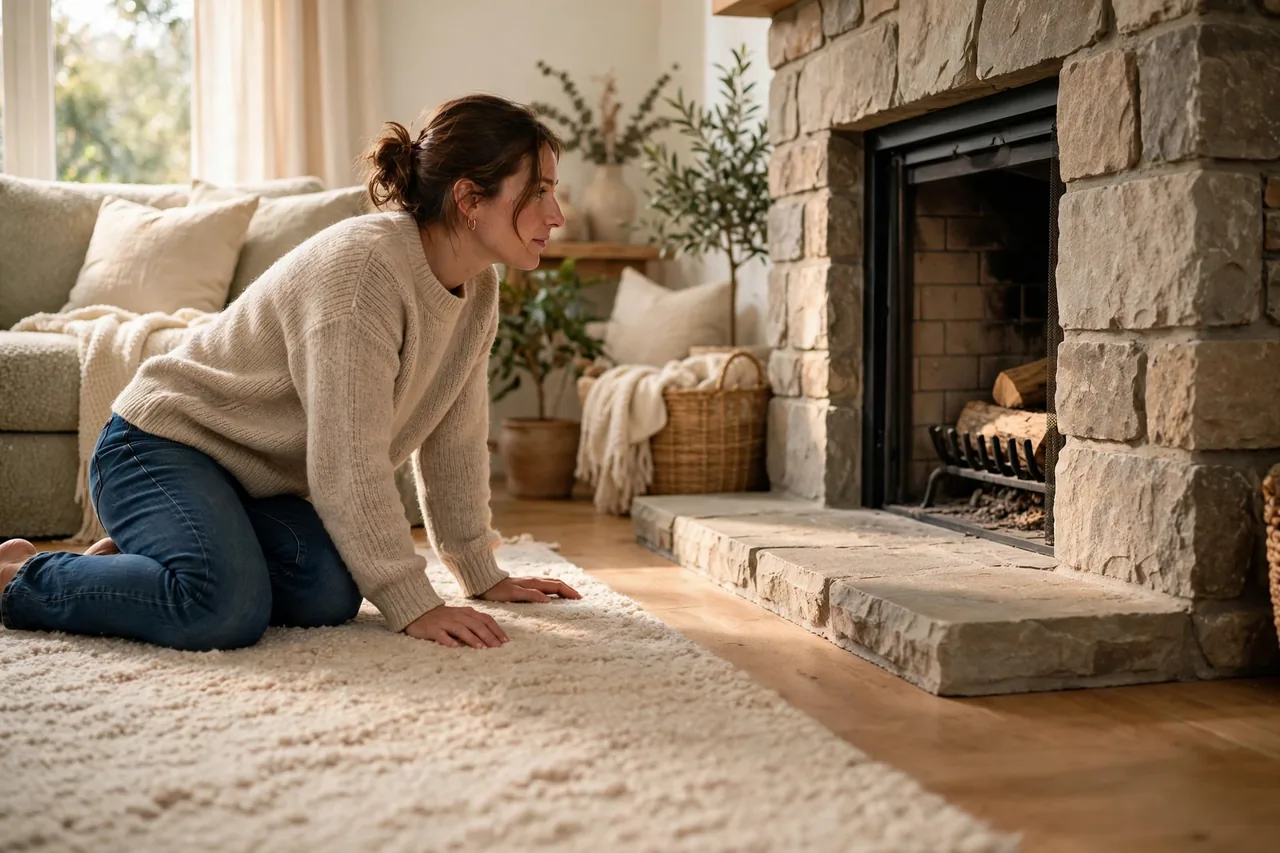
Before you buy anything, kneel where your baby crawls and look at the fireplace from that height. You will see hearth corners at head height, door handles, loose screens, reachable controls, and tools lying beside the fire. See the fireplace the way your baby sees it, and the risks become obvious.
Think about two states: the fireplace running, and the fireplace cold. A cold hearth still causes painful falls onto stone or brick, while a running or recently used fireplace adds burns from hot glass, metal, and embers. The safest setup keeps your baby away from both states.
Make a list of everything within your baby’s reach: the hearth edge, the firebox opening, the glass doors, the gas switch or remote, the tools, the matches, the mantel decorations, and any furniture your baby could climb to reach the mantel. Work through the list one item at a time in the sections below.
Block Access First: The Fireplace Gate
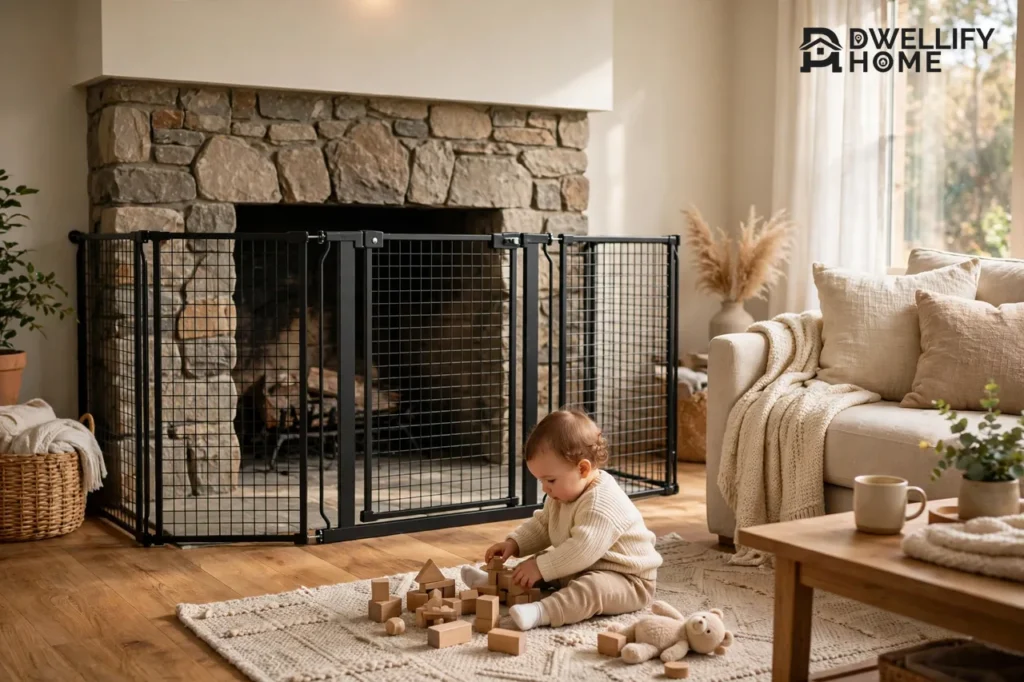
A barrier is the most important step, because a baby who cannot reach the fireplace cannot get hurt by it. A hardware-mounted, multi-panel gate around the whole hearth beats every other fix.
Choose a gate that mounts to the wall or the fireplace surround with screws, not a pressure-mounted gate that a toddler can push over. A multi-panel metal fence can wrap around a wide or angled hearth and cover the projecting corners, not just the firebox opening. Pick a gate with a child-resistant latch, no footholds a toddler can climb, and panels tall enough that your child cannot topple it.
Follow the gate maker’s clearance rules for your fireplace type. Never place an ordinary plastic baby gate close to a working fire, since plastic can melt or catch fire, and never guess at the safe distance. Flame Authority’s fireplace child-safety guide stresses the same point: no single childproofing product makes a fireplace safe alone, and the right barrier, clearance, and installation all depend on your specific fireplace model.
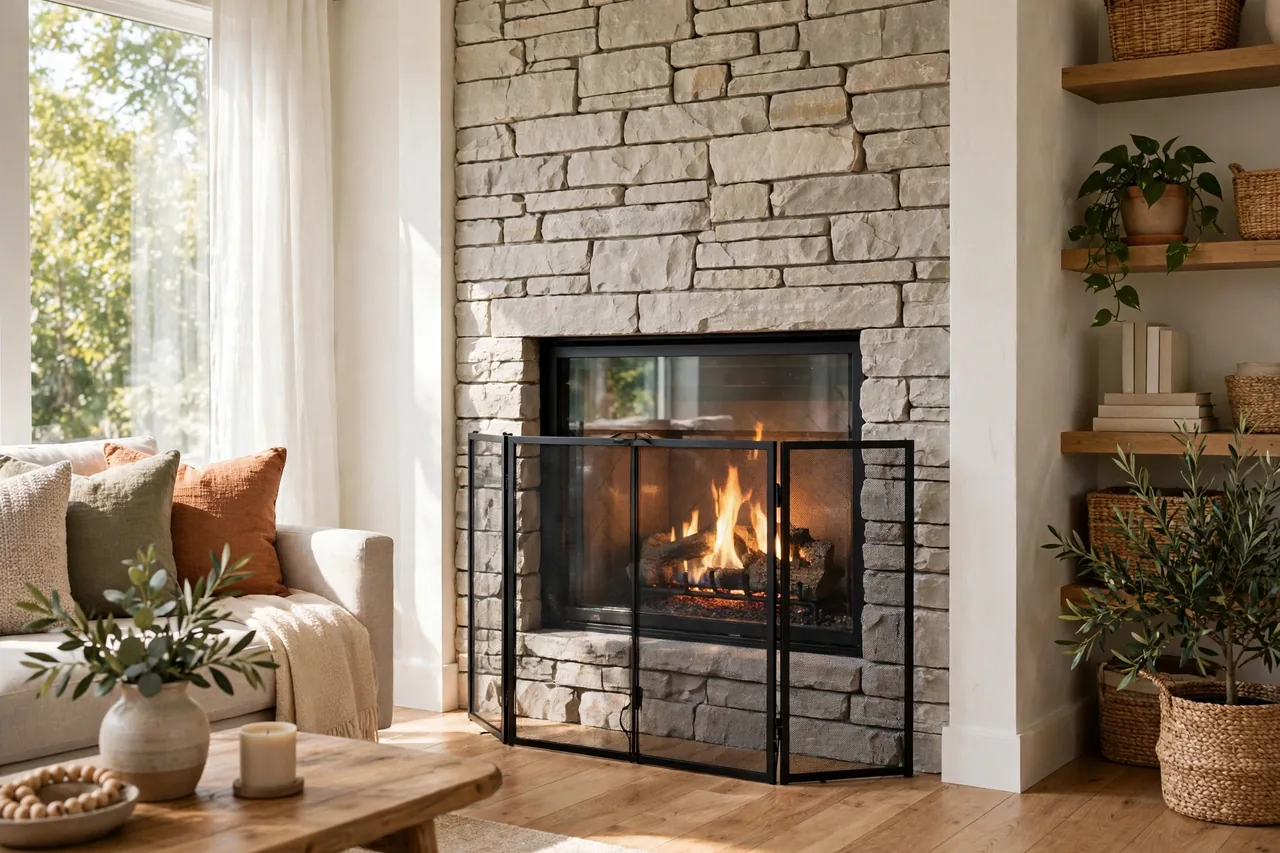
A decorative fire screen is not a baby gate. Screens catch sparks, but most are light enough for a toddler to push aside, and the screen itself gets hot. Use a screen only as a second layer behind a real gate, never as the only barrier.
Keep adult access in mind. Choose a gate with a walk-through door or a panel that detaches, so adults can tend the fire without leaving a wide gap on one side. Test the latch every week, and tighten the mounts the moment anything wobbles.
Guard the Hot Glass and Metal
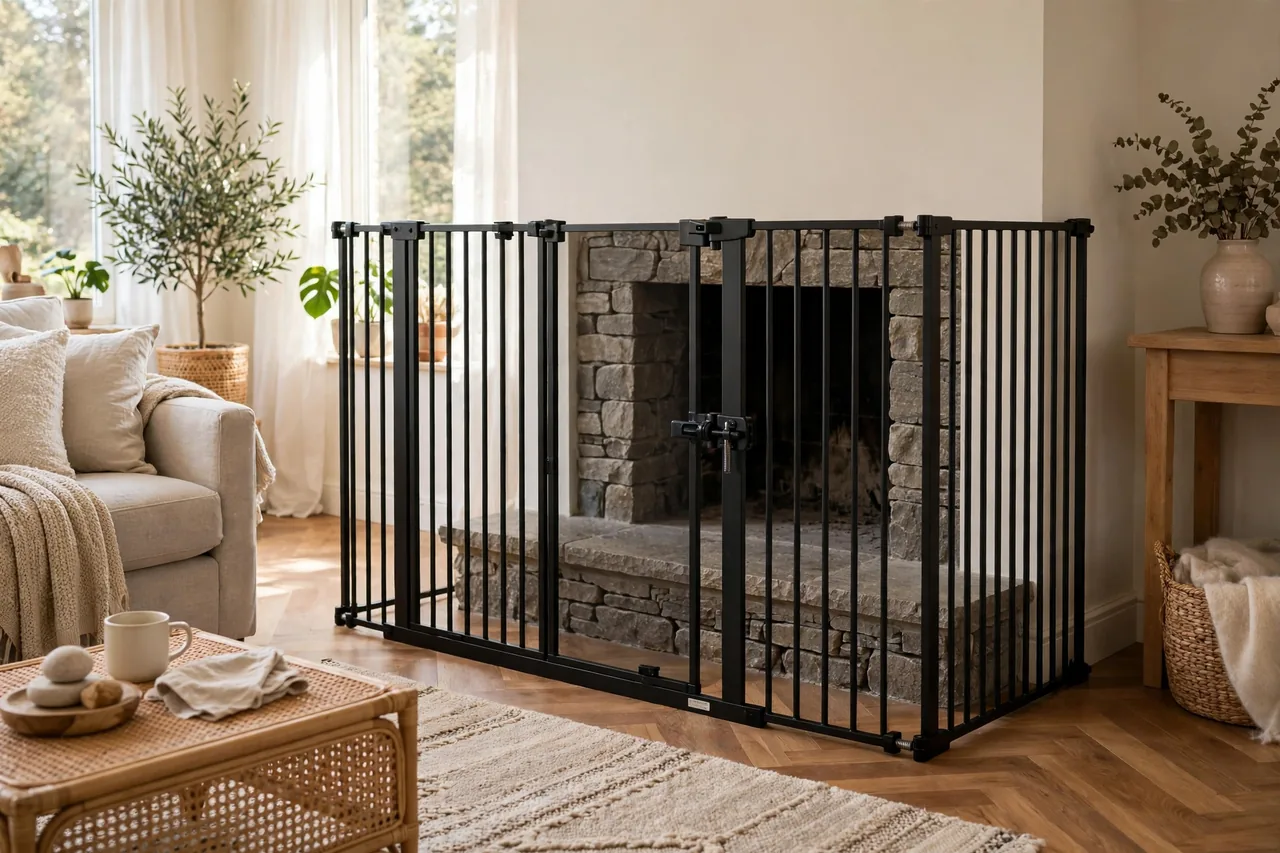
Gas fireplaces deserve special attention, because the glass front looks harmless while it is dangerously hot. Nationwide Children’s Hospital warns that the glass on a gas fireplace can reach 500 to 1,000 degrees Fahrenheit, and that toddlers are often treated in emergency departments with severe burns to their palms from touching it. Its fireplace safety guide also notes that the glass stays hot for an hour or two after the fire is off, and that all gas fireplaces made after 2015 must be sold with a safety barrier.
Keep the barrier in place during use and for at least an hour after you turn the fire off. The American Academy of Pediatrics advises the same: keep children away while the fireplace runs and for at least an hour afterward, since cooling time varies by model.
For a wood fireplace, the doors, screen, and surround all get hot, and embers can pop out onto the hearth. Keep the screen closed while the fire burns, and never leave a fire unattended. Put the fire fully out before you go to bed or leave the house.
If you cannot keep a reliable barrier in front of a gas fireplace, make the fireplace unusable until your children are older. Remove the wall switch and cover the box with a switch plate, take the batteries out of the remote, or shut off the gas supply. A fireplace you cannot turn on cannot burn a curious toddler.
Soften the Hearth Edges
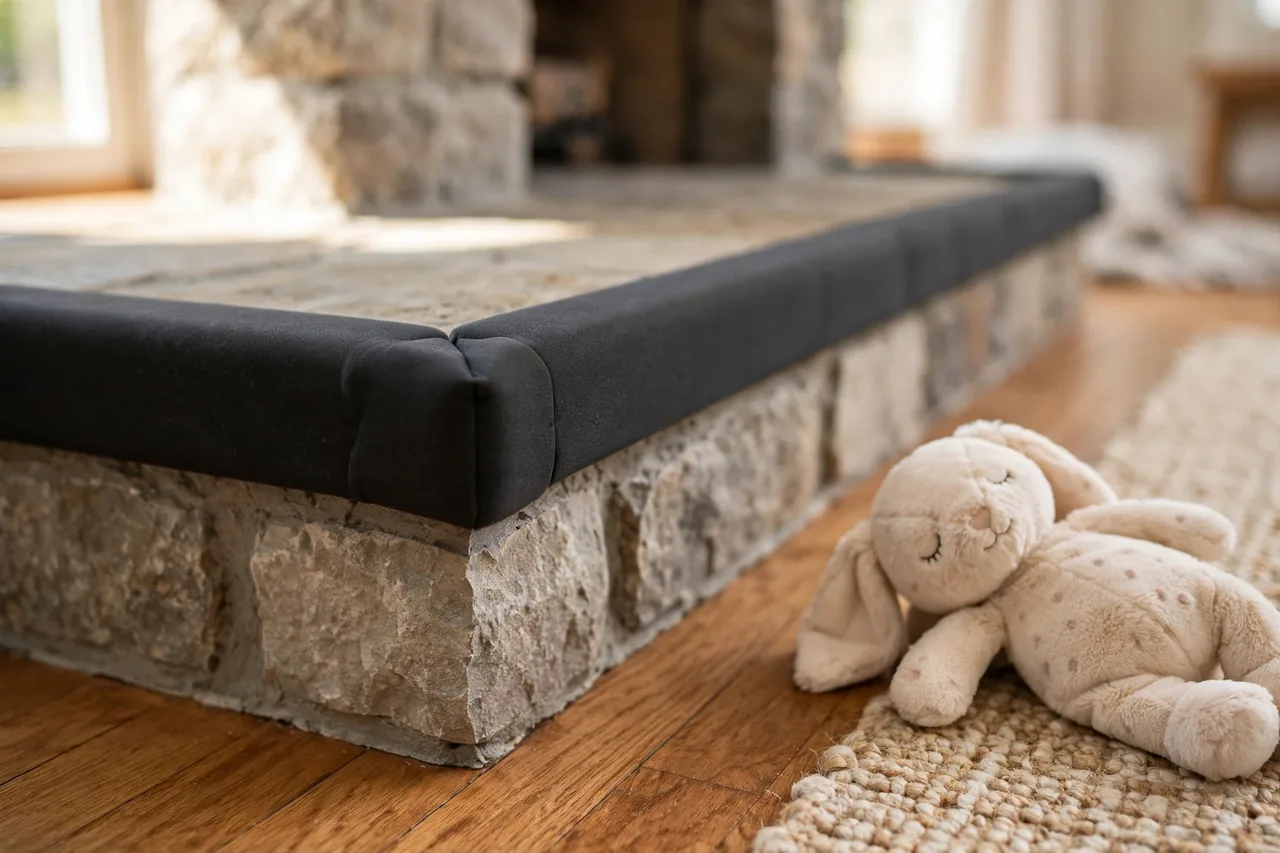
The raised hearth is often the biggest cause of bumps and bruises, because brick, marble, slate, and concrete do not forgive a fall. A toddler learning to walk falls constantly, and a fall onto a sharp hearth corner can cut or bruise badly. Cover every sharp hearth edge your baby can reach, and fit the padding so it cannot peel off.
Use high-density foam edge guards or a full hearth pad that fits your hearth shape tightly. Press the padding on firmly and check it weekly, since a loose piece becomes a choking hazard if your baby peels it off and mouths it.
Know the limit of padding. Foam guards are impact protection, not heat protection. Never put combustible padding against a working or hot hearth unless both the padding maker and the fireplace maker expressly allow it. BabyGuides’ guide to babyproofing a fireplace makes the same warning: standard foam guards are not fireplace heat protection, and a surrounding barrier is the better answer whenever the fireplace is used.
If your fireplace is permanently unused and always cool, padding alone may be enough for the hearth. Even then, keep tools and decorations out of reach, and block the firebox so your baby cannot climb inside.
Lock Away Tools, Controls, and Fire Starters
Fireplace tools look like toys to a baby, but pokers, tongs, and brushes are heavy, sharp, and easy to topple. Store them in a locked cabinet, on a high shelf, or behind the secured gate, where little hands cannot grab them.
Matches and lighters are the most dangerous items in the room. Keep them in a locked box or a high cabinet, never in an open basket beside the fire. Teach older children that matches and lighters are adult tools, and never let them play with them.
Lock the fireplace doors if your model allows it, and cover or remove the controls. Gas fireplace switches often sit at toddler height on the wall beside the fire, so fit a switch cover or remove the switch plate until your children are older. Keep the remote in a drawer, with the batteries out, when the fireplace is not in use.
Move mantel decorations out of reach too. Candles, vases, and framed photos on a low mantel can be pulled down onto a baby, so move them higher or store them until your child is older. Keep the mantel clear of anything flammable while the fire burns.
Protect the Air: Carbon Monoxide and Smoke Alarms
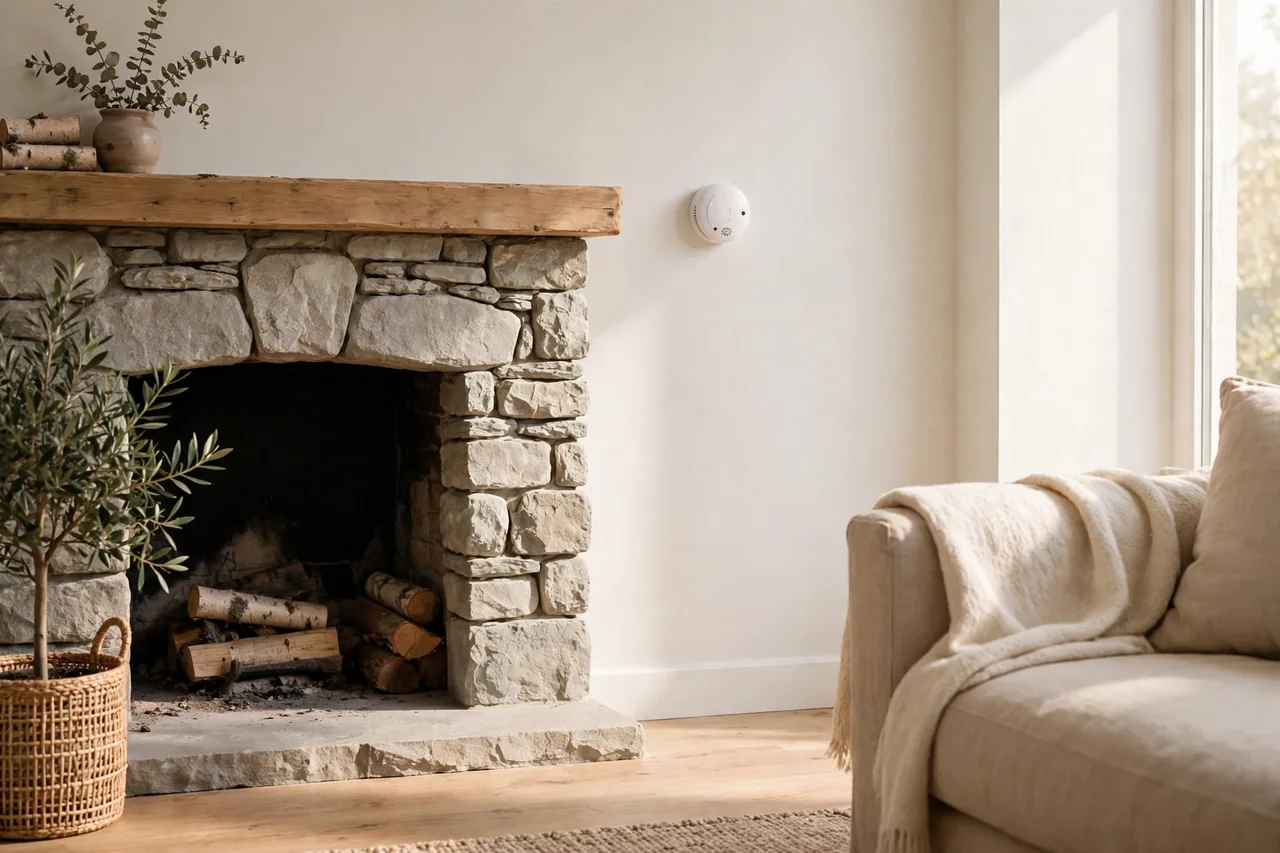
Fireplaces and wood stoves can produce carbon monoxide, a colorless and odorless gas that can be fatal in high amounts. Put a working carbon monoxide detector on every level of your home, near sleeping areas and near the fireplace room.
Test every detector monthly and change the batteries on schedule. Replace any detector that is past its expiry date, and never paint over a detector or cover it with furniture.
Have your fireplace and chimney inspected and cleaned at least once a year by a qualified professional. Cleaning stops creosote buildup in a wood chimney, which can catch fire, and an inspection catches cracked liners, blocked flues, and damaged dampers before they become dangerous.
Keep a fire extinguisher within easy reach of the room, and make sure every adult in the house knows how to use it. Keep the area around the fireplace clear of rugs, papers, and furniture that could catch a spark.
Baby Proofing by Fireplace Type
Each fireplace type has its own risks, so match your setup to the one you own.
Baby proofing by fireplace type
| Fireplace type | Main risks | Key fixes |
|---|---|---|
| Wood burning | Open flame, embers, hot screen, creosote | Mounted gate, closed screen, yearly chimney cleaning |
| Gas | Glass up to 1,000°F, stays hot 1 to 2 hours | Mounted gate, safety barrier, disable switch when not in use |
| Electric | Hot front, cords, controls, tipping | Gate, cord cover, anchor the unit, lock controls |
| Unused or sealed | Hard hearth, climbing into firebox | Hearth padding, blocked firebox, tools stored away |
For electric fireplaces, anchor the unit so a climbing toddler cannot tip it, cover the cord so your baby cannot chew or pull it, and lock the controls. Electric models stay cooler than gas or wood, but the front can still get hot enough to burn small hands.
For three-sided or corner fireplaces, the gate must wrap all exposed sides, not just the front. Measure every side before you buy, and choose a configurable multi-panel gate that can bend around corners.
Teach Fire Safety as Your Child Grows
Gates and locks protect babies, but older children need understanding too. Start teaching fire safety early, in simple words your child can grasp.
Teach toddlers that the fireplace is hot and that they must look but not touch. Use the same words every time, and praise your child for staying back. For preschoolers, explain that fire is for adults only, show them where the gate is, and practice what to do if they see a fire: get out and tell an adult.
Never leave a fire unattended, even with a gate in place. Gates fail, latches stick, and children climb. Stay in the room while the fire burns, and put it fully out before bed or before you leave the house.
Re-check the whole setup as your child grows. A gate that stops a crawler may not stop a climber, and a toddler who can push furniture can drag a chair to the fireplace and climb over the gate. Move climbable furniture away from the fireplace, raise the barrier if your child outgrows it, and re-read the gate maker’s weight and height limits.
What to Buy: A Fireplace Baby Proofing Shopping List
Buy in this order, and do not skip the first item to save money. A cheap gate that a toddler can push over is worse than no gate at all, because it looks safe while it is not.
- A hardware-mounted, multi-panel metal gate sized to wrap your whole hearth, with a child-resistant latch and a walk-through door.
- A fireplace door lock or switch cover that fits your model, plus a remote-control lockbox if your gas fireplace uses a remote.
- High-density foam hearth edge guards or a full hearth pad that matches your hearth shape.
- A locked box or high cabinet for matches, lighters, and fire starters.
- A carbon monoxide detector for the fireplace room and one for every level, plus fresh batteries.
- A fire extinguisher rated for home use, mounted within easy reach of the room.
Measure twice before you order. Measure the full width of the hearth including the projecting corners, the height of the hearth edge, and the distance from the fireplace opening to the nearest wall. A gate that is too short leaves a gap a baby will find, and a gate that is too tall for your mantel layout may not mount safely. Keep the receipts and the manuals, since you will need the model numbers when you buy replacement parts or move the gate to a new home.
Related Guides
Keep the holidays safe with Christmas tree safety tips for a home with small children. Prepare the house for cold weather with how to winterize a house, and know what to do when the heat fails with how to stay warm without power.
Frequently Asked Questions
What is the best way to baby proof a fireplace?
Build layers. Start with a hardware-mounted gate around the whole hearth, then lock the doors and controls, pad the sharp hearth edges, store tools and matches out of reach, and keep carbon monoxide and smoke detectors working. No single product makes a fireplace safe alone.
How hot does gas fireplace glass get?
Gas fireplace glass can reach 500 to 1,000 degrees Fahrenheit, and it stays hot for one to two hours after the fire is turned off. Keep children behind a barrier during use and for at least an hour afterward, and never let a child touch the glass.
Can I use a regular baby gate around a fireplace?
Usually not. A standard pressure-mounted or plastic baby gate is often too weak, too narrow, or too close to the heat for a fireplace. Use a hardware-mounted, multi-panel metal gate made for fireplaces, and follow the maker’s clearance rules for your fireplace type.
Do I need a carbon monoxide detector near a fireplace?
Yes. Fireplaces and wood stoves can produce carbon monoxide, a colorless, odorless gas. Put a working detector on every level of your home, near sleeping areas and near the fireplace room, test it monthly, and have the chimney inspected yearly.
When should I start baby proofing the fireplace?
Before your baby starts crawling, ideally before they can roll to the fireplace on their own. Once pulling up begins, the risk shifts from touching to climbing, so set up the gate, locks, and padding early and test everything before your baby can reach it.
A Short Safety Note
This guide shares general home safety information, not medical or professional advice. Fireplace models differ, so always follow your fireplace manual and your gate maker’s instructions, including the required clearances. If your child touches a hot surface, gets burned, or breathes in smoke, call your doctor or emergency services at once. When in doubt, call a qualified chimney or fireplace professional before you light the next fire.
Gate it, lock it, pad it, and check it often, and the fireplace can stay the cozy heart of your home.