To test a smoke detector, press and hold its test button for 5 to 10 seconds until you hear a loud siren. The National Fire Protection Association (NFPA) says to test smoke alarms once every month by pushing the test button, and if it does not sound, change the battery or replace the whole unit if it is over 10 years old. Test every alarm in your home, warn your family first because the siren is loud, and write down the result for each unit.
A silent alarm is a dangerous alarm. A detector that never sounds may have a dead battery, a worn-out sensor, or a broken horn, and you would only find out during a real fire. A monthly test takes less than a minute per alarm and is the only way to know it will wake you when it matters.
What the Test Button Actually Checks
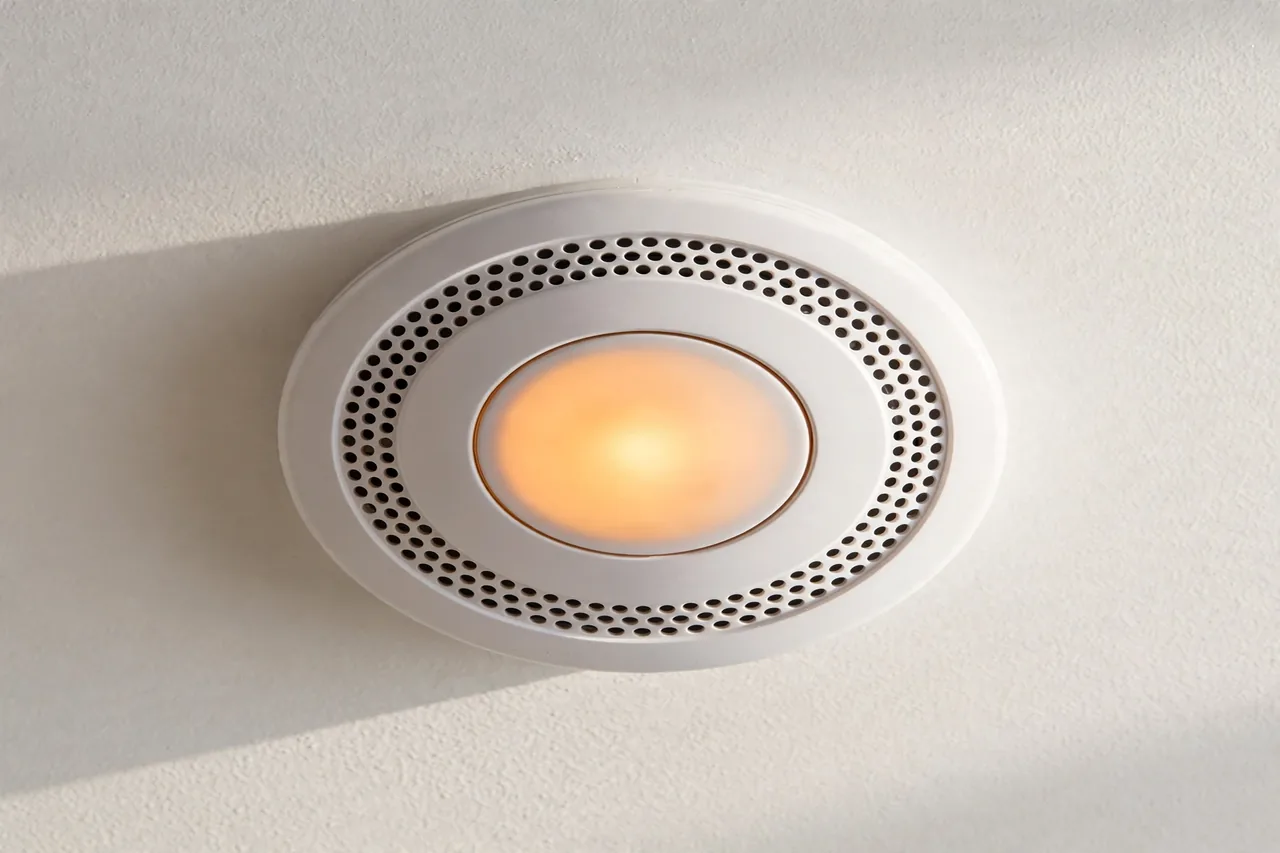
The test button runs the alarm’s built-in self-check. It confirms the battery has power, the internal circuit works, and the horn can sound. On most models you press and hold the button for 5 to 10 seconds, and the alarm answers with a loud siren or a set of three beeps. The button checks the electronics and the horn, not the smoke sensor itself.
That limit matters. A unit can pass the button test and still have a dirty or worn sensor that reacts slowly to real smoke. That is why the button test is monthly, but cleaning and replacement still matter. Think of the button test as checking that the alarm can shout, while cleaning and age checks make sure it can hear.
Some newer alarms run automatic self-tests between your monthly checks. A monthly button press still matters, because it proves the horn works at full volume and confirms the alarm is still mounted, powered, and connected to the rest of the system.
How to Test a Smoke Detector Step by Step
Follow these steps for every alarm in your home. Go room by room so none gets missed.
- Tell everyone in the house you are about to test the alarms, especially children and pets. The siren is loud on purpose and can frighten anyone who is not expecting it.
- Use a stable step stool or ladder to reach the alarm. Never stand on a chair or a stack of boxes.
- Find the test button on the face of the unit. It is usually the largest button and may be labeled “Test” or “Test/Silence.”
- Press and hold the button for 5 to 10 seconds, or for the time your manual states. Listen for a loud, clear siren or the three-beep pattern.
- Check that the indicator light matches what the manual describes for a passing test.
- For interconnected alarms, check that the other units sound too. Ask someone at the far end of the house to confirm they can hear it.
- Write down the date and the result for each alarm, and fix any failure the same day.
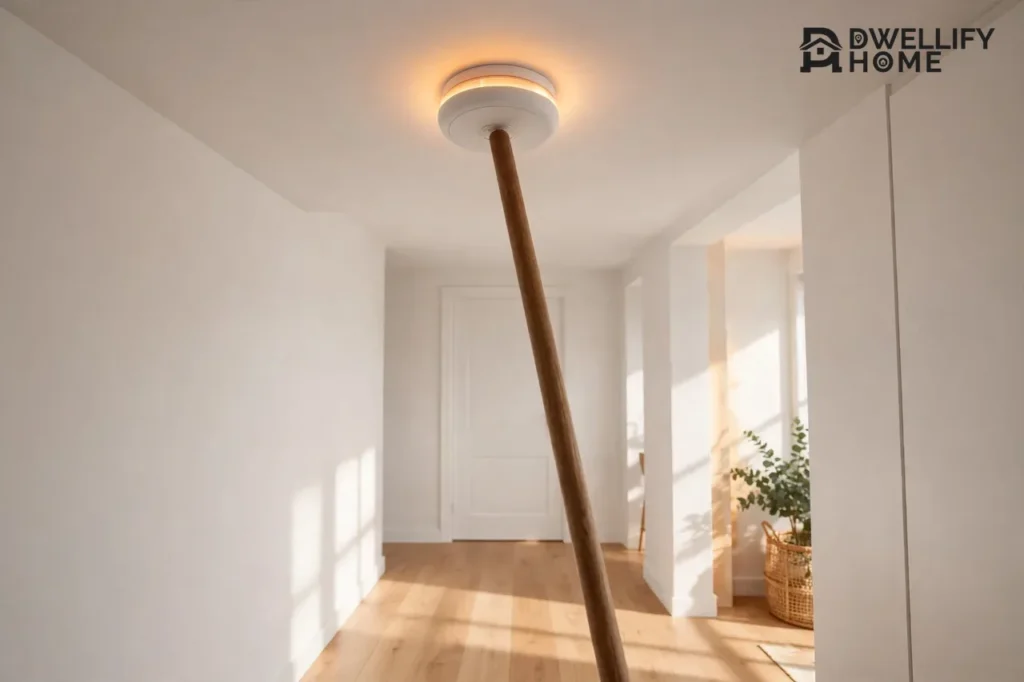
If the alarm is mounted high, a broom handle can press the button, but a ladder gives you a better view of the indicator light. A loud, clear siren is a pass; anything weaker is a fail.
How long should I hold the test button?
Hold it for 5 to 10 seconds on most models, or for the exact time your manual states. Kidde, a leading alarm maker, advises pushing the test or hush button for a minimum of 5 seconds to verify the alarm works. Let go too soon and a healthy alarm may stay quiet, which looks like a failure when it is not.
What should the alarm sound like during a test?
A working alarm gives a loud, piercing siren or a set of three beeps that cuts through normal household noise. The NFPA describes the sound as a loud beep, beep, beep. If the sound is muffled, faint, or uneven, replace the battery and test again. If it is still weak, replace the whole unit.
How Often Should You Test a Smoke Detector?
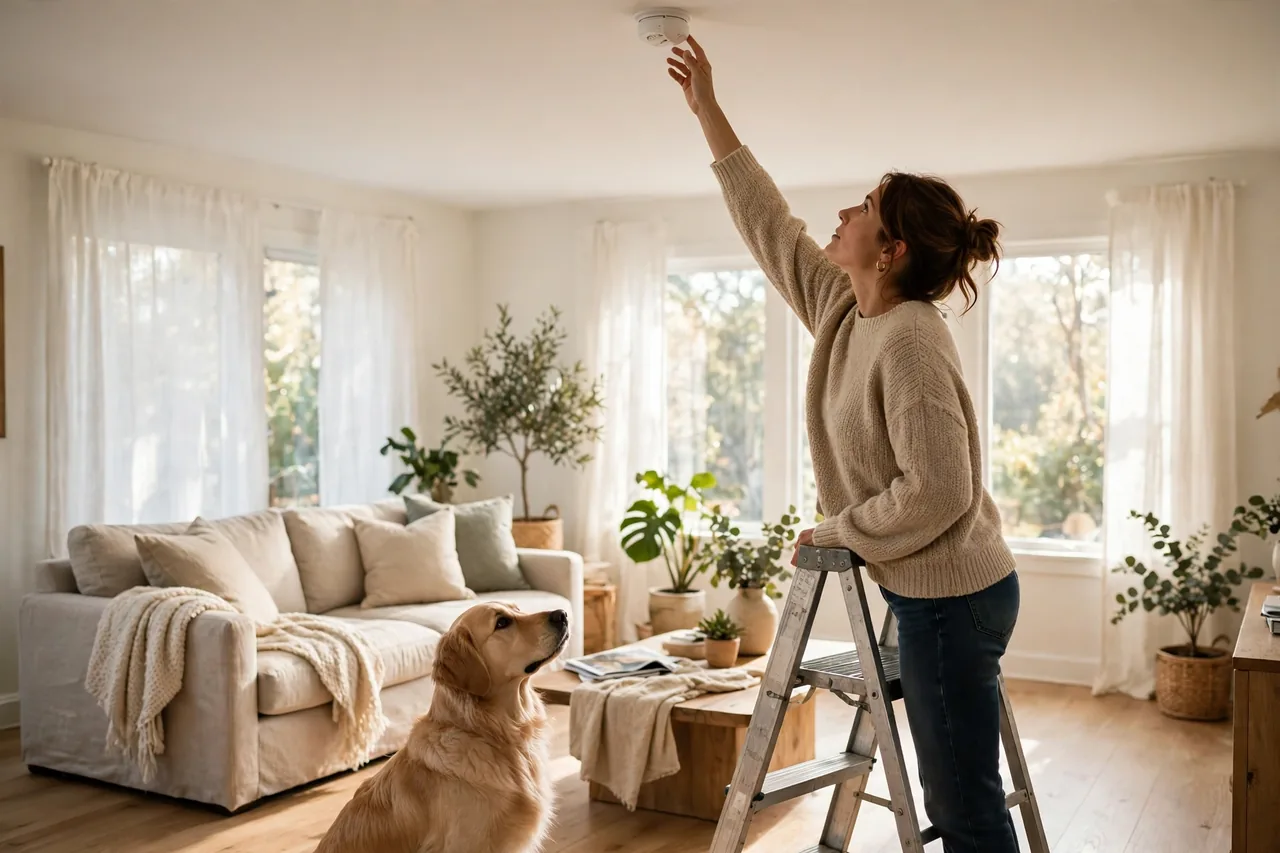
Test every smoke detector at least once a month. The NFPA, the American Red Cross, and most alarm makers all give the same advice: monthly, with the test button. A monthly test catches dead batteries, failed horns, and units that someone accidentally switched off.
Use this schedule to keep every alarm on track.
| Task | How often | Why it matters |
|---|---|---|
| Test button press | Once a month | Confirms the horn and circuit work |
| Vacuum the vents | Once a month | Keeps dust out of the sensor |
| Replace standard batteries | At least once a year | Stops low-battery chirps and failures |
| Check the manufacture date | Once a year | Flags alarms near the 10-year limit |
| Replace the whole alarm | Every 10 years | The sensor wears out and cannot be fixed |
Pick one easy date, like the first Saturday of the month, and test every alarm in one walk through the house. It takes about five minutes for a typical home. Monthly testing is the single most important alarm habit you can build.
How to Test a Hardwired Smoke Detector
Hardwired alarms run on household power with a backup battery, and they test the same way as battery alarms: press and hold the test button and listen. The difference is what you check when the test fails, and what the rest of the system should do.
When you test one hardwired alarm, every interconnected alarm in the house should sound. That is the point of the system: a fire in the basement should wake someone in the upstairs bedroom. Have a family member stand at the far end of the house and confirm they hear it. If only the tested unit sounds, the interconnect wire may be loose or the other units may have a fault.
If a hardwired alarm fails the test, first check the circuit breaker and make sure it is fully on. Then replace the backup battery, because a dead backup can stop the unit from sounding during a power cut even when mains power works. Test again. If it still fails, switch the breaker off and call a licensed electrician rather than opening the ceiling wiring yourself.
How to Test the Smoke Sensor Itself

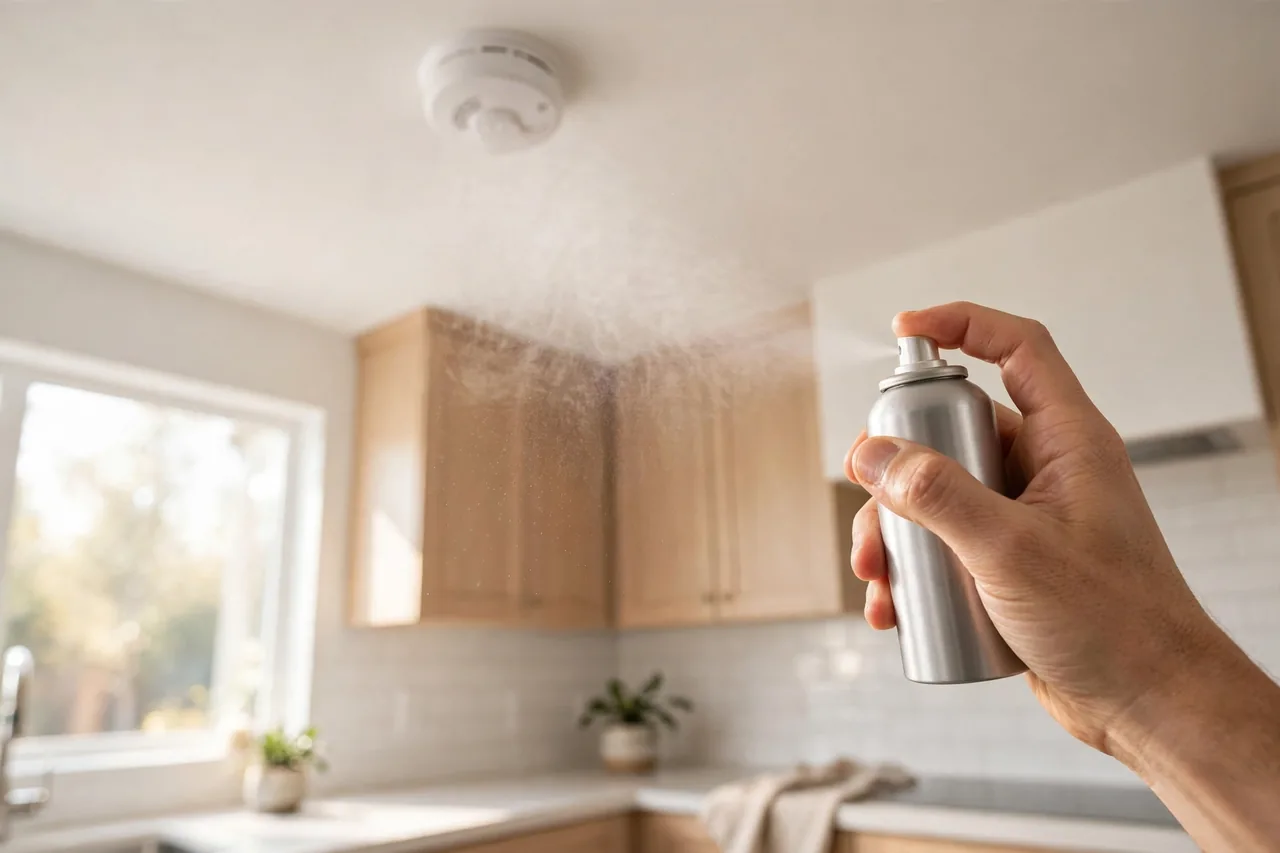
The button test checks the horn, but the sensor is what smells the smoke. To check the sensor, use a smoke detector test spray, sometimes called canned smoke. These aerosol cans release a synthetic particle mist that acts like smoke inside the sensing chamber.
Hold the can 1 to 2 feet from the alarm and give a short burst of 1 to 3 seconds. The alarm should sound within a few seconds. Open the windows afterward and let the air clear before you test the next unit. Only use a spray that your alarm manual approves, and follow both the spray label and the manual.
Never use a real flame to test an alarm. Do not hold a match, candle, lighter, or burning paper near the detector. A flame can damage the sensor, melt the case, or start a real fire, and it tells you nothing the approved spray would not. Never test a smoke alarm with a real flame.
A sensor test once or twice a year is enough for most homes, on top of the monthly button test. If a sensor test fails while the button test passes, the sensing chamber may be dirty or worn out. Clean the vents and try again, and replace the unit if it still fails.
What to Do When a Smoke Detector Fails the Test
A failed test is not a mystery to live with. Work through the fixes in order, and replace the unit when they run out.
- Check the battery. Fit a fresh battery of the exact type on the label, making sure the terminals line up and the door latches.
- Clean the alarm. Vacuum the vents with a soft brush attachment to clear dust, cobwebs, and insects from the sensing chamber.
- Reset the unit. With the power off, hold the test button for 15 to 30 seconds to drain leftover charge, then refit the battery and test again.
- Check the age. Look at the manufacture date on the back. If the alarm is 10 years old or older, replace it, because the sensor is worn out.
- Replace the unit if it still fails. Choose a replacement listed by a nationally recognized testing laboratory.
Never keep pressing the test button and hoping a faint chirp counts as a pass. A faint sound is a fail. The NFPA is clear: if the alarm does not sound when tested, install a fresh battery, and if it still does not work, replace the alarm. A failed test means the alarm cannot protect you until it is fixed or replaced.
Test Smoke Detectors Without a Test Button
Some very old alarms have no test button, and some units have a button that is hard to find under a cover. Start by reading the manual for your model. If there is truly no button, check the power source first: a battery unit should show a power light, and a hardwired unit should have steady power from the breaker.
For a unit with no test button, an approved smoke detector test spray is the practical check. A short burst near the vents should sound the alarm if the sensor and horn work. If it does not sound, replace the unit. An alarm you cannot test is an alarm you cannot trust, and modern alarms with a test button are inexpensive.
Where Smoke Detectors Belong in Your Home
A test only proves the alarms you have can sound. Placement decides whether they can hear a fire in time. The NFPA recommends a smoke alarm inside every bedroom, outside each sleeping area, and on every level of the home, including the basement. That layout means a fire anywhere in the house sounds an alarm near where people sleep.
Mount alarms on the ceiling or high on a wall, because smoke rises. Keep them at least 10 feet from the stove so cooking fumes do not trip them, and keep them out of bathrooms where steam causes false alarms. Do not put an alarm near a heating vent, a ceiling fan, or a window, because moving air can push smoke away from the sensor or blow dust straight into it.
In a two-story home, place one alarm at the top of the stairs as well as one in each bedroom, because smoke from a fire downstairs climbs the stairwell first. In a home with a basement, place an alarm at the bottom of the stairs too. If a room has a pitched ceiling, mount the alarm within three feet of the peak but never right in the peak, where dead air can trap smoke away from the sensor. An alarm in the right place hears the fire first.
When you test each month, glance at placement too. A new bookshelf, a moved bed, or a remodeled kitchen can leave an alarm in a worse spot than it started. A five-second look each month keeps the whole system honest.
Keep a Simple Test Record
A short record turns a good habit into a reliable system. Keep a card or a phone note for each alarm with its room, its manufacture date, the date of each monthly test, and the date of each battery change. When a test fails, the record shows whether the alarm is new and faulty or old and due for replacement.
Write the install date on the back of every new alarm with a permanent marker. That one habit makes the 10-year replacement rule easy to follow, because the date is right there when you take the unit down. If you move into a new home, test every alarm on the first day and replace any unit with no readable date, because you cannot know how old it is.
Stay Safe While Testing
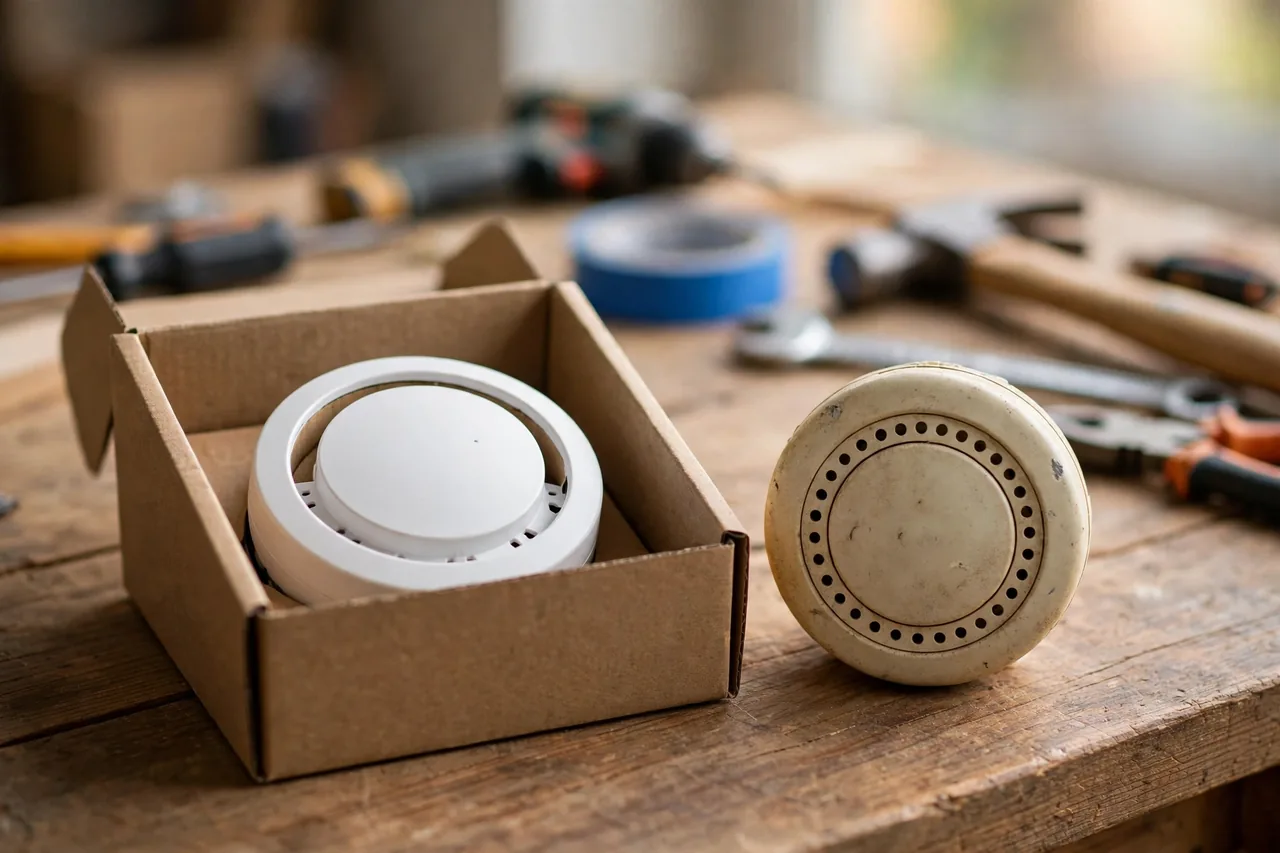
Warn everyone before you press the test button, and keep small children and pets in mind, because the siren is meant to be startling. Use a steady ladder, keep your balance, and never lean out from the top step. If an interconnected system sounds, let it finish before you press another button.
If a carbon monoxide alarm sounds during a test, or anyone feels headache, dizziness, nausea, or confusion, get everyone outside at once and call 911. Do not try to find the source of the gas yourself.
Disclaimer: This article gives general home maintenance guidance, not professional fire-safety advice. Follow your alarm’s manual first, and call a licensed electrician or your local fire department if an alarm keeps failing its test or you are unsure about hardwired connections. Never disable an alarm because it fails a test — replace it.
Related Guides
Keep your home’s safety gear in shape with these guides: the best smoke alarm and carbon monoxide detector picks when a test shows a unit is done, how to stay warm without power for heater safety in an outage, and Christmas tree safety for seasonal fire risks.
Frequently Asked Questions
How often should I test my smoke detector?
Test every smoke detector at least once a month using the test button. The NFPA and the American Red Cross both give the same monthly advice. Also test after a power outage, after changing a battery, and when you move into a new home.
How do I test a smoke detector without the test button?
Use an approved smoke detector test spray. Hold the can 1 to 2 feet away and give a short 1 to 3 second burst near the vents. If the alarm does not sound, replace the unit. Never use a flame, a match, or burning paper to test an alarm.
What does the test button on a smoke detector do?
The test button runs a built-in self-check of the battery, the internal circuit, and the horn. It confirms the alarm can sound loudly. It does not check whether the sensor can detect real smoke, which is why an approved test spray and regular cleaning matter too.
Why does my smoke detector not sound when I press the test button?
Either the battery is dead or wrong, the unit needs a reset, or the alarm has failed or reached 10 years old. Fit a fresh battery of the labeled type, clean the vents, reset the unit, and test again. If it still does not sound, replace the whole alarm the same day.
Should I test hardwired smoke detectors differently?
No, the test itself is the same: press and hold the test button. The extra check is that all interconnected alarms should sound together. If only the tested unit sounds, check the breaker and the backup battery, and call an electrician if the others stay silent.
Test every alarm this month, write down the results, and set a monthly reminder. One minute per alarm is a small price for knowing your home will warn you in time.