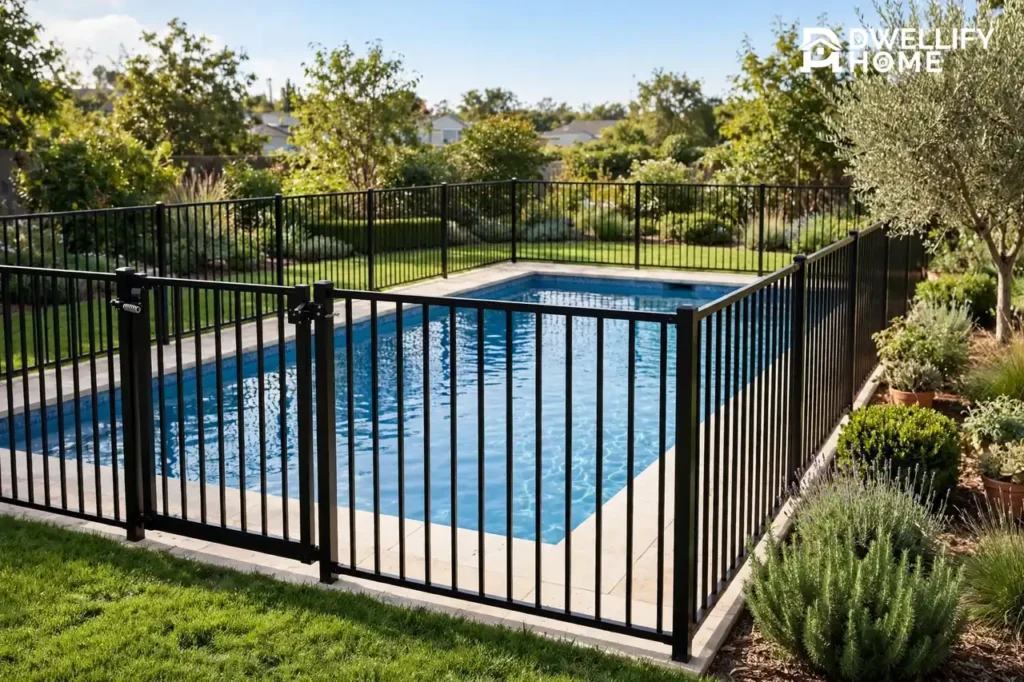
In most of the United States, a residential pool fence must be at least 48 inches tall, with no opening a 4-inch ball can pass through, no more than 2 inches of space under it, and a gate that opens outward, closes by itself, and latches by itself. Pool safety fence regulations follow the International Swimming Pool and Spa Code, known as the ISPSC, and your town or state may add stricter rules on top of it.
This guide explains the model-code rules, the state differences, the gate rules, and the inspection mistakes that fail the most fences. It is general guidance, not legal advice, and your local building department always has the final word.
Which Rules Apply to Your Pool?
Pool fence rules in the United States trace back to two documents. The first is ASTM F1908, the standard guide for residential pool safety barriers, last revised in 2021. The second is the ISPSC, the model pool code most building departments adopt, with local amendments. Your local code is the one that counts, so always check with your building department before you build.
Most states adopt the ISPSC directly or through the residential building code. Some states add their own pool law, and some leave the rules to cities and counties. Only Arizona and California require a 60-inch barrier statewide, while most other states with a statewide rule use 48 inches. A few states set no statewide rule at all, which means your city or county code fills the gap.
Homeowners associations can add rules too. An HOA may demand a taller fence, a certain material, or a color that matches the neighborhood. Check the HOA rules before you buy materials, since a code-legal fence can still break HOA rules.
The 48-Inch Height Rule
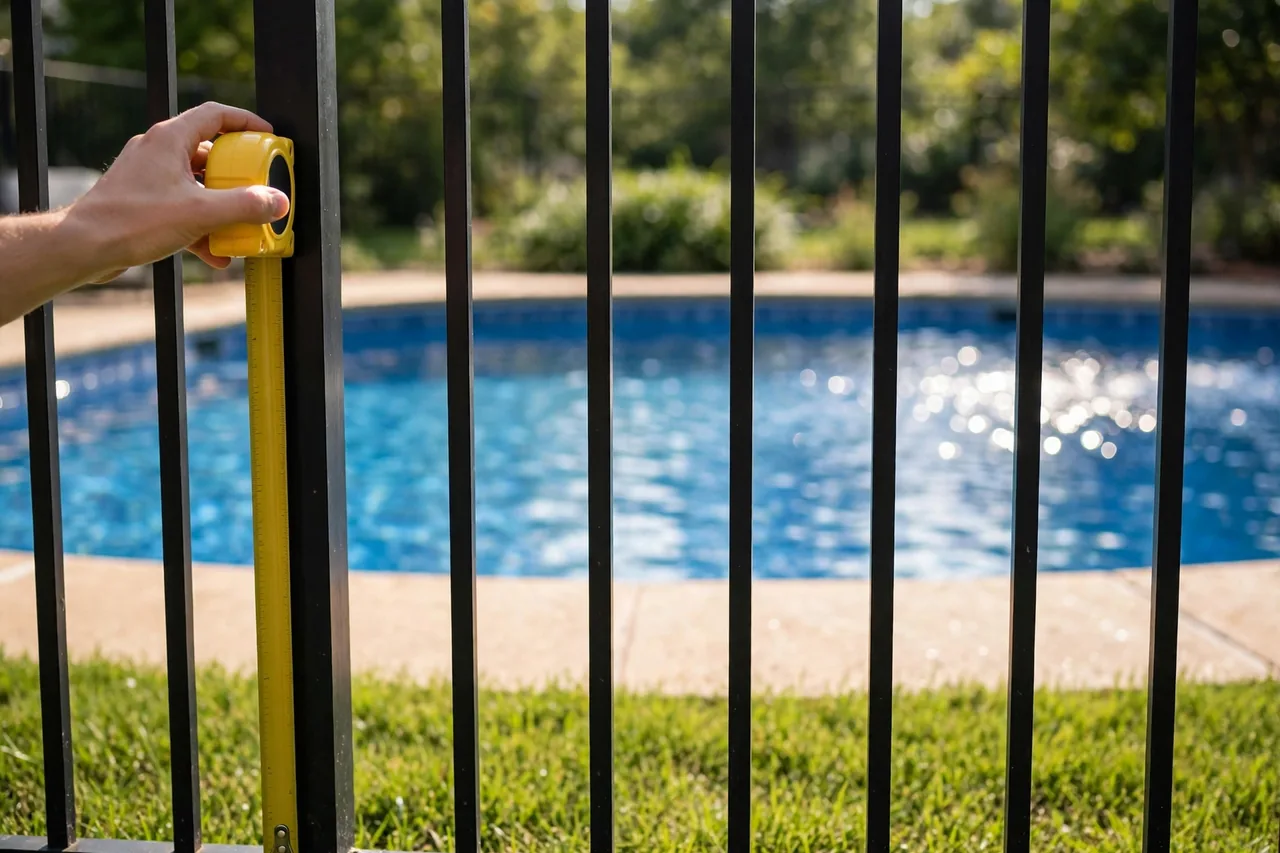
The baseline minimum height for a pool barrier is 48 inches, measured on the side facing away from the pool. That number comes from both ASTM F1908 and the ISPSC, and it applies to fences, walls, and other barriers around the pool.
Height is measured from grade, the ground level outside the fence, and the 48-inch height must hold for at least 3 feet out from the fence face around the whole perimeter. A slope, a planter, a pool pump, or a storage box near the fence can give a child a boost over the top, so keep that 3-foot zone clear of anything climbable. Fine Homebuilding’s guide to a code-compliant pool barrier walks through these ISPSC Section 305 rules, including the 3-foot clear zone and the 4-foot construction fence required while a pool is being built.
Where the pool wall itself sits above grade, as with an above-ground pool, the barrier may sit at ground level or on top of the pool structure. In that case the pool wall can count as the barrier if it is at least 48 inches high all the way around and the manufacturer allows it. Ladders and steps must then be secured, locked, removed, or fenced, since an open ladder defeats the whole barrier.
During construction, the rules start early. A fence at least 4 feet tall must surround the building site from the time digging starts until the permanent barrier is complete, because an open hole with water in it is a drowning risk too.
Openings, Gaps, and the 4-Inch Sphere Test
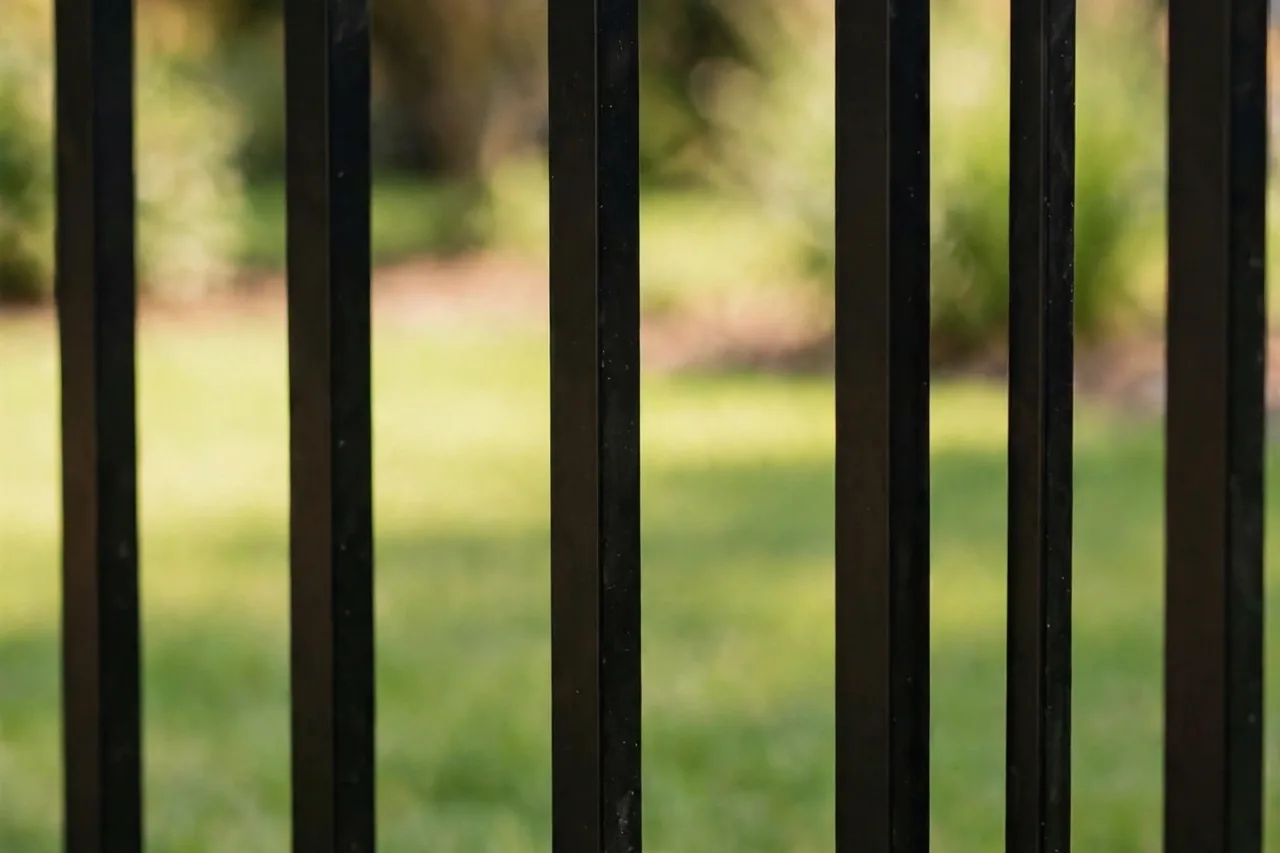
A fence that is tall enough can still fail if a child can slip through it or under it. Inspectors test this with a simple tool: a 4-inch diameter ball. If a 4-inch ball can pass through any opening, the fence fails.
The gap under the fence may not exceed 2 inches, measured on the side facing away from the pool. That tight gap stops a toddler from crawling under the barrier. Where the barrier sits on top of an above-ground pool structure, the gap may be up to 4 inches.
Vertical picket spacing depends on the horizontal rails. When the tops of the horizontal members are less than 45 inches apart, the vertical members must be spaced no more than 1.75 inches apart, because the close rails give a child footholds. When the horizontal members are 45 inches or more apart, vertical spacing may be up to 4 inches. Decorative cutouts inside vertical members must also stay within 1.75 inches.
Chain-link fences have their own limit. The maximum mesh size is a 2.25-inch square, unless slats fastened at the top or bottom shrink the openings to no more than 1.75 inches. Diagonal or lattice members may form openings of no more than 1.75 inches.
Horizontal rails must sit on the pool side of the fence when they are close together, so a child outside cannot use them as a ladder. Solid barriers such as masonry walls must have no dents or bumps a child could use as a foothold, apart from normal construction joints.
Gate Rules: Self-Closing, Self-Latching, Opening Outward
The gate is where most pool fences fail inspection, because a gate that stays open is no barrier at all. Every pedestrian gate in a pool barrier must open outward, away from the pool, and must close and latch by itself.
The latch release matters as much as the latch. Under the 2021 and 2024 editions of the ISPSC, a release on the outside of the gate that is not self-locking must sit at least 54 inches above grade. A key, combination, or electronic self-locking latch may sit no higher than 54 inches. Under the 2015 and 2018 editions, a release lower than 54 inches must sit on the pool side of the gate, at least 3 inches below the top of the gate, with no opening larger than half an inch within 18 inches of it. Your local code names the edition it uses, so confirm which rule your inspector follows.
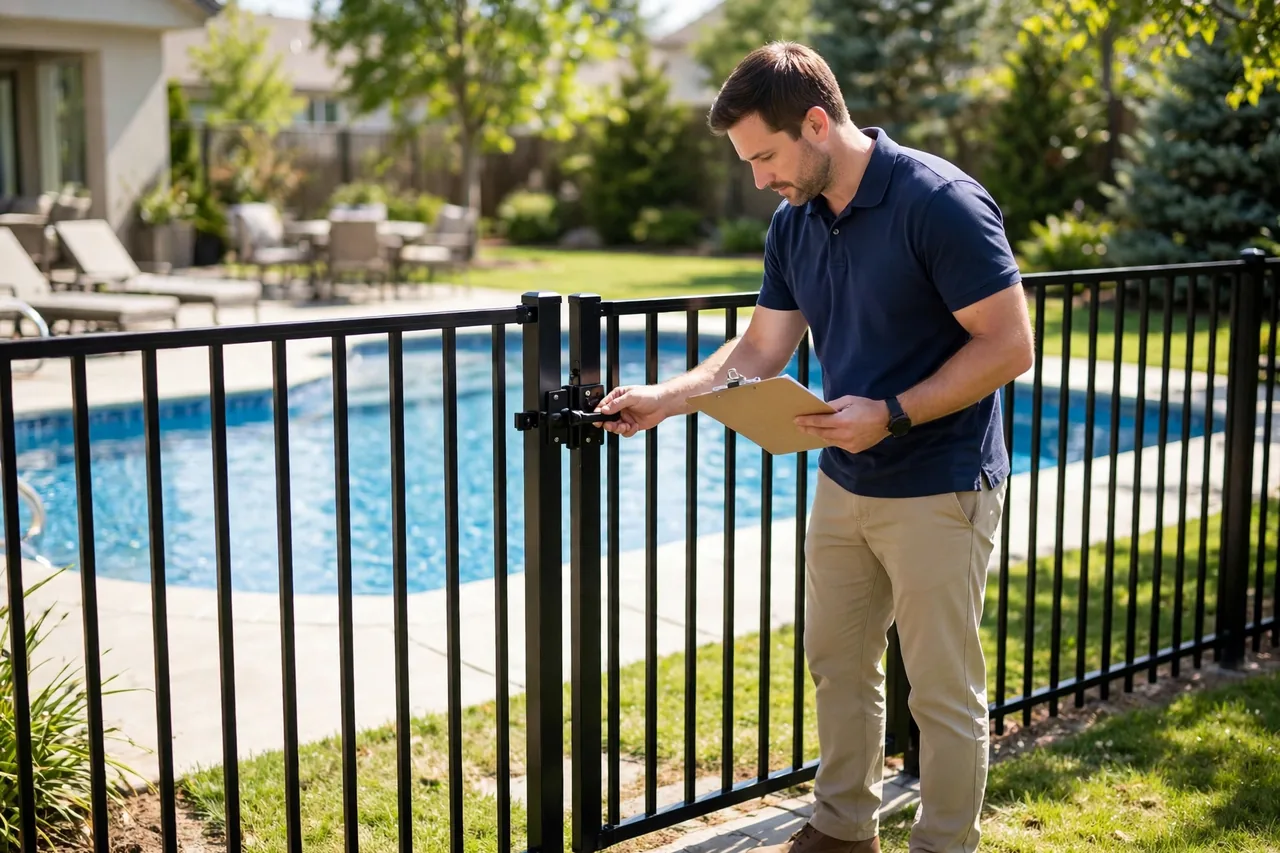
Test your gate the way an inspector does. Open it fully and let go. It must swing shut and latch without a push. Then push on it from outside to check that the latch holds. Do this test every month, because hinges sag, springs weaken, and a gate that worked in spring may drag by late summer.
Gates must also fit a locking device, so you can lock the pool area when it is not in use. Other gates in the barrier, such as a wide equipment gate, must have a self-latching device as well.
When the House Wall Is Part of the Barrier
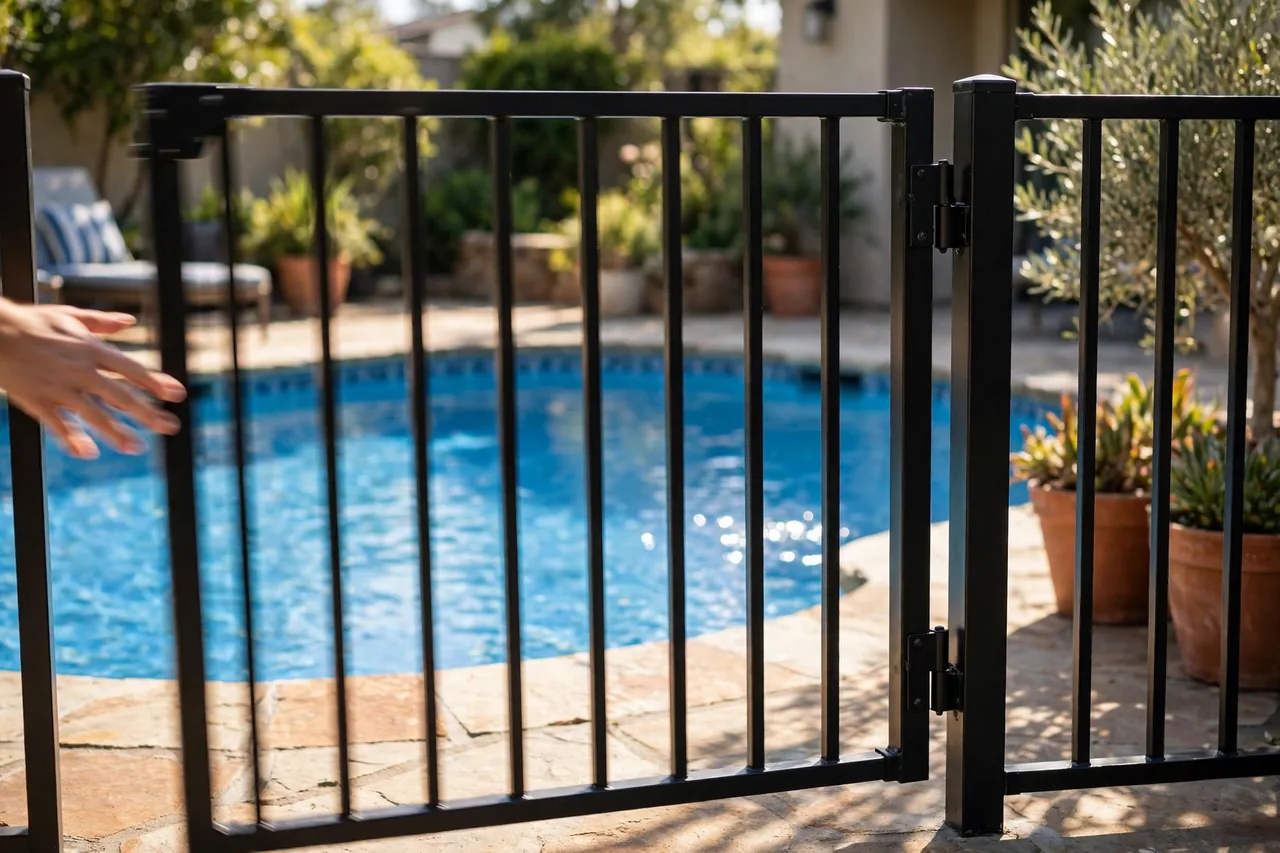
Many homes use one wall of the house as part of the pool barrier, and the code allows this only with extra protection. Doors and windows that open directly into the pool area need alarms or self-closing, self-latching devices, depending on your local code.
Some states require alarms on every door that gives direct pool access. Florida, for example, pairs its 48-inch barrier rule with door alarms on all direct-access doors. Other states allow a powered safety cover that meets ASTM F1346 as an alternative to a full barrier, and spas with a lockable safety cover meeting the same standard may skip the barrier entirely.
Never assume your setup qualifies. Ask your building department whether your house wall, doors, and alarms meet the local rule, and get the answer in writing before you skip any part of the fence.
Pool Fence Rules by State: What Changes
State rules differ more than most owners expect, so a fence that passes in one state can fail in another. The table below shows the statewide pattern verified against official sources in late 2026.
Pool fence rules by state, statewide layer only
| Rule | What it means | Examples |
|---|---|---|
| Minimum height 48 inches | The model-code baseline, used by most states | Most states with a statewide rule |
| Minimum height 60 inches | Stricter statewide height | Arizona, California |
| Door alarms required | Alarms on doors with direct pool access | Florida, Connecticut, New York (pool alarm) |
| No statewide rule | City and county codes set the rule | About 15 states leave it local |
| Above-ground pool wall counts | Pool wall is the barrier if 48 inches and allowed | Model code, most adopting states |
California’s rule comes from Health and Safety Code Section 115922, which adds latch-height requirements, and Arizona’s comes from its state statute. A state-by-state guide that checks every state against its own statute or building code, updated in September 2026, confirms that only Arizona and California require 60 inches statewide, and that 26 states set a statewide rule while 24 leave it to cities and counties. The guide is published by FenceLevel at fencelevel.com, and it links each state’s rule text so you can read the source yourself.
Always confirm your own state and town rules. A statewide summary cannot show your town’s amendments, and towns often add height, alarm, or permit rules that go beyond the state code.
Materials: What Works and What Fails
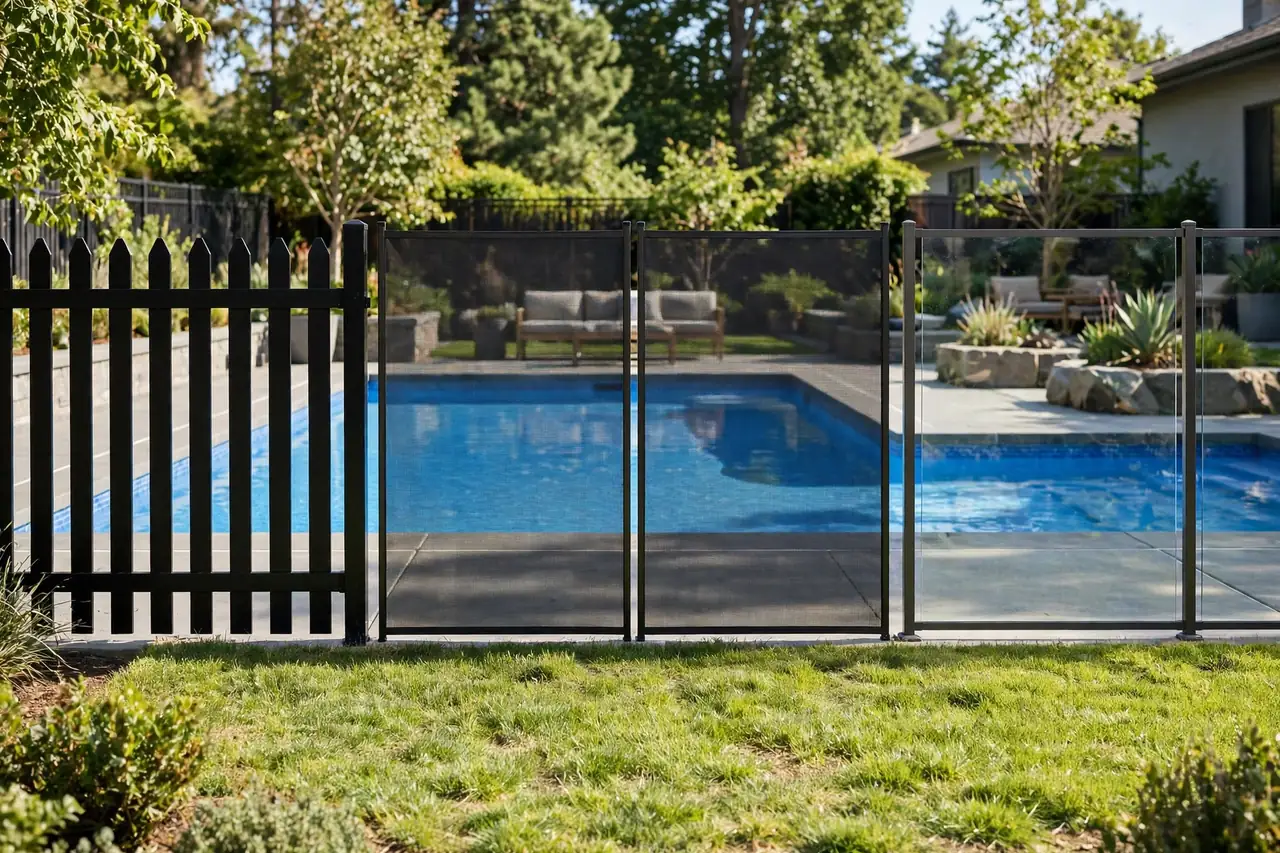
The code sets performance rules, not a material list, so aluminum, vinyl, wrought iron, mesh, glass, and wood can all pass if they meet the height, opening, and gate rules. Each material has its own weak points.
Aluminum and vinyl fences hold their shape well and resist rust, but check that pickets stay tight and gates do not sag. Wrought iron looks classic and lasts long, yet its widely spaced bars need care to meet the 4-inch sphere rule. Mesh pool fences are removable, which helps when the pool is closed for the season, but they must stay taut and anchored, since a loose mesh panel is easy to push under or aside.
Glass panels give a clear view of the pool, which helps supervision, but they need solid posts and hardware, and they must have no gaps a child can slip through at the edges. Wood fences can pass, but wood warps, rots, and shrinks, so check gaps and gate fit every season. Whatever you choose, pick a fence a small child cannot climb, and keep chairs, planters, and toys away from the outside face.
Permits, Inspections, and Common Failures
Most towns require a permit before you build a pool fence, and an inspection after you finish. Call your building department before you buy materials, not after you build.
Walk your fence with this checklist before the inspector arrives:
- Measure height at several points on the outside face. It must be 48 inches or more everywhere, or 60 inches where your state requires it.
- Push a 4-inch ball against every opening. It must not pass through anywhere.
- Measure the gap under the fence. It must be 2 inches or less.
- Open each gate fully and let go. It must close and latch by itself.
- Check the latch release height against your local code edition.
- Look for climbable objects within 3 feet outside the fence and move them.
- Check that horizontal rails sit on the pool side where the code requires it.
- Confirm the fence forms a complete loop with no gap at the house, deck, or equipment pad.
The most common failures are simple: a gate that does not self-latch, a gap under the fence wider than 2 inches, pickets spaced too far apart, and a chair or planter left against the outside of the fence. Fix these before the inspection, and you save yourself a second visit and a second fee.
What a Pool Fence Costs
Costs vary widely by material, length, and terrain, so treat any single number with care. Mesh and aluminum fences usually cost less than glass or wrought iron, and a flat yard costs less to fence than a slope. Get three written quotes from local installers, and ask each one to confirm in writing that the fence meets your local pool barrier code, including the gate hardware.
Remember that the cheapest bid can cost the most if it fails inspection. A fence that needs rebuilding after a failed inspection costs more than a compliant fence built right the first time, and it leaves the pool unprotected while you wait for the rebuild.
Related Guides
Shape the yard around the fence with swimming pool landscaping ideas that keep sight lines open. If your yard is tight, read backyard pool ideas for a small yard before you plan the barrier line. Furnish the deck outside the fence with outdoor furniture for poolside so the seating stays clear of the barrier.
Frequently Asked Questions
How high does a pool fence have to be?
At least 48 inches in most states, measured on the side facing away from the pool. Arizona and California require 60 inches statewide. Your town may require more, so check the local code before you build.
Does a pool fence gate have to be self-closing?
Yes. Every pedestrian gate in a pool barrier must open outward, close by itself, and latch by itself. A gate that stays open is not a barrier, and it is the most common reason fences fail inspection.
Can the house wall count as part of the pool fence?
Yes, in many codes, but only with extra protection such as alarms or self-closing, self-latching devices on doors and windows that open into the pool area. Some states require door alarms. Confirm the rule with your local building department first.
Do above-ground pools need a fence?
Often yes, but the pool wall itself can serve as the barrier if it is at least 48 inches high all the way around, the manufacturer allows it, and ladders or steps are secured, locked, removed, or fenced. Check your local code, since some states exempt above-ground pools and others do not.
What is the 4-inch sphere rule for pool fences?
It is the test inspectors use for openings: no opening in the barrier may let a 4-inch diameter ball pass through. It applies to picket gaps, mesh, lattice, and gaps near gates, and it stops a small child from squeezing through the fence.
A Short Safety Note
This guide explains general pool barrier rules and is not legal advice. Codes change, towns amend the model code, and your inspector’s word is final. Confirm every measurement and gate rule with your local building department before you build, and keep the fence, gate, and latch in good repair. A fence is one layer of protection, so pair it with supervision, swim lessons, and alarms for the safest pool.
Build it to code, test the gate every month, and the fence will do its quiet job for years.