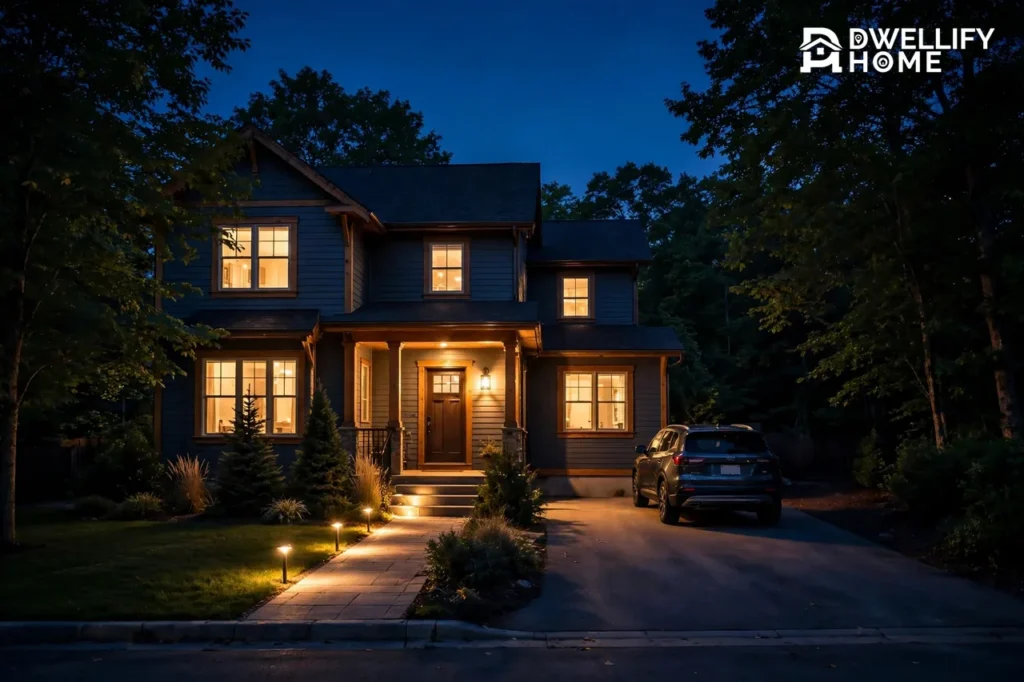
Outdoor security lighting is worth it when it solves a real visibility problem — dark entrances, a blind side yard, a driveway you cannot see from the house. Its real strengths are better visibility, a sudden light that startles and exposes anyone approaching, safer paths at night, and brighter footage for your security cameras. Its real drawbacks are glare, light spilling into neighbors’ windows, false triggers from animals and branches, running costs when lights burn all night, and the hard truth that light alone cannot stop a determined intruder. The verdict: good lighting is one layer of home security, not the whole system.
Homeowners ask this question because the answer is genuinely mixed. A well-placed motion light can change how safe a home feels at night, while a badly placed floodlight can annoy the whole street and still leave the back door in darkness. This guide weighs both sides honestly, compares the main types, and ends with the setup that keeps the benefits and avoids the drawbacks.
Outdoor Security Lighting Pros and Cons at a Glance
Caption: The main benefits and drawbacks of outdoor security lighting, side by side.
| Aspect | Main benefit | Potential drawback |
|---|---|---|
| Visibility | Entrances, paths, and approaches are easy to see | Uneven coverage can leave key areas in shadow |
| Deterrence | Sudden light may discourage someone who wants to stay unseen | Cannot guarantee an intrusion will be prevented |
| Cameras | Brighter light means more usable detail in night footage | Direct light and reflections can overwhelm the image |
| Everyday safety | Safer steps, paths, and driveways at night | Glare can make nearby hazards harder to see |
| Energy use | LEDs and motion controls keep costs low | Always-on brightness and long hours add to the bill |
| Convenience | Automatic controls mean no manual switching | Sensors need the right position and adjustment |
| Neighbors | A lit street helps everyone watch out | Light spill and glare can disturb the people next door |
Pro 1: It Takes Away the Cover of Darkness
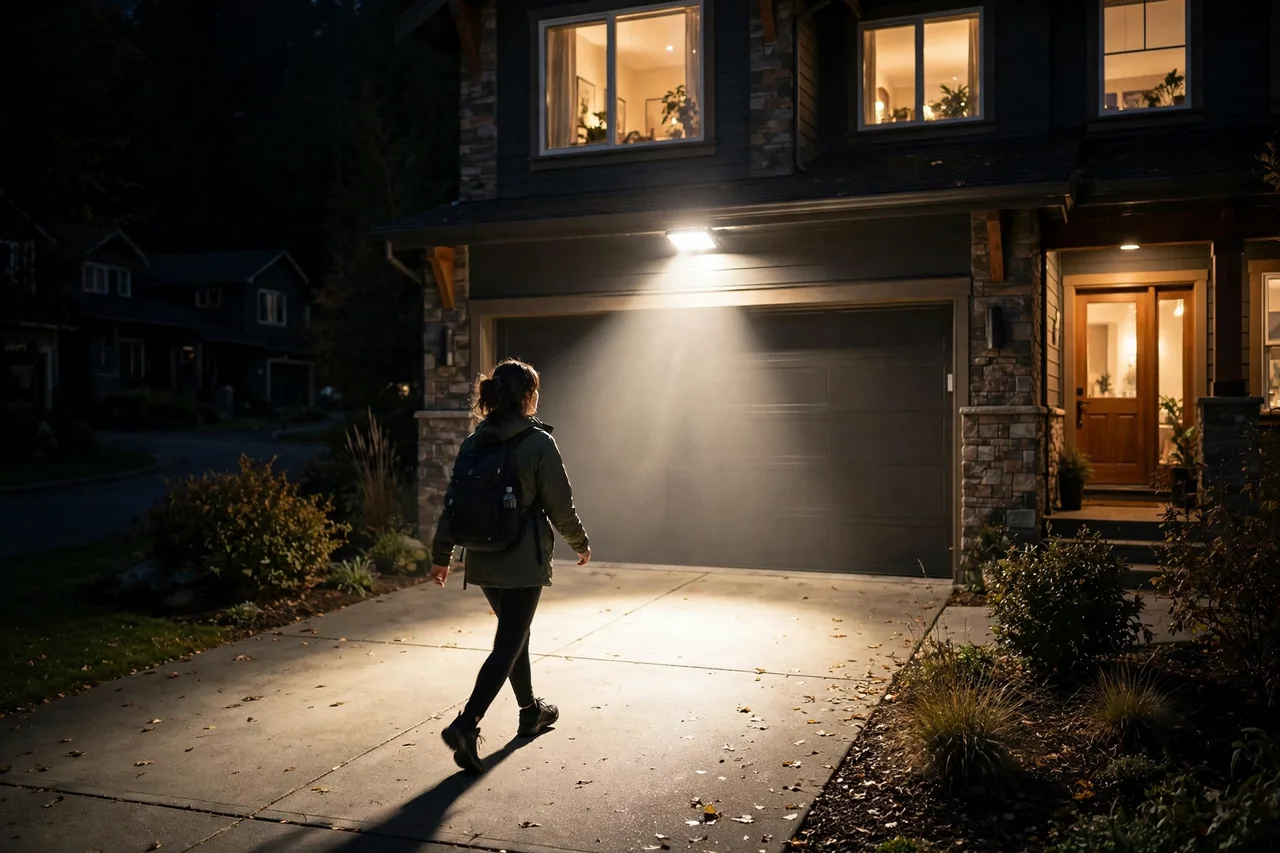
The strongest case for security lighting is simple: burglars prefer to work unseen, and light removes that cover. A motion light that snaps on as someone approaches does more than illuminate — it startles, it exposes, and it signals that the home is watched. Angi’s security lighting guide makes the same point: a bright light turning on unexpectedly can make someone with bad intentions second-guess approaching the home, and it alerts you and your neighbors that someone may be on the property.
The key word is sudden. A porch light that burns all night becomes part of the scenery, and anyone watching the house learns its rhythm. A motion light that fires at 2 a.m. when nobody should be there is an event, not background. The surprise is the deterrent, not the brightness alone.
Pro 2: Safer Nights for Your Family and Guests
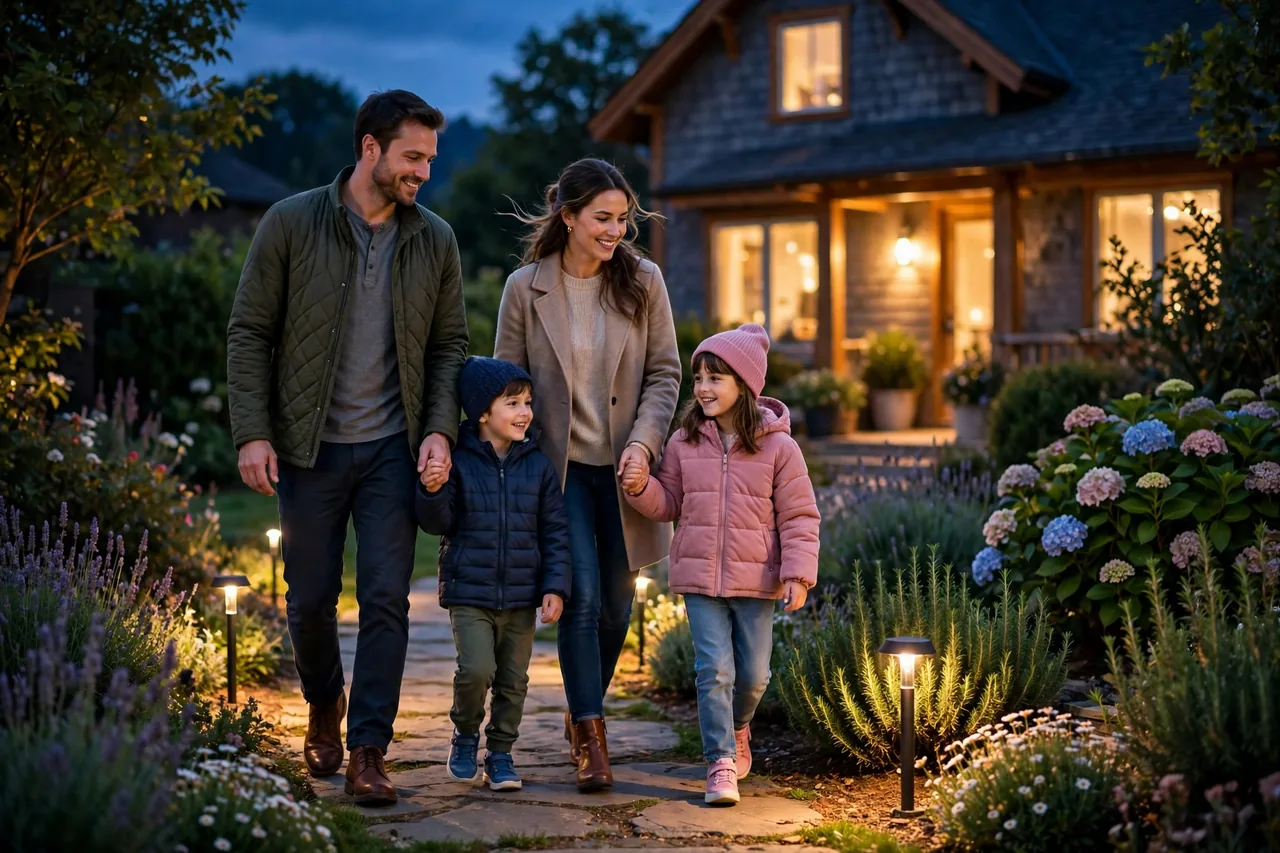
Security is not the only payoff. Good outdoor light keeps people from tripping on steps, missing the edge of the driveway, or fumbling for keys in the dark. Guests find the front door faster, kids and older family members move around the yard more safely, and you can see who is at the door before you open it. This everyday benefit is the one homeowners notice most, because it pays off every single night rather than only on the night something goes wrong.
Path and step lighting earns its keep here too. Low lights along a walkway do not deter anyone, but they stop falls, and falls send far more people to the hospital than break-ins do. A landscape lighting plan that layers path lights with security floods gives you both jobs from one system.
Pro 3: It Makes Your Security Cameras Work Better
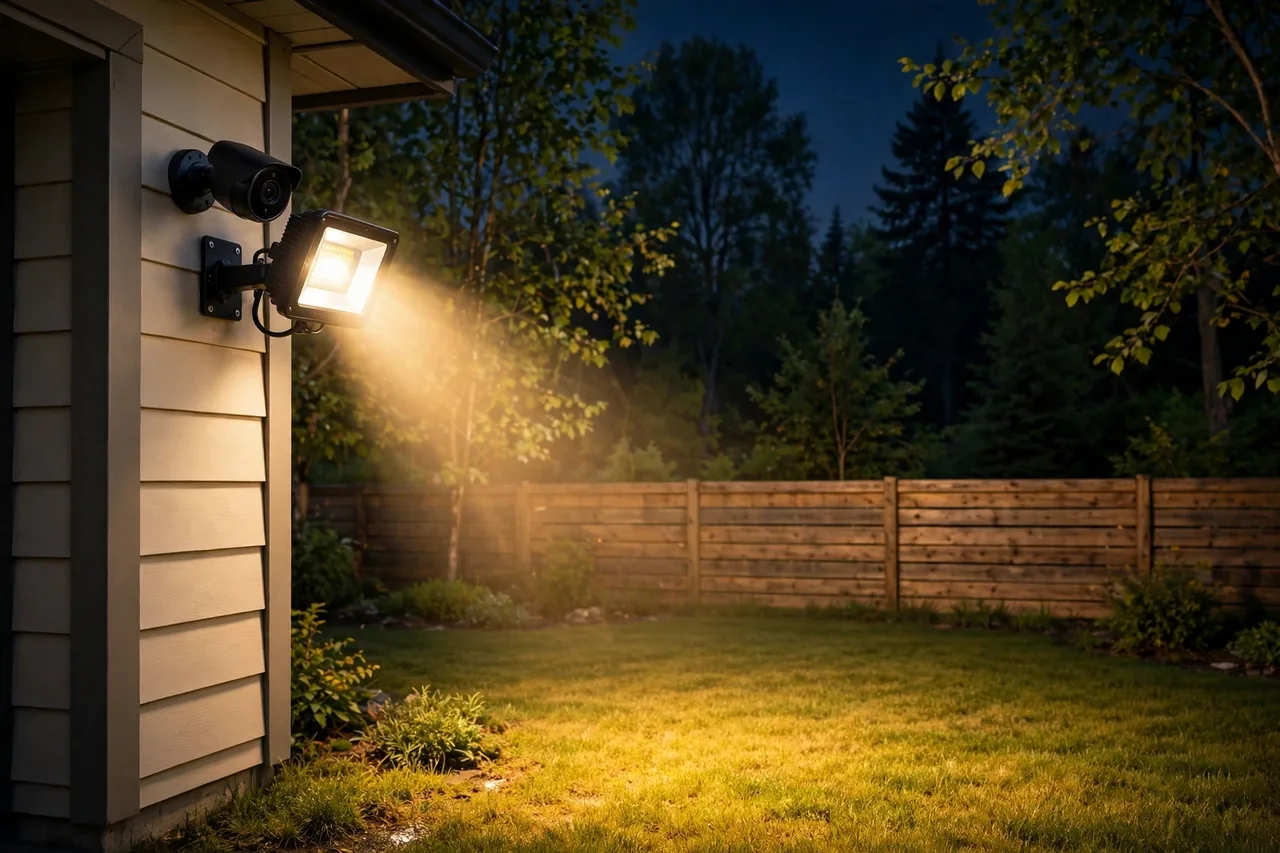
Cameras see poorly in the dark, and a motion light fixes that. When the light fires, the camera gets a bright, detailed scene instead of a grainy gray smear — faces, clothing, and license plates become readable instead of guesswork. Pairing light with a camera multiplies the value of both: the light triggers the camera, and the camera records what the light reveals.
This is also why placement matters for both devices at once. A light aimed straight into a camera lens blinds it with glare and white-out, while a light aimed across the scene from the side gives the camera clean detail. If you already own cameras, add the light where the camera looks, not where it is convenient to mount. Our wide angle security camera guide explains how one camera covers a whole yard when the light is placed to help it, and our guide to how long security cameras keep footage covers what happens to that video after the light fires.
Pro 4: Low Running Costs With LED and Motion Controls
Modern LED security lights sip power. A 30-watt LED floodlight gives roughly the light of an old 500-watt halogen while using a fraction of the electricity, and a motion sensor means it only burns for a minute or two at a time instead of all night. Solar models cost nothing to run at all beyond the purchase price, and battery models need no wiring.
That efficiency is a real pro, but only when the controls are set right. A motion light with its sensitivity cranked up and its timer set to 20 minutes burns nearly as much as an always-on light, because it fires at every branch and stays on for every cat. Set the timer to one to three minutes and the sensitivity to medium, and the running cost stays small.
Con 1: Light Alone Cannot Protect a Home
The biggest drawback is the expectation gap. A standalone security light illuminates an area. It does not lock a door, identify a visitor, record an incident, or call for help. A determined intruder who knows the light is there will simply approach from the dark side, wear a hood, or move fast. Lighting is one layer of security, never the whole system.
Think of it as part of a stack: good locks, solid doors, trimmed shrubs that remove hiding spots, a camera that records, and light that exposes. Any one layer alone is easy to beat; together they make a home a poor target. If the budget only stretches to one thing, a good lock on a weak door beats a floodlight on a strong one.
Con 2: Glare Can Make Things Worse, Not Better
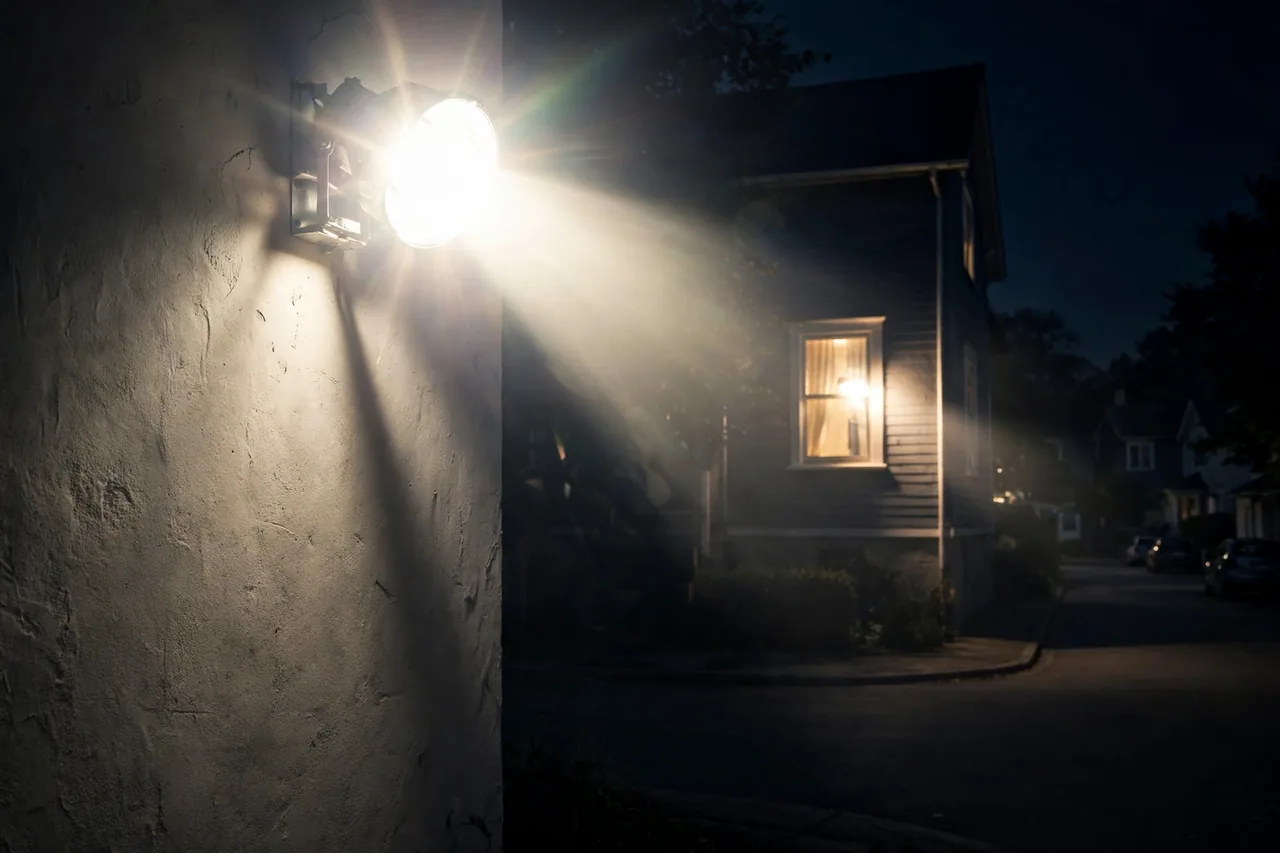
Too much light in the wrong place creates glare, and glare makes the dark areas around the light harder to see — including the person standing just outside the beam. An exposed bulb aimed at eye level blinds you as you walk toward the door, and it blinds your cameras too. The fix is aiming: point fixtures down and across the area, shield the bulb so you see the lit ground rather than the bulb itself, and use the lowest brightness that does the job.
Warm white light around 2700K to 3000K also helps near doors and patios, where harsh daylight-white light feels aggressive. Save the bright 5000K daylight white for driveways and side yards, where detail matters more than mood. Our patio lighting ideas guide shows how warm, layered light keeps an evening pleasant while still keeping the space visible.
Con 3: Light Spill, Neighbors, and the Night Sky
A floodlight that spills into the neighbor’s bedroom window is a fast way to ruin a relationship, and in some neighborhoods it can break HOA rules or local light-pollution ordinances. Check your HOA rules before you mount anything bright, and aim every fixture so its beam stays on your property. Motion sensors help here too: a light that only fires for a minute is far less annoying than one that burns all night.
Wildlife pays a price as well. Bright all-night light disturbs birds, insects, and bats, and it washes out the night sky for everyone on the street. Shielded fixtures, warm color temperatures, and motion-only operation keep the impact small while keeping the security benefit.
Con 4: False Triggers, Maintenance, and Upfront Cost
Motion sensors fire at animals, wind-blown branches, passing cars, and heat from vents and sun-baked walls. Every false trigger wastes power and trains you to ignore the light, which is exactly the wrong lesson. Good aiming and a medium sensitivity setting fix most of it, but some false triggers are unavoidable in a yard with trees and wildlife.
Maintenance is real too: solar panels need cleaning, batteries need replacing every couple of years, and sensor lenses need wiping. And the upfront cost adds up — Angi puts professional installation of motion-sensor lighting at $350 to $500, and a full setup with several fixtures and a camera can pass $1,000. Angi’s security lighting guide breaks down those costs by type and notes that motion-sensor lights remain the most cost-effective option because they only run when triggered.
Motion Sensor vs. Dusk-to-Dawn vs. Always-On
Caption: The three main security lighting types compared.
| Type | Pros | Cons | Best for |
|---|---|---|---|
| Motion sensor | Startles intruders; energy-efficient; alerts you | False triggers; needs aiming and adjustment | Driveways, side yards, garages |
| Dusk-to-dawn | Steady light all night; welcoming; simple | Uses more power; becomes predictable background | Front doors, porches, paths |
| Always-on floodlight | Maximum coverage; no sensor to fail | Highest cost; glare; annoys neighbors | Large yards, rural properties |
| Smart / scheduled | Remote control; random patterns; camera links | Higher cost; needs Wi-Fi and setup | Frequent travelers, smart homes |
Most homes end up with a mix: dusk-to-dawn at the front door for a welcoming glow, motion floods at the driveway, garage, and side yard for the security job, and a smart schedule for the times the house is empty. That mix is the practical answer to the pros-and-cons question, because each type covers the other’s weak spot.
What Security Lighting Costs to Run and Install
The money question has two parts: the fixture and the electricity. A basic solar motion light costs $20 to $35, a good hardwired LED floodlight costs $40 to $100, and a floodlight camera costs $70 to $250 depending on the brand. Professional installation of a hardwired motion-sensor light runs $350 to $500 per Angi, while a DIY solar install costs nothing but the screws.
Running costs stay small when the light only fires on motion. A 30-watt LED running three minutes at a time, a dozen times a night, uses less than a dollar of electricity in a month at typical US rates. The same light burning all night, every night, costs several dollars a month and wears out faster. Motion control is what keeps security lighting cheap to own. Lumetro’s security lighting guide makes the same point: efficient fixtures and sensible controls limit consumption, while unnecessary brightness and long hours are what add cost.
Who Benefits Most — and Who Can Skip It
Security lighting pays off most for homes with dark approaches: a long driveway, a side gate nobody can see, a backyard that backs onto woods or an alley, or a front door hidden behind shrubs. It also pays off for homes that sit empty during the day or for weeks at a time, where a motion light firing is the only sign anyone is watching.
You can skip the big floodlights if your street is already well lit, your entrances are visible from the road, and your doors and windows are strong. In that case a single motion light over the back door and a front porch camera are enough. And if your home already has a full camera system with good night vision, extra floods may add glare without adding information — check your camera footage at night before you buy more light.
How to Get the Pros Without the Cons
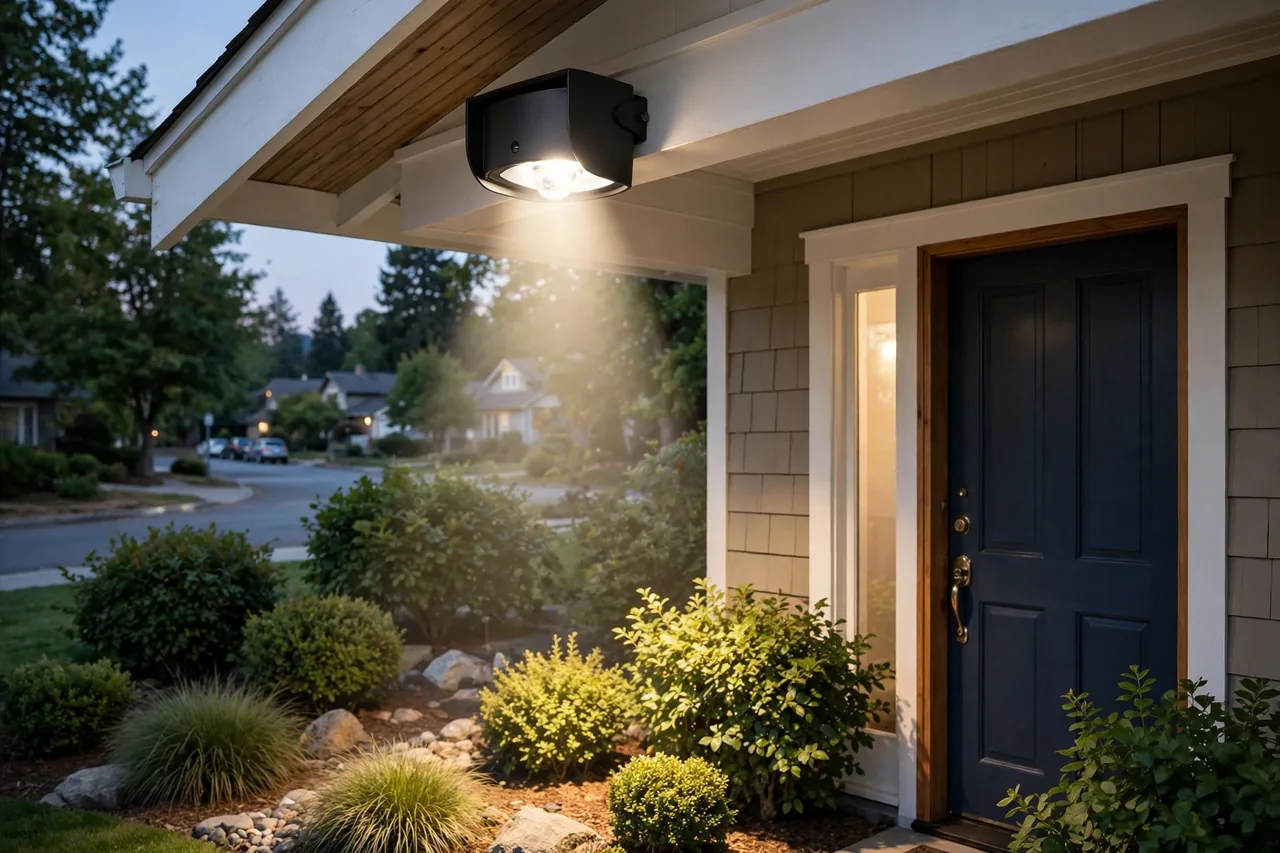
Five rules keep the benefits and cut the drawbacks. First, light the approaches, not the whole yard — doors, gates, and the paths between them. Second, mount fixtures 8 to 10 feet high and aim them down and across, never at the street or a neighbor’s window. Third, use motion sensors for security zones and dusk-to-dawn only at the front door. Fourth, pick LED fixtures with an IP65 weather rating and warm white light near living spaces. Fifth, pair the light with a camera and good locks, because light is a layer, not a system.
Electrical safety note: hardwired security lights connect to your home’s 120-volt wiring. Turn off the breaker and confirm the wires are dead before you touch anything, and hire a licensed electrician for new wiring or if you are unsure.
Frequently Asked Questions
Do motion sensor lights really deter burglars?
They help, but they are not a guarantee. A sudden bright light removes the cover of darkness and signals that someone may be watching, which pushes many opportunistic intruders to move on. They work best as one layer alongside good locks, a camera, and trimmed shrubs that remove hiding spots.
Are outdoor security lights worth the cost?
Yes, when they solve a real visibility problem — a dark entrance, a blind side yard, or a driveway you cannot see. A basic solar or battery light costs under $30 and installs in minutes, while a hardwired setup with professional installation runs $350 to $500 per Angi. Start with one light at the darkest entrance and add more only where the dark remains.
Do security lights use a lot of electricity?
No, not with modern LEDs and motion controls. A 30-watt LED floodlight uses a fraction of the power of an old 500-watt halogen, and a motion sensor means it only runs for a minute or two at a time. Always-on floods cost far more to run, which is why motion control is the smarter default.
Can outdoor security lights annoy my neighbors?
Yes, if they spill into a neighbor’s windows or burn all night. Aim fixtures so the beam stays on your property, use shielded fixtures and warm white light near boundaries, and prefer motion sensors over always-on lights. Check HOA rules before mounting anything bright.
Motion sensor or dusk-to-dawn — which is better for security?
Motion sensor lights are better for security, because the sudden switch-on startles and reveals. Dusk-to-dawn lights are better for steady, welcoming light at entrances. Most homes use both: dusk-to-dawn at the front door and motion floods at the driveway, garage, and side yard.
Outdoor security lighting is worth it when it lights the right spots and stays out of everyone else’s way. Cover the approaches, aim the light down and across, let motion do the work, and back it up with a camera and good locks. Do that, and you keep the visibility, the deterrence, and the safer nights — without the glare, the neighbor complaints, or the false sense of security. If you are ready to choose the fixtures, our best home security camera system guide shows how lights and cameras work together as one system.