The best fire extinguisher for a kitchen is a 5-pound ABC dry chemical extinguisher, rated 1-A:10-B:C, for most home kitchens, plus a Class K wet chemical extinguisher if you deep-fry often. The ABC unit handles wood, paper, grease, and electrical fires, while the Class K unit is the only one built for the super-hot cooking oil fires that an ABC unit cannot cool down. This guide explains which type fits your kitchen, where to hang it, and how to use it.
A kitchen fire is the most common house fire, and the wrong extinguisher makes it worse: water on a grease fire throws burning oil across the room, and a dry chemical extinguisher on a deep-fryer fire can knock the flames down without cooling the oil, so the fire comes back. The type on the label decides what the extinguisher can safely fight, and the label is the first thing to read before you buy. The U.S. Fire Administration lists five extinguisher types, and only two of them belong in a home kitchen.
Which Fire Extinguisher Does a Kitchen Need?
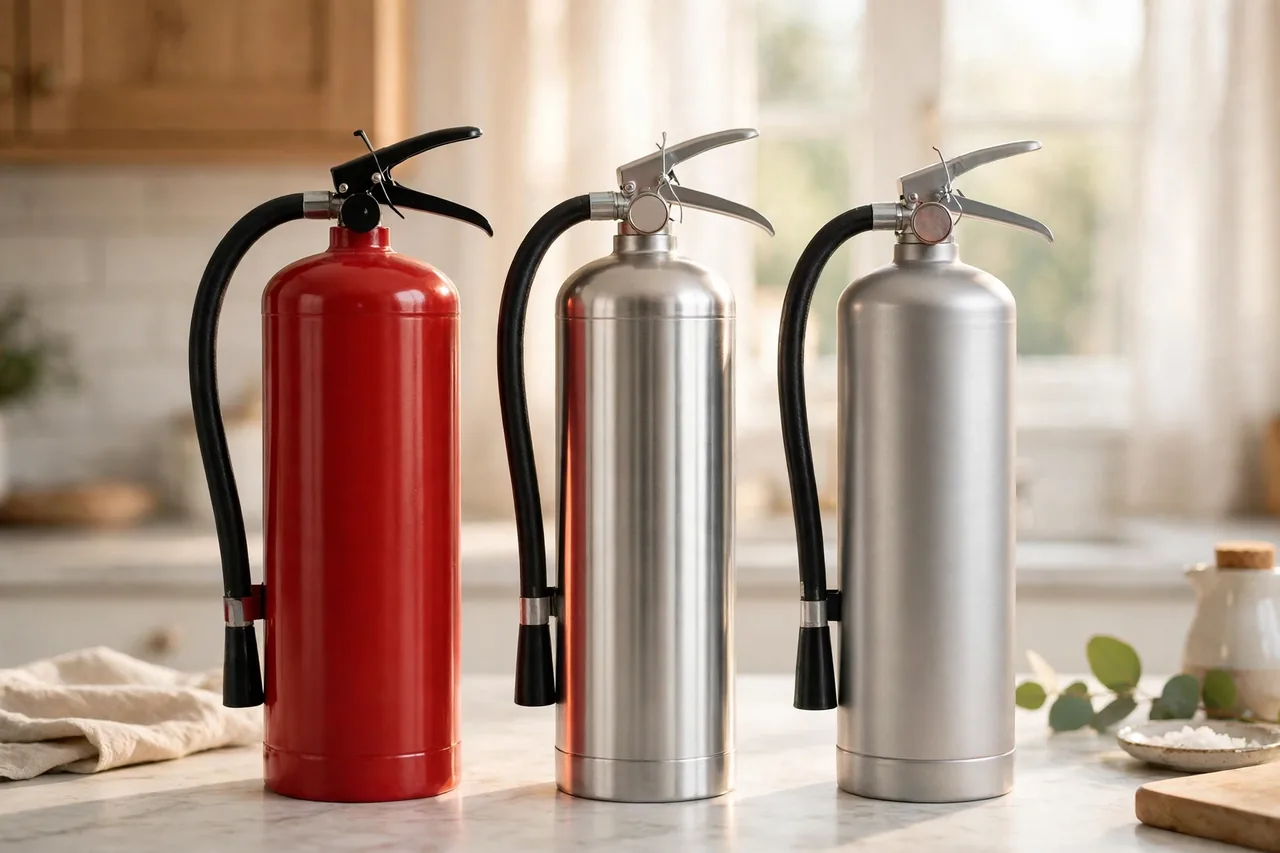
A home kitchen needs a multipurpose ABC dry chemical extinguisher as its first unit, rated at least 1-A:10-B:C, in a 5-pound size. The ABC rating means it fights ordinary combustibles like wood and paper, flammable liquids like grease and oil, and energized electrical equipment like a toaster or a microwave, which covers nearly every fire a home kitchen produces. The 5-pound size is the sweet spot: big enough to put out a real stove fire, light enough for most adults to lift and aim.
Add a Class K wet chemical extinguisher if you deep-fry, pan-fry with large amounts of oil, or cook with a wok at high heat. Class K units spray a potassium-based wet chemical that reacts with hot oil to form a soapy foam layer, a process called saponification, which smothers the flames and cools the oil below its ignition point so the fire cannot come back. An ABC extinguisher can knock down a grease fire, but it cannot cool the oil, so a deep-fryer fire needs the Class K unit. The U.S. Fire Administration’s guide to choosing and using fire extinguishers lists the five classes and explains that most home improvement stores carry multipurpose extinguishers covering Class A through Class C.
Caption: Kitchen fire classes and the right extinguisher for each.
| Fire Class | What Burns | Right Extinguisher |
|---|---|---|
| Class A | Wood, paper, cloth, curtains | ABC dry chemical |
| Class B | Grease, oil, flammable liquids | ABC dry chemical |
| Class C | Energized appliances, wiring | ABC dry chemical |
| Class K | Cooking oils and fats, deep fryer | Class K wet chemical |
| Water on grease | Never — spreads burning oil | No extinguisher, call 911 |
The number in a rating tells you how much fire the unit can handle. The U.S. Fire Administration explains that in a 1-A:10-B:C rating, the 1 before the A equals 1.25 gallons of water on a wood fire, the 10 before the B means it can handle a liquid fire up to 10 square feet, and the C means it works on energized electrical equipment. A bigger number means a bigger fire, and a bigger unit, so a 5-pound 1-A:10-B:C unit is the right size for a kitchen, while a 2-A:10-B:C unit suits a garage better.
ABC vs Class K: The Kitchen Decision
An ABC dry chemical extinguisher is the all-rounder for a home kitchen, and a Class K wet chemical extinguisher is the specialist for cooking oil. The ABC unit uses monoammonium phosphate, a fine yellow powder that interrupts the chemical chain reaction of the fire, and it works on wood, paper, grease, oil, and electrical fires alike. It is the most affordable and widely available option, and it is the unit most fire departments recommend as a first extinguisher for the home.
The Class K unit is the better tool for the most dangerous kitchen fire of all: burning cooking oil. Its wet chemical agent cools the oil as well as smothering it, which is the step that stops reignition, and dry chemical units cannot do that step. A Class K extinguisher guide explains the same cooling gap: dry chemical units cannot reduce oil temperatures enough to prevent reignition, and they can splash burning oil. Class K extinguishers are required by code in restaurants and commercial kitchens, and they are a strong recommendation for a home kitchen with a deep fryer or frequent high-temperature frying. A kitchen safety guide puts it plainly: for most residential kitchens, a Class K or a multipurpose dry chemical ABC extinguisher is the only responsible choice.
Buy the ABC unit first, then add the Class K unit if you fry often. Buy the ABC extinguisher first, and add a Class K unit only if you deep-fry or pan-fry with large amounts of oil. A Class K unit is heavier, costs more, needs more pressure to discharge, and is not rated for electrical fires, so it cannot replace the ABC unit. Keep both if you fry often, and keep only the ABC unit if you mostly bake, boil, and use the microwave.
What to Buy: Three Kitchen Extinguishers Compared
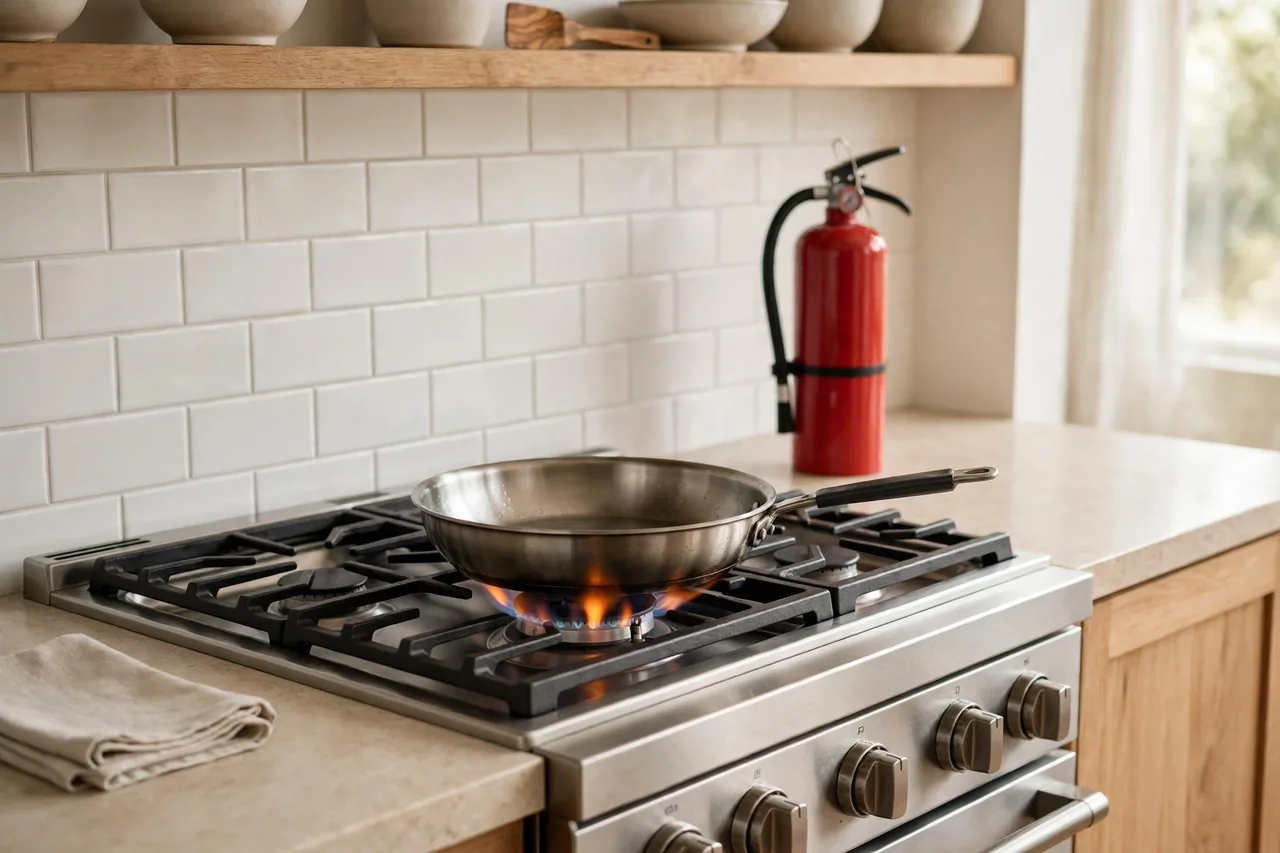
Three extinguishers cover nearly every home kitchen, and the prices below come from a comparison updated 17 November 2026, with each price read from the maker’s store or a major retailer that day. Buy the 5-pound size, check that the pressure gauge reads in the green, and check that the unit carries a UL Listed label, which is the mark that a nationally recognized lab certified it.
Caption: Kitchen extinguishers compared — prices from a comparison updated 17 November 2026.
| Extinguisher | UL Rating | Weight | Price | Best For |
|---|---|---|---|---|
| First Alert HOME1 | 1-A:10-B:C | About 5 lb | $29.95 | Most kitchens |
| Kidde FA110G Basic 110 | 1-A:10-B:C | 3.9 lb | $26.47 | Lightest ABC unit |
| First Alert KITCHEN5 | 5-B:C | About 5 lb | $25.95 | Grease-fire specialist |
The First Alert HOME1 is the best first extinguisher for most kitchens. It is rechargeable, it carries a 1-A:10-B:C rating, it has a color-coded pressure gauge you can read at a glance, and it comes with a mounting bracket. The Kidde FA110G is the lightest ABC unit here at 3.9 pounds, with a 12-year service-free aluminum cylinder, which makes it the easiest to lift and aim for smaller adults. The First Alert KITCHEN5 is a wet chemical unit built for kitchen grease fires, rated 5-B:C, and it is the right second unit for a home that deep-fries. Prices change with sales, so check the live price before you buy, and buy from a retailer that shows the unit in stock.
Where to Put a Kitchen Fire Extinguisher
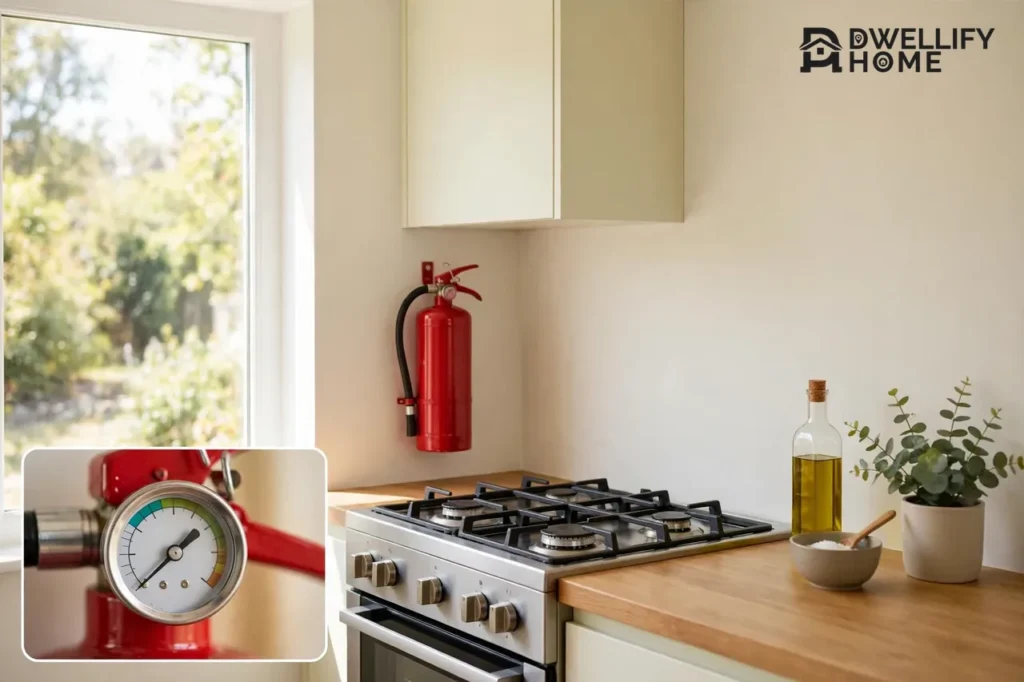
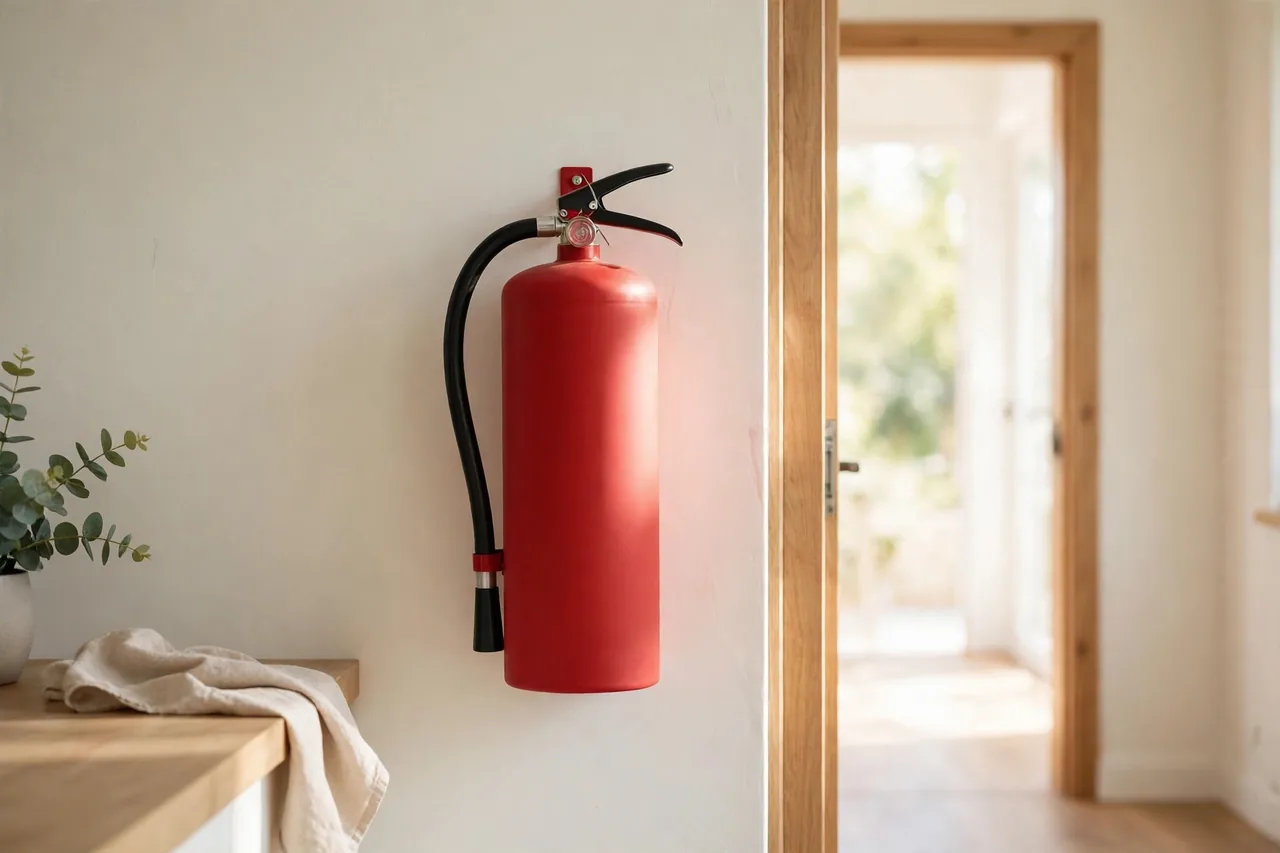
Put the kitchen extinguisher near an exit, not next to the stove. The right spot is on the wall by the kitchen door, or in the cabinet nearest the exit, where you can grab it on your way out and where the fire cannot block your path to it. If the extinguisher sits beside the stove, the flames and smoke you need it for will block you from reaching it, which is the most common placement mistake in home kitchens.
Mount it where every adult in the house can reach it, with the handle at about chest height and the gauge facing out so anyone can see at a glance whether it is charged. A kitchen extinguisher guide recommends keeping an ABC unit at least 10 feet from the stove to avoid accidental discharge from heat, and at least 30 inches from the stove if it is a Class K unit, because heat from normal cooking can damage the unit or trigger it. Never store an extinguisher in a cabinet above the stove, in a closet behind clutter, or on top of the refrigerator where it can fall.
One extinguisher per floor is the minimum, and the kitchen unit is the most important one in the house. Put a second ABC unit near the bedrooms or at the top of the stairs, so a fire anywhere in the house has an extinguisher within reach. Our smoke alarm check guide covers the other half of kitchen fire safety, because an extinguisher only helps if the alarm wakes you in time.
How to Use a Kitchen Fire Extinguisher: PASS
Use the PASS method, which the U.S. Fire Administration teaches as the way to operate a fire extinguisher. Pull the pin and point the nozzle away from you. Aim low, at the base of the fire, not at the flames. Squeeze the lever slowly and evenly. Sweep the nozzle from side to side until the fire is out, then watch the area in case the fire comes back.
- Pull the pin. Hold the extinguisher with the nozzle pointing away from you and release the locking mechanism.
- Aim low. Point the nozzle at the base of the fire, where the fuel is, not at the top of the flames.
- Squeeze the lever. Squeeze slowly and evenly to discharge the agent in a steady stream.
- Sweep side to side. Sweep the nozzle across the base of the fire until it is out, then watch for reignition.
Stand 6 to 8 feet from the fire, with your back to an exit, and never let the fire get between you and the door. If the extinguisher runs out before the fire is out, leave at once and call 911 from outside. If the fire is bigger than a wastebasket, if smoke fills the room, or if you have any doubt at all, do not fight it: get out, close the door behind you, and call 911. An extinguisher is for a small fire in its first minute, not for a fire that has already spread.
What Most People Get Wrong About Kitchen Fires
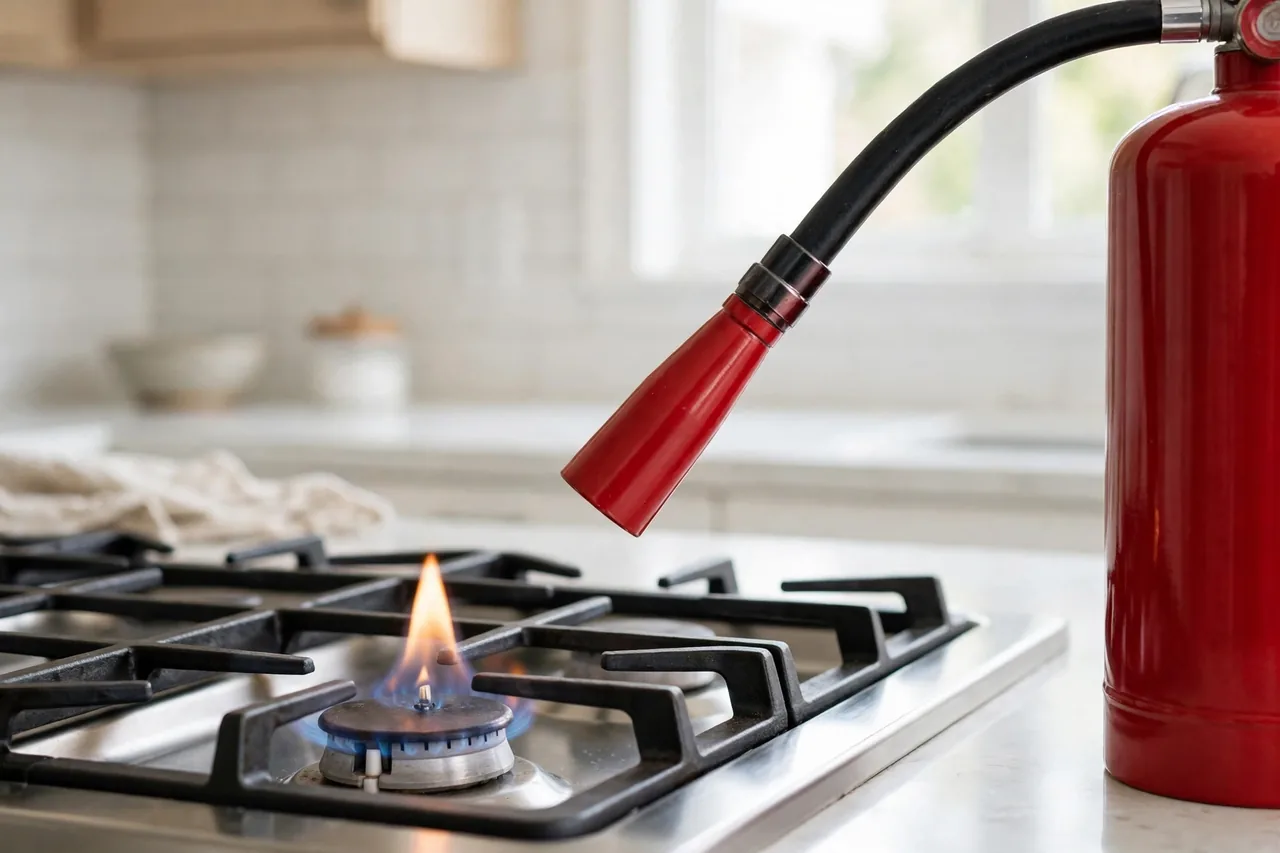
Most people get this wrong: they reach for water when a pan catches fire. Water on a grease fire is the most dangerous mistake in a kitchen, because the water flashes to steam instantly and throws burning oil across the room, spreading the fire to cabinets and curtains and causing severe burns. Never use water on a grease fire, and never carry a burning pan to the sink, because the movement fans the flames and spills burning oil.
The second mistake is using the wrong extinguisher on the wrong fire. A water-based extinguisher on a grease fire spreads the oil, and an ABC extinguisher on a deep-fryer fire may knock the flames down without cooling the oil, so the fire reignites minutes later. Match the agent to the fire: ABC for most kitchen fires, Class K for deep-fryer oil, and nothing but distance and a 911 call for a fire that has spread past the pan.
The third mistake is keeping a dead extinguisher. An extinguisher with a gauge in the red, a broken seal, a dented cylinder, or a missing pin is not an extinguisher, it is a decoration. Check the gauge every month, check the seal and the hose, and replace the unit when it is past its service life or after any use, even a short burst. A used extinguisher is empty until it is recharged or replaced, and it will not save you twice.
Kitchen Fire Safety Beyond the Extinguisher
An extinguisher is the last line of defense, not the first. The first line is prevention: never leave cooking unattended, keep towels and curtains away from the stove, keep a lid nearby for every pan you fry in, and turn pot handles inward so a child cannot pull a pan down. A lid is the fastest way to kill a small pan fire: slide it over the pan to smother the flames, turn off the heat, and leave the lid on until the pan is cool.
The second line is detection. A working smoke alarm in or near the kitchen, tested monthly and with fresh batteries, is what wakes you when a fire starts while you sleep or while you are in another room. Our smoke alarm check guide explains how often to test and when to replace the alarm. A fire blanket is the third line: a fiberglass blanket that smothers a small pan fire or wraps a person whose clothing catches fire, and fire blankets are covered in a separate guide on this site.
Finally, make a plan. Every adult in the house should know where the extinguisher is, how to use it, and where to meet outside. Practice the plan once, so nobody has to learn it during a real fire. The plan costs nothing, and it is worth more than any extinguisher on the wall.
A Short Safety Disclaimer
This guide is general information about home fire safety, not professional fire-safety advice. Fire extinguishers are for small fires in their first minute only. If a fire is spreading, if smoke fills the room, or if you feel unsure at any point, leave the house at once, close doors behind you, and call 911 from outside. Never re-enter a burning building. Check your local fire code for extinguisher requirements, and ask your local fire department for hands-on training if you want to practice using an extinguisher safely.
Related Guides
To keep the other half of kitchen fire safety working, read our smoke alarm check guide. Fire blanket picks, smoke detector placement, and the full guide to fire extinguisher types are covered in separate guides on this site. For the rest of the home, read our door reinforcement guide to harden the doors that protect your family.
Frequently Asked Questions
What type of fire extinguisher is best for a kitchen?
A 5-pound ABC dry chemical extinguisher, rated 1-A:10-B:C, is the best first unit for most home kitchens, because it handles wood, paper, grease, and electrical fires. Add a Class K wet chemical extinguisher if you deep-fry often, because only Class K cools cooking oil enough to stop reignition.
What happens if I use an ABC extinguisher on food?
The dry chemicals in an ABC extinguisher are non-toxic, but they will leave a bitter, powdery residue on everything they touch. Throw away any food the powder reached, and clean every surface the extinguisher sprayed before you cook again.
How do I choose between a Class K and an ABC extinguisher for my kitchen?
Choose the ABC unit first, because it covers wood, paper, grease, and electrical fires, and it is the versatile all-rounder. Choose a Class K unit as well if you deep-fry or pan-fry with large amounts of oil, because only its wet chemical cools the oil and stops the fire coming back.
Can I use water on a kitchen grease fire?
Never. Water on a grease fire flashes to steam and throws burning oil across the room, spreading the fire and causing severe burns. Smother a pan fire with a lid, use a Class K or ABC extinguisher, or get out and call 911.
Where should I keep a fire extinguisher in the kitchen?
Near an exit, on the wall by the kitchen door, with the handle at chest height and the gauge facing out. Keep it at least 10 feet from the stove for an ABC unit, so the fire cannot block you from reaching it, and never store it above the stove or behind clutter.
How often should I check my kitchen fire extinguisher?
Check the pressure gauge every month and make sure it reads in the green, and check the seal, hose, and cylinder for damage. Replace the unit after any use, even a short burst, and when it passes its service life, which is about 12 years for most home units.
Buy a 5-pound ABC extinguisher first, hang it by the kitchen exit where you can grab it on your way out, and add a Class K unit if you deep-fry. Learn PASS before you need it, check the gauge every month, and never use water on a grease fire. Then read our smoke alarm check guide to finish the kitchen safety job.