What Door Reinforcement Really Means
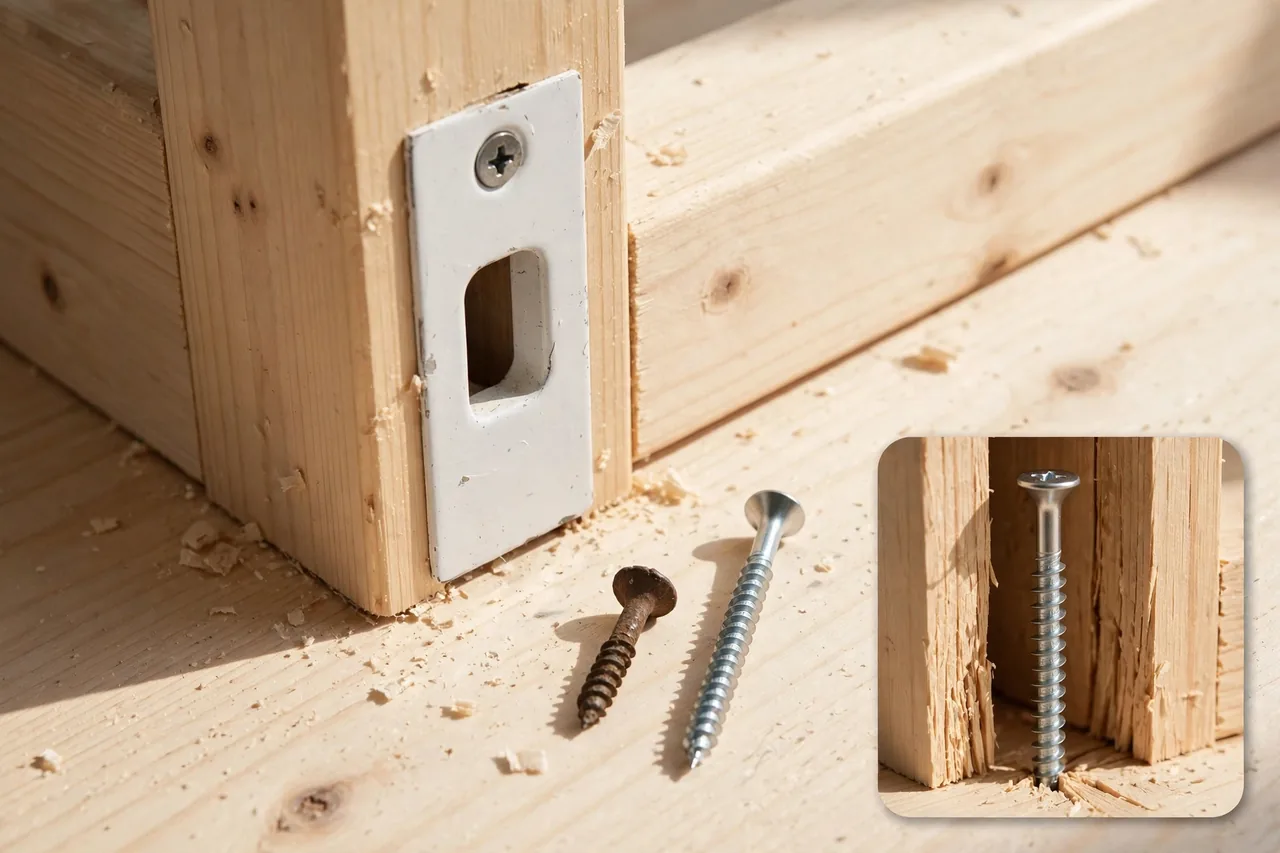
Door reinforcement means strengthening the door, the frame, and the hardware so a kick or a pry bar cannot force the door open in seconds. Most home doors fail at the frame, not at the lock, because the short screws that hold the strike plate and hinges grip only thin trim wood. Reinforcement moves that grip into the solid wall studs behind the frame.
A reinforced door still looks like a normal door. The changes hide inside the frame: longer screws, a heavier strike plate, steel plates along the jamb, and stronger hinges. Together they spread force across the whole frame instead of letting it tear one small spot apart. Family Handyman calls a door reinforcement lock a simple DIY project that takes about an hour and costs less than $40, and the same idea runs through every upgrade in this guide.
Start with the cheapest fix first. You do not need a new door, and you do not need a contractor for most of this work. Work through the steps below in order, and test the door after each one.
Where Doors Actually Fail
Every entry door has three weak points, and a burglar only needs one of them. The strike plate area takes the deadbolt’s force during a kick. The hinge side gives way when short screws pull out of soft wood. And the gap above the lock lets a pry bar spread the frame apart.
Engineer Fix reports that the door frame fails before the lock in an estimated 65% of forced entry attempts. That number tells you where your money should go: the frame first, the lock second. A strong deadbolt in a weak frame is like a strong chain on a paper fence.
Check your own doors before you buy anything. Open each exterior door and look at the strike plate screws, the hinge screws, and the gap between the door and the frame. Wiggle the door while it is locked. If the frame flexes or the latch rattles, you have found your weak point.
How to Spot a Weak Door in Two Minutes
Push the locked door firmly with your shoulder. A solid door barely moves. A weak one flexes at the latch side, and you can often see daylight through the gap. Next, look at the screws. If the strike plate and hinge screws are short and thin, they grip only the jamb, which is soft trim wood that splits easily.
Finally, check the door slab itself. Knock on it. A hollow-core door sounds empty and light, and it can be kicked through no matter how good the hardware is. A solid wood or steel door sounds heavy and dull. Hollow-core doors belong inside the house, never at an exterior entry.
The Five-Minute Fix: Longer Screws
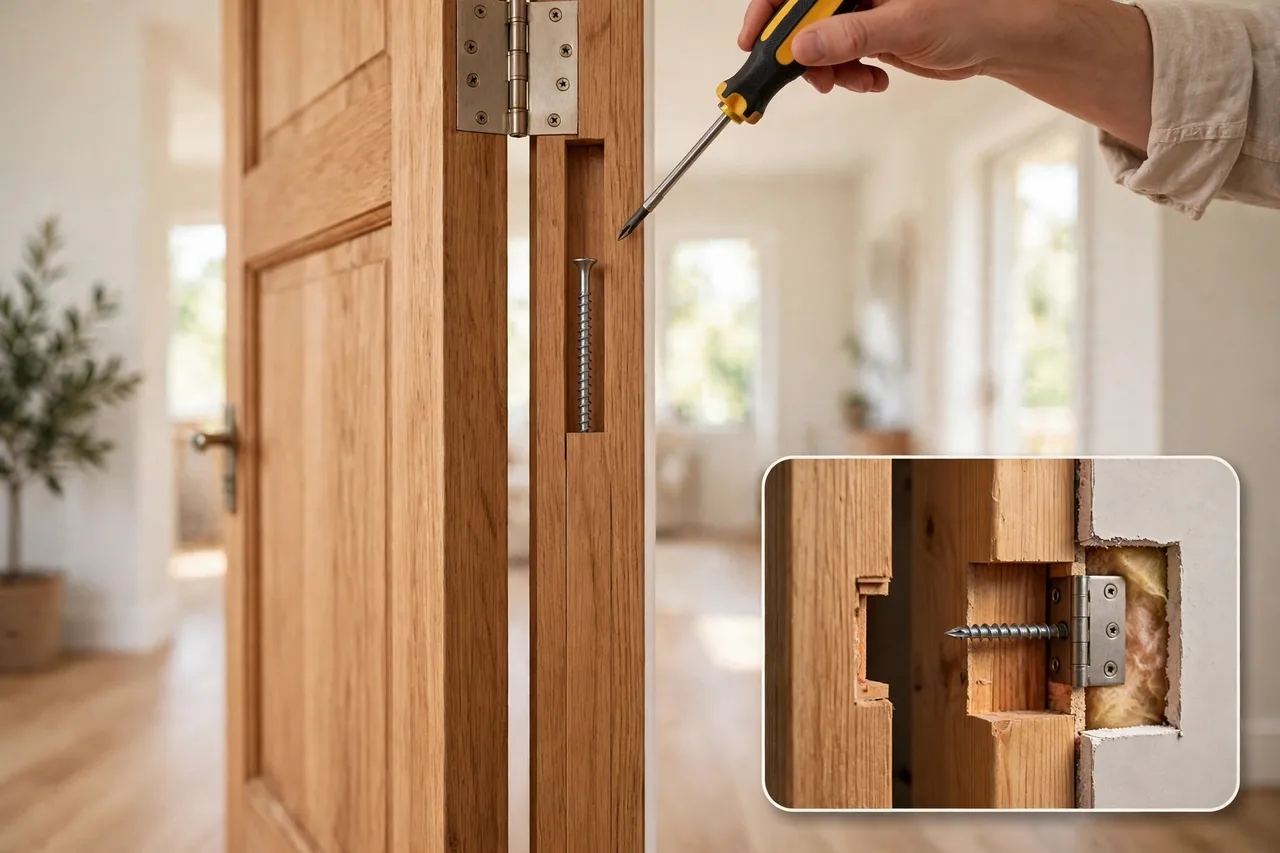
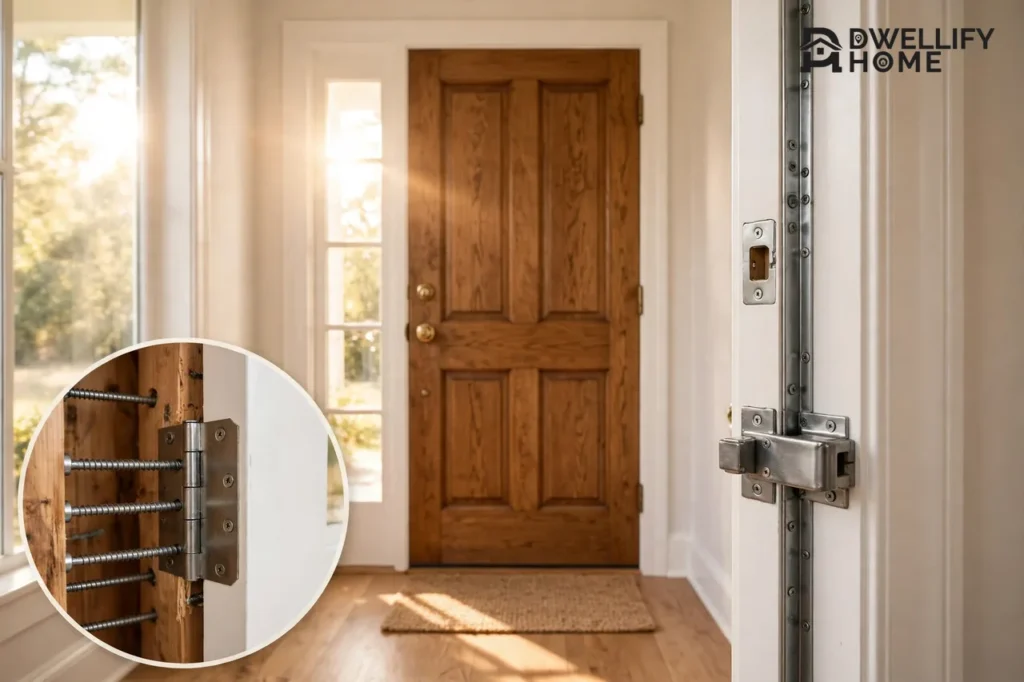
The single best first step costs a few dollars and takes five minutes: swap the short screws in your strike plate and hinges for 3-inch hardened steel screws. Standard strike plates ship with screws about 3/4 inch long. Those screws bite only into the thin jamb. A 3-inch screw passes through the jamb, through the shim space behind it, and deep into the wall stud.
Angi recommends 3 1/2-inch screws for hinges and strike plates because they anchor past the framing and into the studs, which stops a door from being kicked in. Start with the strike plate, then do one screw at a time on each hinge so the door never sags out of place.
Use case-hardened or through-hardened steel screws, not drywall screws. Drywall screws are brittle and can snap under a sudden impact. Look for #9 or #10 gauge screws with a Torx or Phillips head, and drill a small pilot hole first so the wood does not split.
How to Swap the Screws
- Remove one short screw from the strike plate and check its length against a 3-inch screw.
- Drill a pilot hole with a 3/32-inch bit, straight and deep enough for the new screw.
- Drive the 3-inch screw in until it sits flush, but do not over-tighten it.
- Repeat for the other strike plate screws, then do the same for one screw on each hinge.
- Close the door and test the latch and deadbolt. Both should slide in smooth and full.
If a screw spins without gripping, the hole is stripped. Push a wooden golf tee or a few toothpicks coated in wood glue into the hole, let it dry, trim it flush, and drive the screw again.
Upgrade the Strike Plate
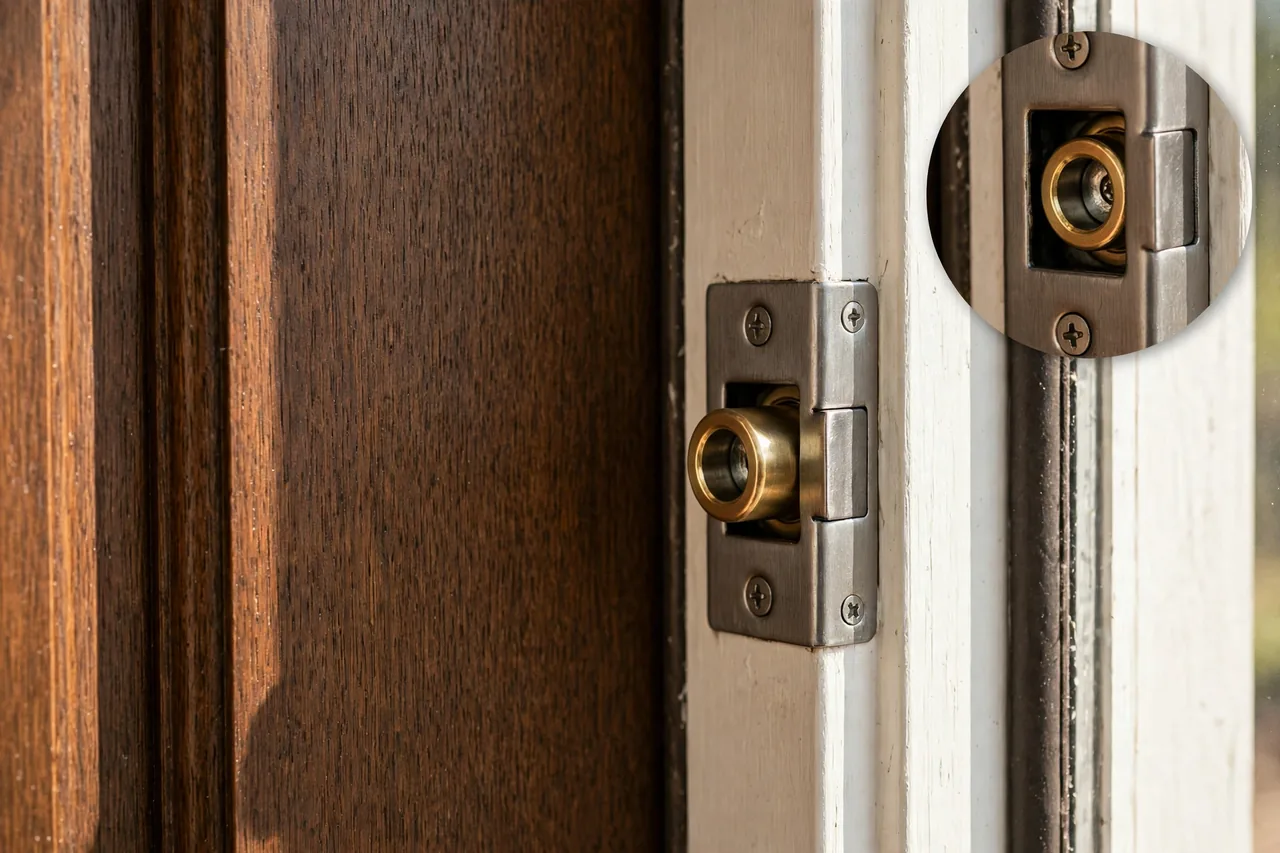
The strike plate is the small metal plate on the door frame that catches the latch and the deadbolt. It is the part that takes every kick, so it deserves better than the thin stamped plate that came with your lock. A reinforced strike plate is thicker, covers more of the jamb, and often has four screw holes instead of two.
A box strike goes one step further. It wraps the deadbolt in a steel box that sits inside the frame, so the bolt cannot push the plate off the jamb. For the highest level of protection, a jamb armor kit adds long steel plates that run the full height of the lock side of the frame and bolt into the studs.
Match the plate to your lock. A latch strike has a curved lip that guides the spring latch in as the door closes. A deadbolt strike has a bigger, squarer opening for the solid bolt. Measure the backset, the distance from the door edge to the center of the lock hole, before you buy, so the new plate lines up with your bolt.
Which Strike Plate Should You Buy?
Caption: Strike plate options compared by strength, cost, and install effort.
| Strike plate type | Best for | Typical cost | Install effort |
|---|---|---|---|
| Standard latch strike | Interior doors | A few dollars | Easy, 10 minutes |
| Reinforced deadbolt strike | Exterior doors | Under $20 | Easy, 20 minutes |
| Box strike | Front and back doors | $15 to $40 | Moderate, chisel work |
| Full jamb armor kit | High-risk entries | $60 to $150 | Moderate, 30 to 60 minutes |
Costs are typical hardware-store ranges, checked November 2026, and they vary by brand and finish. If you buy only one upgrade, buy the reinforced deadbolt strike with 3-inch screws. It is the best value in this whole guide.
Reinforce the Door Jamb
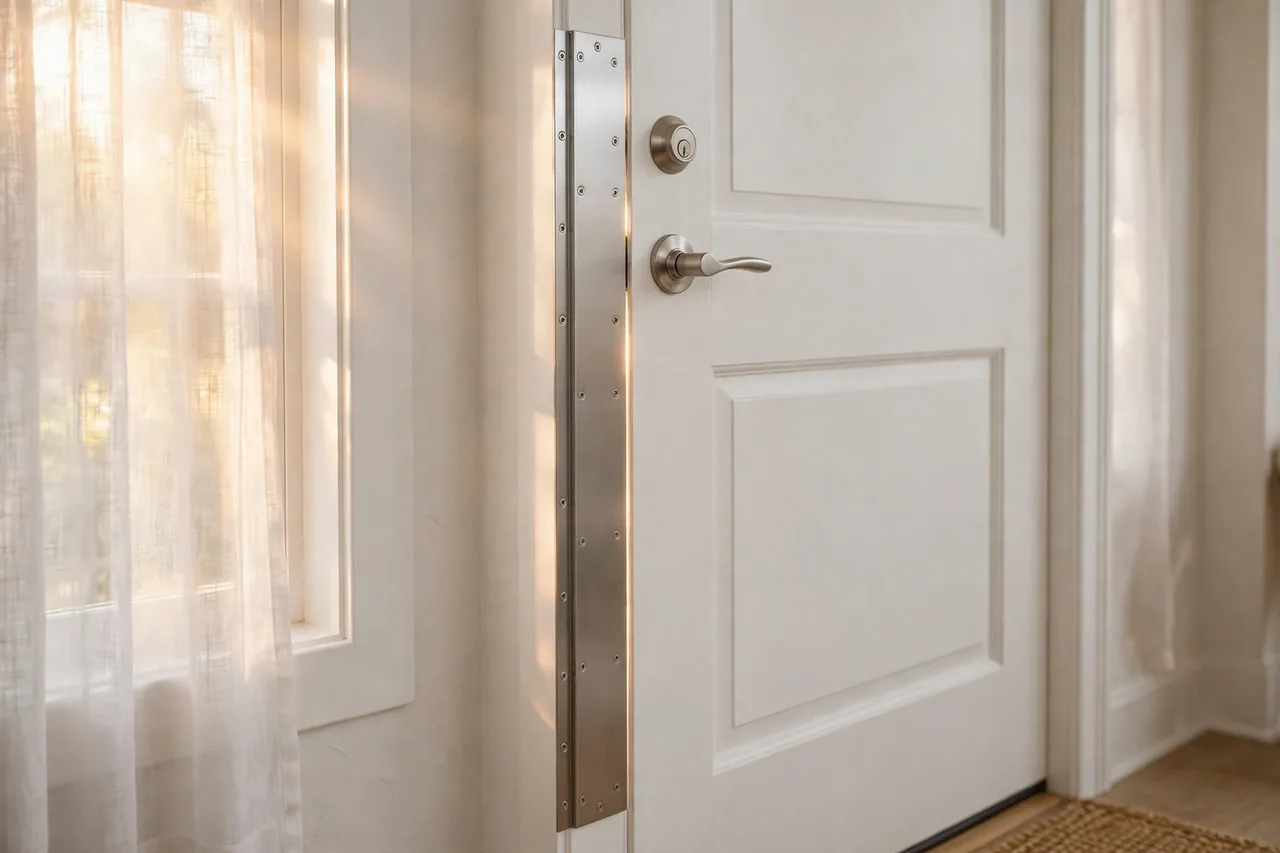
The jamb is the wood frame around the door, and it splits easily along the grain when a kick lands on it. Jamb reinforcement stops that split by covering the weak wood with steel. A jamb shield is a long, flat steel plate that screws over the jamb behind the strike plate and spreads force up and down the frame.
Install the shield with the door open so you can see the full jamb. Hold the plate in place, mark the screw holes, drill pilot holes, and drive long screws through the plate, through the jamb, and into the stud. The plate should sit flat so the door still closes clean against the weather stripping.
Check the wood before you reinforce it. If the jamb is rotted, cracked, or soft enough to dent with a screwdriver, fix the wood first. Steel over rotten wood only hides the problem, and the screws will not hold.
When a Full Jamb Kit Makes Sense
A full jamb armor kit covers the strike side, the hinge side, and the header in one system. It makes sense on a front door that faces the street, a back door hidden from view, or any door that has already been kicked once. Renters should skip this one, because it needs drilling and leaves marks, and use the renter options below instead.
Hinges: The Side Everyone Forgets
Most people guard the lock side and forget the hinges. A burglar can attack the hinge side instead, and short hinge screws pull out of the jamb just as fast as short strike screws. The fix is the same: replace one screw per hinge with a 3-inch hardened screw that reaches the stud.
Do one hinge at a time so the door stays hung. Remove the middle screw from the top hinge first, drill a pilot hole, and drive the long screw in. Repeat on the middle and bottom hinges. If your door swings outward, the hinge pins sit outside, so add hinge shields or security studs that stop someone from popping the pins out.
While you work, check the hinge screws for rust and the hinges for wobble. A door that sags drags on the threshold and stops the deadbolt from lining up with the strike plate. Tighten everything, then test the bolt again.
Upgrade the Lock and the Door Slab
Once the frame holds, the lock earns its keep. Fit a deadbolt with a 1-inch bolt throw, which means the solid bolt extends a full inch into the strike pocket. Look for a deadbolt rated ANSI/BHMA Grade 1 or Grade 2. Grade 1 is the highest residential rating, tested to 250,000 cycles and 10 door strikes, while Grade 2 is tested to 150,000 cycles and 5 strikes, according to the ANSI/BHMA standard as summarized by Engineer Fix.
If your door is hollow-core, replace it with a solid wood or steel door before you spend money on fancy locks. A hollow door can be kicked through the middle, and no frame upgrade fixes that. A solid door also seals better, so it helps with drafts and noise too.
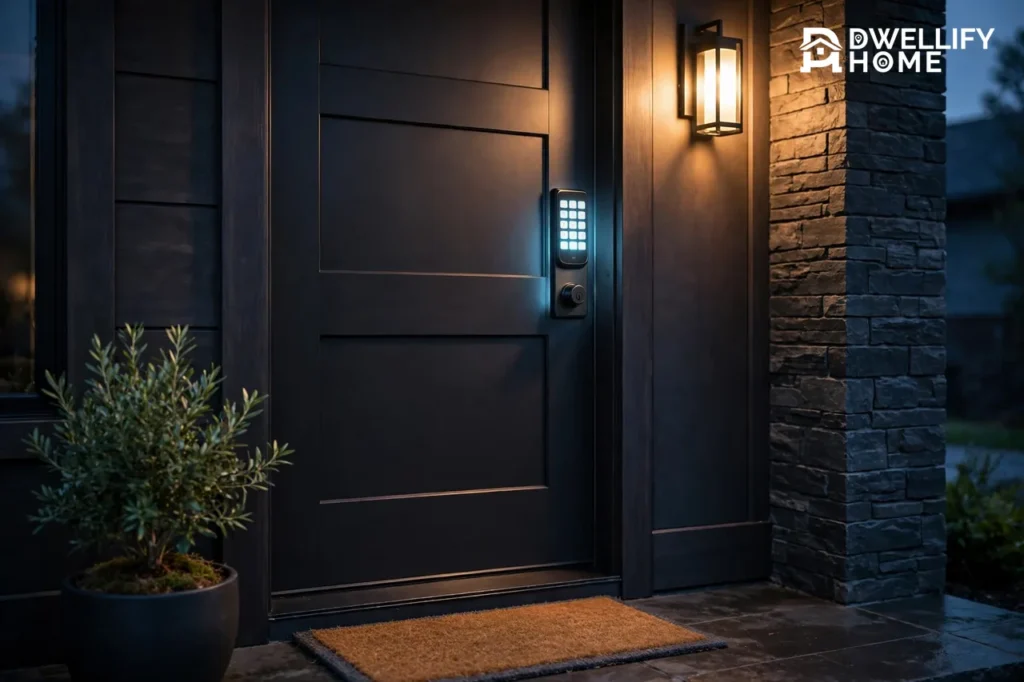
A smart lock can sit on top of a reinforced door, but it does not replace the frame work. Choose the lock for how you live, a keypad if you hate keys, a keyed deadbolt if you want simple, and keep the frame upgrades underneath it. Our guide to the best lock types for home matches each lock to the right door, and the best door locks rounds up six mechanical picks that never need batteries.
Renter-Friendly Door Reinforcement
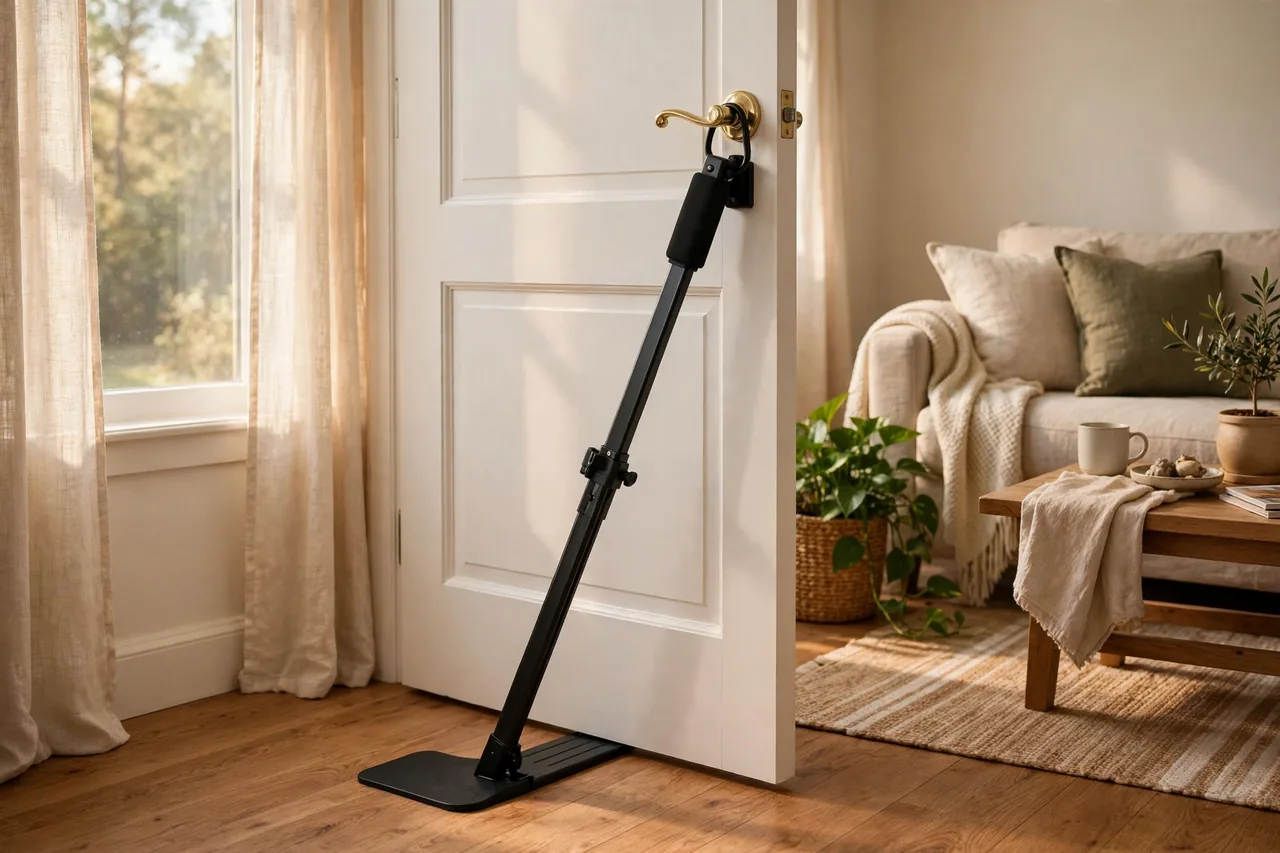
Renters can make a door much harder to force without drilling a single hole. A door security bar braces under the handle and against the floor, and it sets up in seconds each night. A portable door lock wedges into the strike plate from inside and stops the latch from turning. Both come off without a trace when you move out.
Ask your landlord before you drill anything. Many landlords will pay for a strike plate upgrade or a locksmith visit, because it protects their property too. Put the request in writing and keep the old hardware so you can put it back if you move.
What renters should skip: jamb armor kits, new deadbolts, and hinge shields that need screws. What renters should do first: a security bar, a portable lock, and a doorbell camera or a front porch camera that watches the entry.
What Door Reinforcement Costs
Caption: Typical door reinforcement costs per exterior door, checked November 2026.
| Upgrade | Typical cost | Time | Skill needed |
|---|---|---|---|
| 3-inch screws (strike + hinges) | Under $10 | 5 to 10 minutes | Beginner |
| Reinforced strike plate | $10 to $20 | 20 minutes | Beginner |
| Door reinforcement lock | $20 to $40 | About 1 hour | Beginner |
| Jamb shield or armor kit | $60 to $150 | 30 to 60 minutes | Confident DIY |
| Solid replacement door | $150 and up | Half a day | Pro recommended |
| Locksmith install of a kit | $100 to $200 labor | About 1 hour | Pro |
Costs are typical US hardware-store and locksmith ranges, checked November 2026. Start with the $10 screw swap, add the strike plate, and only then decide whether you need a full kit. Most homes never need more than the first two rows.
Mistakes That Undo Good Reinforcement
The most common mistake is buying a strong lock and leaving the short screws in place. The lock is only as strong as the wood it screws into. The second mistake is using drywall screws, which snap under impact, instead of hardened steel screws.
Other mistakes to avoid: over-tightening long screws until they warp the jamb, skipping the pilot hole and splitting the wood, and reinforcing only the front door while the back door still has a hollow slab and a flimsy latch. Walk every exterior door, including the garage entry door, and give each one the same treatment.
Finally, do not forget the door’s daily habits. A reinforced door left unlocked helps no one. Lock the deadbolt every time, even when you are home, and keep the habit after the hardware is in.
Related Guides
If you are working through your whole entry, read how to improve home security with better locks next, it starts with the door, not the lock. Then check every door lock part named so you know what you are looking at, and how locks fail and what the ratings mean before you buy a new deadbolt.
Frequently Asked Questions
Is door reinforcement worth it?
Yes. Door reinforcement is one of the cheapest security upgrades you can make, and it targets the exact spot where most forced entries happen: the frame and the strike plate. A $10 screw swap and a $15 strike plate make a kick-in far harder, and the work takes under an hour.
How do I reinforce a front door?
Start by swapping the short strike plate and hinge screws for 3-inch hardened steel screws that reach the wall stud. Then fit a reinforced strike plate, add a jamb shield if the frame is weak, and finish with a Grade 1 or Grade 2 deadbolt with a 1-inch throw.
What is a door reinforcement lock?
A door reinforcement lock is a small interior device, about three inches tall, that braces the door against the frame from inside. Family Handyman describes it as a spring-loaded lock that installs at shoulder height above the deadbolt, and it only works while you are home to set it.
Can I reinforce a door in a rental apartment?
Yes, with no-drill options. Use a door security bar, a portable door lock, and a camera, and ask your landlord in writing before drilling anything. Many landlords cover the cost of a strike plate upgrade because it protects their property.
How much does it cost to reinforce a door?
Most doors cost under $30 to reinforce well: under $10 for long screws and $10 to $20 for a reinforced strike plate. A full jamb armor kit runs $60 to $150, and a locksmith install adds $100 to $200 in labor. Start cheap and add more only if you need it.
Will a reinforced door stop a determined burglar?
No single upgrade makes a door unbreakable, and no honest guide should promise that. Reinforcement buys time and noise: it turns a two-second kick into a long, loud struggle, and most burglars give up and move on when a door refuses to open fast.
Disclaimer: This guide covers basic DIY hardware upgrades. If your door frame is rotted, cracked, or out of square, or you are unsure about drilling into framing, call a licensed locksmith or carpenter before you start. Always check local building and rental rules first.
Start tonight with the five-minute screw swap. It costs less than a takeout meal, and it is the single best return on effort in home security. Your door will feel different the first time you lock it.