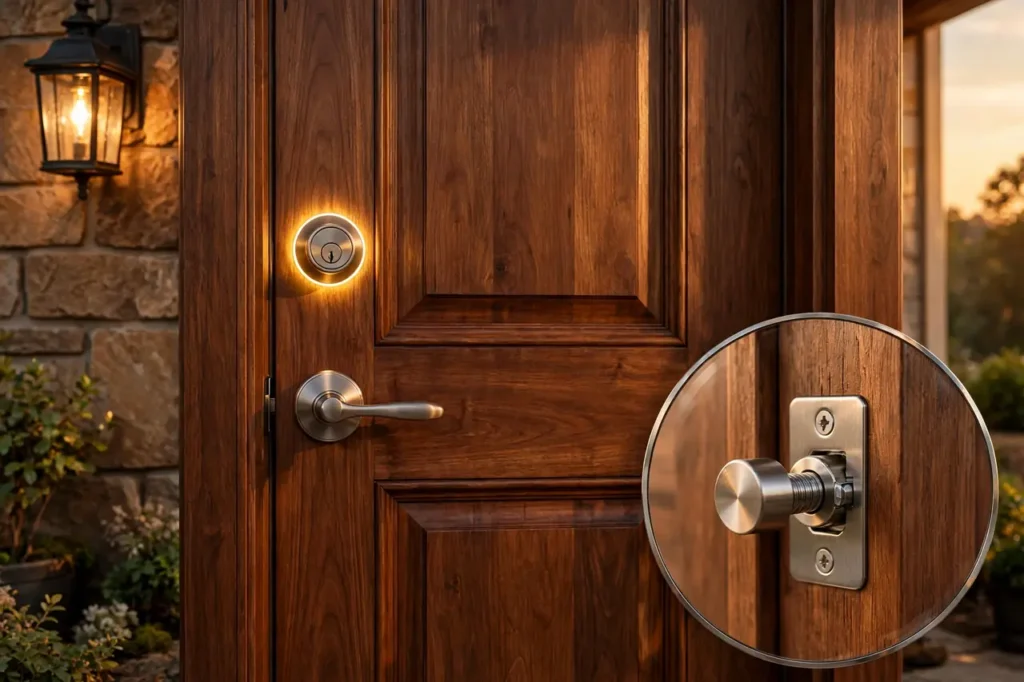
The best door locks for most homes are simple mechanical deadbolts with a high BHMA security grade. Our top pick is the Schlage B60N, a Grade 1 deadbolt that costs $55.27 at Target (checked October 20, 2026). If you rekey often, the Kwikset 980 is the smarter buy, because its SmartKey cylinder lets you change the key yourself in seconds. Every lock on this list works with a plain metal key. There are no batteries to die, no apps to update, and no keypads to fail. We judged each pick on four things: its ANSI/BHMA grade, how well it controls who can copy the key, how easy it is to rekey, and how long it should last.
Quick Picks at a Glance
| Lock | Type | BHMA Grade | Rekey Method | Price |
|---|---|---|---|---|
| Schlage B60N | Single cylinder deadbolt | Grade 1 / AAA | Locksmith or pin kit | $55.27 at Target |
| Kwikset 980 | Single cylinder deadbolt | Grade 1 | SmartKey, do it yourself | $45.99 at Ace Hardware |
| Medeco Maxum | Single cylinder deadbolt | Grade 1, UL 437 cylinder | Dealer only, restricted keys | $338.57 Medeco list price |
| Kwikset 660 | Single cylinder deadbolt | Grade 3 | SmartKey, do it yourself | $22.99 at Ace Hardware |
| Kwikset 665 | Double cylinder deadbolt | Grade 3 | SmartKey, do it yourself | $26.99 at Ace Hardware |
| Schlage Accent F51A | Keyed entry lever | Grade 2 | Locksmith or pin kit | $133 Schlage list price |
Prices are for the lock itself. They do not include installation. Most of these locks install with a screwdriver on a standard door, so the install cost is often $0. Hiring a locksmith adds a service fee on top, and we say more about that below.
How We Judged These Locks
Most “best door locks” lists lead with smart locks. That is fine for some homes, but it skips a large group of people: renters who cannot rely on landlord Wi-Fi, landlords who turn units over every year, and owners who simply want a lock that still works in ten years with zero upkeep. This list is only for them.
We scored every lock on the same four points:
- Grade. The ANSI/BHMA grade is the closest thing locks have to a crash-test rating. Grade 1 is the strongest, Grade 3 is basic. We explain the grades in plain words further down.
- Key control. Can anyone copy the key at a self-serve kiosk, or does the design limit copies? This matters most for rentals and shared homes.
- Rekey ease. When a tenant moves out or a key is lost, how fast and how cheaply can the lock be made safe again?
- Durability. Cycle ratings, bolt construction, and warranty. A cheap lock that fails in two years is not cheap.
We also checked every price on a real US retailer or manufacturer page on October 20, 2026, and we name the source next to each price. If we could not verify a price, the lock did not make the list.
The Best Mechanical Door Locks, Pick by Pick
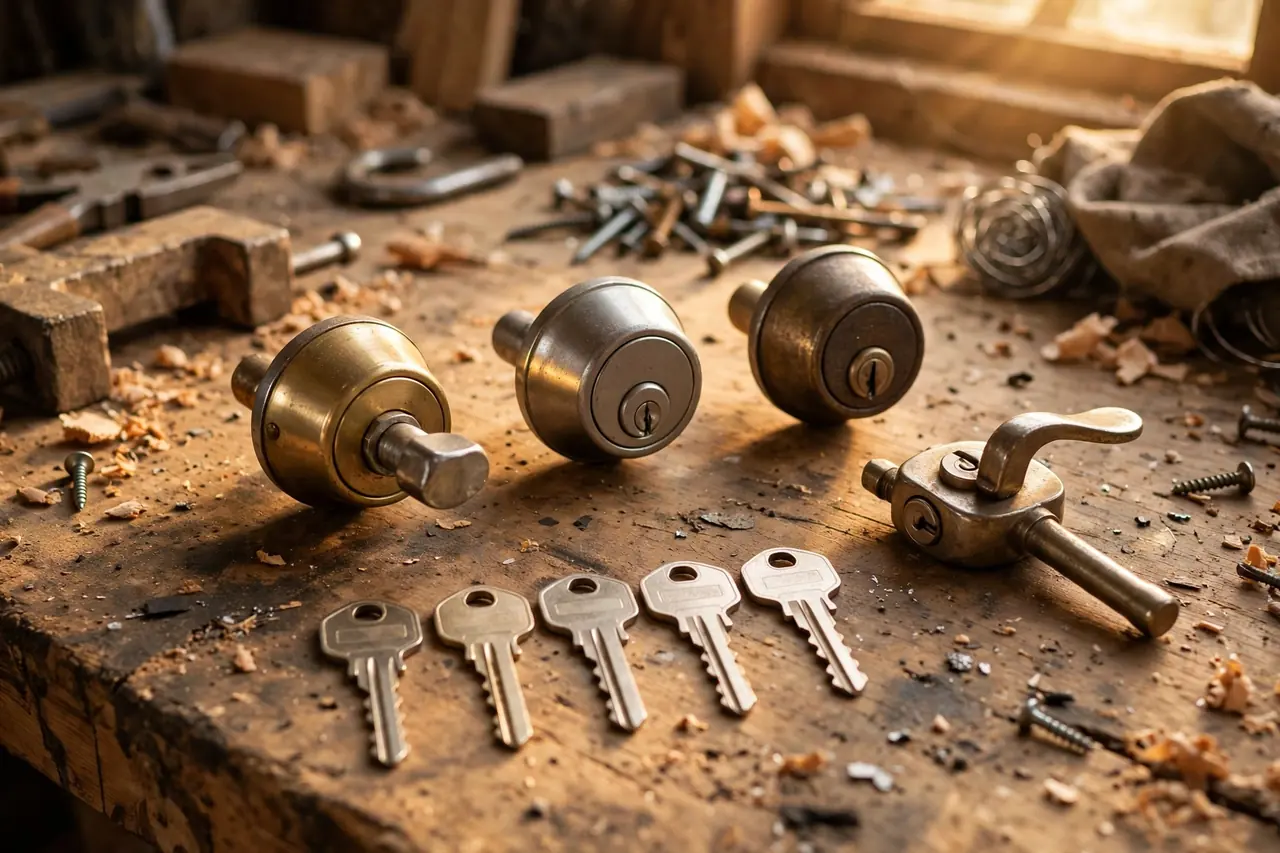
1. Schlage B60N — Best Overall Deadbolt
The B60N is the deadbolt to buy when strength comes first. Schlage rates it Grade 1 with a BHMA AAA score for security, durability, and finish — the highest marks a home deadbolt can earn. The bolt is a full 1 inch long, and inside it sits a hardened steel spinning pin. If someone tries to saw through the bolt, the pin spins with the blade instead of cutting. Anti-drill plates guard the cylinder, anti-pick pins guard the keyway, and the box includes a strike reinforcer that mounts with 3-inch screws, so the bolt holds to the door frame’s stud, not just the thin trim.
The trade-off is rekeying. The B60N uses a traditional 5-pin cylinder, so changing the key means a locksmith visit or a DIY pin kit. You can order Schlage locks keyed alike, which solves the problem at purchase time, but there is no rekey-it-yourself trick later.
- Best for: front doors, owners who plan to stay put, anyone who wants maximum strength per dollar.
- Watch out: no self-rekey feature. Budget for a locksmith if keys change hands often.
- Price: $55.27 at Target, checked October 20, 2026. Schlage’s list price is $81, so street prices below that are normal.
2. Kwikset 980 — Best for Rekeying and Landlords
The 980 is Kwikset’s strongest deadbolt, and its party trick is SmartKey. SmartKey is a cylinder you rekey yourself: insert the current key, turn it, push in the small learn tool that comes in the box, swap in a new key, and turn back. The old key stops working and the new key takes over, with the lock still on the door. Kwikset says the cylinder has passed the UL 437 paragraph 11.6 pick-resistance test, and its side locking bar design resists lock bumping, the trick that defeats many cheap pin cylinders.
Retailer spec listings for the 980 rate it ANSI/BHMA Grade 1, and Kwikset’s own sell sheet calls its grade the highest residential security level. For a landlord, that mix is hard to beat: top grade, plus a tenant turnover that takes minutes instead of a locksmith call for every unit. One honest limit: if every working key is lost, a SmartKey cylinder cannot be rekeyed the normal way. That becomes a locksmith reset or a new cylinder, so keep one labeled spare key in a safe place.
- Best for: landlords, rental turnovers, movers who want one key for every door.
- Watch out: keep a spare working key. With no working key, self-rekeying is not possible.
- Price: $45.99 at Ace Hardware for the matte black finish, checked October 20, 2026.
3. Medeco Maxum — Best for True Key Control
Every lock above uses keys that any kiosk can copy. The Medeco Maxum does not. Its Medeco³ cylinder uses a patented, restricted keyway, so blank keys are controlled by Medeco and copies can only be made by an authorized Medeco dealer, with your authorization on file. If you hand a tenant, cleaner, or contractor a Maxum key, you know exactly how many copies exist. The Maxum is a Grade 1 deadbolt with a UL 437 listed cylinder, the standard labs use for high-security locks that must resist picking and drilling for a set time.
The cost is real. Medeco’s own price book lists the residential Maxum at $338.57, and it is sold and fitted through dealers, so fitting is an extra cost on top of the lock. For one front door on a high-value home, or a small rental where key control is the whole point, it can be worth it. For a whole building, the math rarely works. If this level of security interests you, read our guide to high security locks for the standards behind it.
- Best for: high-value homes, owners who must control key copies, small premium rentals.
- Watch out: dealer-only sales, keys, and service. Lost-key help means a trip to your dealer.
- Price: $338.57, Medeco manufacturer list price from its current price book, checked October 20, 2026. Dealer prices and fitting are extra.
4. Kwikset 660 — Best Budget Deadbolt
The 660 is one of the best-selling deadbolts in America for a simple reason: it does the basic job for about twenty dollars. The SmartKey version rekeys the same way the 980 does, and Kwikset backs it with a lifetime mechanical and finish warranty, which is rare at this price. The bolt throws a full 1 inch, the backset adjusts to fit standard doors, and it installs in minutes.
Be clear about what you give up. The 660 family is Grade 3, the basic level. It is tested to far fewer open-close cycles and lower force than a Grade 1 lock. That is acceptable on a side door, a garage entry, or a low-risk rental. On a front door in a high-risk area, spend the extra money on the 980 or the B60N instead. One buying tip: the 660 is sold with a plain pin cylinder or with SmartKey. Check the box and buy the SmartKey version if you want self-rekeying.
- Best for: side and back doors, budget rental updates, garage entry doors.
- Watch out: Grade 3 is basic security. Do not make it the only lock on a high-risk front door.
- Price: $22.99 at Ace Hardware for the satin chrome SmartKey version, checked October 20, 2026.
5. Kwikset 665 — Best for Doors With Glass
A single cylinder deadbolt has a thumb turn on the inside. If your door has a glass panel, a burglar can break the glass, reach in, and turn it. The 665 removes that weakness by using a key on both sides. It is the double cylinder version of the 660, with the same SmartKey rekeying and Grade 3 rating, so it suits a door whose main risk is reach-through, not brute force.
This pick comes with the strongest caution in this article. A door that needs a key to open from the inside can slow escape in a fire, and many local building and fire codes restrict or ban double cylinder deadbolts on main exit doors. Check your local code before you buy. If the code says no, the safer legal fix is a Grade 1 single cylinder like the B60N, plus a reinforced strike and, if needed, stronger glass film.
- Best for: doors with glass near the lock, where local code allows a keyed inside cylinder.
- Watch out: never fit one where people sleep unless your local code clearly allows it and a key stays within reach of the door.
- Price: $26.99 at Ace Hardware, checked October 20, 2026.
6. Schlage Accent Lever (F51A) — Best Keyed Entry Lever
A deadbolt does the real locking, but the knob or lever below it is what your hand touches 20 times a day. The Accent is Schlage’s F51A keyed entry lever, rated Grade 2 — a step above the Grade 3 levers in most builder homes — and built from metal, not plastic. It is reversible, so it fits left- and right-handed doors, and it latches the door shut every time it closes, which keeps wind and casual pushes from swinging it open.
Use it as a partner to a deadbolt, never as the only lock. A lever’s latch bolt is short and spring-loaded, so it cannot resist force the way a 1-inch deadbolt can. Paired with the B60N above it, you get a matched Schlage set on the same keyway family, and a locksmith can key them alike so one key runs the whole door.
- Best for: the lower lock on a front or side door, homes replacing worn builder-grade levers.
- Watch out: a lever alone is not security. Always pair it with a deadbolt.
- Price: $133 at Schlage list price from its current pricing guide, checked October 20, 2026. Most stores sell it for less than list.
Deadbolt, Knob, or Lever: Which Lock Does What?
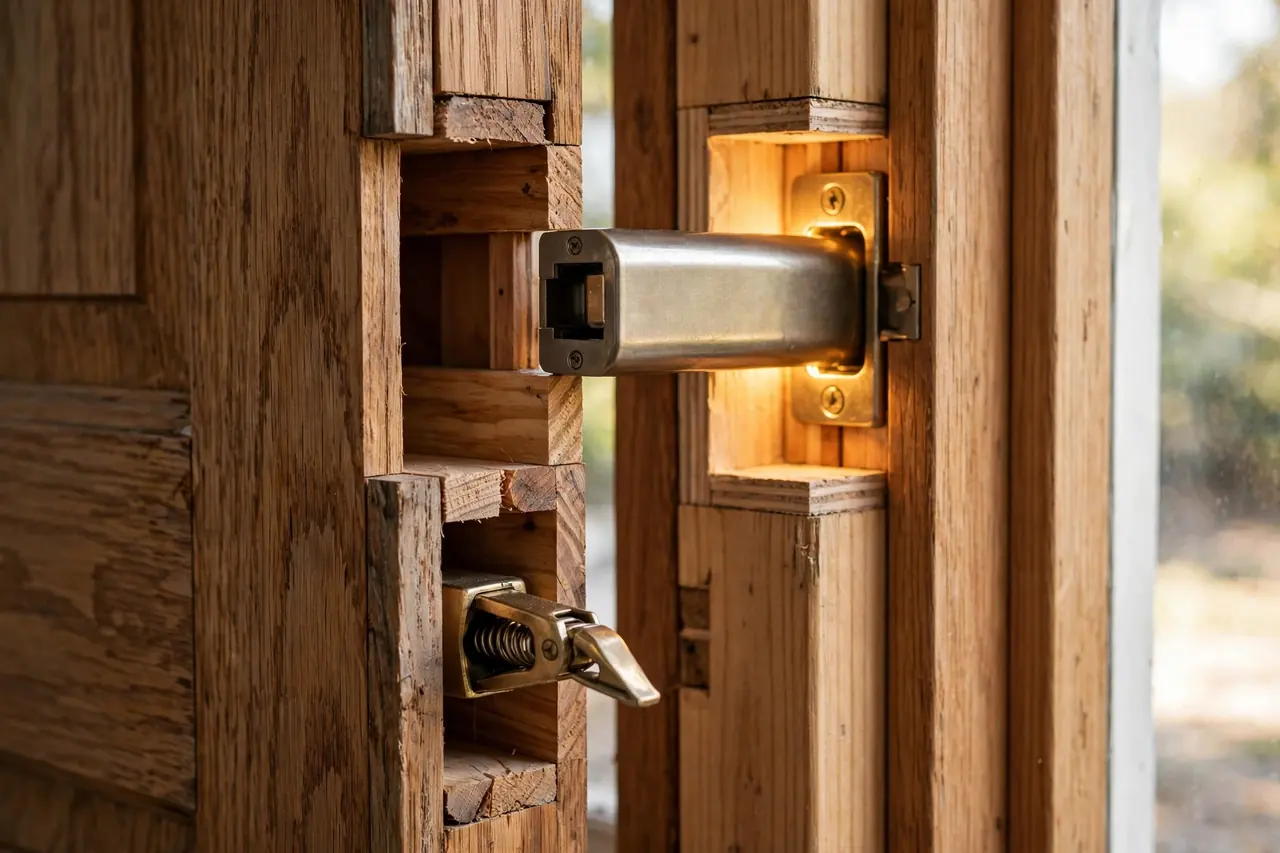
New buyers often ask why a door needs two locks. The answer is that they do different jobs.
- The deadbolt is the security. Its bolt is solid, throws a full inch into the frame, and can only be moved by a key or a thumb turn. It does not spring back. This is the lock that resists kicking, prying, and shimming.
- The knob or lever is the latch. Its small spring bolt only holds the door closed against wind and casual pressure. It can be slipped with a card or a tool on many doors. Treat it as a convenience layer, never as protection.
- A handleset is a style choice. It pairs a deadbolt with a matching grip and lever. It can be a good buy, but judge it by the deadbolt’s grade, not by the handle’s looks.
For a full tour of every lock family — mortise, rim, keypad-free mechanical pushbutton, and more — see our guide to the best lock types for home doors.
What Grade 1, Grade 2, and Grade 3 Really Mean
Lock grades come from ANSI/BHMA testing, the industry standard for door hardware in the US. In BHMA deadbolt testing, Grade 1 locks are built for about 250,000 open-close cycles, Grade 2 for about 150,000, and Grade 3 for about 50,000. The higher grades also face harder hammer blows, stronger pulling forces, and stricter finish tests. Newer BHMA ratings also score security, durability, and finish with letters, where AAA is the top score — that is the score the B60N carries.
How to use the grades when you shop:
- Front door, busy home, or higher-risk area: Grade 1. The cost gap over Grade 3 is often only $25–$35, and the lock may outlast two cheap ones.
- Most side and back doors: Grade 1 or Grade 2 both work. Pick by rekey needs.
- Low-risk doors, garage entries, interior security: Grade 3 is acceptable, with eyes open about its limits.
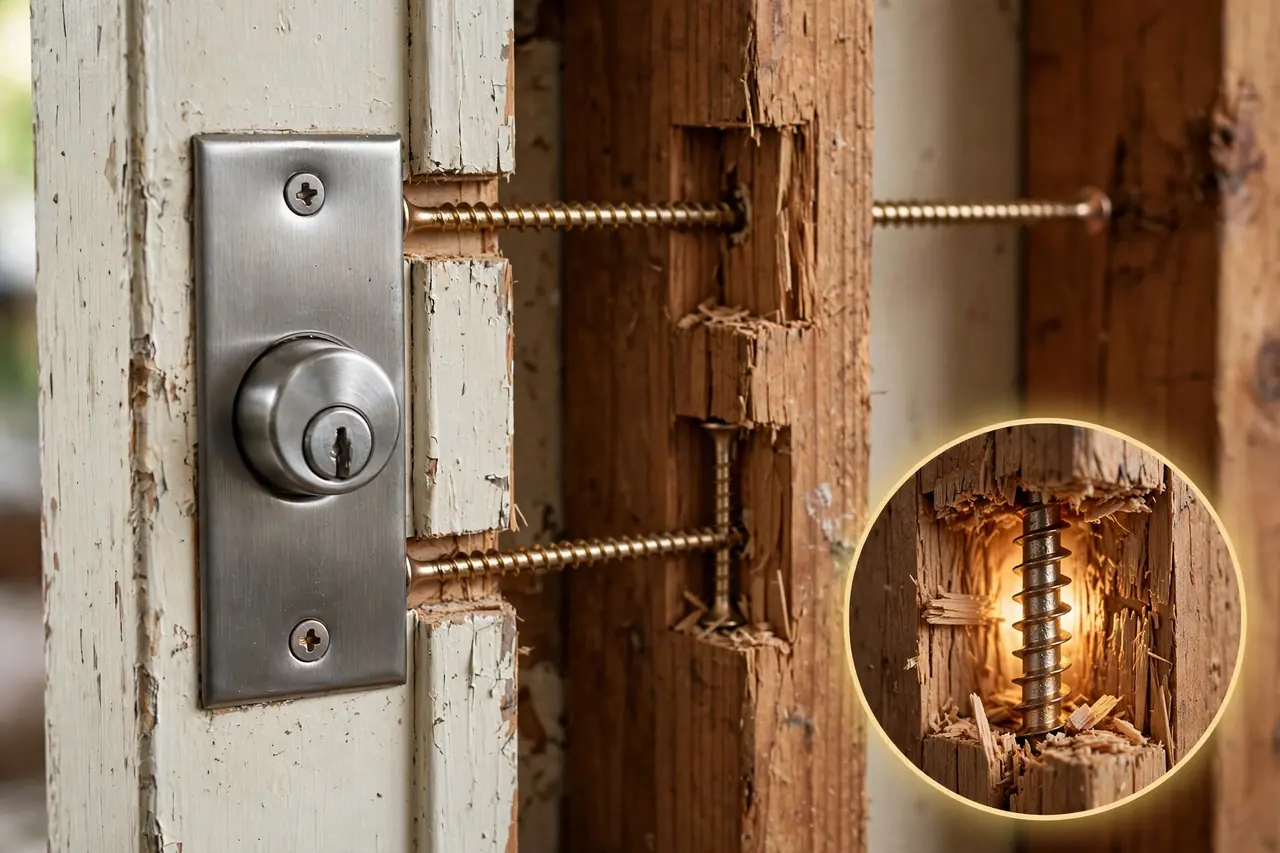
One warning: a strong lock in a weak door still fails. The bolt needs a solid strike plate screwed into the frame stud. Swapping the short screws that come in many boxes for 3-inch screws is the cheapest security upgrade in this whole article.
Key Control and Rekeying, Explained
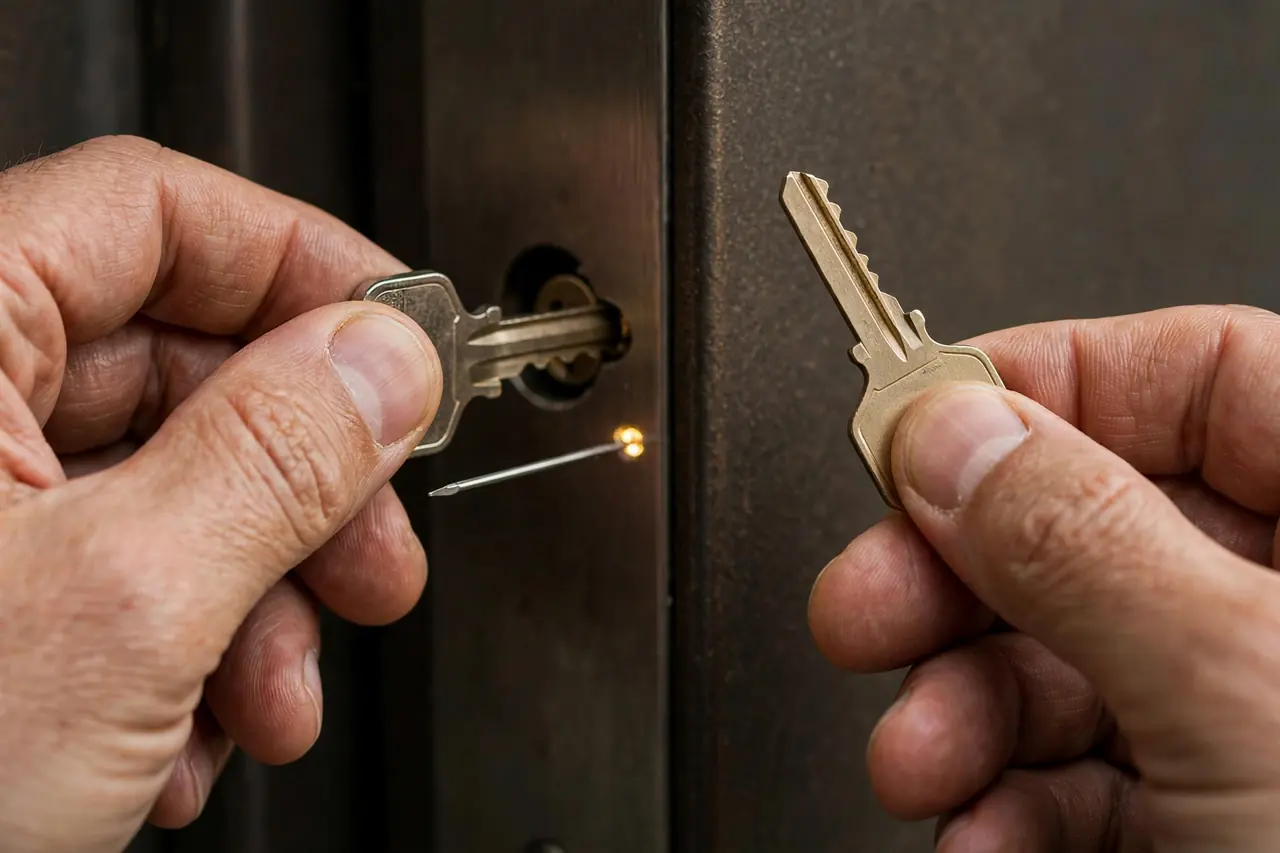
Two ideas decide how a lock behaves after you buy it. Key control is about copies: who can duplicate your key, and how would you know? Rekeying is about change: how fast can the lock be set to a new key when life changes?
Standard keys, like the common Kwikset KW1 and Schlage C keyways, can be copied at any hardware store or kiosk in minutes. That is convenient when you need a spare, and risky when a copy is made without you knowing. Restricted keyways, like Medeco’s, solve this by controlling the blanks. Only authorized dealers hold them, and they cut copies only for people on the authorization record.
Rekeying splits into three levels:
- Self-rekey (SmartKey). With the current key and the learn tool, you change the key in under a minute, free, as often as you like. This is why landlords love the 980 and 660.
- Traditional rekey. A locksmith removes the cylinder and swaps the pins, or you do it with an inexpensive pin kit and some patience. It costs a service fee per visit, so rekeying a whole house in one visit is the smart way to pay for it.
- Key control deadbolts. Landlords who manage several units can step up to two-cylinder key control deadbolts. A hidden second cylinder for the manager sits behind the lock’s face, so your master key works even after the tenant’s cylinder is rekeyed. These are sold through lock dealers rather than big-box shelves, and prices vary by dealer, so get a quote before you commit.
Whatever you choose, rekey or replace the locks when you move in, when a tenant leaves, when a key is lost, and when a relationship or contractor arrangement ends badly. No one can tell you how many copies of an old key exist. Rekeying is how you stop guessing.
Before You Buy: Fit Checks That Save a Return Trip
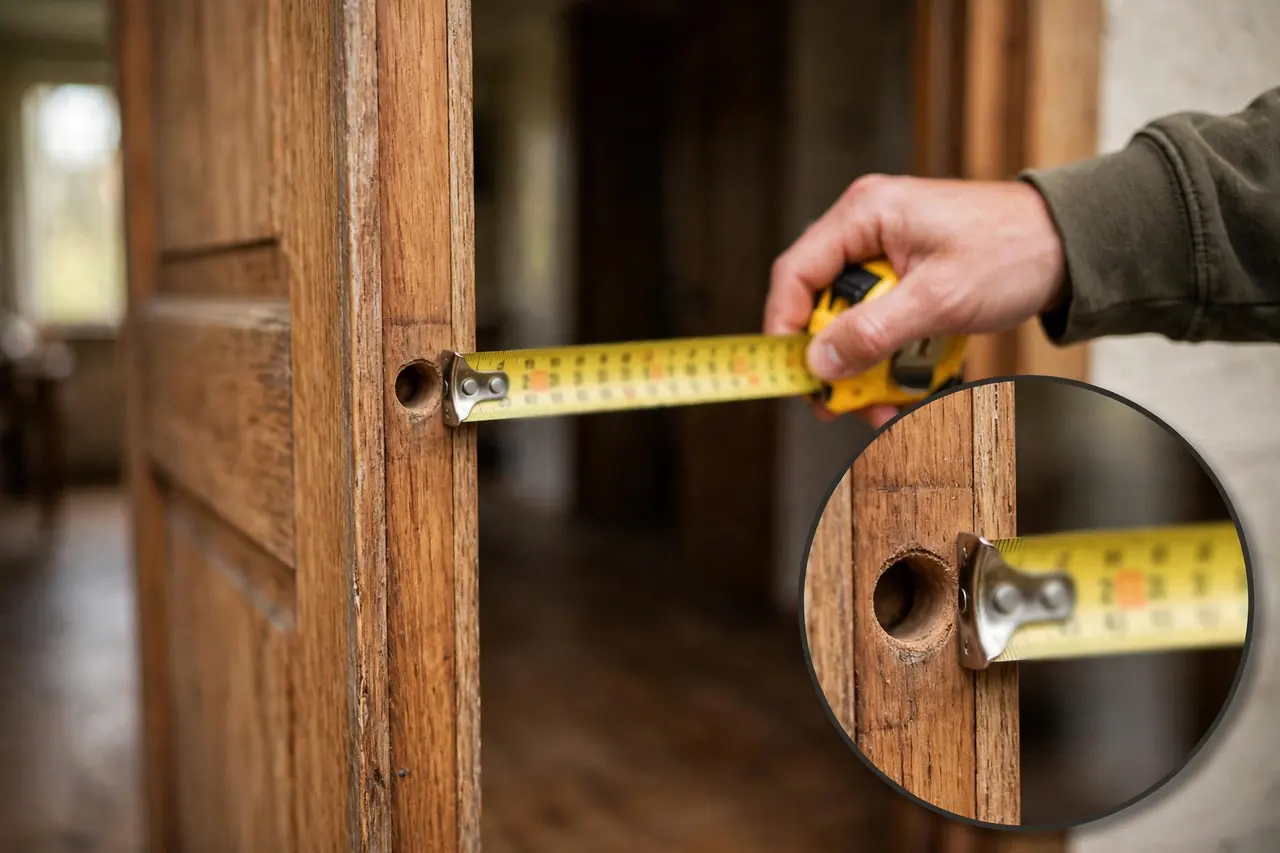
Almost every lock above fits a standard US door, but “almost” is where returns come from. Check these four things before you order:
- Door thickness. Standard doors are 1-3/8 to 1-3/4 inches thick. Every pick here fits that range, and the B60N stretches to 1-7/8 inches. Thick or thin doors may need a kit.
- Backset. Measure from the door’s edge to the center of the lock hole: it will be 2-3/8 or 2-3/4 inches. All six picks adjust to both.
- Hole size. Modern doors use a 2-1/8 inch cross bore and a 1 inch edge bore. Older doors with smaller holes may need drilling, which is a job for care or a pro.
- Handing. Deadbolts do not care which way the door swings. The Accent lever is reversible, so it does not care either. Standalone knobs and some levers do, so check before buying other models.
Also confirm the strike side: the bolt needs a deep, clean pocket in the frame so it can extend its full inch. A bolt that only travels halfway is a common hidden weakness in older homes.
Installation and the Real Total Cost
On a door that already has standard holes, every lock here is a screwdriver job. Kwikset and Schlage both design these models for DIY fitting in minutes, and the rekeyable models need no extra tools beyond the learn tool in the box. Plan on professional help in three cases: drilling a fresh door, fitting a Medeco or other dealer-sold high-security lock, and any door that is warped or misaligned, because a dragging bolt wears out even a Grade 1 lock.
Keep the two costs separate in your budget. The product cost is the price in our table. The install cost is $0 for a DIY swap, or a locksmith’s service fee plus per-lock labor if you hire it out. Rekeying several locks in one visit spreads that fee, which is why a whole-house rekey on moving day costs far less per lock than three separate call-outs.
Frequently Asked Questions
What is the highest security deadbolt lock?
The highest level for a home deadbolt is a BHMA Grade 1 (or AAA-rated) lock, ideally with a UL 437 listed cylinder that has passed timed pick and drill resistance tests. On this list, the Medeco Maxum is the top security pick, followed closely by the Grade 1 Schlage B60N for buyers who do not need restricted keys.
Is there a deadbolt that can’t be picked?
No. Any lock can be defeated given enough time, skill, and tools, and any seller who promises a “pick-proof” lock is overstating it. What high-security cylinders do is resist picking and drilling far longer, which is what UL 437 testing measures. The practical goal is a lock that makes quiet, quick entry fail.
What is the most common deadbolt lock?
The single cylinder deadbolt is by far the most common type on US homes. It locks with a key from outside and a thumb turn from inside. Most homes pair one with a keyed knob or lever below it, and most of the picks in this guide — the B60N, 980, and 660 — follow that same pattern.
What is the best deadbolt lock you can buy?
It depends on your priority. For pure strength per dollar, the Schlage B60N is the best buy. For easy rekeying, the Kwikset 980 wins. For strict control over key copies, the Medeco Maxum stands alone. All three are Grade 1 mechanical deadbolts with no batteries, so the “best” choice is the one that matches your situation.
Can I get one key to work in all my locks?
Yes, in two ways. Locks in the same keyway family can be ordered or rekeyed “keyed alike,” so one key opens every door. SmartKey makes this a DIY job across Kwikset locks: rekey each one to the same new key. The limit is brand: a Schlage key cannot run a Kwikset cylinder, so pick one family per home.
The Bottom Line
If you only buy one lock from this page, make it the Schlage B60N for strength, or the Kwikset 980 if your life involves rekeying — moving, renting, or sharing keys. Add the Medeco Maxum only when controlling key copies is worth dealer prices. Keep the 660 and 665 for the doors they suit, pair every deadbolt with a decent lever like the Accent, and spend ten extra minutes on 3-inch strike screws. That simple, battery-free setup is what the best door locks have looked like for decades, and it is why they keep working when smart gear needs a charge.
Note: Prices were checked on October 20, 2026, and can change at any time. DwellifyHome does not sell locks. Always check your local building and fire code before fitting a double cylinder deadbolt, and use a licensed locksmith for high-security or restricted-key locks.