A high security lock is not defined by its price tag or its packaging. It is defined by testing. For the label to mean anything, the lock’s cylinder should be listed to UL 437, which means it resisted picking for 10 minutes and drilling for 5 minutes in a lab. The lock body should meet ANSI/BHMA Grade 1, the strongest grade a deadbolt can earn. On top of the metal, high security locks add key control, so the key cannot be copied at a self-serve kiosk.
This guide explains each of those standards in plain language. You will learn what the tests actually measure, how restricted keys work, and how pins, sidebars, and discs stop picking and bumping. You will also learn when a cylinder upgrade beats a full lock swap. One honest limit up front: no lock is unbeatable. These standards measure how long a lock resists attack, not whether it can be beaten forever.
What “High Security” Actually Means
“High security” is not a legal term for door locks. Any brand can print it on a box. The locks that deserve it share two things, and you should check for both before you pay extra.
The first is physical attack resistance. The cylinder and the lock body are built to slow down picking, bumping, drilling, and forcing. Independent labs test that resistance under standards such as UL 437 and the ANSI/BHMA grades, which this guide covers next.
The second is key control. A high security key is hard to copy without your permission. The key blank is restricted, so copies come only from an authorized dealer who checks your authorization first. A lock can be strong against a drill and still fail you here, because a copied key opens it in seconds with no damage at all.
Here is a detail many buyers miss: UL 437 covers attack resistance only. A UL 437 listed cylinder is not required to offer key control. So when you shop, confirm both halves separately — the listing for the metal, and the key control terms in writing from the dealer.
UL 437: The Cylinder Test That Matters Most
UL 437 is the UL Solutions standard titled “Standard for Safety for Key Locks.” It tests the cylinder — the part your key slides into — rather than the whole lock. That focus is exactly right, because the cylinder is where skilled attacks happen. Its test requirements are summarized on the BHMA standards pages and in UL 437 requirement summaries used across the lock industry.
The quiet attacks: picking and impressioning
Picking means opening the lock with tools instead of a key, by moving the pins inside one by one. Impressioning means slowly filing a blank key until it becomes a working key for that lock. Under UL 437, a door lock cylinder must resist both attacks for 10 minutes each. A basic hardware-store cylinder can often be picked in well under a minute by someone practiced, so 10 minutes is a serious bar.
The loud attacks: drilling, sawing, and forcing
UL 437 also attacks the cylinder with power tools and force. For door locks and cylinders, each of these attacks must fail for 5 minutes:
- Drilling — a drill aimed at the pins and shear line, the points that would let the plug turn.
- Sawing — cutting at the plug, body, or bolt.
- Prying — levering the bolt out of its strike opening.
- Pulling — trying to pull the plug or cylinder out of the lock.
- Driving — hammering the plug or bolt inward to bypass the mechanism.
- Forcing — twisting attacks on the keyway, the exposed cylinder, and the lock assembly.
The cylinder must also survive a 10,000-cycle endurance test, so it still works smoothly after years of daily use, and it must meet a minimum count of different key changes, so locks are not all keyed alike. When a cylinder passes, it earns a UL listing, and you can look for that listing when you buy.
ANSI/BHMA Grades: A156.36 Rates the Lock Body
Where UL 437 grades the cylinder, ANSI/BHMA A156.36 grades the whole auxiliary lock, which includes most deadbolts. BHMA — the Builders Hardware Manufacturers Association — runs the testing program, and its own A156.36 Hardware Highlights describe the grade tests. Grades run from Grade 1 (strongest) down to Grade 3 (basic residential).
For a Grade 1 deadbolt, the standard demands a 250,000-cycle life test — opening and closing a quarter of a million times — plus strength tests that include 1,350 pounds of force pushing the door against the extended bolt. The key must also turn with no more than 9 lbf-in of torque, so a strong lock still opens easily for the person with the right key.
Deadbolt grades under ANSI/BHMA A156.36
| Test | Grade 1 | Grade 2 | Grade 3 |
|---|---|---|---|
| Open-and-close cycles | 250,000 | 150,000 | 100,000 |
| Hammer blows survived | 10 | 5 | 2 |
| Typical use | Heavy-duty and high-risk doors | Most homes | Basic residential, better inside the home |
Two warnings come with the grades. First, many locks are sold as “Grade 1 features” or “meets Grade 1 specs” without certification. Look for BHMA certified products instead; BHMA keeps a Certified Products Directory of hardware that passed its tests. Second, a door assembly takes the grade of its weakest part. A Grade 1 deadbolt in a hollow door with a flimsy strike plate is not a Grade 1 door.
A156.30: The Standard Written Only for High Security Cylinders
ANSI/BHMA A156.30, updated in a 2025 edition, is the standard that defines high security cylinders themselves. Instead of grades, it rates cylinders by levels — A, B, and C — across three groups of tests:
- Key control — how tightly key blanks and cutting are restricted.
- Destructive tests — plug pulling, impact, torque, and timed drill resistance: 5 minutes at level B and 10 minutes at level C.
- Surreptitious tests — pick and decoding resistance, plus a long mechanical security cycle test of up to 100,000 cycles at the top level.
At the top key-control level, the rules get strict: key blanks must not be available from a second source, the keyway must be protected by law (usually a patent), and the manufacturer supplies factory-cut keys only after authorization. When you see a cylinder described as A156.30 rated, ask which level. The level tells you far more than the words “high security” ever will.
Restricted Keyways and Key Control: The Feature That Stops Copies
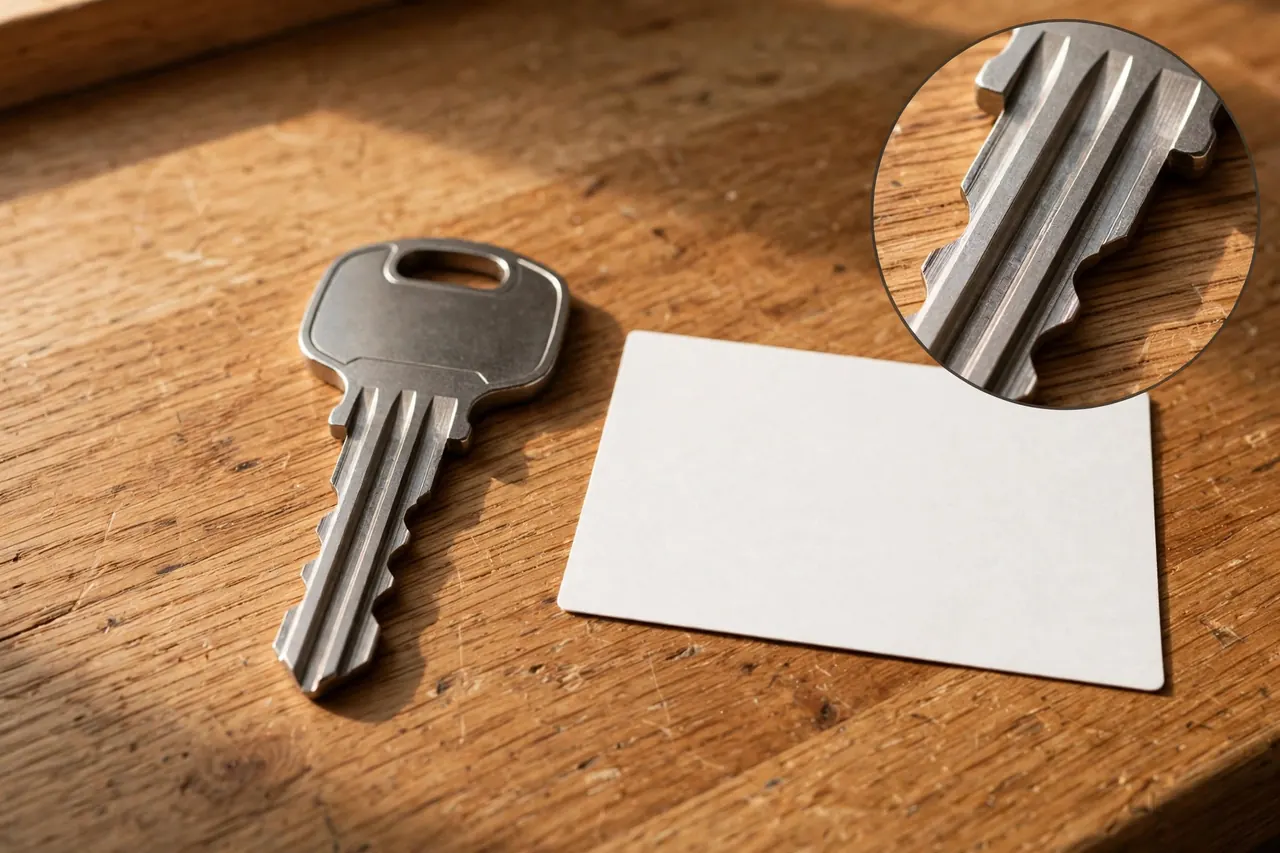
Think about how an ordinary house key gets copied. You hand it to a kiosk or a hardware store, and a machine traces it. No one asks who you are. If a cleaner, contractor, or ex-tenant kept your key for one afternoon, a copy may already exist — and you would never know.
A restricted keyway breaks that chain. The key blank has a special shape that is protected by a patent and sold only to authorized dealers. The cutting machine for that blank is not the standard one in a big-box store. When you want a copy, the dealer checks your signature or authorization card against the record from the day the lock was installed. No card, no copy.
This is why a stamped message is not the same thing. “Do Not Duplicate” stamped on a normal key is a request, not a control. Many shops honor it, but nothing in the key’s design stops a copy. Key control works because the blank itself is unavailable, not because of a warning.
Two habits protect you after you buy:
- Keep the authorization card somewhere safe, and write down which dealer holds your key record.
- Ask what happens when the keyway’s patent expires. Patents end, and when they do, copy protection can weaken. Good manufacturers keep restricting blanks after expiry, but you should hear that promise before you buy, not after.
For a wider look at how locks fit into whole-door protection, see the DwellifyHome guide to door locks security.
Inside the Cylinder: Pins, Sidebars, and Discs
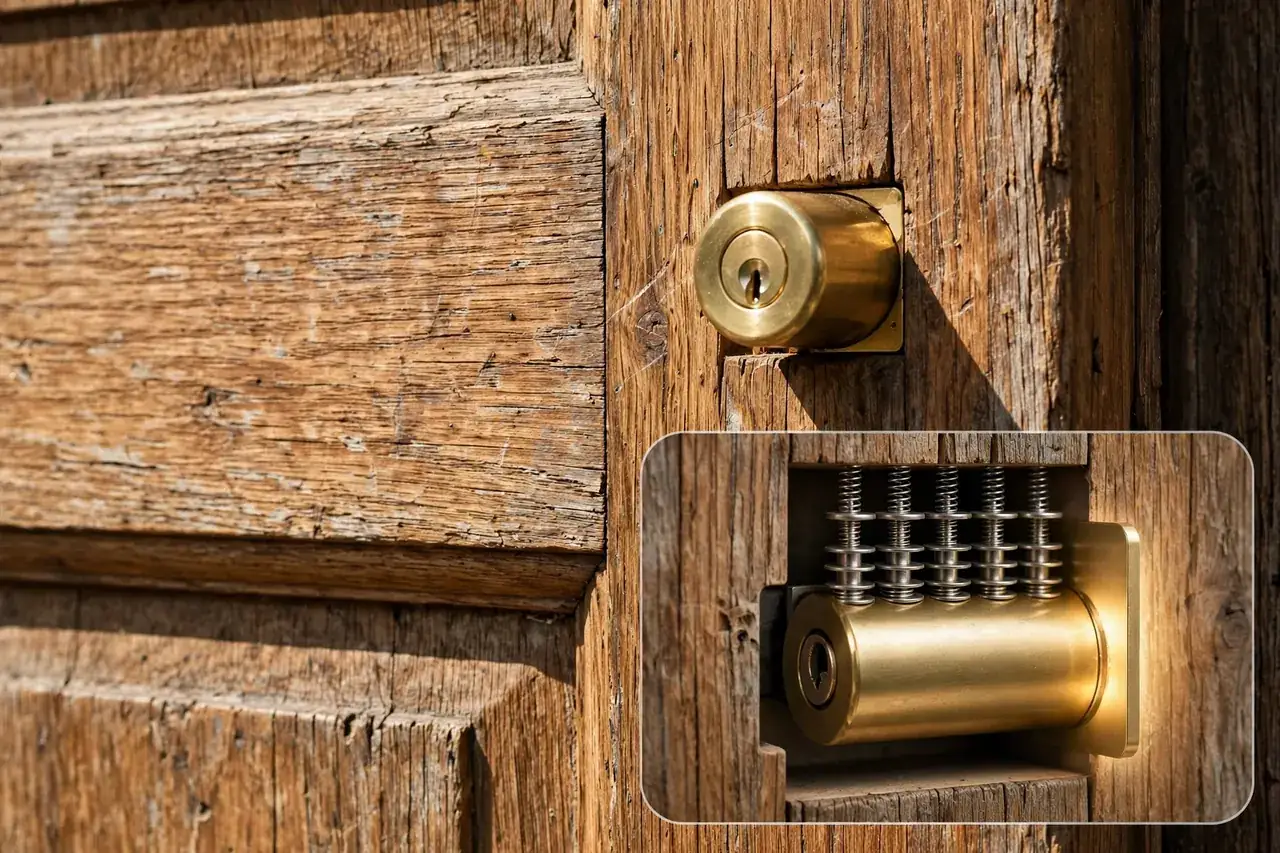
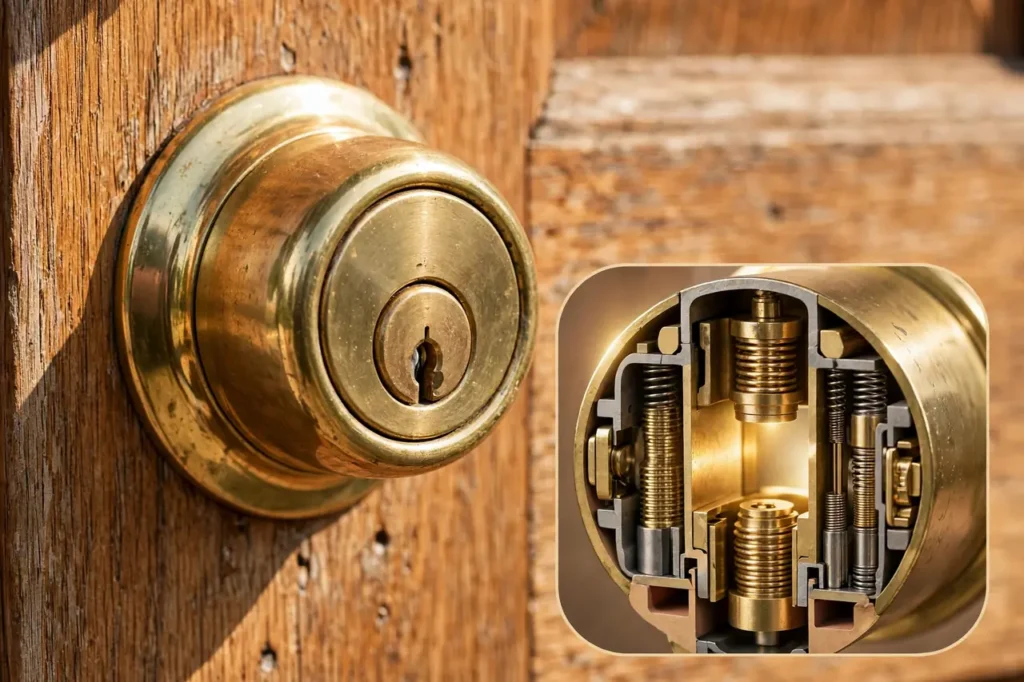
A standard cylinder holds one row of pins. The right key lifts each pin pair to a split point called the shear line, and the plug turns. Picks, and bump keys, attack that single row. A bump key is a key cut to the deepest cuts; one sharp tap knocks all the pins up at once, and for a split second the shear line is clear.
High security cylinders add a second thing the key must satisfy at the same moment. That second check is what defeats both tools:
- Security pins — spool and serrated pins that catch and bind when a pick lifts them, so the plug gives false feedback instead of opening.
- Sidebars — a spring-loaded bar that drops into a groove in the plug only when every pin is in the exact right position. Medeco cylinders, for example, use pins that must be lifted and rotated to the correct angle before the sidebar can retract. A bump key cannot rotate pins, so the sidebar stays locked even if the main pins jump.
- Telescoping pins — a pin inside a pin, used in Mul-T-Lock cylinders, which doubles the positions a pick must set correctly.
- Rotating discs — disc-detainer cylinders, the design Abloy is known for, replace pins with a stack of discs that the key must rotate into alignment. There is no spring-loaded pin stack for a bump key to bounce.
The lesson is simple: bumping and basic picking work because a cheap cylinder asks only one question. High security cylinders ask two or three questions at once, and the wrong answer to any of them keeps the door locked.
Drill Resistance: Hardened Steel Where the Bit Wants to Go
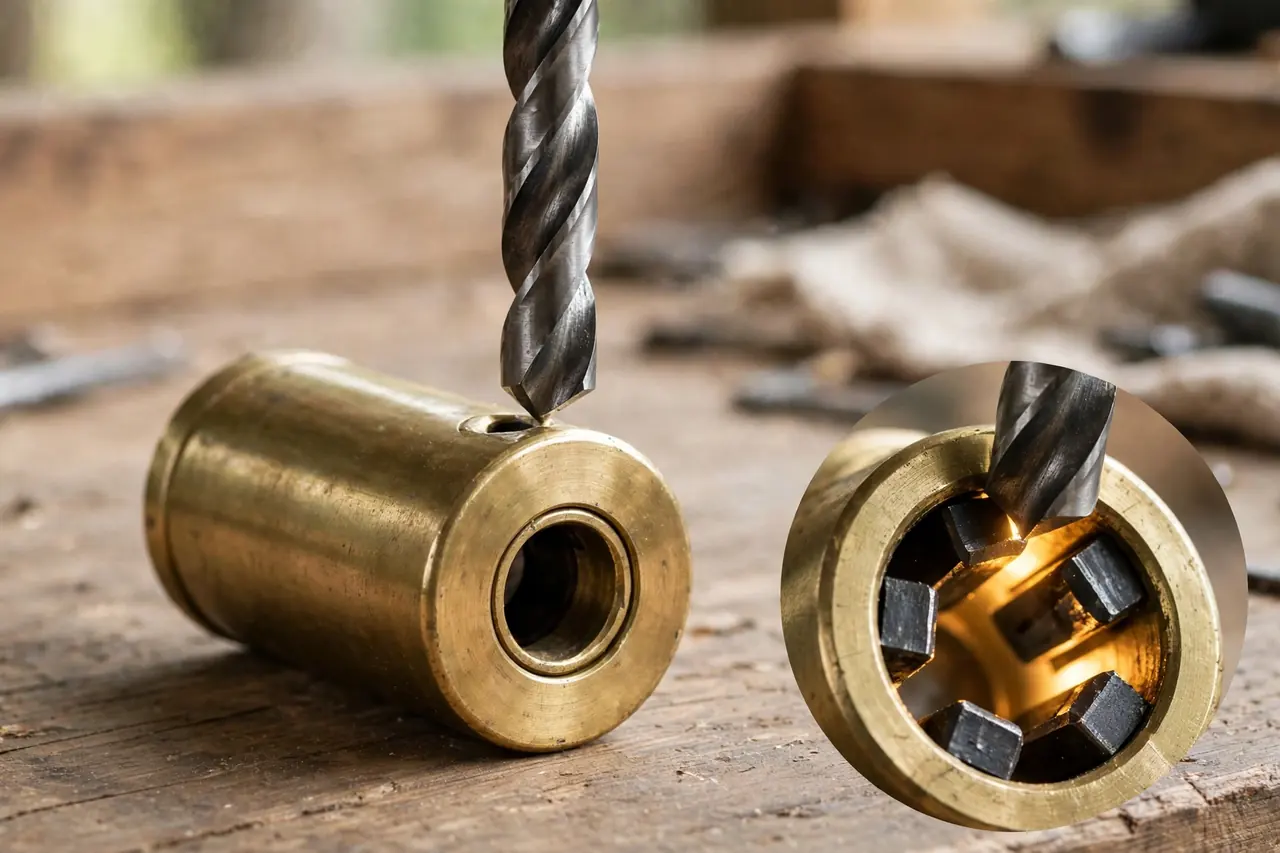
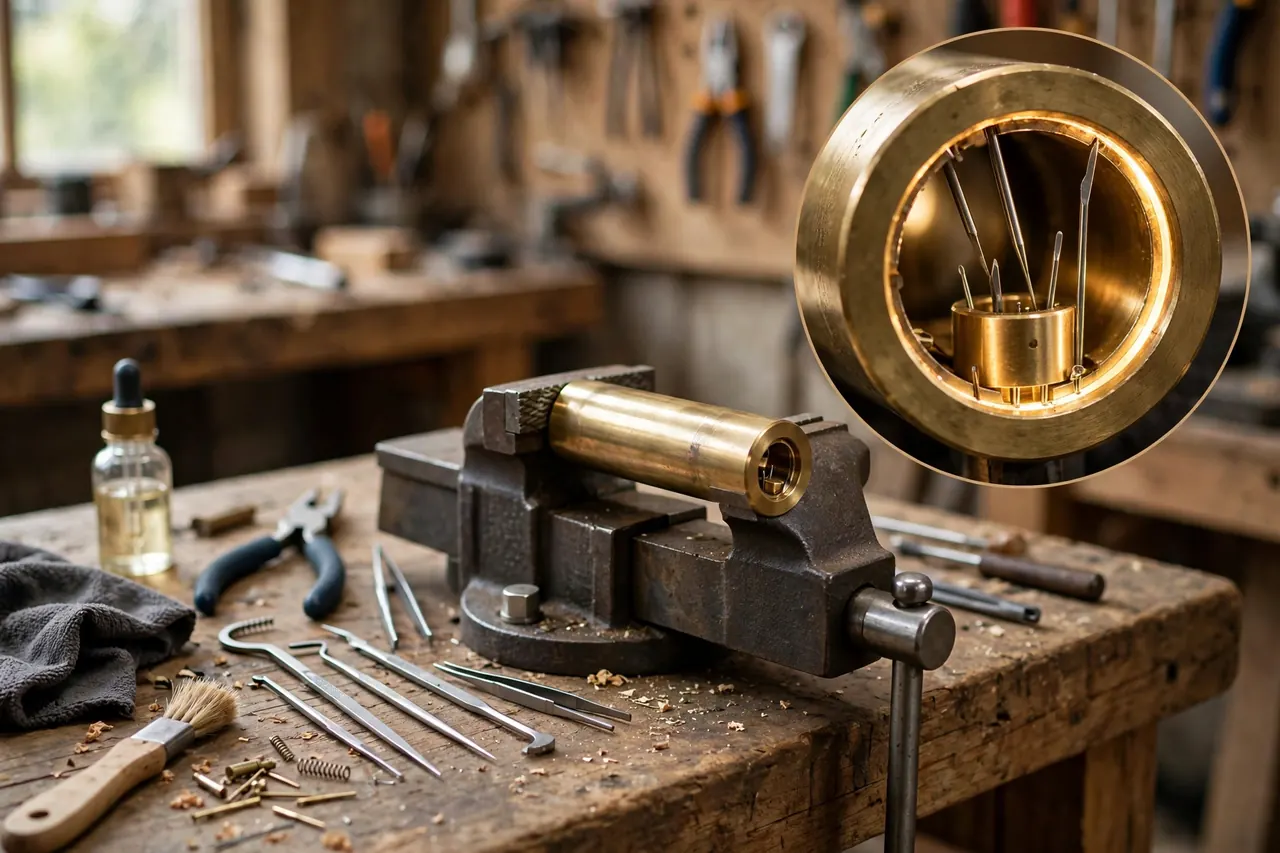
A drill attack is not random. The bit aims at known weak points: the shear line, where cutting through the pins frees the plug; the screws or pins that hold the cylinder together; and the plug face, where a hole can expose the mechanism. UL 437’s 5-minute drill test is timed because drill resistance is about delay — long enough that the noise and effort send most attackers elsewhere.
Manufacturers buy those minutes with hardened steel placed exactly where the bit wants to travel:
- Hardened inserts and rods inside the cylinder body and plug, which dull or snap standard bits.
- Hardened pins mixed into the pin stacks, so drilling through the shear line chews through steel, not soft brass.
- Free-spinning discs or faceplates over the front of the cylinder, which rotate with the bit instead of letting it bite.
One caution: drill protection only covers the cylinder itself. If the rest of the lock body is thin cast metal, an attacker may skip the cylinder and attack the body or the door. That is the weakest-link problem again, and it leads straight to the next decision.
Cylinder Upgrade or Full Lock Swap?
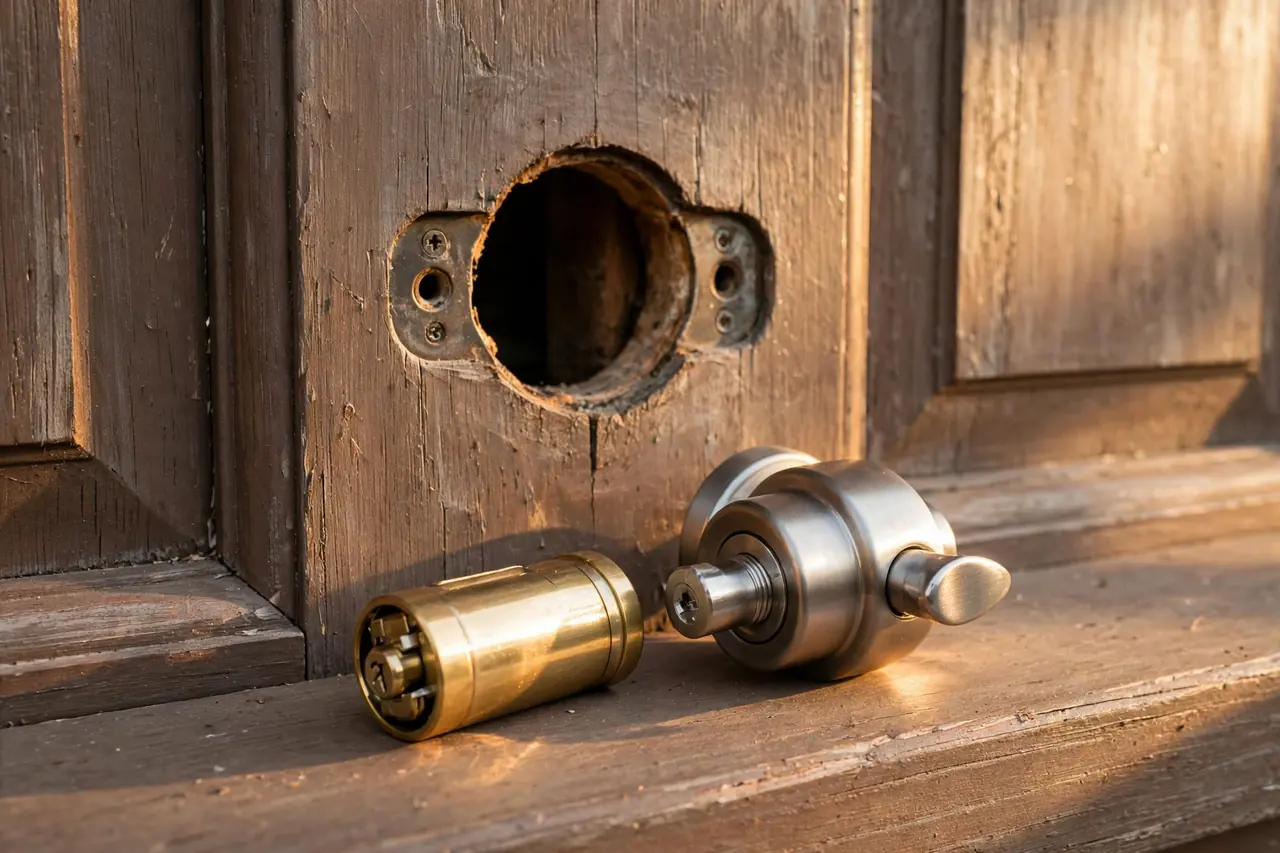
Here is the good news hidden in most high security systems: the cylinder is often sold on its own, in formats made to retrofit the lock hardware already on your door. You may not need a whole new lock to get UL 437 attack resistance and true key control. Choose based on the state of what you already own.
Upgrade just the cylinder when…
- Your deadbolt body is Grade 1 or Grade 2, works smoothly, and throws its bolt fully into the frame.
- Your real problem is key control — too many copies of your key exist, or you just moved in.
- You want pick and bump resistance, which live in the cylinder, not the bolt.
- Your door and frame are solid, with a strike plate held by long screws into the wall stud.
Replace the whole lock when…
- The existing lock is ungraded or Grade 3, with a short bolt throw or a worn, loose body.
- The bolt does not extend fully, the key sticks, or parts are corroded.
- You are changing the door anyway, or the frame and strike need rebuilding at the same time.
If the whole lockset does need replacing, compare complete locks in the DwellifyHome guide to the best door locks before you spend anything on a cylinder. And whichever route you take, check the strike plate: a reinforced strike with 3-inch screws reaching the stud does more against a kicked door than any cylinder can.
How to Verify a Lock Is Really High Security
Before you pay a premium, run this short checklist:
- Find the UL 437 listing. The cylinder should be listed, not just “built to UL standards.” Listings can be checked in UL’s product directories.
- Find the BHMA grade. Look for the grade and the standard number (A156.36 for deadbolts, A156.30 for high security cylinders) and confirm the product in BHMA’s Certified Products Directory.
- Get the key control terms in writing. Who can cut copies, what proof they require, and whether blanks stay restricted after the patent expires.
- Ask which level. For an A156.30 cylinder, the level (A, B, or C) and its drill-resistance time should be stated plainly.
- Be suspicious of vague words. “Military grade,” “virtually unpickable,” and “maximum security” with no standard named are marketing, not testing.
A dealer who sells real high security hardware can answer every one of these in a minute. A dealer who cannot is selling you a story, not a standard.
Disclaimer
No lock is unbeatable, and DwellifyHome does not present any lock as such. UL 437, ANSI/BHMA A156.36, and ANSI/BHMA A156.30 are laboratory test standards: they measure how long hardware resists defined attacks under test conditions, and real-world results vary with the door, the frame, and the quality of installation. Ratings are not guarantees against break-ins. For high-risk properties, pair good hardware with professional installation and advice from a licensed locksmith or security professional.
Frequently Asked Questions
What is a high security lock?
It is a lock whose cylinder has passed independent attack tests, such as UL 437, and whose keys are controlled. The cylinder resists picking, bumping, and drilling far longer than a standard cylinder, and copies of the key can only be made by an authorized dealer with your approval.
What makes a cylinder “high-security” vs. standard?
Three things: timed resistance to picking and drilling under standards like UL 437 and ANSI/BHMA A156.30, extra internal defenses such as sidebars or security pins, and a restricted keyway. A standard cylinder has none of these — it uses a common blank anyone can copy and a single row of basic pins.
How do restricted keyways prevent duplication?
The key blank is patent-protected and sold only to authorized dealers, and it needs a special cutting machine most shops do not have. To get a copy, you must show your authorization or signature card. Without it, the dealer will not cut the key, so copies stay under your control.
Do you replace the full lock or just the cylinder?
Often, just the cylinder. High security cylinders come in retrofit formats that fit many existing lock bodies, so a sound Grade 1 or Grade 2 deadbolt can gain key control and pick resistance from a cylinder swap alone. Replace the whole lock if the body is Grade 3, worn, or throws its bolt poorly.
Can high-security cylinders work with a master key system?
Yes. Major high security platforms support master keying, where one key opens several locks while each lock also has its own key. It suits landlords and small offices. The system must be planned by the dealer from the start, because the cylinder’s pinning and key records are set up around the hierarchy.
The Bottom Line
Start with the standards, not the shelf. Check that the cylinder is UL 437 listed, that the lock body is BHMA Grade 1, and that the keyway is restricted with terms you have in writing. Then look honestly at your door: if the body and frame are sound, a cylinder upgrade gives you most of the protection for less work. If they are not, fix the weakest part first — because that, and not the badge on the box, is what an attacker will test.