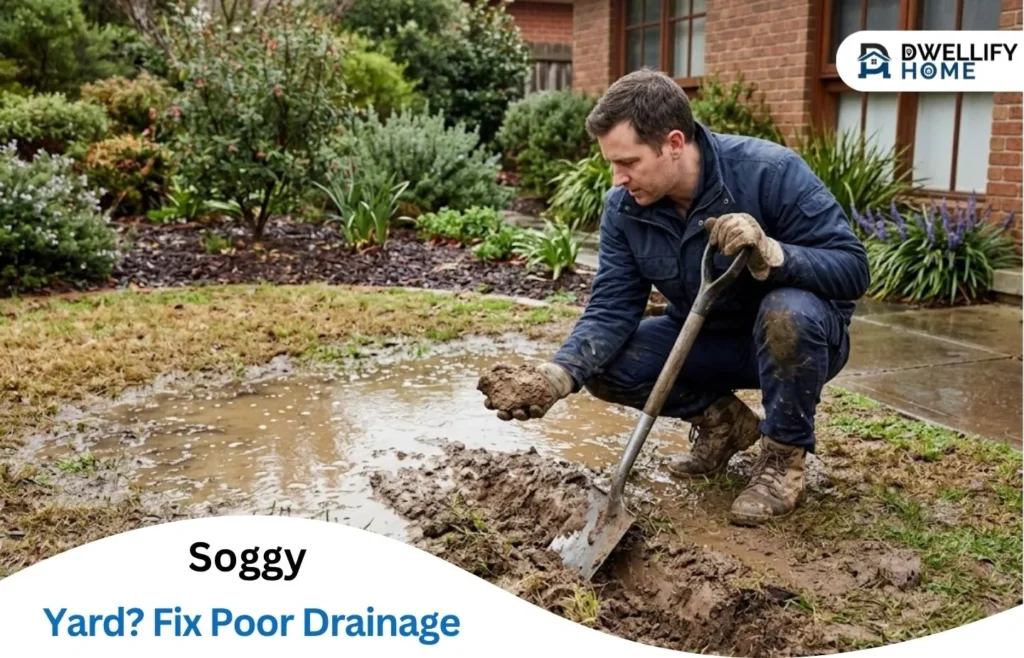
Few things are more frustrating than a lawn that turns into a swamp every time it rains. Standing water kills grass, attracts mosquitoes, leaves muddy footprints through the house and, in the worst cases, pushes moisture toward your foundation. The fix depends entirely on the cause, so the first job is detective work. This guide walks through how to diagnose a wet yard and the most common solutions, from simple weekend tasks to bigger projects.
Step 1: Watch Where the Water Goes
The best time to study your drainage is during and right after a heavy rain. Walk the property and note:
- Where water enters the yard: downspouts, a neighbour’s slope, the street or a driveway.
- Where it collects: low spots, along fences, against the house or at the bottom of a slope.
- How long it stays: a few hours is normal; a day or more points to a real problem.
Take photos or sketch a rough map. Patterns quickly emerge, and they tell you whether you are dealing with surface runoff, poor soil drainage or both.
Step 2: Identify the Cause
Roof Runoff
A single roof can shed a surprising amount of water. If downspouts empty right beside the foundation or into a flat area, water has nowhere to go. This is the most common, and cheapest, problem to fix.
Poor Grading
Soil should slope away from the house. Over time, settling, landscaping projects and erosion can leave the ground flat or even tilted toward the foundation.
Compacted or Clay Soil
Heavy clay and compacted soil absorb water slowly. Even a perfectly graded yard can stay soggy if water simply can’t soak in.
A Naturally Low Spot
Some yards have a dip where water from surrounding areas collects. These usually need a way to move water out rather than just help it soak in.
High Water Table
In some areas, ground water sits close to the surface, especially in spring. This is harder to solve and often calls for sub-surface drainage.
Step 3: Start With the Simple Fixes
Before investing in major work, try the basics:
- Clean and extend downspouts. Add extensions or buried pipes to carry roof water several feet away from the house.
- Aerate the lawn. Core aeration loosens compacted soil and helps water absorb.
- Top-dress with compost. Over time, organic matter improves soil structure.
- Regrade small areas. Adding soil near the foundation to restore a gentle slope away from the house often helps.
For a deeper look at these quick wins and when they’re enough, this practical guide on how to get rid of standing water in your yard breaks down the options by cause.
Step 4: Consider Long-Term Drainage Solutions
If simple fixes don’t solve the problem, these are the common next steps:
French Drains
A gravel-filled trench with a perforated pipe collects sub-surface water and carries it to an outlet. French drains are well suited to soggy lawns and wet areas along foundations.
Dry Wells
An underground pit filled with stone (or a plastic chamber) holds water and lets it slowly soak into the surrounding soil. Dry wells often pair with downspout lines.
Catch Basins and Channel Drains
These collect surface water at low points, patios or driveways and send it through solid pipe to a safe outlet.
Rain Gardens
A shallow, planted depression with water-loving plants can absorb runoff while adding beauty and habitat. Rain gardens work best for moderate amounts of water and well-draining soil.
Dry Creek Beds
A decorative channel of river rock can guide surface water across the yard while looking like a natural landscape feature.
When to Call a Professional
DIY fixes go a long way, but some situations call for experienced help: water entering the basement, large yards with complex grades, drainage that crosses property lines, heavy clay, or a system that needs to tie into a storm sewer. Professional yard drainage services typically start with a site evaluation, then design a system (often a mix of grading, drains and outlets) to suit the specific property.
When comparing contractors, ask:
- How will you determine where the water is coming from?
- Where will the water be discharged, and is that allowed locally?
- What materials will you use for pipe, gravel and fabric?
- How will you restore the lawn or landscaping afterwards?
Preventing Future Problems
Once your yard drains well, keep it that way. Clean gutters each fall and spring, check that downspout extensions stay connected, avoid piling mulch or soil against the foundation, and look over drain outlets after major storms.
The Takeaway
A soggy yard isn’t something you have to live with. Watch where the water goes, figure out why it’s staying, and match the fix to the cause. Many yards improve with simple changes, and the rest can usually be solved with a well-planned drainage system.
Please be aware that this article may contain affiliate or sponsored links. Qualifying purchases made through these links may generate a commission for Dwellifyhome.com, helping us cover website expenses and continue producing helpful content.