Yes, most dogs can swim in a pool safely, but only with supervision, a clear way out, and a fence or barrier that keeps them away when no one is watching. Dog swimming pool safety starts before your dog ever touches the water, because even strong swimmers can tire, panic, or fall in when no one is home.
Pools look safe, yet they hide real risks for dogs. Smooth walls give paws nothing to grip, ladders confuse many dogs, and a floating pool cover can trap a dog that falls in. The good news is that every one of these risks has a simple fix, and this guide walks through all of them.
Can Every Dog Swim in a Pool?
No, not every dog can swim, and assuming yours can is the most common mistake owners make. Some dogs take to water at once, while others sink, panic, or tire in seconds. Never throw a dog into a pool to find out if it can swim.
Retrievers, spaniels, and poodles were bred for water work, so they usually paddle well. Even so, they still need supervision and a way out. A tired retriever in a deep pool is still a dog in trouble.
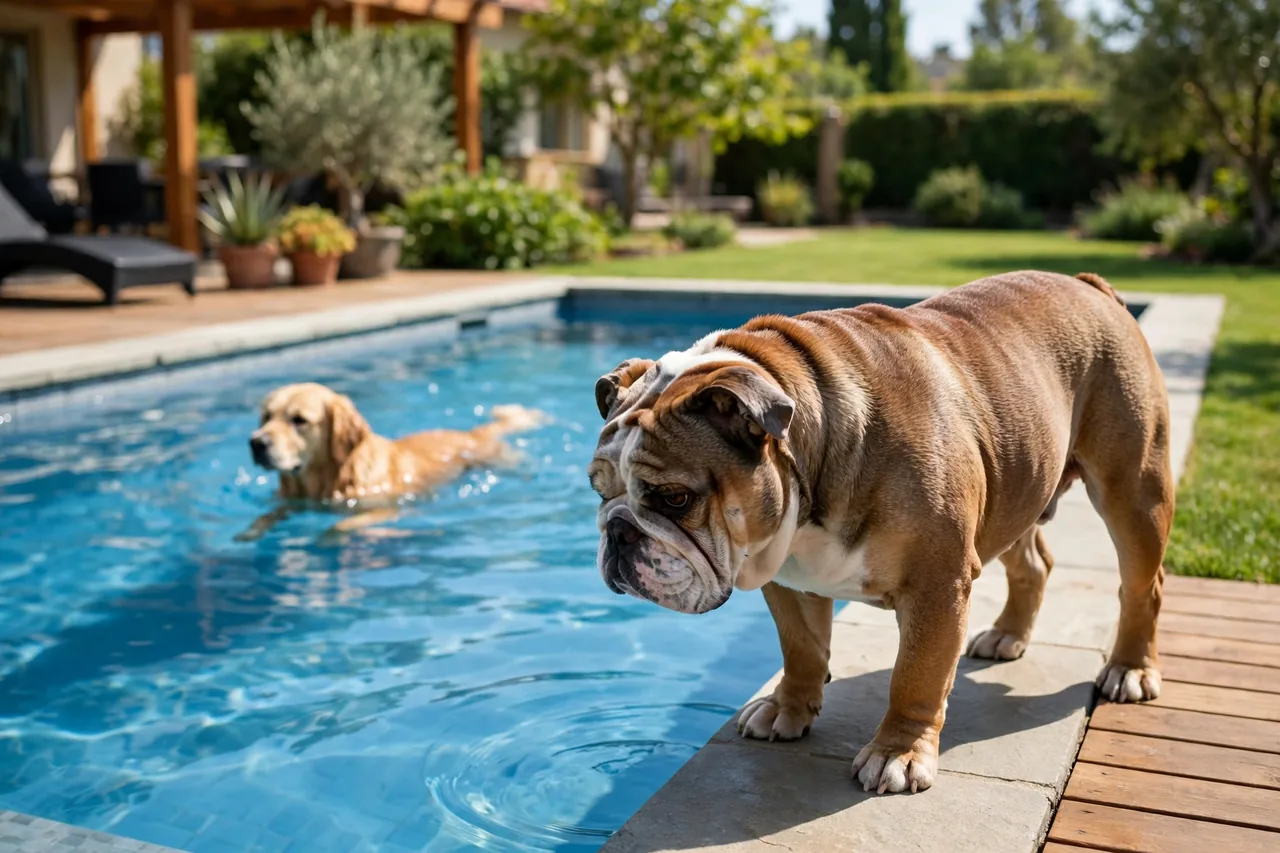
Some body shapes make swimming hard. Flat-faced breeds such as pugs, French bulldogs, and English bulldogs must tilt their heads far back to keep their noses above water, which pushes their back ends down. Short-legged dogs such as dachshunds and basset hounds struggle to power through the water, and heavy, barrel-chested dogs tire fast. The American Animal Hospital Association (AAHA) advises owners to check a dog’s build and health before any swim, and its water safety guide for pets lists life jackets, ramps, and fences as the core gear for pool safety.
Ask your vet before the first swim if your dog is a puppy, a senior, overweight, or living with heart, breathing, or joint problems. A vet can tell you whether swimming helps or hurts your dog, and how long a session should last.
Teach Your Dog the Exit Before Anything Else
The single most useful skill a pool dog can learn is how to get out on its own. Most pool accidents happen when a dog falls in alone and cannot find the steps. Teach the exit first, before play, before fetch, and before any deep-water swim.
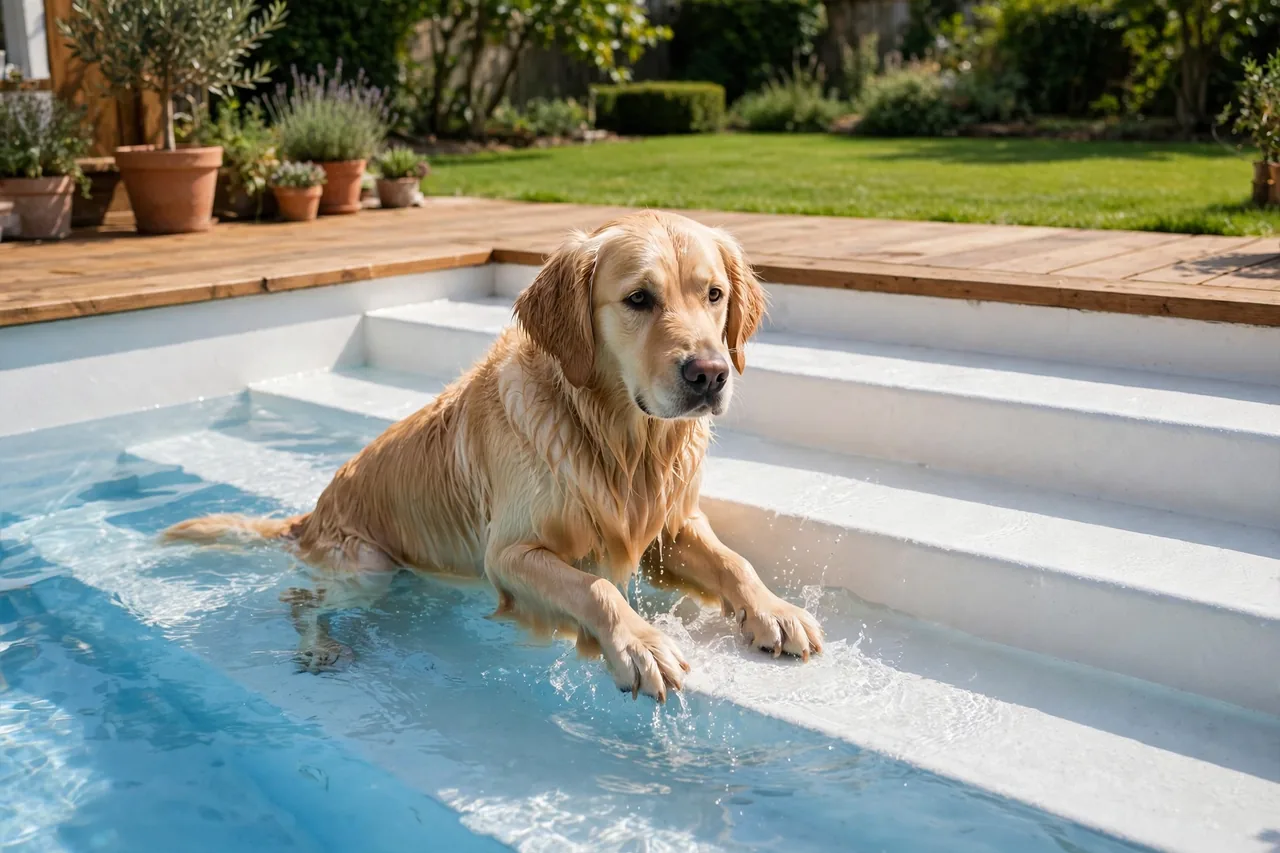
Start on the steps with your dog on a leash. Walk it in and out of the shallow end several times so it learns where the steps are. Then guide it a few feet from the steps, turn it toward them, and let it swim back on its own. Repeat this from different spots around the pool until your dog heads for the steps without help.
Practice often, at least a few times each swim season. Dogs forget, and a pool looks different from the water than it does from the deck. A dog that knows the exit from one side may still panic when it falls in from the other side, so practice from every edge your dog can reach.
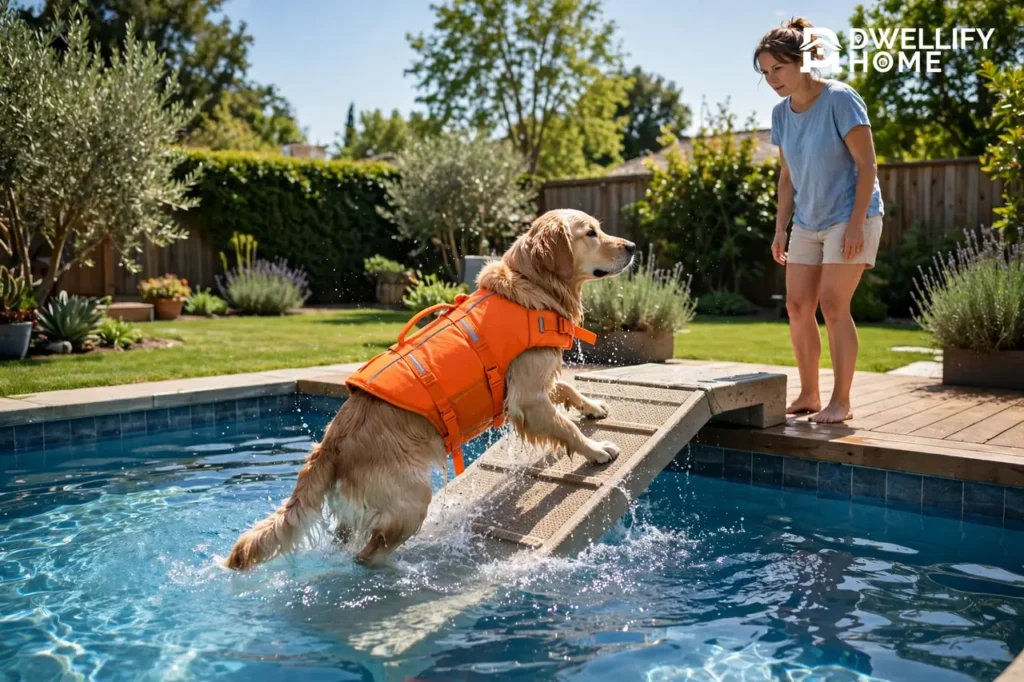
If your pool has no built-in steps, add a dog ramp. A ramp with a grippy surface gives paws something to climb, and it works even when a dog is tired. Place it where your dog can see it from the water, and train your dog to use it the same way you train the steps.
Ladders are not a safe exit for most dogs. Vertical rungs confuse them, and many dogs cannot climb a ladder even when they can see it. Treat a ladder as a human exit only.
Block Access When No One Is Watching
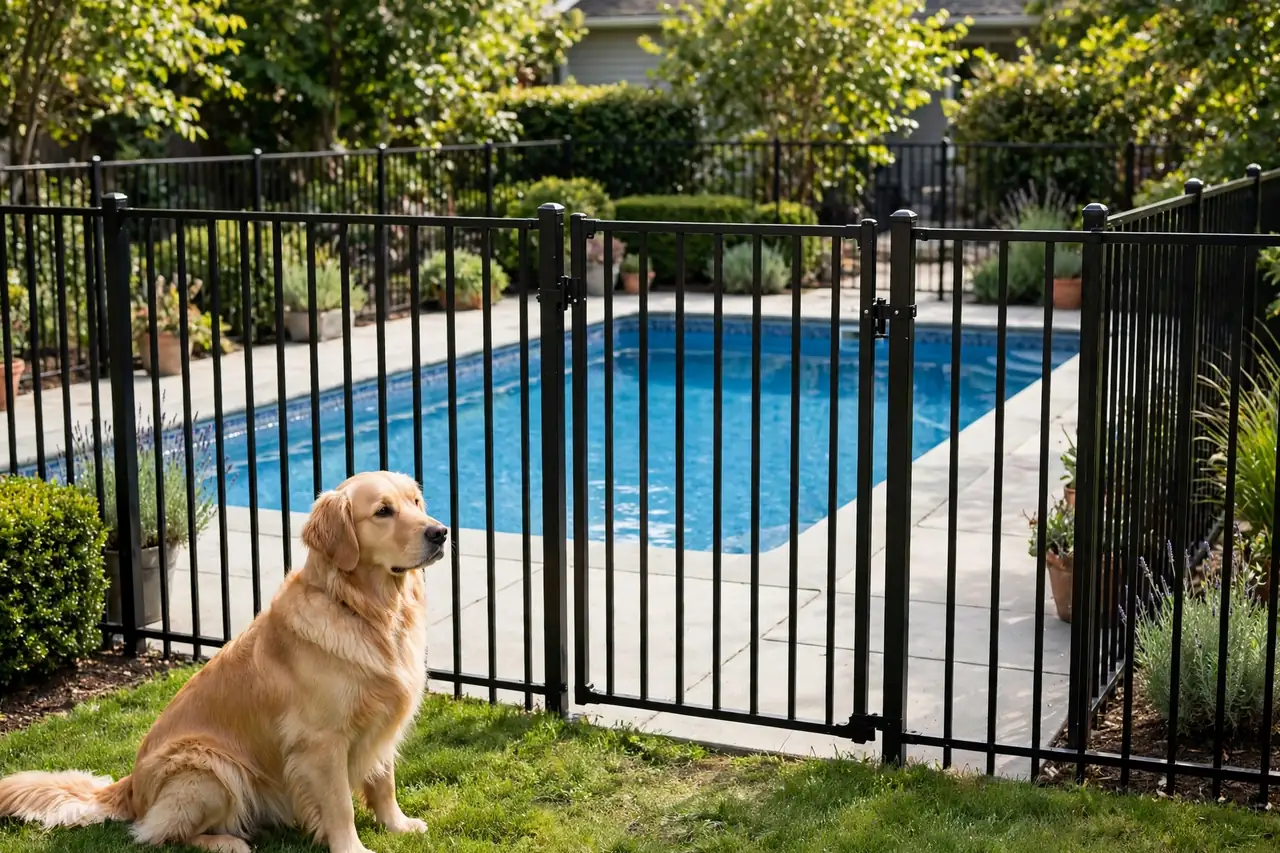
A fence is the only barrier that works when you are not there. Dogs fall into pools during normal play, while chasing a ball, or while wandering the yard at night. A four-sided fence with a self-closing, self-latching gate keeps your dog out when the pool is closed.
Keep the gate latched every time you leave the pool area, even for a minute. Dogs learn to nose open gates that do not latch, so test the latch often and fix it the moment it sticks or sags.
Pool alarms add a second layer. A surface alarm sounds when something breaks the water, and a gate alarm sounds when the gate opens. Alarms never replace a fence or supervision, but they buy you seconds, and seconds matter in the water.
Never trust a pool cover to keep a dog safe. A solid safety cover that is anchored and rated to hold weight can help, but a loose mesh or floating cover is a trap. A dog that walks onto a floating cover sinks into the water underneath it and cannot climb out. If you use a cover, keep it tight, anchored, and fully closed when the pool is not in use, and still keep the fence shut.
The Gear That Keeps Dogs Safe in the Water
Good gear does not replace supervision, but it makes every swim safer. Buy gear that fits your dog, not gear that looks good in a photo.
A Life Jacket That Fits
A dog life jacket adds buoyancy and gives you a handle to lift your dog out of the water. It matters most for weak swimmers, puppies, seniors, and flat-faced or short-legged breeds. Pick one with a snug fit that does not slip sideways, a handle on top, and bright colors you can spot fast. Check the weight range on the label before you buy, and test the fit in shallow water first.
A Ramp or Steps Your Dog Can Use
Every pool a dog uses needs a dog-friendly exit. Built-in steps work if your dog has practiced on them. A ramp works in almost any pool and helps tired or older dogs most. Keep the ramp clean, since algae makes it slippery, and check that it stays firmly in place.
Fresh Water, Shade, and a Rest Spot
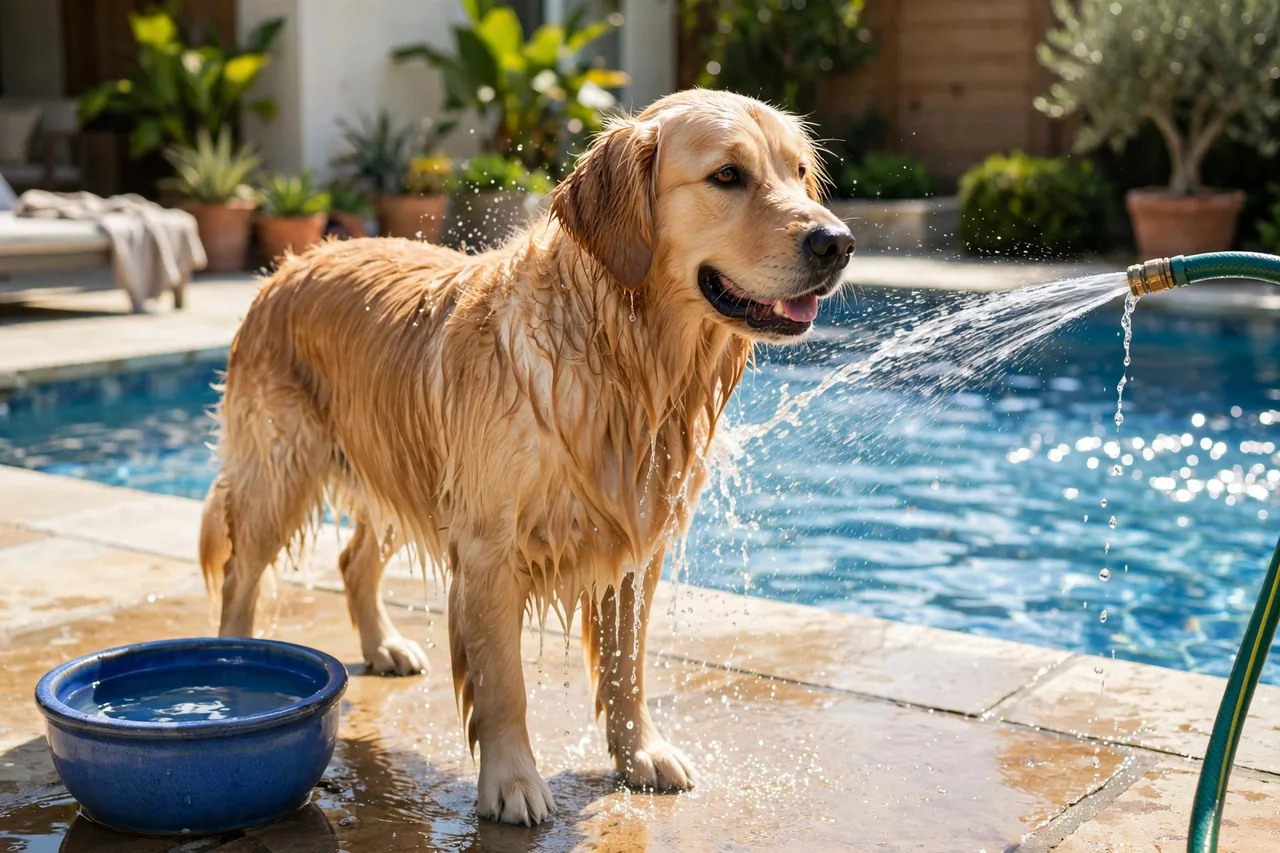
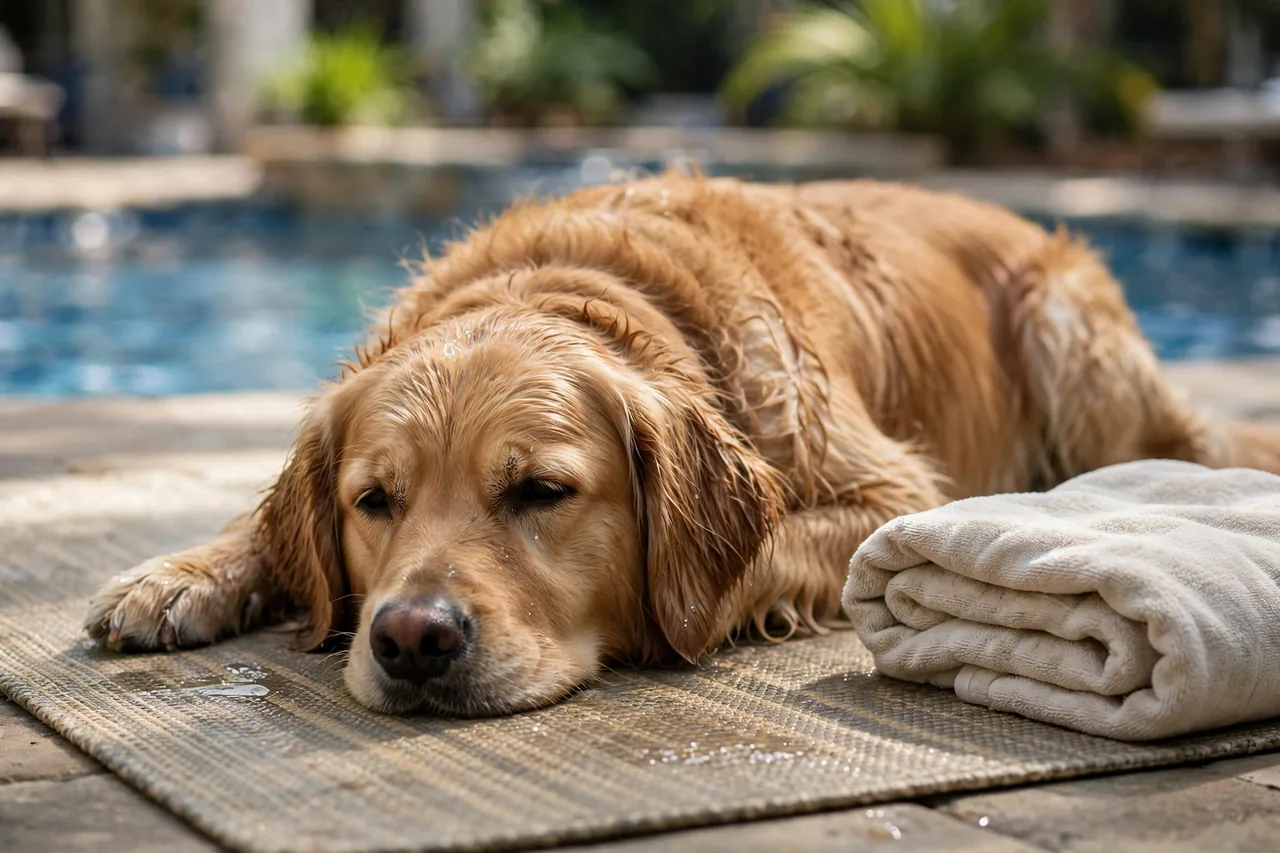
Keep a bowl of fresh water at the poolside so your dog drinks that instead of pool water. Set out shade and a dry towel or mat where your dog can rest between swims. Dogs overheat fast in summer sun, and a wet dog in full sun can still get too hot.
Pool Water, Chemicals, and Your Dog’s Health
Pool water at normal levels is usually safe for dogs to swim in, but drinking it is another matter. Keep fresh drinking water beside the pool so your dog never treats the pool as a water bowl.
Well-kept pool water holds free chlorine at about 1 to 3 parts per million, and that level rarely harms a dog’s skin or coat. The trouble starts when a dog gulps water again and again during play. Large amounts can upset the stomach and cause vomiting or diarrhea. Saltwater pools carry a similar risk, since a dog that drinks a lot of salty water can develop salt poisoning.
Rinse your dog with fresh water after every swim. Rinsing washes chlorine and pool chemicals off the coat and skin, and it helps stop itching and dry skin. Dry your dog well, especially around the ears and skin folds, since damp ears invite infection.
Watch the ears after swimming. Dogs that swim often can develop ear infections, so check for redness, smell, or head shaking in the days after a swim. If you see any of these signs, call your vet rather than pouring cleaner into the ears yourself.
Keep pool chemicals locked away from your dog at all times. Chlorine tablets, shock, and algaecide are far more concentrated than pool water, and they can burn a dog’s mouth and stomach. Store them in a closed shed or cabinet your dog cannot open, and follow the product’s re-entry time after you treat the water.
Rules for Every Swim Session
Safe swims follow the same rules every time, no matter how calm the day looks. Write them down and teach them to everyone who watches your dog.
- Supervise every swim. Stay at the poolside, watch your dog, and keep your phone in your pocket.
- Keep sessions short. Start with 10 to 15 minutes, then rest, then swim again only if your dog still looks strong.
- Stop at the first sign of tiredness. Slow paddling, a low back end, or frantic splashing means the swim is over.
- Never throw toys far into deep water again and again. Fetch until exhaustion is a real risk, even for strong swimmers.
- Swim in daylight or good light. A dog in a dark pool is hard to see and hard to help.
- Keep the water warm enough. Cold water tires dogs fast, and older dogs feel the cold sooner.
- End the session before your dog asks to stop. A dog that quits mid-pool is already in trouble.
Watch the weather too. Get your dog out of the water at the first sign of thunder or lightning, and stay out until the storm has fully passed.
Signs Your Dog Is in Trouble in the Water
Drowning in dogs is often quiet. A dog in trouble may not bark or splash wildly. Learn the signs now, so you can act in seconds instead of guessing.
Call your dog out of the water at once if you see labored breathing, heavy panting, uncoordinated paddling, a head held very low, or repeated gulping of water. A dog that circles, cannot find the steps, or keeps slipping back into the water needs help right away.
If your dog goes under, stay calm and get it out fast. Lift it by the life jacket handle or support its chest and back end together. Once out, check breathing and responsiveness. If your dog is not breathing normally, start pet CPR if you know how, and get to an emergency vet at once, even if your dog starts breathing again on its own. ASPCA Pet Health Insurance notes that dogs can develop breathing problems hours after swallowing water, so its water safety guide urges owners to watch for coughing, vomiting, or unusual tiredness after any swim and to call a vet fast if these appear.
Learn basic pet CPR before swim season starts. Many vets and animal hospitals run short classes, and a few minutes of training can save your dog’s life. Keep your vet’s number and the nearest emergency clinic’s number saved in your phone and posted near the pool.
Common Mistakes Dog Owners Make Around Pools
Most pool accidents come from small, everyday mistakes, not from wild risks. Check yourself against this list before the next swim.
First, do not assume a life jacket replaces supervision. A jacket helps a dog float, but it cannot stop panic, exhaustion, or a dog trapped under a cover. Second, do not let your dog swim alone while you run inside, even for a minute. Third, do not throw your dog in the water or push it off the edge. Forced entry creates fear and panic, and a panicked dog is far more likely to swallow water.
Fourth, do not trust a pool cover as a barrier. Fifth, do not skip the exit practice because your dog “already knows how to swim.” Swimming skill and exit skill are two different things. Finally, do not ignore tiredness. A dog that swims until it is exhausted can sink with little warning, so you set the limit, not your dog.
How to Introduce a New Dog to the Pool
Introduce a new dog to the pool slowly, over several short visits. Let your dog sniff the edge, wade on the steps, and leave whenever it wants. Reward calm behavior with praise and treats, and never force your dog deeper than it chooses to go.
For puppies, wait until your vet says swimming is safe, usually around three to four months of age, when coordination and strength have improved. Start in very shallow water and keep the first sessions to a few minutes. Older dogs can learn too, but keep their sessions shorter and watch for stiffness or tiredness after the swim.
If your dog hates the water, accept it. Some dogs never enjoy swimming, and that is fine. A shallow kiddie pool in the shade gives a water-shy dog a way to cool off without fear, and it carries almost none of the risk of a full pool.
Related Guides
Plan the space around your pool with swimming pool landscaping ideas that keep the area safe and easy to watch. Furnish the deck with outdoor furniture for poolside so you always have a shaded spot to supervise from. If your yard is small, read backyard pool ideas for a small yard before you plan fencing and access.
Frequently Asked Questions
Can all dogs swim in a pool?
No. Most dogs can learn a basic paddle, but flat-faced breeds, short-legged breeds, puppies, seniors, and dogs with health problems may struggle or tire fast. Judge your own dog’s build and health, ask your vet, and use a life jacket for any dog that is not a strong swimmer.
Is chlorine pool water safe for dogs?
Yes, at normal levels of about 1 to 3 parts per million, pool water is usually safe for dogs to swim in. The risk comes from drinking large amounts, which can upset the stomach. Keep fresh water poolside, discourage gulping, and rinse your dog with fresh water after every swim.
How old should a puppy be before swimming in a pool?
Most vets suggest waiting until a puppy is three to four months old before real swimming, when coordination and strength have improved. Very shallow wading can start earlier if your vet agrees. Always supervise, keep sessions short, and use a life jacket for a young puppy.
Can a dog drown in a pool even if it can swim?
Yes. Strong swimmers can drown from exhaustion, panic, illness, or entrapment under a cover. A dog that cannot find the exit is in danger no matter how well it swims. That is why exit training, supervision, and a fence matter more than swimming skill alone.
Do dogs need a life jacket in a pool?
Weak swimmers, puppies, seniors, and flat-faced or short-legged breeds should always wear one near deep water. Strong swimmers benefit too, since the handle lets you lift a tired dog out fast. A life jacket helps, but it never replaces supervision or a fence.
A Short Safety Note
This guide shares general home and pet safety information, not veterinary or medical advice. Every dog is different, so check with your vet about your own dog’s health, breed risks, and swim limits before the first swim. If your dog has a water accident, shows breathing trouble, or acts strangely after swimming, call your vet or an emergency animal clinic right away.
Set up the fence, teach the exit, and keep your eyes on your dog, and the pool can stay the fun place it should be.