If you’ve ever stood in a bedroom with a measuring tape and thought, “Okay… but will this actually fit?” you’re not alone. A queen bed is one of the most popular choices because it balances comfort and space, but the real challenge is visualizing it in your room.
Here’s the thing: the mattress size is only the starting point. The frame, headboard, walking space, and even your nightstands can change how “big” a queen bed feels in real life. Let’s walk through it like we’re standing inside your bedroom, planning the layout together.
Snippet-ready definition:
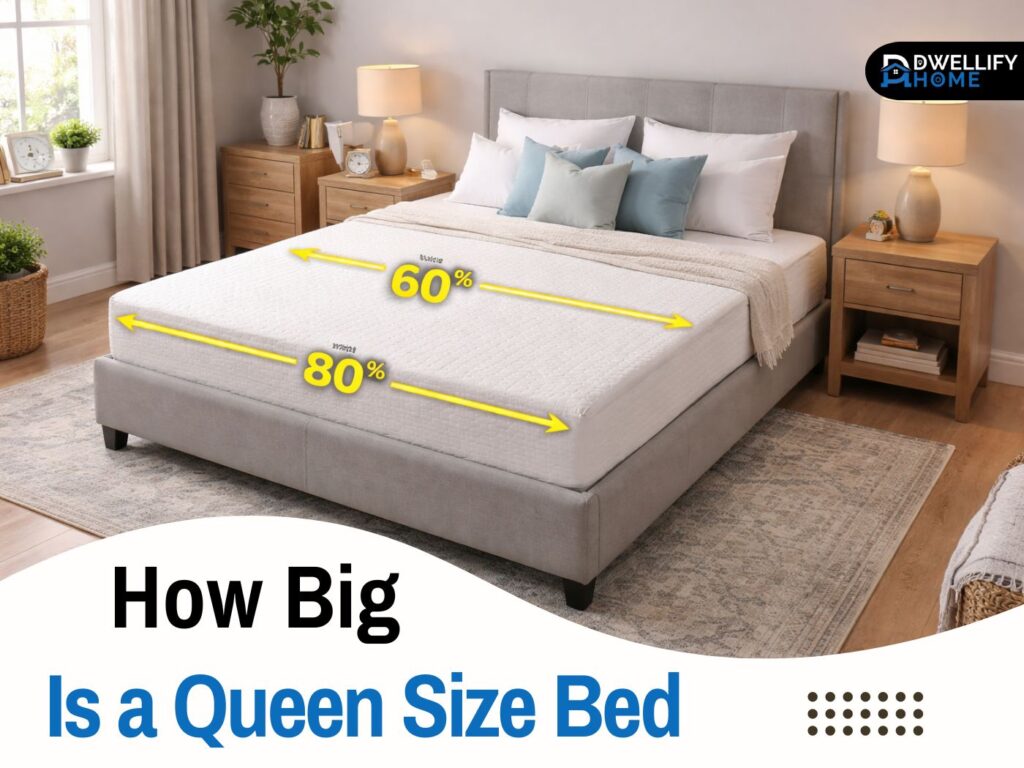
A standard queen mattress measures 60 inches wide by 80 inches long (152 x 203 cm). The overall bed footprint can be larger with a frame or headboard, so measure your room clearance before buying.
Mission Statement:
At Dwellify Home, our mission is to make bedroom planning simple and practical, so your bed, furniture, and walking space fit comfortably in real homes without guesswork.
Quick Guide Comparison Table
Sizes below are standard mattress dimensions (frame sizes can run larger).
| Bed size | Inches (W x L) | Feet (W x L) | Centimeters (W x L) |
| Full | 54 x 75 | 4.5 x 6.25 | 137.2 x 190.5 |
| Queen | 60 x 80 | 5 x 6.67 | 152.4 x 203.2 |
| King | 76 x 80 | 6.33 x 6.67 | 193.0 x 203.2 |
Quick measuring steps (so the bed actually works in your room)
- Measure your room and mark a 60 x 80 inch rectangle on the floor with painter’s tape (this is the mattress).
- Add a few extra inches on each side for the queen size bed frame and any thick rails.
- Add more depth if you’re using a headboard that sticks out.
- Walk around it and check door swings, closet clearance, and drawer space.
Tip from real layouts: even if the mattress fits, a bulky bed frame can steal just enough space to make a room feel tight. Typical queen frame footprints can land around 62–65 x 82–85 inches, depending on design.
How Big Is a Queen Size Bed (Quick Answer)
A standard queen mattress measures 60 inches wide by 80 inches long. That’s the number most brands use, and it’s the measurement you’ll see on mattress labels.
On top of that, many people casually say “queen bed size” when they mean the mattress. But in a real room plan, the full footprint usually ends up larger because of the bed frame and headboard. We’ll break that down in a minute so you don’t get surprised after delivery day.
How big is a queen size bed in inches
The standard queen size bed dimensions in inches are:
- Width: 60 inches
- Length: 80 inches
That width is what gives most adults enough shoulder room to sleep comfortably. And that length works well for many sleepers, but if you’re tall, you’ll want to pay attention to that 80-inch length because your pillow and sleeping position can eat into usable space.
How big is a queen size bed in feet
In feet, a queen mattress is:
- 5 feet wide
- 6 feet 8 inches long
A quick way to picture it: it’s about as wide as a standard two-seat sofa is long, and it takes up a big, confident rectangle in a room. You can absolutely make it work in smaller bedrooms, but the layout has to be intentional.
Queen size bed in cm
If you like metric measurements, a queen mattress is:
- 152.4 cm wide
- 203.2 cm long
Some product pages round this to 152 cm x 203 cm, and that’s totally normal. The important part is knowing the standard and then checking the exact specs for the mattress and frame you’re buying.
Queen Mattress vs Queen Bed Frame (Why Measurements Don’t Always Match)
Guess what? Most “it didn’t fit” stories happen because someone measured the mattress and forgot the frame. And as a room planner, I see it all the time.
A queen mattress might be 60 by 80 inches, but once you add a frame, the outer edges can grow by a few inches on each side. It doesn’t sound like much, until you’re trying to squeeze past the bed with a laundry basket or open a closet door that now hits the corner.
How big is a queen size bed frame (typical real footprint)
A queen size bed frame usually adds extra width and length beyond the mattress. The amount depends on the style:
- Simple metal frame: often close to mattress size
- Platform bed: usually adds a little around the perimeter
- Upholstered frame: can add more because of padding and thicker rails
- Storage bed: often looks sleek, but the base can be bulkier than expected
A practical tip I use with clients: when you’re checking a product listing, look for “overall dimensions” not just “mattress size.” That’s the real number that matters for your room.
How big is a queen size bed with headboard
A headboard can change the feel of the bed even more than the frame. Some headboards sit almost flush, while others extend backward or have a thicker profile.
If your room is tight lengthwise, that extra depth matters. I’ve seen cases where someone measured wall-to-wall perfectly, then the headboard pushed the bed forward enough that drawers couldn’t open fully. It wasn’t a huge mistake, but it was annoying every single day.
Platform bed vs standard frame vs storage bed
Here’s a simple way to choose based on space:
- Standard frame: flexible, often easiest for tight rooms
- Platform bed: stable, clean look, but check the outer dimensions
- Storage bed: great for apartments, but needs clearance for drawers
If you’re working with a smaller bedroom, the best part is you can still choose any style. You just need to plan the clearances before you commit.
Queen Size vs Other Bed Sizes (Most-Asked Comparisons)
A queen makes the most sense when you compare it to what’s around it. These are the numbers I use constantly during bedroom planning.
What size is a full size bed
A standard full bed measures 54 inches wide by 75 inches long. It works well for solo sleepers and smaller guest rooms, but for two adults it can feel tight quickly.
That’s why people often upgrade from full to queen after living with a full for a while. The extra space sounds small on paper, but it changes comfort in real life.
Full size bed dimensions in feet
In feet, a full bed is:
- 4.5 feet wide
- 6 feet 3 inches long
That shorter length is the big deal. If someone is taller, their feet can start to edge toward the end of the mattress.
Queen vs full (side-by-side difference that matters)
Here’s the difference in a simple, practical way:
- Queen is 6 inches wider than a full
- Queen is 5 inches longer than a full
Six inches doesn’t sound dramatic, but it’s like adding an extra “buffer zone” between sleepers or giving a solo sleeper more freedom to move. And five inches of extra length can be the difference between feeling cramped and feeling settled.
Queen vs king (is king worth it?)
A standard king mattress measures 76 inches wide by 80 inches long. Notice the length is the same as a queen, but the width jumps a lot.
King beds are fantastic for couples who want lots of personal space, or for anyone sharing the bed with kids or pets. The tradeoff is room layout. In many bedrooms, a king forces everything else to shrink, and walking space becomes the first casualty.
What Room Size Do You Need for a Queen Bed? (Fit + Clearance)
Let’s talk real layout. A queen can fit in a smaller bedroom, but your comfort depends on clear walking paths and usable furniture space.
I always plan around the idea that your room should be livable, not just technically possible. You shouldn’t have to sideways shuffle every morning.
Minimum room size for a queen bed
A common minimum guideline is around 10 feet by 10 feet for a queen, but that’s a starting point, not a guarantee.
If the room is 10 by 10 and the bed is centered, you can usually make it work with slim nightstands. But if you have a closet door that swings into the room, or you want a dresser, you’ll need a smarter layout.
A comfortable setup often happens around 10 by 12 feet, because you get more flexibility for nightstands, walking space, and storage furniture.
Clearance checklist (the part most people skip)
When you’re planning, look beyond the bed itself. Think about movement and daily routines.
Here are the clearances I check first:
- At least 24 inches of walking space on one side, if the room is tight
- 30 to 36 inches feels comfortable for most people
- Extra space at the foot of the bed if you have drawers, a bench, or a door nearby
- Closet and bathroom doors that can open without hitting bed corners
A quick real-world example: I once helped a homeowner who had a queen bed that fit perfectly, but the closet door only opened halfway. The fix was simple, we shifted the bed just a few inches and swapped bulky nightstands for floating shelves. Suddenly the room worked.
Nightstands and tight-room layout tips
If your bedroom is compact, you don’t need to give up function. You just need slimmer choices.
Good space-saving options include:
- Narrow nightstands with a small footprint
- Wall-mounted shelves as bedside surfaces
- Sconces instead of table lamps to free up surface space
- A bed with built-in headboard shelves if you like that style
The goal is to keep essentials close without stuffing the walkway.
How Much Space Does Each Person Get on a Queen? (Comfort Reality)
A queen gives you 60 inches of width total. For two adults, that can feel comfortable, especially if both sleepers don’t sprawl.
But comfort depends on sleeping style. If one person turns a lot, sleeps diagonally, or likes a big pillow setup, the bed can feel smaller than the numbers suggest. Add a pet that sleeps in the middle, and you’ll notice it fast.
Here’s my honest take from real homes: for many couples, a queen is the sweet spot. For couples who want extra personal space, or for anyone who shares the bed with kids or large pets, the extra width of a king can be a big quality-of-life upgrade if the room allows it.
Queen Bed Variations You Might See (Avoid Buying the Wrong Size)
Not every “queen” is exactly the same once you get into variations. These aren’t always available everywhere, but they’re worth knowing.
Olympic Queen vs Standard Queen
An Olympic Queen is typically wider than a standard queen. People choose it when they want more width but don’t have room for a king.
If you go this route, double-check sheet and frame availability. It’s a great size, but it can be less common.
California Queen vs Standard Queen
A California Queen is usually longer and a bit narrower than the standard queen, depending on the manufacturer.
This can make sense for taller sleepers in narrower rooms. Just be careful with bedding sizes and frame compatibility.
Split Queen
A split queen is basically two narrower mattresses side by side that together equal a queen width.
It can help with moving and can be useful with adjustable bases. But you’ll want to think about the center gap and whether that’s comfortable for your sleeping style.
Bedding Sizes for a Queen (Sheets, Comforters, and Mattress Depth)
This is where many people get frustrated. The mattress size might be standard, but bedding fit depends on thickness and style.
Queen sheets and fitted-sheet pocket depth
Queen sheets are labeled for queen mattresses, but the fitted sheet depth is the key detail.
If you have a thick mattress, a topper, or a pillow-top, you may need deep pocket sheets. If sheets keep popping off the corners, it’s usually not because the mattress is “weird,” it’s because the pocket depth doesn’t match.
A simple tip: check mattress height in inches and compare it to the fitted sheet’s pocket depth before buying.
Queen comforter/duvet sizing tips
A queen comforter can fit, but some people prefer a slightly larger size for better side coverage. That’s especially true if you like a cozy drape or if two sleepers tend to tug the blanket.
The best part is you don’t need to overthink it. Just decide what matters more:
- Neat look with less overhang
- More coverage on the sides for comfort
Rug size ideas under a queen bed
A rug under a queen bed can make the room feel finished and warmer underfoot. The key is making sure your feet land on rug, not cold floor.
Common approaches that work well:
- A large rug that extends beyond the sides of the bed
- Runners on both sides if a full rug isn’t practical
- A medium rug under the lower half of the bed to save cost and still look intentional
Smart Buying Tips
This is the part I wish everyone did before clicking “buy.” It saves money, stress, and awkward returns.
The 5-minute measuring method
Grab a tape measure and do this:
- Measure the wall where the bed will go.
- Mark the bed footprint on the floor with painter’s tape.
- Add a little extra tape for the frame and headboard thickness.
- Walk around it like it’s already there.
You’ll instantly feel whether the room still functions. It’s simple, but it’s surprisingly revealing.
Delivery and moving checklist
Beds don’t teleport into rooms. Make sure the path works.
Check:
- Door widths
- Stair turns and landings
- Elevator size if you’re in an apartment
- Tight corners in hallways
I’ve seen a queen mattress make it inside easily, while the headboard got stuck on the staircase. Planning this ahead avoids that headache.
Common mistakes to avoid
Here are the classic ones:
- Measuring only the mattress, not the overall bed footprint
- Forgetting door swing and closet clearance
- Choosing bulky nightstands in a small room
- Buying sheets without checking mattress height
- Centering the bed perfectly and then realizing one side has no walkway
A small adjustment, like shifting the bed a few inches or using slimmer furniture, often fixes the problem.
Quick Queen Size Bed Checklist (Before You Buy)
Use this quick list and you’ll feel confident:
- Confirm mattress size: 60 × 80 inches
- Check overall bed dimensions including frame and headboard
- Plan for comfortable walking clearance
- Make sure closet and room doors open fully
- Decide on nightstand plan (standard or space-saving)
- Measure delivery path (doors, stairs, corners)
- Check bedding fit for mattress thickness
- Think about who’s sleeping in it and how they sleep
FAQs
1) What is the actual size of a queen size bed?
The standard queen mattress is 60 inches wide by 80 inches long. In metric, that’s about 152 x 203 cm.
2) Can a queen bed fit in a 12×12 room?
Yes, in most cases. A 12×12 room usually gives enough space for a queen plus walking clearance and nightstands, as long as your frame isn’t oversized and doors or closets don’t collide with the bed.
3) Is 54×75 a queen size bed?
No. 54 x 75 inches is a full size mattress. A queen is 60 x 80 inches.
4) Can two people sleep in a queen bed?
Yes. A queen is commonly used for two adults. Comfort depends on how much personal space you both like and whether you share the bed with kids or pets.
5) How big is a queen size bed frame compared to the mattress?
It’s usually larger than the mattress. Many queen frames add a few inches in width and length, and some designs can reach roughly 62–65 x 82–85 inches overall. Always check “overall dimensions.”
Conclusion
A queen bed is a practical, comfortable choice for many homes, and the standard queen mattress size is 60 inches wide by 80 inches long. But the real secret to getting it right is planning the full footprint, including the bed frame and headboard, and leaving enough clearance so the room still feels easy to live in.
If you take one action today, do the painter’s tape test on your floor. It’s quick, it’s honest, and it helps you see exactly how the bed will feel in your space. Once you’ve done that, choosing the right setup becomes much simpler, and you’ll be able to buy with confidence instead of crossing your fingers.
Disclaimer
This guide provides general sizing and layout advice. Exact measurements can vary by brand, bed frame style, headboard design, and mattress thickness, so always confirm product “overall dimensions” before purchasing.

I’m Bilal, the founder of Dwellify Home. With 6 years of practical experience in home remodeling, interior design, and décor consulting, I help people transform their spaces with simple, effective, and affordable ideas. I specialize in offering real-world tips, step-by-step guides, and product recommendations that make home improvement easier and more enjoyable. My mission is to empower homeowners and renters to create functional, beautiful spaces—one thoughtful update at a time.