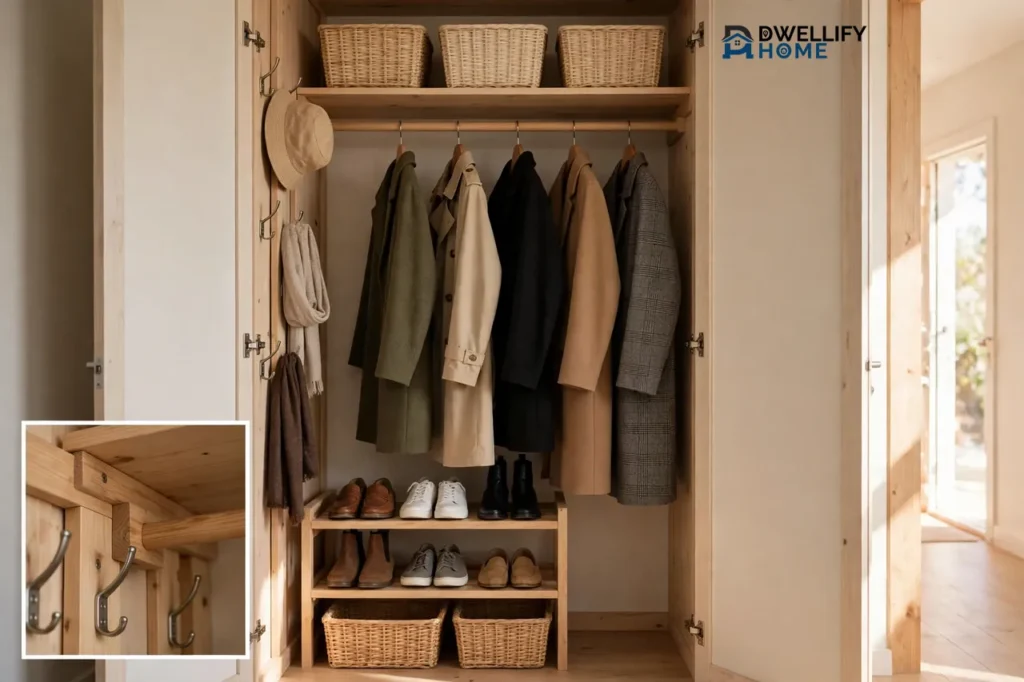
Coat closet organization works best when you give every coat, shoe, and bag one clear home by how often you use it. Empty the closet, keep only the coats and gear you use this season in the prime spots, and move off-season items up high or to another room. Then use hooks for grab-and-go items, a rod for coats, and bins or a shoe rack for the rest. That simple zone system is what keeps a small entry closet calm on busy mornings.
This guide walks you through that system step by step. You will learn what belongs in a coat closet, how to choose between hooks and rods, how to handle shoes and bags, and how to rotate gear by season so the closet never fills up again.
What Belongs in a Coat Closet
A coat closet earns its keep at the front door, so it should hold only the things you grab on your way out. That usually means coats and jackets you wear right now, daily shoes and boots, hats, gloves, scarves, umbrellas, and the bags you carry each day.
It should not become a catch-all for the whole house. Tools, paperwork, gift wrap, board games, and sports gear you rarely use belong somewhere else. When those items creep in, coats get crushed, shoes pile up, and nobody can find anything in a hurry.
As Reader’s Digest puts it, keep only the items for the current season in the closet and give coats breathing room, because crowded coats wrinkle and zippers can snag fabric. You can read their full guide to coat closet organization for more ideas on what to keep and what to move out.
Set Up Zones by How Often You Use Things
Zones turn a small closet into a system. Instead of pushing everything in wherever it fits, you sort by height and by use. Daily items sit where your hands and feet reach with ease. Rare items go up high or out of the closet.
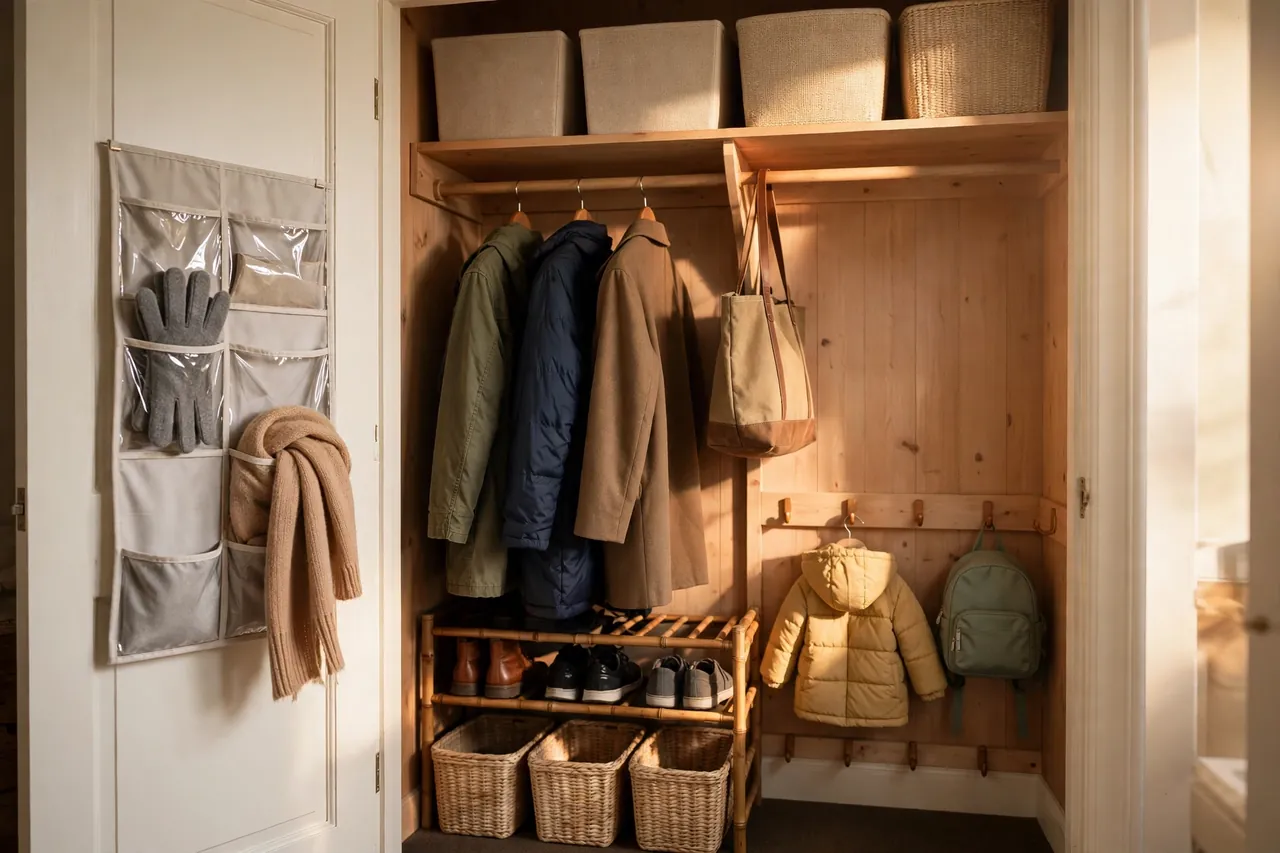
Use this zone plan as your starting point, then adjust it to fit your closet and your family.
| Zone | Where it sits | What goes there |
|---|---|---|
| Prime zone | Rod and wall at chest height | Coats you wear this week and daily bags |
| Floor zone | Bottom of the closet | Daily shoes, a boot tray, and one basket per person |
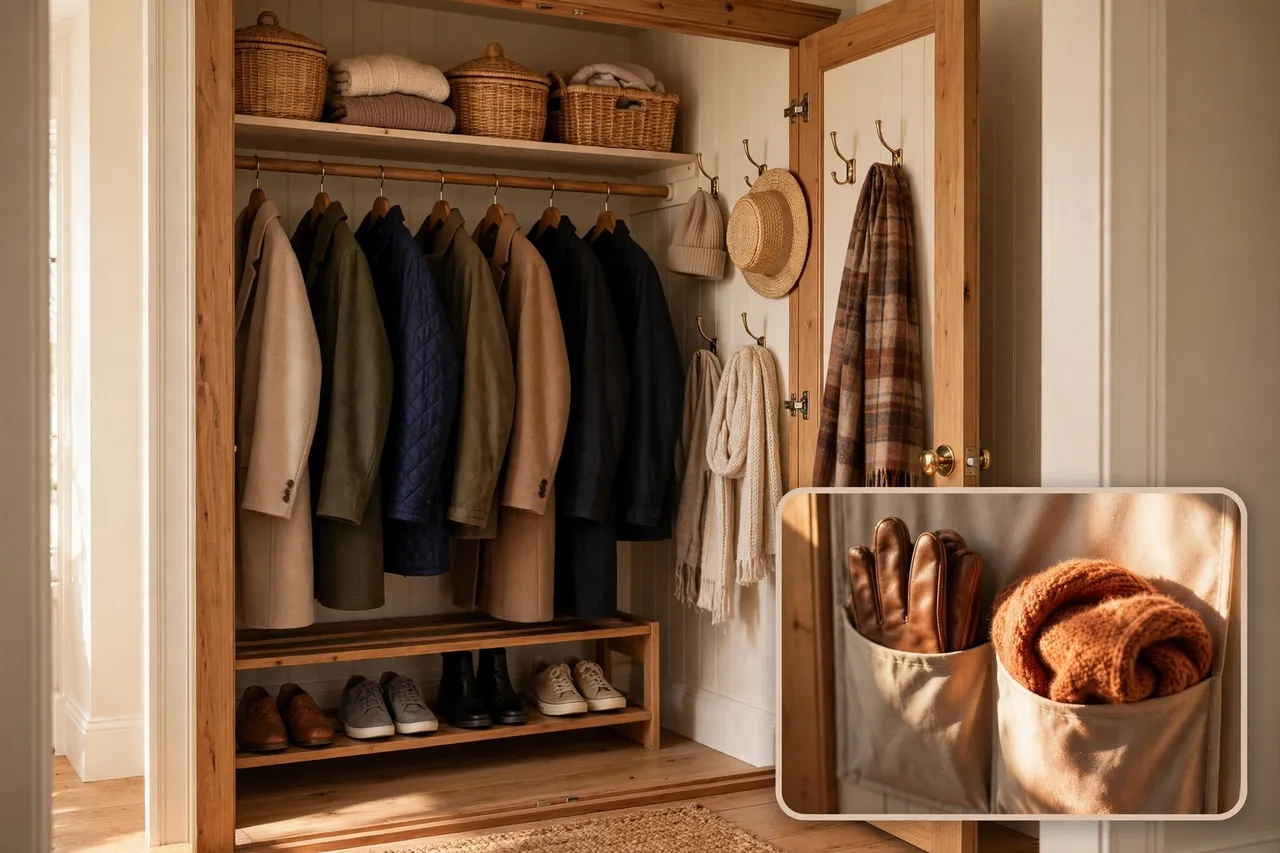
| Door zone | Inside of the door | Hats, gloves, scarves, a lint roller, and dog bags |
| Kid zone | Hooks at kid shoulder height | Kids’ coats, backpacks, and hats |
| Top shelf | Above the rod | Off-season gear in labeled bins |
| Overflow | Another room | Formal coats and gear you use a few times a year |
When every item has a zone, putting things away takes seconds. That is the real secret to a closet that stays tidy. You do not need more willpower. You need a home for each thing.
How to Organize a Coat Closet in 7 Steps
Plan about two to four hours for an average closet. A small closet may take less time, while a busy family closet may take a bit more. Work through these steps in order, and do not buy storage until you finish the first four.
- Empty everything out. Take out every coat, shoe, bag, and bin, including the top shelf and the floor. Vacuum the floor and wipe the shelf and rod while the closet stands bare.
- Sort by category and season. Make piles for everyday coats, off-season coats, shoes and boots, hats and gloves, bags, umbrellas, and anything else you find.
- Declutter with a simple rule. Use three boxes: keep, donate, and trash. Let go of coats nobody wore in a full year, outgrown kids’ jackets, single gloves, broken umbrellas, and cracked hangers.
- Measure the closet. Write down the rod width, the depth, the height from floor to rod, and the door thickness if you plan to use an over-the-door organizer. These numbers stop you from buying a rack that does not fit.
- Plan your zones. Use the zone table above. Put daily coats and bags in the prime zone, daily shoes on the floor, and small items on the door or in bins.
- Add only the storage that fixes a real problem. Too many shoes? Add a rack. Small items everywhere? Add bins or door pockets. Kids who never hang coats up? Add low hooks.
- Label and put everything back. Label every bin, most of all the ones on high shelves where you cannot see inside. Put daily items back last, so they sit at the front.
If you sort first and shop second, you will buy less and the closet will work better. Most coat closet failures start the other way around, with a cart full of organizers for items that should have left the closet.
Hooks vs. Rods: Which Works Best in a Coat Closet?
Rods and hooks do different jobs, and most coat closets need both. The rod holds coats neatly and keeps them in shape. Hooks handle the grab-and-go items that a hanger slows down: a daily jacket, a backpack, a dog leash, or an umbrella.
Hang coats on the rod by type or by person. Group heavy winter coats together, light jackets together, and long coats on one side so short coats leave open floor space under them for a shoe rack or bins. For families, give each person a small section of rod so everyone knows where their coats live.
Use hooks on the side walls and the inside of the door for items you grab in a rush. Kids do far better with hooks than with hangers, so place their hooks at about shoulder height and move them up as kids grow. Renters can use strong adhesive hooks instead of screws, but check the weight rating first, because a heavy wet parka can pull a small hook right off the wall.
A second, lower rod can double hanging space for short jackets and kids’ coats. HGTV’s expert guide to coat closet organization notes that hanging coats low and placing shoes above, or adding double hanging space, feels much more user-friendly than stacking everything at eye level. Try a no-drill hanging rod extender first if you rent or you want to test the idea before you commit.
Choose the Right Hangers for Each Coat
Hangers matter more in a coat closet than in a bedroom closet, because coats are heavy and bulky. The wrong hanger can bend, snap, or leave bumps in coat shoulders.
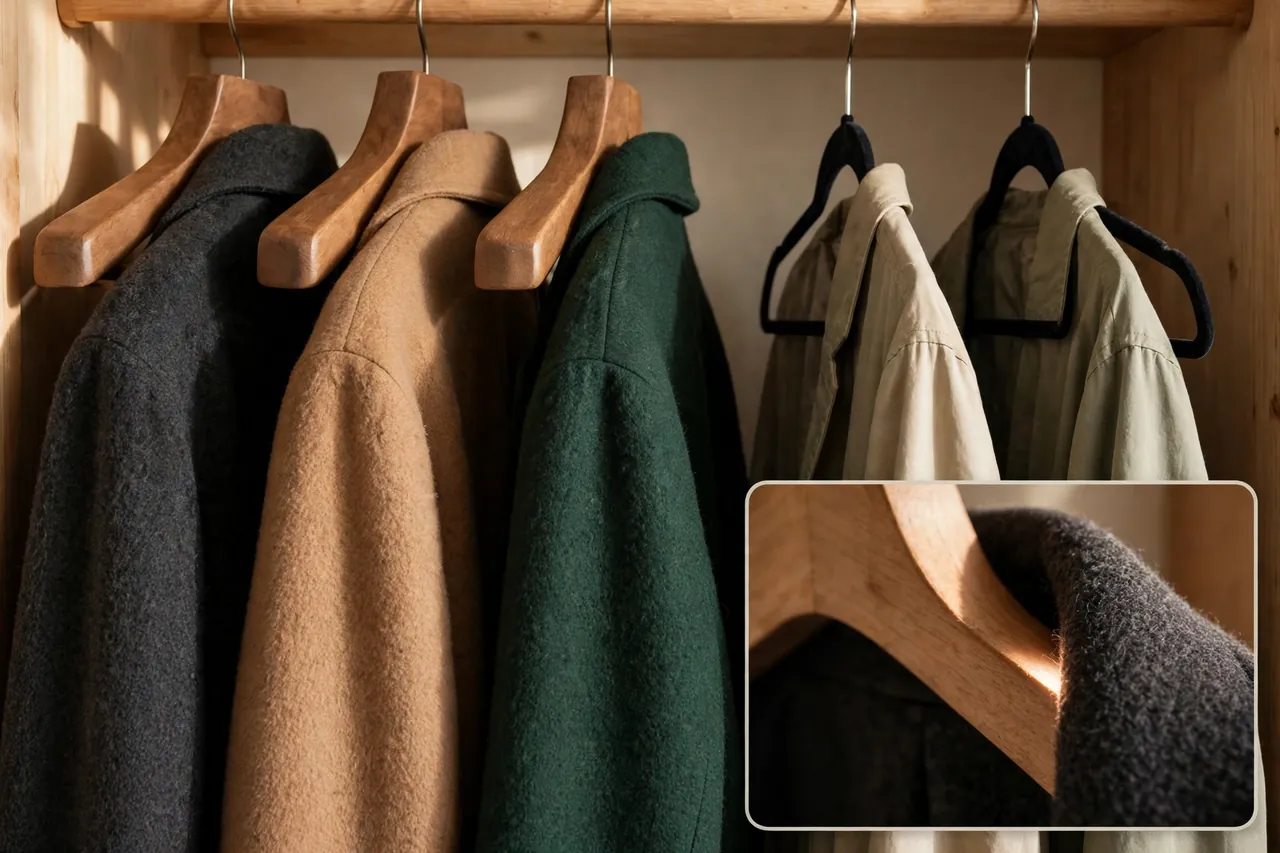
- Wide wooden or cedar hangers suit heavy winter coats, wool coats, and parkas. Their wide shoulders support the coat’s shape.
- Slim velvet hangers suit light jackets, rain shells, and fleeces. They save space and stop jackets from slipping.
- Thin plastic hangers with grip suit kids’ coats and medium jackets.
- Wire hangers suit nothing in a coat closet. They bend under weight and dent shoulders, so recycle them and move on.
Matching hangers also help. When hangers match, coats line up neatly, slide with ease, and take up less rod space. Keep wide hangers for your few heavy coats and slim hangers for light jackets, even in a small closet.
Organize Shoes, Boots, and Bags Without a Floor Pile
Shoes cause most coat closet mess, because they land where they fall. Fix the floor first, and the rest of the closet feels calmer at once.
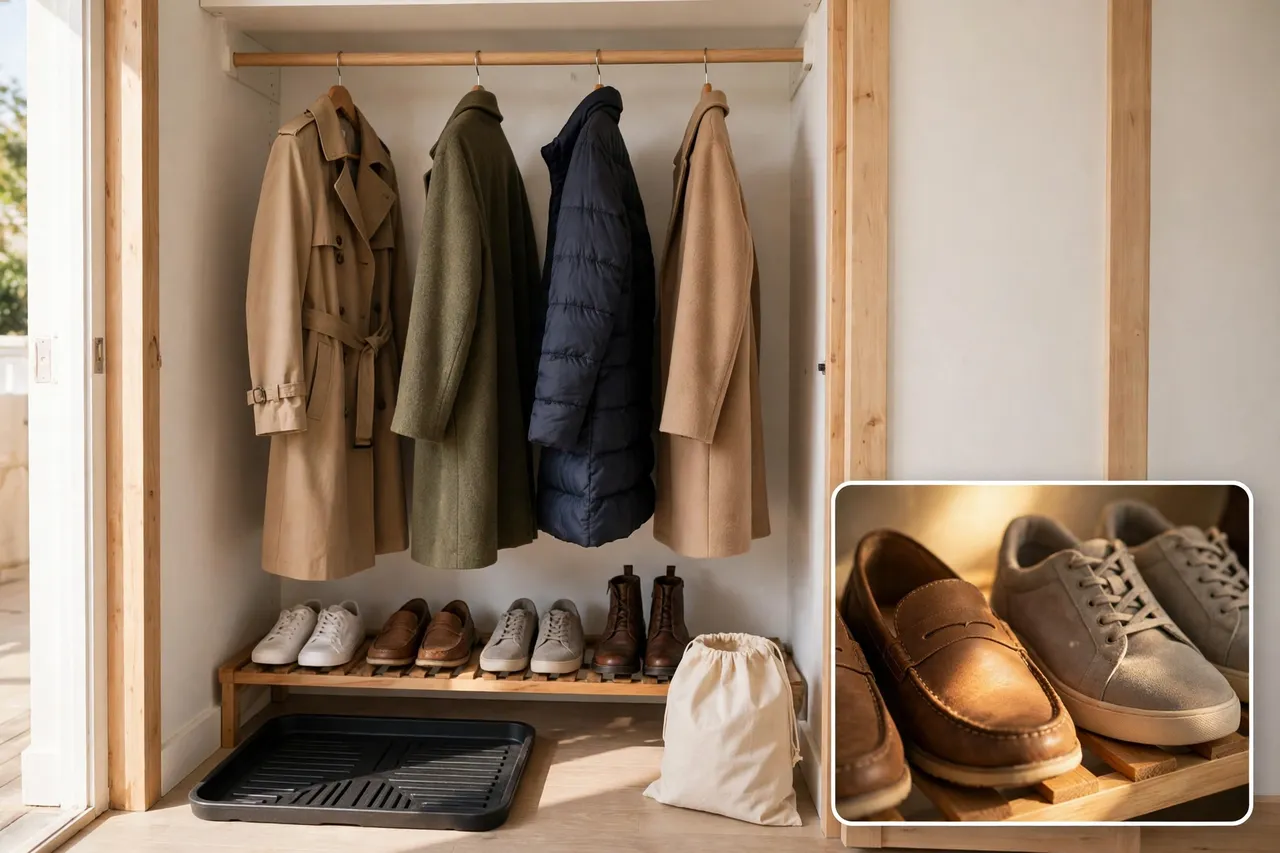
Keep only daily shoes and boots in the coat closet. Move dress shoes, seasonal boots, and extra pairs to a bedroom closet or another room. A two-tier shoe rack doubles floor storage without needing more width, and an expandable rack adjusts to fit closets of different widths. For more foyer-specific options, see this guide to shoe storage for the foyer, which covers cabinets, benches, and other entry shoe setups.
Give boots a tray with a raised edge. The tray catches snow, rain, and mud before it reaches the floor or the shoes beside it. If you have no room for a tray, a storage tote lid works as a stand-in.
If your family tosses shoes instead of lining them up, skip the rack and give each person one sturdy basket on the floor. A basket beats a pile, because the pile stays contained and each person owns one spot.
Bags need a limit, too. Reusable shopping bags multiply fast, so set a number you can live with, keep them in one bin or a wall-mounted bag holder, and pass the extras on. Hang daily bags on hooks or in the prime zone, and store spare bags on the top shelf.
Rotate Coats and Gear by Season
Seasonal rotation is what keeps a coat closet useful all year. A closet that holds winter parkas in July and light rain jackets in January serves nobody well.
Twice a year, at the change of seasons, swap the closet over. Bring the new season’s coats, hats, and gloves down to the prime zone, and move last season’s gear to the top shelf or another room. Clean coats before you store them, because dirt draws moths to natural fibers like wool.
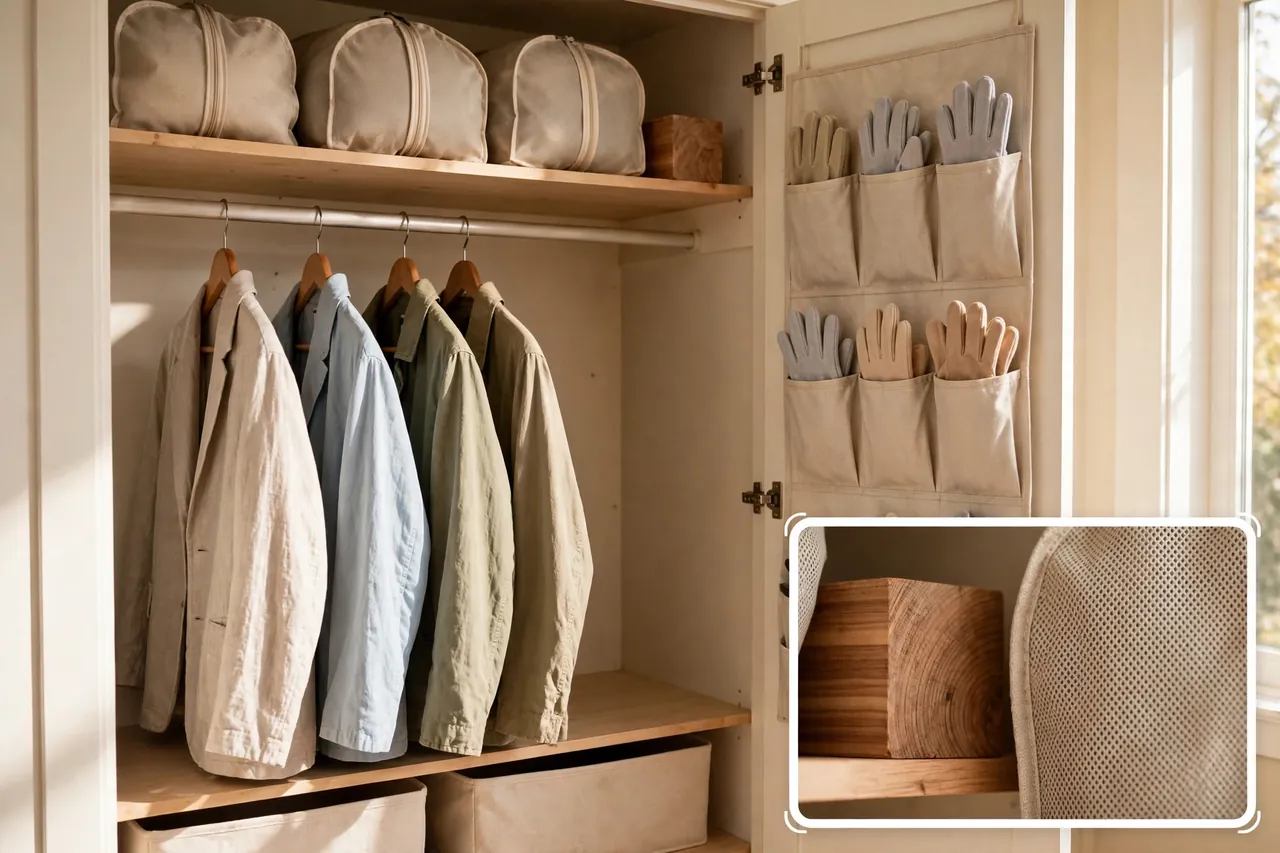
Use breathable cotton garment bags for stored coats, and add cedar blocks or rings to help deter moths. Lightly sand the cedar when its scent fades. Vacuum-sealed bags save a lot of space for fleeces and synthetic jackets, but store down coats loosely instead, because long compression can flatten the down.
Swap door pockets by season as well. Fill them with gloves and hats in winter, then swap in sunscreen, sunglasses, and bug spray in summer. That way only the gear you need right now sits within easy reach.
Small Coat Closet Organization Ideas
A small coat closet needs every inch to work, and it rewards strict choices. Start by cutting coats per person. In a tiny closet, one daily coat per person plus one rain jacket is plenty, and the rest lives elsewhere.
Next, go vertical. Use the door with an over-the-door organizer, add hooks on the side walls, and add a second shelf above the first if you have room. Bi-fold and sliding doors cannot hold a door organizer, so hang the same organizer on a side wall inside the closet instead.
Choose narrow, deep bins with handles over bulky bins, because they fit a small closet better and pull down with ease from a high shelf. Skip wide wooden hangers for light jackets, and save them for the few heavy coats that truly need them.
If your entry has no coat closet at all, build the same system in the open. Wall hooks or a rail by the door hold daily coats, a slim shoe bench holds shoes underneath, and a small basket holds hats and gloves. With no door to hide things, matching hooks and baskets keep the spot looking calm. A table for consoles can add that same drop zone beside the door, with drawers or shelves for keys and small items.
Keep Wet Gear, Smells, and Mustiness Out
Damp gear in a closed closet causes musty smells, and it can wet the dry coats beside it. Dry first, then store. Hang wet coats on a hook or chair outside the closet until they dry, and let wet boots sit on a tray until they dry, too.
Leave the closet door open for a while after a rainy or snowy day so air can move through. Store umbrellas open until they dry, then close them and stand them in a tall bin or hang them on a hook.
A hanging moisture absorber or a few cedar blocks can help in a closet that always feels damp, but air and dry gear matter more than any product. If a coat still smells musty after it dries fully, wash or dry-clean it before you put it back.
Make It Last: Habits, Mistakes, and a Quick Reset
A closet stays tidy through small habits, not one big clean-out. Hang your coat up each time you come in, line shoes up on the rack or in the basket, and empty the boot tray each week. Those tiny steps take minutes and stop the pile from forming again.
Use a one-in, one-out rule. When a new coat comes home, an old one leaves through donation or storage. Keep a small donation bag on the closet floor, so you can drop in a coat or pair of gloves the moment you decide you no longer need it.
Watch out for the mistakes that undo good coat closet organization:
- Buying organizers before you declutter, so you organize items that should have left.
- Packing the rod so tight that coats wrinkle and nobody hangs anything back up.
- Using slim velvet hangers for heavy coats, which can bend or snap.
- Putting wet gear away damp, which spreads moisture and smell.
- Keeping off-season gear in prime space instead of up high or in another room.
- Skipping labels on high bins, so you forget what sits inside them.
- Forgetting the kids, because if they cannot reach it, they will not use it.
Plan a short reset each season and a full empty-and-declutter once a year. A five-minute weekly tidy, a fifteen-minute monthly check, and a one-hour seasonal swap keep the system running without another weekend overhaul.
Related Guides
Decluttering Clothes: A Closet Audit That Leaves You With Clothes You Love · How to Organize Room: A Simple System That Works in Any Room
Frequently Asked Questions
What is the first step in coat closet organization?
Empty the closet completely. Take out every coat, shoe, bag, and bin, including the top shelf and the floor. Then sort items by category and season. You cannot plan zones or buy the right storage until you see exactly what you own and how much space you have.
How do you organize a small coat closet?
Declutter first, then go vertical. Use the door with an over-the-door organizer, add hooks on the side walls, put a slim shoe rack on the floor, and keep off-season items on the top shelf or in another room. Limit coats per person so the small space never fills past its limit.
What should be stored in a coat closet?
Coats and jackets in use, daily shoes and boots, hats, gloves, scarves, umbrellas, and daily bags belong in a coat closet. Seasonal gear can go on the top shelf. Things that do not relate to going out, like tools or paperwork, belong elsewhere in the home.
What are the best hangers for a coat closet?
Wide wooden or cedar hangers are best for heavy coats because they support the shoulders. Slim velvet or thin plastic hangers work for light jackets. Avoid wire hangers, because they bend under heavy coats and leave bumps in the shoulders.
How do I keep my coat closet from smelling musty?
Let wet coats, boots, and umbrellas dry before you store them, use a boot tray, leave the door open after wet days, and add cedar blocks or a moisture absorber. Dry gear and moving air matter most, so never pack damp items into a closed closet.
How many coats should each person keep in the coat closet?
Two to three coats per person is a good guideline for the coat closet, plus two pairs of shoes and one bag. Store the rest elsewhere. In a very small closet, cut that back to one daily coat plus one rain jacket per person.
Start with the empty-and-sort step this week, even if you only have an hour. Once you see what you truly own, the zones fall into place, and your front door stops greeting you with a pile. If off-season gear needs a home outside the closet, a garage storage plan can hold seasonal items in labeled bins, and if you ever plan a bigger entry upgrade, the mudroom ideas in this remodeling guide show how a bench, hooks, and cubbies turn a narrow entry into a smooth drop zone.