Good laundry organization ideas work like a simple system, not a bigger pile of bins. Sort clothes as they come off, wash a full bag when it is ready, fold straight into a basket for each person, and put clean clothes away the same day. That one flow stops laundry from spreading across floors, chairs, and beds, and it makes wash day much shorter.
💡 Practical Home Tip: Start with sorting, not shopping. Watch where dirty clothes land for one week, then place your hampers exactly there. A system that fits your real habits will last far longer than a pretty setup in the wrong spot.
This guide shows you how to build that system step by step. You will pick a sorting setup, set up a folding station, store supplies within reach, and create a weekly routine your whole household can follow. No building work is needed, and most of these ideas work in a small laundry closet, a shared laundry room, or a full laundry room.
Start With a Sorting System That Runs Itself
A sorting system does the hard work before wash day. Instead of facing one big mixed pile, you sort each item once, at the moment you take it off. Then a full bag becomes a ready load, with no extra sorting step.
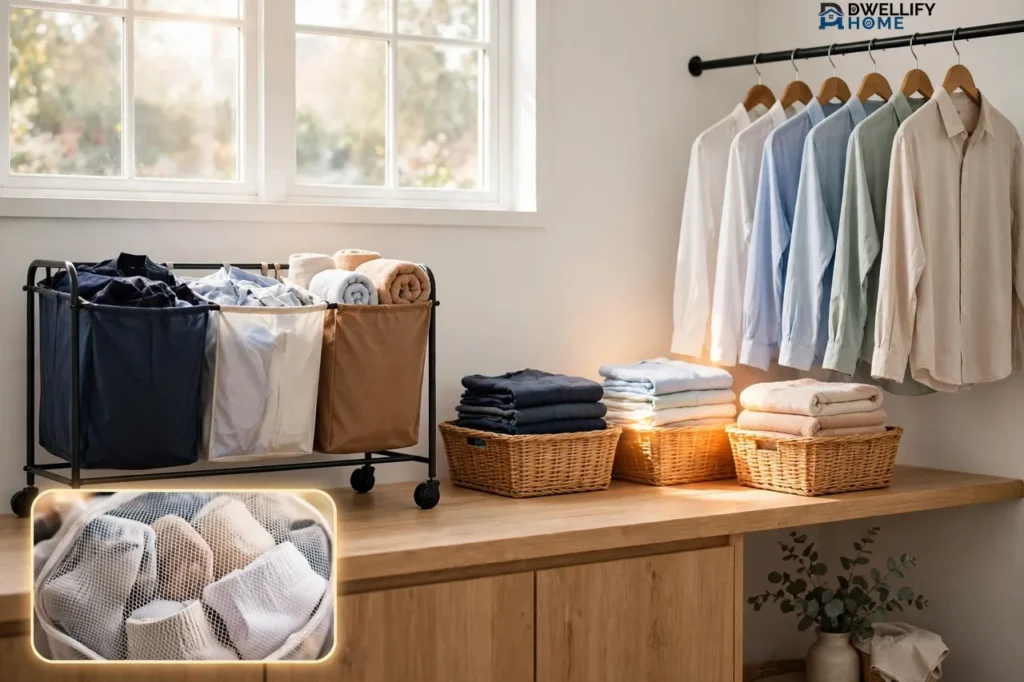
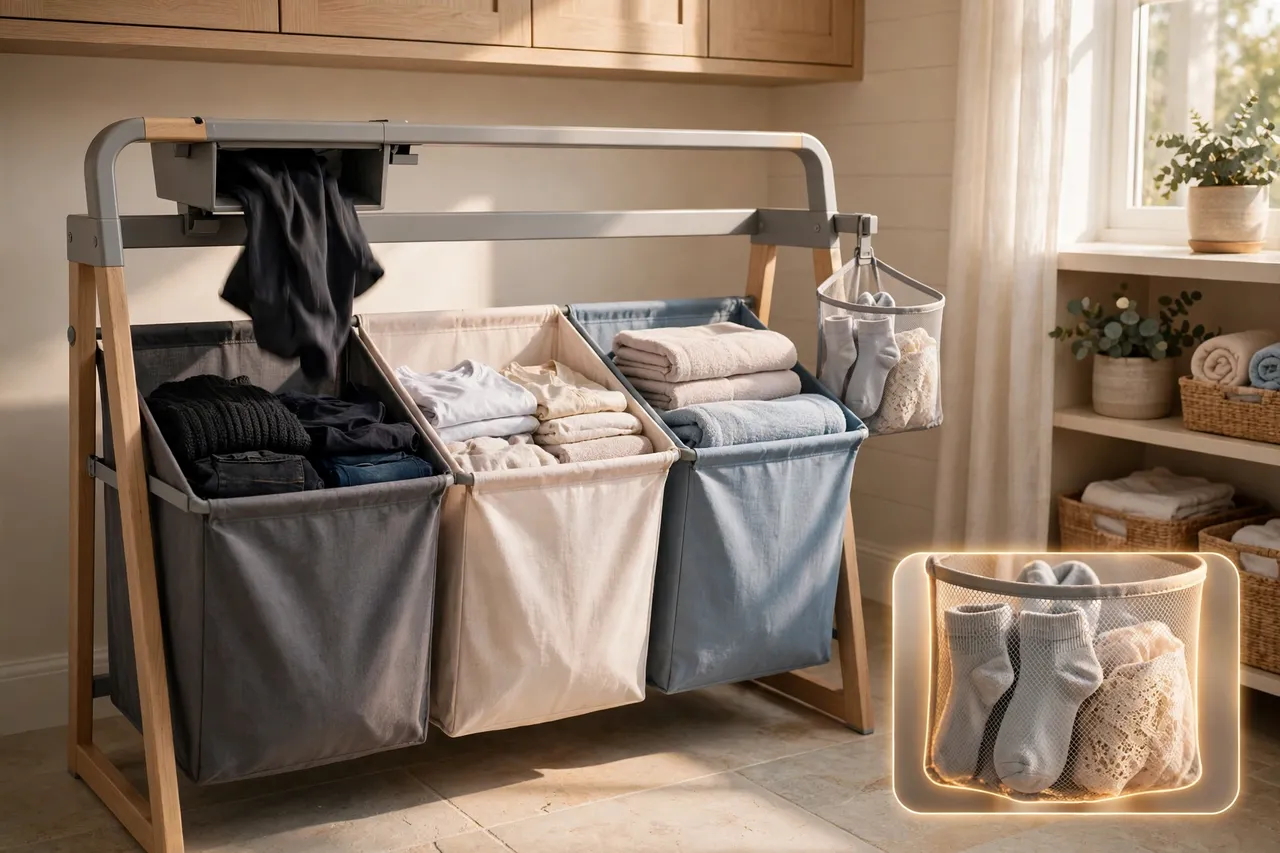
Most homes do well with three main groups. Use one bag for darks, one for lights, and one for towels and bedding. Towels and sheets shed lint, weigh more, and often need a different cycle, so keep them apart from everyday clothes. Add a fourth bag only if you need it, for very dirty items like muddy sports clothes or work clothes.
Next, add a small mesh bag for delicates, socks, and small items. Hang it on the sorter or keep it in a labeled basket nearby. Small items go straight into the mesh bag, so socks stop vanishing and delicates stay off heavy cycles by mistake. Empty pockets, close zippers, and turn printed shirts and jeans inside out as clothes go into the bag, and you save another step on wash day.
Label every bag in plain words. Use tags, color-coded labels, or simple signs that anyone in the house can read at a glance. A label removes guessing, and it helps kids, guests, and new helpers follow the same system without asking you each time.
Choose Hampers That Fit Your Home
The best hamper setup is the one your family will actually use. A central sorter suits a home where one adult does most of the washing. Place it in a hallway, bathroom, or laundry room where clothes come off, and sort by load type, not by person.
A hamper for each person suits older kids and teens who can manage their own loads. Each hamper becomes that person’s load, which cuts mix-ups and makes folding simple. In a mixed home, combine the two: teens keep their own hampers, while a central sorter takes younger children’s clothes plus towels.
Pick hampers you can move when they fill up. Rolling hampers and bags that lift out work well, because you can carry one bag to the washer instead of dragging a heavy basket. If your washer sits upstairs or downstairs, choose bags you can carry safely on the stairs, or use a rolling hamper and carry the bags, not the whole unit.
Watch the size, too. A bag that holds about one load works best. Oversized bins tempt everyone to keep adding clothes until you face several loads at once. Smaller, full bags create a clear signal: this bag is ready to wash.
Test the placement for one week before you buy more gear. If clothes still land on the floor beside the hamper, move the hamper to that exact spot, or add a second small hamper there. A system that meets clothes where they drop beats a larger system that everyone walks past.
Set Up a Folding Station That Ends the Pile
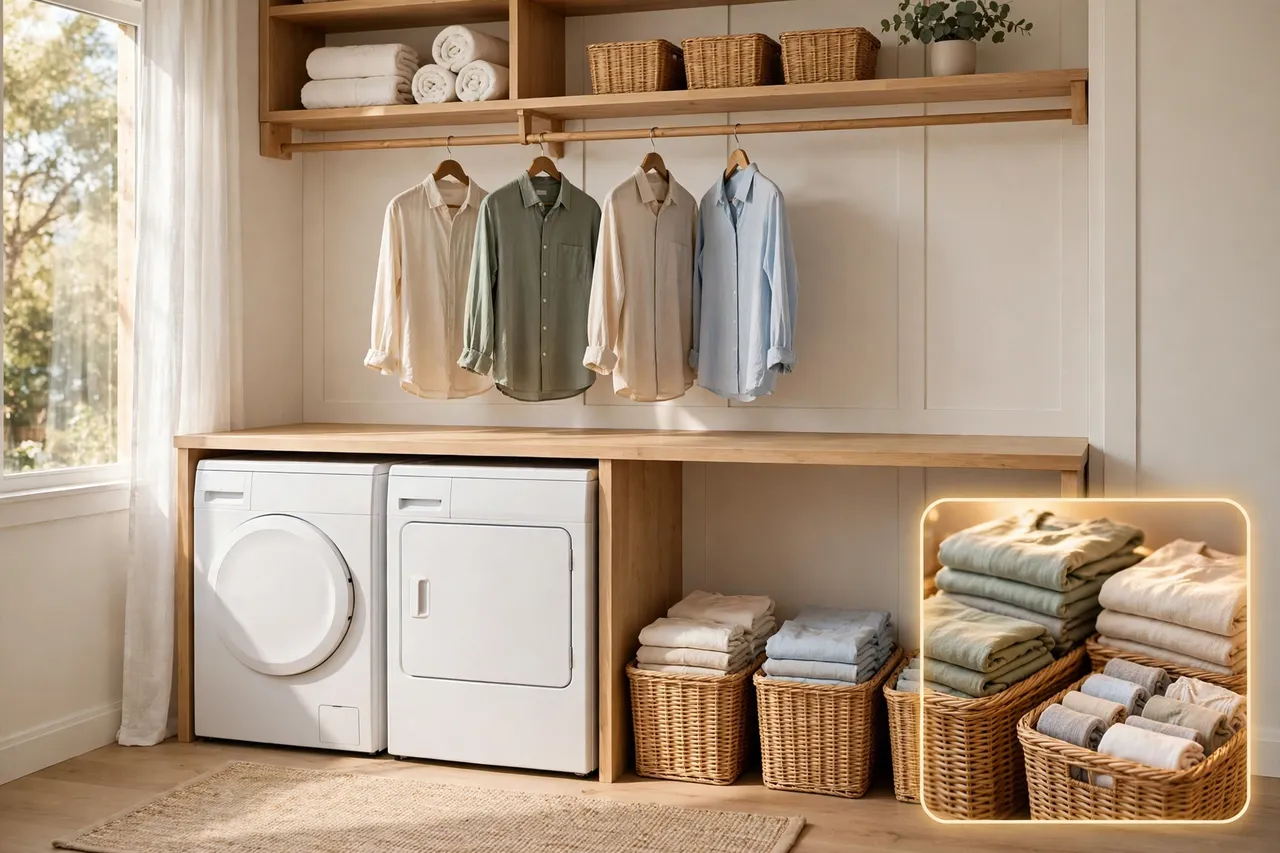
Clean laundry piles up when it has nowhere to go. A folding station fixes that problem. It gives you one flat, clear surface where clothes move straight from the dryer to folded stacks, with no stop on the couch or bed.
Use a countertop over side-by-side machines, a folding table, or a fold-down surface if space is tight. Keep the surface clear between loads. If it fills up with supplies, mail, or clean clothes waiting for days, it stops working as a station and starts working as storage.
Set up the station for the next step, not just folding. Keep one basket for each person right beside it, so you fold straight into the right basket. Add a small bin for socks and underwear while you fold, and a hook or rod for shirts that need hanging right away. Hang clothes straight after washing when you can, because it cuts down on ironing later.
Try the one-touch rule: clean clothes go from the dryer straight to folded or hung, with no middle stop. The rule sounds small, but it breaks the most common laundry habit, which is moving the same pile three times before anyone puts it away.
Store Supplies So Every Load Starts Fast
A slow load often starts with a search. Detergent sits in one room, stain spray hides in another, and mesh bags vanish just when you need them. Store everything for one load within reach of the machines, and you remove that friction.
Group supplies by job. Keep detergent, stain treatment, and dryer supplies near the washer. Keep hangers, mesh bags, and clean baskets near the folding station. Keep backup products and less-used items higher up or in a separate bin, so everyday items stay easy to grab. A shelf above the machines can hold one row of daily supplies, but it is only one small part of this system, not the system itself.
Label bins in plain words, just like your sorting bags. One bin for stain care, one for dryer supplies, and one for small tools like a lint roller and clothespins saves time and stops duplicates. When you finish a product, put its replacement on a short list right away, so you never start a load and find the detergent empty.
Check the supply spot once a month and remove what you no longer use. Combine half-used bottles of the same product, recycle empties, and move bulk backups out of the daily zone. A small, current supply area stays fast, while a crowded one slows every load down again.
Store laundry products with safety first. Keep them in their original containers, close them tightly, and store them out of sight and out of reach of children and pets. The U.S. Consumer Product Safety Commission warns that single-load liquid laundry packets look like candy or toys to young children, dissolve fast in wet hands or saliva, and must stay sealed in their original containers and locked up tight, out of a child’s sight and reach. Read the CPSC guidance on laundry packet safety. The American Academy of Pediatrics also advises keeping laundry products in original containers with their labels, closed tightly, and stored up and away, with a high, locked cabinet as the best choice. See the American Academy of Pediatrics laundry safety tips. Never let children handle laundry packets, and never place loose packets in a basket, on top of a machine, or on a counter before use.
Build a Family Laundry Routine That Sticks
A system without a routine still drifts. A routine turns sorting and folding into a habit, so laundry moves on its own instead of waiting for a big catch-up day. Start by finding your peak days, then build the week around them.
Many families wash towels on one set day and sheets on another, then fit clothing loads around those anchors. For example, wash towels on Saturday and sheets on Sunday, and give each person a clothing day during the week. Keep one or two free days for sportswear, mixed loads, or anything that missed its slot.
Wash a bag when it fills up, not on a fixed day alone. A full bag gives you a clear trigger, and it stops the “I will do it later” pile from growing. Set a phone timer or an alert for the end of each cycle, so wet clothes do not sit in the drum and need a second wash.
Give every person a job they own. Younger children can carry clothes to the hamper, match socks, and fold washcloths. Older children can sort by color, fold towels, and put clean clothes away. Teens can run a full load with supervision at first, then run their own laundry day from start to finish. Show each job once, then let them try it, and keep detergent packets out of young children’s reach at every step.
Organize Clean Laundry and Put-Away
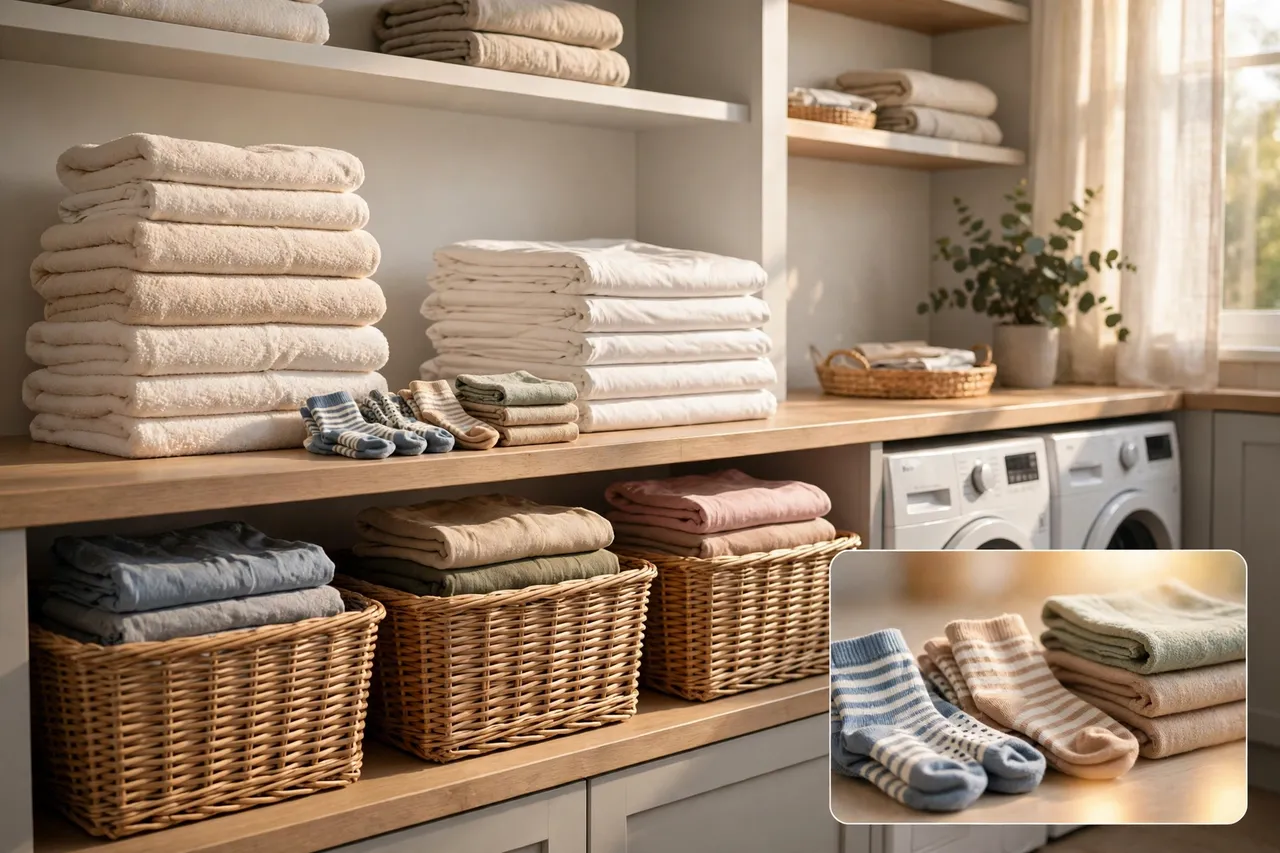
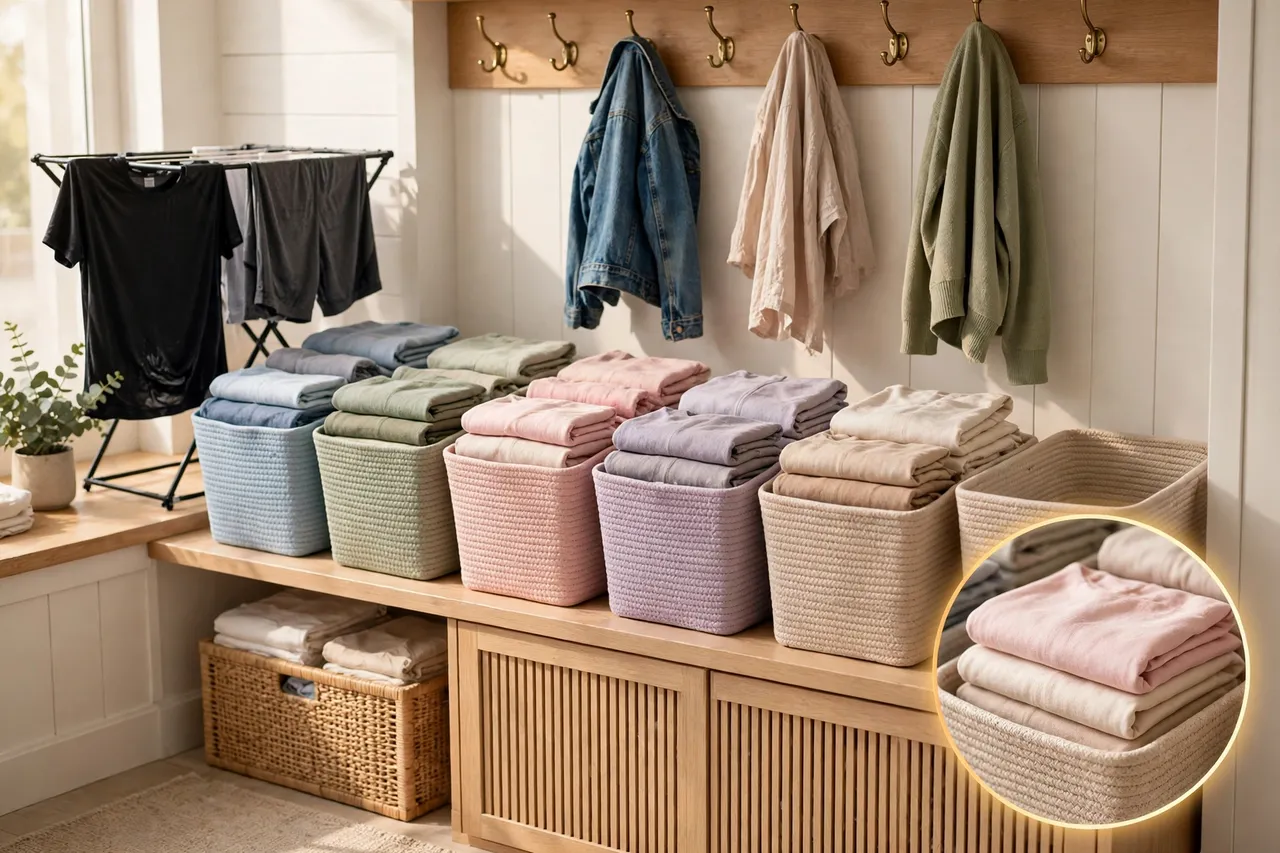
Clean laundry needs its own system, or it ends up back in a pile. The simplest setup mirrors your sorting setup: one clean basket per person, in that person’s color or with a clear label. Fold straight into the right basket, and each person puts their basket away the same day, then returns the empty basket to the laundry area for the next load.
Handle special items before they cause trouble. Hang wet swimsuits and sweaty gym clothes to dry before they go into a closed hamper, because damp clothes left in a closed bin turn musty and pass the smell on. Treat stains when the shirt comes off, not on wash day, and keep a stain pen or spray right by the sorter for that moment.
Make put-away part of the load, not a separate chore for later. A load counts as done only when clean clothes reach drawers and closets. If put-away always waits, folded baskets stack up, the folding station fills, and the next load has nowhere to land.
Keep a small “wear again” spot for clothes worn once but not yet dirty. A few hooks near the bedroom or laundry area work well. These clothes stay out of the clean drawers and out of the dirty hamper, so you stop washing clothes that did not need a wash.
Small Spaces, Rentals, and Shared Machines
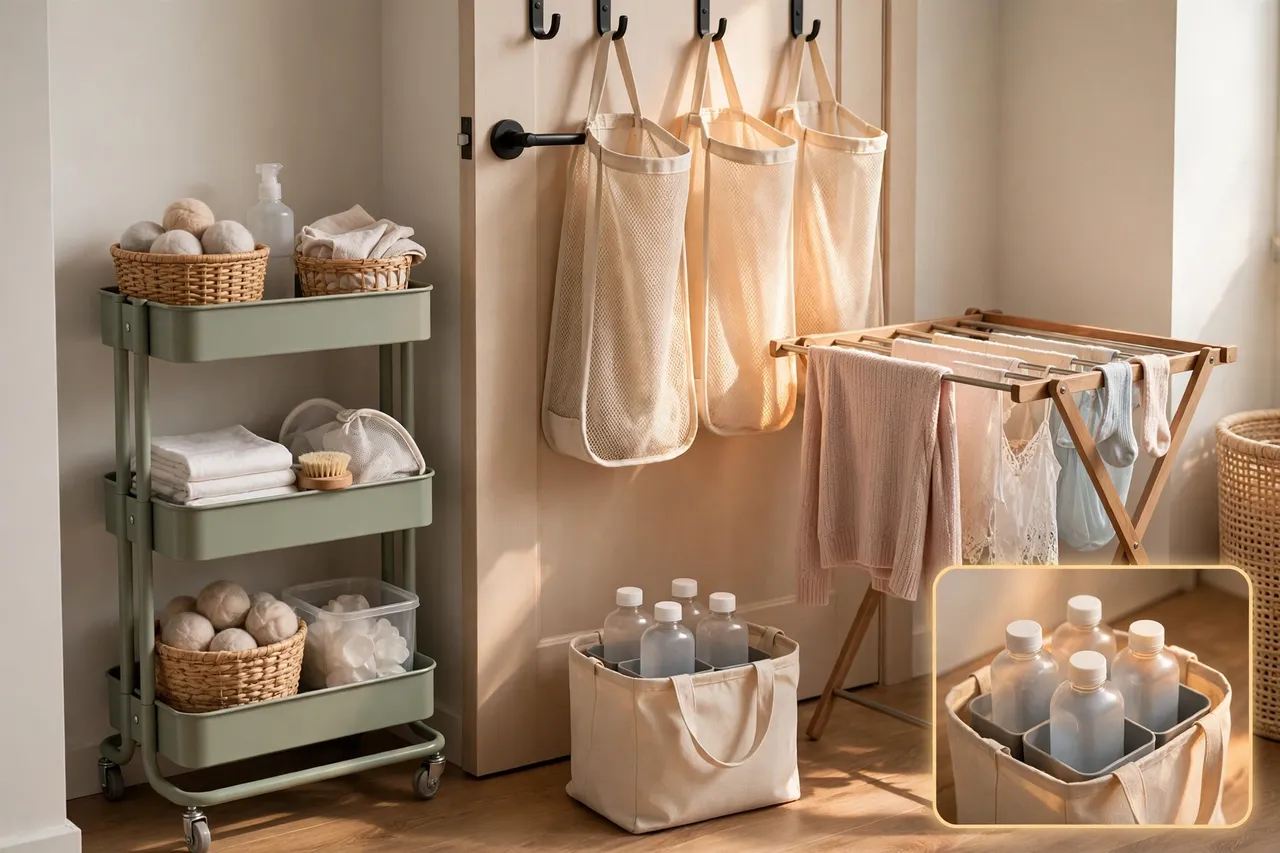
Small laundry spaces need the same system, just in a smaller shape. Use a slim rolling cart for supplies, a fold-down drying rack for delicates, and hanging sorter bags on a door or wall hooks when floor space runs out. Collapsible tables and drying racks fold away when you do not need them, which keeps a tight room usable.
Renters can skip built-in work and still run the full system. Use freestanding sorters, rolling carts, over-door hooks, and labeled baskets that move with you. Measure doorways, gaps, and machine widths before you buy anything, because a cart that is one inch too wide for its gap helps no one.
Shared machines need a carry-friendly setup. Use lift-out bags you can carry to the machines, a small caddy for your own detergent and stain spray, and a timer so you return on time. Fold at home if the shared room has no folding space, and take your clean basket straight back so the next person can use the machines.
If your laundry room also needs a bigger change, read Dwellify Home’s guide to laundry room renovations for layout, lighting, and storage planning. Use it for the room itself, and keep this article’s sorting and routine system for the daily work inside it.
Mistakes That Undo a Good System
Most laundry systems fail for a few fixable reasons. First, buying before measuring. A sorter that blocks a door, a cart that does not fit its gap, or a basket too heavy to carry will sit unused. Measure first, then buy.
Second, sorting only on wash day. A big mixed pile takes time and energy, and it tempts you to skip loads. Sort as clothes come off, and wash day becomes a simple step, not a project.
Third, letting clean clothes wait. A folding station covered in clean clothes cannot fold the next load. Put clean clothes away the same day, and keep the station clear.
Fourth, giving the system no owner. If no one owns towels, sheets, or the weekly reset, the system fades. Assign one small job per person, review what is not working every few weeks, and change the setup that fails instead of blaming the routine.
Finally, keep the weekly reset short. Once a week, put products back where they belong, clear the lint trap, wipe out hampers, and wash fabric liners about once a month. A ten-minute reset stops clutter from creeping back.
Homes, machines, and care labels vary, so always follow the care label on each garment and your machine manual. If a fabric, stain, or machine problem worries you, check the label or ask a qualified professional before you wash, and keep all laundry products locked away from children.
Related Guides
Daily Cleaning Schedule: A Simple Routine for a Tidy Home · Decluttering Clothes: A Closet Audit That Leaves You With Clothes You Love
Frequently Asked Questions
What is the best laundry sorting system for a family?
A three-bag sorter in a shared spot, plus a hamper for each teen, works for most families. Sort darks, lights, and towels and bedding as clothes come off, and wash each bag when it fills. If floor space is tight, hanging sorter bags on a door or wall hooks do the same job.
How many laundry baskets does a family need?
Start with three bags for dirty laundry and one basket per person for clean clothes. That setup keeps dirty loads separate and gives every person a clear put-away basket. If your washer sits upstairs or downstairs, pick baskets you can carry safely when full.
How do you sort laundry?
Sort by color first, then by fabric weight. Put darks, lights, and towels and bedding in separate bags, and use a mesh bag for delicates and small items. Empty pockets, close zippers, and turn jeans and printed shirts inside out as clothes go in.
What laundry chores can kids do at each age?
Toddlers can match socks and carry clothes to the hamper, and by about age eight most kids can run machines with supervision. Give each child one job they own each week, which works better than a little help with everything. Keep detergent packets out of young children’s reach.
How do you organize clean laundry for a family?
Give each person a basket in their own color and fold straight into it. Keep a small bin per person for socks and underwear while you fold. Have everyone put their basket away the same day and bring the empty basket back for the next load.
Start small this week. Pick your three sorting bags, label them, and place them where clothes come off. Wash the first full bag, fold straight into a basket per person, and put it away the same day. Once that loop runs once, repeat it, and your laundry will start to run itself.