
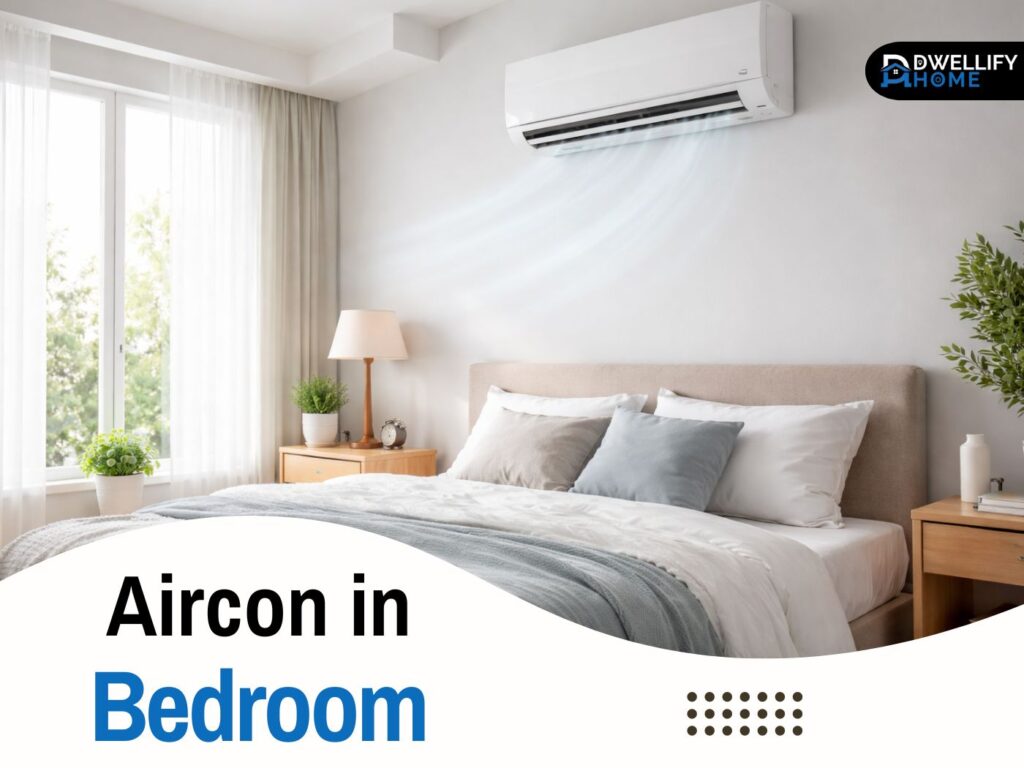
I’ve installed and tuned a lot of bedroom AC setups, and the pattern is always the same: when it’s done right, you sleep like a rock. When it’s done wrong, you wake up freezing, thirsty, or annoyed by noise.
So in this guide on aircon in bedroom comfort, I’ll walk you through what actually works in real homes, not just what looks good on a spec sheet. We’ll cover placement, sizing, sleep-friendly settings, noise, air quality, and how to keep running costs reasonable.
Snippet-ready definition:
Aircon in a bedroom means using an air conditioner to keep sleep comfortable. The key is gentle airflow away from the bed, a moderate temperature, low noise, and clean filters so the air feels fresh and steady.
Mission Statement:
At Dwellify Home, our mission is to make everyday home comfort simple and practical, with real-world guidance that helps you sleep better, save energy, and avoid common AC mistakes.
Quick Answer (What most people need in 30 seconds)
Here’s the thing: bedroom cooling is easy when you stick to four basics. Keep the airflow off your body, don’t set the temperature too low, choose a quieter unit or mode for night, and clean the filters regularly.
The best part is you don’t need a perfect setup to feel a big difference. Even a small change, like adjusting the louver angle away from your bed or using a timer, can turn a “restless night” room into a comfortable one.
Quick Guide Table (Comparison)
| Type | Best for | Pros | Watch-outs | Noise feel |
| Split (wall-mounted) | Most bedrooms | Quiet, efficient, steady comfort | Needs proper install and placement | Usually quiet |
| Window AC | Budget setups | Strong cooling, simple | Can be noisier, needs tight sealing | Medium to loud |
| Portable AC | Renters, flexible rooms | No permanent install | Must vent well, can cost more to run | Medium |
| Central AC | Whole-home cooling | Even comfort when balanced | Bedrooms may need airflow balancing | Usually quiet at vent |
Step-by-step: Best position for air conditioner in bedroom
- Pick a wall that cools the room, not your body
Aim for a spot that lets air travel across the room, not directly onto the bed. - Avoid installing directly above the bed
Direct drafts often cause dry throat, stiff neck, and wake-ups. - Keep airflow clear
Don’t let curtains, tall furniture, or shelves block the indoor unit. - Install it high and away from heat sources
High placement supports better air spread and steadier comfort. - Point airflow toward an open area or passageway
This reduces direct cold air on sleepers and feels more natural.
Is Aircon in the Bedroom Good or Bad?
In most cases, it’s good. A cooler, less humid room can make it easier to fall asleep and stay asleep, especially in hot or sticky weather. I’ve seen people who used to wake up drenched start sleeping through the night once the room stopped feeling like a sauna.
On top of that, proper cooling can reduce that “stuffiness” feeling that builds up in closed rooms. The downside usually isn’t the AC itself. It’s how it’s used, like blasting cold air directly at the bed, running a dirty filter, or setting the temperature so low your body keeps fighting it.
Best Position for Air Conditioner in Bedroom (Placement + Airflow)
If you remember one rule, make it this: don’t aim the airflow at where you sleep. I’ve walked into bedrooms where the unit is installed right above the headboard. The owner always says the same thing: “It cools fast, but I wake up with a dry throat or a stiff neck.” That’s a classic draft issue.
A better approach is placing the indoor unit on a wall that lets the air travel across the room, not straight onto the bed. Often that’s the wall opposite the bed or a central spot where the air can mix and circulate evenly.
Simple placement checklist (no technical overload)
Keep the airflow clear. Curtains, tall wardrobes, and shelves can block the stream and cause uneven cooling, which makes people lower the temperature to compensate. That’s how you end up with one icy corner and one warm corner.
Also, avoid locations that get hammered by direct sun or heat sources. Even a warm lamp corner can confuse the room sensor and make the unit cycle oddly at night.
Which Type Is Best for Aircon in Bedroom?
When someone asks me about the best aircon in bedroom setups, I usually answer with a question: do you want the quietest comfort, or do you need flexibility because you rent or move often? Different systems fit different lives.
In many homes, a wall-mounted split system is the most comfortable choice because it’s typically quieter and more efficient at holding a steady temperature. That steady feel matters in bedrooms because big temperature swings can wake you up.
Split or wall-mounted aircon in bedroom
This is my go-to recommendation when you can install it properly. It’s usually quieter because the compressor is outside, and many models have a good sleep mode and gentle fan settings. If you’re sensitive to noise, this matters a lot.
Window aircon in bedroom
These can work well, especially for smaller budgets, but noise and sealing are the big issues. If the unit rattles or the window has gaps, you’ll hear it and you’ll lose cool air. A tight seal and a stable mount can make a huge difference.
Portable aircon in bedroom
Portable units are popular for renters. Just know they only work well when the exhaust hose is short and straight, and the window seal is tight. If the hot air leaks back into the room, the unit runs harder, gets louder, and costs more.
Central aircon in bedroom
Central systems can be great, but bedrooms often suffer from poor balancing. One room gets too much airflow, another gets too little. Zoning and proper vent balancing help, and sometimes a simple return-air path (like a door undercut) fixes “my bedroom never cools” complaints.
Right Size for the Room (BTU and Cooling Capacity)
Sizing isn’t about buying the biggest unit. In bedrooms, oversized units can actually feel worse because they cool the air quickly but don’t run long enough to remove humidity. That leaves the room cool but clammy, and that sticky feeling can interrupt sleep.
A quick real-world guide I use: many typical bedrooms land in the 5,000 to 8,000 BTU range, but sunlight, insulation, ceiling height, and how many people sleep there all matter. If your bedroom faces afternoon sun or has poor insulation, you may need more capacity than the same-size room on a shaded side of the house.
Best Sleep Settings (Temperature, Modes, Humidity)
Guess what, the “coldest setting” is almost never the best for sleep. Most people rest better at a moderate temperature where the room feels cool but not sharp. If you wake up at 3 a.m. feeling chilled, that’s a sign the setpoint is too low or the airflow is hitting you.
I like a simple nighttime routine: cool the room for 30 to 60 minutes before sleep, then use sleep mode or a timer to ease the cooling overnight. It keeps comfort steady and often lowers energy use without you thinking about it.
Humidity vs temperature (the comfort detail most people miss)
Sometimes people say, “My room is cool but I still feel uncomfortable.” That’s often humidity or airflow. A fan on low can help mix the air so you don’t feel a cold jet in one spot and still air in another.
If your home is naturally dry, the opposite can happen. You might feel too dry at night. In that case, raising the setpoint a little and directing airflow away from your face often helps more than adding extreme cooling.
Noise Level: How to Choose a Quiet Bedroom AC
Noise is a sleep killer, even when you think you’ve gotten used to it. In bedrooms, I aim for low decibel performance and a smooth fan sound rather than a start-stop clunk. Many people are happiest with units that can run gently for longer, instead of blasting and shutting off repeatedly.
If you’re comparing models, look for a quiet mode and low indoor sound levels. Inverter systems often feel calmer because they can ramp up and down instead of cycling hard. The best part is that smoother operation can also help with comfort because the temperature stays steadier.
For existing systems, small fixes help: tighten loose panels, use vibration pads where appropriate, and make sure the indoor unit isn’t installed on a hollow section of wall that amplifies sound. I’ve seen a simple mounting adjustment turn a “buzzing bedroom” into a quiet one.
Health + Air Quality
Most “AC health problems” I hear about are actually comfort problems: dry throat, dry eyes, and nasal irritation. In my experience, the biggest triggers are cold air blowing directly at the sleeper and a filter that hasn’t been cleaned in ages.
A cleaner filter helps airflow and reduces dust recirculation. It also helps the unit work less aggressively, which can mean less noise and fewer temperature swings. If you have allergies or asthma, clean filters and good airflow direction matter even more.
Maintenance that actually matters
For most homes, checking the filter monthly during heavy use is a solid habit. If it looks dusty, clean it according to the manufacturer’s instructions. A clogged filter makes the system work harder, cool unevenly, and sometimes develop odors.
If you notice musty smells, weak cooling, or unusual noises, that’s when a deeper service can be worth it. It’s not about being dramatic, it’s just practical maintenance like changing oil in a car.
Aircon in Bedroom Cost (Running Cost + How to Lower It)
Running cost depends on a few predictable things: how cold you set it, how long it runs, the unit’s efficiency, and how well your room holds cool air. Bedrooms can be expensive when there are air leaks around windows, under doors, or through thin curtains.
If you want to reduce cost without sacrificing sleep, try these technician-approved habits:
- Pre-cool the room, then raise the setpoint slightly for the night.
- Use sleep mode or a timer so it doesn’t run full power all night.
- Pair AC with a fan to distribute air more gently.
- Seal obvious leaks around windows and doors.
- Keep filters clean so airflow stays strong.
If you’ve ever looked up aircon in bedroom cost and felt confused, that’s normal. Two identical units can cost very different amounts to run depending on insulation, sun exposure, and settings.
Small Bedroom Aircon Tips (Fast fixes for tight spaces)
Small rooms cool quickly, which sounds great, but they also create stronger drafts because you’re closer to the airflow. If you’ve got a small aircon in bedroom spaces, louver direction matters more than anything. Aim the air across the room and bounce it off a wall rather than shooting it straight at the bed.
Also, don’t ignore circulation. In tight rooms, the air can stratify, meaning one layer is cooler and another is warmer. A small fan on low often evens things out and lets you keep the AC at a more comfortable setting.
Common Mistakes (and Quick Fixes)
I’ve seen these mistakes in real bedrooms over and over, and the fixes are usually simple.
First, direct airflow on the bed. If you wake up with a dry throat or stiff shoulders, adjust the louvers up and away, or change the fan speed. You want comfort, not a wind tunnel.
Second, blocked airflow. Curtains over the unit, furniture in front of vents, or a portable unit shoved into a corner all reduce performance. Move obstructions so the unit can breathe.
Third, temperature set too low because it “cools faster.” It might cool fast, but it often leads to wakeups and higher cost. A moderate setpoint plus steady airflow is usually the better sleep formula.
Fourth, portable unit setup issues. With a portable aircon in bedroom use, a long, bendy exhaust hose and a leaky window seal can ruin performance. Keep the hose short, minimize bends, and seal the window kit properly.
Finally, ignoring filter cleaning. A dirty filter can make the air feel dusty, reduce cooling, and increase noise. It’s one of the highest-impact fixes you can do yourself.
FAQ
1) Is aircon in bedroom good?
Yes, for most people it’s great for comfort and sleep, especially in hot or humid weather. The difference is in the setup: avoid drafts onto the bed, keep a moderate temperature, and clean filters regularly.
2) What is the 3 minute rule for air conditioners?
Most technicians mean this: after switching the AC off, wait about 3 minutes before turning it back on to protect the compressor from stress and short-cycling.
3) What is the $5000 AC rule?
It’s a repair vs replace guideline: multiply the unit’s age by the repair cost. If the number is over 5,000, replacement is often the smarter long-term move.
4) Where is the best place to put an aircon in a bedroom?
A spot where air flows across the room, not straight at the bed. Many guides recommend directing airflow toward an open area or passageway to avoid cold air blowing on sleepers.
5) How often should I clean the AC filter in a bedroom?
Check it monthly during heavy use. If it looks dusty, clean it, because clogged filters reduce airflow, worsen air quality, and can increase noise and running cost.
Conclusion
If you want aircon in bedroom comfort that actually helps you sleep, don’t chase extreme cold. Focus on smart placement, gentle airflow, a steady temperature, and clean filters. Those four things fix most complaints I hear in real homes.
And here’s the practical takeaway I tell clients: your bedroom AC should feel like quiet background comfort, not like a cold wind aimed at your face. Get that right, and you’ll notice the difference the very first night.
Disclaimer:
This article shares general home comfort advice based on common HVAC best practices. It isn’t medical advice. If you have allergies, asthma, or ongoing symptoms, consult a qualified professional. For installation or electrical work, use a licensed technician.

I’m Bilal, the founder of Dwellify Home. With 6 years of practical experience in home remodeling, interior design, and décor consulting, I help people transform their spaces with simple, effective, and affordable ideas. I specialize in offering real-world tips, step-by-step guides, and product recommendations that make home improvement easier and more enjoyable. My mission is to empower homeowners and renters to create functional, beautiful spaces—one thoughtful update at a time.