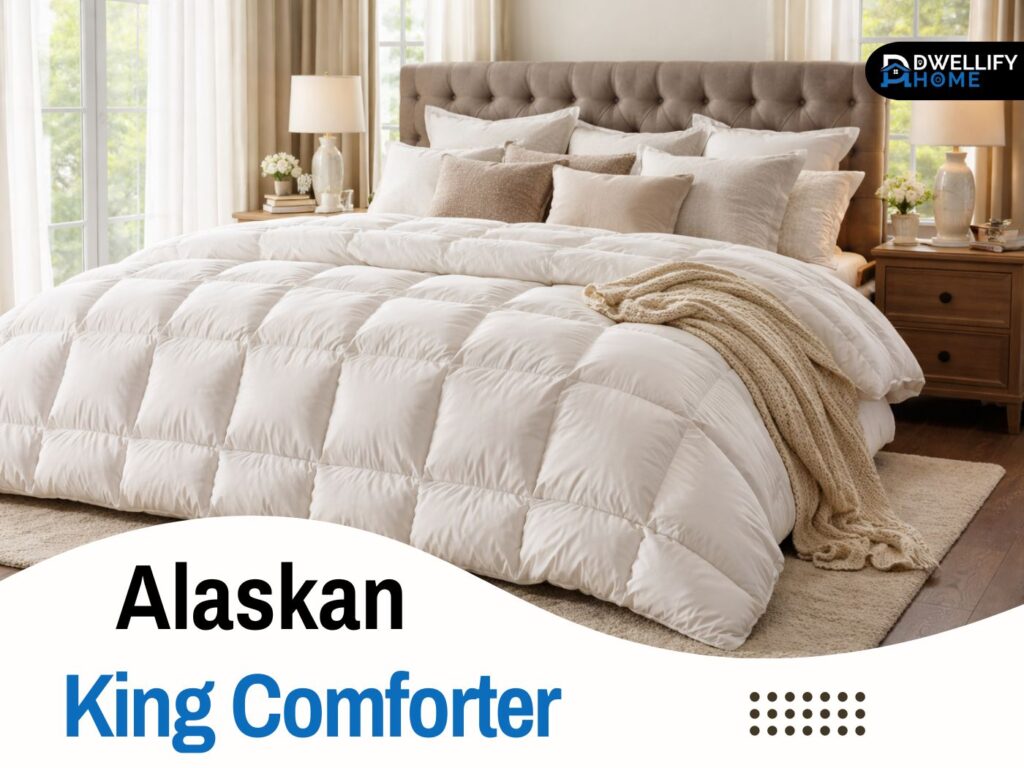
An Alaskan King bed is the kind of upgrade that feels luxurious the first night you sleep on it. The not-so-luxurious part usually starts when you try to buy bedding and realize most “king” options don’t even come close.
I’ve helped a lot of homeowners dial in the right oversized bedding, and the same truth always shows up: the right comforter isn’t about the label, it’s about the inches, the drape, and how you actually sleep. Let’s walk through it calmly, step by step, so you don’t end up with an expensive blanket that looks too small or feels wrong.
Snippet-ready definition:
An Alaskan King comforter is an extra-oversized comforter made for very large beds, with enough width and length to drape properly. The best fit depends on your mattress height, desired drop, and sleep habits.
Mission Statement:
Dwellify Home’s mission is to help homeowners choose bedding that fits the real world, not just the label, with practical sizing guidance, material know-how, and clear care advice so your bedroom feels comfortable and looks pulled together.
What “Alaskan King” means in bedding
Alaskan King isn’t a standard size like Queen or King, so bedding brands don’t follow one universal rule. You’ll see different measurements depending on the maker, and comforter sizing is often designed around “drop” or “overhang” rather than matching the mattress exactly.
Here’s the key idea: a mattress can be huge, but a comforter needs extra width and length to hang nicely on the sides, cover movement at night, and still look balanced in the morning. This is why the same bed can feel right with one comforter and awkward with another, even when both claim to fit.
Quick guide table: pick the right option fast
| Option | Best for | Why it works | Watch-outs |
| 120×120 | Slimmer mattresses, neat look | Less bulk, easier handling | Can feel short on deep mattresses or with two sleepers/pets |
| 132 x 120 | Most Alaskan King setups | Better side drop and coverage | Heavier to wash and store, check return shipping costs |
| Duvet insert + cover | Easy cleaning, seasonal swaps | Wash the cover more often, keep insert protected | Needs corner tabs/ties so the insert doesn’t bunch |
| Quilt (oversized) | Warm climates, layering | Breathable, lighter feel | Often not warm enough alone in cold rooms |
Simple sizing rule I use with clients:
- Decide your drop (how far you want it to hang).
- Add mattress height and topper thickness into the plan.
- Buy based on inches, not the label.
For reference, an Alaskan King mattress is commonly listed as 108″ x 108″.
Alaskan king comforter sizes explained (the part most people get wrong)
When clients ask me what matters most, my answer is simple: choose the size first, then choose the materials. If you start with fabric and ignore dimensions, you’re more likely to feel disappointed.
For most homes, the decision comes down to two popular measurements and one big misunderstanding about the word “oversized.”
The two most searched sizes: 120×120 vs 132 x 120
A comforter around alaskan king comforter 120×120 can work in a few specific situations. It’s usually best when:
- Your mattress is not very tall
- You like a cleaner, less “drapey” look
- You don’t share the bed with kids or pets who steal coverage
I’ve seen 120×120 look fine on slimmer setups, especially when the bed frame sits higher and you don’t need a deep drop to cover the sides.
Now let’s talk about the safer option for most real bedrooms: alaskan king comforter 132 x 120. This size tends to give that fuller, hotel-like hang. It’s especially helpful when you’ve got a thick mattress, a topper, or two sleepers who pull the comforter during the night. If you want fewer “cold side gaps” and more consistent coverage, this is usually the direction I recommend.
Oversized Alaskan king comforter vs “oversized king”
This is where a lot of money gets wasted. “Oversized king” is a marketing phrase, not a guarantee. Many oversized king comforters are still designed for a standard King or California King bed, just with a little extra width.
If you’re considering an oversized alaskan king comforter, don’t trust the word oversized alone. Trust the product specs. I tell clients to do this in order:
- Check the exact inches
- Confirm whether it’s a comforter or a duvet insert
- Scan reviews for real photos on large beds
That process avoids most sizing regrets.
Measure your bed the right way (so the comforter actually drapes)
Measuring sounds basic, but it’s the easiest way to avoid returns on bulky bedding. You’re measuring for drape, not just coverage.
Grab a tape measure and note:
- Mattress width and length
- Mattress height, including any topper
- How much drop you want on each side
Here’s a practical trick I use at home consults. Use painter’s tape to outline the drop you want on the sides of the bed, then measure that final “visual footprint.” It turns the decision from guessing into something you can actually see.
Comforter vs duvet vs quilt for Alaskan King
This part comes down to your lifestyle. Two homes can buy the same size bedding and have totally different experiences because one household washes weekly and the other changes bedding seasonally.
A comforter is usually easiest. A duvet system is more flexible. A quilt is lighter and works best as a layer.
Alaskan king duvet (insert + cover)
An alaskan king duvet setup can be a lifesaver if you like a fresh bed but don’t want to wrestle a giant comforter into the washing machine all the time. You wash the cover more often, and the insert stays protected.
One feature matters more than most people think: corner tabs or duvet ties. Without them, the insert shifts and bunches, and you’ll end up re-straightening it every few nights. If you’ve ever fought a lumpy duvet, you already know why this matters.
Alaskan king quilt
An alaskan king quilt is great when you sleep warm, live in a warmer climate, or like layering. Quilts also drape nicely without feeling heavy.
A common setup I recommend is quilt plus a lightweight blanket, then add a comforter only in colder months. It keeps the bed breathable, and you’re not stuck with one “all or nothing” option.
How to choose the best Alaskan king comforter
Once sizing is locked, choosing the best alaskan king comforter is mostly about warmth control, fill quality, and construction. This is where you can spend smart instead of spending big.
Warmth level and fill weight (lightweight, all-season, heavyweight)
Most brands break warmth into three categories: lightweight, all-season, and heavyweight. That’s actually useful, as long as you match it to how your bedroom behaves.
If your room runs warm, or you keep the heat on at night, lightweight can feel more comfortable and less sweaty. All-season is the most flexible choice for many homes. Heavyweight is best for cold rooms, older homes with drafts, or anyone who genuinely likes that cozy “weighted” feel without using a separate weighted blanket.
A real example: I’ve had clients buy heavyweight because they love the idea of warmth, then they end up kicking it off at 2 a.m. because the room is already insulated and warm. Your room temperature matters as much as your personal preference.
Fill type (down vs down-alternative)
Down is warm for its weight and can feel lofty and soft. It’s also more sensitive to moisture and needs more careful maintenance. If you’re allergic, or you want simpler care, down alternative comforters can be a better fit.
Down-alternative fills vary a lot. Some are thin and flat. Others feel plush and keep their shape. The easiest way to judge is to look for clear information about fill weight, stitching style, and customer photos after a few washes.
Shell fabric and construction (what lasts)
Shell fabric affects breathability and how the comforter feels against your skin. Cotton shells often feel cooler and more breathable. Microfiber shells can feel smoother and may be easier to care for, but some sleep warmer.
Construction is the long-term difference. Look for box-stitch or baffle-style layouts that keep the fill from sliding to the corners. On oversized bedding, weak stitching shows up fast because there’s more fabric weight pulling on seams.
Trust signals (EEAT in product form)
In my work, the most reliable brands share the details that matter. I look for:
- Exact dimensions listed clearly
- Fill type and warmth rating explained simply
- Care instructions that match the material
- Transparent return policy, especially for oversized items
If a listing is vague about size, weight, and materials, it’s usually vague for a reason.
Where to buy an Alaskan king comforter (and how to shop smart)
Where you shop matters less than how you check the details. The same size can be great from one seller and disappointing from another.
Marketplaces like Amazon (how to avoid misleading listings)
If you’re browsing alaskan king comforter amazon options, treat it like a checklist purchase. Confirm measurements first, then read reviews for clues like mattress height and drop.
I also recommend filtering reviews by “most recent” and looking for photos. Photos show drape better than product images, especially when a comforter is labeled oversized without real proof.
Large catalog retailers like Wayfair (using filters correctly)
Catalog retailers are helpful because you can filter by size and material. Still, filters can be imperfect, so confirm the dimensions on the product page.
If you see “132 x 120 Alaskan King,” that’s a good start. Then check material, warmth notes, and return terms. Oversized bedding can be expensive to ship back.
Specialty oversized-bed brands (when they’re worth it)
Specialty brands often do a better job with true sizing and matching duvet covers. They also tend to offer different warmth weights, which is useful if you know you sleep hot or cold.
The tradeoff is price. In my experience, specialty is worth it when you want a long-term comforter and you’re picky about drape, weight balance, and materials.
Alaskan king comforter sale tips (save money without buying junk)
An alaskan king comforter sale can be a great time to buy, but only if you keep your standards. The biggest trap is buying something cheap that doesn’t list proper specs.
A simple way to shop sales without regrets:
- Decide your dimensions first
- Decide your warmth level second
- Only then compare prices
Red flags during sales are vague sizing, missing material info, or reviews that mention clumping and flatness after washing.
Care, washing, and everyday maintenance (especially for oversized bedding)
Oversized bedding needs realistic care planning. Some comforters can be washed at home, but many are better in a large-capacity machine.
A few tips I share with homeowners:
- If your washer drum feels packed, it won’t rinse well and the fill can clump
- Dry thoroughly, and pause to break up clumps by hand during the cycle
- Store in a breathable bag, not compressed in plastic for months
If you go the duvet route, care gets easier because you can wash the cover often and protect the insert.
Common mistakes and how to avoid them
Most issues I see come from assumptions, not bad intentions.
Common mistakes:
- Buying “oversized king” assuming it equals Alaskan King coverage
- Choosing size without factoring mattress height and topper thickness
- Forgetting duvet cover sizing when buying an alaskan king duvet insert
- Ignoring return shipping costs on bulky bedding
If you remember only one thing, remember this: inches first, everything else second.
Alaskan King vs other oversized beds (quick comparison)
Oversized beds come in a few families, like Wyoming King and Texas King, plus other large formats that vary by brand.
The useful takeaway is simple. Don’t shop by the bed name alone. Shop by the mattress dimensions you own, then pick a comforter size that gives you the drape you want. That approach works no matter what the oversized category is called.
FAQs
1) What is the difference between Alaskan King and king comforter?
A standard king comforter is usually designed for a standard King mattress (76″ x 80″), and comforter dimensions vary by brand but often fall within common “king comforter” ranges.
An Alaskan King setup needs much more coverage because the mattress itself is typically 108″ x 108″, so you’ll usually need oversized sizes like 120×120 or 132×120 depending on your desired drape.
2) Is an Alaskan King bigger than a king?
Yes. A standard King mattress is 76″ x 80″, while an Alaskan King is commonly 108″ x 108″, which is dramatically wider and longer.
3) Which is bigger, Texas King or Alaskan King?
An Alaskan King is bigger overall. A Texas King is often listed around 80″ x 98″, while an Alaskan King is commonly 108″ x 108″.
4) What comforters do 5 star hotels use?
Most luxury hotels use a duvet-style setup: a white duvet insert (down or high-quality down-alternative) inside a washable duvet cover. Look for a cotton shell and baffle-box construction for even fill and a fuller look.
5) Is 132 x 120 too big, or will it look sloppy?
Not usually. On deep mattresses and family-style sleepers (couples plus pets or kids), 132 x 120 often looks more balanced because it gives a proper drop and reduces nightly tug-of-war. Many listings position 132 x 120 specifically as “extra large” coverage.
Conclusion
Choosing an alaskan king comforter isn’t complicated once you stop trusting labels and start trusting measurements. Pick the right size for your mattress height and the drape you want, then choose warmth and fill based on how your room actually feels at night.
If you want the safest path, measure carefully, aim for enough drop to prevent nightly tug-of-war, and buy from a seller with clear specs and a return policy you understand. Do that, and your oversized bed will finally look and feel the way you expected when you bought it.
Disclaimer
This article is for general bedding guidance based on hands-on fitting experience and publicly available sizing information. Always confirm exact product dimensions, materials, and care instructions on the seller’s page before purchasing, especially for oversized bedding.

I’m Bilal, the founder of Dwellify Home. With 6 years of practical experience in home remodeling, interior design, and décor consulting, I help people transform their spaces with simple, effective, and affordable ideas. I specialize in offering real-world tips, step-by-step guides, and product recommendations that make home improvement easier and more enjoyable. My mission is to empower homeowners and renters to create functional, beautiful spaces—one thoughtful update at a time.