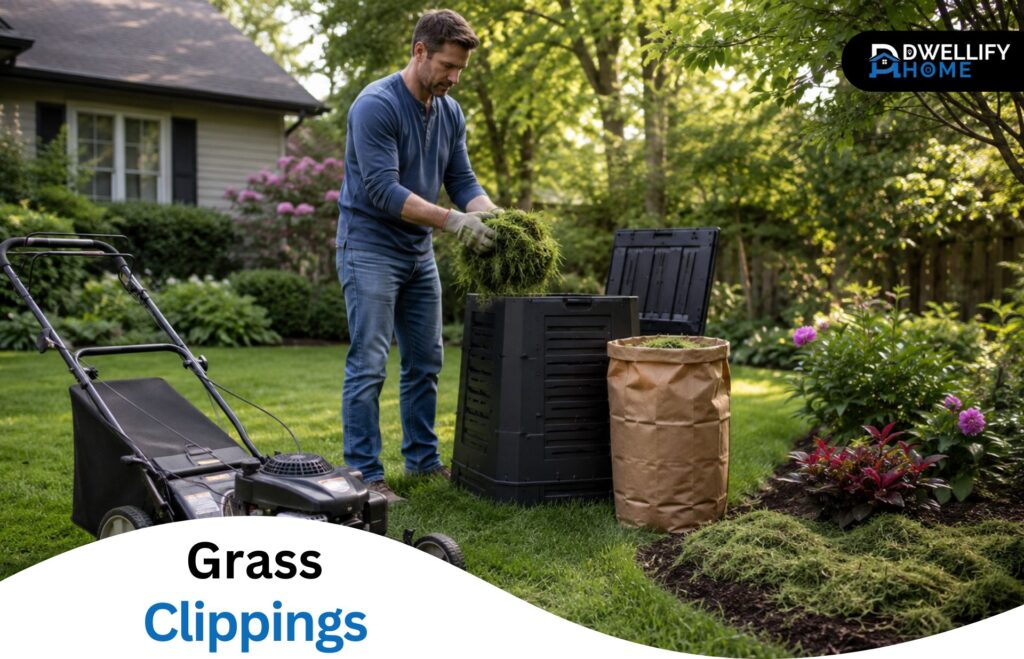
Most people treat grass clippings like trash. Bag them, drag them to the curb, forget about them. After enough years working on lawns, I can tell you that’s usually the worst thing you can do with them, and almost always the most work. Those clippings are free fertilizer, free mulch, and free compost material sitting right there on your grass.
It adds up, too. The EPA reported that yard trimmings like grass and leaves came to about 12 percent of all the municipal waste generated in the U.S. in 2018, and a good share of that grass never needed to leave the lawn at all. This guide covers the four real things you can do with grass clippings, and how to pick the one that fits your yard.
Snippet-Ready Definition
Grass clippings are the cut pieces of grass left after mowing. Most homeowners leave them on the lawn (grasscycling), compost them, or use them as mulch, because they return nitrogen and organic matter to the soil and reduce yard waste.
Our Mission
At Dwellify Home, we help homeowners and property enthusiasts make practical, confident decisions about their homes, gardens, and outdoor spaces — turning everyday questions, like what to do with grass clippings, into clear, trustworthy guidance you can act on.
What should you do with grass clippings?
For most lawns, the best thing to do with grass clippings is leave them where they fall so they feed the soil. If you have more than the lawn can use, compost them or spread them as garden mulch. Bag and dispose of them only when the grass is wet, overgrown, diseased, or recently sprayed.
The choice really comes down to your grass and your timing:
- Leave them on the lawn when you’re mowing on a regular schedule and the grass is dry.
- Compost or mulch them when you have garden beds, or simply more clippings than the lawn needs.
- Bag and get rid of them when the grass got too long, it’s soaking wet, the lawn has a disease, or you sprayed it recently.
Most weeks, leaving them is the right answer. Everything else is for the exceptions, and we’ll go through each one.
Quick decision guide — what to do with grass clippings
| Option | Best when | What you get |
| Leave on lawn (grasscycling) | You mow on schedule and the grass is dry | Free slow-release fertilizer, least work |
| Compost | You have a pile or more clippings than the lawn needs | Free soil amendment for the garden |
| Mulch | You have garden beds or rows to cover | Weed control, moisture retention, slow feeding |
| Bag and dispose | Grass is wet, overgrown, diseased, or recently treated | Clean removal when reuse isn’t safe |
Key benefits of leaving or reusing clippings
- Free, slow-release nitrogen for the lawn
- Less time spent bagging, emptying, and hauling
- Less yard waste sent to the landfill
- Healthier soil and better moisture retention
- Free mulch and compost material for the garden
Are grass clippings good for your lawn?
Yes, grass clippings are genuinely good for your lawn. They’re roughly 80 to 85 percent water, so they break down fast, and as they do they hand nitrogen and other nutrients straight back to the soil. It’s a slow, steady feeding your lawn gives itself every time you mow.
The numbers hold up. Research from Oregon State puts clippings at around 3 to 4 percent nitrogen, with smaller amounts of phosphorus and potassium. Clemson sums it up well: clippings act roughly like a 4-1-3 fertilizer. That’s not a heavy dose, but it’s free, and it shows up week after week.
There’s more to it than the NPK, though. As clippings decompose they add organic matter and feed the soil microbes that keep a lawn healthy from the ground up. Over a season, that quiet trickle of nutrients and organic material does more for your soil than most people expect.
Do grass clippings cause thatch?
No, grass clippings don’t cause thatch on a properly mowed lawn. This is the myth that keeps people bagging, and it just doesn’t hold up. Thatch is built from tough, slow-rotting plant parts. Clippings are mostly soft, water-rich leaf blades that break down long before they could ever pile up.
Thatch is that spongy layer of stems, crowns, roots, and runners sitting between the green grass and the soil. Those parts are full of lignin, which is slow to rot. Leaf blades aren’t, so soil organisms chew through them in days. Research from Oregon State, Penn State, and the University of Minnesota has consistently found that clippings don’t build thatch.
I’ll be straight about the nuance: a few specialists, like UC’s IPM program, note clippings might add a sliver to thatch, but agree the benefits clearly outweigh it. And if you ever do need to dethatch, that’s a separate problem with its own causes. It isn’t your clippings’ fault.
Leaving grass clippings on the lawn (grasscycling)
Leaving clippings on the lawn has a name, grasscycling, and it’s the simplest, most rewarding thing you can do with them. You’re not adding a chore. You’re just not bagging. Done right, it feeds the lawn and saves you real time. Here’s how to do it without ending up with clumps.
How to grasscycle the right way
Grasscycling comes down to the one-third rule: never cut off more than a third of the grass height in a single mow. Keep the clippings short and they settle into the lawn instead of clumping on top. Mow when the grass is dry, with a sharp blade, on a regular schedule, and you’ll barely notice the clippings are there.
The University of Maryland puts the rule simply: to keep a lawn at 3 inches, mow when it reaches about 4. Short clippings fall between the blades and disappear quietly. Long clippings sit on top, mat together, and smother the grass underneath.
A sharp blade matters more than people think. A dull one tears the grass, stresses it, and leaves ragged clippings that don’t settle. And when the lawn is growing fast in spring, mow more often rather than lower. That’s how you keep clippings short without scalping the lawn.
Do you need a mulching mower to grasscycle?
No, you don’t need a mulching mower to grasscycle. A mulching mower or a mulching blade cuts clippings finer and helps them settle, which is a nice bonus. But a standard rotary mower works fine as long as you mow often enough to keep the clippings short. No new purchase required.
A mulching setup holds clippings under the deck a little longer and chops them smaller, so they vanish faster. If you’re buying a mower anyway, it’s worth getting, or you can add a mulching blade to the one you’ve got. Side-discharge and reel mowers handle short clippings just fine, too.
The setup to move away from is bagging, where a grass catcher pulls everything off the lawn. If you’ve been collecting clippings out of habit, you can start grasscycling today with whatever’s in your garage. Just take the bag off.
Does grasscycling work with every grass type?
Grasscycling works on nearly every common lawn: cool-season grasses like Kentucky bluegrass, tall fescue, and ryegrass, and warm-season grasses like Bermuda. The main exception is Zoysia, which grows so dense and breaks down so slowly that clippings can build up on top rather than settling in.
For most lawns, grass type doesn’t change the advice: keep clippings short and let them fall. Zoysia is the one to watch. Its thick, wiry growth means clippings don’t decompose the way they do in a fescue or bluegrass lawn, and the University of Florida flags it as a case where collecting clippings or occasional dethatching makes sense.
How much time and fertilizer money grasscycling saves
Grasscycling can supply a real share of your lawn’s nitrogen, commonly cited as about 25 percent of what it needs in a year, with some research putting it higher. It also saves time, because you skip bagging, emptying, and hauling every time you mow. Over a season, that adds up to hours.
Several extensions, including Missouri, Maryland, and Illinois, land near that 25 percent figure. Penn State’s research went further, finding clippings returned close to half the nitrogen that had been applied as fertilizer. In plain terms, returning roughly a pound of nitrogen per 1,000 square feet over a season can offset a fertilizer application or more.
The time savings are just as real. A Texas study cited by the University of Georgia found that grasscycling meant mowing a little more often but cut about 35 minutes off each mow by skipping the bag, around 7 hours saved over six months. Your exact numbers depend on lawn size and fertilizer prices, but the direction never changes: less work, less money.
How to compost grass clippings
Yes, you can compost grass clippings, and they’re one of the best free “green” materials a pile can get. The key is balance. Clippings are rich in nitrogen, so mix them with carbon-heavy “browns” like dry leaves, straw, or shredded cardboard, and turn the pile so air can move through it.
On their own, clippings have a low carbon-to-nitrogen ratio. Michigan State puts fresh clippings near 13 to 1, when a healthy pile wants closer to 30 to 1, which is exactly why you balance them out. A practical mix is about two parts browns to one part clippings by volume, and Illinois suggests keeping fresh clippings to no more than half the pile.
Skip that balance and you’ll know fast. A thick wad of wet clippings packs down, shuts out air, and turns into a slimy, ammonia-smelling mess. That sour smell is the pile gone airless. Turn it regularly, keep the browns mixed in, and it breaks down clean. One caution first: if the lawn’s been sprayed, hold off, and I’ll explain why shortly.
How to use grass clippings as mulch
Grass clippings make excellent garden mulch, but dry them first. Spread fresh and green, they mat into a slimy layer that blocks water and air. Dried and applied in thin layers, no more than an inch or two at a time, they suppress weeds, hold moisture in the soil, and feed the bed as they break down.
I let clippings dry for a day or two, right on the lawn or on a tarp, before raking them around plants. Iowa State makes the same point: drying first is what keeps them from matting and souring. Then keep it thin. Minnesota, Clemson, and Illinois all land on the same ceiling of an inch or two per application, and you can always add more once the first layer breaks down.
Used this way, clippings are great around vegetables, in flower beds, and along garden rows. They keep the soil cooler, cut down on watering, and slowly turn into food for whatever you’re growing. The one condition: only use clippings from a lawn that hasn’t been treated with long-lasting weed killers, which brings us to the part most people never hear about.
When to bag and how to dispose of grass clippings
Leaving clippings is the default, but there are real cases where bagging is the smarter call, and times you’ll end up with clippings you can’t reuse at all. Here’s when to reach for the bag, and how to get rid of clippings the right way when you have to.
When should you bag clippings instead of leaving them?
Bag your clippings when leaving them would cause problems: when the grass got too long and clumps, when it’s soaking wet, when the lawn has an active disease, when weeds have gone to seed, or right after a weed killer or pesticide treatment. The rest of the time, leaving them wins easily.
A few clear signals it’s a bagging week:
- The grass got away from you and you’re cutting off far more than a third, so the clippings will clump no matter what.
- It’s wet and clumping as you mow.
- The lawn has a disease like leaf spot, dollar spot, brown patch, rust, or red thread. The University of Minnesota notes that bagging helps keep it from spreading.
- Weeds have gone to seed, and leaving clippings would scatter them across the yard.
- You recently used a weed-and-feed or sprayed the lawn.
Outside of those, drop the bag and let them fall.
How to dispose of grass clippings responsibly
If you genuinely can’t reuse clippings, work down the list: grasscycle first, then compost, then mulch, then your municipal yard-waste pickup or a local compost drop-off. Many states ban yard waste from landfills outright, so check your local rules. And never blow or dump clippings into storm drains or ditches.
A surprising number of places won’t let yard waste go in the regular trash. States including Indiana, Delaware, Michigan, Pennsylvania, West Virginia, and Wisconsin have landfill bans on yard trimmings, and more than 20 states have some kind of restriction. Most towns run a curbside yard-waste program or a compost site that’ll take clippings, usually free or close to it.
The one thing to never do is sweep clippings into the street or a storm drain. They wash straight into creeks and lakes, where the same nitrogen that feeds your lawn feeds algae instead. Minnesota and plenty of other agencies push hard on this because it’s a genuine water-quality problem. Bag them, compost them, or haul them, just keep them out of the gutter.
When grass clippings aren’t safe to reuse: herbicides and lawn chemicals
Clippings from a lawn treated with certain long-lasting weed killers can damage your garden, even after composting. A handful of broadleaf herbicides survive the compost pile intact and harm sensitive plants. The safe move is simple: after any weed-and-feed or broadleaf spray, wait about two to three mowings before composting or mulching those clippings.
The chemicals to know are the pyridine carboxylic acids: aminopyralid, clopyralid, and picloram. NC State Extension has documented how these can pass through compost and stunt or kill sensitive plants like beans, peas, tomatoes, potatoes, peppers, lettuce, and carrots. It’s frustrating because the finished compost looks perfectly fine.
Here’s the honest nuance, though. Clopyralid hasn’t been allowed on residential lawns since 2002, so clippings from a typical home lawn are usually safe. The real risk comes from professionally treated turf, or hay and manure brought in from elsewhere. After a common weed-and-feed with 2,4-D, MCPP, or dicamba, Penn State and Iowa State suggest waiting two to three mowings before reusing the clippings.
If you’re ever unsure about a batch of compost, there’s a simple test: plant a few peas or beans in it. If the new growth comes up twisted and cupped, that compost has herbicide in it and shouldn’t go near your garden. As a basic habit, keep kids and pets off any treated lawn until it’s dried and settled, following the product label.
Creative ways to reuse extra grass clippings
When you have more clippings than the lawn or compost pile can use, there are easy ways to put them to work. Steep them in water for a quick liquid feed, layer them into new garden beds, or use them to build soil over time. Just keep that herbicide rule in mind for anything you’re growing to eat.
A simple “grass tea” is a longtime favorite. Pack a bucket about halfway with clippings, fill it with water, and let it sit a few days. Strain it off and you’ve got a mild, nitrogen-rich liquid feed for your plants. For bigger jobs, clippings are ideal for sheet mulching, sometimes called lasagna gardening, where you layer them with cardboard and leaves on the ground to build a planting bed by next season, no digging required.
They also work as green material for a backyard chicken run or to keep a compost pile active through the season. Whatever the use, if those clippings came off a treated lawn, keep them well away from anything headed for the dinner table.
Frequently asked questions about grass clippings
How long do grass clippings take to decompose?
Short clippings left on the lawn break down fast, often within a week or two during active growth, and sometimes just a few days in peak season. Warmth, moisture, and healthy soil life all speed the process along.
What is the one-third rule of mowing?
It means never removing more than a third of the grass blade in one mow. To keep a lawn at 3 inches, you mow when it reaches about 4. It keeps clippings short and the grass unstressed.
How often should you mow your lawn?
Often enough to follow the one-third rule, which shifts with the season. In spring’s fast growth that can mean every five to seven days; in summer heat, less often. Let the grass height decide, not the calendar.
Can you mulch with wet grass clippings?
It’s best not to. Wet clippings mat into a slimy layer that blocks air and water and can turn sour. Spread them on the lawn or a tarp to dry for a day or two first, then use them.
Can grass clippings spread lawn disease?
Yes, when the lawn is actively diseased. Mowing can move fungal spores around, so if you see leaf spot, brown patch, rust, or similar, bag those clippings until the lawn recovers instead of leaving or composting them.
Is it illegal to dump grass clippings?
It can be, depending on where you live. Many states ban yard waste from landfills, and dumping clippings on public land or into storm drains is often prohibited. Check your local rules before putting them in the trash.
Are grass clippings safe to use after a weed-and-feed?
Wait first. After a broadleaf weed treatment, give it two to three mowings before composting or mulching those clippings. That window lets the product break down enough to keep it away from sensitive garden plants.
Can grass clippings go in the vegetable garden?
Yes, with two conditions: dry them first so they don’t mat, and only use clippings from a lawn that hasn’t had long-lasting weed killers. Spread thin, they make a fine mulch around vegetables.
Why are grass clippings considered a “green” in composting?
Because they’re high in nitrogen and break down quickly, like other fresh greens. That nitrogen feeds the microbes doing the composting, which is why you pair clippings with carbon-rich browns like dry leaves or cardboard.
The bottom line on grass clippings
Grass clippings aren’t waste. They’re one of the easiest wins in your whole yard. For most homeowners, most of the time, the smart move is also the lazy one: leave them on the lawn and let them feed the grass. When you’ve got extra, compost them or spread them as mulch. Save the bag for the weeks when the grass is wet, overgrown, diseased, or freshly treated.
Get that rhythm down and you’ll spend less time hauling bags, less money on fertilizer, and end up with a healthier lawn for the effort you’re not making. That’s really all there is to what to do with grass clippings, and it’s about as good a deal as lawn care gets.
Disclaimer: This article is for general informational purposes only. Lawns, climates, grass types, and local regulations vary, so your results and best options may differ. Always check your local guidelines and product labels before applying anything to your lawn or garden.