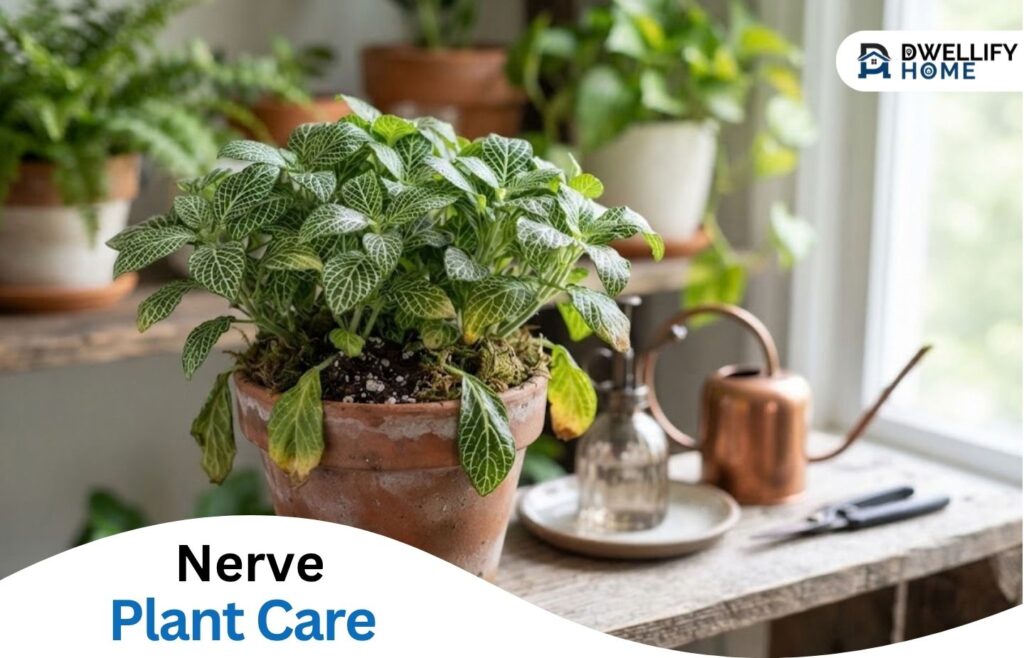
A nerve plant can look healthy on your desk, then suddenly droop over the edge of its pot. That change is alarming, especially when you’re unsure whether it needs water or has already had too much.
Good nerve plant care starts with bright, indirect light, evenly moist soil, reliable drainage, and protection from dry air and drafts. The useful habit is checking those conditions before making changes.
Start with the soil whenever leaves wilt. A dry root ball and a soggy pot need different responses, even when the leaves look similar.
Short Definition
Nerve plant, or Fittonia albivenis, is a small tropical houseplant with colorful leaf veins. It grows best in bright, indirect light with evenly moist, well-drained soil and protection from dry air and drafts.
Practical Home Tip
Drooping leaves can appear when the soil is dry or too wet. Before watering, feel the potting mix and check for water trapped inside the decorative pot. Adding more water won’t help when poor drainage is the problem.
DwellifyHome Mission Statement
DwellifyHome helps homeowners and renters make informed, practical choices for comfortable, stylish living spaces—with clear guidance that fits everyday life.
Quick Nerve Plant Care Checklist
- Check soil moisture before watering.
- Provide bright, indirect light.
- Let excess water drain and empty the outer pot.
- Keep the plant away from heating vents and cold drafts.
- Check soil and drainage before treating wilted leaves.
- Inspect leaf undersides and stems when problems persist.
What Is a Nerve Plant?
Nerve plant, or Fittonia albivenis, is a small tropical plant grown mainly for its patterned leaves. You may also see it sold as Fittonia or mosaic plant.
Its leaves carry a network of white, pink, or red veins. The plant grows low and spreads outward, making it useful for small pots and enclosed plant displays called terrariums. NC State Extension lists its height at roughly 3–8 inches, although size varies.
For most US households, it makes sense to treat Fittonia as an indoor foliage plant. Choose a place where you can enjoy the leaves and easily reach the soil for checks.
| Care factor | Starting point |
| Light | Bright, indirect light; protect from strong afternoon sun |
| Water | Keep the root ball lightly moist without leaving it waterlogged |
| Potting mix | A mix that holds some moisture and drains freely |
| Temperature | A comfortable, steady indoor temperature |
| Humidity | Protect from very dry air; consider a humidifier or terrarium |
| Maintenance | Check growth, leaves, soil, and drainage before adjusting care |
Use this table as a starting guide. Your pot, room, and plant will determine the details.
How to Care for a Nerve Plant Indoors
Choose Bright, Indirect Light
Bright, indirect light means a well-lit spot where strong sunlight isn’t falling directly on the leaves for long periods. Near a bright window with a sheer curtain is one possible setup.
Look at the actual light reaching the plant. Window direction helps, but nearby buildings, trees, and overhangs can change the conditions considerably.
Check the spot at different times of day before settling on it. A shelf that looks shaded in the morning may receive strong afternoon sun.
A bathroom can work when it has suitable light. Shower steam alone doesn’t make a dark room a good growing space. Similarly, a bright living room may offer a better location than a humid but dim corner.
Recheck placement as the seasons change. You don’t need to keep moving the plant, but it helps to notice when sunlight begins reaching a previously shaded shelf.
Water According to Soil Moisture
There is no watering schedule that works for every nerve plant. Check the upper layer of potting mix and water as it begins to dry, before the whole root ball dries out. Let excess water escape, then empty the saucer or outer pot.
For an established plant in a regular pot, checking roughly the top inch is a useful starting point. Be gentler and shallower in a tiny container, where an inch may represent much of the rooting space.
Feel the mix rather than judging only by its color. Damp mix feels moist against your finger; wet mix may feel saturated and leave your finger muddy.
When watering is needed:
- Take the growing pot out of any decorative cover.
- Pour water slowly over the mix until it runs from the drainage holes.
- Let the pot drain before returning it to its place.
- Empty any water that collects underneath.
Make a reminder to check the plant rather than automatically water it. A calendar can support observation without making the decision for you.
During the first few weeks, note when you water and what the soil feels like between waterings. That gives you a useful picture of your own setup.
Use a Suitable Pot and Potting Mix
Choose an indoor potting mix that retains moisture while allowing excess water to drain. Perlite, the lightweight white particles found in many mixes, helps create air spaces. Fine bark can also be part of a suitable blend.
A ready-made houseplant mix is a reasonable starting point. You don’t need an elaborate recipe before you understand how the existing mix behaves.
The container matters too. Fittonia has shallow roots, so avoid choosing a very deep pot simply because it looks attractive. Keep the pot reasonably matched to the root ball.
For an ordinary potted plant, drainage holes are essential. You can keep a plastic nursery pot inside a decorative container without holes, provided you remove it for watering and let it drain.
Adding stones to the bottom does not replace drainage holes. Water can remain trapped in the potting mix above that layer. NC State’s container-growing guidance explains this common drainage mistake.
Before buying a new planter, ask whether you can lift the plant out easily. A beautiful outer pot becomes inconvenient when checking for trapped water is difficult.
Keep Temperature and Humidity Steady
A room kept around 65–80°F is a practical setting for indoor care. Treat this as a comfortable working range, rather than an exact boundary between healthy and unhealthy growth.
Avoid cold window glass, drafty doors, and direct airflow from heating or cooling vents. Check the plant’s actual location, especially overnight; the thermostat elsewhere in the house may tell a different story.
Humidity means moisture in the air. It is separate from moisture around the roots, so extra watering cannot solve every problem caused by dry air.
Occasional misting provides only a brief change in humidity. University of Georgia Extension explains that misting would need to be extremely frequent to maintain a meaningful increase around a plant.
A humidifier offers more control. A small humidity meter can help you understand whether the air near the plant is consistently dry before buying equipment.
A terrarium is another option because an enclosure helps retain moisture. An open pot is easier to inspect and drain, while an enclosed display requires careful attention to how much water remains inside.
Don’t carry an open-pot watering routine straight into a terrarium. Check the growing medium each time, and keep the enclosure away from strong direct sunlight.
Feed, Prune, and Repot When Needed
Feed according to growth and the fertilizer label. A small plant producing new leaves has different needs from one that has stopped growing.
As one grower’s starting point, Proven Winners recommends monthly feeding at half strength during active growth. Product strengths vary, so read the directions before applying that approach.
Avoid adding fertilizer simply because leaves are drooping. First work out whether moisture, drainage, light, or temperature is causing the problem.
To keep the plant compact, pinch or trim stem tips just above a node—the point where leaves join the stem. Use clean scissors and remove dead material as you notice it.
Repot when roots become crowded or the mix no longer performs well. Roots emerging from drainage holes are a reason to inspect the root ball, rather than an automatic instruction to buy a much larger pot.
Choose only a modest increase in size when more space is needed. You can also refresh unsuitable potting mix without greatly increasing the container.
Common Nerve Plant Problems and What to Check
A leaf symptom gives you a clue, not a complete diagnosis. Look at the soil, drainage, recent care, and location together.
Before changing several things, identify the clearest problem. Otherwise, it becomes difficult to tell which adjustment helped.
Wilting With Dry Soil
When stems droop and the root ball is dry, lack of water is a likely cause. Water the mix thoroughly, allow it to drain, and keep the plant in suitable indirect light.
Check that the root ball actually becomes moist. Water running out immediately does not always mean the whole mix has absorbed it.
A drought-stressed Fittonia may regain firmness after watering, but recovery depends on how much damage has occurred. Don’t add more water repeatedly while waiting for the leaves to lift.
Once it improves, review what happened. Was the plant overlooked, moved to a brighter spot, or exposed to warm airflow? That answer is more useful than simply deciding to water more often forever.
Avoid deliberately waiting for collapse as your routine watering signal.
Wilting With Wet Soil
A wilted plant sitting in wet mix needs a drainage check before another drink. Remove any standing water and make sure the pot’s holes are clear.
If the plant keeps declining, carefully slide the root ball out for inspection. Brown, soft roots with an unpleasant smell can indicate rot. Root color alone is less useful than texture and the overall condition.
Remove clearly rotten roots with clean scissors and repot into fresh, suitable mix in a clean container. Keep the pot matched to the remaining roots. Recovery is uncertain when much of the root system has been lost. NC State’s houseplant troubleshooting guidance supports inspecting roots before choosing a rescue approach.
Don’t put the plant in harsh sun to dry it quickly. Address the wet growing conditions while maintaining suitable light.
Yellow Leaves, Brown Edges, and Other Changes
Use this table to decide what to inspect first. Several causes can occur together.
| What you notice | Possible explanation | First check |
| Yellow leaves with wet mix | Excess moisture or poor drainage | Look for collected water and inspect the roots if decline continues |
| Dry, brown edges | Dry air, strong sunlight, or watering problems | Review light exposure and moisture history |
| Long stems with wider leaf spacing | Insufficient light | Assess whether the current spot is bright enough |
| Leaf drop | Drying, drafts, or temperature changes | Check recent changes in care and placement |
| Cottony patches, fine webbing, or sticky residue | Possible pests | Examine stems, leaf joints, and leaf undersides |
Take a clear photo when you first notice a problem. Comparing it later can help you distinguish old damage from new damage.
If you find pests, separate the plant from nearby houseplants while identifying them. Choose treatment for the pest you actually have, and follow directions for indoor use.
Avoid homemade dish-soap sprays. University of Minnesota Extension warns that homemade soap products can burn plants. A labelled insecticidal soap is a different product, with its own directions and limitations.
For persistent symptoms you cannot explain, a local extension service can help assess photos and your care history.
Pink, White, and Red Nerve Plants
A pink nerve plant brings warmer color to a shelf, while white-veined forms create a sharper contrast against green leaves. Red-veined selections offer another variation.
Choose the color you enjoy, then inspect the individual plant. Look beneath the foliage and around the stems rather than judging only the top view.
“Pink” or “white” on a shop label may describe appearance without identifying a named cultivar. Keep the label when one is supplied, especially if you want to check its expected size later.
These color choices share the same basic care approach. Leaf color does not justify a separate watering calendar.
How to Propagate a Nerve Plant
Propagation means growing a new plant from an existing one. Stem cuttings are a practical method for Fittonia.
Start with a healthy plant and a small pot with drainage holes. Prepare fresh, lightly moist rooting mix before cutting, so the stem does not sit around drying out.
- Choose a healthy stem tip. Select one with several leaves and at least two nodes.
- Cut below a node. Use clean, sharp scissors to make the cut.
- Remove the lowest leaves. Leave the upper leaves in place and expose the lower stem.
- Insert the cutting. Place the lower node into the mix, keeping the remaining leaves above it.
- Provide gentle conditions. Keep it warm, in bright indirect light, with the mix moist but not saturated.
A clear cover can help reduce moisture loss while roots develop. Keep it out of direct sun and supported above the foliage. These basic principles follow NC State’s guidance on rooting cuttings.
Check regularly for drying or decay. Avoid repeatedly pulling the stem out to look for roots.
Rooting speed varies with conditions. Allow a functioning root system to develop before moving the cutting into a larger pot, and gradually expose covered cuttings to normal room air once established.
Frequently Asked Questions
Are nerve plants difficult to care for?
They can be manageable for beginners who enjoy checking their plants regularly. The challenge is keeping moisture and growing conditions reasonably consistent.
Consider your routine before buying one. A plant placed where you naturally notice it is easier to monitor than one tucked into a rarely used room. Start with one plant and learn how its pot dries between waterings.
What is a nerve plant good for?
Its main appeal is decorative. Patterned foliage adds color to desks, shelves, and small indoor plant arrangements without needing a large floor space.
Fittonia also suits terrarium displays when the setup meets its needs. Choose it for its appearance and the enjoyment of growing it. There is no need to rely on air-cleaning or health promises to justify having one.
Is nerve plant toxic to cats and dogs?
The ASPCA lists nerve plant as non-toxic to cats and dogs, using the older botanical name Fittonia verschaffeltii.
Non-toxic does not mean suitable for eating. ASPCA’s general plant-safety guidance notes that chewing any plant material may cause vomiting or stomach upset.
Keep the plant out of reach of persistent chewers. Contact your veterinarian if your pet becomes unwell, and mention any fertilizer or pesticide recently used.
Does a nerve plant flower?
Yes, it can produce small flowers on upright spikes, although flowering is uncommon indoors. Its patterned leaves usually provide most of the visual interest.
A plant without flowers is not necessarily unhealthy. Focus on leaf condition and steady growth rather than trying to force blooms with extra fertilizer. You can trim unwanted flower spikes with clean scissors if you prefer the foliage display.
Build a Care Routine That Fits Your Home
Keep your nerve plant somewhere you can easily check its soil, leaves, and drainage. Let those observations guide watering and other changes.
When a problem appears, start with the clearest clue and make a measured adjustment. A few useful checks will tell you more than a rigid calendar—and make caring for this small, colorful plant much less confusing.
Disclaimer
This guide provides general plant-care information. Conditions vary by home, season, pot, and plant. Follow fertilizer and pest-treatment labels, seek local extension guidance for persistent plant problems, and contact a veterinarian if your pet becomes unwell after chewing a plant.