Pineapple seeds can turn up while you’re cutting fresh fruit, yet another pineapple may contain none at all. They can grow into new plants, although finding a seed doesn’t guarantee it will sprout. The first task is knowing what you’re looking at—and whether this is a growing project you’ll enjoy.
A few collected seeds make a small experiment you can start with ordinary supplies. Expect to spend time watching for roots and caring for a young plant before thinking about fruit. The useful starting point is close inspection, followed by a simple setup you can monitor.
Short Definition
Pineapple seeds are small seeds that sometimes develop inside pineapple fruit. Gardeners collect or buy them to grow new plants, although germination is uncertain and many store-bought pineapples contain none.
Mission Statement
DwellifyHome helps homeowners, renters, and home lovers make informed, practical choices for living spaces that feel comfortable, welcoming, and true to their style.
Quick Seed-Starting Checklist
- Inspect the outer flesh beneath the rind for seeds.
- Check seed identity and germination information before buying.
- Label your container with the source and planting date.
- Maintain steady warmth and damp—not waterlogged—conditions.
- Plan for ongoing care and indoor space before expecting fruit.
Where to Find Pineapple Seeds
Fresh fruit is one place to look; specialist sellers and online marketplaces are another. Neither route guarantees viable seeds, meaning seeds capable of germinating.
Looking Beneath the Rind
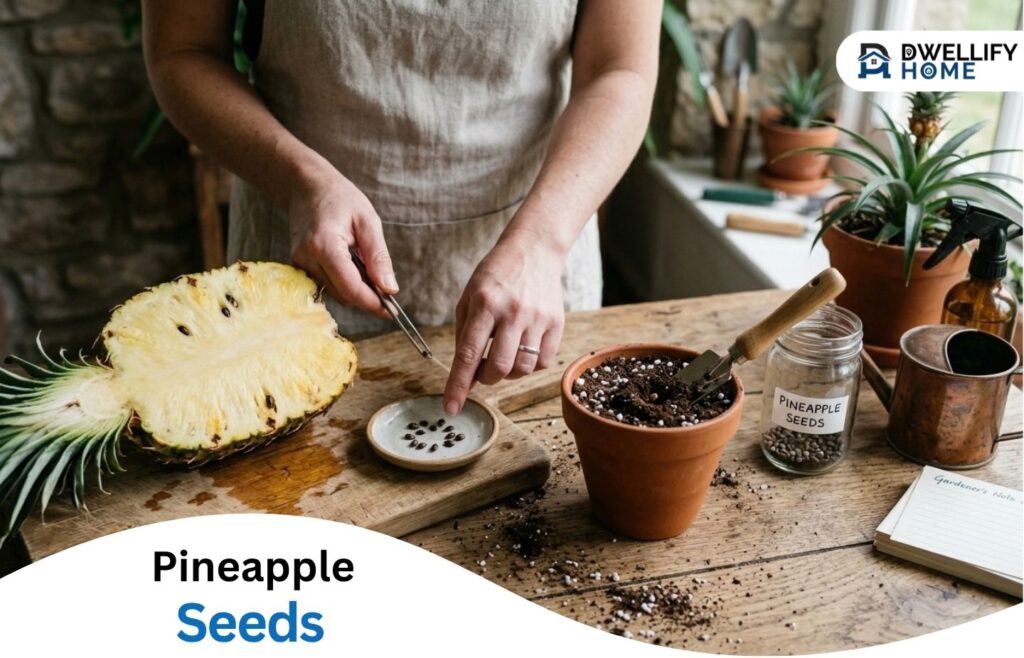
Look in the outer flesh, just beneath the rind and near the pineapple’s eyes—the patterned sections of its skin. Seeds appear as tiny, separate dark-brown or nearly black pieces. The rough eyes and stringy fibers themselves aren’t seeds. These collection photographs show where growers have found them.
Set the fruit on a stable cutting board and remove a strip of rind. Inspect both the exposed flesh and the inside of the strip before continuing. Good lighting helps; a phone’s magnifier can make small details easier to examine.
Don’t spend an afternoon dismantling a fruit that has none. You can inspect as you prepare it to eat and save anything promising along the way.
Checking Seed Listings Before Buying
A photograph of a ripe pineapple tells you little about the packet being sold. Before buying, look for:
- The botanical name, Ananas comosus, rather than an ambiguous common name.
- Information about the seed source and collection date.
- Recent germination-test details, including how many seeds were tested.
- Clear photographs of the actual seeds and resulting seedlings.
Ask the seller to clarify missing information. A long list of attractive fruit colors or a promise of rapid harvest should prompt questions, not a larger order. For a first attempt, a small, well-documented batch makes more sense than a large packet with vague claims.
Why Some Pineapples Have No Seeds
Pineapples can develop fruit without making seeds. They are generally self-incompatible: pollen from the same variety does not normally produce seed. Compatible pollen from another variety can lead to seed formation when plants flower together.
That’s why a seedless fruit isn’t evidence that you missed something, and “hybrid” alone isn’t an adequate explanation. An organic label doesn’t guarantee seeds either.
Growers commonly multiply plants using crowns and offshoots. These are pieces of an existing plant, so seed production isn’t necessary to keep growing the crop.
Preparing and Planting Pineapple Seeds
Gently lift each seed from the flesh with tweezers or a blunt utensil. Rinse away clinging pulp without scraping the seed. Gather a clean bag or small container, paper towel or fresh growing mix, water, and a label.
Use clean containers and a light seed-starting mix rather than soil scooped from the garden. Garden soil can compact and introduce disease organisms into a small indoor setup.
Aim for steady warmth around 77°F (25°C). A controlled pineapple study found that temperature best among the conditions tested. It also used presoaking, but did not establish that soaking is essential for every home attempt. Treat it as an optional variation, not a guaranteed shortcut.
Starting Seeds on a Damp Paper Towel
This approach lets you check for roots without digging through soil.
- Wet a plain paper towel and squeeze out excess water. It should feel damp without dripping.
- Space the seeds apart so you can inspect them individually.
- Fold the towel over and place it inside a clean food-storage bag or covered container.
- Label it with the sowing date and seed source.
- Keep it warm and inspect regularly, adding a little water only when the towel begins losing moisture.
Keeping seeds moist in a covered setup is standard seed-starting practice, but it cannot make an unviable seed grow. Avoid pooling water in the bag.
Choose a warm spot away from direct sun rather than using a sunny windowsill as an improvised heater. A thermometer is more useful than guessing how warm the surface feels.
Starting Seeds in Potting Mix
Direct sowing avoids moving a newly emerged root from a towel. It does make early progress harder to see.
- Fill a small container with drainage holes with premoistened seed-starting mix.
- Place the seeds on the surface, leaving space between them.
- Add just enough fine mix to lightly cover them, then mist gently.
- Add a clear humidity cover and keep the container warm, checking that the mix stays moist without becoming waterlogged.
This shallow approach is described in an illustrated home-propagation guide. Don’t substitute the planting depth used for a pineapple crown; a tiny seed needs a different setup.
How Long Should You Wait for Sprouts?
Plan to monitor for several weeks, with room for a longer wait. Germination depends on the seed and its conditions, so an unchanged bag after a week doesn’t establish failure. Some seeds may never sprout. Use the sowing date to track progress rather than as a countdown to guaranteed growth.
In the controlled study, seeds kept at 77°F averaged roughly four weeks to germinate. Those were prepared breeding-program seeds under laboratory conditions, so the result is a useful reference, not a schedule for grocery-store seeds.
When progress stalls, check the setup before adding more water or heat:
| What you notice | What to check or change |
| No visible change | Check actual temperature and moisture; allow for uncertain seed viability. |
| Towel drying at the edges | Add a little water and check whether the container closes properly. |
| Water collecting in the bag or pot | Remove excess water and check drainage. |
| Mold spreading across the towel | Move intact seeds to a fresh damp towel and clean container; discard visibly decaying material. |
Moisture should be consistent without leaving seeds waterlogged. That balance matters because seeds also need oxygen.
Caring for Pineapple Seedlings After They Sprout
For towel-started seeds, visible root growth is the cue to prepare a small pot. You don’t need to wait for an arbitrary one-inch plant height. Seeds started in mix can remain there while they have room to develop.
Make a small opening in moist mix, lower the root into it gently, and settle the surrounding mix without burying emerging leaves. Avoid pulling on the root or crushing the young plant. For seedlings already growing in soil, lift the root ball with a small spoon rather than tugging the stem.
As leaves emerge, provide good light and remove the humidity cover. Check the mix frequently, watering gently as the surface begins to dry and letting excess drain away. A seedling needs attention to its small root zone; a mature pineapple’s tolerance of dry conditions isn’t a watering guide for a new sprout.
Once new leaves are developing, check whether the mix already contains fertilizer. Use any additional feed according to its seedling directions rather than applying mature-plant doses. General seedling-care guidance supports adjusting light, ventilation, and feeding after germination.
Will a Seed-Grown Pineapple Produce Fruit Indoors?
A seed-grown plant may eventually produce fruit indoors, but there is no dependable household timetable. Seven years is not a fixed rule, and estimates for plants started from crowns should not be applied directly to seedlings. Light, warmth, plant development, and continued care all affect the outcome.
Plan for the plant before planning the harvest. Depending on variety and conditions, mature pineapples can reach roughly 3–6 feet in height and spread. That makes future floor space more relevant than the size of the seed pot. They also need protection from frost.
A bright growing area away from cold drafts is useful, and an established plant can spend suitable warm weather outdoors. Introduce outdoor exposure gradually, with an indoor place ready for colder weather. Chicago Botanic Garden notes that cold spells and rapid temperature changes can interfere with fruit production.
The project is easier to enjoy when healthy new growth counts as progress. A harvest can remain a possibility without becoming the only measure of success.
When Starting With a Pineapple Top Makes More Sense
A crown—the leafy top of the fruit—or an offshoot is a more established starting point when your main goal is growing a pineapple plant. UF/IFAS identifies these as the usual propagation materials; larger pieces generally develop toward fruiting more quickly than smaller ones.
| Starting material | Best fit for your goal |
| Collected seeds | You enjoy germination experiments and already have seeds worth trying. |
| A healthy crown | You want to reuse the top of a fruit and begin with a larger piece of plant material. |
| A slip or sucker from an established plant | You have access to a grower or nursery and want an established propagation route. |
You can keep the seed project small while choosing a crown for a separate attempt. Either choice still requires suitable conditions and ongoing care.
Pineapple Seed FAQs
Can You Tell Whether a Pineapple Seed Is Viable by Looking at It?
Appearance can help you identify possible seeds and reject obviously damaged material, but it cannot confirm that a seed will germinate. An intact-looking seed may still fail. A germination attempt under suitable conditions is more informative than color alone, although one failed attempt cannot tell you whether the seed or the conditions caused the problem.
Will Seeds From a Pink Pineapple Grow Pink Fruit?
Don’t assume they will. Seed-grown offspring may differ from the parent, particularly with hybrid plants. Del Monte describes commercial Pinkglow production using existing crowns; that does not establish what fruit a particular seed will produce. A seller’s pink-fruit photograph is therefore not a color guarantee.
Do You Need Two Pineapple Plants to Get Fruit?
No. A single pineapple plant can produce fruit without a second plant supplying pollen. Fruit formation and seed formation are different processes. Compatible cross-pollination matters when producing seeds; it isn’t a requirement for a solitary plant to carry a seedless pineapple.
Conclusion: Growing Pineapple From Seed at Home
Start your pineapple seeds in a small, labeled setup with steady warmth and careful moisture control. Keep the experiment manageable and watch for progress beyond the first sprout. Choose a crown or offshoot when that better suits your goal, and leave room for the plant to grow before counting on fruit.
Disclaimer
This content is for general informational purposes only. Individual homes, needs, preferences, budgets, and situations vary. Seek qualified professional advice for safety concerns, installations or repairs, legal matters, structural, electrical, plumbing, or HVAC work, and major property decisions.