When a home suffers damage from a severe hailstorm, wildfire, heavy snowfall, or burst pipe, the immediate priority for homeowners is protecting their property and family. However, dealing with the insurance claim that follows can be just as challenging as handling the damage itself. Understanding policy language, documenting losses, communicating with insurance representatives, and evaluating settlement offers can quickly become overwhelming.
Colorado homeowners face several property-related risks throughout the year, from sudden summer storms to winter freeze damage. Although homeowners insurance provides financial protection against covered losses, filing a claim does not always guarantee that every repair expense will be fully recognized. This is where professional public adjusters can make a meaningful difference.
1. Helping Homeowners Understand Their Insurance Coverage
Homeowners insurance policies contain detailed terms, conditions, exclusions, and coverage limits. While these documents explain what an insurer may pay for, understanding how the provisions apply to a specific property loss can be difficult.
A public adjuster works on behalf of the policyholder rather than the insurance company. Their responsibility is to review the policy, identify relevant coverage provisions, and help homeowners understand which damages may qualify for compensation.
For example, a Colorado homeowner whose roof is damaged by a hailstorm may assume that the insurance company will automatically cover the entire replacement cost. However, the actual settlement can depend on the policy’s roof coverage, deductible, depreciation provisions, and applicable exclusions.
For homeowners dealing with complicated claims, experienced public adjusters in Colorado can help clarify policy provisions and assess the coverage potentially available for their losses. All City Adjusting, for example, assists property owners with policy reviews, damage documentation, and negotiations with insurance companies. This support can be particularly useful when questions arise about the extent of covered damage or the insurer’s settlement estimate.
2. Conducting Detailed Property Damage Assessments
One of the most important responsibilities of a public adjuster is identifying and documenting property damage. Insurance claims require more than a general description of what happened. A thorough assessment helps establish the extent of the loss and provides supporting evidence for the requested settlement.
Some types of damage are immediately visible, while others may remain hidden until a professional inspection takes place.
Consider a hailstorm that damages a residential roof. Homeowners may notice broken shingles or visible dents in metal components, but the storm could also affect gutters, flashing, ventilation systems, siding, and exterior fixtures. Water intrusion may create additional problems inside the property.
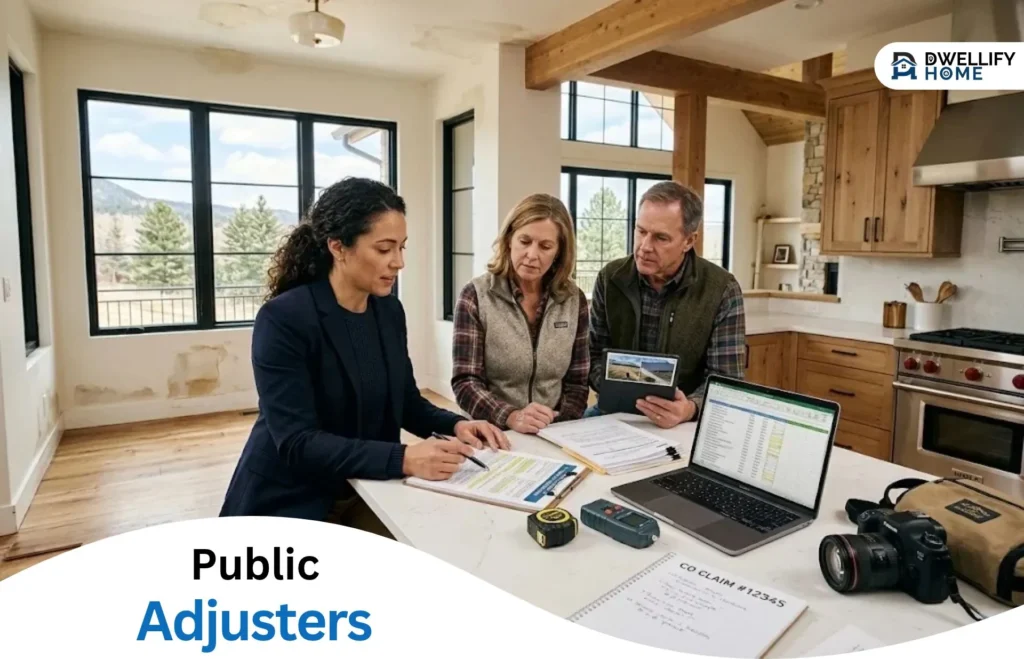
A detailed assessment typically involves:
- Inspecting affected areas throughout the property.
- Photographing visible damage and recording relevant details.
- Identifying potential hidden damage that requires further investigation.
- Reviewing contractor estimates and repair documentation.
- Preparing an organized inventory of damaged materials and property.
This documentation gives homeowners a clearer picture of the actual loss and helps support their claim during discussions with the insurance company.
3. Preparing Accurate and Comprehensive Insurance Claims
Preparing an insurance claim involves gathering multiple pieces of information and presenting them in a format that supports the requested compensation. Missing documents, incomplete repair estimates, or unclear descriptions can complicate the process.
Public adjusters help organize the information needed to establish the value of a property loss. Depending on the situation, this may include photographs, inspection reports, contractor estimates, receipts, inventories, and other relevant records.
For instance, imagine a homeowner in Colorado Springs experiencing significant water damage after a frozen pipe bursts during winter. The resulting damage may affect flooring, drywall, insulation, cabinets, and personal belongings.
Simply reporting the damaged pipe may not fully communicate the financial impact of the incident. A properly prepared claim should account for all relevant covered damage and necessary restoration work.
A public adjuster can help organize these details, review estimates, and present a well-supported claim that reflects the documented property loss.
4. Communicating and Negotiating With Insurance Companies
Insurance claims often involve ongoing communication between homeowners, insurance representatives, contractors, and other professionals. Responding to requests for additional information, reviewing estimates, and discussing settlement differences can consume considerable time.
For homeowners unfamiliar with the claims process, these conversations may be difficult, particularly when technical insurance terminology is involved.
Public adjusters serve as representatives of the policyholder during claim discussions. They can communicate with the insurance company, explain the documented damages, respond to questions, and negotiate when the proposed settlement does not adequately reflect the covered loss.
This representation can be particularly useful when an insurer’s initial assessment differs significantly from the homeowner’s repair estimates.
However, negotiations must remain grounded in the actual policy provisions and supporting evidence. A public adjuster cannot guarantee a particular settlement or require an insurer to pay for damages that are excluded from coverage.
5. Identifying Underestimated or Overlooked Damage
Property damage is not always limited to the areas that initially attract attention. A storm-damaged roof, for example, may also affect attic insulation, ceiling materials, ventilation, and interior finishes.
If an inspection focuses only on visible exterior damage, additional problems may go unnoticed.
This can become a concern when homeowners receive an insurance estimate that does not account for the full scope of necessary repairs.
Public adjusters review damage assessments and supporting documentation to identify potential gaps. They may recommend additional inspections or request clarification when certain repair items appear to have been overlooked.
Consider a hailstorm affecting a home in Fort Collins. The homeowner notices roof damage and files a claim. During a more detailed inspection, additional damage may be identified on gutters, window screens, exterior trim, and other components.
Identifying these issues early helps homeowners present a more complete account of their property loss. It also reduces the possibility of discovering significant repair requirements after restoration work has already started.
6. Helping Homeowners Navigate Weather-Related Claims
Colorado’s varied climate creates several challenges for residential properties. Different regions experience different combinations of weather-related risks, and homeowners may need to understand how these events affect their insurance coverage.
Hailstorms are a significant concern along the Front Range, where severe thunderstorms can damage roofs, windows, siding, and outdoor structures. Mountain communities may experience heavy snowfall, ice accumulation, and frozen plumbing. Wildfire exposure is another important consideration for properties near forested and dry vegetation areas.
Each type of loss requires careful documentation and a clear understanding of the applicable policy provisions.
For example, wildfire-related claims may involve structural damage, smoke contamination, debris removal, and damage to personal belongings. Water damage caused by frozen plumbing may require documenting both the initial incident and the resulting interior damage.
A public adjuster can help homeowners understand the documentation requirements and organize the claim according to the circumstances of the loss.
7. Reviewing Insurance Settlement Offers Before Acceptance
Receiving a settlement offer can feel like the final step in an insurance claim. However, homeowners should take time to understand how the proposed amount was calculated before accepting it.
An insurance estimate may include specific repair quantities, material costs, labor allowances, depreciation, and deductible adjustments. If certain items are missing or underestimated, the settlement may not adequately address the documented damage.
A public adjuster can review the proposed estimate against the property’s actual condition, contractor assessments, and applicable policy coverage.
For example, a homeowner may receive an estimate for replacing damaged roofing materials but later discover that the original scope does not account for necessary flashing replacement or other related repairs. Reviewing the estimate carefully can help identify these discrepancies.
Homeowners should also understand the distinction between actual cash value and replacement cost coverage. Depending on the policy, depreciation may initially be deducted, with additional payment potentially available after qualifying repairs are completed and documented.
Careful settlement review helps property owners make more informed decisions before agreeing to the proposed amount.
8. Reducing the Administrative Burden During Recovery
Recovering from significant property damage involves much more than filing an insurance claim. Homeowners may need to arrange temporary accommodation, coordinate contractors, purchase replacement materials, protect undamaged belongings, and manage family responsibilities.
Handling every insurance-related task independently can add unnecessary pressure during an already stressful period.
Public adjusters can take responsibility for many claim-related administrative activities, including preparing documentation, organizing estimates, communicating with insurers, and following up on outstanding questions.
This support allows homeowners to dedicate more attention to restoring their properties and returning to their normal routines.
It is important to remember that homeowners still have responsibilities throughout the process. They should maintain copies of relevant documents, respond to reasonable information requests, protect their property from further damage, and review important decisions before proceeding.
9. Knowing When to Consider Hiring a Public Adjuster
Not every insurance claim requires professional representation. A minor incident with straightforward damage and an uncomplicated settlement may be manageable without additional assistance.
However, professional support may be worth considering when:
- The property has suffered extensive structural or water damage.
- The insurance company’s estimate appears significantly lower than repair estimates.
- Important damage may have been overlooked.
- The claim involves complicated policy provisions.
- Communication with the insurance company has become difficult.
- The insurer has denied part or all of the claim and the homeowner believes the decision deserves further review.
Before hiring a public adjuster, homeowners should verify the professional’s licensing status in Colorado, review their experience, understand their fee structure, and carefully read the representation agreement.
They should also ask about potential additional expenses, cancellation terms, and how the adjuster will communicate throughout the claim process.
Choosing a qualified professional with a transparent approach can make the experience more manageable.
Protecting Your Home and Your Financial Interests
Property damage can disrupt everyday life, but navigating the insurance process does not have to become another source of uncertainty. Understanding policy coverage, documenting losses thoroughly, reviewing settlement offers, and maintaining clear communication are all important steps toward a successful recovery.
For Colorado homeowners, working with a public adjuster can provide valuable assistance when a claim becomes complicated or the extent of the damage is difficult to establish. The right professional guidance helps property owners understand their options, present stronger documentation, and make informed decisions throughout the claims process.
Ultimately, being proactive and understanding your insurance rights can make a meaningful difference when unexpected property damage occurs.
At Dwellifyhome.com, we believe in maintaining transparency about our commercial partnerships. Some links in this article may be affiliate or sponsored links, and we may receive compensation through qualifying transactions or promotional collaborations.