A well-organized home rarely starts with matching baskets or a full weekend of sorting. It usually starts with one small change that makes the day feel easier. In real homes, the best systems are the ones people can actually keep up with. They don’t look complicated, and they don’t take much thinking once they’re in place.
That’s why the most useful organizing methods are usually the simplest ones. A few practical shifts can cut down on visual clutter, save time, and make everyday routines run more smoothly without turning your house into a project.
Snippet-Ready Definition:
Easy home organization tips are simple ways to sort, store, and manage household items so daily routines feel less cluttered, more efficient, and easier to maintain.Our Mission:
Dwellify Home helps homeowners make practical, stylish, and informed décor and home organization decisions.
Why Easy Home Organization Tips Work in Real Life
Complicated systems often fall apart fast. They look good at first, but the moment life gets busy, things end up back on the counter, stuffed in a drawer, or piled on a chair.
Simple systems hold up better because they fit normal habits. A basket by the entryway for keys and mail works because it’s easy. A shelf for lunch containers near the fridge works because it makes sense. Good organization isn’t about making a home look untouched. It’s about making it easier to live in.
It also helps reduce the little frustrations that build up during the week. You spend less time hunting for things, less time cleaning around clutter, and less energy trying to reset a room that never had a working system in the first place.
How to Start Organizing a Messy House Without Getting Overwhelmed
The biggest mistake people make is trying to tackle everything at once. That usually leads to half-finished piles and even more stress than before.
Start with one small area that affects your day the most. That might be the kitchen counter, the bathroom drawer you open every morning, or the entryway where bags and shoes pile up. Pick one space you can finish in one session.
The goal at the beginning isn’t to organize the whole house. It’s to create momentum. Once one space feels better and stays better, the next one gets easier.
Tip 1: Declutter Before You Organize
It’s hard to organize too much stuff. No container, bin, or shelf will fix that.
Before setting up any system, remove what you don’t use, need, or even like having around. Expired products, duplicate tools, broken items, old paperwork, and random extras all make organizing harder than it needs to be.
A good rule is this: if an item makes storage more difficult but doesn’t serve your current life, it probably shouldn’t take up prime space in your home. Decluttering first gives you a much clearer picture of what actually needs a home.
Tip 2: Group Items by Category, Not Just by Room
One of the easiest home organization tips to maintain is grouping similar things together. It sounds basic, but it solves a lot of everyday mess.
Instead of storing items wherever they fit, organize by category. Keep all batteries together. Put gift wrap in one place. Store cleaning supplies by type. Gather school papers, chargers, light bulbs, and spare toiletries into their own clear groups.
This is where a simple home organization category list helps. Think in terms of daily essentials, food storage, cleaning supplies, paperwork, seasonal items, and backup stock. Once categories are clear, it’s much easier to see what you have and where it belongs.
Tip 3: Give Everything a Clear and Practical Home
A home stays organized when items return to the same place without much effort. That only happens when their storage spot makes sense.
Keep things close to where they’re used. Mugs near the coffee station. Trash bags under the sink. Sunscreen near the door if your family uses it before heading out. The more natural the placement, the more likely the system will stick.
This is also where people often make things harder than necessary. Items that are used every day shouldn’t be tucked into hard-to-reach bins or high shelves. Save those spaces for seasonal or backup items.
Tip 4: Use Containers, Baskets, and Labels Only Where They Help
Storage products can help, but only when they solve a real problem. Buying too many containers too early often creates more clutter, not less.
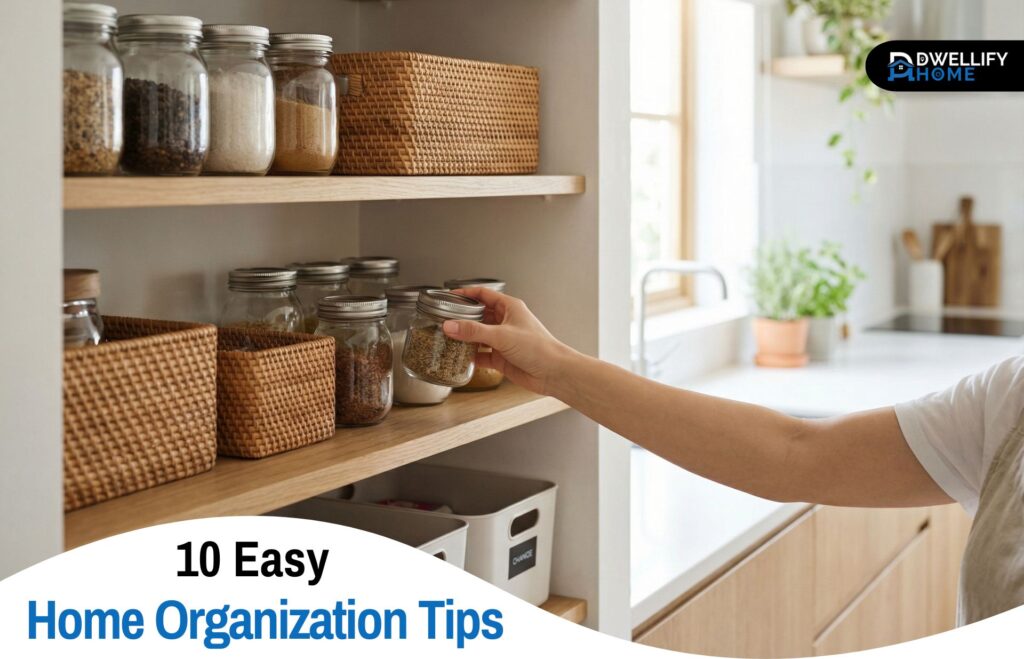
Use bins and baskets to keep categories contained, especially in places where items tend to spread out, like pantries, bathroom cabinets, and linen closets. Clear containers work well when you need to see what’s inside quickly. Open bins are often better for items used every day because they’re easier to maintain.
Labels are helpful when multiple people share the space or when categories aren’t obvious. They’re especially useful for pantry shelves, kids’ items, cleaning supplies, and storage zones in shared areas. But not every basket needs a label. Sometimes the simplest setup is the one that works best.
Tip 5: Make the Most of Vertical and Hidden Storage Space
A lot of clutter problems come from ignoring the space above, below, behind, and inside what you already have.
Vertical storage is one of the most practical home organization ideas for small spaces. Add hooks inside cabinet doors, use shelf risers in kitchen cabinets, hang organizers on closet doors, and make use of wall space in laundry rooms or entryways.
Under-bed storage, the backs of doors, high closet shelves, and narrow gaps beside appliances can all become useful spots when used carefully. The key is not to turn hidden storage into forgotten storage. Keep it reserved for things you use occasionally, not daily essentials.
Tip 6: Create Easy Room-by-Room Organization Shortcuts
Every room has a few trouble spots. You don’t need a full makeover. You just need one or two smart fixes.
In the kitchen, focus on counters, food containers, and pantry items. Keep the things you use most within easy reach and move rarely used appliances out of prime space.
In the bathroom, under-sink storage and drawers usually make the biggest difference. Group products by use, not brand or size.
In the entryway, create a landing spot for shoes, keys, bags, and mail. Even one bench, tray, or basket can stop clutter from spreading through the house.
Bedrooms and closets also respond well to simple resets. Keep surfaces mostly clear, limit overflow storage, and make laundry easy to sort and put away.
Tip 7: Use Easy Home Organization Hacks That Save Time
The best home organization hacks are the ones that remove friction from daily routines.
A tray can turn a messy bathroom counter into one contained zone. A lazy Susan can make deep cabinets easier to use. Drawer dividers stop small items from mixing together. Clear pouches or zip bags can keep chargers, travel items, or craft supplies from becoming a pile.
Repurposing what you already have often works just as well as buying something new. Small boxes, jars, sturdy bins, and shallow baskets can all help create order without much cost.
Tip 8: Set Up a Simple Daily and Weekly Reset Routine
Organization isn’t a one-time job. What keeps a home manageable is a short routine that prevents clutter from building back up.
A five-minute evening reset can do a lot. Put dishes away, return items to their spots, clear one main surface, and reset the entryway. That small habit changes how the next day starts.
A weekly reset helps catch what daily routines miss. Check the fridge, gather loose papers, empty the car, return misplaced items, and deal with donation pieces before they sit around too long.
This is often the difference between a home that looks organized once and a home that stays that way.
Tip 9: Organize Your Home Like a Professional
Professional-looking organization usually comes down to three things: visibility, accessibility, and consistency.
You want to be able to see what you have, reach what you use, and return items to the same place without thinking too much about it. That’s really the foundation of how to organize your home like a professional.
Another detail that gets overlooked is making systems easy for everyone in the household. A neat setup that only one person understands won’t last. Labels should be clear, containers should be easy to use, and the storage plan should make sense to the people living there.
Tip 10: Keep Your Organization System Realistic for Your Lifestyle
This matters more than people think. A home with kids, roommates, a small kitchen, or a busy schedule needs practical systems, not ideal ones.
That might mean using open baskets instead of folded drawer inserts. It might mean keeping snacks low for children or putting a laundry basket exactly where clothes usually land. Realistic organization follows actual habits first, then improves them.
That’s also why organization ideas for students or shared homes need to stay simple. Limited space and shared routines call for categories, labels, and low-maintenance storage, not complicated setups that fall apart after a week.
Key Benefits
- Reduces daily clutter without complicated systems
- Makes it easier to find and put away items
- Helps small spaces feel calmer and more usable
- Saves time during everyday routines
- Creates habits that are easier to maintain long term
Common Home Organization Mistakes to Avoid
A few mistakes show up again and again.
Buying storage before decluttering is a big one. So is creating too many categories too early. Another common problem is organizing for appearance instead of use. A system may look tidy, but if it’s awkward to keep up with, it won’t last.
Trying to do too much at once also leads to burnout. One drawer done properly is more helpful than three rooms half-finished.
FAQs
What is the 5 5 5 rule for decluttering?
The 5 5 5 rule is a simple way to make quick progress: put away 5 items, throw away 5 items, and donate 5 items. It works well when a room feels overwhelming.
What are some simple home organization tips?
Start small, declutter before buying storage, group similar items together, give everything a clear home, and use a short daily reset to keep clutter from building back up.
What is the 10-10-10 rule for decluttering?
The 10-10-10 rule usually means finding 10 items to keep in place, 10 to donate, and 10 to toss or recycle. It’s a practical way to make decisions faster.
What is the 12-12-12 rule for decluttering?
The 12-12-12 rule means choosing 12 items to throw away, 12 to donate, and 12 to return to their proper place. It’s useful for quick whole-room resets.
How do you start organizing a messy house without getting overwhelmed?
Start with one small area you use every day, such as a counter, drawer, or entryway. Finishing one space first builds momentum and makes the next step easier.
How to Make Home Organization Last
Lasting organization comes from habits, not motivation. Review problem areas regularly. Keep a donation bag somewhere easy to access. Notice where clutter naturally collects and fix the cause, not just the symptom.
A pile of shoes by the door usually means the house needs a shoe solution there. Paper clutter on the counter often means there’s no clear place for incoming mail. Small patterns tell you what needs adjusting.
Easy home organization tips work best when they match real life. Start small, make things easier to put away, and build systems you’ll still want to use on a busy Tuesday. That’s what makes an organized home feel calmer, more useful, and much easier to keep up with.
Disclaimer:
Content is for general informational purposes and should be adapted to your space, routine, and household needs.

I’m Bilal Hassan, the founder of Dwellify Home. With 6 years of practical experience in home remodeling, interior design, and décor consulting, I help people transform their spaces with simple, effective, and affordable ideas. I specialize in offering real-world tips, step-by-step guides, and product recommendations that make home improvement easier and more enjoyable. My mission is to empower homeowners and renters to create functional, beautiful spaces—one thoughtful update at a time.