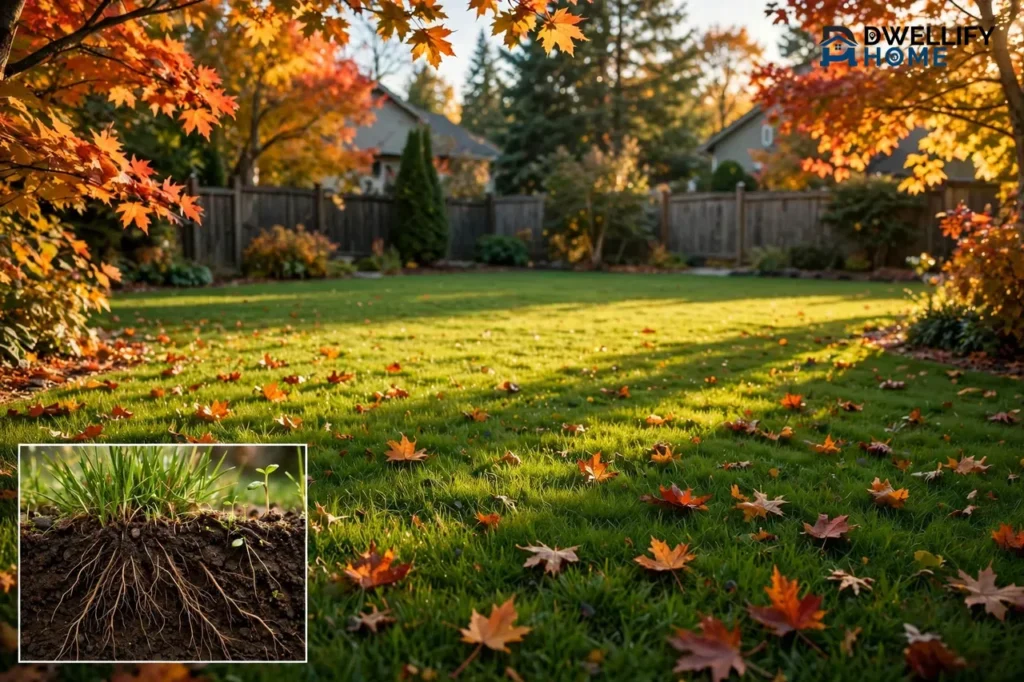
Fall lawn care sets up next spring’s lawn. For cool-season grass, overseed between late August and mid-October, because new grass needs 4 to 8 weeks to root before the first hard frost, according to LawnStarter.
Fall is the season when your lawn heals from summer heat and builds the roots it needs to survive winter. Cool-season grass grows hard in fall, so this is the best time of year to feed it, thicken it, and fix thin spots. Warm-season grass winds down instead, so it needs a lighter touch and an earlier finish. This guide walks you through fall lawn care in the right order, for both grass types, so nothing you do undoes the step before it.
First, Know Your Grass Type
Every fall lawn care job depends on your grass type, so check this first. Cool-season grass grows in the North, the Midwest, and the Pacific Northwest. Warm-season grass grows in the South. If you live in the middle of the country, you may have either type, or a mix.
Cool-season grasses include Kentucky bluegrass, tall fescue, fine fescue, and perennial ryegrass. Fall is their best season. You can aerate, overseed, and fertilize them now, and they will thank you for it in spring.
Warm-season grasses include Bermuda, zoysia, St. Augustine, centipede, and bahiagrass. They slow down as days shorten and go dormant in winter. In fall you mostly mow, clear leaves, and stop feeding nitrogen early, so tender new growth does not get caught by frost.
Not sure which type you have? Look at when your lawn grows fastest. If it peaks in spring and fall, it is cool-season grass. If it peaks in summer heat, it is warm-season grass. Your local extension office can confirm it for free if you are still unsure.
The Fall Lawn Care Order That Works
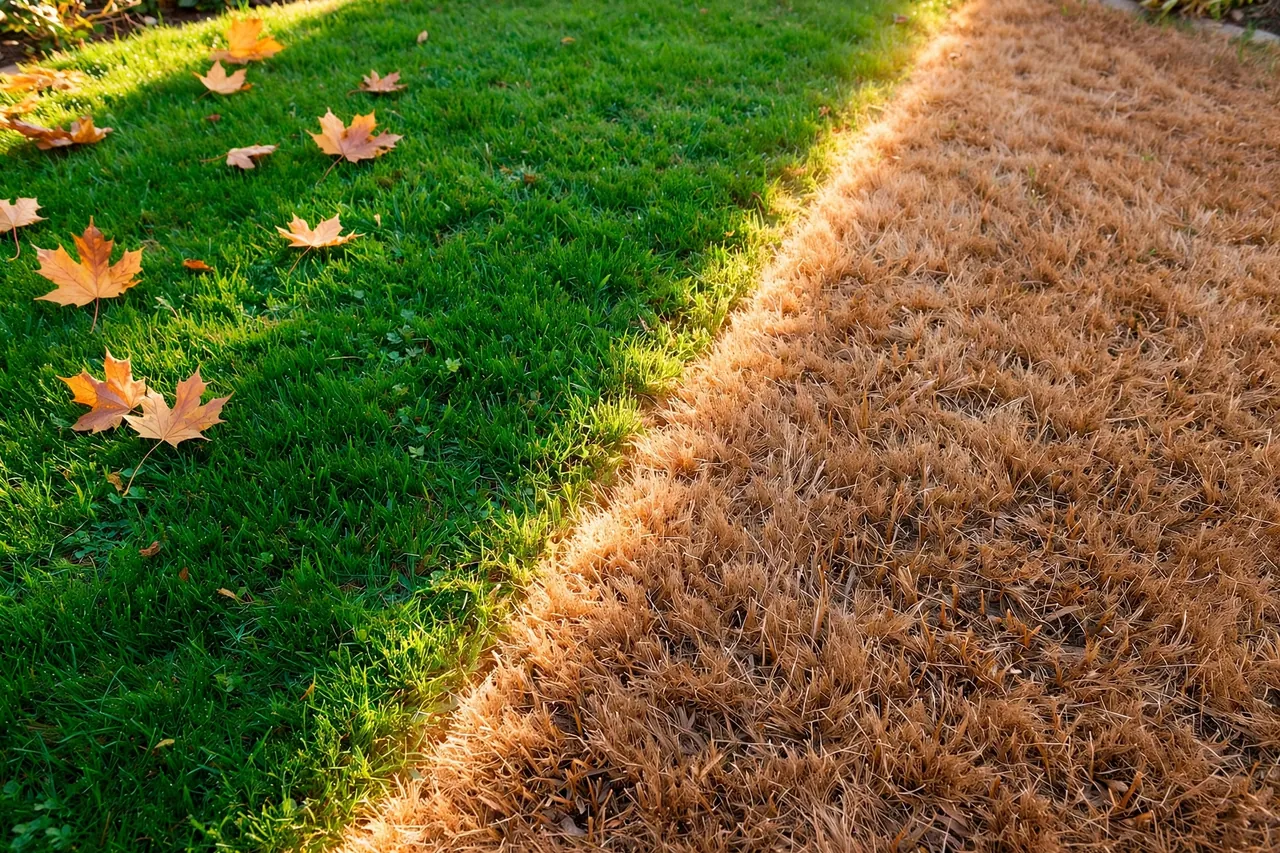
Order matters in fall. Do the jobs in the wrong order and one step can undo the last one. For example, weed killer can stop new seed from sprouting, so it must come before seeding, with enough wait time between them.
Work through the season in this order:
- Test your soil, so you feed only what the lawn needs.
- Control fall weeds, before you seed.
- Dethatch only if the thatch layer is thick.
- Core aerate the lawn.
- Overseed thin and bare spots right after aerating.
- Apply starter fertilizer at seeding time.
- Water new seed lightly and often until it sprouts.
- Keep leaves off the grass all fall.
- Apply a late-fall winterizer fertilizer.
- Do the final mow, then put your tools away for winter.
This order comes from the same sequence LawnStarter and Olivia’s Garden both use in their fall checklists, and it works because each step sets up the next one. Aeration opens the soil, seed falls into the holes, fertilizer feeds the new roots, and water keeps the seed alive.
Test Your Soil Before You Feed Anything
Test your soil before you buy fertilizer. A soil test tells you what your lawn actually needs, so you do not waste money feeding it the wrong thing. As Chelsea Morris of High-Class Grass told LawnStarter, skipping the test and applying amendments blindly is one of the biggest wastes she sees.
Collect samples from several spots across your lawn, about 4 inches deep for an established lawn, and mix them together. You can use a basic at-home soil test kit, or send the sample to a lab through your local Cooperative Extension office. Extension staff can also help you read the results and work out the right fertilizer rate for your grass type.
Lawns grow best in soil with a pH of about 6.0 to 7.0, according to Olivia’s Garden. If your soil is too acidic, lime raises the pH. If it is too alkaline, sulfur lowers it. Fall is a good time to apply lime because it works slowly over the winter.
Your test also shows nitrogen, phosphorus, and potassium levels. Use those numbers to pick your fertilizer. If potassium is low, pick a winterizer with a higher third number on the bag. If potassium is already fine, a standard fall fertilizer works just as well.
Aerate Compacted Soil
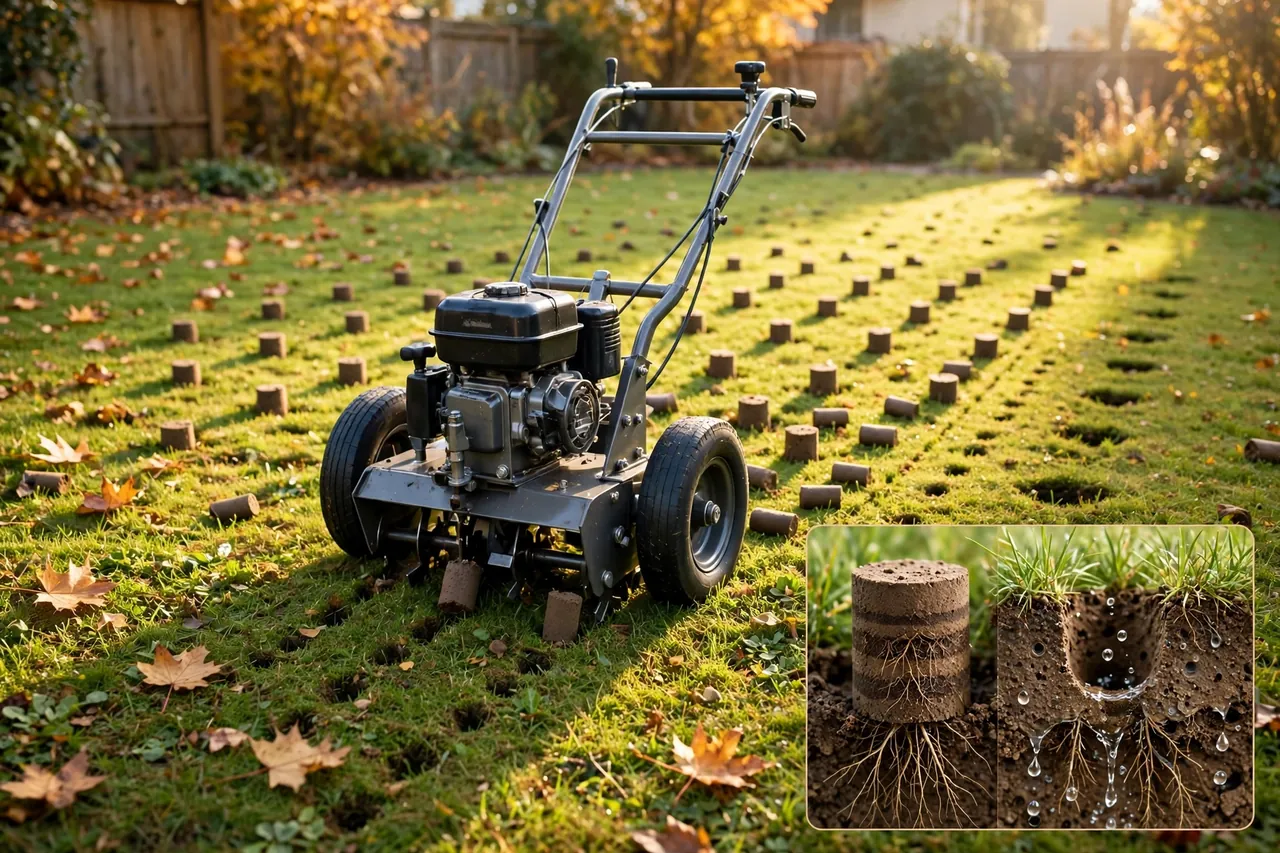
Aeration pokes holes in the lawn so air, water, and nutrients can reach the roots again. Compacted soil chokes grass, so the lawn thins out and dies back. Foot traffic, clay soil, and heavy use all pack the ground down over summer.
Try the screwdriver test first. Push a screwdriver into the ground. If it slides in easily to the handle, your soil is fine. If you meet strong resistance, it is time to aerate. Puddles that sit instead of soaking in are another clear sign.
Aerate cool-season lawns from September through mid-October, which is the window Lawn Love and LawnStarter both give. Aerate warm-season grass in late spring or early summer instead, not in fall, because it is heading into dormancy and cannot heal the holes.
Use a core aerator, which pulls small plugs of soil out with hollow tubes. Water the lawn the night before so the soil is moist but not soggy, and make two passes in different directions over the worst areas. Leave the plugs on the lawn. They break down within a couple of weeks and return nutrients to the soil as they decompose.
Rent a core aerator for a day if your lawn is large, or hire the job out if the ground is very hard. Aerate heavily used lawns every year, and moderate-traffic lawns every 2 to 3 years.
Overseed Thin and Bare Spots
Overseeding means spreading new grass seed over your existing lawn to thicken it and fill bare spots. Early fall is the single best seeding window of the year for cool-season grass. The soil is still warm, the air is cooler, and weeds are less pushy than in spring.
Time it by your first frost, not by the calendar. Aim to finish seeding at least 4 to 6 weeks before your first hard frost, so young grass has time to root, according to Olivia’s Garden. Lawn Love gives the same rule as 45 days before the first hard frost. Soil temperatures between about 50 and 65 degrees work well for cool-season seed.
Follow these steps to overseed:
- Mow the lawn a little shorter than usual, to about 2 inches, and clear away leaves, sticks, and debris. Seed must touch soil to sprout.
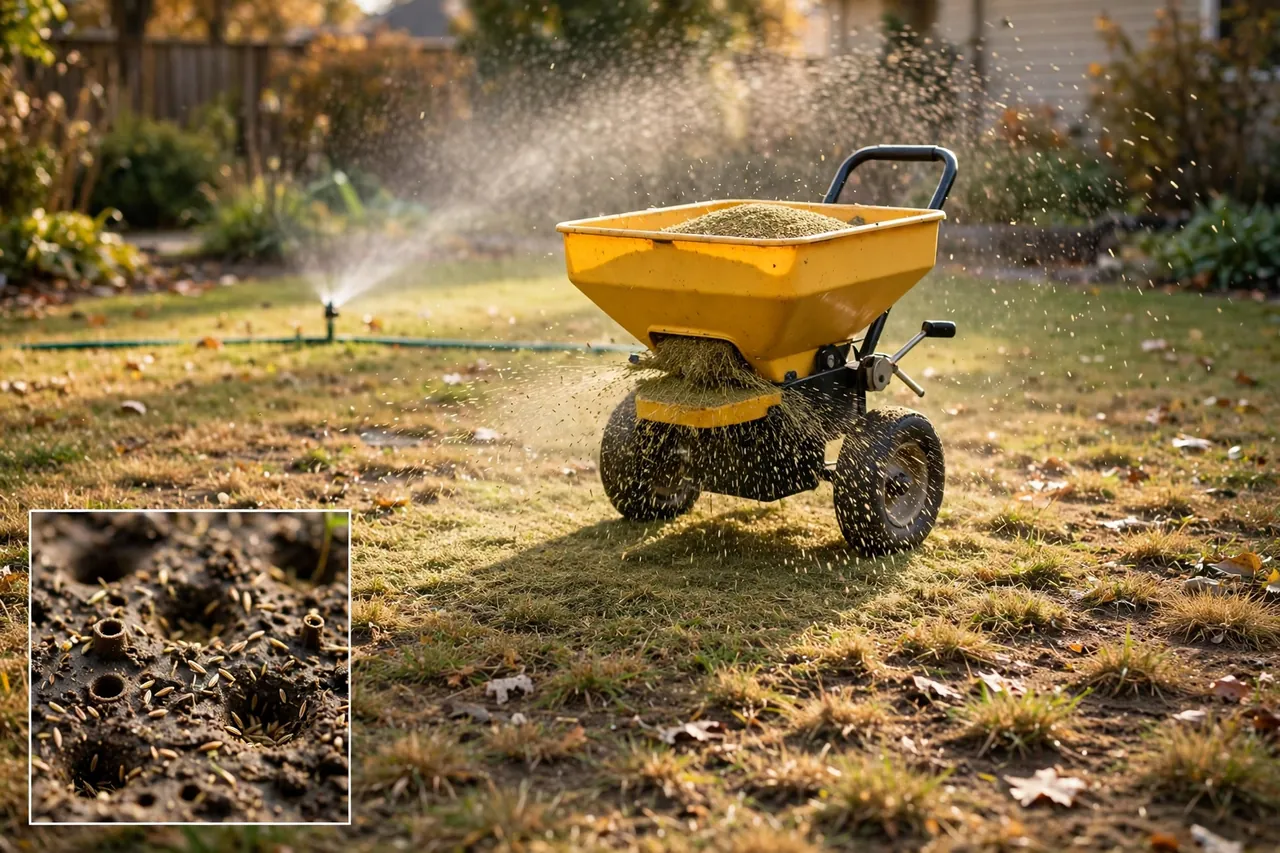
- Aerate first, then seed right away, so seed falls into the aeration holes.
- Match the seed to your grass type and your sun and shade. Use fresh seed labeled for lawns.
- Spread it evenly with a broadcast spreader. Walk one direction with half the seed, then cross at a right angle with the rest.
- Rake lightly so the seed settles into the soil.
- Water lightly once or twice a day until the seed sprouts. Do not let it dry out.
Seed sprouts at different speeds. Perennial ryegrass often sprouts in 5 to 10 days, tall fescue in about 1 to 2 weeks, and Kentucky bluegrass in 2 to 4 weeks, according to Olivia’s Garden. Keep the soil moist until seedlings appear, then water less often but more deeply.
Warm-season lawns should not be overseeded in fall, unless you are adding ryegrass for winter color. The soil is too cold for warm-season seed to sprout. If you missed the fall window, dormant seeding is an honest backup: spread seed in late fall once the soil is too cold for it to sprout, and it will wake up in spring.
Feed the Roots: Fall Fertilizing
Fall fertilizer feeds root growth, and roots are what carry a lawn through winter and into spring. The top of the grass slows down in fall, but the roots keep working, so food you put down now gets stored for green-up.
For cool-season grass, apply fall fertilizer between September and November, according to Lawn Love. The late-fall feeding, often called a winterizer, goes down in October or November, once top growth slows but before the ground freezes. Roots keep absorbing nutrients after the grass stops growing.
For warm-season grass, feed earlier: between August and mid-September, and no later than the end of September. If you have not fed by October, skip it entirely this year. Late nitrogen pushes tender new growth right before frost, and that growth dies back and weakens the lawn.
Pick the right product for the job:
- At seeding time, use a starter fertilizer. It is higher in phosphorus to help seedlings root. Some states restrict lawn phosphorus, so check local rules and let your soil test decide.
- In early to mid-fall, if you are not seeding, use a balanced lawn fertilizer with nitrogen. A common guideline is about 0.5 to 1 pound of actual nitrogen per 1,000 square feet, but always follow the product label.
- In late fall, use a winterizer fertilizer with a high ratio of nitrogen and potassium. Potassium helps roots harden off for winter.
Do not fertilize before a heavy rain, which can wash fertilizer off your lawn and into storm drains. Give the grass a light watering after feeding instead, so it soaks in. And never fertilize cool-season grass during drought stress, as turfgrass specialist Alec Kowalewski of Oregon State University warns. Stressed grass cannot use the food, and the salts can burn it.
Clear the Leaves Before They Smother the Grass
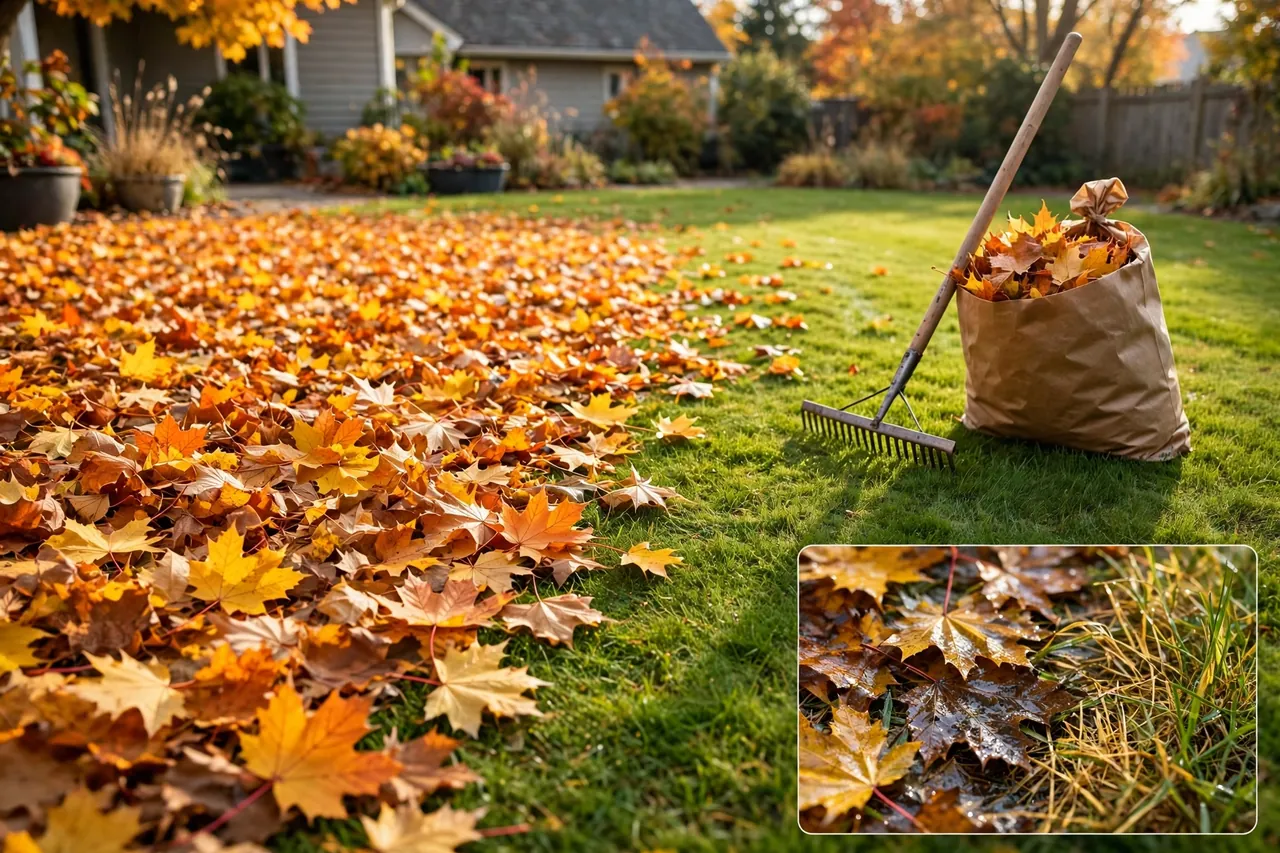
Leaves look harmless, but a thick blanket of them blocks light and air, traps moisture, and smothers the grass underneath. Wet leaves left all winter can kill patches and invite mold and fungus.
Deal with leaves from September to December, whenever the cover starts getting deep. The rule is simple: if you can still see grass through the chopped leaves, you are fine. If you see a mat of leaves, bag it.
- Thin layers: mow over them with a rotary mower. The shredded bits settle between the blades and feed the soil as they break down.
- Thick layers: rake or bag them. Use them for compost or as mulch in garden beds, where they do good instead of harm.
- Freshly seeded areas: keep leaves off completely. Leaf litter blocks the sun, air, and water that new seed needs to sprout.
Clear leaves every week or two through fall, not just once at the end. A weekly pass takes minutes. A month of buildup takes a weekend and risks the lawn underneath.
Keep Mowing Until Growth Stops
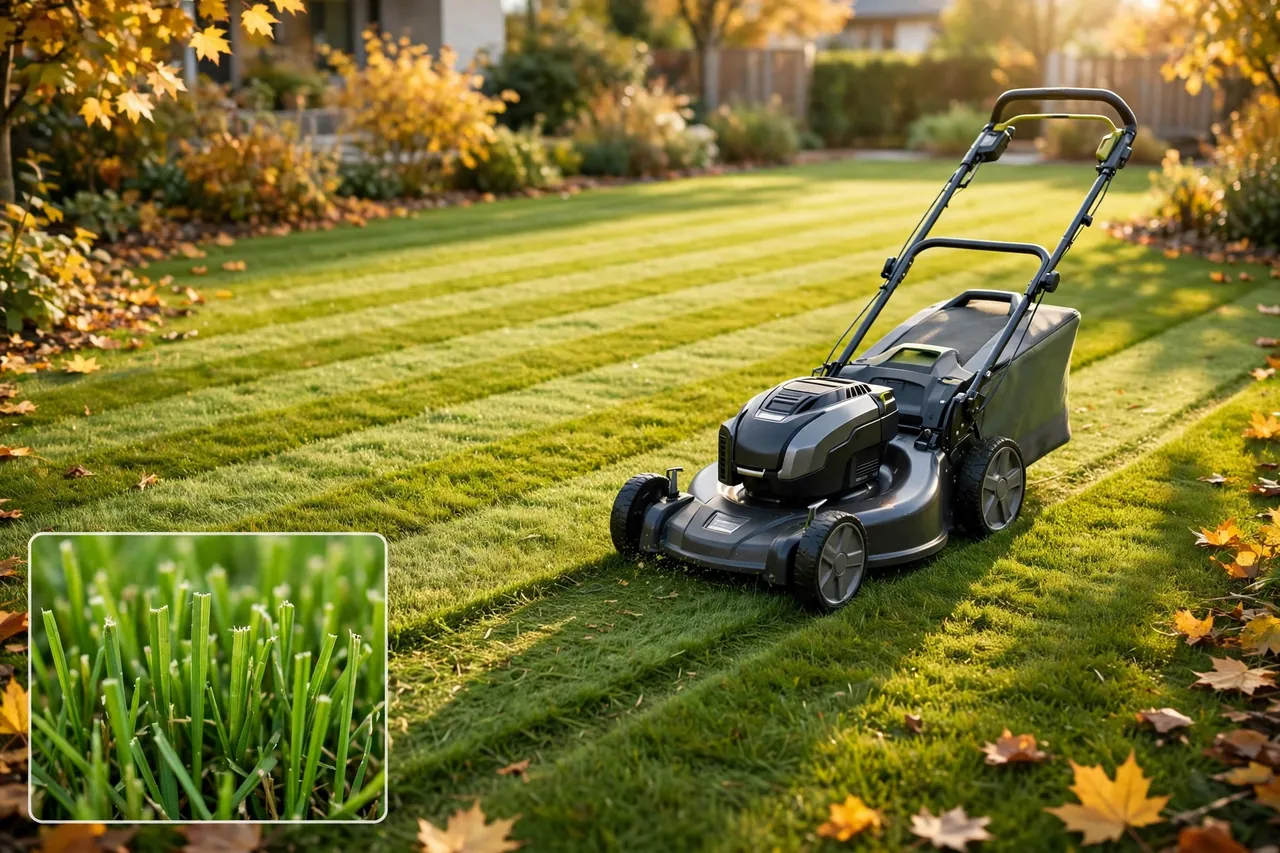
Keep mowing as long as the grass is growing. Fall is one of the highest-growth periods of the year for cool-season grass, so stopping too early leaves the lawn too long before winter.
Stop mowing cool-season lawns once growth stops, usually October or November, or when soil temperatures drop to about 40 degrees, according to Lawn Love. Warm-season grass tells you when it is done: it simply stops growing.
For the final cut, keep the grass around 2 to 3 inches for most grasses. LawnStarter gives 2 to 2.5 inches for cool-season grass. Long grass mats down under snow and traps moisture, which invites snow mold, the fungus that shows up as matted gray or pink circles when the snow melts. But do not scalp it either. Cutting too short stresses the grass, exposes the crown at the base of the plant, and raises the risk of winter kill.
Lower the height gradually over the last few cuts, and never remove more than one-third of the blade at a time. Mow new seedlings when they reach about 3 to 3.5 inches, with a sharp blade, so you cut cleanly instead of tearing young grass.
Water Less, but Do Not Quit Too Early
Watering needs drop in fall, but the grass still needs moisture to build a strong root system for winter. The mistake is stopping too soon, or watering right up to the freeze.
For cool-season grass, stop regular watering once daytime highs stay below 40 degrees and nights fall into the low 30s, according to Lawn Love. For warm-season grass, stop once daytime highs drop below 50 degrees. Cut back from 2 to 3 days a week to once a week at most as growth slows, and let rainfall take over where it can.
New seed is the exception. Until seed sprouts, water lightly once or twice a day so the top inch of soil stays damp. After seedlings appear, work up to about 1 inch of water per week, including rain. Established grass needs about 1 inch per week in fall.
Stop watering before the ground freezes. Water on frozen ground turns to ice, which expands and damages roots, blocks the soil from absorbing moisture, and leaves you with mud once it melts. Water deeply and less often while the ground is still open, and water in the morning so the grass dries before night.
Treat Fall Weeds While Roots Pull Down
Fall is the best time of year to treat perennial weeds like dandelions and clover. In fall the plant pulls nutrients down into its roots to store them for winter, and weed killer travels down with those nutrients into the root system. In spring the energy moves upward instead, so the same spray works less well.
For fall weed control on both cool-season and warm-season grass, apply pre-emergent herbicides from late August to October, or whenever soil temperatures fall below 70 degrees, according to Lawn Love. Soil temperature matters here, not air temperature. That timing stops next spring’s weeds before they sprout.
For weeds you can already see, spot-treat broadleaf weeds with a post-emergent product, or pull them by hand after rain, when the soil is soft. A hoe works for seedlings and a dandelion puller works for taproots. Skip the crabgrass treatment in fall. Crabgrass does not sprout until late spring or early summer, so save that job for mid-March to May, when soil temperatures hit 50 to 55 degrees.
Read every product label before you spray or spread, and check the wait time before seeding. Most weed killers and crabgrass preventers can stop grass seed from sprouting, so weed control must come first, with the label’s wait time between the two jobs. If you would rather skip chemicals entirely, hand-pulling and hoeing work well in fall too.
Dethatch Only If the Layer Is Thick
Thatch is the layer of dead stems and roots between the grass blades and the soil. A little thatch is fine. It insulates the soil and holds moisture. Too much of it blocks water, fertilizer, and seed, and gives pests and disease a place to hide.
Check it with a trowel or spade. Cut out a small plug of grass and soil and measure the brown, spongy layer above the soil. If it is more than half an inch thick, it is time to dethatch. If it is thinner, leave it alone.
Dethatch cool-season grass between late August and early September, while it is still growing hard enough to recover before winter. Dethatch warm-season grass in spring instead. Use a dethatching rake for a small lawn or a power rake for a larger one, and mark any sprinkler heads, water lines, and buried utility lines before you run a power rake. Dethatch before you aerate, so the aerator works on clean soil.
Put the Yard to Bed for Winter
Once the last jobs are done, put the yard to bed properly. A few small steps now save expensive repairs in spring.
If you have a sprinkler system, drain it before the first hard freeze. Water left in the lines freezes, expands, and cracks pipes, valves, and sprinkler heads. Drain hoses and lines, shut off the water, and store hoses out of the cold.
Clean and store your tools before winter. Empty the gas from the mower or charge the batteries, sharpen the blades, and clean the deck. Dull blades tear grass instead of cutting it, and a dirty deck holds moisture and rusts over winter.
Stay off frosty grass. Walking on frozen blades can damage them and leave footprints that show up in spring. Keep foot traffic light on new seed for 6 to 8 weeks while it roots.
Watch for wet spots that never dry. If part of your lawn stays soggy all fall, the problem may be drainage, not the season. Our guide to fixing a soggy yard walks through the drainage fixes that stop the puddles from coming back.
Fall Lawn Care Month by Month
Use this table to plan the season at a glance. Count backward from your local first-frost date, because the dates shift by region.
| Month | Cool-season lawns | Warm-season lawns |
|---|---|---|
| September | Test soil, control weeds, dethatch, aerate, overseed, starter fertilizer | Finish feeding by mid-September, mow, clear leaves |
| October | Keep new seed moist, mow at normal height, clear leaves, winterizer feeding | Stop nitrogen, mow until growth stops, clear leaves |
| November | Final mow, last watering before freeze, clean and store tools | Final mow, drain sprinklers, stay off frosty grass |
If you start late, do not try to cram everything into one weekend. The jobs that matter most are overseeding before the window closes and the late-fall feeding. Leaves and the final mow can follow. If you miss the seeding window entirely, wait for spring or try dormant seeding in late fall.
Mistakes That Undo a Good Fall
Most fall lawn failures come from a few avoidable mistakes. Check yourself against this list before the season ends:
- Seeding too late, so young grass has no time to root before frost.
- Skipping the soil test and feeding blind.
- Spreading weed killer and seed on the same day, so the seed never sprouts.
- Letting new seed dry out, even for one hot, dry day.
- Mowing too short for the final cut, or stopping mowing too early.
- Fertilizing warm-season grass late, which pushes growth right before frost.
- Leaving a thick mat of leaves on the lawn all winter.
- Watering after the ground freezes, which damages roots.
Get the order right, time the big jobs by soil temperature and your first frost, and the lawn will do most of the work itself over winter.
A Short Word on Safety
Always read the label on any fertilizer, pre-emergent, or weed killer before you use it, and follow its directions for rates, timing, and safety. Keep children and pets off a treated lawn until it is dry or for as long as the label says. Wear gloves when you spread or spray, and store products where children cannot reach them. If you are unsure about a product, ask your local extension office. That advice is free.
Related Guides
How to Fix a Soggy Yard: Drainage Fixes That Work · Reseeding Lawn: How to Start Over and Grow Thick New Grass · Best Time for Aerating Lawn · How to Put Fertilizer on Grass · Lawn Care Tips for Spring
When spring arrives, the work flips: cleanup, pre-emergent, and the first mow take over from fall feeding and overseeding.
Frequently Asked Questions
When should I aerate and overseed my lawn?
For cool-season lawns, aerate and overseed from late summer to mid-fall, ideally at least 4 to 6 weeks before your first hard frost. In most northern areas that means late August through September. Aerate first, then seed right away so the seed lands in the holes.
When should I fertilize my lawn in fall?
Apply starter fertilizer when you seed, and a winterizer fertilizer in late fall, about October to November, once top growth slows but before the ground freezes. Follow the label rate. For warm-season grass, feed earlier, by mid-September, and skip it if October has already arrived.
Is October Too Late to Fertilize My Lawn?
For cool-season grasses like Kentucky bluegrass or tall fescue, October is actually ideal. The winterizer window runs through November. For warm-season grasses like Bermudagrass or Zoysiagrass, October is too late, because late nitrogen pushes tender growth right before frost.
Should I remove the soil plugs left on the lawn after core aeration?
No, leave them in place. They break down within a couple of weeks and return nutrients and organic matter to the soil as they decompose. Mowing over them once they dry out helps them crumble faster.
Can I put down weed killer and grass seed at the same time?
Usually not. Most weed killers and crabgrass preventers can stop grass seed from sprouting. Read the product label for the wait time before you seed, and do the weed control first. Hand-pulling weeds is the safe option if you want to seed right away.
Can I use weed-and-feed products in the fall?
Usually it is not the best call. The timing of your pre-emergent and your last fertilizer application may not line up, and it is hard to match the right fertilizer and herbicide rates in a single product. Use the two products separately, each at its own right time.
Fall lawn care is the work that makes next year easy. Feed the roots, thicken the thin spots, clear the leaves, and make the last cut count. Come spring, the lawn will green up early and thick, and the season will start with a lawn that is already ahead.