The best ideas for a sloped yard match the fix to how steep the slope is. Slopes under 33 percent can be held with plants, mulch, or rock alone, while slopes over 50 percent need retaining walls or terracing, according to Lawn Love’s slope guide. This guide walks through the ideas that work at each grade, from simple groundcovers to terraced garden rooms, so you can pick the ones that fit your slope, your budget, and how much upkeep you want.
A slope feels like a problem at first. Grass slides, mulch washes away after rain, and mowing feels unsafe. But a slope also gives you something a flat yard never can: height, layers, and views. The trick is to stop fighting the hill and start working with it. Slow the water, hold the soil, and give each level of the slope one clear job. If standing water is your biggest problem, start with our yard drainage solutions guide before you pick plants or walls.
Start by Reading Your Slope
Every good sloped yard starts with the same step: measure the slope before you buy a single plant or stone. The grade decides which ideas will work and which ones will fail. A gentle slope needs planting. A steep slope needs structure. Guessing wrong wastes money and leaves you with the same eroding hill a year later.
How to Measure Slope Grade
Use the stake method. Drive a stake at the top of the slope and another at the bottom, then stretch a level string between them. Measure the horizontal run and the vertical drop, then divide the drop by the run and multiply by 100. A 1-foot drop over 10 feet of run is a 10 percent slope. Lawn Love’s guide groups slopes into three bands: under 33 percent, 33 to 50 percent, and over 50 percent. Mile High Lifescape uses a finer ladder, in its hillside landscaping guide: under 15 percent is gentle and easy to plant, 15 to 33 percent is moderate and suits groundcovers or low walls, and above 33 percent usually needs terraces, walls, or professional drainage design.
Write your number down and keep it with your plan. When a nursery or contractor asks how steep your yard is, that number answers the question in seconds. It also keeps you honest: a slope that looks mild from the porch often measures steeper than you expect.
Check Sun, Soil, and Water Flow
Walk the slope after a heavy rain before you plan anything. Watch where water runs, where it pools, and where soil has already washed away. The wettest line on the hill shows you where drainage matters most. Also note which way the slope faces. South-facing slopes get strong sun and dry out fast, so they suit drought-tolerant plants. North-facing slopes stay cooler and hold moisture, so they suit ferns, hostas, and other shade lovers. East- and west-facing slopes fall in between.
Check the soil too. Sandy soil washes away faster than clay, and poor, thin soil holds plants weakly. If the top of the slope is bare dirt, cover it soon. Bare soil on a slope loses ground with every storm. Lawn Love, citing USDA figures, reports that the United States loses 1.7 billion tons of topsoil every year, and slopes are among the biggest culprits. Even a temporary cover, like straw or an erosion-control blanket, protects the soil while permanent plants take root.
| Slope grade | Best first move | What to add next |
|---|---|---|
| Under 15 percent | Groundcovers, shrubs, and mulch | Paths and planting beds |
| 15 to 33 percent | Groundcovers plus low walls or rock | Terraces and steps |
| Over 33 percent | Terraces or retaining walls | Professional drainage design |
Terrace a Steep Slope Into Flat, Usable Levels
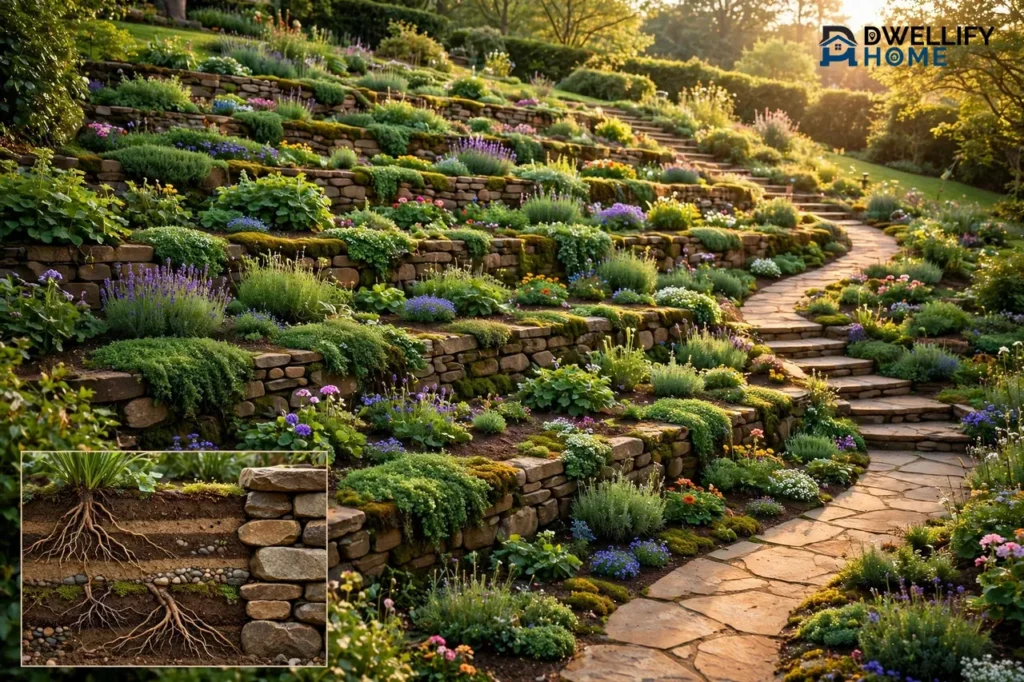
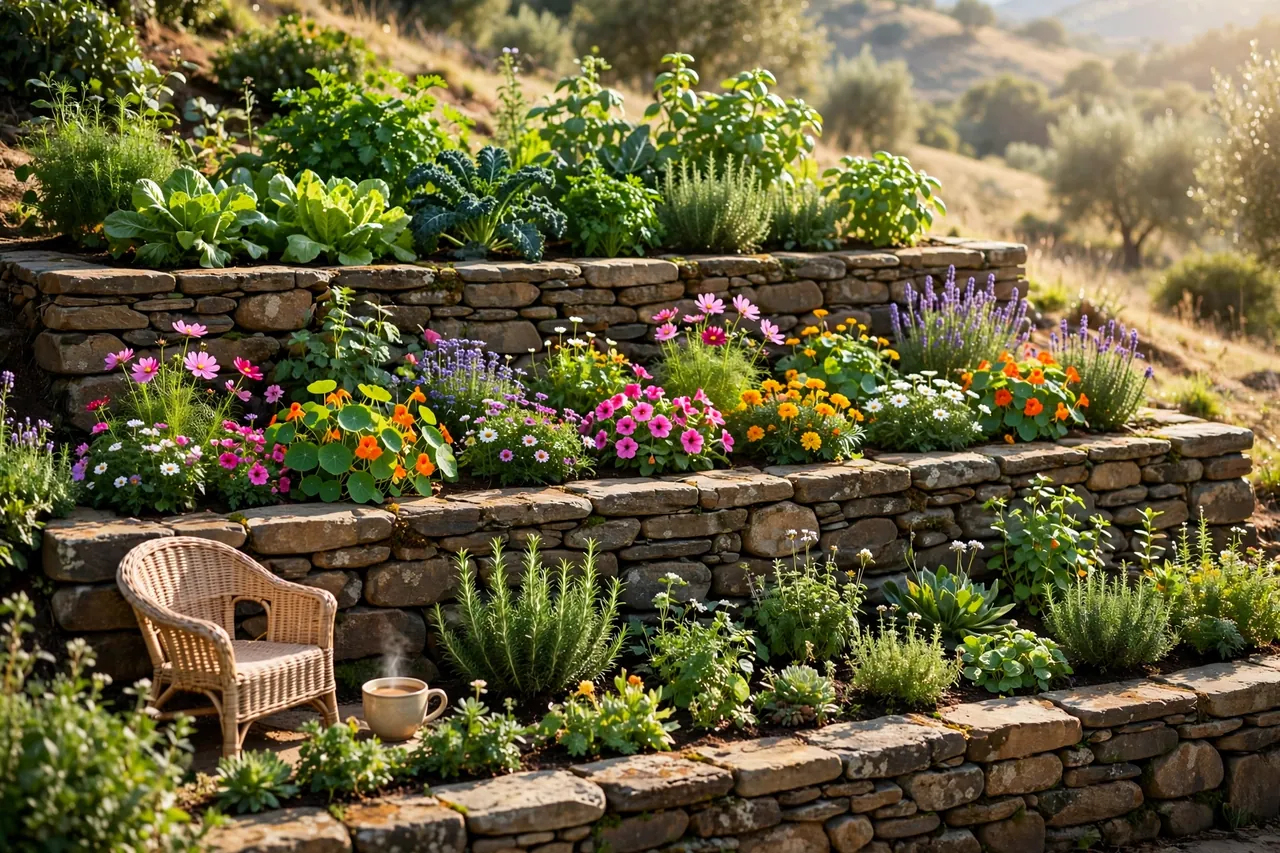
Terracing is the single most useful idea for a steep slope. You cut the hillside into a series of level platforms, and each platform gets held in place by a low retaining wall. One long, useless hill becomes three or four flat beds you can actually use: one for vegetables, one for flowers, one for a chair and a coffee cup.
Terraced gardens open up creative layouts, and Homes and Gardens’ sloped backyard ideas show how designers turn steep gardens into layered, usable spaces.
Short walls beat one tall wall almost every time. Two or three low walls share the load, look better, and cost less to fix if one ever shifts. Each terrace also catches its own rain instead of sending it all downhill at once. That alone slows erosion more than most people expect. Fill the flat beds with plants, and their roots lock the soil in place while the wall holds the shape.
Terraces work best when each level has one job. A dining terrace near the house, a planting terrace in the middle, and a wildflower terrace at the bottom gives the whole slope a clear purpose. Leave a wide step or a small landing between levels so you can move through the garden without climbing over beds. If you plan a vegetable garden on a slope, terraces are the natural home for it: each row gets full sun without the row above shading it, and water drains well instead of pooling around the roots.
Do not cut into the bottom of a slope to make a terrace. Removing soil from the toe of a hill takes away the part that holds the rest up, and that is one of the most common causes of slope failure. If your plan needs deep digging, a wall taller than 4 feet, or work near your foundation, bring in a licensed landscape contractor or engineer before you start.
Use Retaining Walls as Design Features, Not Just Structure
A retaining wall holds soil back, but it can also be the best-looking part of your yard. Natural stone brings texture and a sense of permanence. Dry-stacked stone, fitted together without mortar, lets water drain through the gaps, which takes pressure off the wall. Brick gives a clean, formal look that suits classic homes. Poured concrete pairs well with modern planting, like ornamental grasses and Japanese maples, for a sharp, architectural feel.
Think of a wall as furniture, not just engineering. A low wall doubles as extra seating around a patio. A wall with a wide, flat cap gives you a ledge for pots and lanterns. Built-in planters along the top soften the hard edge and spill flowers down the face. Our guide on how to build a retaining wall on a slope walks through the build itself, from the base to the drainage behind the wall.
Every wall needs drainage behind it. Water trapped behind a wall pushes it forward, no matter how good the stone looks. A gravel backfill and a drain pipe at the base carry that water away safely. A wall without drainage becomes a dam, and dams fail. Check your local rules too: many towns require a permit and an engineered design once a wall passes 4 feet tall, and the exact limit varies by area.
Plant Groundcovers and Shrubs That Hold the Soil
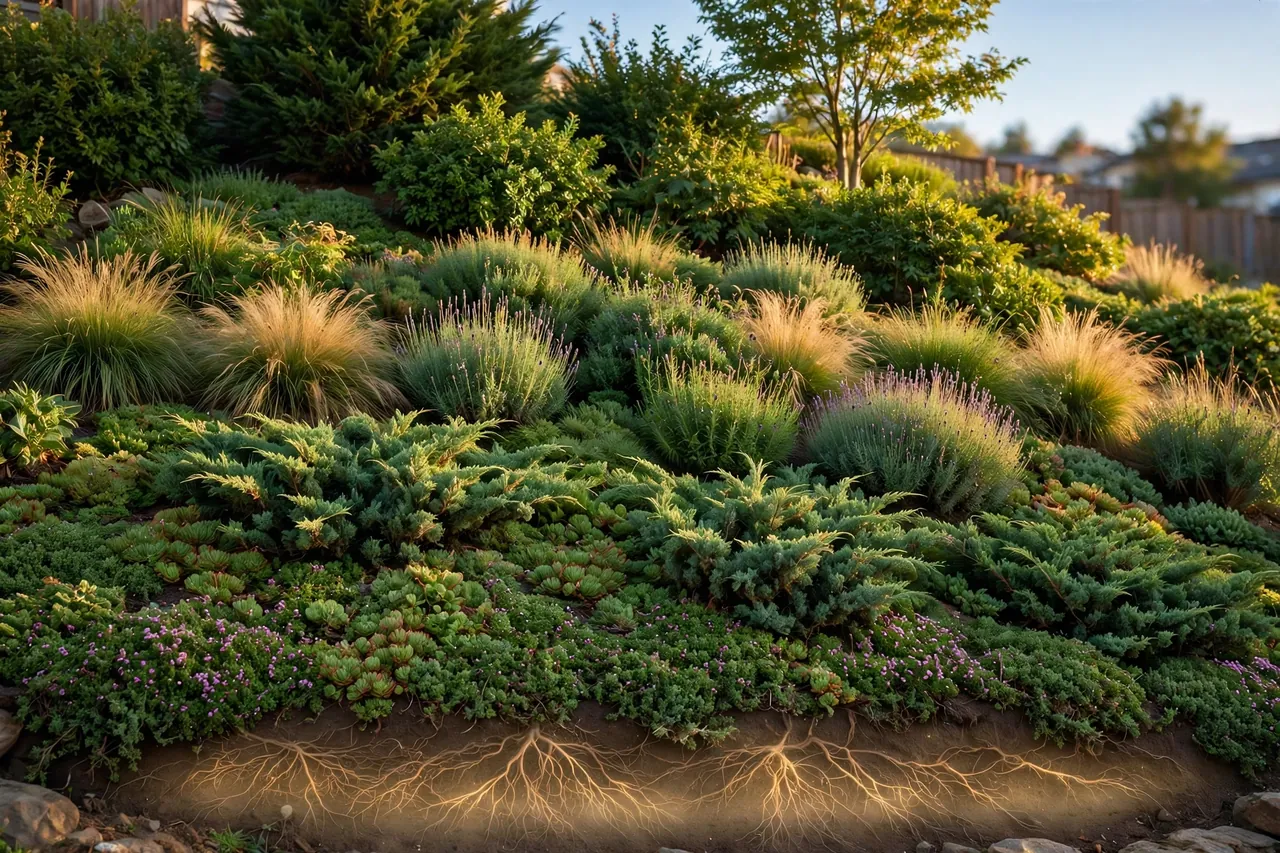
Plants are the cheapest long-term fix for a slope, and on gentle grades they often do the whole job. Roots knit the soil into a mat, leaves soften the impact of rain, and the plants return organic matter to the ground as they grow. The key is root depth, not leaf cover. Deep-rooted plants hold a bank. Shallow turf peels off a steep bank in the first heavy storm.
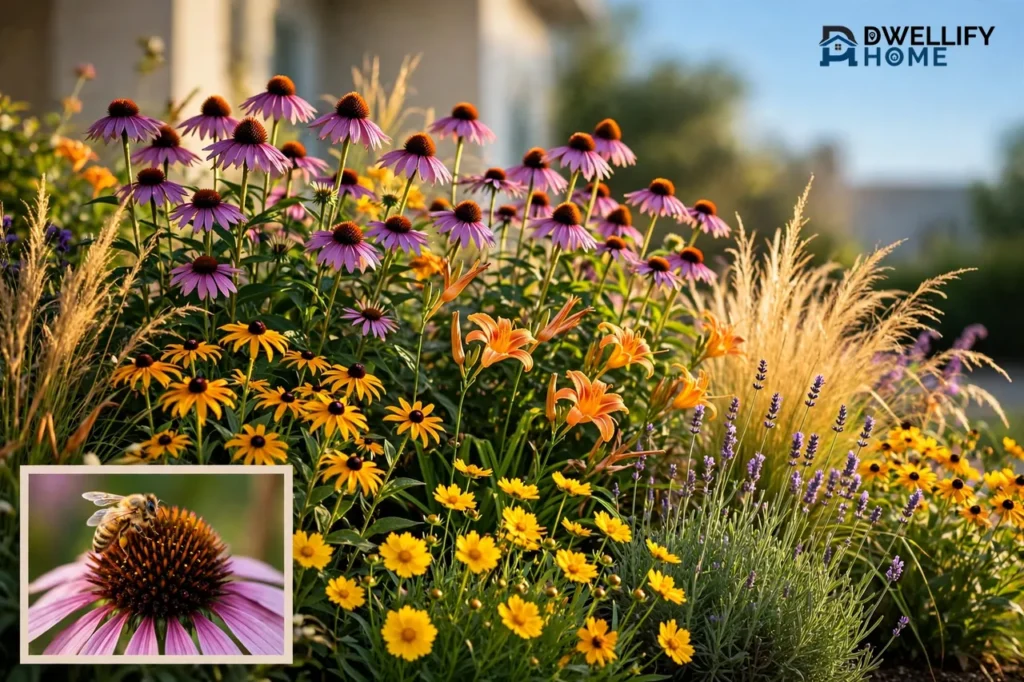
For sunny slopes, creeping juniper, sedum, and creeping thyme spread fast, hold soil well, and need little water once they settle in. For shady slopes, hostas, ferns, and native shrubs like mountain laurel do the same work in low light. Ornamental grasses work across a wide range of slopes because their deep, fibrous roots grip the soil from many angles at once. Native plants deserve first pick wherever they fit: they already suit your climate, they need less water and care, and local nurseries and county extension offices often give them away at plant swaps.
Layer your planting the way nature does. Put tall shrubs or small trees at the top of the slope, medium shrubs and ornamental grasses in the middle, and low groundcovers at the base. This layered look gives the hill depth and keeps every level covered, so rain never hits bare soil. Group plants by water needs too. Plants that need more water go toward the bottom of the slope, where water naturally collects, and drought-tolerant plants go near the top, where the ground dries first.
Do not plant English ivy on a slope. It spreads fast and looks like a quick fix, but it is invasive in many parts of the United States, it smothers native plants, and it adds weight to trees and walls. Pick a native groundcover instead and give it one full season to establish before you judge it.
Build a Hillside Rock Garden With Boulders and Gravel
Rock is the low-maintenance answer for a slope. Stones are heavy, so they stay put in rain that would wash mulch and soil downhill. A rock garden also looks like it belongs on a hillside, because in nature, rocky slopes and hardy plants grow together. Use angular, fractured stone rather than smooth, rounded river rock: angular pieces lock together, while round stones roll.
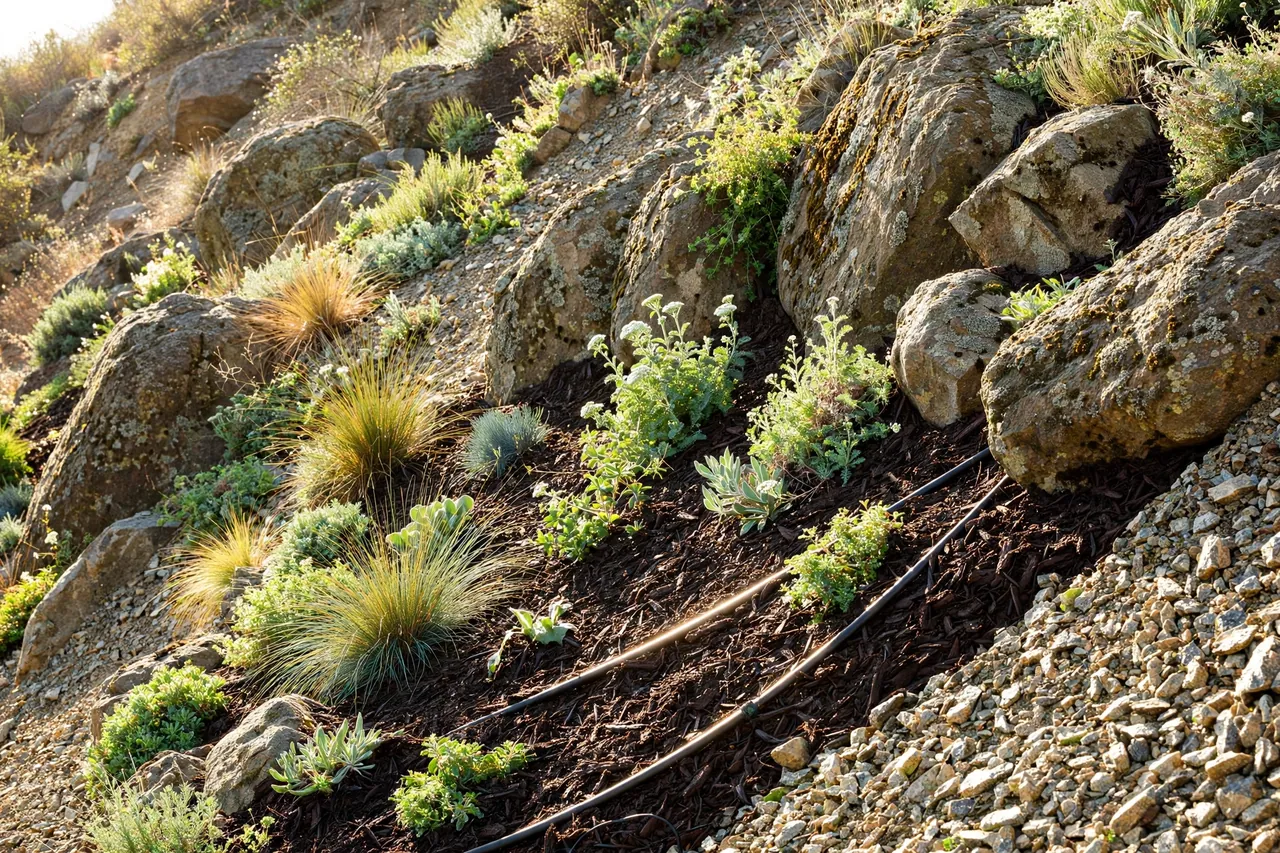
Start with a few large boulders, partly buried so they look like they grew out of the hill instead of sitting on top of it. Vary the sizes. Then fill between them with gravel or smaller stone and tuck drought-tolerant plants into the gaps: sedum, creeping thyme, alpine aster, and dwarf conifers all thrive in thin, fast-draining soil.
A rock garden needs almost no watering and no mowing once it settles in. That makes it a strong pick for a steep bank you never want to climb with a mower. It also pairs well with terraces: stone walls at the edges, gravel paths between the beds, and boulders as focal points at each turn of the path.
Build Steps and Paths That Follow the Slope
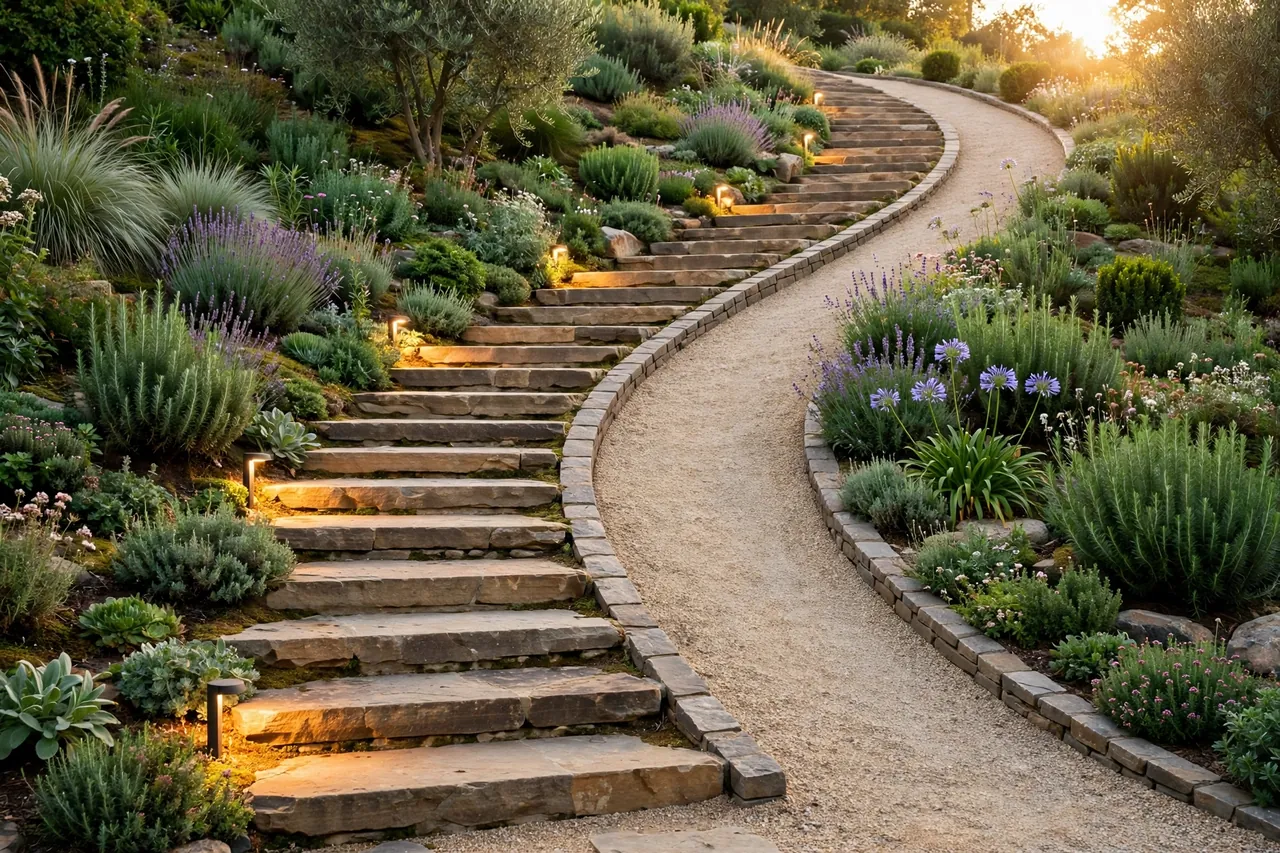
A slope without a path is a slope nobody uses. Steps and paths turn a hill you avoid into a garden you walk through. Curved paths work better than straight ones on a slope: they slow the walk, soften the climb, and make even a modest hill feel like a destination. Wide steps with a generous tread feel safe and welcoming, while narrow, steep steps feel like a chore.
Pick the path material for the grade. Gravel drains well and costs little, but it needs solid edging to stay in place on a slope. Natural stone pavers last for decades and grip well underfoot. Decomposed granite compacts into a firm surface that suits dry hillsides. For steps, cut stone or large flat pavers give a refined look, while timber steps suit a rustic garden. Whatever you choose, edge the path firmly. Loose path material migrates downhill in the first hard rain without edging to hold it.
Light the path if you use the yard after dark. Low, warm lights along the steps make the climb safe and make the garden glow in the evening. Our guide to cheap DIY garden path ideas covers budget-friendly path materials and layouts you can adapt to a slope.
Keep the rise of each step comfortable. If a set of steps feels tiring or uneven, people stop using it, and the slope goes back to being a view instead of a garden. Landings every few steps give walkers a place to pause and give the climb a rhythm.
Slow Water With Dry Creek Beds and Rain Gardens
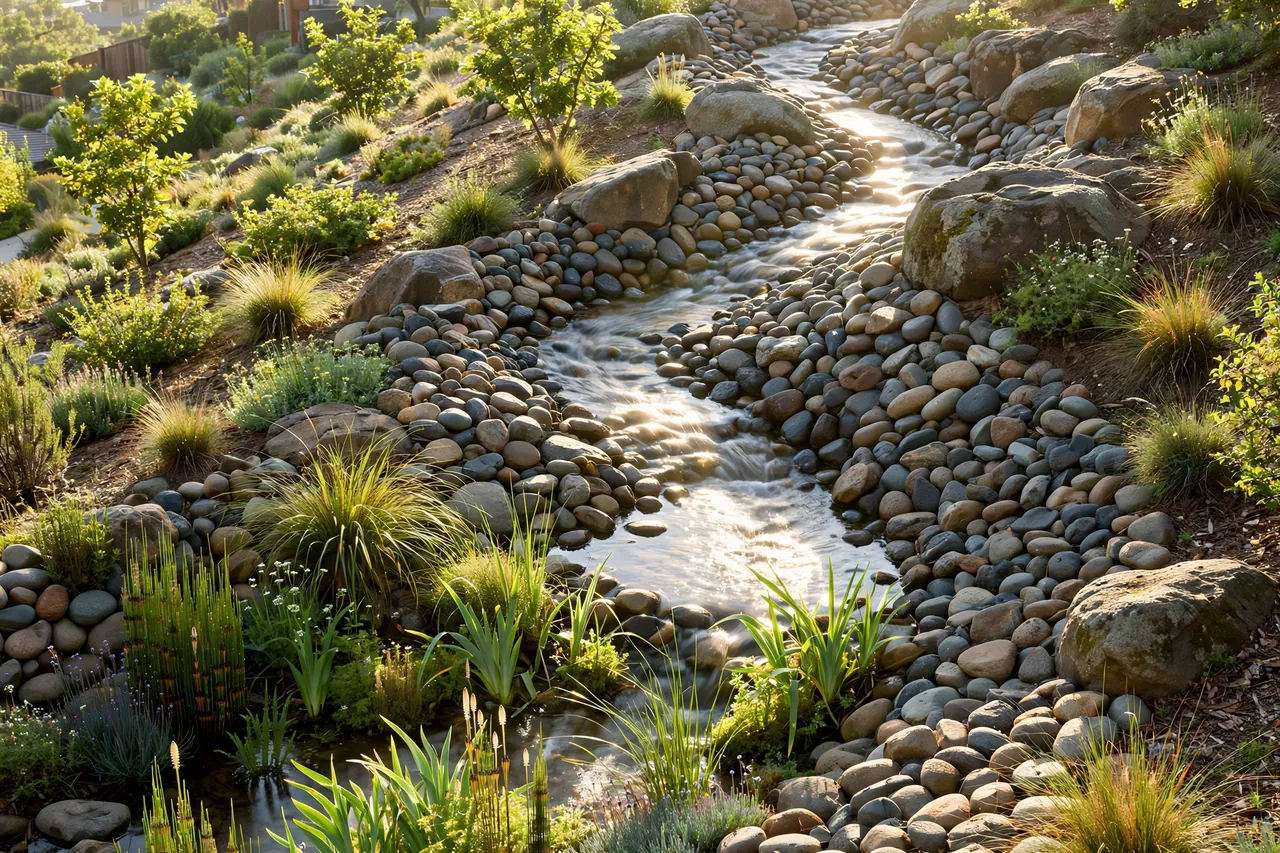
Water is the force that shapes every slope, so the smartest ideas work with it instead of against it. A dry creek bed is a shallow, winding channel lined with river rock that carries rainwater down the slope slowly and safely. Most of the year it looks like a decorative rock feature. In a storm it earns its keep, guiding water away from your foundation and into a safe outlet instead of letting it carve a gully through your lawn.
A rain garden does the same job with plants. It is a shallow dip planted with water-loving natives that soak up runoff and let it sink into the ground. Put it where water already collects at the bottom of the slope, never against the house. A rain garden also feeds pollinators and looks like a flower bed, so it solves a drainage problem without looking like drainage work.
Never send all of a slope’s water into one soggy spot at the bottom. Spread it out. A gravel-filled bed, a swale, or a series of small check dams across the flow line all slow water down and give it time to soak in. If you pipe water away, make sure it empties into a real drainage area, not onto a neighbor’s yard or a public sidewalk. If your yard stays soggy at the base of a slope, read our guide on how to find the cause and fix a soggy yard before you dig anything.
Create Usable Zones: Seating, Play, and Growing Food
The best sloped yards feel like several small gardens stacked on one hill. Give each level one job and the whole slope starts to make sense. A flat terrace near the house becomes a dining patio with a view over the garden below. A middle terrace becomes a seating nook tucked between shrubs, quiet and private. The sunny top terrace becomes a vegetable garden, where terraced beds drain well and catch sun from several angles through the day.
A hillside patio overlook is one of the most rewarding zones to build. Cut a level platform into the slope, hold it with a retaining wall, and finish it with stone or concrete. Add perimeter planting for privacy and a few lights for evening use. The elevation that made the yard hard to mow becomes the reason the patio feels special.
For families, a slope can hold a play zone too, but place it with care. Put play areas on a flat terrace, never on the slope face itself, and keep the ground level and soft underfoot. A small lawn terrace works for play on gentle slopes, but on steeper ground, groundcovers and planting are safer than turf a child can slip on.
Frame the view on purpose. Keep planting low at the edge of the property so the sightline stays open, and avoid planting a large tree right where the best view sits. A slope naturally opens up views, and a little planning turns that into the yard’s best feature.
Make a Steep Slope Low Maintenance
Be honest about how much upkeep you want before you pick a design. A terraced vegetable garden looks wonderful, but it needs regular watering, weeding, and harvesting. A slope planted with native groundcovers and topped with mulch asks for very little once it settles in. The best design is the one you will actually maintain.
Mulch is the lowest-maintenance starting point, but it needs the right kind on a slope. Loose wood chips float and wash away. Double-shredded hardwood bark mulch knits together and stays put, especially in a thicker 3 to 4 inch layer. On steeper ground, a cellulose mulch tackifier helps the mulch grip the slope while plants establish. Gravel and decomposed granite need even less attention: they never rot, they drain well, and weeds struggle to root in them. A layer of landscape fabric under gravel cuts weeds further, though the fabric needs replacing after some years.
Choose plants that match your slope’s sun and water instead of fighting them. Drought-tolerant natives on a sunny slope, shade lovers on a north-facing bank, and ornamental grasses almost anywhere will outlast fussy plants that need constant watering. Drip irrigation, run under the mulch with emitters at the base of each plant, waters slowly enough to soak in instead of running downhill. It saves water and it saves the slope.
For plant shopping, compare sellers before you buy in bulk. Our guide to the best places to buy plants online can help you find native groundcovers and shrubs without driving to five nurseries.
Plan It in Phases on a Budget
A sloped yard does not need to be finished in one season. In fact, phasing the work over two or three seasons usually gives a better result, because you learn how water and plants behave on your slope before you spend on the next stage. Start with the work that protects the soil: groundcovers, mulch, and any drainage fix the slope needs. Then add structure: one terrace or one wall at a time. Finish with the fun parts: paths, seating, and planting for looks.
Save money where saving is safe. Native plants from swaps and extension giveaways, locally quarried angular stone, bulk mulch, and gravel paths all cut costs without cutting quality. Do not save money on drainage or structure. A wall without drainage, a terrace cut into the toe of a slope, or a pipe that dumps water at your foundation will cost far more to fix than it saved to build.
Keep a simple sketch of the finished plan, even if you build it in stages. The sketch keeps each phase pointing at the same design instead of drifting into a collection of unrelated projects. Measure twice, build once, and let each season teach you what the next phase needs.
Mistakes to Avoid on a Sloped Yard
Most slope failures come from a short list of avoidable mistakes. First, leaving soil bare. Bare dirt on a slope erodes with every rain, so cover it the same season you clear it. Second, planting in rows that run straight up and down the hill. Water follows those rows like channels. Plant along the contour, across the slope, so each row slows water instead of speeding it up.
Third, building one tall wall where three short ones would do. Tall walls carry more pressure, need engineering, and fail harder. Fourth, skipping drainage behind a wall or under a terrace. Water pressure builds silently until something gives. Fifth, mowing a slope that is too steep for the mower. If the grade feels unsafe to walk, it is unsafe to mow: convert that bank to groundcovers or rock instead.
Sixth, clearing all the plants to “clean up” a slope. Those roots may be the only thing holding the soil in place. Clear in sections, and replant each section before you clear the next one.
When to Call a Pro
Some slope work is a good weekend project. Planting groundcovers, spreading mulch, building a low garden bed, and laying a gravel path all sit comfortably in DIY territory. Other work belongs to a professional. Call a licensed landscape contractor or engineer if your wall will stand taller than 4 feet, if the slope shows cracks, leaning trees, or soil that keeps slipping after rain, or if water threatens your foundation or a neighbor’s property.
Call 811 before you dig for any reason, even for a shallow trench or a fence post. The free service marks buried utility lines so you do not hit gas, electric, or water lines hidden under your yard. Check local permit rules too, because many towns require a permit for walls over a set height, for major grading, or for work near wetlands and regulated drainage.
Check your local rules before you build, and get a professional assessment for steep slopes or complex drainage. Homes, budgets, and soil conditions vary, and a short consultation costs far less than rebuilding a failed wall or repairing erosion damage. This article gives general guidance for typical home slopes, not engineering advice for your specific lot.
Related Guides
How to Build a Retaining Wall on a Slope · Fix a Soggy Yard: Find the Cause and Fix the Drainage · Cheap DIY Garden Path Ideas · Best Places to Buy Plants Online · Modern Landscape Design Trends Homeowners Love · Retaining Wall Pavers · Retaining Walls Ideas · Compare Dry Stream Bed vs Trench Solutions
Frequently Asked Questions
How to landscape a hillside cheaply?
Start with native groundcovers, bulk mulch, and drought-tolerant plants instead of costly walls. Dry-stacked fieldstone costs less than poured concrete for low walls, and many homeowners can build short sections themselves. Build the project in phases over two or three seasons to spread the cost without losing the result.
How do you stop erosion on a slope?
Dense plant cover is the most reliable long-term fix, because roots anchor the soil and leaves soften the impact of rain. In the short term, erosion-control fabric, straw wattles, and mulch protect bare ground while plants establish. Terracing and dry creek beds add more protection by slowing and redirecting runoff.
What plants grow best on hillsides?
On sunny slopes, creeping juniper, sedum, and creeping thyme spread quickly and hold soil well. Shaded slopes suit hostas, ferns, and native shrubs like mountain laurel. Ornamental grasses work across many slope types because their deep, fibrous roots grip the soil firmly.
Are retaining walls necessary for hillside landscaping?
Not always. Gentle slopes under 15 percent can usually be held with groundcovers, shrubs, and mulch alone. Slopes above 15 to 20 percent benefit from terraced retaining walls, and slopes above 33 percent usually need professionally designed structures for safety and long-term stability.
How can I make my sloped yard look good?
Start by adding structure: a low stone wall, a curved pathway, or a row of boulders gives the slope a clear shape. Layer plants of different heights and textures so the hill feels full and planned. Clean edges and consistent mulch do more for curb appeal than almost any other single change.
Pick one idea from this guide and start there. Measure your slope, cover any bare soil, and build the first terrace or plant the first groundcover bed this season. A slope changes slowly, but each step you finish makes the next one easier, and a year from now the hill you avoided can be the best part of your yard.