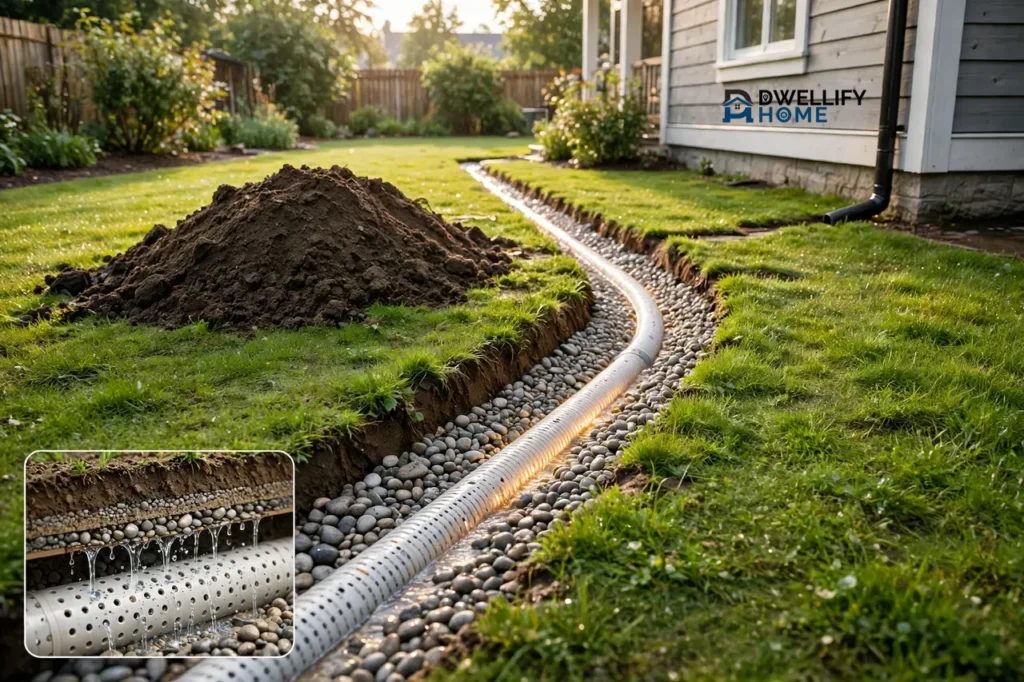
The best yard drainage solution is the one that matches where your water comes from, and the ground beside your foundation should drop at least 6 inches in the first 10 feet, according to HomeGuide’s 2026 cost guide. Most wet yards need only one or two of the seven solutions in this guide, and this article helps you pick the right ones, know what they cost, and decide when to call a pro.
Water problems look alike from the kitchen window, but they have different causes. A puddle by the patio needs a different fix than a soggy lawn or a wet basement wall. This guide walks through each solution, what it costs in the United States, and when each one fits. If you have not yet figured out why your yard stays wet, start with our guide on how to find the cause and fix a soggy yard — it shows you how to watch where water goes and spot the cause before you spend a dollar.
How to Pick the Right Drainage Solution
Pick the fix by the water, not by the product. Ask three questions first. Where does the water come from? Where does it sit? And where can it safely go?
Roof water that pours off a downspout needs a downspout fix. Surface water that sheets across a patio needs a surface drain. Water that soaks in and stays in the soil needs a buried drain or better grading. And water with nowhere to go needs an outlet — a dry well, a ditch, or a storm drain connection.
Use this quick match as your starting point:
- Water pools on a patio, driveway, or walkway: channel drain or catch basin.
- The lawn stays soggy days after rain: French drain or regrading.
- Water runs toward the house: regrading, a curtain drain, or downspout drainage.
- A low spot collects runoff from all sides: dry well, swale, or rain garden.
- Water seeps into a basement or crawl space: exterior footing drain or interior perimeter drain — hire a pro.
When two problems overlap, combine two solutions. A French drain that ends in a dry well is a common pair, and a regraded yard often still needs a downspout line to carry roof water away.
French Drains
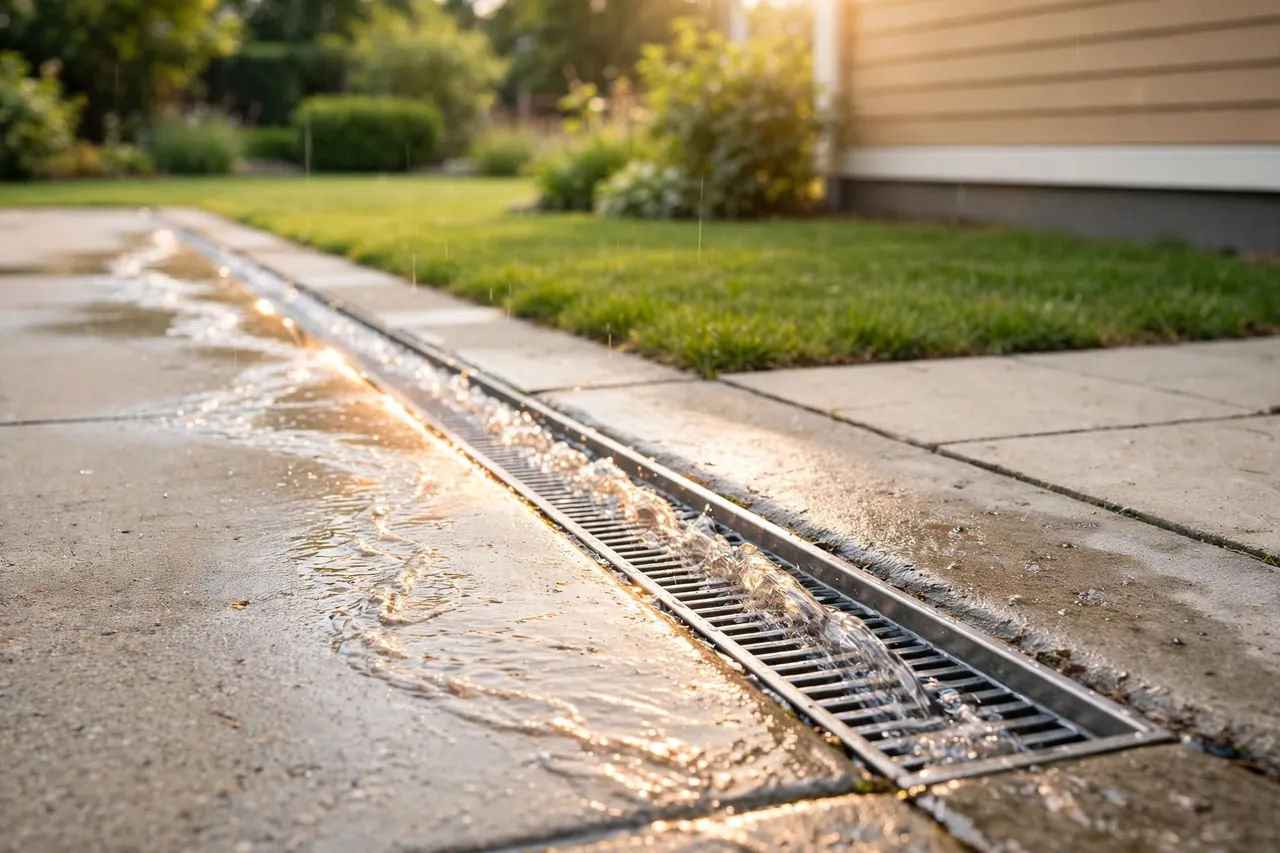
A French drain is a sloped trench filled with gravel and a perforated pipe. Water seeps through the gravel, enters the pipe through its holes, and flows downhill to a safe outlet. It is the workhorse of yard drainage because it handles both surface water and water sitting in the soil.
How a French Drain Works
The trench usually runs 18 to 24 inches deep for a yard drain, and deeper — down to the footing — when it protects a foundation. Landscapers line the trench with filter fabric, add a bed of washed gravel, lay the perforated pipe with its holes facing down, cover it with more gravel, wrap the fabric over the top, and backfill. The fabric keeps soil out of the gravel so the drain does not clog. The pipe needs a steady downhill slope, about 1 inch of drop for every 8 feet of run, so water keeps moving.
When a French Drain Fits Best
Choose a French drain when the lawn stays wet long after rain, when water sits along a foundation, or when a low strip of yard never dries out. A curtain drain — a shallow French drain dug across a slope, uphill from the house — catches water before it reaches the yard at all. That makes it a smart pick when runoff flows down from a neighbor’s lot or a street.
Skip a French drain when the problem is only roof water. A downspout line costs far less and fixes that directly. And a French drain cannot help if the outlet sits higher than the trench — water will not flow uphill, so a flat lot may need a sump pump at the end of the line.
French Drain Cost
An exterior French drain costs $10 to $35 per linear foot installed, or $1,000 to $4,000 for a typical yard system, according to HomeGuide’s 2026 cost guide (checked Nov 9, 2026). A shallow yard drain runs $10 to $30 per foot, while a curtain drain runs $10 to $25 per foot. Deep footing drains cost far more — $30 to $90 per foot — because the crew must dig down to the foundation.
A do-it-yourself French drain costs about $4 to $8 per linear foot in materials, or $200 to $800 for a small project, per HomeGuide (checked Nov 9, 2026). Renting a trencher adds $100 to $200 per day. The work is labor-heavy, so most homeowners hire it out for long runs and dig short runs themselves.
Channel Drains and Catch Basins
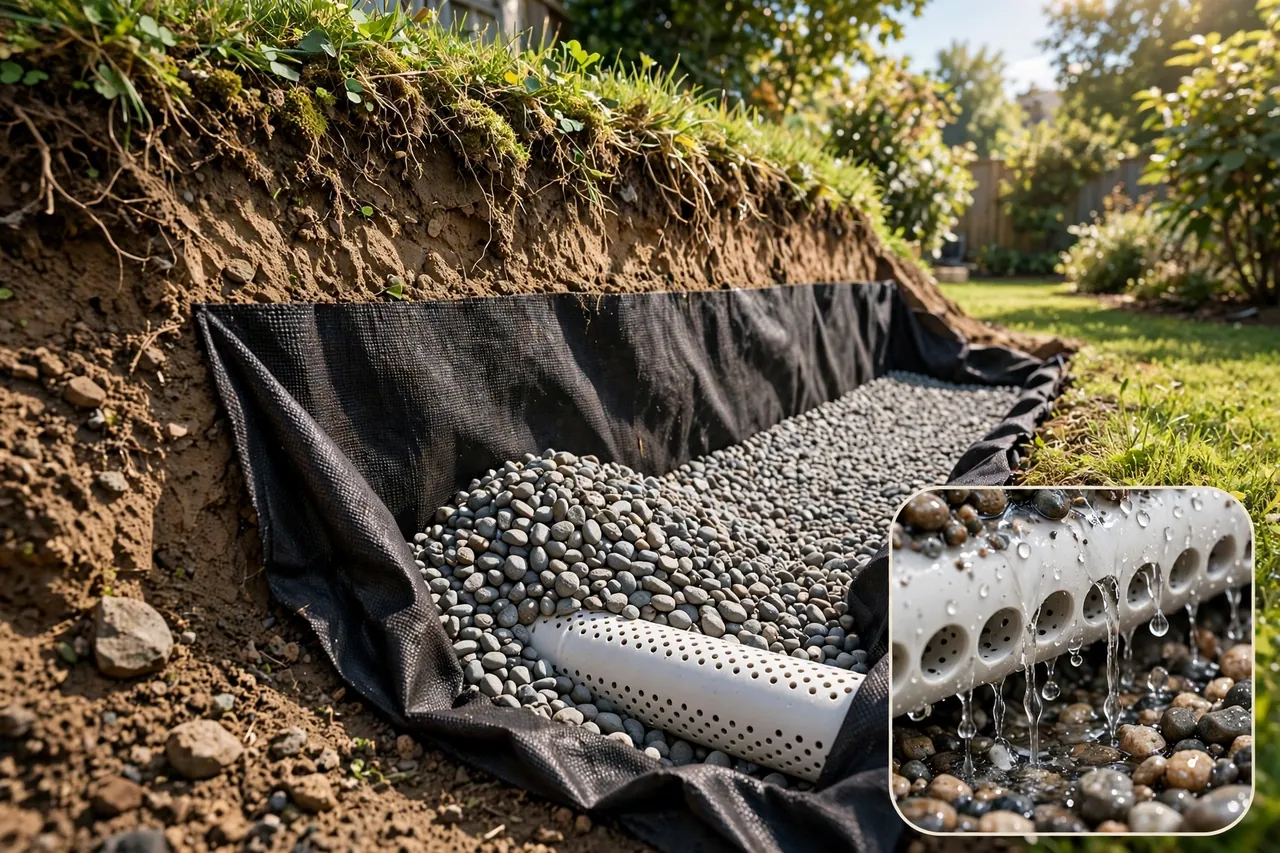
Channel drains and catch basins catch water on the surface, before it can soak in or spread. A channel drain is a long, narrow grate set flush with a paved surface. A catch basin is a box with a grate on top, sunk into the ground at a low point. Both send the water into solid pipe that carries it to an outlet.
Use a channel drain across a driveway, at the edge of a patio, or in front of a garage door where rain pools. Use a catch basin in a low corner of the lawn, at the bottom of a slope, or under a downspout. The basin’s grate filters leaves and debris, and you lift it off to clean the box out.
A channel drain costs $30 to $150 per linear foot installed, depending on the grate and channel material, according to HomeGuide (checked Nov 9, 2026). A driveway channel drain runs $400 to $2,400 in total. Catch basins cost $20 to $70 each for the materials, and a full catch-basin system runs $8 to $15 per square foot of system, per HomeGuide (checked Nov 9, 2026).
Pool decks and patios deserve special care. Water that pools on a pool deck can slip under pavers and wash out the base, so a channel drain along the deck edge is a common fix. Our guide to rectangle pool landscaping ideas shows how drainage fits into a finished pool yard.
Dry Wells
A dry well is an underground pit that holds water and lets it soak slowly into the surrounding soil. It can be a hole filled with gravel, a prefabricated plastic tank, or a concrete chamber. Downspout lines and French drains often end in a dry well when there is no ditch or storm drain to send the water to.
Dry wells work best in sandy or loamy soil that drains well, and in areas where the water table sits low. They struggle in heavy clay, because the water has nowhere to soak. They also need room — keep a dry well at least 10 feet from the house foundation and away from septic systems.
A dry well installation costs $1,200 to $5,200 on average, including materials and labor, according to HomeGuide’s 2026 dry well cost guide (checked Nov 9, 2026). A simple gravel pit can cost as little as $50 to $250, while a concrete tank runs $500 to $3,000 or more. Big yards with heavy runoff may need two or more dry wells.
Grading and Swales
Grading means reshaping the ground so water flows away from the house instead of toward it. It is the oldest drainage solution, and often the cheapest one that actually lasts. Many drainage problems start here: soil settles over time, mulch piles up against the foundation, and a yard that once sloped away slowly tilts back.
The rule to remember is simple. The ground should drop at least 6 inches in the first 10 feet from the foundation, per HomeGuide (checked Nov 9, 2026). Walk your house after a heavy rain. If water sits against the wall or flows toward it, the grade has failed, and no drain will fix that until the slope is right.
Regrading a yard costs $500 to $5,000 on average, or $0.40 to $2.00 per square foot, according to HomeGuide (checked Nov 9, 2026). Fixing the grade around one side of a house runs $500 to $1,000, while grading around the whole house runs $1,000 to $3,000. Small touch-ups — adding topsoil near the foundation to restore the slope — are a weekend job for many homeowners.
A swale is grading in a different shape: a shallow, grassy channel that guides water across the yard to a ditch or outlet. Swales cost $5 to $15 per linear foot, per HomeGuide (checked Nov 9, 2026), and they suit yards with a gentle slope and room to spare. On a steep slope, a swale can erode, and a retaining wall may be the better answer — see our guide on how to build a retaining wall on a slope before you reshape a hillside.
Downspout Drainage
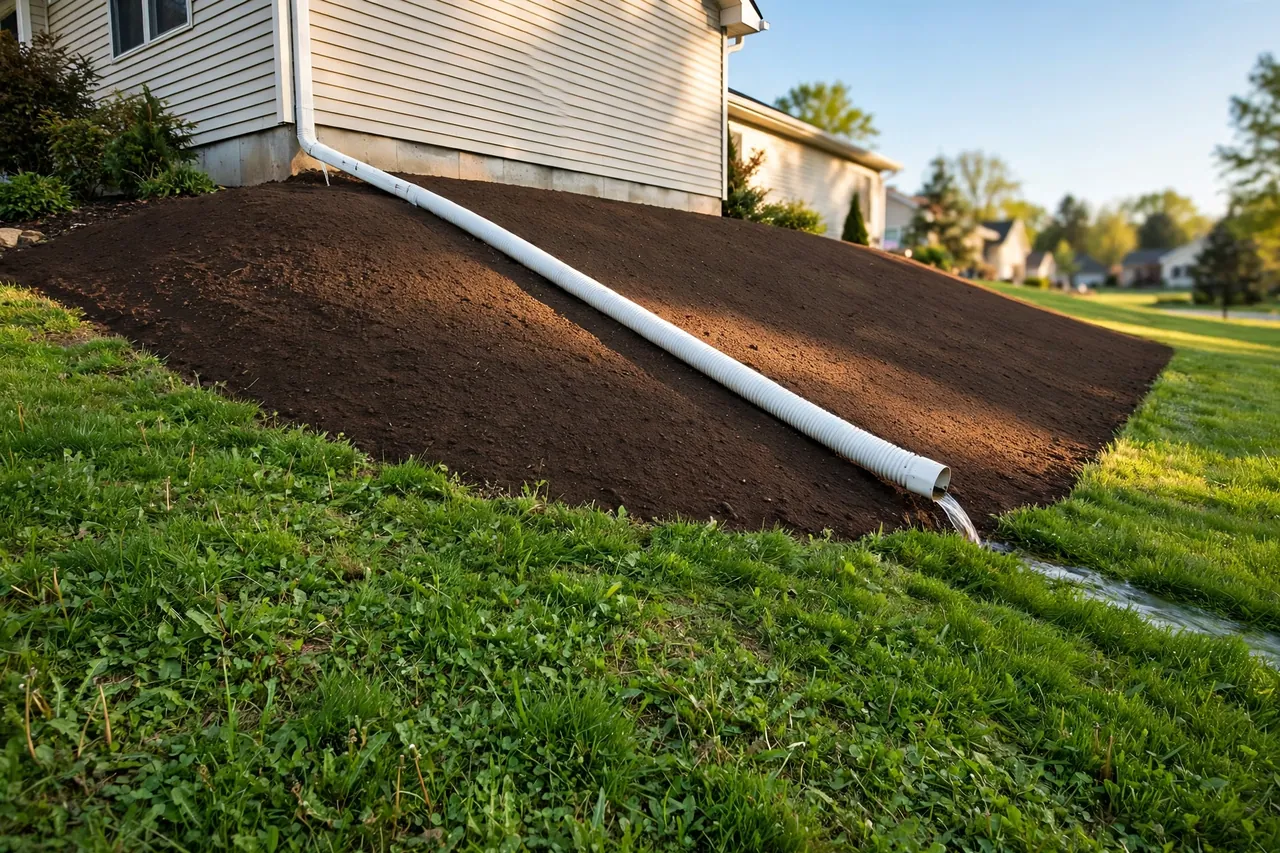
One roof can shed hundreds of gallons in a single storm, and if the downspouts dump that water beside the foundation, no lawn drain can keep up. Downspout drainage is the cheapest fix in this guide, and it solves the most common cause of wet yards.
Start with the simplest step: add a downspout extension that carries water at least 10 feet from the house. Extensions cost $5 to $25 each, per HomeGuide (checked Nov 9, 2026). For a cleaner look, bury the downspout underground and run solid pipe to a pop-up emitter in the lawn — a small cap that lifts open when water flows and closes when it stops. Burying a downspout costs $150 to $350 per downspout installed, per HomeGuide (checked Nov 9, 2026).
Connect the buried line to a dry well or a French drain when the yard has no downhill outlet. Keep the line clear: a leaf guard at the top and a cleanout at the bottom stop the two most common clogs. And never send downspout water onto a neighbor’s lot or a public sidewalk — check your local rules first, because many towns limit where roof water may go.
Rain Gardens and Dry Creek Beds
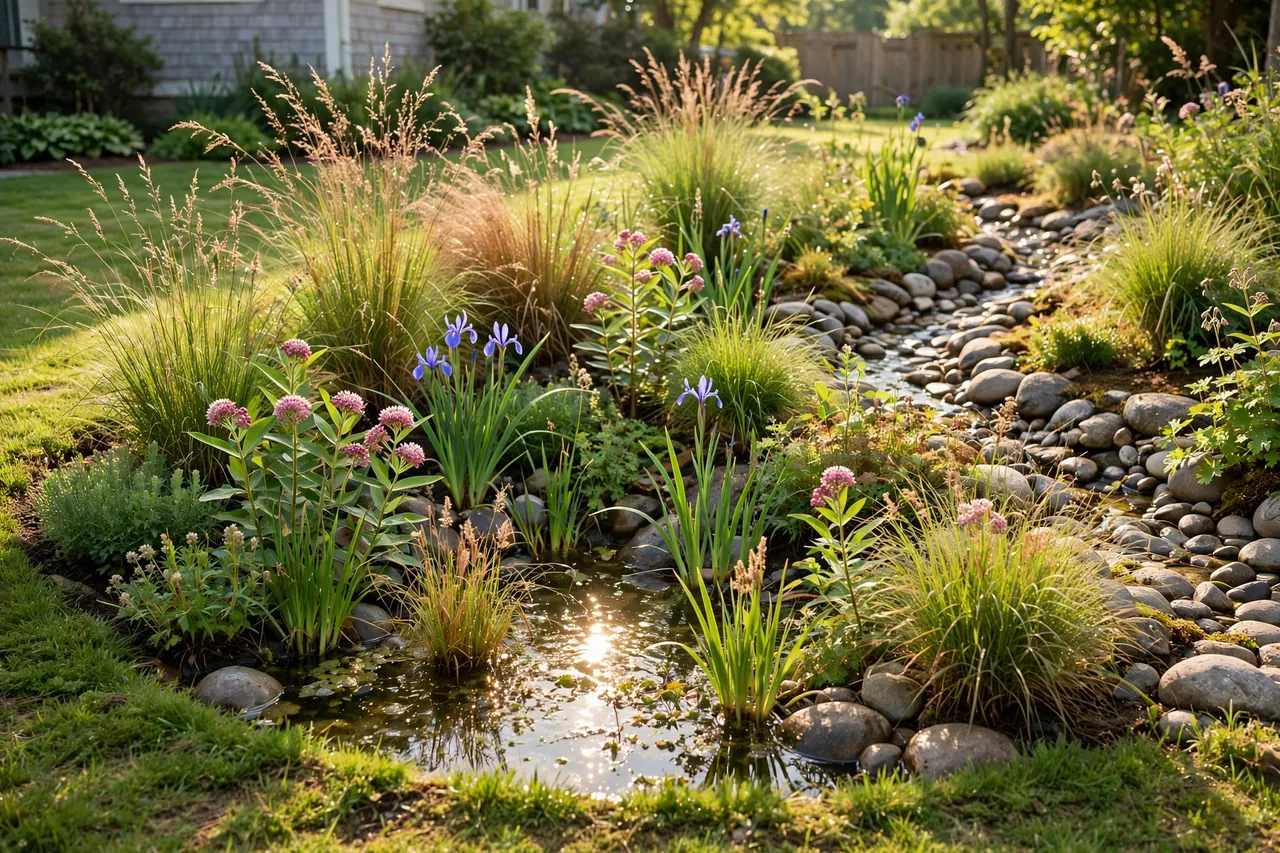
Not every drainage solution is a pipe. A rain garden is a shallow, planted dip that catches runoff and lets it soak in. Water-loving native plants and deep roots pull water into the soil, and the garden adds color and habitat while it works. Better Homes & Gardens lists a rain garden among its five smart solutions for poor drainage, alongside compost and water-loving plants. A rain garden costs $500 to $3,000, or $5 to $15 per square foot, according to HomeGuide (checked Nov 9, 2026). It fits moderate amounts of water and soil that drains at a fair rate — it will not fix a yard that holds standing water for days.
A dry creek bed is a decorative channel of river rock that guides surface water across the yard. It looks like a natural stream bed when dry and carries water when it rains. It suits a yard with a gentle slope and a clear path from the wet spot to an outlet. It is not a fix for water with nowhere to go, and it will not help against a foundation.
Both options shine where a pipe would look out of place — a front yard, a garden border, or a spot you see from the patio every day. They also pair well with drains: a French drain can end in a rain garden, and a swale can feed a dry creek bed.
Yard Drainage Solutions Compared
Use this table to compare the seven solutions side by side. All prices are US installed costs from HomeGuide’s 2026 guides, checked Nov 9, 2026.
Table: Yard drainage solutions at a glance — cost, best use, and limits.
| Solution | Typical cost | Best for |
|---|---|---|
| French drain | $10–$35 per linear foot | Soggy lawns, water near foundations |
| Channel drain | $30–$150 per linear foot | Driveways, patios, garage entries |
| Catch basin | $20–$70 per basin, materials | Low spots, downspout outlets |
| Dry well | $1,200–$5,200 installed | Lots with no downhill outlet |
| Regrading | $500–$5,000 per project | Water flowing toward the house |
| Swale | $5–$15 per linear foot | Guiding runoff across a yard |
| Rain garden | $500–$3,000 | Moderate runoff, visible garden spots |
One more cost to budget: permits. Drain permits cost $100 to $375 on average, per HomeGuide (checked Nov 9, 2026), and a connection to a public storm drain adds about $275. Cutting a curb for a new street outlet can cost $400 to $500 in permits alone.
DIY or Hire a Pro?
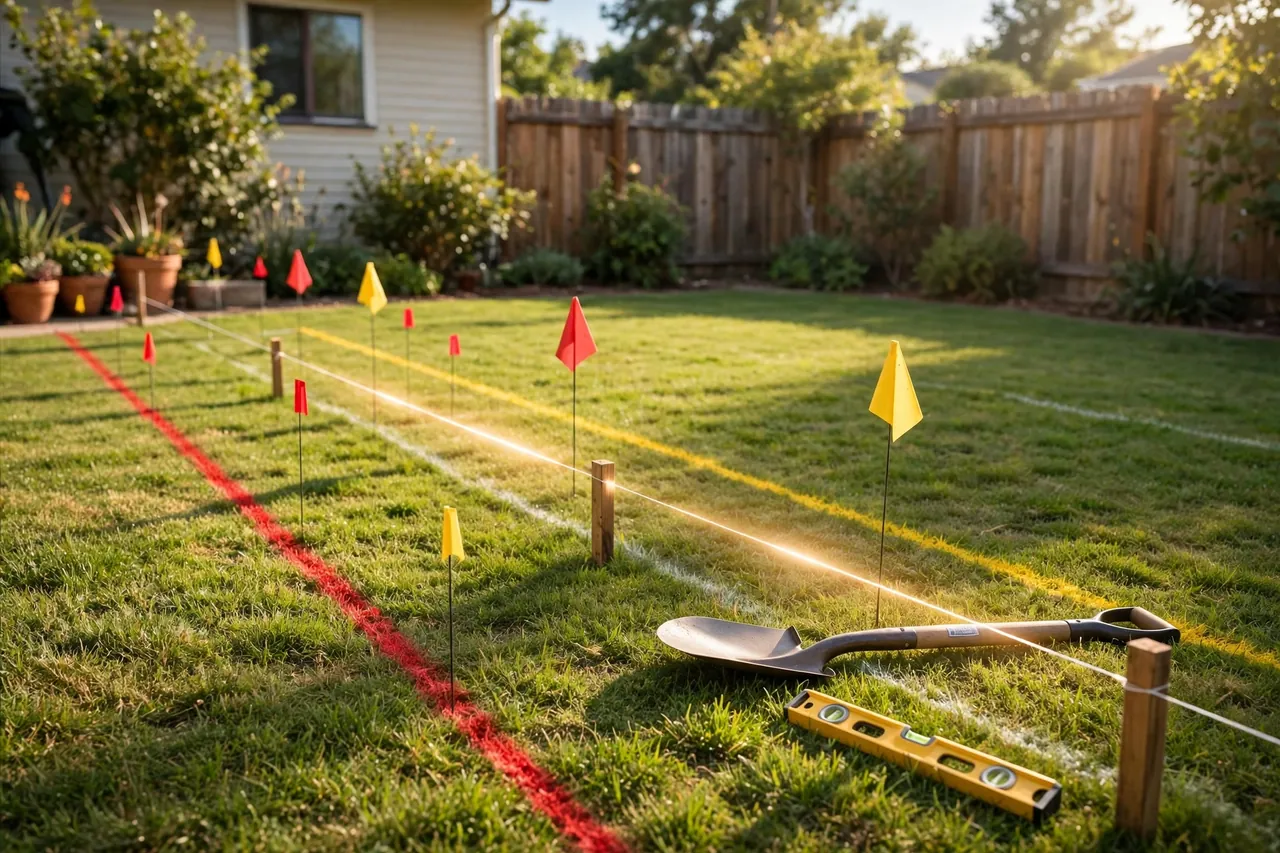
Many drainage jobs are fair do-it-yourself projects. Downspout extensions, small regrading touch-ups, rain gardens, and short French drains all sit within reach of a careful homeowner with a shovel and a weekend. A do-it-yourself drain runs about $4 to $8 per linear foot in materials, per HomeGuide (checked Nov 9, 2026).
Hire a professional when the job crosses any of these lines:
- Water enters the basement or crawl space.
- The drain must run deeper than 2 feet, near a foundation, or under a driveway.
- Drainage crosses a property line or ties into a storm sewer.
- The yard has heavy clay, a high water table, or a complex slope.
- The job needs a sump pump, an engineer, or a permit you are unsure about.
Before you dig anything, call 811 — the free national service that marks buried utility lines. It is the law in most states, and hitting a gas or electric line turns a yard project into an emergency. Check with your local building department about permits, too. This Old House’s French drain guide notes that some areas treat drains deeper than 24 inches as professional-only work, so local rules can decide the DIY question for you.
When you compare contractors, ask where the water will go, what pipe and gravel they will use, and how they will restore the lawn afterward. A good bid names the outlet and the materials. A vague bid names neither.
Keep Your Drainage Working
A drainage system only works if it stays clear. Clean gutters and downspouts each fall and spring, and check that extensions stay connected after storms. Lift catch basin grates and scoop out leaves and silt at least once a year. Walk the drain outlet after a heavy rain — if water trickles out slowly or not at all, the line may be clogging.
A professionally installed drainage system lasts 15 to 40 years with proper maintenance, according to HomeGuide (checked Nov 9, 2026). The three habits that stretch that life are wrapping the pipe in filter fabric, making the drain wide enough to resist clogs, and checking it every year before the rainy season.
Watch for warning signs: water that pools where it never pooled before, a soggy strip along the old drain line, or a downspout that backs up in light rain. Catch these early and the fix is usually a cleaning, not a replacement.
Please note: drainage and grading work can affect your home’s foundation, and digging can hit buried utility lines. Call 811 before you dig, check local permit rules, and hire a licensed drainage contractor or structural professional for foundation-level work, basement water, or any job deeper than 2 feet. Homes, soil, and local rules vary, so treat the costs and steps in this guide as a starting point and get a site-specific quote before you commit.
Related Guides
Soggy Yard? How to Find the Cause and Fix Poor Drainage · How to Build a Retaining Wall on a Slope · rectangle pool landscaping ideas · Garden Wall · Landscaping Ideas with Rocks and Stones · Lawn Sprinkler Repair
Frequently Asked Questions
How Deep Should a drainage system be?
A drain should be 8 to 24 inches deep and 6 to 12 inches wide, depending on the problem, according to HomeGuide. Surface pooling needs a shallow trench, while foundation protection needs pipes 2 feet deep or more, and full basement waterproofing can require 6 feet or more.
How Long Does It Take To Install A Drainage System?
A downspout extension, curtain drain, or simple drain takes 1 to 2 days on average, per HomeGuide. Larger projects with long pipe runs can take up to 2 weeks, depending on the size of the yard, the depth of the drain, and the soil.
When Is The Best Time To Install A Drainage System?
The best time is during dry, warm weather, according to HomeGuide. Unless it is an emergency, wait until nighttime temperatures stay above 40°F, so water stays unfrozen and the contractor can inspect and repair the soil and pavement properly.
How Long Does a Drainage System Last?
A professionally installed drainage system lasts 15 to 40 years with proper maintenance, per HomeGuide. To stretch its life, make the drain wider so it clogs more slowly, wrap the pipe in filter cloth, and schedule yearly maintenance when water starts draining slower than usual.
Where Does The Water From Drains Go?
A drain carries water down a gradual slope to a dry well, a public drain, a water main, or a drainage ditch, according to HomeGuide. In some towns, stormwater may go into city irrigation ditches with permission from the local water department — always confirm the outlet is legal before you build.
Start with the cheapest fix that matches your water. In many yards, a downspout extension and a small grading touch-up solve the problem in a weekend. When they do not, the table above points to the next step — and a pro can size the system to your lot in a single site visit.
Explore More Yard Drainage Guides
Drainage is the unglamorous half of curb appeal — our how to upgrade your home’s curb appeal guide shows where it fits, and these guides cover each fix in detail.
- Installing a French Drain — a weekend fix for a soggy yard.
- Dry Stream Bed vs Trench Drain — which fix stops your soggy yard for less?
- Ideas for a Sloped Yard — stop erosion and turn the hill into usable space.
- How to Restore a Muddy Lawn — fix the water first, then grow the grass.
- Retaining Wall Pavers — build a wall that holds soil and lasts for years.
- Retaining Walls Ideas — 15 designs that turn a slope into usable yard.