A garden wall is a short freestanding or soil-holding wall that divides a yard, frames a bed or patio, or holds back a slope, and HomeGuide’s 2026 cost data puts a professionally installed wall at $20 to $50 per square foot of wall face.
That one structure can do a lot of jobs at once. It gives you privacy without a tall fence, turns a slope into flat planting space, edges a flower bed so mulch stays put, or gives a patio a finished backrest. The trick is picking the right type before you buy a single block, because a freestanding wall and a retaining wall are two very different builds even when they look the same from the street. If the wall sits at the front of your home, our front-of-house landscaping guide shows how to use it as part of a polished, welcoming entry.
This guide walks you through both. You will see the wall styles that work in a normal American yard, the steps for building a low wall yourself, what each material costs in 2026, the permit line you need to know, and the drainage details that keep a wall standing for decades.
Freestanding or Retaining: Which Garden Wall Are You Building?
Everything downstream depends on this one distinction. A freestanding garden wall holds up nothing but itself. Both faces show, and it divides space, blocks a sightline, or gives a border something to lean against. Think of a low brick edge around a rose bed or a five-foot stucco panel screening a hot tub from the neighbors.
A retaining wall holds back earth. One face shows and the other sits buried against soil that wants to slide downhill. That soil gets heavy when it rains, and water trapped behind a wall builds pressure that can push the whole thing over. Colorado State University Extension puts it bluntly: most retaining wall failures trace back to water or soil moisture behind the wall, not to the blocks themselves.
Here is the practical difference. A freestanding garden wall two feet tall is a weekend project with a shovel and a level. A retaining wall two feet tall needs a compacted gravel base, drainage stone, and usually a perforated pipe. Same height, completely different job.
If your wall will hold back a slope, read our guide on how to build a retaining wall on a slope before you start. It covers the stepped layout and drainage that a slope demands.
Garden Wall Ideas That Work in a Real Yard
A garden wall should look like it belongs to your house, not like it wandered in from a catalog. Match the material to your home’s style and to the job the wall has to do. These five styles cover nearly every yard, and Marshalls’ 13 garden wall ideas show how the same styles adapt to small and large gardens alike.
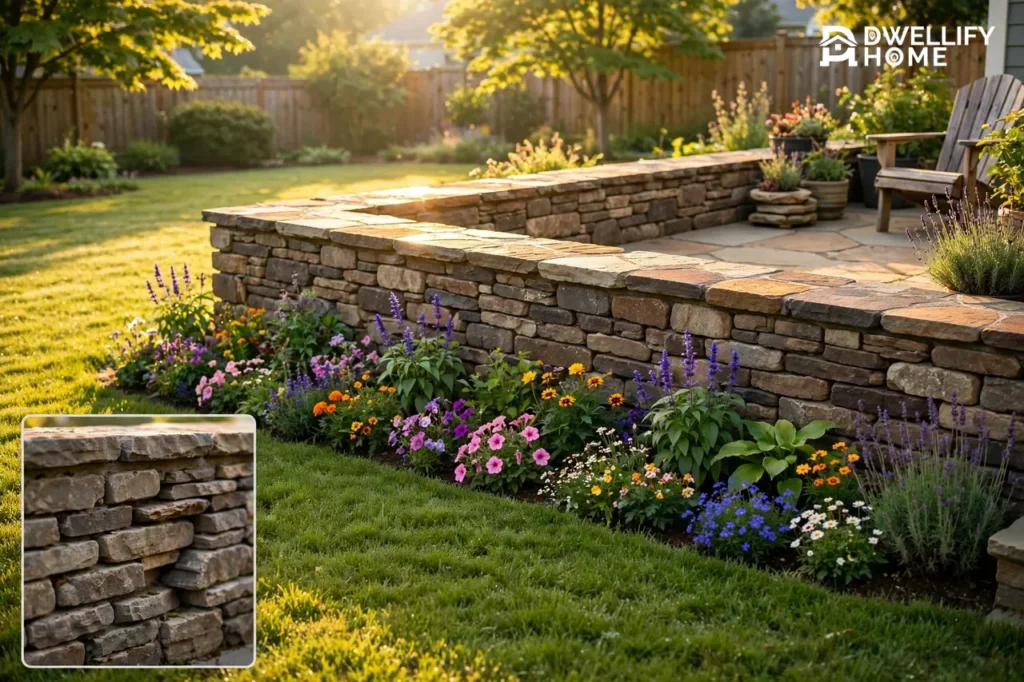
Natural Stone Garden Walls
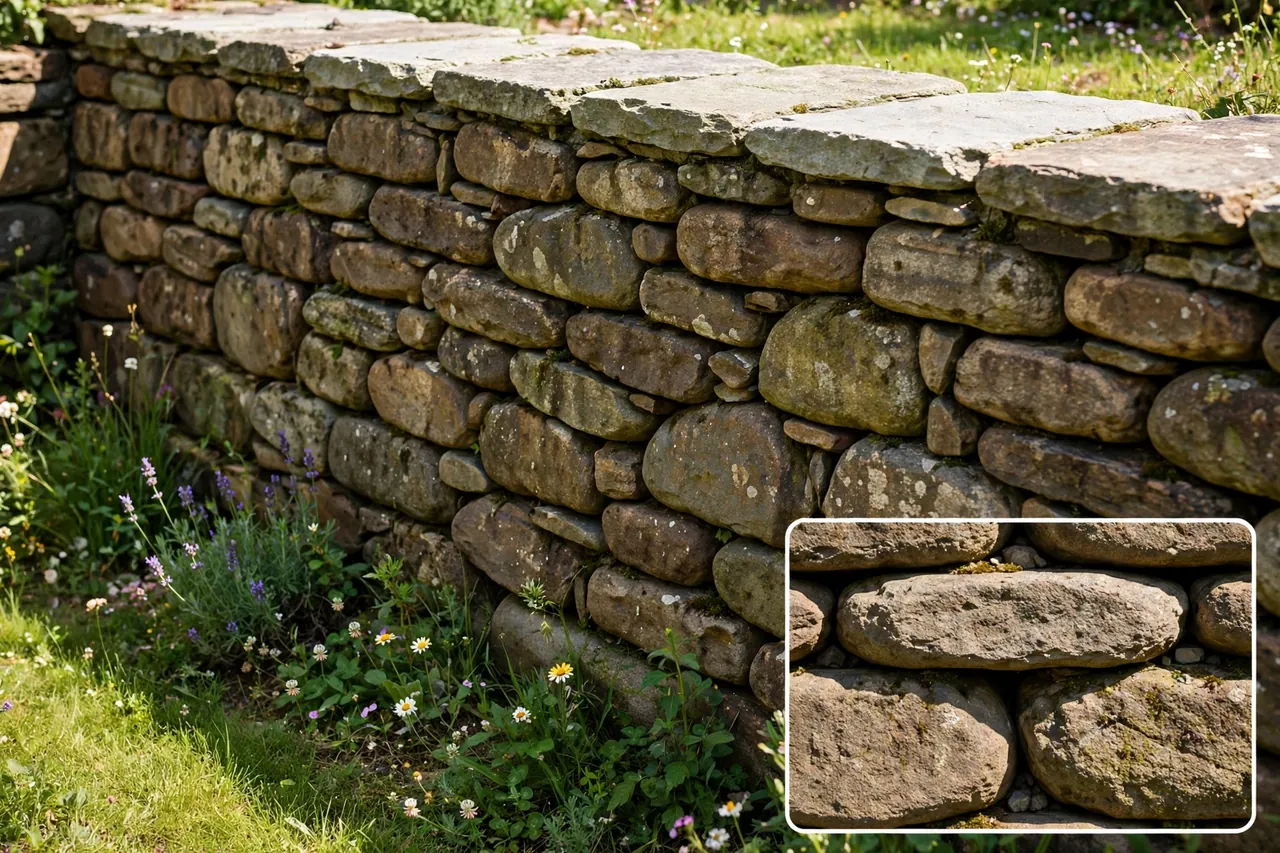
Stone is the fastest way to make a new yard feel settled. A dry-stacked fieldstone wall reads like it has stood there since the property was farmland, and it costs less than people assume because you skip mortar, footings, and a mason.
The University of Connecticut’s Stone Wall Initiative publishes the dry-stone technique, and it comes down to three rules worth memorizing. Batter the faces, which means slanting each face inward one inch for every twelve inches of height so gravity locks the wall together. Set one stone over two, so every stone bridges the joint of the two beneath it. And heart the middle by building two faces back to back and filling the core with the odd stones that are not good enough for the face.
Fieldstone runs $70 to $200 per ton, and one ton covers seven to ten square feet of wall face, according to Backyard Edit’s 2026 pricing guide. Order about fifteen percent more than your math says, since running short mid-wall means a second delivery fee. Gardening Know How’s stone wall building guide walks through the same trench, gravel base, and staggered-course method step by step.
Brick and Concrete Block Garden Walls
If stone reads rustic, brick and block read architectural. They also make the most sense when you want a predictable result, because the units are identical and the courses stack level without any sorting.
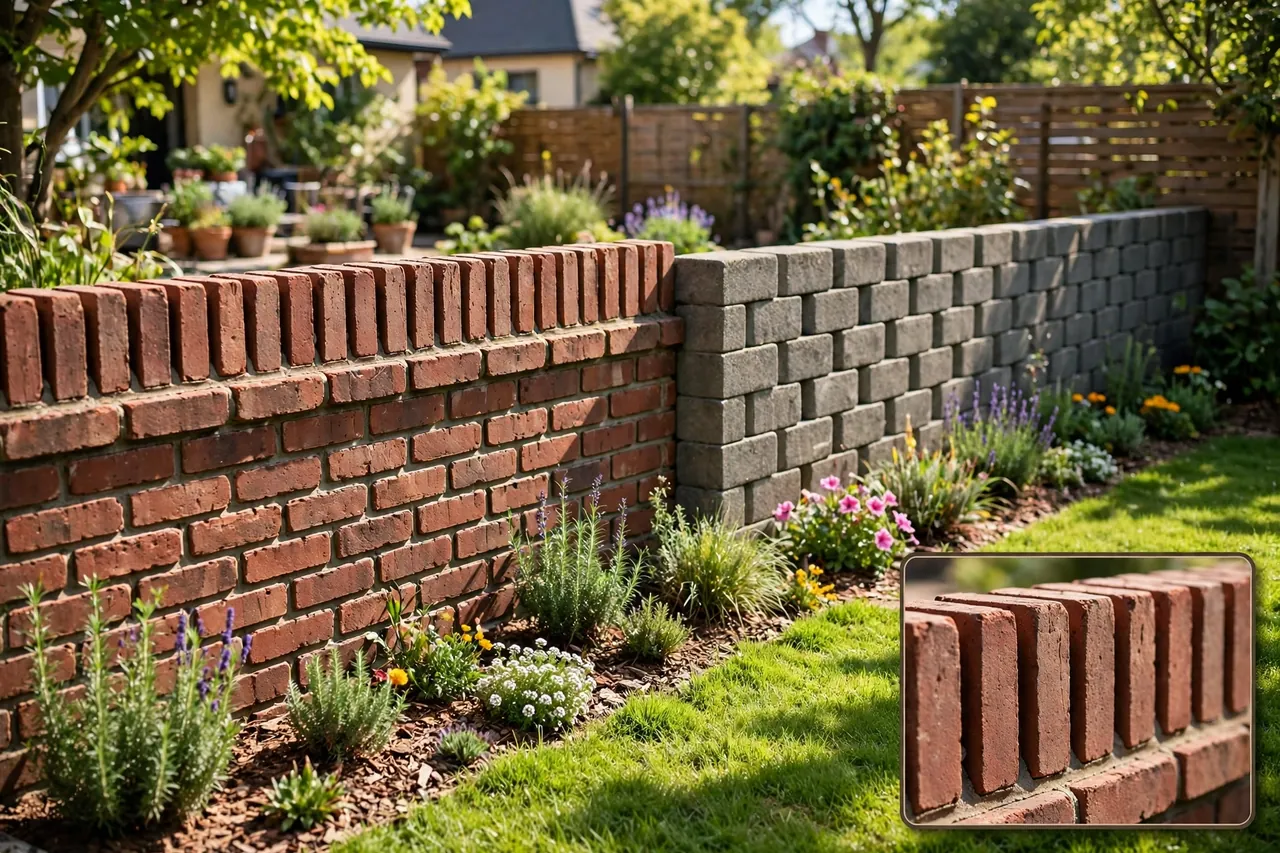
Segmental concrete block is the workhorse. The units lock together, the tumbled edges look like garden rather than commercial, and a confident beginner can lay a low wall in a weekend. Brick garden wall ideas worth trying include a soldier course along the top for a finished cap, a slanted or stepped brick wall that follows a grade change, or a pierced brick pattern where every fourth brick is left out to let light and breeze through. That last one screens sightlines without turning your yard into a box.
Painted block deserves a mention too. A concrete block wall finished in warm white or soft charcoal costs almost nothing to change and completely resets the mood of a small yard.
Living Garden Walls
A masonry wall tall enough to give real privacy is expensive, heavy, and in many towns illegal above six feet without review. Plants solve the same problem for less money and no permit.
Start with climbers on a trellis. Star jasmine, clematis, and climbing hydrangea will cover a six-foot panel in two to three growing seasons. Keep the trellis six to eight inches off the wall face so air can circulate behind the foliage, a point Mississippi State University Extension stresses. Panels mounted flat against a wall trap moisture and grow mildew.
Modular green wall panels are the next step up. They are planted pockets or trays mounted to a structure, and they work best with lightweight soil, drip irrigation, and plants that stay under a foot tall so the panel does not get top-heavy. For a softer version, stack tall planters filled with columnar arborvitae in a row. From ten feet away it reads as a wall, and you can rearrange it whenever you want.
Gabion, Corten Steel, and Timber Walls
Scroll through ten roundups of garden wall ideas and you will see stone, brick, and block on every one. These three barely show up, which is exactly why they make a yard look like nobody else’s.
Gabion walls are galvanized wire cages filled with stone. They are the cheapest real wall you can build, and they drain themselves by design because water passes straight through the rock. No weep holes, no pipe, no pressure buildup. Fill them with river cobble for a soft look or crushed granite for a sharp one.
Corten steel is weathering steel that rusts to a stable orange-brown patina and then stops. It gives you a two-inch-thin wall profile where a block wall would eat eight inches, which matters enormously in a narrow side yard. Metal walls sit at the top of the price range, so use corten for a short accent run rather than a full boundary.
Timber means pressure-treated landscape timbers or reclaimed sleepers. They are warm, fast to install, and honest about lifespan: expect fifteen to twenty years, less where soil stays wet. Timber suits raised planting terraces well and forever walls poorly.
Low Garden Walls With a Fence on Top
A garden wall does not have to be full height to look fantastic and do its job. A low stone wall topped with a wooden fence or metal railing gives you structure plus flexible height, and the mix of textures adds visual interest.
This combination also solves the privacy problem gracefully. The solid base blocks the view at seating level, the fence above adds height without the weight or cost of a tall masonry wall, and you can paint the fence any color that suits your home.
Use the same trick around a patio. A low wall with a thick cap doubles as extra seating when friends come over, and it frames the patio without closing it in. Our rectangle pool landscaping ideas show how low walls shape outdoor rooms around water too.
How to Build a Low Garden Wall Yourself
A freestanding wall under three feet tall is a fair weekend project for a confident beginner. A retaining wall over four feet tall is not: hire a pro for that. These steps cover a low dry-stacked or block wall. Stop and call a contractor if you hit anything below that surprises you.
- Call 811 before you dig. Dial 811 a few days ahead and your local utility company will mark buried pipes and cables for free. Never skip this step.
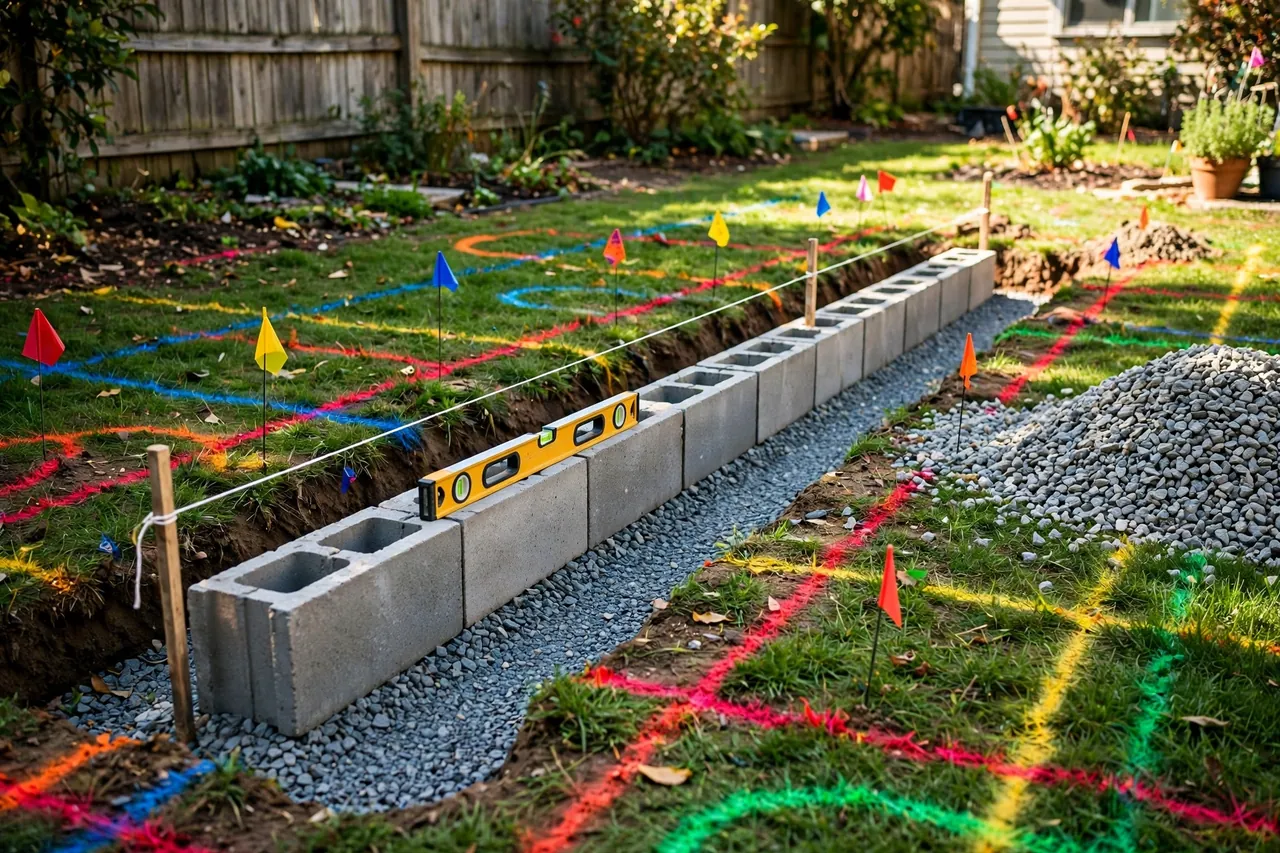
- Mark the line. Use stakes and mason’s string for a straight wall, or lay a garden hose on the ground for a curve. Spray the line with landscape marking paint.
- Dig the trench. Dig along the line a bit wider than your blocks. For a dry-stone wall, go about three inches deep. For block, dig deeper so you can fit the gravel base below.
- Lay the base. Oregon State University Extension recommends a four- to six-inch layer of three-quarter-inch minus crushed base in the trench, topped with a one-inch layer of coarse sand. Tamp it flat and check it with a level.
- Set the first course. Bury the first course about one inch for every eight inches of finished wall height. Level each block on all sides before moving on. A level first course is the whole secret.
- Stack the next courses. Stagger every joint so each block bridges the two below it. Never let vertical joints line up. Check level every few blocks.
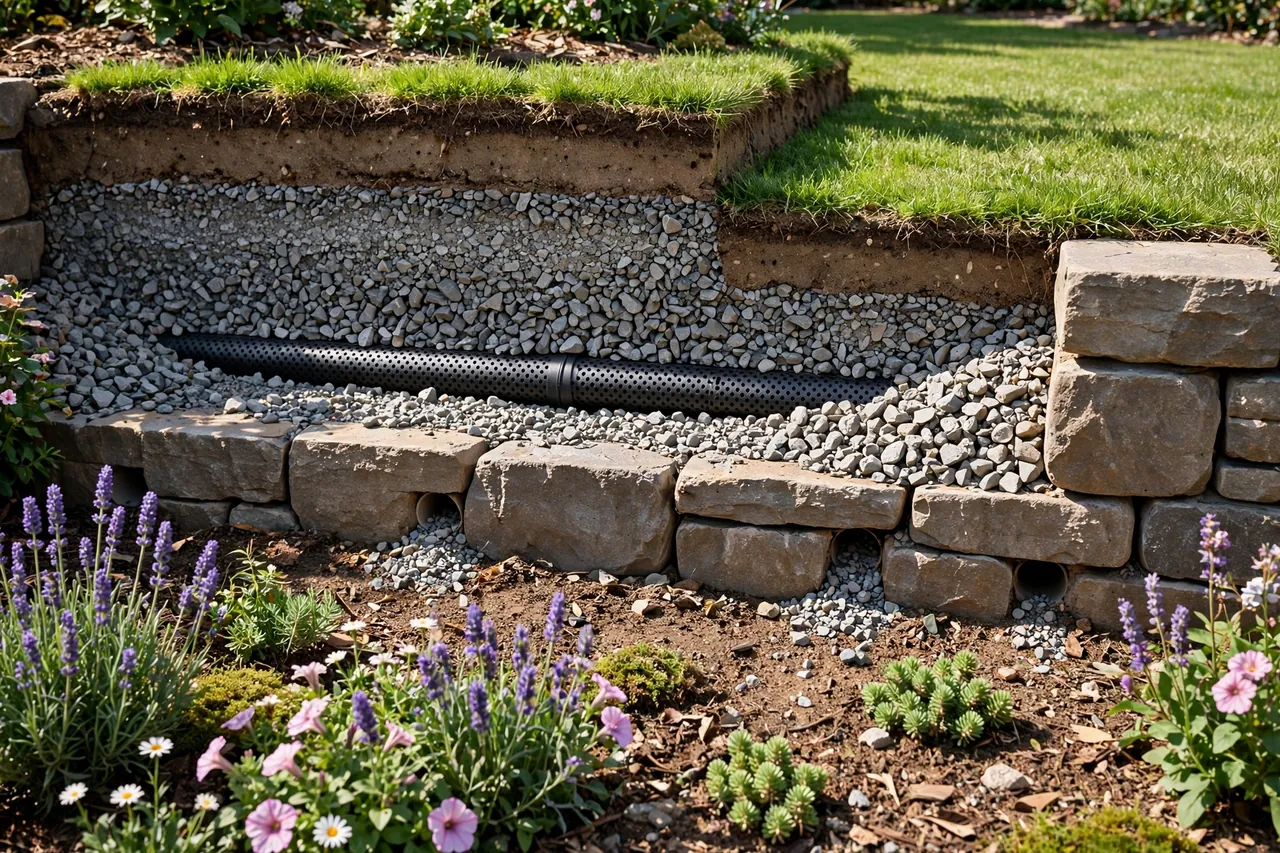
- Add drainage if soil pushes on the wall. Backfill with clean crushed gravel, not the soil you dug out, and add a perforated drain pipe at the base or weep holes in the bottom course.
- Cap the top. Finish with capstones or a flat cap block. Glue the cap down with construction adhesive made for masonry so it stays put.
Work in short sections and step back often. A wall that looks straight from two feet away can wave like a snake from across the yard.
What a Garden Wall Costs in 2026
HomeGuide’s 2026 cost data, compiled from contractor invoices nationwide, puts a professionally installed retaining wall at $20 to $50 per square foot of wall face overall, with materials at $5 to $20 and labor at $10 to $30 per square foot. Angi’s 2026 survey puts the national average project at $6,077, with a typical range of $3,194 to $9,201. Prices checked November 9, 2026. These are planning ranges, not quotes, so get at least three itemized local quotes before you commit.
| Material | Installed cost per sq ft | Best for |
|---|---|---|
| Gabion (wire cages + stone) | $10 to $40 | Cheapest real wall, self-draining |
| Interlocking concrete block | $15 to $35 | Predictable, DIY friendly |
| Timber / railroad tie | $10 to $40 | Warm look, 10 to 20 year life |
| Poured concrete | $20 to $45 | Modern, needs a contractor |
| Dry-stack natural stone | $20 to $85 | Rustic, no mortar, high labor |
| Brick | $30 to $60 | Classic, best for low walls |
| Corten steel | $40 to $150 | Thin profile, accent runs only |
Two reference points make the numbers concrete. A ten-foot run two feet tall typically lands between $700 and $1,300 professionally installed, and a four-foot version of the same run roughly doubles that. Doing your own labor removes roughly $10 to $30 per square foot, which is where DIY savings actually live.
The cheapest way to build a real wall is a gabion cage filled with locally sourced stone, or dry-stacked concrete blocks set on a compacted gravel pad with no mortar. Both skip the two biggest cost drivers, which are skilled masonry labor and poured footings. Sourcing fill stone from a local quarry rather than by the bag makes a substantial difference on a longer run. For a full cost breakdown with a calculator, the retaining wall cost calculator compares its ranges against HomeGuide and Angi.
Permits and the Four-Foot Rule
Four feet is the number that decides whether your wall is a weekend project or a permitted one. This Old House notes that many jurisdictions require permits for walls over four feet tall, and a structural assessment above that height is standard advice. Colorado State University Extension says the same thing about engineered design above four feet.
Four feet is not a national law. It is the number that shows up most often in municipal code, which is why it is a useful trigger for picking up the phone. Your town might say three feet. Your homeowners association might say two and have opinions about color. Height thresholds, setback distances from property lines, and surcharge rules all vary by municipality, so a five-minute call to your local building department before you buy materials is worth it.
Retaining walls are a different story from freestanding walls. Many towns require a permit for any retaining wall over four feet of exposed face, and often an engineered drawing on top of that. If your wall sits near a property line, a driveway, or your home’s foundation, check first even when it is short.
Drainage and Footings: The Details That Keep a Wall Standing
This is the section that decides whether your wall is still straight in five years. Skip it and you will rebuild.
Give water an exit. Behind any retaining wall, backfill with clean crushed gravel rather than the soil you dug out. Gravel lets water drop straight down instead of pooling and pushing. Add a perforated drain pipe at the base wrapped in filter fabric, or leave weep holes in the bottom course, and give the water somewhere to actually go once it arrives. If water has nowhere to go, it will find a way out through your wall. Our guide on fixing a soggy yard covers the drainage side of the problem in more depth.
Dig below your frost line. Footings that sit above the frost line get lifted every winter by expanding soil, and a wall that lifts unevenly cracks. Frost depth varies enormously across the country, from a few inches in the far south to several feet in the far north. Your county building department publishes the number for free, so ask before you dig.
Compact, then compact again. Loose base material settles under load, so run a plate compactor over the gravel in two-inch lifts rather than dumping six inches at once and hoping. Colorado State University Extension adds that foundation material should extend at least one foot beyond both the front and back of the base width.
What to Plant on, in, and Around Your Garden Wall
A wall creates three separate growing conditions, and matching plants to the right one is what makes the whole thing look designed instead of decorated. Before you buy anything, check your zone. The USDA Plant Hardiness Zone Map was updated in 2023 using weather data from 1991 through 2020, and a ZIP code search on the map site takes about ten seconds.
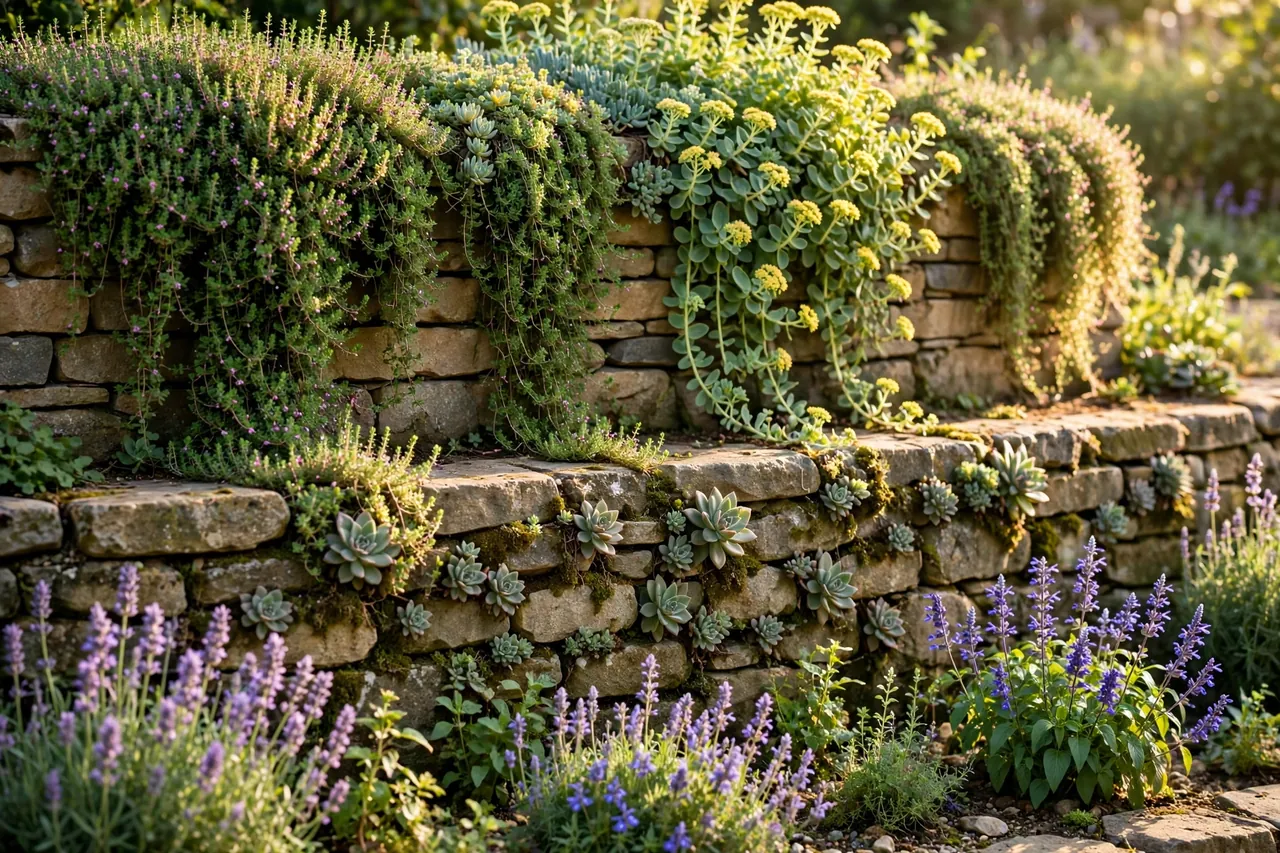
On top, plant spillers that cascade over the edge and soften the hard line. Creeping thyme, trailing rosemary, sedum Angelina, and creeping phlox all work in Zones 5 through 9 and tolerate the fast drainage of a wall top. In the face, use crevice plants. Dry-stacked walls have gaps, and hens and chicks, sempervivum, small ferns in shade, and lewisia will colonize the joints and make a new wall look decades old. Tuck a pinch of potting mix into the crevice, wedge the plant in, and keep it damp for the first month.
At the base, match the exposure. A south-facing wall base bakes because masonry radiates stored heat well into the evening, which suits lavender, salvia, and Mediterranean herbs. A north-facing base stays cool and shaded, so hosta, hellebore, astilbe, and Japanese forest grass are the better call. The single most common mistake is identical plantings on both sides of the same wall, half of which are struggling by July.
For groundcover at the base, compare creeping myrtle vs periwinkle before you choose, since the two look alike but behave differently. And if you need plants delivered, our list of the best places to buy plants online covers reliable sellers.
Mistakes to Avoid With a Garden Wall
Most failed walls fail for boring reasons, and every one of them is avoidable. Do not build on bagged sand instead of compacted crushed gravel: sand shifts, and a wall set on it can rise almost an inch in one winter and go wavy across the top. Do not skip the level on the first course, because every course above copies its mistakes. Do not stack joints in a straight vertical line, since continuous seams are where walls split.
Do not forget the neighbors and the rules. A wall that crosses a property line or blocks a neighbor’s drainage can turn into a dispute that costs far more than the wall did. And do not plant the same thing on both sides of a wall: sun, shade, heat, and moisture change completely from one face to the other, so treat each side as its own garden.
Finally, do not start with the longest wall in your yard. Pick the shortest one first and learn on it. A two-foot dry-stacked or block wall can be finished in a weekend for a few hundred dollars in materials, and you will learn more in those two days than in a month of saving photos.
Please note: garden walls that hold back soil are structural work. Walls over four feet tall, walls near foundations, driveways, or property lines, and any wall showing cracks, leaning, or bulging should be checked by a licensed contractor or structural engineer. Heavy blocks and stone can cause serious injury, so get help with lifting, wear gloves and eye protection, and never work under an unstable wall.
Related Guides
How to Build a Retaining Wall on a Slope · Fix a Soggy Yard: Drainage That Actually Works · Creeping Myrtle vs Periwinkle · Best Places to Buy Plants Online · Rectangle Pool Landscaping Ideas · Landscaping Ideas with Rocks and Stones · Yard Drainage Solutions · Cost of Tree Removal
Frequently Asked Questions
Do I need a permit to build a garden wall?
Usually not for a freestanding wall under three feet, but retaining walls are a different story. Many US jurisdictions require a permit for any wall over four feet of exposed face, and often an engineered drawing on top of that. Height thresholds and setback rules vary by town, so call your local building department before you buy materials.
What materials are best for building garden walls?
For a first build, segmental concrete block is the most forgiving because the units are uniform and the systems lock together. Dry-stacked stone gives the best character but takes real patience. Gabion is the value pick and drains itself. Brick suits low, formal walls, and corten steel is for thin accent runs.
Do you need foundations for a garden wall?
Some form of prepared base, yes, though “foundation” is heavier than what most garden walls need. A dry stone wall wants a shallow trench roughly three inches deep with about two inches of gravel. A block retaining wall wants four to six inches of compacted crushed base topped with an inch of coarse sand, with the first course buried one inch for every eight inches of height.
How much does a garden wall cost per foot?
HomeGuide’s 2026 data puts a professionally installed wall at $20 to $50 per square foot of wall face, with gabion at the low end around $10 to $40 and natural stone or steel at the high end. A ten-foot run two feet tall typically lands between $700 and $1,300 installed. Doing your own labor removes roughly $10 to $30 per square foot. Prices checked November 9, 2026.
What is the cheapest way to build a garden wall?
Gabion cages filled with locally sourced stone, or dry-stacked concrete blocks set on a compacted gravel pad with no mortar. Both skip the two biggest cost drivers, which are skilled masonry labor and poured footings. Sourcing your fill stone from a local quarry rather than by the bag makes a substantial difference on a longer run.
Start with the shortest wall in your yard and the job that solves a real problem: a crumbling bed edge, a sightline into a neighbor’s kitchen, or a slope that keeps washing mulch onto the patio. Get the base right, give water somewhere to go, and the pretty part takes care of itself.