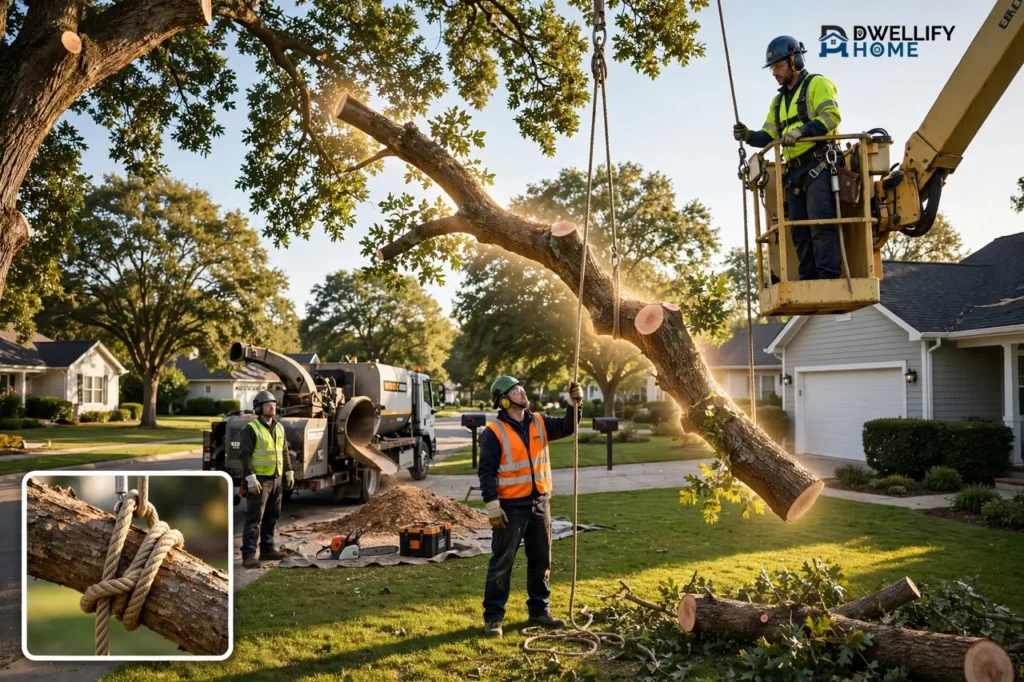
Tree removal costs $750 on average in the United States, according to Angi’s 2026 national cost data, checked Nov 9, 2026.
Most homeowners pay between $200 and $2,000 to take down a single tree, and that range covers the cutting itself. Your final bill depends mostly on how tall the tree is, how close it stands to your house or power lines, and whether you also pay for stump grinding and hauling the wood away. A small tree in an open yard can cost as little as $150, while a very large or dangerous tree near power lines can reach $10,000. This guide walks you through every price, every cost factor, and For how one tree fits into a whole-yard budget, see our guide to how much landscaping costs.
How Much Does Tree Removal Cost?
The national average cost to remove a tree is $750, according to Angi, updated Oct 22, 2026 and checked Nov 9, 2026. Most homeowners pay between $200 and $2,000 for one tree. Thumbtack’s 2026 cost guide puts the national average range a little wider, at $450 to $1,450, with low-end jobs at $373 to $432 and high-end jobs at $2,500 to $3,300.
Why do the two sources differ? They measure slightly different things. Angi’s average covers the full range of single-tree jobs across the country, while Thumbtack’s range reflects prices reported by its pros for cutting down one tree, not including stump removal. Both agree on the big picture: a small, easy tree costs a few hundred dollars, and a big, tricky tree costs well over $1,000.
Think of the price in three parts. First comes the cutting: the crew climbs or uses a lift, cuts the tree down in sections, and lowers each piece safely. Second comes the cleanup: branches, trunk wood, and leaves hauled away or chipped. Third comes the stump: grinding or digging it out, which most companies charge for separately. When you compare quotes, ask every company to list all three parts, so you compare full prices and not just the cutting.
Tree Removal Cost by Tree Size
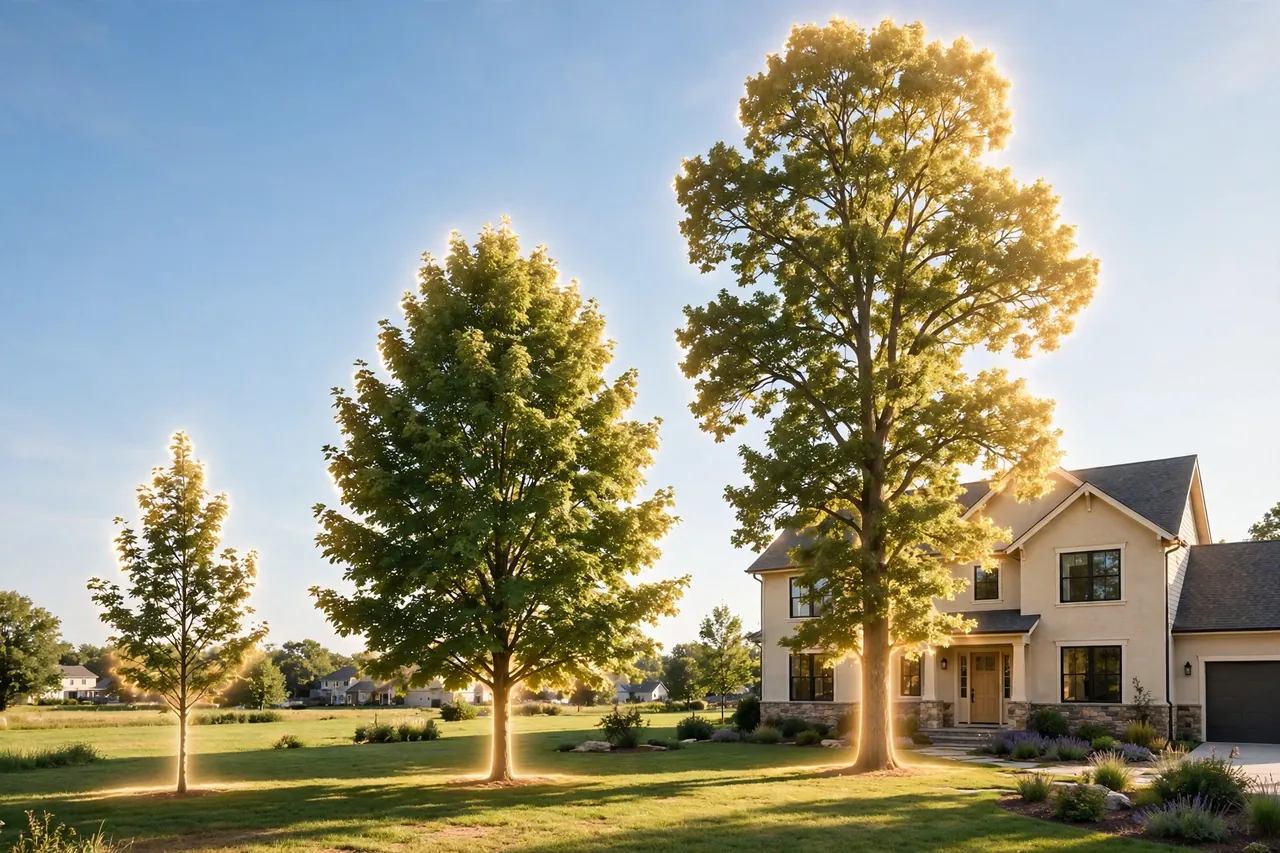
Height is the biggest price driver. A taller tree takes more time, more crew, and more equipment, and every extra foot adds risk. Angi’s 2026 table below shows the average removal cost by height, checked Nov 9, 2026.
| Tree height | Average removal cost |
|---|---|
| Up to 30 feet | $150–$450 |
| 30–60 feet | $450–$1,200 |
| 60–80 feet | $800–$1,500 |
| Over 80 feet | $1,000–$2,000 |
Thumbtack measures size differently, by trunk diameter and canopy width, and its numbers tell the same story. A small tree with a trunk under 12 inches across costs $226 to $946 to remove, a mid-size tree with a 12- to 24-inch trunk costs $517 to $2,132, and a large tree with a 24- to 36-inch trunk costs $976 to $4,117, according to Thumbtack data (source: Xactware), checked Nov 9, 2026. The wider the canopy, the higher the price inside each band, because a wide canopy means more branches to cut, lower, and haul away.
Measure your tree before you call for quotes. Stand far back and compare the tree to your house: a two-story house is about 20 to 25 feet tall at the roofline, so a tree that rises well above it is likely 40 feet or more. Wrap a tape around the trunk at chest height to get its diameter. These two numbers let a company give you a realistic ballpark price over the phone, and they help you spot a quote that looks far too high or suspiciously low.
What Affects the Cost of Tree Removal?
Two trees of the same height can cost very different amounts to remove. The crew’s price reflects the work, the risk, and the equipment, not just the tree. Here are the factors that move your quote up or down.
Tree species
Some species cost more to remove than others. Angi’s 2026 data, checked Nov 9, 2026, puts oak removal at $200 to $2,000, pine at $250 to $1,500, maple at $250 to $2,000, ash at $250 to $1,800, cedar at $250 to $1,500, palm at $650 to $1,500, and aspen at $1,000 to $1,800. Palms cost more because the wood is extremely heavy. Aspens cost more because their root systems are large and complex. Oaks can cost more when they are heritage trees, and some states forbid removing them at all, so check local rules before you book anything.
Health and condition of the tree
A dead or diseased tree is unpredictable, and that unpredictability costs money. Angi reports that poor health and structural problems can add up to 15% to the final cost, checked Nov 9, 2026. A diseased tree with soft wood can be cheaper to cut, at $400 to $900, because the wood gives way easily. But a tree with hidden decay can behave in ways the crew cannot predict, so the team may need special rigging to bring it down safely. A tree leaning 15 degrees or more, with a hollow trunk, fungus at the base, or more than 25% dead branches, is a removal candidate, not a wait-and-see tree.
Location and access
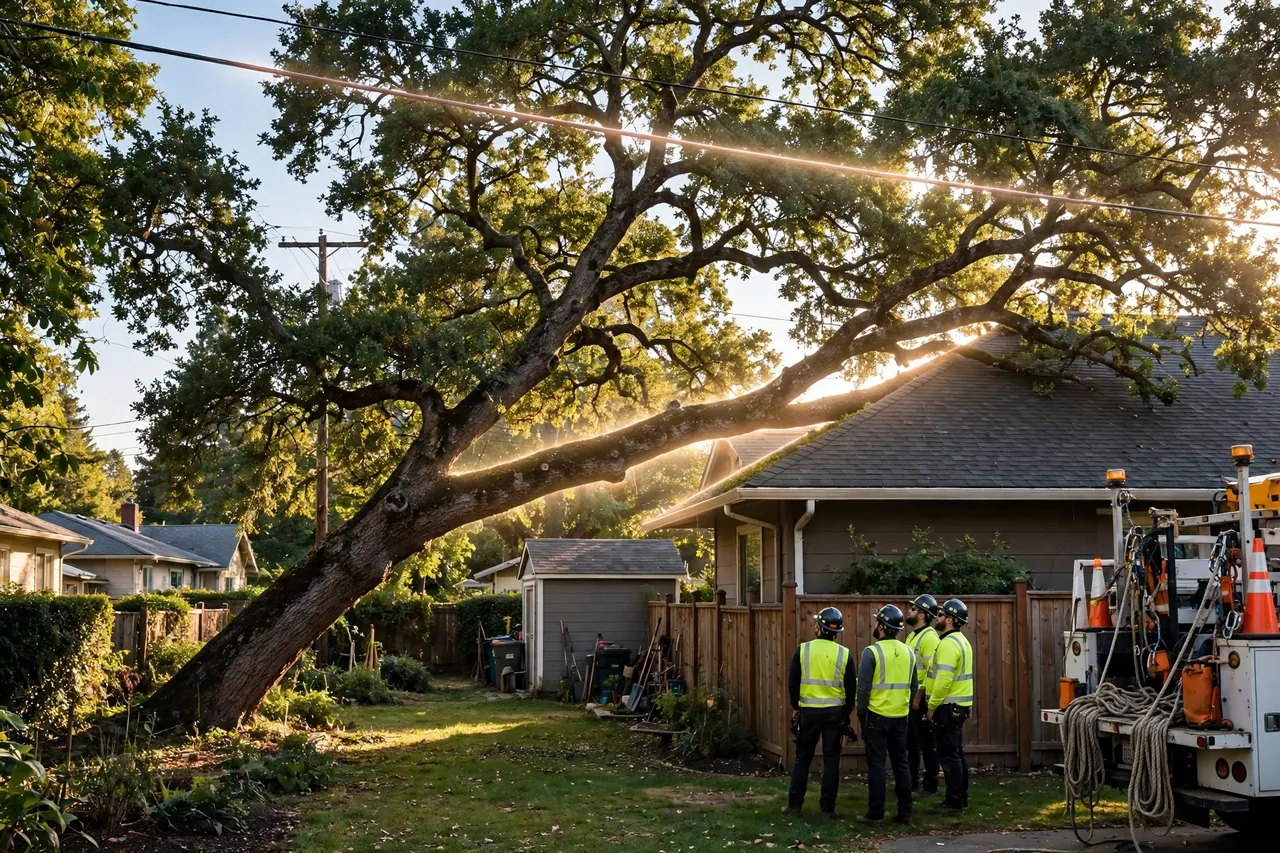
A tree standing in an open front yard with a clear path for a truck costs far less to remove than the same tree squeezed between a fence, a shed, and a power line. Angi reports that a tight, hard-to-reach, or unsafe location often adds 25% to 50% to the total cost, checked Nov 9, 2026. Crews charge more when they must carry every branch out by hand, protect a roof or deck below, or work around live power lines. If you can clear a path before the crew arrives, by moving garden furniture, pots, and fences out of the way, you can trim that premium.
Emergency removal after a storm
Emergency tree removal commands a premium. Angi puts emergency jobs at up to $5,000, depending on the circumstances, checked Nov 9, 2026. After a big storm, every tree company in town is busy, and crews work long hours in risky conditions. Check your homeowners insurance policy before you pay out of pocket, because storm-related removal is often covered. If a tree has fallen on your house, do not rush the removal: your insurer may need to send an adjuster to see the damage first, and clearing the tree early can remove the evidence they need for your claim.
Number of trees
Removing several trees at once usually costs less per tree than removing them one at a time, because the crew, truck, and chipper are already on site. When you clear a whole plot, companies often price by the acre instead of by the tree. Angi reports $500 to $6,000 per acre, depending on how densely wooded the land is, checked Nov 9, 2026. A lightly wooded acre typically runs up to $2,500 per acre, while a very densely wooded acre can pass $6,000. Ask for a per-tree price and a bulk price, then compare the two.
Extra Costs to Budget For
The cutting price is only part of the bill. These add-ons catch many homeowners by surprise, so budget for them before you sign.
Stump grinding and stump removal
Most tree removal quotes leave the stump in the ground. Grinding it down costs extra. HomeGuide puts stump removal at $100 to $400 on average, depending on the method, checked Nov 9, 2026. Stump grinding for the first stump runs $120 to $400, each extra stump $30 to $60, and grinding by diameter $2 to $6 per inch. Digging a stump out with a backhoe costs $80 to $190 per stump, and chemical rotting costs $100 to $200 per stump. Angi’s figures are lower for grinding alone, at $100 to $150 for the first stump and $50 per extra stump, checked Nov 9, 2026, so get the stump price in writing either way. If you skip the stump, remember it will sit in your yard for years, slowly rotting, and it can sprout new shoots.
Cleanup and debris removal
A removed tree leaves a big pile behind: branches, bark, leaves, and a heavy trunk. Angi reports hauling the debris away costs about $70, running it through a chipper averages $95, and splitting it into firewood costs around $70, checked Nov 9, 2026. Some companies include basic cleanup and charge only for hauling. Others charge for every part. Ask exactly what “cleanup” means in your quote: raked bare ground, or just the big pieces gone?
Permits and arborist reports
Many cities require a permit to remove a tree taller than 10 feet. Angi puts the permit at $60 to $150, checked Nov 9, 2026. If your city also wants an arborist’s report before it grants the permit, budget an average of $860 for that report. Heritage or protected trees can need extra approval, and removing one without a permit can bring a fine. Call your city or county office first; the permit step is quick when you know the rules, and costly when you skip it.
Crane service
When a tree threatens a roof, a car, or a power line, the crew brings in a crane. Angi reports crane service adds roughly $500 per day, ranging from $250 to $600 per day, checked Nov 9, 2026. For very difficult removals, the total crane cost can climb to $6,000 to $7,000. A crane is not an upsell: it is how a crew removes a tall tree safely when there is no safe place for the pieces to fall.
How Much Does It Cost to Remove a Fallen Tree?
A tree that has already fallen costs less to clear than one still standing, because the crew skips the climbing and careful sectioning. Angi puts removing a fallen tree at $75 to $150, checked Nov 9, 2026. That covers cutting the wood up and hauling it away when the tree lies in open ground with easy truck access.
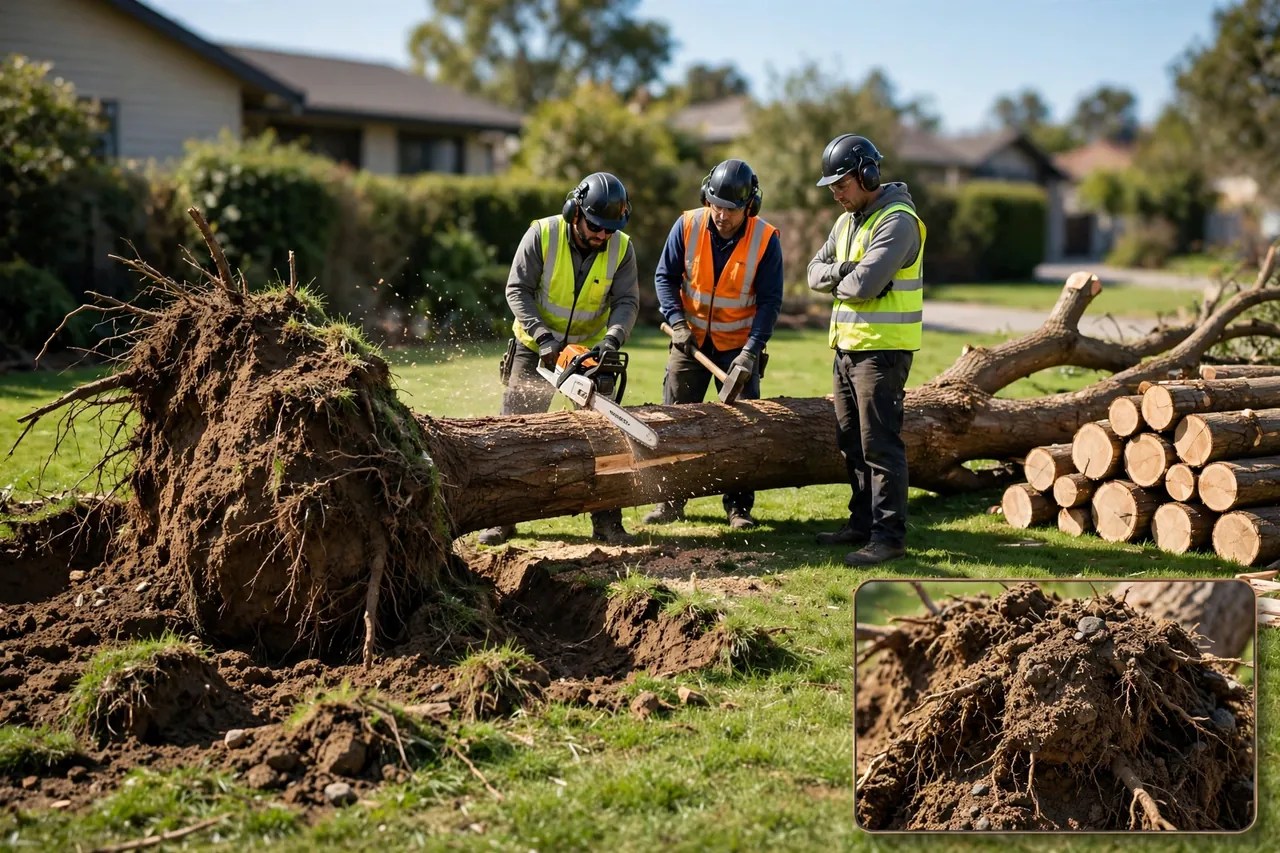
But an uprooted tree with its root ball still attached is a different job. Angi reports uprooted or fallen trees cost $300 to $500 to clear when the crew must cut up and haul away the lumber, checked Nov 9, 2026. If the fallen tree rests on your roof, your fence, or a car, the price rises fast, because the crew must lift it off without causing more damage. And if the tree fell in a storm, call your insurer first: storm damage is often covered, and your insurer may want photos and an inspection before the tree moves.
Never try to move a large fallen tree yourself. A trunk under tension can spring, roll, or snap when you cut it, and a root ball can tip back into its hole with tons of force. Cut only small branches you can reach safely from the ground, and leave the trunk to a crew with the right gear.
Can You Remove a Tree Yourself?
For a small, healthy tree in open ground, with no house, fence, or power line nearby, some homeowners do the job themselves. Thumbtack quotes a pro who puts it plainly: if the tree holds no risk to your health or home, there is no reason to oppose removing a smaller tree yourself. You still need a sharp chainsaw, safety gear, a clear escape path, and a plan for where every piece will fall.
For anything bigger, hire a pro. Large trees are a job for a licensed, insured tree service, not a weekend project. Here is why: a tree can look solid and hide decay inside, so it may fall in a direction you did not expect; a single wrong cut can drop a heavy limb on your roof; and working near power lines can kill. Thumbtack’s pro warns that serious damage to your health or home is extremely possible, and it only takes one thing to go wrong with a large tree. A pro crew brings ropes, harnesses, rigging gear, and a chipper, and their insurance covers the damage if something goes wrong. Your homeowners policy may not cover damage from your own DIY tree work.
If you do take on a small tree, follow these safety rules. Wear a hard hat, eye protection, gloves, and steel-toe boots. Work only in dry, calm weather, never in wind or rain. Plan two escape routes away from the fall line, and clear them of branches and tools. Cut only what you can reach from the ground, and never climb a tree with a running chainsaw. If the tree leans toward a house, a fence, or a power line, stop and call a pro. Saving a few hundred dollars is never worth a hospital visit.
💡 Practical Home Tip: Before the crew arrives, walk the yard with them and point out septic lines, sprinkler heads, buried cables, and anything fragile near the tree. Mark the spots with flags. It takes five minutes, and it prevents the kind of damage that costs far more than the removal itself.
How to Save Money on Tree Removal
You can cut the bill without cutting corners. These steps work, and pros recommend them.
- Get at least three quotes. Prices for the same tree can differ by hundreds of dollars between companies. Ask each one for an itemized quote that lists cutting, stump grinding, hauling, and any permit fee.
- Book in the off-season. Spring, summer, and early fall are the busiest seasons for tree work. Winter and late fall are quieter, and some companies offer lower prices to fill their schedule.
- Remove several trees at once. One visit for three trees costs less per tree than three separate visits, because the crew and equipment come out once.
- Clear the area yourself. Move garden furniture, pots, fences, and debris out of the way before the crew arrives. Easy access can cut the hard-access premium.
- Do your own cleanup. Ask the crew to leave the wood in pieces and haul the brush yourself, or chip it into mulch for your garden beds. Hauling is one of the easiest costs to take on.
- Leave the stump. If the stump sits in a back corner where it harms nothing, skipping the grinding saves $100 to $400 right away. You can always grind it later.
- Keep the firewood. Ask the crew to cut the trunk into firewood lengths instead of hauling it away. You save the hauling fee and gain a winter’s worth of wood.
- Ask an arborist first. An ISA Certified Arborist can tell you whether the tree truly needs removal, or whether pruning would solve the problem for far less money.
Be wary of a quote that is far below the others. A very cheap bid can mean no insurance, no license, or a crew that plans to leave the mess behind. Ask every company for proof of insurance and a written quote before they start work.
What to Do After the Tree Is Gone
Once the tree is down, your yard has a hole, a bare patch, and a lot more sunlight than before. That is a chance to improve the space, not just a cleanup job.
Start with the ground. Fill the hole left by the stump with topsoil, tamp it down, and let it settle for a few weeks before you plant anything over it. If the spot holds water after rain, fix the drainage before you plant: a soggy patch will kill new plants fast. Our guide to fixing a soggy yard walks through the drainage fixes that work for wet spots, from grading to French drains.
Then decide what goes in the empty space. A new tree is the obvious choice if you miss the shade, and you can order a young replacement tree online and have it shipped to your door. See our roundup of the best places to buy plants online to compare nurseries. If you would rather keep the area open, plant a low groundcover over the old stump spot: creeping myrtle vs periwinkle compares two tough groundcovers that fill bare ground fast. And if the removal changed how your yard slopes or drains toward the house, read how to build a retaining wall on a slope before you regrade, so the new layout holds the soil in place.
Finally, watch the sunlight. A spot that sat in deep shade for years now gets full sun, and the plants that grew there may scorch. Move shade-lovers to a shadier corner, and choose sun-loving plants for the newly open spot. Give the soil a season to settle, and your yard will look better than it did with the old tree in place.
How to Get a Fair Quote in 5 Steps
- Measure the tree. Note its height against your house and its trunk diameter at chest height, so every company quotes the same tree.
- Call three licensed, insured companies. Ask each one to visit in person: a phone quote cannot see the power lines, the fence, or the slope.
- Ask for an itemized written quote. Cutting, stump grinding, hauling, chipping, and permits should each appear as their own line.
- Ask who cleans up. Confirm whether the price includes raking, hauling, and filling the stump hole, or whether that costs extra.
- Check insurance and permits. Ask for proof of liability insurance and workers’ compensation, and confirm who handles the city permit.
A good company welcomes these questions. If a company refuses to put the price in writing, cannot show insurance, or pressures you to decide on the spot, walk away and call the next one on your list.
Safety First: Read This Before You Book
Tree removal is one of the most dangerous jobs a homeowner can face. Falling limbs, rolling trunks, hidden decay, and live power lines can cause serious injury or death, and a falling tree can destroy a roof, a car, or a fence in seconds. Large trees, trees near power lines, leaning trees, and dead or decaying trees are jobs for a licensed, insured professional, never for a homeowner with a chainsaw and a ladder.
Disclaimer: This article gives general cost and safety information only. Prices vary by location, tree, and company, and they change over time. Always get a written quote from a licensed tree service, check your local permit rules, and call your power company before any work near power lines. If a tree threatens your home or safety, contact a professional right away. DwellifyHome is not liable for injury or damage from tree work done from this guide.
Related Guides
- Fix Soggy Yard Drainage — sort out wet spots left behind after a tree and stump come out.
- How to Build a Retaining Wall on a Slope — hold soil in place when removal changes your yard’s slope.
- Best Places to Buy Plants Online — order a young replacement tree or new plants for the empty space.
- Creeping Myrtle vs Periwinkle — pick a tough groundcover for the bare spot where the tree stood.
Related Guides
Garden Wall · Front of House Landscaping · Low Maintenance Front Yard Landscaping
Frequently Asked Questions
Where can I find a tree removal cost calculator?
You can find tree removal cost calculators online. Some sites offer several calculators, including ones for palm tree removal and crane-assisted removal. You can also ask your tree removal pro if they have a calculator you can use, since a local pro’s tool reflects real prices in your area.
Do you need a permit to cut down a tree on your property?
You might need a permit to cut down a tree. The rules vary from one city, county, or environmental agency to the next. A local professional usually knows the laws in your area, but do your own research too, and check whether your area protects heritage trees.
How long does it usually take to remove a tree?
Removing a tree can take anywhere from 10 minutes to 24 total hours or more, according to Thumbtack’s pro source. A small tree takes just a couple of hours, a mid-size tree takes four to eight hours, and a large tree can take one or two full working days, plus up to two hours for stump removal.
How long does it usually take to grind a stump?
Grinding a stump can take anywhere from 10 minutes to 4 hours or more, according to Thumbtack’s pro source. The time depends on the stump’s size, how deep the roots run, and whether the crew must work around rocks, fences, or buried lines.
What do you do with tree stumps once removed?
That is entirely up to you. You can pay someone to remove the stumps, cut them into smaller pieces to use as firewood, or turn them into furniture such as tables, mounts, or stands. Many homeowners grind the stump and use the chips as mulch in their garden beds.
Tree removal costs $750 on average, but your price comes down to your tree: its size, its species, its health, and where it stands. Measure the tree, get three itemized quotes, and budget for the stump and the cleanup on top of the cutting. And when the tree is big, leaning, or near a power line, hire a licensed pro and let them carry the risk. Get your quotes this week, and your yard will be clear, safe, and ready for whatever you plant next.