Front of house landscaping is the design of the beds, walkway, lawn, and plants between the street and your front door, and a professional front-yard refresh typically costs $1,500 to $5,000 in the US, according to Angi’s 2026 cost data.
That first view from the curb sets the tone for your whole home. A tidy walk, healthy plants at the right size, and one clear focal point at the door can make even a plain house look cared for and welcoming. The good news is that you do not need a big budget or a design degree to get there. You need a plan that fits your site, plants that fit your climate, and work done in the right order.
This guide walks you through that plan: how to read your yard, the five design rules that do the heavy lifting, plant picks by climate zone, ideas for every house style and yard size, real 2026 costs, and a step-by-step order you can follow yourself.
Start With Your Site, Not a Photo
The first rule of landscaping is to work with your site, not against it. Check sun, slope, soil, and drainage before you buy a single plant, and choose species that suit those conditions. Most failed do-it-yourself plans come from forcing a look the site cannot support.
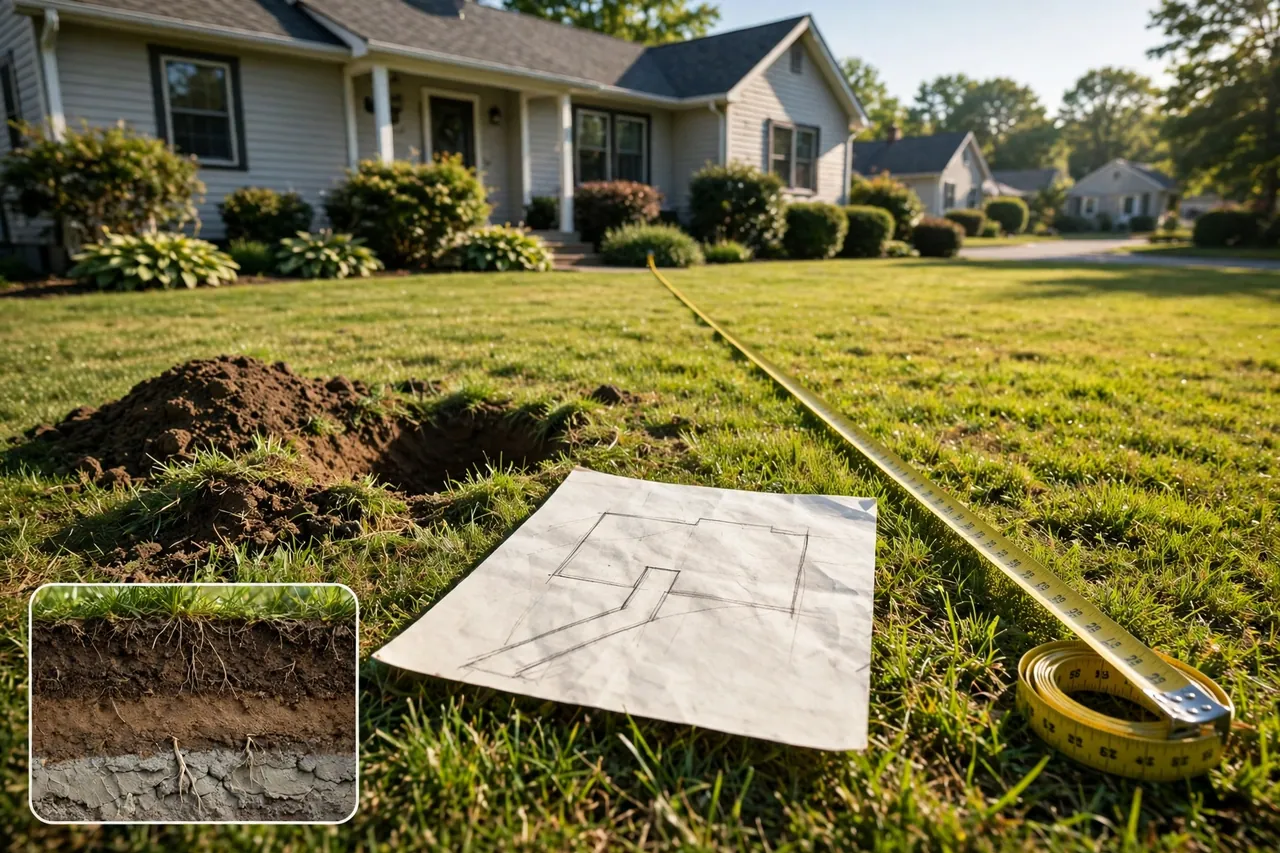
Give yourself one Saturday for a simple site survey before you shop. Measure the front yard and sketch it on paper: property line, house footprint, driveway, walkway, windows, downspouts, utility boxes, and trees you already have. Note the distances from the street, too. A sketch keeps you from buying plants that do not fit.
Next, track the sun. Check the yard at 9 a.m., noon, and 4 p.m. and mark the spots that get full sun (6 or more hours), part shade, and full shade. A south-facing slope with thin soil wants drought-tolerant plants. A north-facing yard wants shade-tolerant ones. Forcing the opposite costs you in replacements and watering.
Then watch the water. After a heavy rain, look for where water pools and which way the ground slopes relative to the house. Water must always drain away from the building, never toward it. Dig a few holes and check the soil as well. Is it sandy, heavy with clay, or packed hard from construction? Clay holds water and starves roots of air, while sand drains fast and dries out.
Finally, find your USDA hardiness zone. The USDA Plant Hardiness Zone Map divides North America into 13 zones based on average annual minimum winter temperatures, and it tells you which plants can survive your winters. Check your zone on the USDA Plant Hardiness Zone Map before you fall in love with a plant at the nursery. Your local extension office can also confirm which varieties do best in your county.
One safety step comes before any digging: call 811. It is the free national service that marks buried utility lines, and you must call before you dig anywhere in the US. Visit Call 811 or dial 811 a few days before you break ground so you do not hit a gas, electric, or water line.
Five Design Rules That Make a Front Yard Look Polished
You do not need a design degree. Five simple rules cover most of what separates a polished yard from a patchy one. Penn State Extension teaches these same principles in its Design Basics for Residential Landscapes course: assess the site, unify the elements, and plan before you plant.
1. Design for mature size. A plant at the nursery is a baby. Design for how it will look in five to ten years, so you do not pull out overcrowded shrubs shortly after planting them. Read the plant tag, write down the mature height and width, and space for that size, not the size in the pot.
2. Plant in odd-numbered groups. Grouping plants in 3, 5, or 7 looks more natural than even or rigidly symmetrical groups. Extension designers treat the rule of three as a foundational design principle. It also makes planning easier, because you choose a few repeated groups instead of dozens of single plants.
3. Repeat for rhythm. Repeating a color, shape, or plant type creates rhythm along the length of the yard. Repeat one grass or one perennial every few feet along the foundation, and the whole front starts to feel like one design instead of a collection of random plants.
4. Keep the scale honest. Scale is the size of one part of the landscape compared to another. A plant or object that is out of proportion looks wrong next to the house. Low, wide beds suit a long ranch house, while taller shrubs and a small tree suit a two-story home. As a rule of thumb, foundation plants should never grow taller than two-thirds the height of the windows beside them when mature.
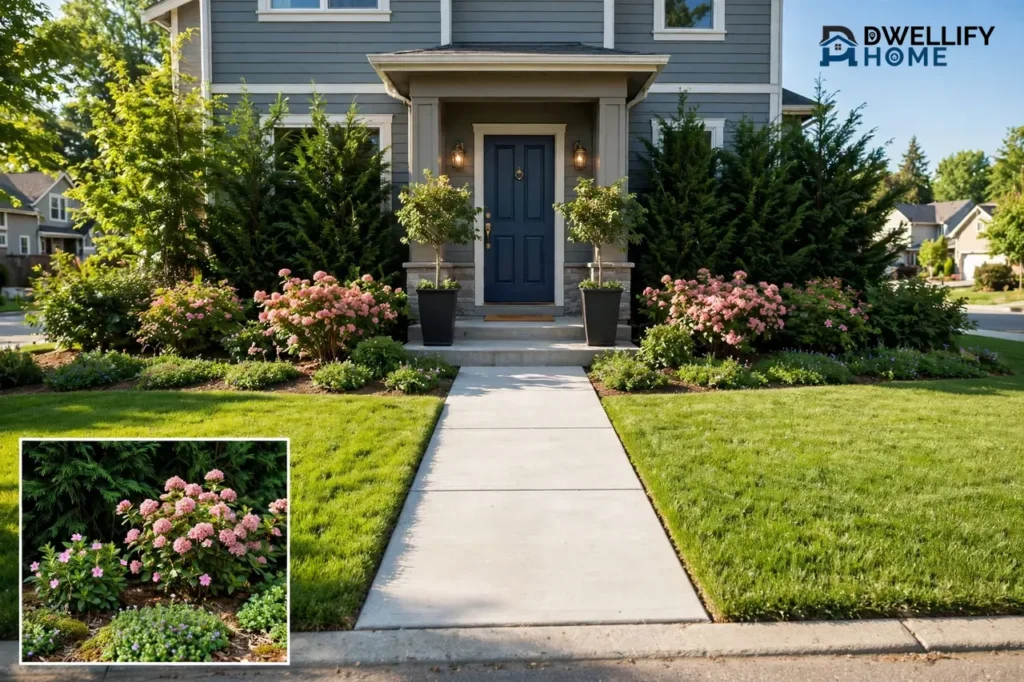
5. Give the eye one focal point. The front door should be the star. Use your boldest color, a small tree, or a pair of matching planters near the walkway so the eye travels straight to the entry. Everything else plays a supporting role.
Lay Out the Front Yard in Zones
A front yard has three jobs: arrival, display, and storage. Think of it in zones, then design each one.
Arrival: the path and the door. The walkway from the street or driveway to the door is the spine of the design. Make it direct and wide enough for two people to walk side by side, about 4 feet wide at least, and let it curve only if there is a reason, such as a tree or a slope. A straight, generous walk reads as confident and welcoming. Add a light or two along it now, because lighting is cheap to add early and costly to retrofit.
Display: beds and borders. Beds do the visual work. A common mistake is the narrow ribbon: a thin strip of flowers hugging the foundation while a vast lawn stretches to the street. Fix it by deepening the beds, wrapping them around the corners of the house, and anchoring them with a small tree or a shrub mass. Make foundation beds at least as deep as the mature width of the shrubs you plant in them, so the plants never crowd the walk or the siding.
Storage: parking, bins, and utilities. Hide what you cannot move. Evergreen shrubs or a low screen cover meters and bins. For parking, two paved wheel tracks with permeable gravel or grass between them work well and cost less than a full slab. Keep the strip between the sidewalk and the curb in mind, too: it often belongs to the city, with its own planting rules, so check before you plant there.
Before you commit to any layout, check your HOA rules and local setbacks. HOA covenants can dictate turf coverage, plant heights, and fence styles, and corner lots often have a sight triangle rule: no foliage blocking the view between 2 and 8 feet above the ground near intersections and driveway aprons. Confirm the exact numbers in your own documents.
Foundation Planting: The Best Plants for the Front of Your House
Foundation planting is the layer of shrubs, perennials, and groundcovers that sits against the house. It softens the hard line where the walls meet the ground, hides the foundation, and frames the windows and door. Get this layer right and the rest of the yard almost designs itself.
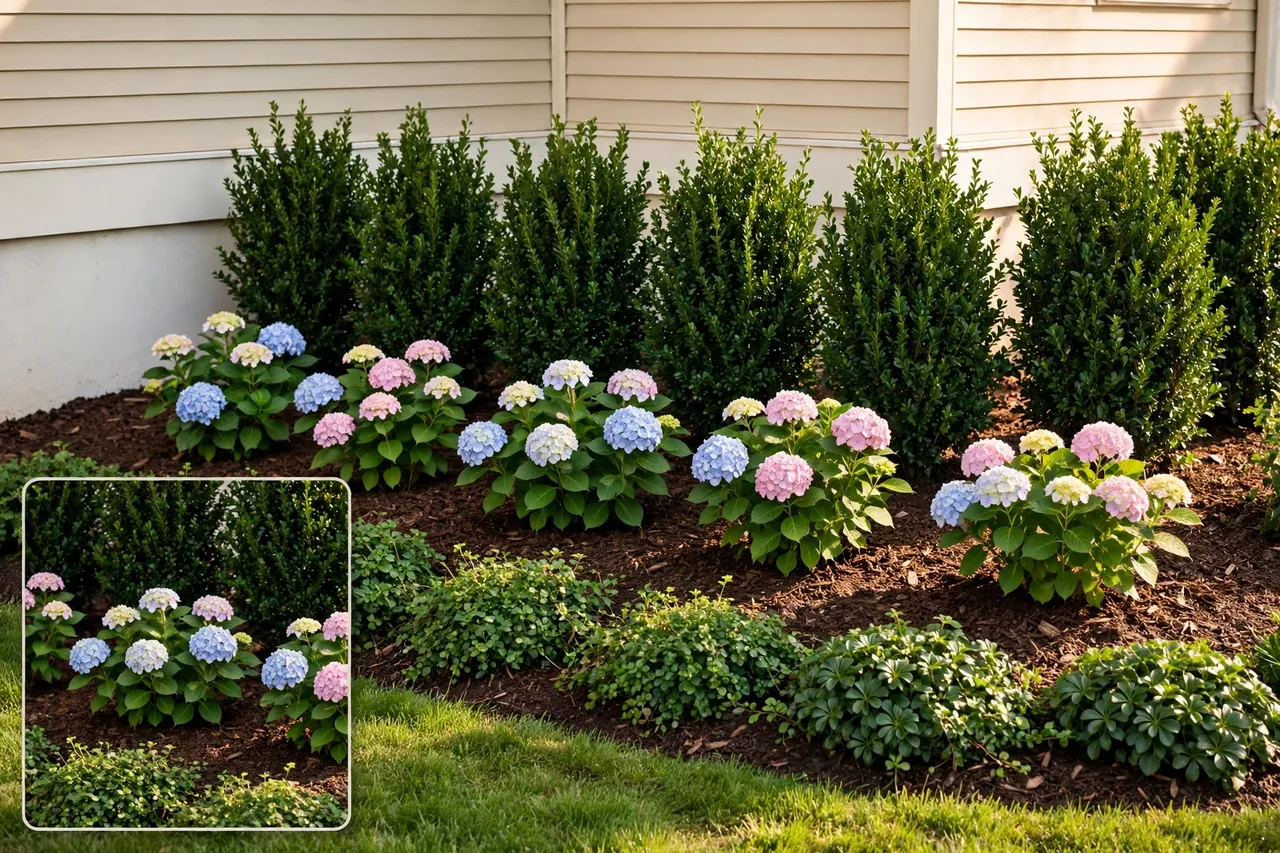
Build it in three layers. The back layer holds evergreen structure, 2 to 6 feet tall. The middle layer adds seasonal color with flowering shrubs and perennials, 18 to 36 inches tall. The front layer finishes with low groundcovers and edging plants under 12 inches tall. Each layer should look good on its own, so the bed never has a bare season.
Plant foundation shrubs 2 to 3 feet from the house. That gap gives air flow, keeps moisture off the siding, and leaves room for the shrub to reach its mature width without rubbing the wall. Small front yard plants or container plants can sit slightly closer, but never jam a shrub against the foundation.
Choose plants by your USDA zone first, then by sun. These proven picks work across much of the US:
| Climate zone | Evergreen structure | Seasonal color |
|---|---|---|
| Zones 3–5 (cold) | Boxwood, yew, dwarf spruce | Panicle hydrangea, spirea |
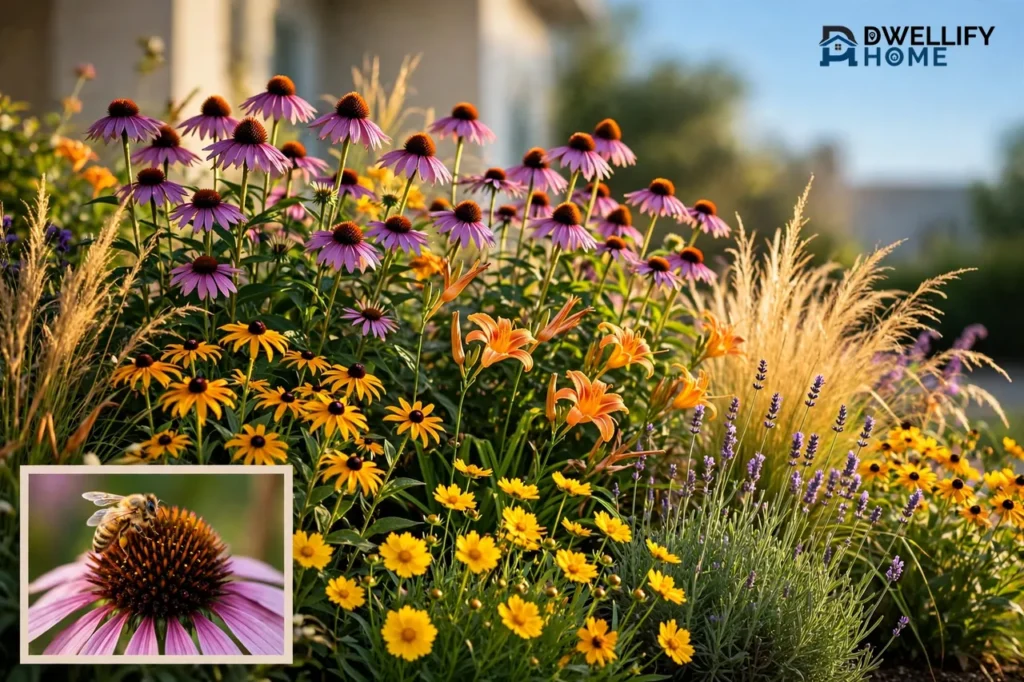
| Zones 6–7 (moderate) | Dwarf holly, globe arborvitae | Lavender, Russian sage, coneflower |
| Zones 8–10 (warm) | Dwarf yaupon holly, inkberry | Hibiscus, gardenia, azalea, lantana |
| Zones 9–11 (hot and dry) | Agave, dwarf yucca | Desert marigold, autumn sage |
For year-round structure, mix evergreens for winter, perennials for spring and summer, and shrubs with interesting bark or berries for the off-season. Boxwood and dwarf holly are the workhorses: they stay green all winter, hold a tidy shape, and frame a door or walkway without constant trimming. Dwarf hydrangeas, miniature roses, and petite spirea add color without overwhelming a narrow bed. Compact ornamental grasses such as blue fescue, little bluestem, and dwarf fountain grass bring softness and movement to tight spaces.
Groundcovers tie the layers together. Low, tough plants fill the gaps between shrubs, smother weeds, and keep the bed looking finished. Creeping thyme, sedum, and bugle all work along a walkway edge. If you are choosing between two classic shade groundcovers, our guide to creeping myrtle vs periwinkle compares their growth, care, and best spots.
Buy plants from a source you trust, and check the tag twice: mature size and zone. If you shop online, compare sellers first with our list of the best places to buy plants online. A cheap plant in the wrong zone is the most expensive plant you will ever buy, because you will buy it twice.
Front of House Landscaping Ideas by House Style
The best front yard landscaping matches the house it sits in front of. The same plants can look perfect on one home and wrong on the next, because the house sets the lines, the colors, and the mood. Match the planting to the architecture and the whole property starts to feel intentional.
Ranch house
A long, low ranch needs height and rhythm to break up the horizontal roofline. Plant a small ornamental tree off-center in the yard, repeat one shrub along the foundation, and use a curved bed to soften the long front wall. Low-growing plants keep everything in proportion, and a wide walk suits the wide facade. Front yard landscaping ideas for a ranch house work best when the planting adds vertical accents without hiding the house.
Colonial and traditional
Symmetry is the friend of a colonial. Mirror the planting on both sides of the door: a pair of boxwoods, a pair of planters, a pair of small trees framing the walk. Defined borders, classic color palettes, and neatly trimmed shrubs suit the formal lines. Keep the palette simple, with green structure first and one or two flower colors repeated.
Modern and contemporary
Modern homes want clean lines and a limited palette. Use angular plants such as ornamental grasses and agave, sculptural evergreens such as columnar juniper or globe arborvitae, and large swaths of one material, such as gravel or a single groundcover. Skip the fussy flower mix. A few bold forms and plenty of open space read as modern; clutter reads as messy.
Cottage style
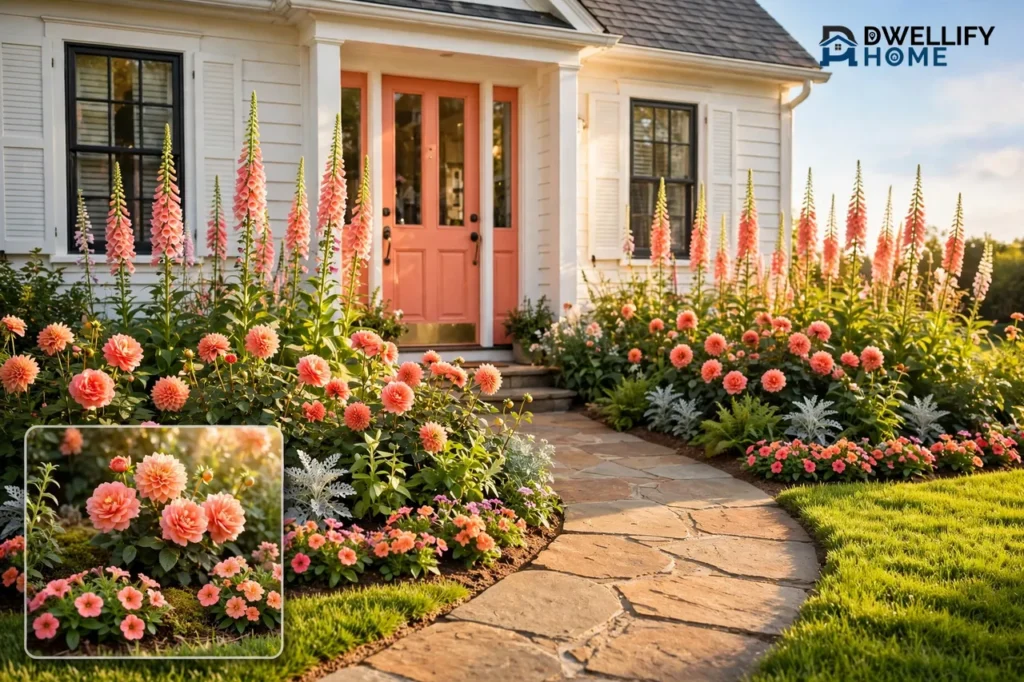
Cottage gardens are the opposite of modern: layered, soft, and full. Combine flowering shrubs such as hydrangeas and roses with ornamental grasses, then edge the beds with lavender or catmint for fragrance. Let plants spill gently over the bed edge. The look is romantic and a little wild, but it still needs structure underneath, so keep boxwood or dwarf holly as the backbone.
Small front yard
A small yard needs the same layers in miniature. Choose dwarf varieties, skip the lawn if it is mostly shade or wear, and use containers by the door for seasonal color you can swap in minutes. One small tree is enough. Two or three repeated plant groups beat ten different single plants, which only make a small space feel busy.
Small Front Yard Landscaping Ideas That Still Feel Big
Small front yards punish clutter and reward editing. Every plant must earn its place, and every square foot must do more than one job.
Start by shrinking the lawn. A small, well-shaped lawn reads as intentional. A large, empty one reads as a chore. Replace part of the turf with a deep bed, a gravel path, or a groundcover panel. You will mow less, water less, and the yard will look bigger because the eye has more to explore.
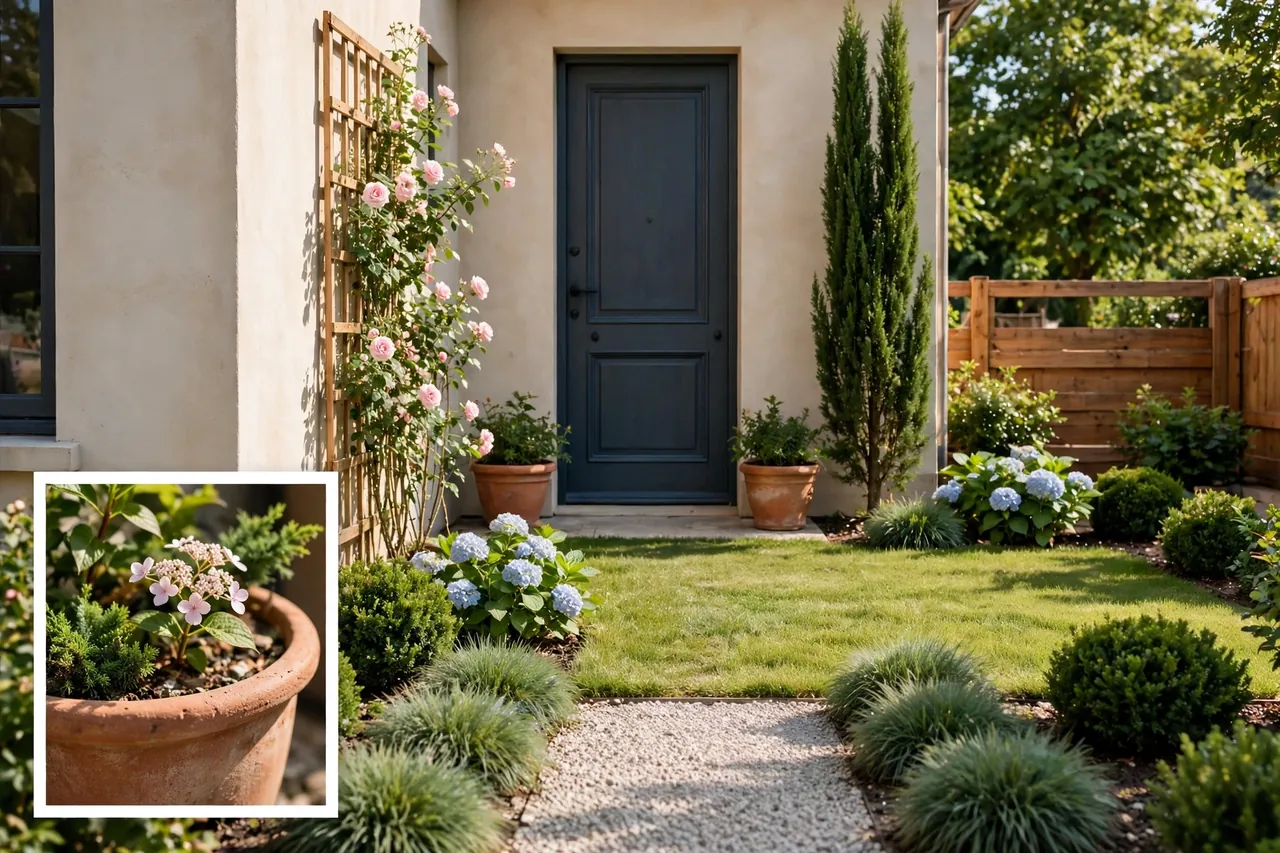
Go vertical where the ground runs out. A trellis with a climbing rose or clematis, a narrow columnar tree, or a tall planter by the door adds height without taking floor space. Hang baskets on the porch and flank the door with matching pots. Containers are the small yard’s best friend: they add instant color, move with the seasons, and need no digging.
Keep the palette tight. Pick three plants and repeat them: one evergreen, one flowering shrub, and one perennial or grass. Dwarf boxwood, mini hydrangeas, and low-growing ornamental grasses work well together, and entryway container plants add flexibility and seasonal interest. A tight palette makes a small yard feel calm and designed, while a dozen different plants make it feel like a nursery lot.
Finally, borrow the view. If your neighbor has a lovely tree or your street has a green verge, do not block it with a tall fence or a solid hedge. Frame the view instead, and let the borrowed green make your yard feel larger than it is.
Low-Maintenance Front Yard Landscaping
Low maintenance does not mean no maintenance. It means choosing plants and materials that mostly take care of themselves, so your weekends stay yours.
Native plants are the easiest win. Plants native to your region already know your soil, your rain, and your winters, so they need less water, less fertilizer, and less fuss than imports. Ask your extension office for a native list for your county, and build the backbone of the bed from it. Evergreen bushes such as boxwood and dwarf holly provide structure, flowering shrubs add seasonal color, and ornamental grasses create texture while keeping upkeep minimal.
Mulch is the second win. A 2- to 3-inch layer of shredded bark or wood mulch holds moisture in the soil, keeps weeds down, and makes the beds look finished the same afternoon you spread it. Top it up once a year in spring. Skip landscape fabric under gravel: it blocks water from soaking in and makes future planting harder.
Reduce the lawn and the chores shrink with it. Replace thirsty turf in dry or shady spots with gravel beds, groundcovers, or a simple stone path. A gravel front garden suits sunny, dry sites and looks sharp with the right plants, but check your HOA first: some covenants require a minimum share of living turf in the front yard.
Choose slow growers on purpose. A shrub that grows 6 inches a year needs one light trim, while a fast grower needs three. Dwarf varieties of boxwood, holly, and spruce stay in bounds for years. And group plants with the same water needs together, so you never water a drought lover just because it sits next to a thirsty hydrangea.
Walkways, Edging, and Hardscape
Hardscape is the permanent part of the yard: walks, edging, walls, and steps. It costs more than plants and lasts far longer, so plan it carefully before you build it. Hardscape labor often costs more than the materials, which is why softscape is the cheaper route to curb appeal.
For walkways, concrete is the budget choice at about $5 per square foot, while stone or brick runs $25 per square foot or more, according to Houzz’s front yard guide. Gravel or decomposed granite paths cost less than concrete, stone, or brick and suit a casual or cottage style. Whichever material you pick, keep the walk at least 4 feet wide and level, with a slight slope away from the house so rain runs off, not in.
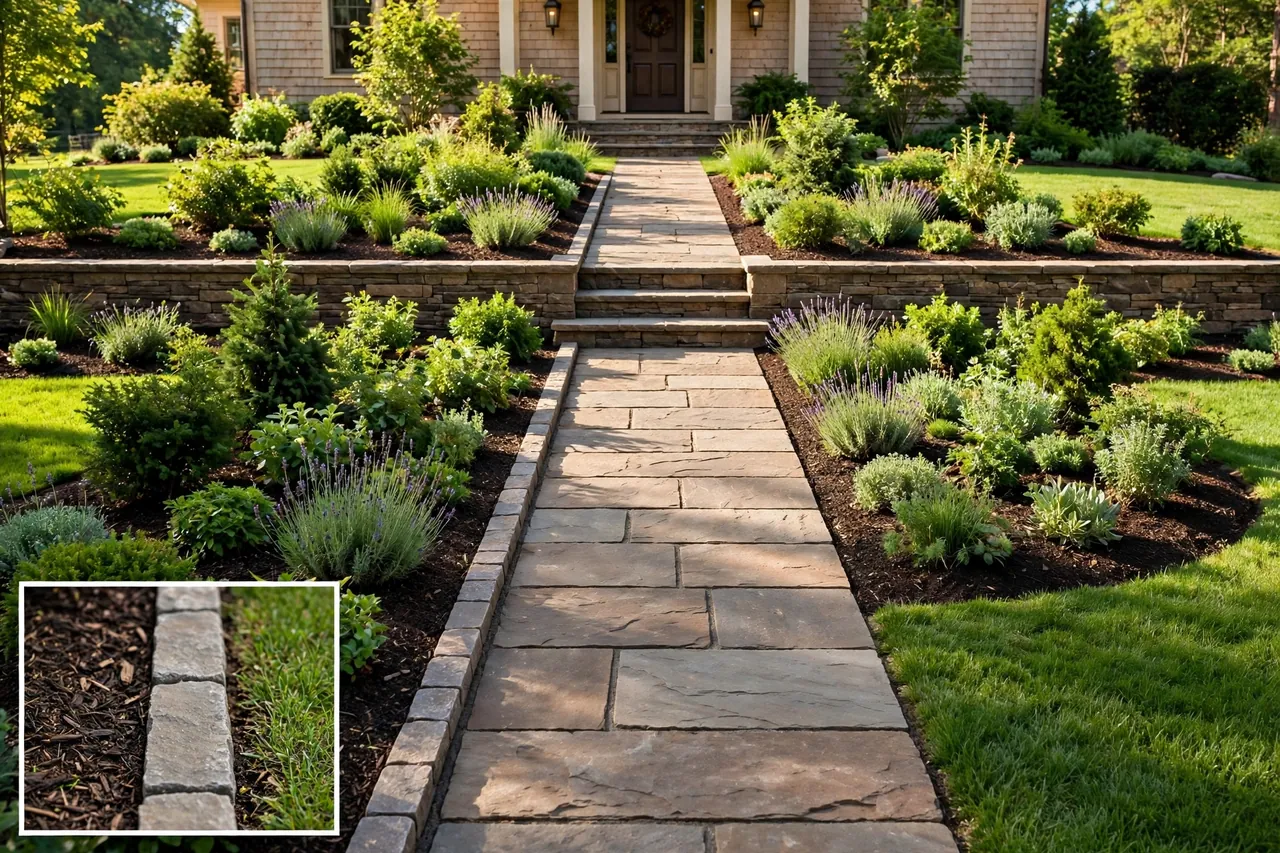
Edging is the small detail that makes beds look finished. A clean stone, brick, or steel edge stops grass from creeping into the beds and stops mulch from spilling onto the lawn. It also makes mowing faster, because the mower wheel can ride the edge. Set the edging slightly above the lawn so it reads as a line, not a trip hazard.
On a sloped front yard, a low retaining wall turns one steep bank into two level planting tiers. Walls also stop soil from washing onto the walk every time it rains. If your slope is more than a gentle grade, get a professional to design the wall: a failed wall is expensive and can damage the house. For the building steps, see our guide on how to build a retaining wall on a slope.
Keep hardscape in proportion. A front yard with more paving than planting looks like a parking lot, not a garden. As a rough guide, let plants and lawn cover at least half the front yard, and let the walk, driveway, and patio share the rest.
Water, Drainage, and Grading: Protect the House First
Water is the one thing in a front yard that can damage the house. Before you spend a dollar on plants, make sure water drains away from the building. Grade the soil so it slopes away from the foundation for at least the first 6 feet, and keep beds from trapping water against the wall.
Extend downspouts away from the house, into a planted swale or a rain garden placed well away from the wall. Never let a downspout dump water at the foundation corner. If you plan a stormwater feature or any major regrading within 10 feet of the foundation, bring in a licensed landscape contractor or civil engineer first: the risks are structural damage and basement flooding.
Watch for the warning signs. Water that pools near the foundation after rain, a soggy strip of lawn that never dries, or mulch that washes onto the walk all point to a drainage problem, not a plant problem. Fix the water first, then plant. If your yard stays wet, our guide to fix soggy yard drainage walks through the causes and the fixes in detail.
Irrigation deserves the same care. Water deeply and less often so roots grow down instead of staying at the surface. Drip lines and soaker hoses beat sprinklers for beds, because they put water at the roots and keep leaves dry, which cuts disease. Water early in the morning so the leaves dry before night.
What Front of House Landscaping Costs
Front yard landscaping costs less than backyard work, because the front relies on plants and fresh sod rather than big-ticket hardscape. Angi’s 2026 data, updated September 23, 2026 and based on more than 32,000 verified projects, puts the numbers in a clear range. All prices below are US national figures, checked November 9, 2026. Your own total depends on yard size, local labor, plant choices, and how much hardscape you add, so treat these as a planning range, not a quote.
| Project scope | Typical US cost |
|---|---|
| Professional front yard refresh | $1,500 to $5,000 |
| Average professional landscaping, standard lot | $3,518 |
| Landscaping per square foot | $4.50 to $12 |
| Full backyard renovation | $15,000 to $50,000 |
| Sod, material only | $0.35 to $0.85 per square foot |
Labor is the biggest line in most quotes. Angi reports that labor makes up 40% to 65% of the total project cost, and professional landscaper labor typically runs $50 to $100 per hour. That is why a simple design with plants and mulch costs far less than the same yard with a new paver walk and a wall: the materials are only part of the bill.
Design fees sit on top. Hiring a landscape designer for a custom plan usually costs between $300 and $1,500 for a basic front yard design, and full-service design can run 10% to 20% of the construction budget. A simple sketch you draw yourself costs nothing and is enough for most front yards.
The cheapest route is an approach, not a material: favor softscape over hardscape. Low-maintenance native plants, mulch, and sod cost far less than concrete, pavers, or stone, partly because hardscape labor often exceeds material costs. Divide and replant existing perennials and groundcovers to repeat plants for free, and phase the project across seasons so the spending spreads out.
Your Step-by-Step Plan: From Bare Yard to Finished in 7 Steps
Order matters. Do the work in this sequence and you will not dig up finished work to fix something you skipped.
- Survey the site. Measure, sketch, track the sun at 9 a.m., noon, and 4 p.m., watch water after rain, and find your USDA zone.
- Check the rules. Read your HOA documents, confirm setbacks and permits with your city or county, and call 811 before you dig.
- Fix water and grade first. Slope soil away from the house, extend downspouts, and solve any pooling before you plant anything.
- Set the structure. Build or repair the walkway, edging, and any wall, then shape the beds deep and wide.
- Plant the backbone. Put in the trees and evergreen shrubs first, spaced for their mature size, 2 to 3 feet from the house.
- Fill the layers. Add the middle layer of flowering shrubs and perennials, then the front layer of groundcovers. Plant in groups of 3, 5, or 7.
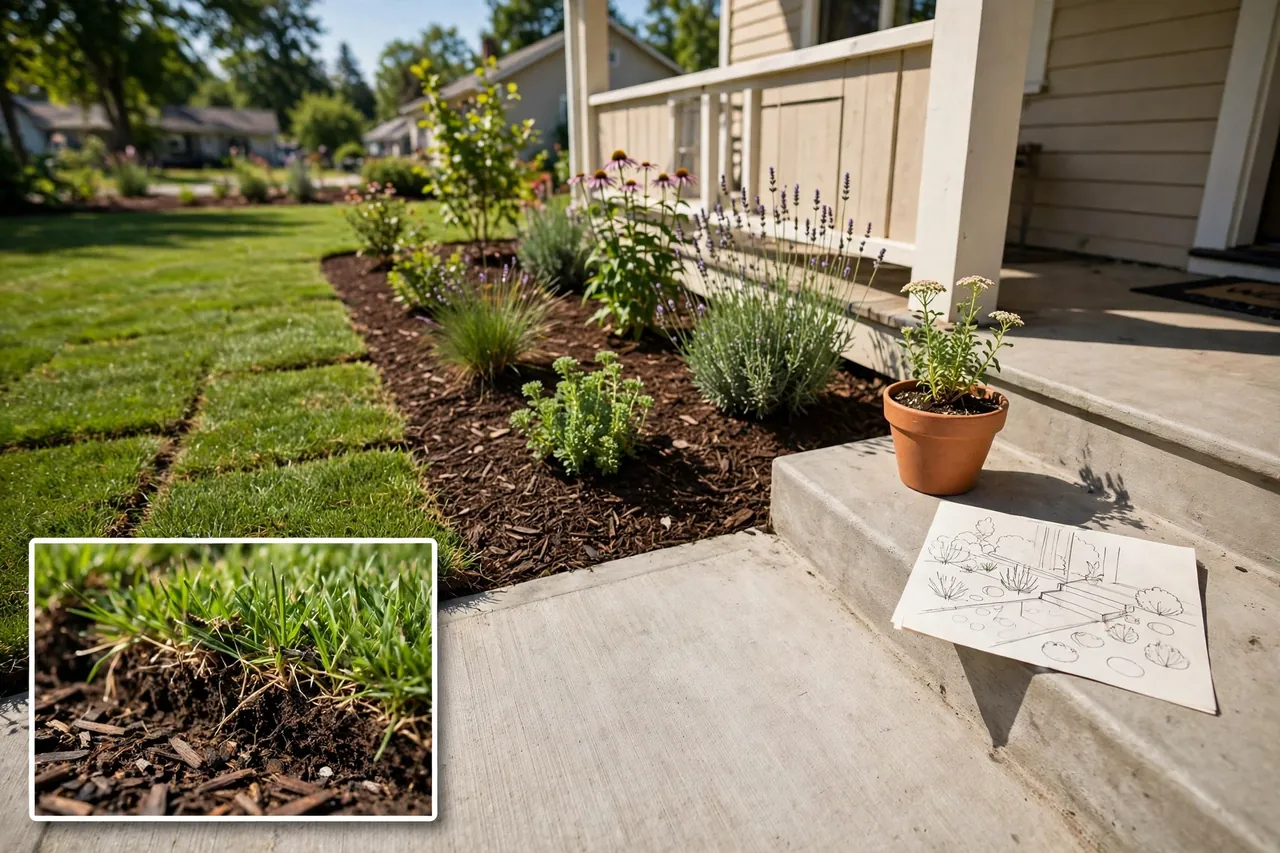
- Mulch, water, and light. Spread 2 to 3 inches of mulch, water deeply, and add walkway lighting while the soil is still open and easy to work.
Phasing is a legitimate strategy. Do the drainage and structure plants in year one, then add the secondary layers in year two. It spreads the spending without compromising the design, and the yard still looks better after phase one than it did before you started.
Mistakes to Avoid
Most front yard disappointments come from a short list of avoidable mistakes. Check your plan against these before you buy.
- Planting for the nursery size, not the mature size. A shrub that reaches 6 feet wide will swallow a 2-foot bed and block a window. Space for the tag size.
- Planting shrubs against the house. No air flow, damp siding, and no room to grow. Keep 2 to 3 feet clear.
- A thin ribbon bed. A narrow strip along the foundation looks skimpy next to a big lawn. Deepen the bed and wrap it around the corners.
- Too many different plants. Ten single plants read as clutter. Three repeated groups read as design.
- Ignoring the sun and the zone. A sun lover in shade and a tender plant in a cold zone both die the same way: slowly, then all at once.
- Skipping the 811 call. One cut utility line costs more than the whole planting budget and puts people at risk.
- Letting water run toward the house. Pretty beds cannot fix a foundation that stays wet. Grade first, plant second.
A short note on safety: front yard landscaping is low-risk work for most homeowners, but treat the exceptions seriously. Never dig without the 811 utility mark, never build a retaining wall over 3 feet tall without professional design, and hire a licensed contractor for any grading or drainage work within 10 feet of your foundation. If a tree near the house needs removal, hire a certified arborist rather than cutting it yourself.
Related Guides
Fix Soggy Yard Drainage · Best Places to Buy Plants Online · How to Build a Retaining Wall on a Slope · Creeping Myrtle vs Periwinkle · Flower Beds · Low Maintenance Front Yard Landscaping · Covered Patio Ideas
Frequently Asked Questions
What is the first rule of landscaping?
Work with your site, not against it. Check sun, slope, soil, and drainage before you buy plants, and choose species that suit those conditions. Most failed do-it-yourself plans come from forcing a look the site cannot support.
What is the cheapest option for landscaping?
Favor softscape over hardscape. Low-maintenance native plants, mulch, and sod cost far less than concrete, pavers, or stone, partly because hardscape labor often exceeds material costs. Divide and replant existing perennials and groundcovers to repeat plants for free, and phase the project across seasons.
How much does front yard landscaping cost?
In the US, a professional front yard refresh typically falls between $1,500 and $5,000, according to Angi’s 2026 data. Your total depends on yard size, local labor, plant choices, and how much hardscape you add. Pricing each object in your plan gives you a number tied to your actual design.
What are the best low-maintenance plants for a front yard?
Evergreen bushes for the front yard like boxwood and dwarf holly provide structure, and flowering shrubs add seasonal color. Additionally, ornamental grasses create texture while keeping upkeep minimal. Choose natives for your zone first, and they will need the least water and care.
How close should foundation shrubs be planted to a house?
Generally, plant foundation shrubs 2–3 feet from the house to allow airflow and prevent moisture issues. Moreover, small front yard plants or container plants can be placed slightly closer. Always leave room for the shrub to reach its mature width.
What are the best plants for small front yards?
Compact shrubs like dwarf boxwood, mini hydrangeas, and low-growing ornamental grasses work well. In addition, entryway container plants add flexibility and seasonal interest. Pick three plants and repeat them instead of filling a small space with many different singles.
Start this weekend with the site survey: measure, watch the sun, and check your zone. That one hour of looking saves you from the most common mistake in front of house landscaping, which is buying beautiful plants for a yard they cannot live in. Once the site tells you what it wants, the design almost draws itself, and the front of your house will finally greet you the way a home should.