
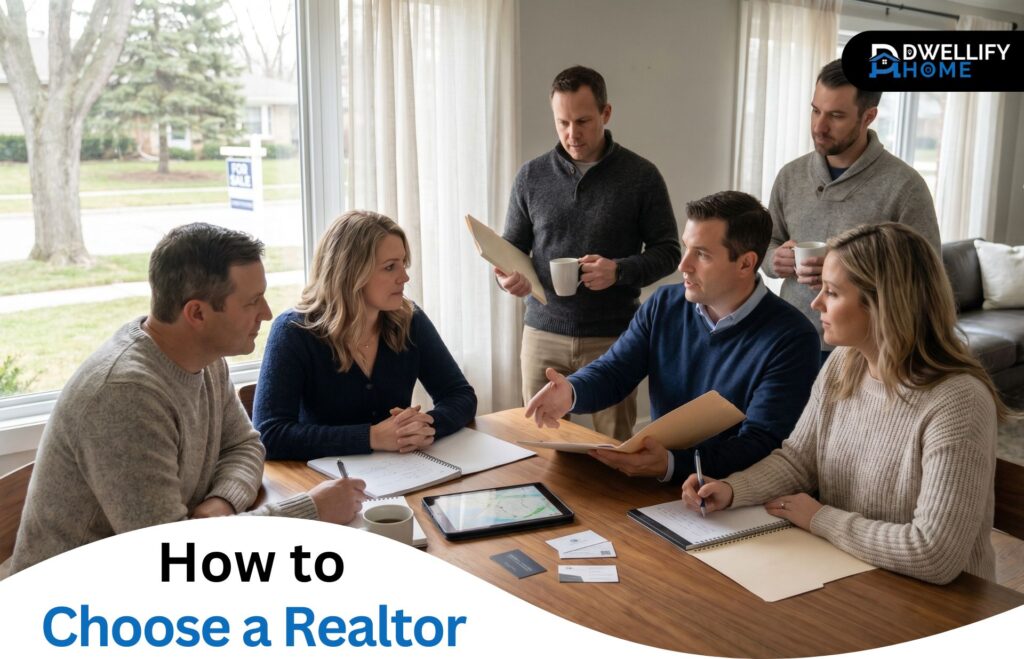
Buying or selling a home is rarely just a financial transaction. For most people, it’s the single largest money decision of their lives — and the person guiding that decision matters more than most realize.
The right realtor can mean the difference between getting a fair price and leaving money on the table, between a smooth closing and a deal that falls apart at the last moment. Knowing how to choose a realtor — not just pick one — is a skill worth developing before you ever sign anything.
This guide covers how to find strong candidates, what to actually evaluate, what questions to ask, and when to walk away.
The Short Answer
Choosing a realtor means evaluating an agent’s local experience, track record, communication style, and contract terms before hiring them. The right match protects your interests — whether you’re buying, selling, or doing both at the same time.
Mission Statement
At Dwellify Home, we help homeowners make informed, practical decisions — from understanding the property process to creating spaces that feel genuinely lived-in and right. Every piece of content is written to give you clarity, not noise.
Realtor, Real Estate Agent, or Broker — What’s the Actual Difference?
These titles get used interchangeably, but they’re not the same. Understanding the distinction saves confusion when you’re reading bios, comparing credentials, or signing representation agreements.
What Makes Someone a REALTOR® (And Why the Title Matters)
A REALTOR® is a licensed real estate agent who is also an active member of the National Association of Realtors (NAR). That membership comes with a formal Code of Ethics that members are required to follow — something that doesn’t automatically apply to all licensed agents.
It’s not a guarantee of quality, but it does mean a higher standard of conduct and access to member resources, including MLS databases and ongoing education. When comparing agents, the REALTOR® designation is a baseline worth noting.
What a Real Estate Broker Is — and When It’s Relevant to You
A broker has completed additional licensing requirements beyond a standard agent. They can operate independently, run their own brokerage, and supervise other agents.
In practice, most buyers and sellers work with agents who operate under a broker’s license. It becomes more relevant when you’re evaluating experience level or dealing directly with a brokerage firm rather than an individual agent.
Quick Comparison: Buyer’s Agent vs. Listing Agent
| Factor | Buyer’s Agent | Listing Agent |
| Who they represent | The buyer | The seller |
| Main responsibility | Find and negotiate on properties | Price, market, and sell the home |
| When you need one | When purchasing a home | When selling a home |
| Compensation (post-2024 NAR) | Outlined in buyer agreement | Typically paid from sale proceeds |
| Key skill to evaluate | Neighborhood knowledge + negotiation | Pricing strategy + marketing plan |
Key Things to Look for When Choosing a Realtor
- Verified local transaction history in your specific area — not just general market experience
- A strong list-to-sale-price ratio backed by real, recent data
- Full-time availability during the active stages of your transaction
- Clear communication habits established before you sign anything
- Transparent contract terms covering commission, duration, and exit conditions
Buyer’s Agent vs. Listing Agent — Know Which One You Need
What a Buyer’s Agent Does — and What They Owe You
A buyer’s agent represents your interests as a purchaser. They help you find properties, evaluate pricing, structure offers, and negotiate on your behalf. Their legal duty — called fiduciary duty — is to you, not to the seller.
Following the 2024 NAR settlement, buyer’s agent compensation is no longer automatically baked into MLS listings the same way it used to be. You’ll now typically review and sign a buyer representation agreement upfront that outlines compensation terms before touring homes together.
What a Listing Agent Handles When You’re Selling
A listing agent — also called a seller’s agent — manages the entire sales process on behalf of the seller. That includes pricing strategy, preparing the property for market, photography, marketing, negotiating offers, and managing the transaction through closing.
Their job is to get you the best possible price and terms. How well they do that depends heavily on their local market knowledge and marketing capability — both of which you can and should evaluate before hiring.
Before You Search for a Realtor, Get These Things Clear
Are You Buying, Selling, or Both?
Some people are doing both at once — selling their current home while buying another. That situation adds complexity and affects which agent setup works best for you. Some agents handle both sides; others specialize. Know your situation before you start reaching out.
Define Your Timeline, Budget, and Property Type First
An agent who primarily works with first-time condo buyers isn’t necessarily the right fit for someone selling a five-bedroom home in a suburban market. Clarify your timeline, price range, and property type before interviewing anyone. It lets you ask better questions and filter out agents who aren’t a realistic match.
Know Your Communication Preferences Before You Start Interviewing
Some agents prefer calls. Others work primarily through text or email. Some will give you daily updates; others check in only when there’s something worth sharing.
Neither style is universally right, but a mismatch can be genuinely frustrating during a high-stakes transaction. Decide how you want to be kept informed — then ask directly how each agent typically communicates with clients.
Where to Find Realtor Candidates Worth Your Time
Ask for Referrals — But Ask the Right Question
A referral from someone who recently completed a transaction is more useful than a general recommendation. Ask specifically: “Did they communicate well under pressure?” and “Would you use them again?” The second question reveals more than the first.
Online Platforms: How to Use Zillow, Realtor.com, and Agent Finders
Zillow and Realtor.com both let you search agents by area, transaction history, and reviews. They’re useful research tools, but note that some platforms allow agents to pay for higher placement — meaning visibility doesn’t always equal quality.
Services like Clever Real Estate or Ideal Agent pre-vet agents and can be a faster way to find candidates, though their networks vary by market.
Watch Agents at Open Houses Before You Ever Call One
Open houses are essentially free auditions. You can see how an agent presents a property, how they handle questions, and how they interact with visitors. If you’re buying in a specific neighborhood, attending a few open houses before committing to an agent gives you real observational data rather than just a polished bio.
Your Mortgage Lender Can Be a Surprisingly Good Referral Source
Lenders work alongside agents constantly. They see who communicates well, who understands contracts, and who keeps transactions on track. A recommendation from a lender you already trust carries weight — they have professional skin in the game.
Key Factors to Look for When Choosing a Realtor
Local Knowledge — Neighborhood-Level, Not Just City-Wide
An agent who says they cover “the greater metro area” is not the same as one who has closed 15 transactions on the specific streets you’re targeting. Hyperlocal knowledge — school districts, micro-market pricing trends, typical days on market — directly affects both strategy and outcome.
Track Record That You Can Actually Verify (Transactions, Days on Market, List-to-Sale Ratio)
Ask for specific numbers, not general statements. How many transactions did they close in your target area last year? What was their average list-to-sale-price ratio? How many days did their listings typically sit before going under contract?
These figures are verifiable and tell you far more than a five-star review.
Full-Time vs. Part-Time Realtor — Why Availability Has a Real Cost
A part-time agent may be perfectly skilled, but availability during a competitive offer situation or a tight inspection window matters. If a deal requires a fast response and your agent isn’t reachable, that cost is real.
Ask directly: Is this your full-time work? How quickly do you typically respond to client messages?
Professional Designations Worth Knowing: CRS, ABR, SRES, RENE
- CRS (Certified Residential Specialist) — advanced residential sales training
- ABR (Accredited Buyer’s Representative) — specialized buyer representation
- SRES (Seniors Real Estate Specialist) — relevant for older adults navigating estate or downsizing situations
- RENE (Real Estate Negotiation Expert) — focused on negotiation skills
None of these replace transaction experience, but in combination with a strong track record, they signal ongoing professional development.
Solo Agent or Team? What Each Setup Means for Your Experience
A solo agent personally handles every aspect of your transaction. A team means you may get more bandwidth and faster response times, but you might work with an assistant or junior agent for showings and paperwork rather than the person you originally met.
Neither is better by default. Just ask clearly: who will I primarily be working with day-to-day?
Communication Style — Match Theirs to Yours Before You Commit
Notice how an agent communicates during the interview phase itself. Are they clear and direct? Do they follow up when they say they will? The way they treat you before you’re a client is usually the best preview of how they’ll treat you after you’ve signed.
How to Pick a Realtor When You’re Buying a Home
What First-Time Buyers Should Prioritize in an Agent
First-time buyers should prioritize an agent who takes time to explain the process — not just complete it. Someone who answers questions without making you feel rushed, who understands that closing your first home comes with a steep learning curve, and who will walk you through each document before you sign it.
Get Pre-Approved for a Mortgage Before You Start Agent Shopping
Pre-approval isn’t just a financial step — it makes you a more informed client and a more credible buyer. Many agents in competitive markets won’t invest serious time with buyers who haven’t been pre-approved. Get that step done first.
What Buyer Representation Agreements Look Like After the 2024 NAR Settlement
The 2024 NAR settlement changed how buyer’s agent compensation is structured. Buyers are now typically required to sign a written agreement with their agent before touring homes. This agreement outlines the agent’s compensation, the duration of the relationship, and the scope of services.
Read it carefully. Understand how long you’re committed, what triggers compensation, and what your exit options are before you sign.
How to Pick a Real Estate Agent for Selling Your Home
Why Pricing Strategy Tells You More About an Agent Than Anything Else
An agent who immediately suggests a high listing price to win your business isn’t necessarily serving your interests — they may be telling you what you want to hear. A strong listing agent walks you through comparable sales data and explains their pricing logic clearly, even if that number is lower than you hoped for.
How to Evaluate an Agent’s Listing Presentation and Digital Marketing Plan
Ask to see examples of their listings. Are the photos professional? Is the description well-written? Does the listing appear across major platforms? Digital marketing quality directly affects how many buyers your property reaches and how quickly it attracts serious offers.
The Dual Agency Problem — What It Is and Why It Should Concern You
Dual agency means one agent represents both the buyer and seller in the same transaction. It’s legal in many states, but it creates an inherent conflict of interest. An agent cannot fully advocate for both sides simultaneously.
If your agent mentions dual agency during the process, understand exactly what that means for your negotiating position before agreeing to it.
What Not to Tell Your Realtor When Selling
Your listing agent is ethically obligated to represent your interests — but if they’re also showing your home to buyers or working with buyers through their brokerage, some information can work against you.
Avoid volunteering your lowest acceptable price, your motivation for selling, or any urgent timeline pressures. Share what’s necessary for the agent to do their job — nothing more.
Questions to Ask a Realtor Before You Hire Them
These aren’t conversation starters — they’re evaluation tools. Each one is designed to surface information that directly affects your decision.
- How many transactions did you close in this specific area in the last 12 months?
- What is your average list-price-to-sale-price ratio — and how does that compare to the local market?
- Will I be working directly with you, or primarily with someone on your team?
- How do you typically communicate between showings, offers, and closing?
- How do you handle multiple clients at the same time — what’s your current workload?
- Can you share references from a recent client with a situation similar to mine?
- How would you handle a situation where my expectations and the market reality don’t align?
That last question is particularly revealing. An agent who answers it confidently and honestly — without hedging or flattering you — is showing you how they’ll handle difficult conversations during the actual transaction.
Red Flags That Should Make You Walk Away
They Quote You an Unrealistically High Listing Price to Win Your Business
It’s called “buying the listing” — and it happens more than you’d think. An inflated suggested price gets your attention, but it usually leads to price reductions, extended days on market, and a weakened negotiating position. Compare the agent’s suggested price to actual recent comparable sales.
Slow or Vague Communication During the Interview Phase
If they take three days to return your initial call or answer questions with non-answers, that’s not a personality quirk — it’s a preview. Communication quality before you’re under contract tends to get worse after.
They Lack Verifiable Experience in Your Specific Area or Property Type
General enthusiasm is not a substitute for documented local experience. If an agent can’t point to recent, specific transactions in your market, ask why. The answer matters.
They Push You to Sign Quickly Without Walking Through the Contract
Any agent who rushes you through a representation agreement, a listing contract, or a purchase offer without explaining the key terms is creating risk for you. Legitimate urgency exists in real estate — unnecessary urgency is a pressure tactic.
Their Online Presence Shows Sloppy Listings, Thin Reviews, or Gaps in Activity
Search the agent by name. Look at their active and past listings. Are the photos quality? Are the descriptions accurate? Do reviews mention specific, meaningful details — or read generic and vague? Patterns in their public record tell you something real.
Why Personality Fit Matters — But Shouldn’t Be Your Top Deciding Factor
Getting along well with your agent makes the process more comfortable, and that’s genuinely worth something over weeks or months of transactions.
But chemistry is not a performance indicator. An agent who’s easy to talk to but lacks local experience or a strong track record will cost you more than a few awkward conversations ever could.
Use performance data first — transaction history, verified reviews, market knowledge, communication responsiveness. Personality fit becomes the tiebreaker between two otherwise comparable candidates, not the primary deciding factor.
Understanding the Agent Agreement Before You Sign
What the Contract Should Cover: Commission, Duration, and Exit Terms
Whether you’re signing a buyer representation agreement or a listing agreement, three things should be clearly spelled out: the commission rate or compensation structure, the length of the agreement, and under what conditions either party can exit the contract early.
Don’t assume anything is standard. Read it, ask questions, and get clarity on what happens if the relationship isn’t working.
How to Negotiate Realtor Commission Without Damaging the Relationship
Commission is negotiable. Most agents won’t volunteer that, but most will have a reasonable conversation about it — especially if you’re a motivated, well-prepared client.
A fair approach is to ask about their commission structure, understand what services are included, and discuss whether adjustments are possible based on your situation. Approaching it as a business conversation rather than a confrontation usually produces better results.
Agent Matching Platforms vs. Finding One on Your Own — What Works Better?
Platforms like Clever Real Estate, Ideal Agent, and FastExpert pre-screen agents and match you based on your criteria. They’re worth considering if you’re in an unfamiliar market or short on time for research.
The trade-off is that their agent networks vary significantly by region, and some services earn a referral fee that can influence which agents they surface. They’re a starting point — not a final answer.
Going directly — through referrals, open house observation, and local market research — takes more effort but gives you more control over the selection process. In markets where you have strong local knowledge, doing the research yourself tends to produce better candidates.
When It’s Okay to Switch Realtors — and How to Handle It
Most agency agreements have a defined end date and, in some cases, an early termination clause. If your agent is consistently unresponsive, lacks market knowledge that’s affecting your outcomes, or has created trust issues, ending the relationship is a reasonable step — not an overreaction.
Before switching, review your contract for any exclusivity clauses or post-termination obligations. Some agreements include a “tail period,” meaning if you buy or sell a property introduced by that agent within a set window after termination, compensation may still apply.
Handle the conversation professionally. A written notice is cleaner than a phone call, and keeping emotion out of it makes the transition easier.
Conclusion
Choosing the right realtor comes down to a clear process: define what you need, find qualified candidates, evaluate them on verifiable criteria, ask specific questions, and watch closely for warning signs.
Chemistry matters — but performance data, local knowledge, communication habits, and contract transparency are what actually protect your interests when things get complicated.
Whether you’re buying or selling, the time you invest in learning how to choose a realtor before signing anything will almost always be worth it. Start with the questions in this guide, trust what you observe during the interview phase, and don’t rush a decision that carries this much financial weight.
Disclaimer
The content published on Dwellify Home is intended for general informational purposes only. It does not constitute professional real estate, legal, or financial advice. Individual circumstances, local market conditions, and regulations vary — always consult a qualified professional before making real estate decisions.