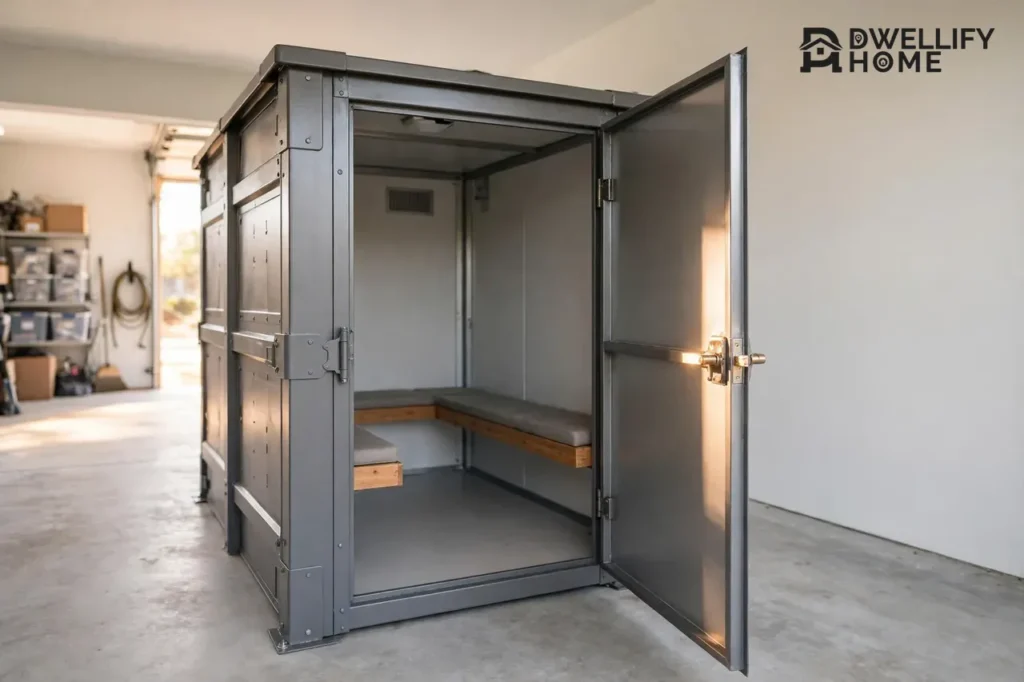
The best above-ground tornado shelter for most homes in 2026 is the Survive-a-Storm ShelterCube Estate 6 x 6, at $6,830.50 at Home Depot, checked 23 November 2026. It fits up to 12 people, is built from heavy steel, and is tested to survive EF5 tornado winds and debris, so a family of four has room to spare and a shelter that does not need a basement.
An above-ground tornado shelter is a steel or concrete safe room that bolts to a concrete slab inside a garage, a closet, or a yard, and it protects you without digging a hole. The best above-ground tornado shelter must meet the FEMA P-320 guidance or the ICC 500 standard, because a shelter that has not passed the debris-impact test is just a metal box. This guide compares four shelters with dated prices, real specs, and the trade-offs that matter.
The Short Answer: Which Above-Ground Tornado Shelter Should You Buy?
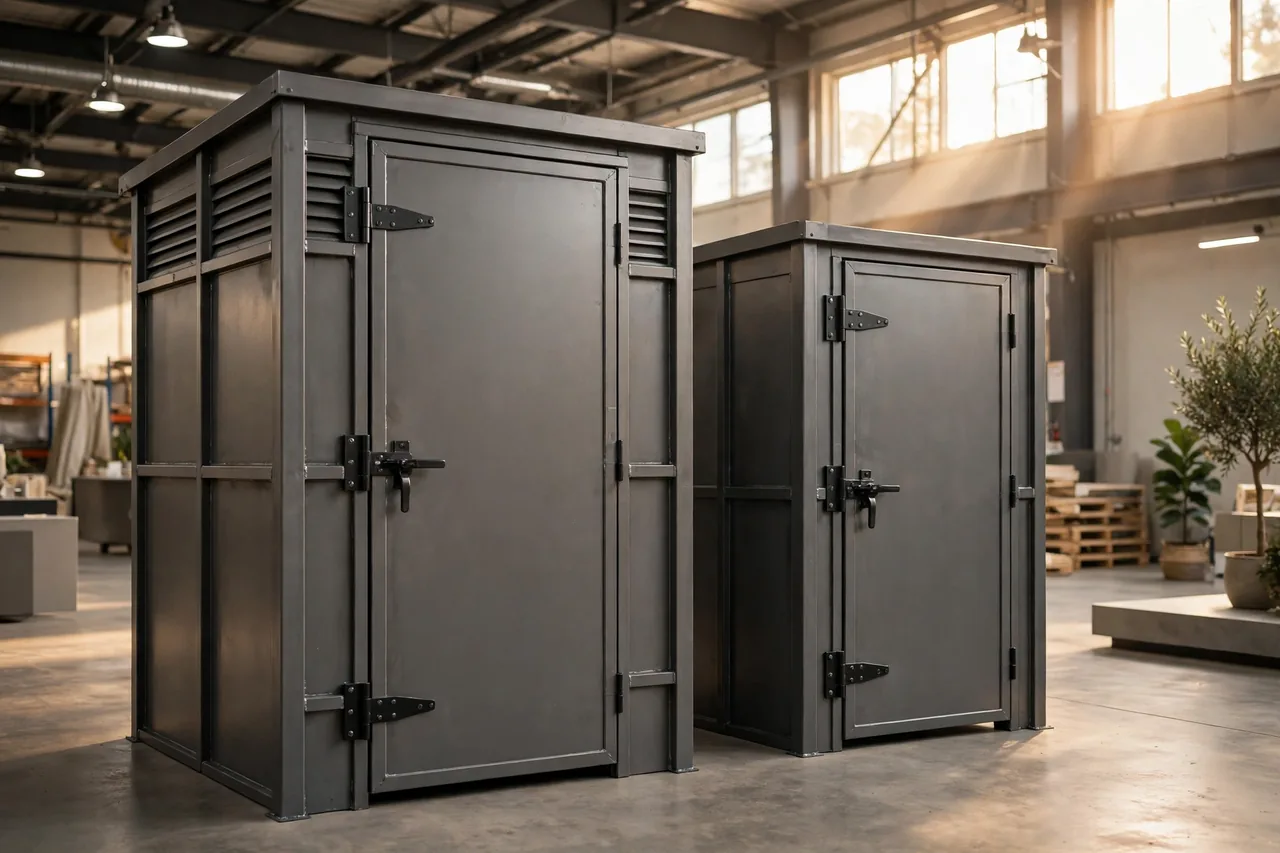
Buy the Survive-a-Storm ShelterCube Estate 6 x 6 if you want the best all-round above-ground tornado shelter. At $6,830.50, checked 23 November 2026, it holds 12 people, fits in a garage or a large closet, and costs less per person than any smaller unit.
Buy the ShelterCube Hovel 4 x 4 if your space is tight and your budget is near $5,000. It costs $5,247.85 at Home Depot and holds 4 to 5 people. Buy the Survive-a-Storm Extreme 4 x 4 if you want the toughest small unit, at $5,620. Buy the Panelized 4 x 4 if the shelter must fit through a normal doorway, because it arrives in panels and bolts together inside the room. The table below makes the choice fast.
Best Above-Ground Tornado Shelters at a Glance
Caption: Best above-ground tornado shelters compared — prices checked 23 November 2026.
| Shelter | Size | People | Price | Best For |
|---|---|---|---|---|
| Survive-a-Storm ShelterCube Estate 6 x 6 | 6 ft x 6 ft | 12 | $6,830.50 | Most families |
| Survive-a-Storm ShelterCube Hovel 4 x 4 | 4 ft x 4 ft | 4–5 | $5,247.85 | Small spaces |
| Survive-a-Storm Extreme 4 x 4 | 4 ft x 4 ft | 5 | $5,620 | Toughest small unit |
| Survive-a-Storm Panelized 4 x 4 | 4 ft x 4 ft | 5 | $5,350 | Through-door install |
Prices are unit prices and do not include delivery, a concrete pad, or installation. The ShelterCube Estate and Hovel prices are Home Depot list prices, and the Panelized price is the NorthGrid Supply list price, all checked 23 November 2026. A concrete pad usually adds about $5 to $10 per square foot, and delivery is priced by location, so ask what the price includes before you order.
How We Picked These Shelters
A good above-ground tornado shelter has to pass one test above all others: the debris-impact test. FEMA P-361 includes a test in which a 15-pound 2 x 4 timber strikes the shelter wall at 100 mph, and a shelter that passes it can stand up to the debris in an EF3 to EF5 tornado. We judged every pick on that test, on the ICC 500 standard, on capacity, and on honest pricing.
Only buy a shelter that names its standard in writing — FEMA P-320 or ICC 500 — and ask the maker for the test report before you pay. FEMA does not certify products itself, so a claim of “FEMA approved” without a test report from an accredited lab is not proof. The National Storm Shelter Association keeps a member directory of producers who follow its quality program, and that list is a useful filter, not a guarantee.
Capacity matters more than most buyers expect. A 4 x 4 unit holds 4 to 5 people, but it feels tight with pets, a wheelchair, or supplies. A 6 x 6 unit holds 12 people and gives a family of four real room to sit, which matters when a warning keeps you inside for an hour. Price per person falls fast as the unit grows, so buy one size bigger than you think you need if your slab and budget allow it.
1. Survive-a-Storm ShelterCube Estate 6 x 6 — Best Overall
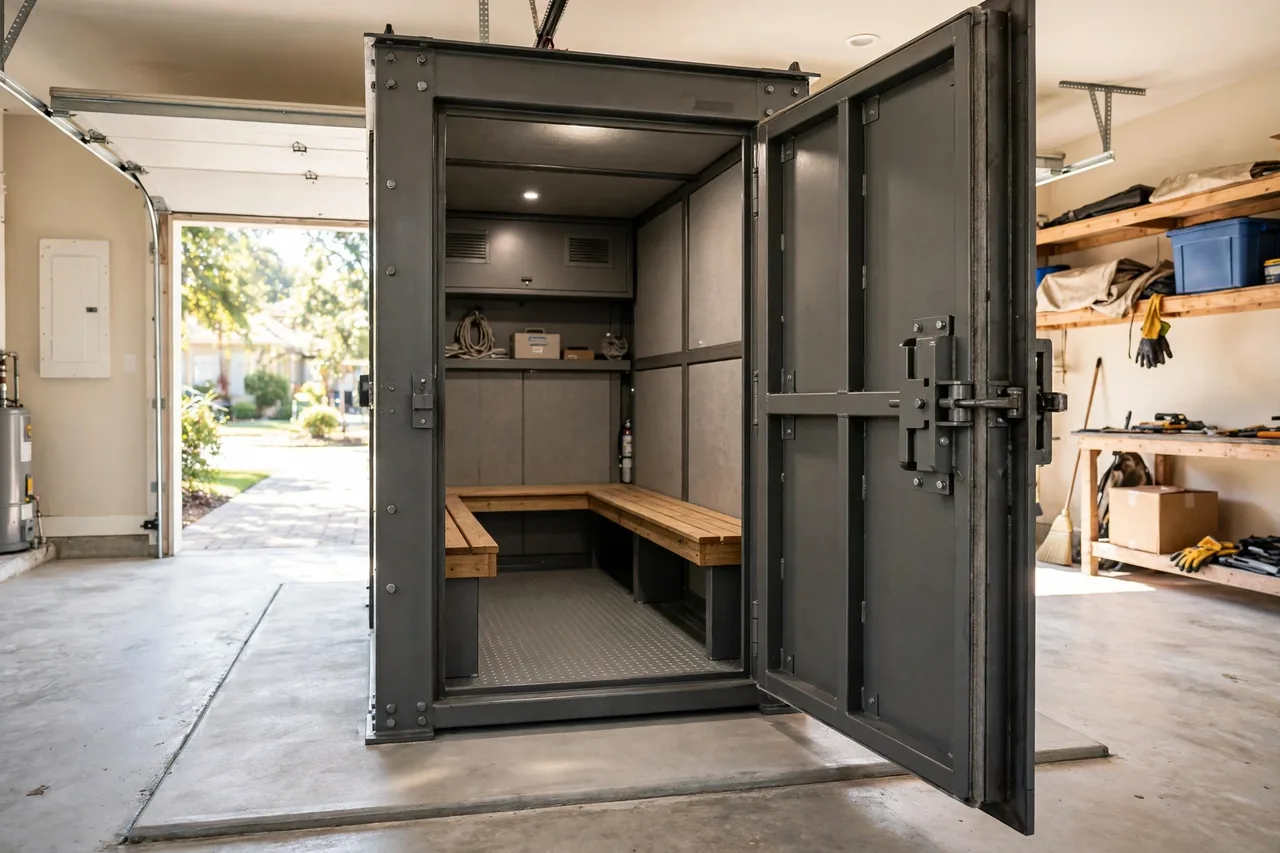
The Survive-a-Storm ShelterCube Estate 6 x 6 is the best above-ground tornado shelter for most families because it gives you the most room per dollar. At $6,830.50, it costs about $570 per person for 12 people, while the smaller Hovel costs more than $1,000 per person.
Caption: Survive-a-Storm ShelterCube Estate 6 x 6 key specs.
| Spec | Detail |
|---|---|
| Price | $6,830.50 at Home Depot, checked 23 November 2026 |
| Size | 6 ft wide x 6 ft deep x 88 in high |
| Capacity | Up to 12 people |
| Construction | Steel, built to protect against EF5 tornado winds and debris |
| Install | Bolts to a concrete slab; delivery and pad extra |
The Estate is a one-piece welded steel unit, so there are no panel seams to worry about, and it arrives ready to anchor. See the Home Depot listing for the ShelterCube Estate 6 x 6 for the full spec list and current price.
Owners ask the same questions again and again: is it big enough, and can you get out if debris blocks the door? In the maker’s own Facebook walkthrough of its largest 8 x 6 model, viewers worried most about feeling trapped, and the brand answered with its anchor strength, venting, and EF5 test history, including survival in the Moore, Oklahoma tornado of 2013. Read the Survive-a-Storm walkthrough and buyer questions before you decide on size.
Pick the Estate if you have a garage slab or a large closet and a family of four or more. Skip it if your doorway or stairwell cannot take a one-piece 6 x 6 unit, because then the Panelized model below is the better buy.
2. Survive-a-Storm ShelterCube Hovel 4 x 4 — Best for Small Spaces
The Survive-a-Storm ShelterCube Hovel 4 x 4 is the best above-ground tornado shelter for a tight space or a tight budget. It costs $5,247.85 at Home Depot, checked 23 November 2026, and it fits in a small garage corner, a closet, or a patio slab.
Caption: Survive-a-Storm ShelterCube Hovel 4 x 4 key specs.
| Spec | Detail |
|---|---|
| Price | $5,247.85 at Home Depot, checked 23 November 2026 |
| Size | 4 ft wide x 4 ft deep |
| Capacity | 4–5 people |
| Construction | Steel, built to protect against EF5 tornado winds and debris |
| Install | Bolts to a concrete slab; delivery and pad extra |
The Hovel is the smallest one-piece unit in the ShelterCube line, and its size is both its strength and its limit. It slides into spaces a bigger unit cannot reach, and it costs the least of the one-piece models. See the Home Depot listing for the ShelterCube Hovel 4 x 4 for the full spec list.
The trade-off is room. Four adults in a 4 x 4 box have almost no space for water, a first-aid kit, or a pet, and a warning that lasts an hour feels very long. Buyers in the maker’s Facebook comments ask most about price before install, and the brand quotes about $4,800 before installation for its smaller closet models, which shows how much the pad, delivery, and anchoring add. If your family is two people and a dog, the Hovel is enough. If you have three kids, step up to the Estate.
Pick the Hovel if space or budget forces a small unit. Skip it if you need room for supplies or a wheelchair, because you will regret the tight fit the first time you use it.
3. Survive-a-Storm Extreme 4 x 4 — Toughest Small Unit
The Survive-a-Storm Extreme 4 x 4 is the toughest small above-ground tornado shelter on this list. It costs $5,620 at Home Depot, checked 23 November 2026, and it is built as a single heavy steel unit for buyers who want the strongest small shelter they can buy.
Caption: Survive-a-Storm Extreme 4 x 4 key specs.
| Spec | Detail |
|---|---|
| Price | $5,620 at Home Depot, checked 23 November 2026 |
| Size | 4 ft wide x 4 ft deep |
| Capacity | 5 people |
| Construction | Heavy steel above-ground unit |
| Install | Needs a concrete pad; installation not included; delivery priced by location |
The Extreme’s own product page is clear about what the price does not cover: installation is not included, delivery is priced by location, and a concrete pad is needed. See the Home Depot listing for the Extreme 4 x 4 for the full details. That honesty matters, because the cheapest unit price is not the cheapest installed price.
An independent Oklahoma price check from October 2026 puts Survive-a-Storm steel shelters at $3,995 to $9,245 unit-only, and puts installed above-ground safe rooms at $6,250 to $8,000, which lines up with the Extreme’s price once you add a pad and delivery. Read the Oklahoma storm shelter cost guide to see what installers actually charge in tornado country.
Pick the Extreme if you want the strongest small unit and you have a pad ready. Skip it if you need more than five seats, because the Estate costs only about $1,200 more and holds more than twice as many people.
4. Survive-a-Storm Panelized 4 x 4 — Best When It Must Fit Through a Door
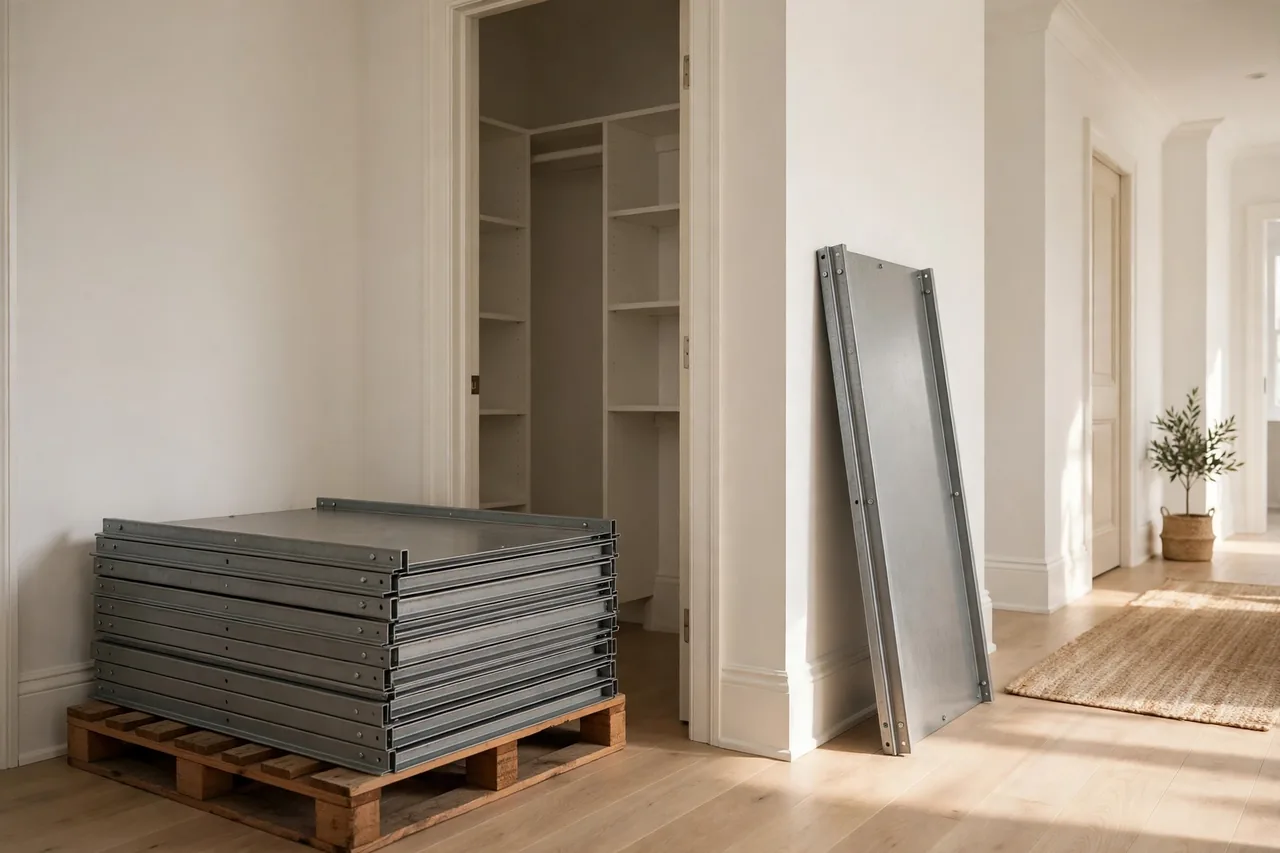
The Survive-a-Storm Panelized 4 x 4 is the best above-ground tornado shelter when a one-piece unit cannot reach the spot. It costs $5,350 at NorthGrid Supply, checked 23 November 2026, and it arrives in two-foot panels that bolt together inside the room.
Caption: Survive-a-Storm Panelized 4 x 4 key specs.
| Spec | Detail |
|---|---|
| Price | $5,350 at NorthGrid Supply, checked 23 November 2026 |
| Size | 4 ft wide x 4 ft deep; larger sizes to 8 x 6 available |
| Capacity | 5 people (4 x 4); up to 16 people (8 x 6) |
| Construction | Steel panels bolted together on site |
| Install | Assembles inside a closet, laundry room, garage, or yard |
The Panelized model exists for one problem: a one-piece shelter cannot fit through a normal doorway, a hallway, or a basement stair. Its panels ship on pallets to the curb, and you carry them in and bolt them together where the shelter will stand. See the NorthGrid Supply listing for the Panelized shelter for sizes and prices up to the 8 x 6, 16-person model at $8,215.
In the maker’s video of this unit, the presenter shows the two-foot panels, the bolted steel walls, ceiling, and floor, and the escape hatch option, and calls it the best option for interior spaces where a large one-piece shelter cannot fit. Watch the Survive-a-Storm panelized shelter video to see how the panels go together before you order.
Pick the Panelized model if your shelter spot is inside the house and a one-piece unit cannot get there. Skip it if you have a clear garage slab, because a one-piece unit is faster to install and has no panel seams.
Above-Ground vs. Underground: Which Is Safer?
An above-ground shelter built to FEMA P-320 or ICC 500 is as safe as an underground shelter against tornado wind and debris, and the Federal Emergency Management Agency says a safe room built to those standards gives near-absolute protection. The choice is not about safety, it is about your home, your body, and your ground.
Above-ground shelters win on access. There are no stairs to climb in the dark, no water to pump out, and no risk of being trapped below a collapsed house. That matters for older people, for anyone in a wheelchair, and for families with small children. Underground shelters win on space and cost per person in some regions, with typical installed prices of $4,000 to $20,000, but they need digging, drainage, and a dry site.
If your ground is rocky, your water table is high, or anyone in your family cannot climb stairs fast, an above-ground shelter is the right call. If you have a dry site, a big yard, and a low budget, an underground unit can cost less. Either way, the standard is the same: FEMA P-320 or ICC 500, with a test report you can read.
What Most People Get Wrong About Above-Ground Shelters
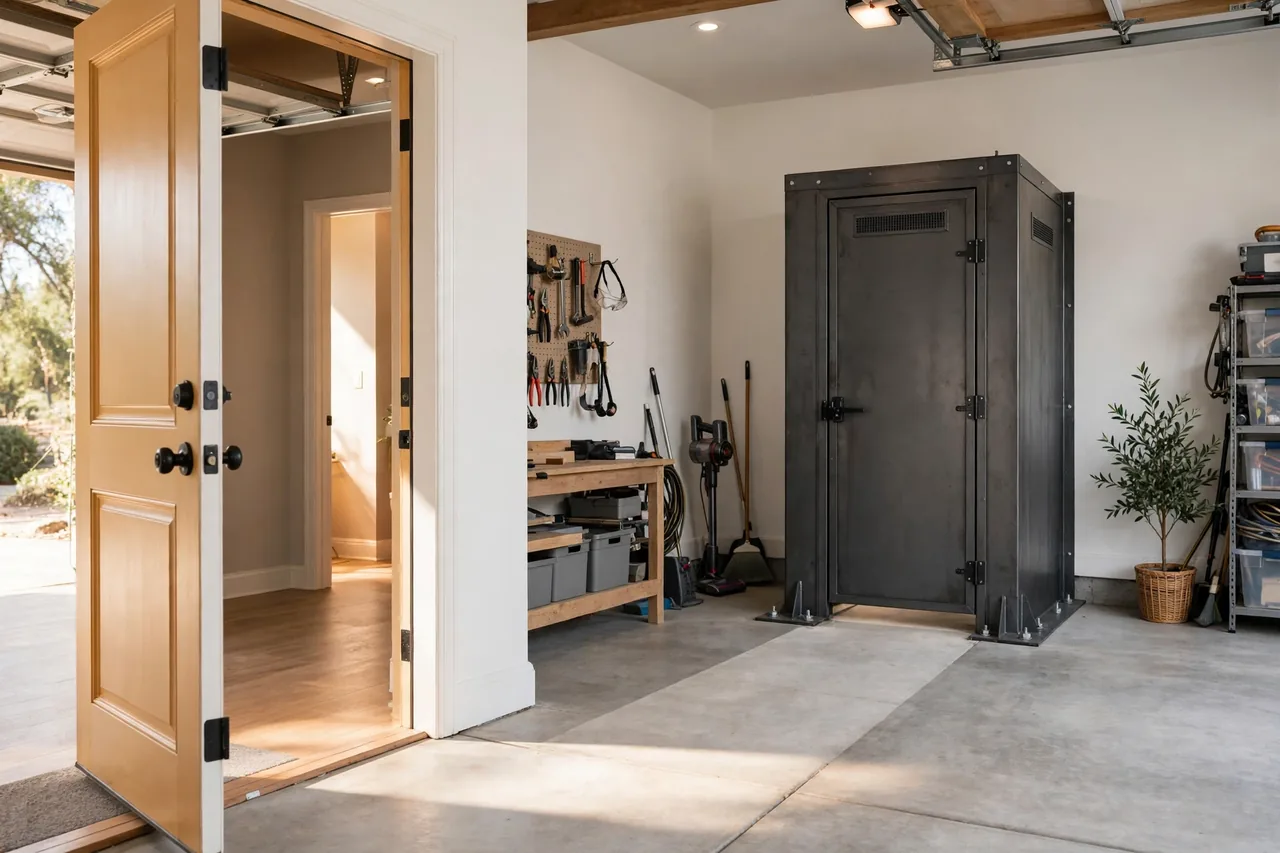
Most people get above-ground shelters wrong in one big way: they think a shelter above ground cannot survive a tornado. That belief comes from watching houses get torn apart, but a house is not a shelter. A certified safe room is a steel or concrete box anchored to a slab with tested walls, and it is built to a different standard from the house around it.
The second mistake is trusting a label instead of a test report. “FEMA approved” sounds official, but FEMA does not certify products. What matters is the debris-impact test report from an accredited lab, showing the unit passed the 15-pound 2 x 4 at 100 mph test. Ask for that report by name, and walk away from any seller who cannot show it.
The third mistake is forgetting the total cost. The unit price is only part of the bill. A concrete pad, delivery, anchoring, and installation can add $1,000 to $3,000 or more. The independent shelter guide at ShelterCompare puts the cheapest credible small above-ground steel unit at roughly $3,000 to $5,000 installed, and the most flexible safe rooms higher, so budget for the installed price, not the list price.
Where to Put an Above-Ground Tornado Shelter
Put your above-ground shelter where you can reach it in under a minute, day or night, in the dark, and in the rain. For most homes, that is the garage, on a reinforced concrete slab, close to the door into the house. A garage spot keeps the shelter out of your living space and lets the whole family reach it fast.
A closet or laundry room works too, especially for the Panelized model, which bolts together inside the room. That spot hides the shelter in daily life and keeps it steps from the bedrooms. An outdoor slab in the yard works if the shelter is close to the house, but a long run across a yard in a storm is a bad plan, and the unit needs a proper pad and drainage.
Whatever spot you pick, the shelter must bolt to a concrete slab that meets the maker’s spec. A shelter that is not anchored is a shelter that can slide or lift, and anchoring is the part of the install that a professional should check. Get the pad poured and cured before the unit arrives, and keep the path to the door clear at all times.
How Much Does an Above-Ground Tornado Shelter Cost Installed?
A small above-ground steel shelter costs about $3,000 to $12,000 installed, according to the 2026 cost overview at ShelterCompare, which puts above-ground steel units at $3,000 to $12,000 for 4 to 12 people with a one-day install. FEMA’s own homeowner guidance puts a small prefabricated safe room at about $3,000, and a 14-foot by 14-foot safe room at about $14,000 to $17,000.
The four picks in this guide sit inside that range: $5,247.85 to $6,830.50 for the unit, plus a pad, delivery, and anchoring. In Oklahoma, installer price lists from October 2026 put installed above-ground safe rooms for 9 to 16 people at $6,250 to $8,000, which matches the Estate’s price once install is included.
Check for help with the cost before you pay full price. FEMA lists possible funding sources including grants, rebates, and special financing, and some states run rebate programs, such as Oklahoma’s SoonerSafe program, which has paid eligible homeowners 75 percent of the cost up to $2,000. Ask your state emergency management office what is open now, because programs open and close by year.
A Safety Note Before You Buy
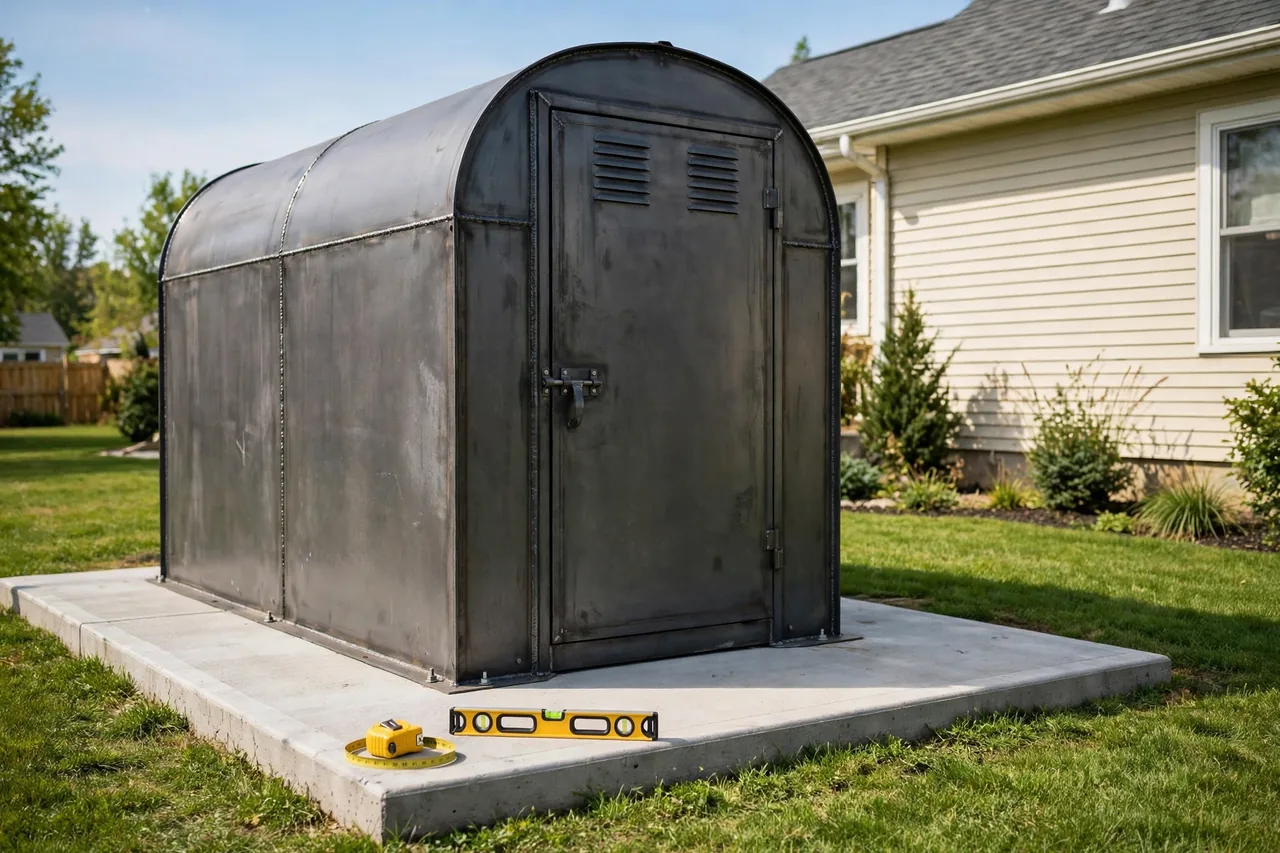
An above-ground tornado shelter is life-safety equipment, not furniture. Buy only a unit that names FEMA P-320 or ICC 500 in writing and shows you the debris-impact test report from an accredited lab. Have a professional check the slab and the anchoring, and never install a shelter on a slab that does not meet the maker’s spec. This guide is general information based on prices checked 23 November 2026, not engineering advice, and prices and programs change, so confirm the price and the standard with the maker before you order.
Related Guides
Start with where to shelter when the warning sounds: our DIY storm shelter guide covers planning, costs, and build basics for the full range of shelter types. If you want to build rather than buy, that guide is your next read, and if you want to watch your home around the clock, our best home security camera system guide covers the setup.
Frequently Asked Questions
Are above-ground tornado shelters safe?
Yes, when they are built to FEMA P-320 or ICC 500 and anchored to a proper concrete slab. FEMA says a safe room built to those standards gives near-absolute protection from tornado winds and flying debris.
How much does an above-ground tornado shelter cost?
A small above-ground steel shelter costs about $3,000 to $12,000 installed. The four picks in this guide cost $5,247.85 to $6,830.50 for the unit, plus a concrete pad, delivery, and anchoring.
What is the best tornado shelter for a family?
For most families, the Survive-a-Storm ShelterCube Estate 6 x 6 at $6,830.50 is the best pick. It holds 12 people, so a family of four has room for supplies, pets, and guests.
Do above-ground tornado shelters need a concrete slab?
Yes. Every above-ground steel shelter must bolt to a reinforced concrete slab that meets the maker’s spec. A shelter that is not anchored can slide or lift in extreme wind.
Can you install an above-ground tornado shelter yourself?
A panelized unit can be bolted together by a skilled homeowner, but the slab and anchoring should be checked by a professional. A one-piece unit is heavy and needs delivery equipment and a proper pad.
Are above-ground shelters better than underground shelters?
Neither is safer when both meet FEMA P-320 or ICC 500. Above-ground shelters win on access, with no stairs and no flooding, while underground shelters can cost less per person on a dry site.
Buy the ShelterCube Estate 6 x 6 if you have a family and a garage slab, the Hovel 4 x 4 if space is tight, and the Panelized 4 x 4 if the shelter must fit through a doorway. Whichever you pick, ask for the test report, budget for the pad and delivery, and put the shelter where you can reach it in under a minute.