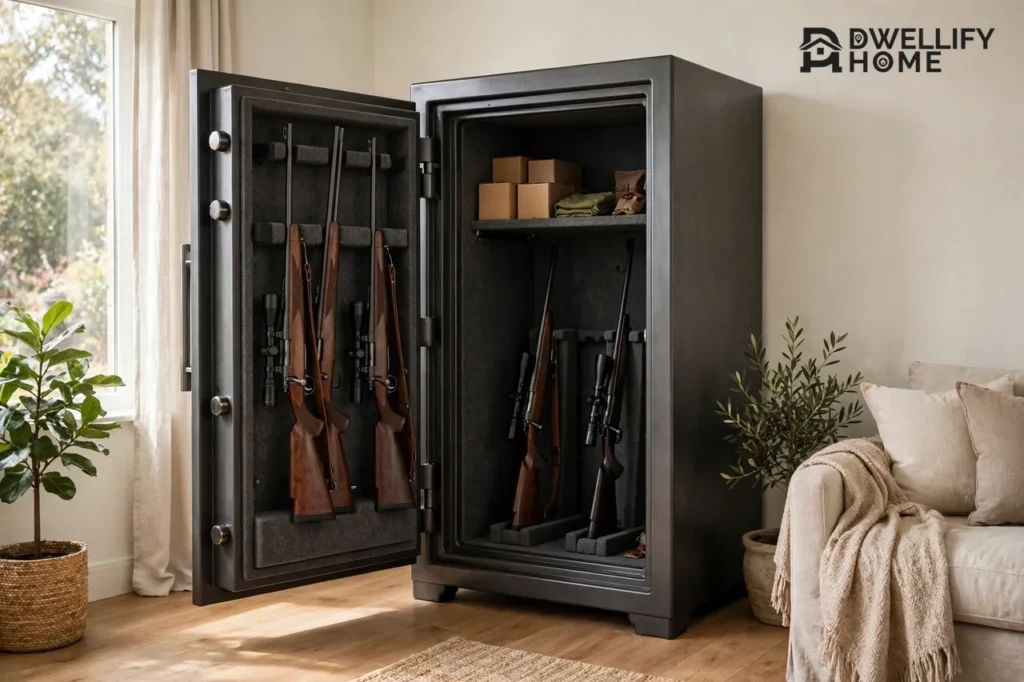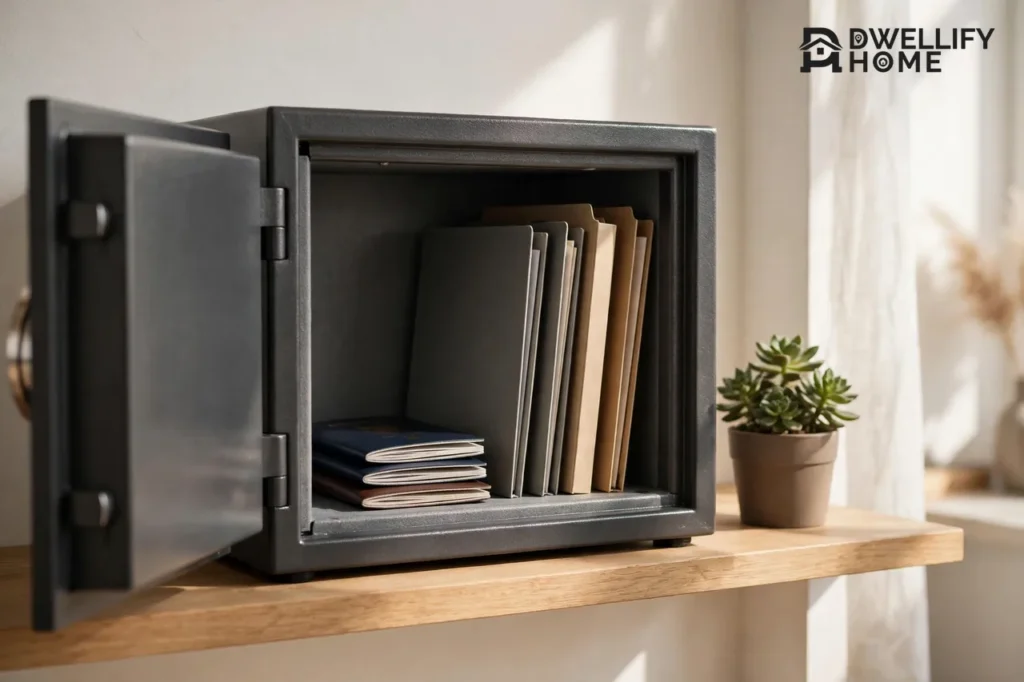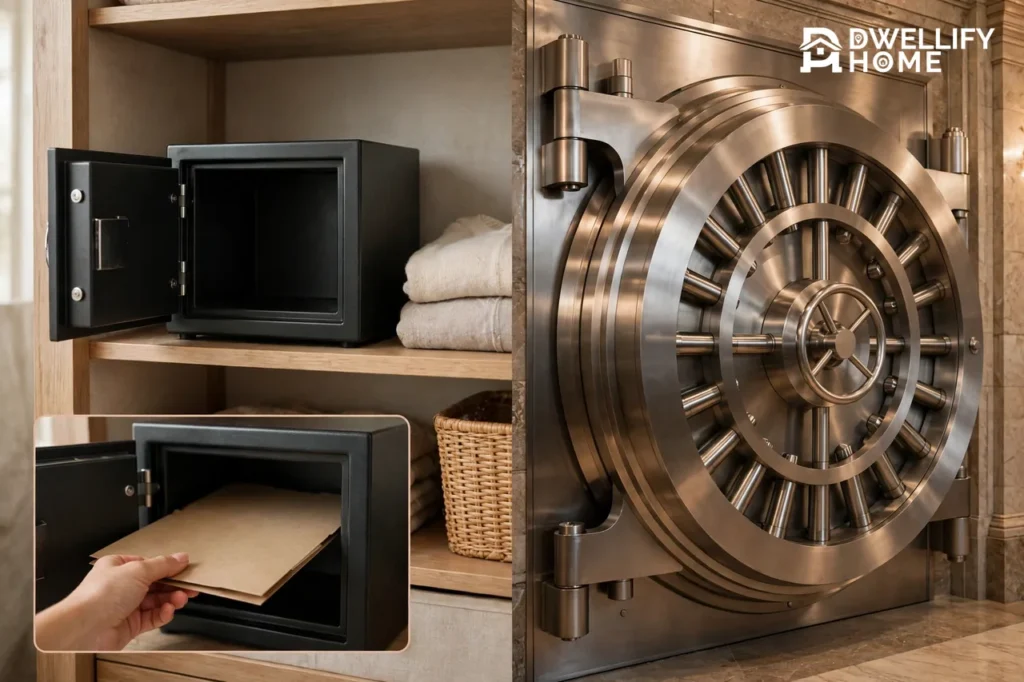
Choose both: keep what you need fast in a home safe, and keep what you cannot replace in a safe deposit box. A home safe wins on access, because you can reach it any time, including nights, weekends, and emergencies. A safe deposit box wins on distance, because your things sit in a bank vault, away from a house fire, flood, or burglary at home. Neither one is automatically insured, and that surprise catches most people.
This guide compares the two side by side, gives you a simple rule for what goes where, and covers the costs, the insurance gaps, and the mistakes that leave people locked out of their own valuables. It is general information, not legal, tax, or insurance advice, because the rules for safe deposit boxes and estates vary by bank and by state.
Home safe vs. safe deposit box: side by side
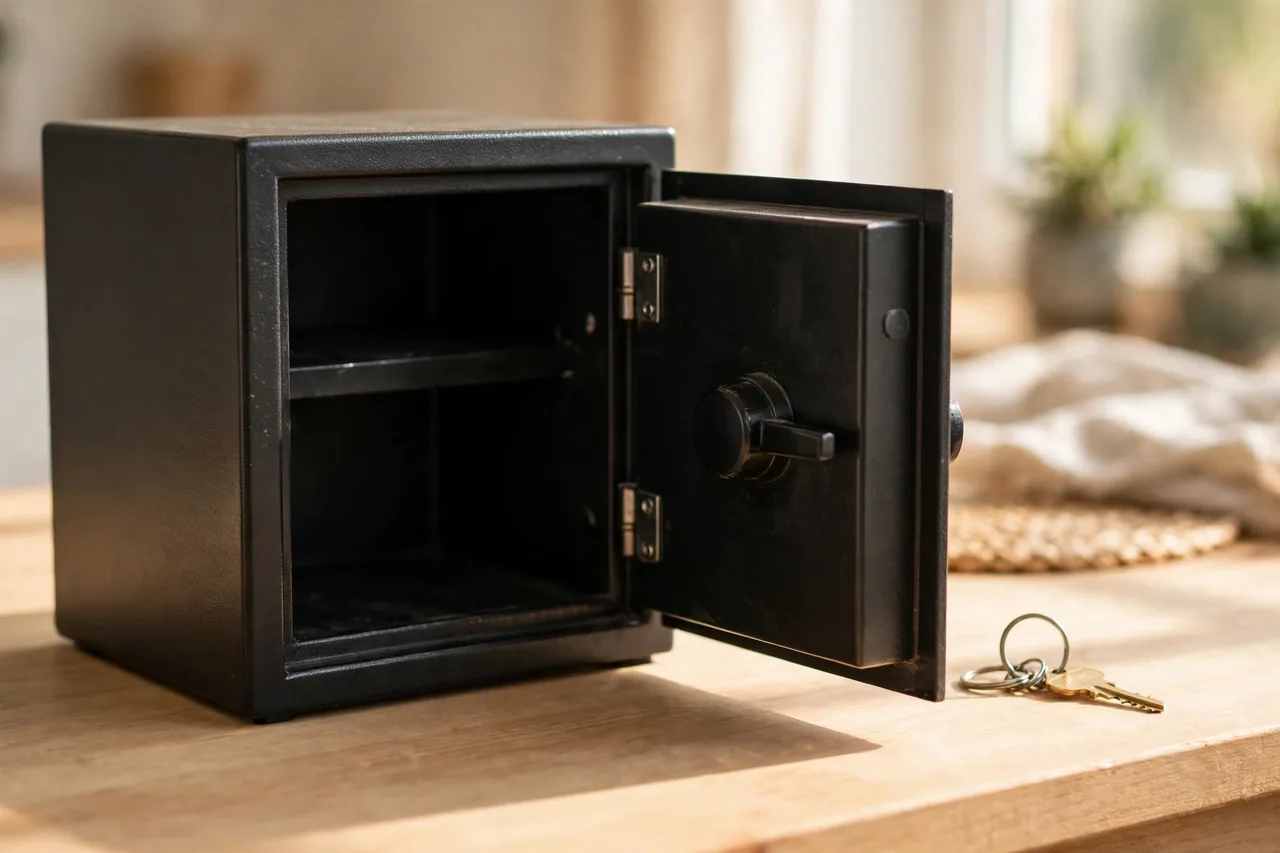
The two options protect against different risks, and each one has a weak spot the other covers. Read the table first, then the detail below it.
Side-by-side comparison:
| Factor | Home safe | Safe deposit box |
|---|---|---|
| Access | Any time, day or night | Bank hours only, at that branch |
| Theft risk | Depends on the safe, anchoring, and hiding spot | Low, but not zero |
| Fire and flood risk | Depends on the safe’s ratings and location | Bank vaults resist both, but disasters can still reach them |
| Insurance | Usually covered by homeowners or renters policy, often with low limits for cash, jewelry, and metals | Contents are NOT insured by the FDIC or the bank by default |
| Cost | One-time purchase, plus installation | Yearly rental fee, varies by bank and box size |
| Privacy | Only people you tell know it exists | The bank has a record of the box and who can open it |
| Emergency use | Immediate | Closed nights, weekends, and holidays |
The insurance gap most people miss
The FDIC does not insure safe deposit box contents. FDIC insurance covers deposit accounts up to $250,000 per depositor, per insured bank, for each ownership category — and a safe deposit box is not a deposit account. The FDIC states plainly that a safe deposit box is storage space provided by the bank, so its contents, including cash, checks, and valuables, are not insured by FDIC deposit insurance if damaged or stolen, and financial institutions generally do not insure the contents either.
That surprises people twice. First, cash in a box is not protected the way cash in a checking account is. Second, the bank’s lease usually caps its own liability at a low figure, often $25,000 or less, no matter what you stored inside. If you want protection for the valuables in your safe deposit box or home safe, the FDIC says to talk to your homeowner’s or renter’s insurance agent about adding coverage under those policies.
The home safe side has its own gap. Standard homeowners policies generally cap jewelry theft at about $1,500, because jewelry is small and easy to steal. A valuable collection needs a separate rider or floater, and your insurer will ask about the safe’s rating and whether it is bolted down. Photograph everything, save appraisals, and check the limits before you assume you are covered. Our guide to homeowners insurance explains how those limits work.
What goes in the home safe

Keep anything you or your family might need immediately. Original estate plan documents belong at home: wills, revocable living trusts, durable powers of attorney, and medical directives must be easy for your executor or survivors to reach in a medical emergency or death. Keep Social Security cards, insurance policies, and passports at home too, especially if you travel often or could be asked to leave the country at short notice.
Add everyday jewelry, a small amount of emergency cash, and firearms you use regularly. A home safe is also the right place for a grab-and-go fire and water bag with copies of IDs, insurance policies, and a list of accounts for evacuations. The rule is simple: if you might need it at 2 a.m., on a Sunday, or during an evacuation, it stays at home.
What goes in the safe deposit box
Store things that are hard or impossible to replace and that you rarely need. Birth certificates, property deeds, divorce papers, military records, and irreplaceable family photos belong in the box. Add backup copies of your estate plan documents, a household inventory for your executor, and heirlooms, coin or stamp collections, and other high-value items you do not wear or use often.
Keep credit card data and other sensitive media in the box too, because you do not want to risk exposing it to a burglar who finds a home safe. The box is also the right place for the originals of documents whose copies live at home: if the house burns, the originals survive in the vault.
What never goes only in a safe deposit box
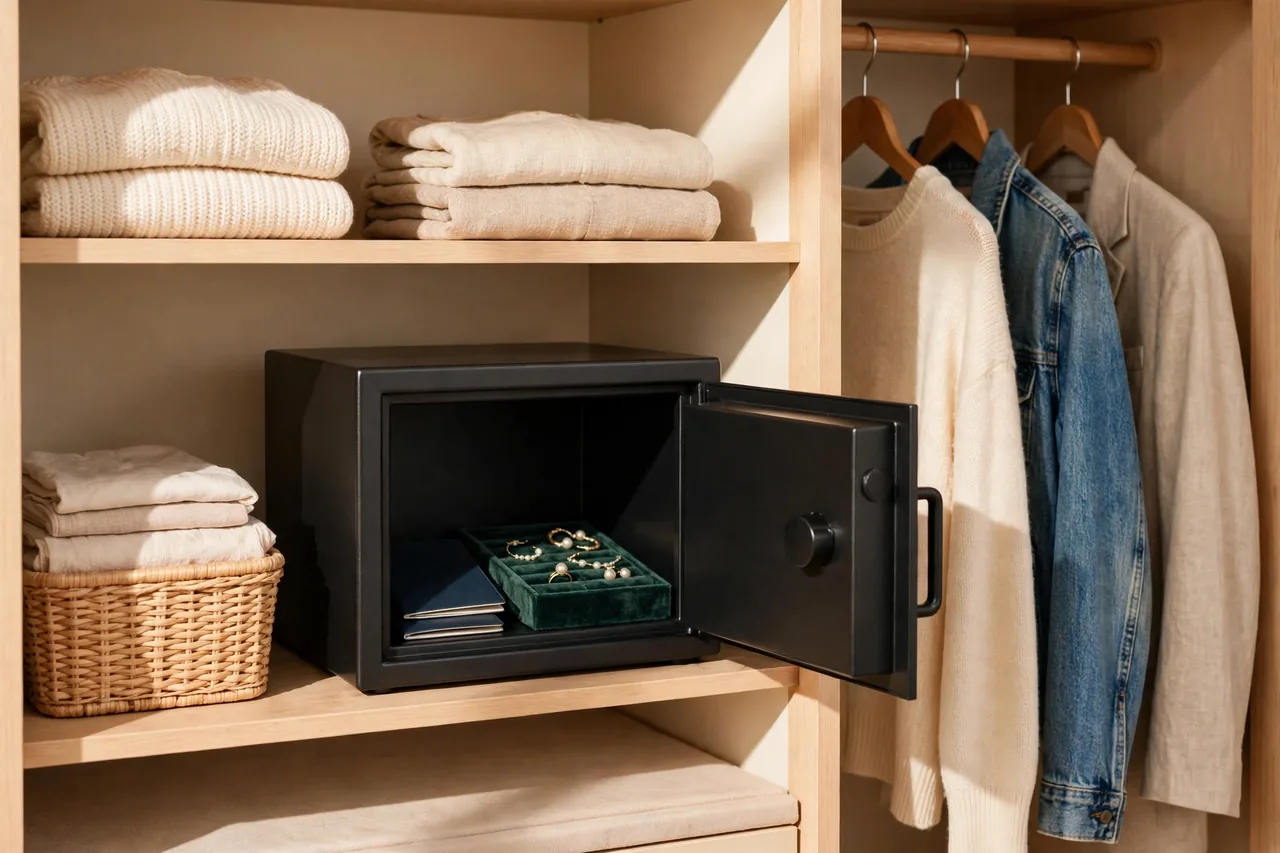
Never store the only copy of something your family needs in an emergency. An original will, a power of attorney, or a medical directive locked in a bank box can be unreachable exactly when it matters most. Banks are closed at night, on weekends, and on holidays, and after a death, the bank may seal the box until the estate is sorted, which can take weeks.
Keep originals of emergency documents at home and backup copies in the box, not the other way around. Tell your executor where both are, and make sure at least one other trusted person knows the home safe’s combination or key location. A safe nobody can open is as useless as no safe at all.
Also, never store cash in a safe deposit box as savings. Cash in a box earns nothing and is not FDIC-insured, while the same cash in a deposit account earns interest and carries federal insurance up to the $250,000 limit. Cash belongs in a deposit account; the box is for things, not money.
What does each option cost?
A home safe costs once, plus installation. Angi’s October 2026 data puts the national average cost of a safe at $500, with most homeowners paying between $250 and $780 depending on type, size, and security features. Professional installation runs $150 to $600, with hourly rates of $50 to $200, and delivery adds $75 to $300 for large or heavy safes. Anchoring or bolting adds $50 to $300.
A safe deposit box costs every year. The fee varies by bank and box size, and small boxes are usually the cheapest, but the fee never stops: you pay it for as long as you keep the box. Over ten years, a modest box can cost as much as a mid-range home safe. Add the cost of a separate insurance rider for the box contents, because the bank does not insure them, and the yearly total rises further.
Do the simple math for your own case. If you only need to protect a few documents and some jewelry, one good home safe may cost less over five years than a box plus a rider. If you hold irreplaceable heirlooms, the box is worth the rent, and the home safe becomes the fast-access partner, not the replacement.
Access, privacy, and the death problem
Access is where the two options differ most. A home safe opens any time, but only for people who know the combination or have the key. A safe deposit box opens only during bank hours, only at that branch, and only for people named on the lease, with ID and usually a second key held by the bank.
Privacy cuts both ways. A home safe is private: only people you tell know it exists. A bank box is on record: the bank knows the box exists, who can open it, and when it was opened. That record is a feature for estates and a drawback for privacy.
The death problem deserves its own warning. When the box holder dies, the bank may freeze the box until the estate provides the right papers, and that process takes time. Your family may need the will to start the process, but the will is inside the frozen box. Keep the original will at home, keep a copy in the box, and tell your executor where both are. The same logic applies to burial instructions and medical directives.
How to open a safe deposit box: what the bank asks for
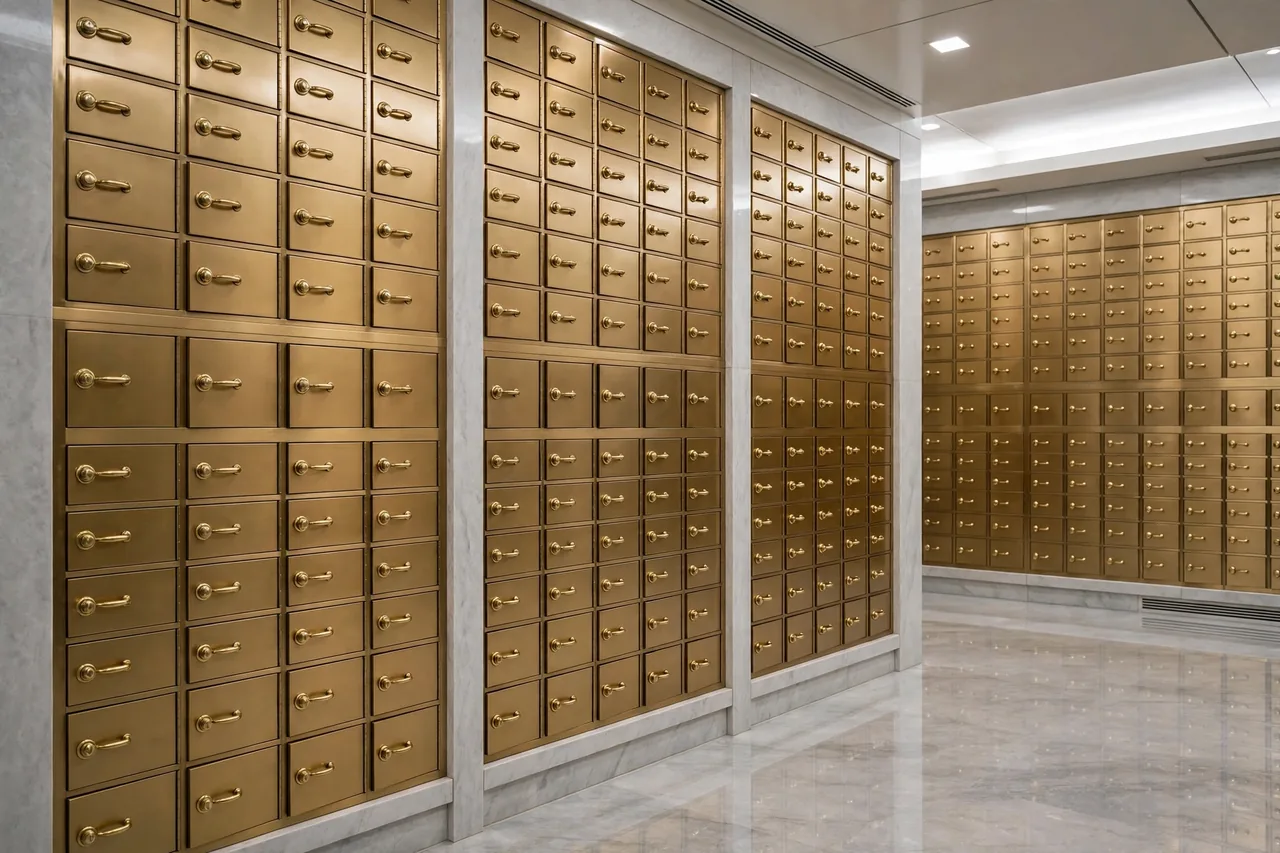
Opening a box is slower than opening a safe, and that is by design. Most banks use dual control: you hold one key, the bank holds the other, and both keys plus your ID are needed to open the box. You sign in, a bank employee checks your ID against the lease, and you open the box together in a private viewing room. Only people named on the lease can open it, so add a spouse, a trusted child, or your executor to the lease while you are healthy, not after a crisis.
Ask the bank these questions before you sign: what size boxes are available and what does each cost per year, what happens to the box if the branch closes, what is the bank’s liability limit in the lease, and what papers does your family need if you die or cannot come in yourself. Some banks drill a box for unpaid rent after notice, and some states let the bank seal a box on the holder’s death until the estate shows a death certificate and court papers. Knowing those rules now saves your family weeks later.
Visit the box at least once a year. Check that the key still turns, that the contents are dry, and that the list you keep at home still matches what is inside. A box nobody visits for five years is a box whose contents get forgotten, and forgotten valuables help no one.
What happens if the bank closes or fails?
A bank failure does not put your box contents at risk the way it puts deposits at risk, because the box is not a bank asset. If an insured bank fails, the FDIC protects deposit accounts up to $250,000, and the box contents stay yours, but access can be interrupted while the bank is closed or transferred. Keep copies of the most important box contents at home, so a temporary closure never leaves you without a birth certificate or a deed when you need it.
If a branch closes for good, the bank usually moves boxes to another branch and notifies holders, but the move can take weeks and the new branch may be farther away. Ask your bank how it handles branch closures, and keep the box at a branch you expect to last. A small fee saving is not worth a box that moves across town.
A simple split that works for most people

Use both, and split by urgency. At home, in an anchored safe: passports, everyday jewelry, a small amount of cash, firearms, and documents your family might need fast. At the bank, in a safe deposit box: birth certificates, deeds, heirlooms, collections, and backup copies of everything at home.
Then close the gaps. Photograph and list everything in both places, store the list outside the house, and check your insurance limits for both. Test the home safe’s lock every year, replace its batteries on a schedule, and visit the bank box at least once a year so nothing is forgotten. A security plan you never check is a plan that fails quietly.
If you are buying the home safe first, pair it with a camera that watches the approach to the room, not the safe itself. See our guide to the best home security camera system for placement that covers entries without pointing at your valuables.
Related Guides
Build the rest of the plan with these guides: the best home security camera system for watching entries, homeowners insurance for covering what neither a safe nor a box insures by itself, and cellular home security systems that keep working when power or internet fails.
Frequently asked questions
Are safe deposit box contents insured by the FDIC?
No. The FDIC insures deposit accounts up to $250,000 per depositor, per insured bank, for each ownership category. A safe deposit box is not a deposit account, so its contents are not FDIC-insured, and banks generally do not insure them either.
Is a home safe better than a safe deposit box?
Neither is better for everything. A home safe wins on access and privacy, while a safe deposit box wins on distance from fire, flood, and burglary at home. Most people should use both, split by how fast they need each item.
What should I not put in a safe deposit box?
Do not put the only copy of a will, power of attorney, or medical directive in a box, because the bank may seal it after a death and your family cannot reach it. Do not store cash as savings there either, because it earns nothing and is not insured.
How much does a safe deposit box cost?
The yearly rental fee varies by bank and box size, and small boxes cost least. Ask your bank for its current fee schedule, and add the cost of a separate insurance rider, because the bank does not insure the contents.
Can the bank open my safe deposit box?
Yes, in limited cases. Banks use dual control, with one key held by you and one by the bank, and they can drill a box for unpaid rent, a court order, or after the holder’s death under state law. Check your lease for the exact terms.
💡 Practical Home Tip: Make a one-page list of everything in your home safe and your bank box, with photos, and keep a copy with a trusted person outside your house. If fire, theft, or a frozen box ever hits, that list is what turns a disaster into a claim.
Start with the split: fast-access items at home, irreplaceable items at the bank. Then fix the insurance gap, because neither a safe nor a box covers you by itself — and the cheapest time to learn that is before anything goes wrong.