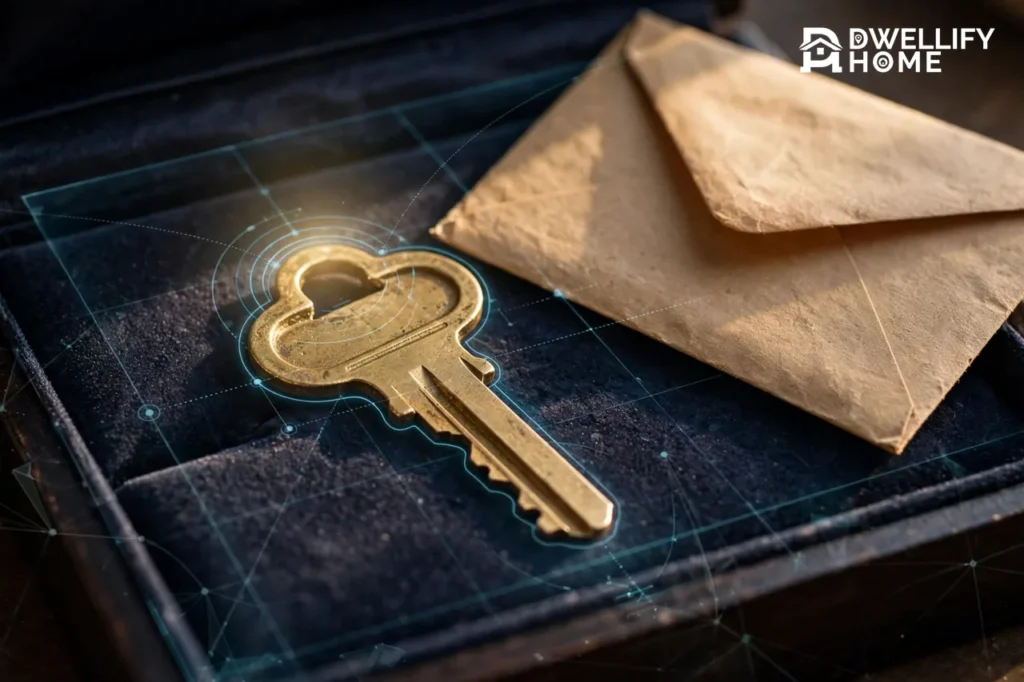
A safe deposit box key looks like a flat, plain brass or nickel-silver key, usually 3 to 4 inches long, with a flat blade, square notches cut along one edge, and the lock maker’s name and a number stamped on the bow — the part you hold. It has no bank name on it, no plastic head, and no chip. If the key in your hand is long, thin, flat, and stamped with a name like Mosler, Sargent & Greenleaf, Yale & Towne, or Diebold plus a number, it is almost certainly a safe deposit box key.
Most people meet this key the confusing way: it turns up in a drawer, a jewelry box, or an envelope of papers after a death or a move, and it fits nothing in the house. This guide shows you exactly what to look for, what the stamps and numbers mean, how to tell it apart from look-alike keys, and what to do next — including how to find the bank when the key itself refuses to say. One stamp on the key tells you the maker, not the bank, and that single fact saves most people hours of wrong searching — it is explained in the markings section below.
What a Safe Deposit Box Key Looks Like, Part by Part
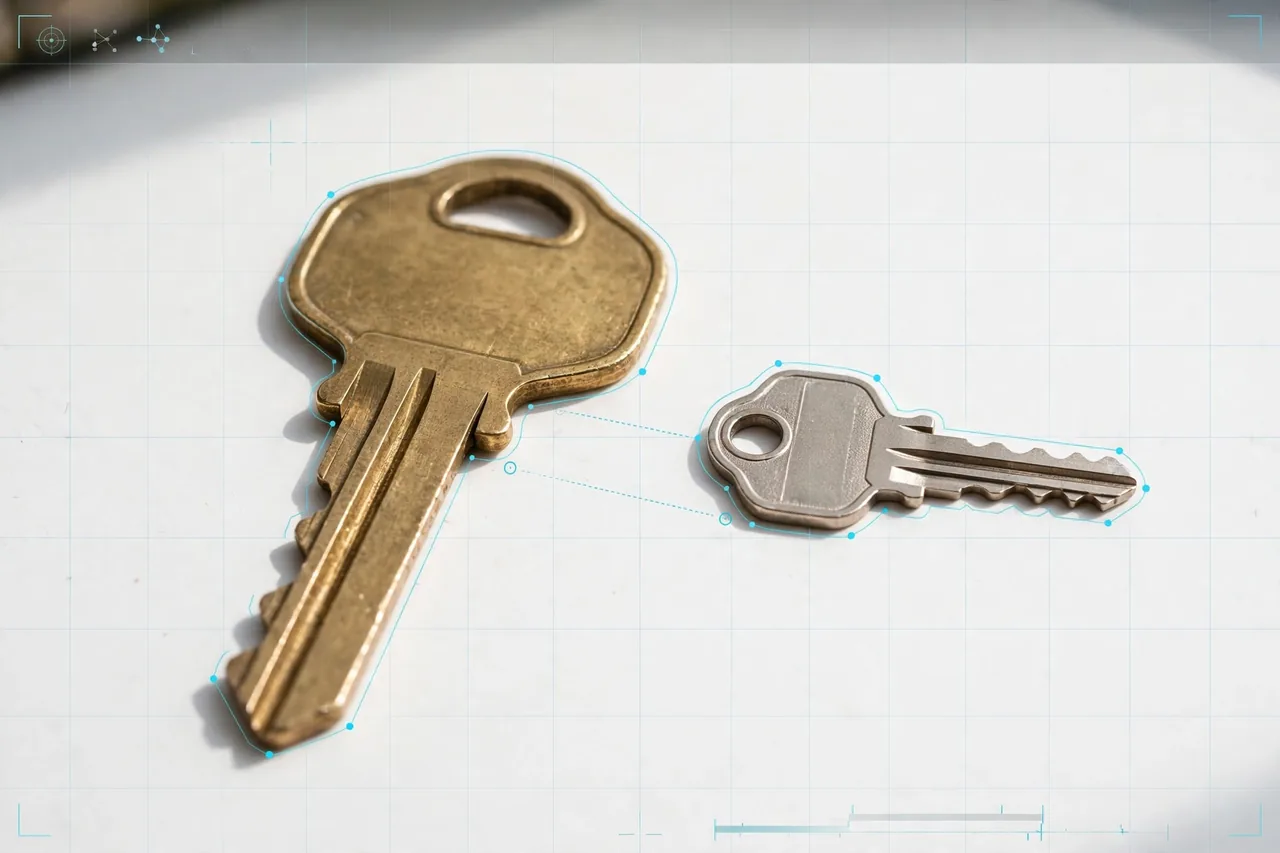
A safe deposit box key has four parts that set it apart from a house key: a flat blade, square-cut notches on one edge, a plain metal bow stamped with a maker name and a number, and a length of about 3 to 4 inches. The blade is uniform in thickness from tip to tail, with deep grooves running along its length that match the wards inside the lock. The notches — called the bitting — are square-cut valleys and peaks along one edge, and on many keys they are cut on both sides so the key works either way up. The bow is usually a simple rectangle, circle, or three-lobed shape in bare metal, with no rubber cover and no branding beyond the maker’s stamp.
History of Safes photographed a Mosler safe deposit key as the classic example: a flat blade with square notches along one edge and a three-lobed bow stamped with the maker’s name and a number. Their guide to safe deposit box keys is the clearest photo reference for this key type, and it is the source for the markings table below. Compare your key against that photo first — if the shape matches, you are almost certainly holding the right kind of key.
Caption: How to read a safe deposit box key.
| What you see | What it means |
|---|---|
| Flat blade, square notches on one edge | Matches the classic safe deposit key shape |
| Maker name on the bow (Mosler, Sargent & Greenleaf, Yale & Towne, Diebold) | Who made the lock — not which bank rented the box |
| A number stamped on the bow | The box number or the lock’s serial number — not the bank |
| Two identical keys together | Banks hand renters a pair of keys |
| A tag or envelope with a branch name or box number | Your best lead — start with that bank |
| Round shank with a bit at the tip | More likely an old safe, strongbox, or door key |
What the Stamps and Numbers Actually Mean
The stamps and numbers on a safe deposit box key tell you who made the lock and which box or lock it belongs to — and nothing about which bank holds the box. Mosler, the maker of bank vaults and safe deposit equipment, explained that a number stamped on a safe deposit key gives the box number or the lock’s serial number, nothing more. The maker’s name tells you who built the lock, and one maker sold its locks to hundreds of banks, so the name alone cannot narrow the search to one branch. The number is the box or the lock’s serial — never the bank, and never a code you can look up online.
Some keys carry a blind code that only the branch knows, and some carry the box number plainly. Either way, there is no public directory that turns a key number into a bank name — Mosler said that neither it nor anyone else in the trade records which bank a key belongs to. If a website offers to identify your bank from a key photo for a fee, walk away: the information does not exist to sell. What the number can do is prove your case at the right bank, once you find it, because the bank can match the number to its own records.
How It Differs From a House Key, a Safe Key, and a Padlock Key
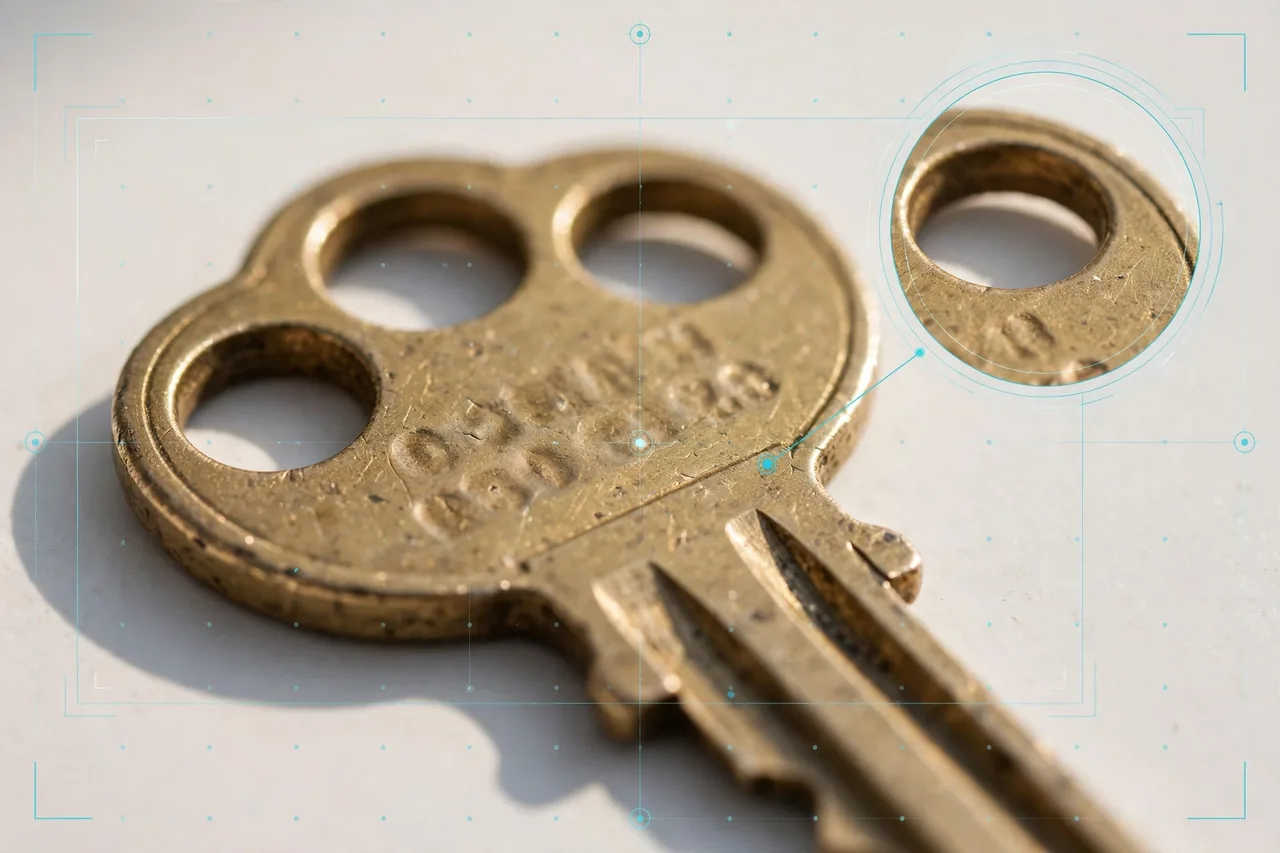
A safe deposit box key differs from a house key in size, shape, and feel: it is longer and thinner, usually 3 to 4 inches against a house key’s 2 inches, flat with no bulky plastic head, and stamped with a lock maker’s name instead of a key brand. A house key from Schlage or Kwikset is short, thick, and built to survive a pocket or a purse; a safe deposit key is delicate by comparison, made of brass or nickel-silver chosen to resist corrosion while it sits in a drawer for years.
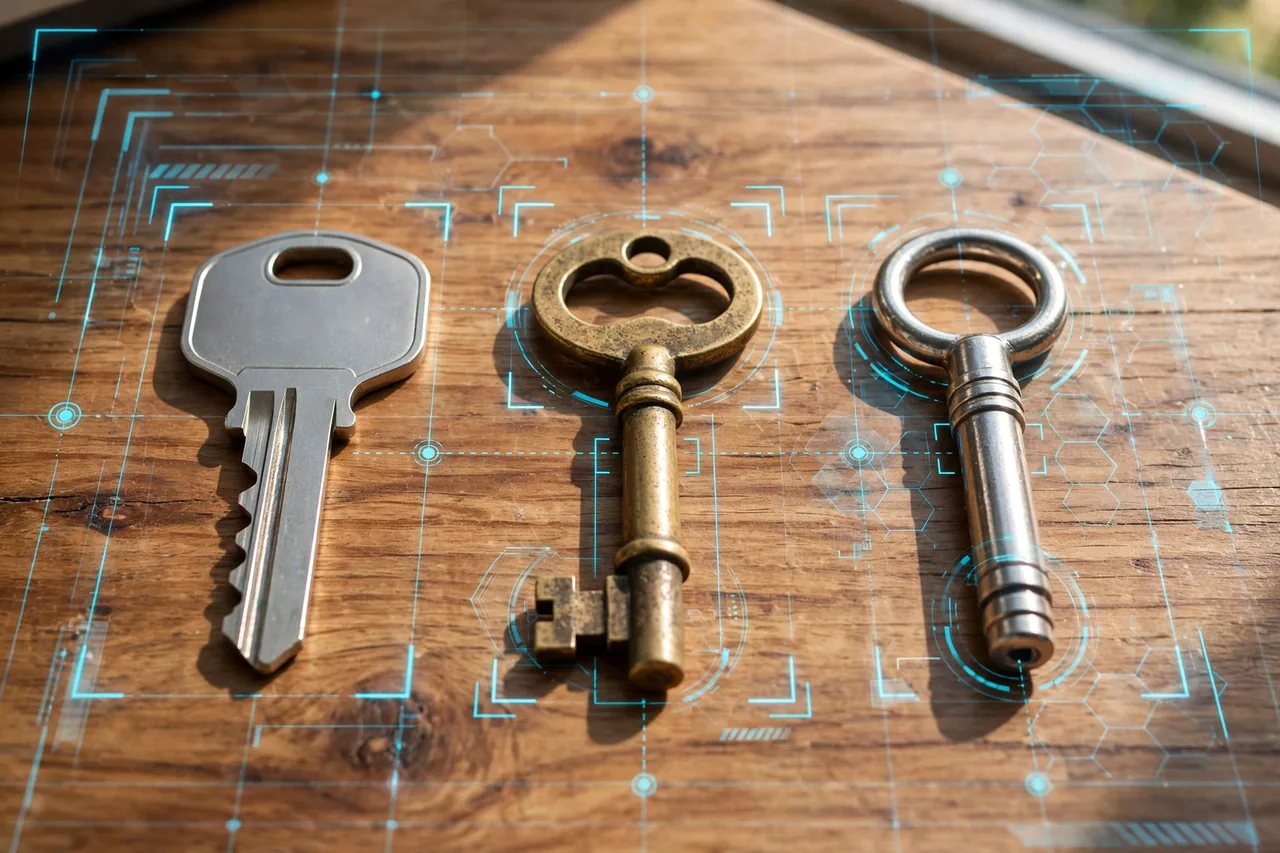
Three look-alikes cause most of the confusion. A filing-cabinet or desk key is also small and flat, but it is shorter and its cuts are shallower. An old safe or strongbox key has a round shank with a bit hanging off the tip — the classic skeleton-key shape — which a safe deposit key never has. A tubular key is a hollow cylinder with cuts around its rim, used on vending machines and bike locks, and it looks nothing like a flat blade once you hold them side by side. If your key has a round shank and a bit, stop looking for a bank box and start looking for an old safe or a strongbox in the house.
That sorts the shape. The next question is the one that actually gets you into the vault: how does the key work?
How the Two-Key System Works
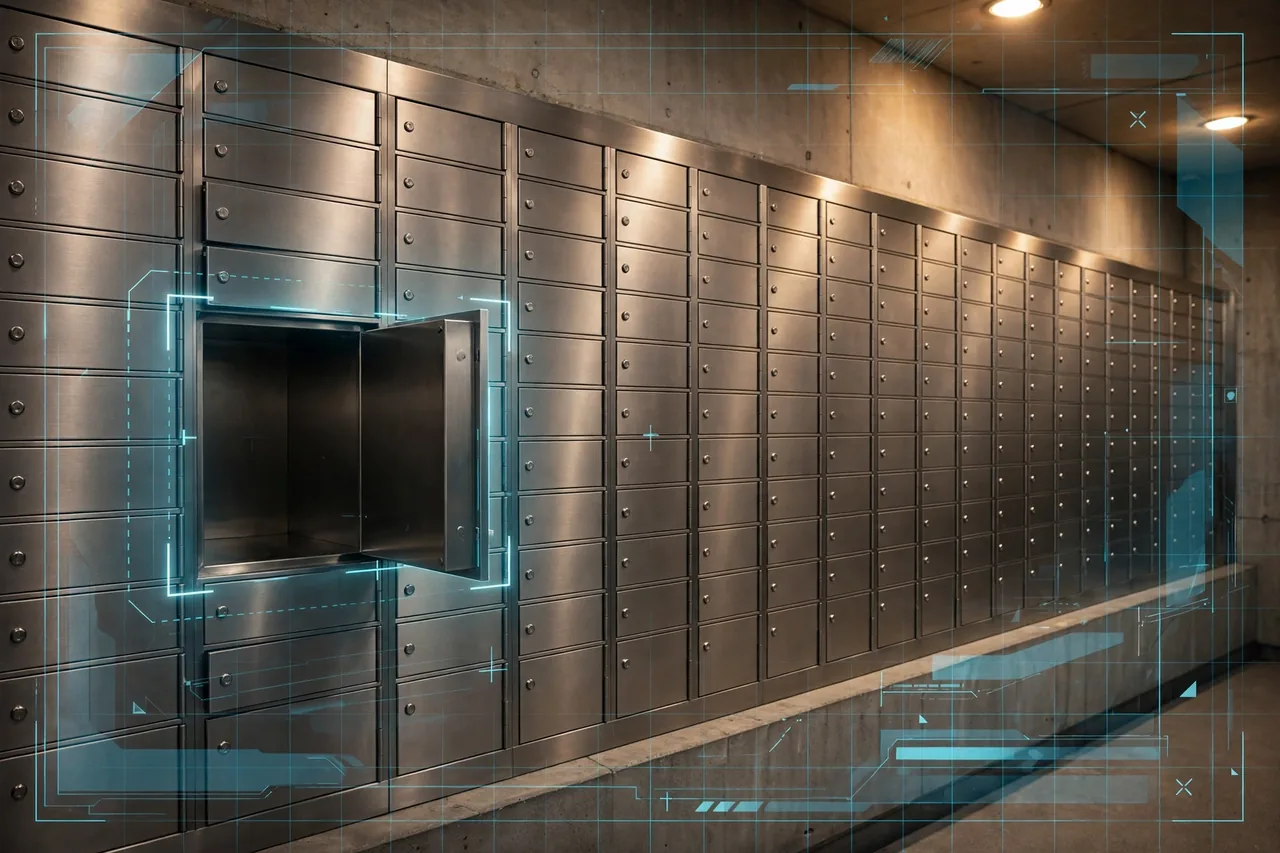
A safe deposit box opens only when two keys turn at the same time: your renter’s key and the bank’s guard key. The box has two separate locks, and the bolt only retracts when both keys turn together, so neither you nor the bank can open it alone. The US bank regulator, the Office of the Comptroller of the Currency, calls this dual control: “Typically, a bank employee and the customer each have a key, both of which are required to gain entry to the box.” The bank’s key is the guard key, and the bank keeps it. Your key is the renter’s key, and the bank has no copy of it.
The visit follows the same routine at almost every bank. You show photo ID, sign an access log, and a bank employee checks your signature against the one on file. The employee escorts you into the vault, inserts the guard key while you insert your key, and both turn together. The employee slides the metal box out, hands it to you, and leaves you alone in a private viewing room. When you finish, the box goes back, both keys turn again, and the box locks. Wells Fargo’s lease puts the other half of the deal in writing: the renter has “the only keys” to the box, and the bank has no way in without them “other than drilling the lock.”
What to Do If You Found a Mystery Key
If you found a mystery key, work through these steps in order: check the stamps, look for the second key, search the paperwork, then ask the banks. Start with the key itself — read the maker name and number off the bow and write them down, and photograph both sides of the key. Then look for its twin: banks hand renters a pair of identical keys, so the second key is often in the same drawer, the same jewelry box, or the same envelope. Two identical flat keys together are a strong sign you have found a safe deposit pair.
- Read the maker name and number off the bow and photograph both sides of the key.
- Look for the second identical key in the same drawer, box, or envelope.
- Search bank statements for a safe deposit rental fee — an annual charge is the best clue to which bank holds the box.
- Search estate papers, the will, and any letter from a bank for a branch name or box number.
- Ask the banks where the person held accounts, starting with the one on the statements. Bring the key, the death certificate if there is one, and your ID.
- If the rent stopped years ago, search the state’s unclaimed property database — the contents may already be with the state.
Unpaid boxes get opened by the bank. In California the contents go to the State Controller after three years, and owners or heirs can claim them free with no time limit. Other states have their own timelines, so check the state where the person lived. Do not try to guess the bank from the key alone — the key cannot tell you, and guessing wastes the visit.
What Happens If You Lose the Key
If you lose a safe deposit box key, the bank drills the lock open and you pay for it. Banks do not keep a copy of your key, and they do not let renters copy keys, so a lost key means a locksmith destroys the lock cylinder, the bank fits a new lock, and you get a new pair of keys. Wells Fargo lists a $200 drill fee for 2026, with the renter also paying for the new lock and keys and a $20 deposit for the key pair. LegalClarity’s guide to opening a safe deposit box puts the general range at $150 to $300 for drilling, and notes that Chase drills the lock with the renter present and then requires the box to be emptied and given up. Read their guide to safe deposit box access, costs, and rules for the full lost-key and access procedure.
If you lose one key but still have the second, ask the branch first — some banks will cut a replacement for a small fee of $10 to $50 when one working key remains. If both keys are gone, drilling is the only option, and you must be present while it happens: a bank employee stays in the room to document the opening and keep the chain of custody over the contents. You will sign updated lease paperwork, and the bank logs the event in the permanent access record for that box number. Never let anyone but the bank’s own locksmith drill a box — an outside locksmith cannot open it without the bank, and the bank will not allow it.
What Most People Get Wrong
Most people get safe deposit box keys wrong in three ways. First, they assume the number on the key names the bank — it names the box or the lock, and no directory connects it to a bank. Second, they assume the bank keeps a spare key — it keeps a guard key, which is a different key for a different lock, and it cannot open your box without you. Third, they assume the contents are insured by the FDIC — they are not. The FDIC insures deposit accounts like checking and savings, and it states plainly that the contents of a safe deposit box are not insured by FDIC deposit insurance if damaged or stolen.
The fourth mistake is storing the key inside the box. It sounds tidy and it is a disaster: if the key is in the box, you cannot open the box to get the key, and you pay a drilling fee to recover your own property. Keep both keys somewhere safe outside the bank, in separate places, and tell one trusted person where they are. And keep the key out of the house’s junk drawer if you can — a labeled envelope in a home safe beats a mystery key that nobody can identify later. Our best home safe guide covers fire-rated home safes for the keys and papers that should never leave the house.
A Short Note Before You Go to the Bank
Going to the bank with a mystery key is a paperwork errand, not a treasure hunt, so bring ID, the key, and anything that ties the key to a person: statements, a will, a death certificate, or a power of attorney. If the box belonged to someone who died, the bank freezes access until the estate’s legal paperwork is in order, and a power of attorney ends at death — only the executor or a court order opens the box after that. This guide is general information, not legal advice, and the bank’s own lease and your state’s unclaimed property rules decide the details where you live.
Related Guides
If you are sorting out what to keep at home and what belongs in a bank vault, our best home safe guide covers fire-rated safes for documents, passports, and jewelry at home, and our best home security camera system guide covers the cameras that watch the room where those valuables live. A home safe for the keys and a camera on the room is the pair that keeps a mystery key from ever happening again.
Frequently Asked Questions
What does a safe deposit box key look like?
It is a flat brass or nickel-silver key, usually 3 to 4 inches long, with a flat blade, square notches on one edge, and the lock maker’s name and a number stamped on the bow. It has no bank name, no plastic head, and no chip, and it is longer and thinner than a house key.
Can you tell which bank a safe deposit box key belongs to?
No. The maker’s name tells you who built the lock and the number tells you the box or the lock’s serial — neither names the bank, and no public directory connects a key to a bank. Find the bank through statements, estate papers, or the state’s unclaimed property database.
How many keys do you get with a safe deposit box?
Two identical renter’s keys. The bank keeps a separate guard key, and the box opens only when your key and the guard key turn at the same time. Keep both of your keys outside the bank, in separate places.
What happens if you lose your safe deposit box key?
The bank hires a locksmith to drill the lock open, and you pay for it — typically $150 to $300, with Wells Fargo listing a $200 drill fee for 2026. After drilling, the bank fits a new lock and gives you a new pair of keys. If you still have one key, ask the branch about a cheaper replacement first.
Can a safe deposit box key be copied?
Usually not. Most bank leases forbid copying the renter’s keys, and the bank holds a strict policy of only two renter keys. If you lose one key, go through the branch — a locksmith can duplicate a key from the second one only with the bank’s approval.
Are safe deposit box contents insured by the FDIC?
No. The FDIC insures deposit accounts like checking, savings, and certificates of deposit. It does not insure anything inside a safe deposit box — not jewelry, not documents, not cash — so insure valuable items separately if they need cover.
Read the maker name and the number off the bow, look for the second key, and check the bank statements for a rental fee — that trio finds the bank faster than anything else. Then read our best home safe guide and give the keys a proper home of their own.