The best home safe for most people is the SentrySafe SFW123GDC. It covers the three things most households want from a safe, theft protection, real fire protection, and protection from water, in one 1.23 cubic foot box: UL Classified for 1 hour at 1,700°F, ETL Verified for 24 hours in 8 inches of water, with a digital keypad and four live-locking bolts. It costs $286.99 on Amazon as of November 18, 2026.
If that price is too high, the best budget home safe is the Amazon Basics steel safe at $129.99: strong theft protection, no fire rating, and a price that leaves room for a separate fire box for your papers. This guide compares five safes by the job each one does, because the best home safe is the one built for the threat you actually face.
Quick Picks: The Best Home Safe at a Glance
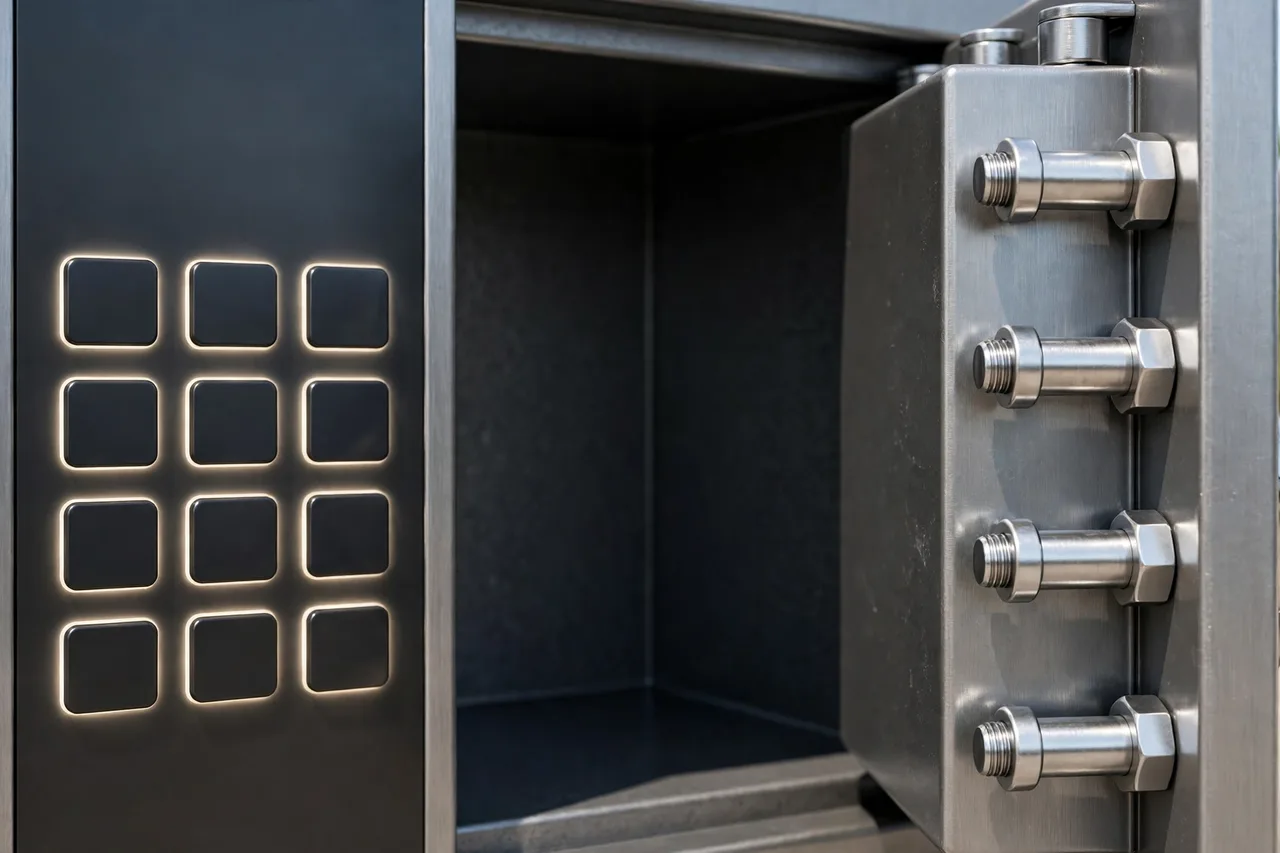
Five safes, five jobs. Prices are Amazon listed prices checked November 18, 2026, and they change often, so check the listing before you buy.
Best home safes compared:
| Safe | Best for | Fire rating | Water rating | Price (checked Nov 18, 2026) |
|---|---|---|---|---|
| SentrySafe SFW123GDC | Most homes: fire, water, theft | UL 1 hr at 1,700°F | ETL 24 hr, 8 in | $286.99 |
| SentrySafe SFW123DSB | Same safe, dial lock | UL 1 hr at 1,700°F | ETL 24 hr, 8 in | $224.99 |
| SentrySafe HD4100 | Documents and hanging files | UL 30 min at 1,550°F | ETL Verified | $57.79 |
| Amazon Basics 50SAM | Theft protection on a budget | None stated | None stated | $129.99 |
| FOWORE 42CC-35 | Largest keypad safe with alarm | Not stated | Not stated | $199.99 |
What a Home Safe Has to Do: Three Threats, One Box
A home safe guards against three different things at once: fire, water, and theft. Most shoppers try to cover all three with one purchase, and most safes only do one or two of them well. Fire protection comes from insulation. Theft protection comes from steel thickness, locking bolts, and bolt-down anchors. Water protection comes from seals and a verified water rating.
Pick the safe for your biggest threat first. If your papers are irreplaceable, fire protection leads and the SFW123 models below are the answer. If cash and jewelry are the worry and fire is a smaller risk, a heavier steel security safe with no fire rating, like the Amazon Basics pick below, gives you more theft protection for the money. If you live in a flood zone, a water rating matters as much as the fire rating, because fire hoses and burst pipes ruin papers that survived the flames.
One warning that saves buyers from the most common mistake: no safe is truly fireproof. A UL fire rating promises only that the inside stays below the point where paper chars, about 350°F, for a set time, usually half an hour or one hour. The honest standard is UL 72, and a real rating names a lab, a time, and a temperature. The word “fireproof” alone on a listing means nothing.
How to Choose a Home Safe
Size: measure what goes in, then go one size up
Lay out what goes in before you look at brands: passports, the house deed, cash, jewelry, a laptop, a backup drive. Letter papers lie flat in about 9 by 11.5 inches. Binders standing up need about 12 inches of height. Then check the inside size, not the capacity line: if the listed cubic feet is as big as the outside dimensions suggest, it is the outside size, and the inside is smaller. Fire insulation eats room, so a safe that looks big on the shelf holds less than you expect.
Most people buy too small. List what goes in now, add what you will store in two or three years, and choose the size that fits that list, then go one size up. A safe that is full in twelve months is a safe you stop using properly.
Lock: keypad, fingerprint, dial, or key
The lock is what owners complain about most. Across the home safes one review site checked, 42% of what owners said about ease of use was negative, and 59% of what they said about the locking mechanism was negative. Every pick below has a backup way in: a key, a second key, or an external battery box. Test your code a dozen times before you fill the safe, change keypad batteries once a year, and keep the backup key outside the safe, never inside it.
A fingerprint is fastest. A keypad is fast and easy for daily use. A dial never needs batteries and never locks you out for a dead cell. A key is simple but offers the least convenience. There is no wrong choice, only a lock you trust and can open under stress.
Weight and bolt-down: the rule that matters most
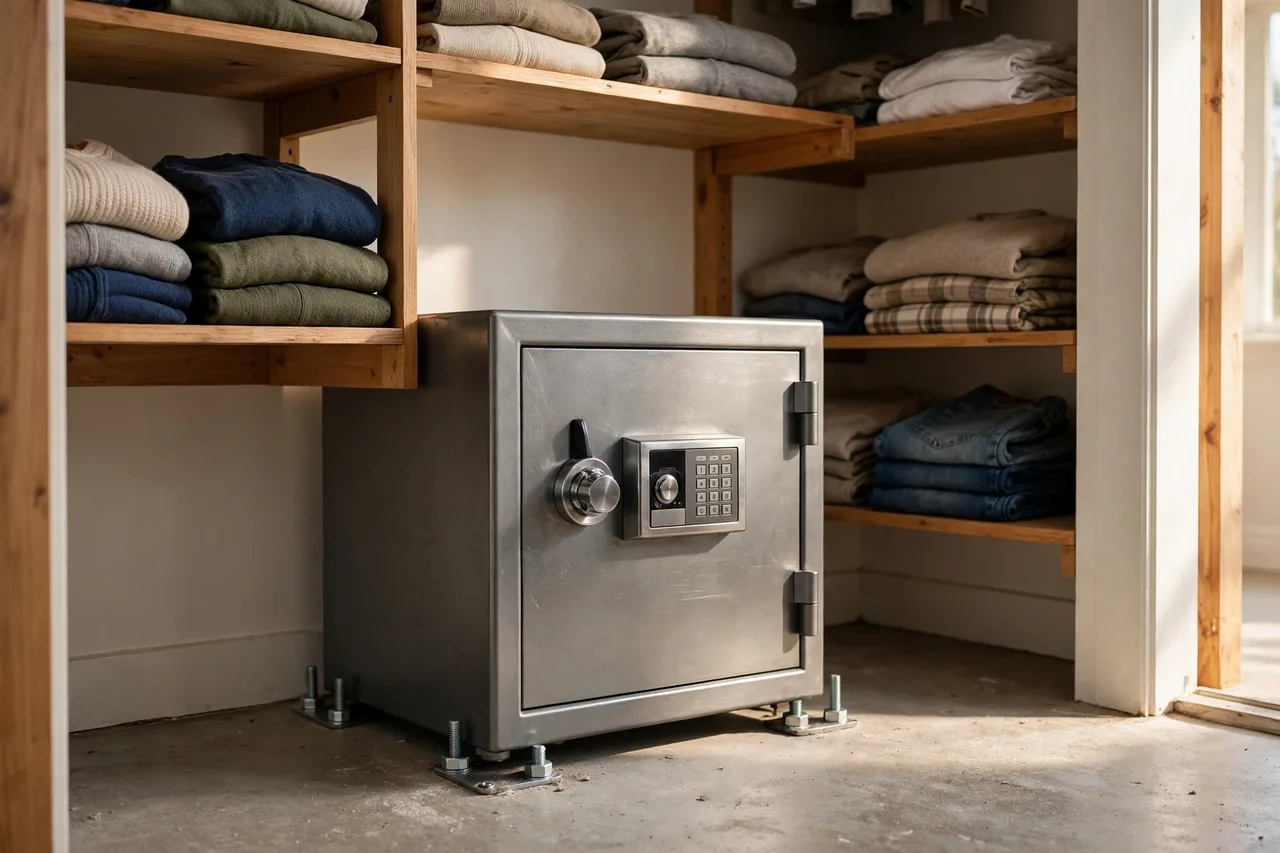
Bolt it down, always. None of these safes carries a burglary rating, and anything two people can lift, a burglar can carry off and open later. Every pick below is pre-drilled to bolt down. Concrete floors hold best; on a wooden floor, bolt into a joist. A 17-pound fire chest is a grab-and-go box, not a theft safe, unless it is anchored.
Where it goes
Put the safe out of sight, on the ground floor, and away from the master bedroom closet, which is where burglars look first. A closet in a spare bedroom or a home office works well. Upstairs is a bad idea: a safe can drop through a burning floor, and only the SFW123 models here are verified to stay shut after a 15-foot fall. In a flood zone, keep it off the basement floor unless it has a water rating.
The 5 Best Home Safes
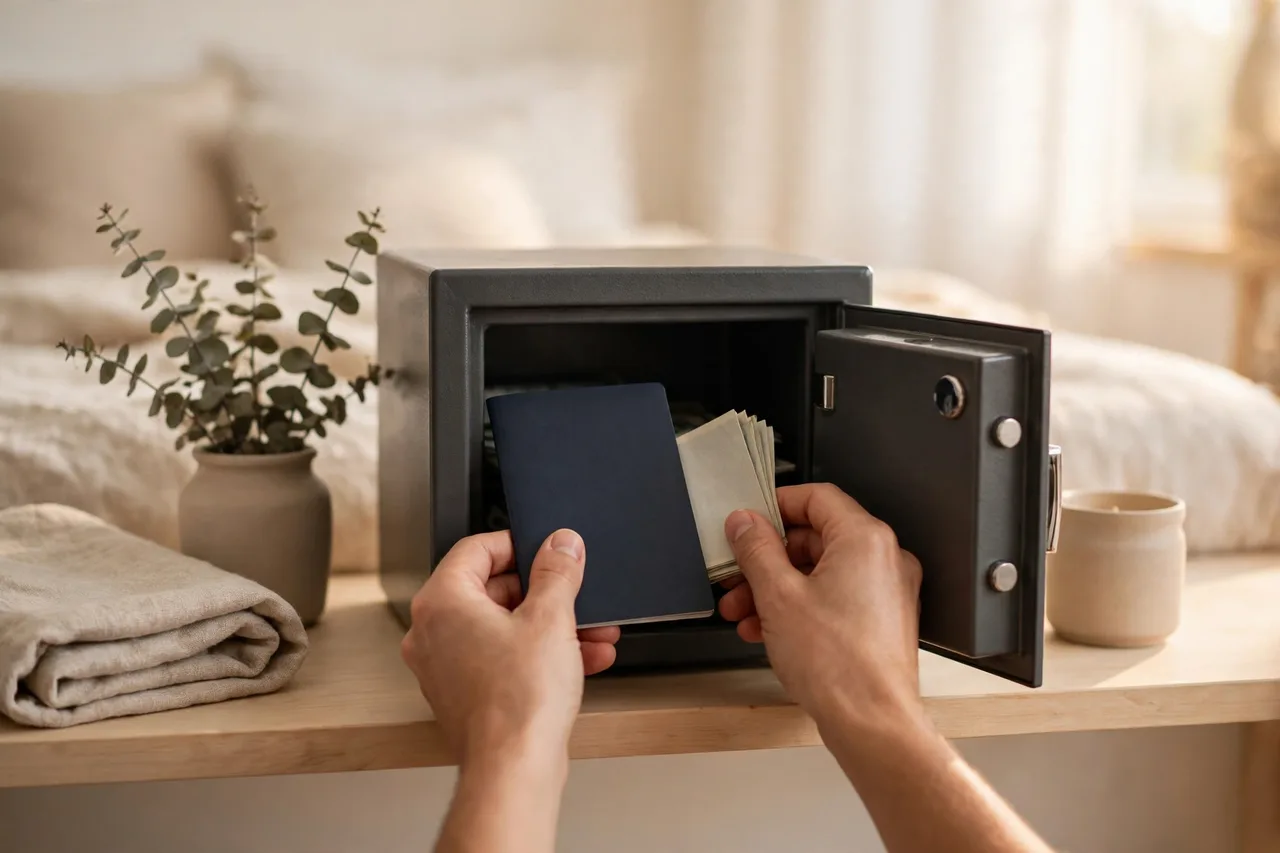
1. SentrySafe SFW123GDC — Best Overall Home Safe
The SFW123GDC tops the list because it covers the three things most households want from a safe: theft protection, real fire protection, and protection from water. It is UL Classified for 1 hour at 1,700°F, ETL Verified for 24 hours in 8 inches of water, and ETL Verified to survive a 15-foot fall during a fire and stay closed.
SFW123GDC at a glance:
| Spec | Detail |
|---|---|
| Capacity | 1.23 cubic feet |
| Fire rating | UL Classified, 1 hour at 1,700°F |
| Water rating | ETL Verified, 24 hours in 8 inches of water |
| Lock | Digital keypad plus backup key, interior light, four live-locking bolts |
| Weight | About 87 pounds, with bolt-down hardware |
| Price | $286.99 on Amazon, checked November 18, 2026 |
What owners say: an analysis of 1,847 user reviews from Reddit communities including r/homesecurity, r/homeowners, and r/BuyItForLife named the SFW123GDC the best fireproof safe for most people, and Bob Vila’s hands-on testing of ten home safes picked its dial twin as best overall. Owners praise the tested ratings and the closet-friendly size, and the most common complaint is the one every keypad safe shares: keep spare batteries and the backup key handy.
2. SentrySafe SFW123DSB — Best Home Safe With a Dial Lock
The SFW123DSB is the same body as the SFW123GDC with a dial combination lock instead of a keypad. Same 1.23 cubic feet, same UL 1-hour fire rating at 1,700°F, same ETL water and 15-foot drop ratings, and four 1-inch live-locking bolts. It costs $62 less, and its lock never needs batteries.
SFW123DSB at a glance:
| Spec | Detail |
|---|---|
| Capacity | 1.23 cubic feet |
| Fire rating | UL Classified, 1 hour at 1,700°F |
| Water rating | ETL Verified, 24 hours in 8 inches of water |
| Lock | Dial combination plus backup key, four 1-inch live-locking bolts |
| Weight | 86.3 pounds, with bolt-down hardware |
| Price | $224.99 on Amazon, checked November 18, 2026 |
Bob Vila named this model its best overall fire safe after hands-on testing of six fireproof safes, and Ezvid Wiki’s November 2026 update moved it to the top of its list. The dial is slower than a keypad, which is the trade-off: you gain a lock that cannot die from a dead battery and lose a few seconds every time you open it. For a safe you open once a week or less, that is a good trade.
3. SentrySafe HD4100 — Best Home Safe for Documents
If almost everything you store is paper, the HD4100 is the right size and the right price. Paperwork in hanging folders drops straight in and stands upright. It is UL Classified for 30 minutes at 1,550°F and ETL Verified for water protection.
HD4100 at a glance:
| Spec | Detail |
|---|---|
| Capacity | 0.65 cubic feet, fits letter-size hanging files |
| Fire rating | UL Classified, 30 minutes at 1,550°F |
| Water rating | ETL Verified water protection |
| Lock | Key lock |
| Weight | About 38.8 pounds |
| Price | $57.79 on Amazon, checked November 18, 2026 (Walmart lists it at $54.39) |
The honest limit is the 30-minute rating and the light weight: at under 39 pounds it is easy to carry, which is good for evacuations and bad for theft. Bolt it down if it lives at home, and pair it with a heavier security safe if theft is your bigger worry.
4. Amazon Basics Steel Home Security Safe — Best Budget Home Safe for Theft
The Amazon Basics steel safe is the best budget home safe when theft is the threat and fire is not. It is built for burglary deterrence, not fire: an 8-gauge steel door, a 14-gauge body, two live door bolts, concealed hinges, and floor or wall mounting, all for $129.99.
Amazon Basics steel safe at a glance:
| Spec | Detail |
|---|---|
| Capacity | 1.8 cubic feet |
| Fire rating | None stated by the maker |
| Steel | 8-gauge door, 14-gauge body, two live-locking bolts |
| Lock | Electronic keypad plus backup keys |
| Mounting | Floor or wall mounting hardware included |
| Price | $129.99 on Amazon, checked November 18, 2026 |
What owners say: with over 29,000 five-star ratings on Amazon, this is the safe budget buyers keep recommending to each other, and Bob Vila named it best bang for the buck after hands-on testing. The limit is plain: it has no fire rating at all, so do not put irreplaceable papers in it without a fire bag inside, or pair it with a small UL-rated fire box such as the HD4100 above.
5. FOWORE 42CC-35 — Best Large Keypad Home Safe With an Alarm
The FOWORE is the biggest keypad safe on this list: 2.8 cubic feet with an alarm that sounds after three wrong codes, an external battery backup, and four 1.2-inch live-locking bolts. It suits a household that needs room for cash, jewelry, documents, and a laptop in one box.
FOWORE 42CC-35 at a glance:
| Spec | Detail |
|---|---|
| Capacity | 2.8 cubic feet |
| Fire rating | Not stated by the maker |
| Lock | Digital keypad, alarm after 3 wrong codes, external battery backup |
| Bolts | Four 1.2-inch live-locking bolts |
| Price | $199.99 on Amazon, checked November 18, 2026 |
The alarm is the feature that sets it apart: three wrong codes trigger a siren that deters a casual thief and alerts the household. The limit is the same as the Amazon Basics pick: no stated fire rating, so papers need a fire bag inside or a separate fire-rated box. For a big household that opens its safe daily and wants space and an alarm, it is the best value here.
What to Keep in a Home Safe (and What to Leave Out)
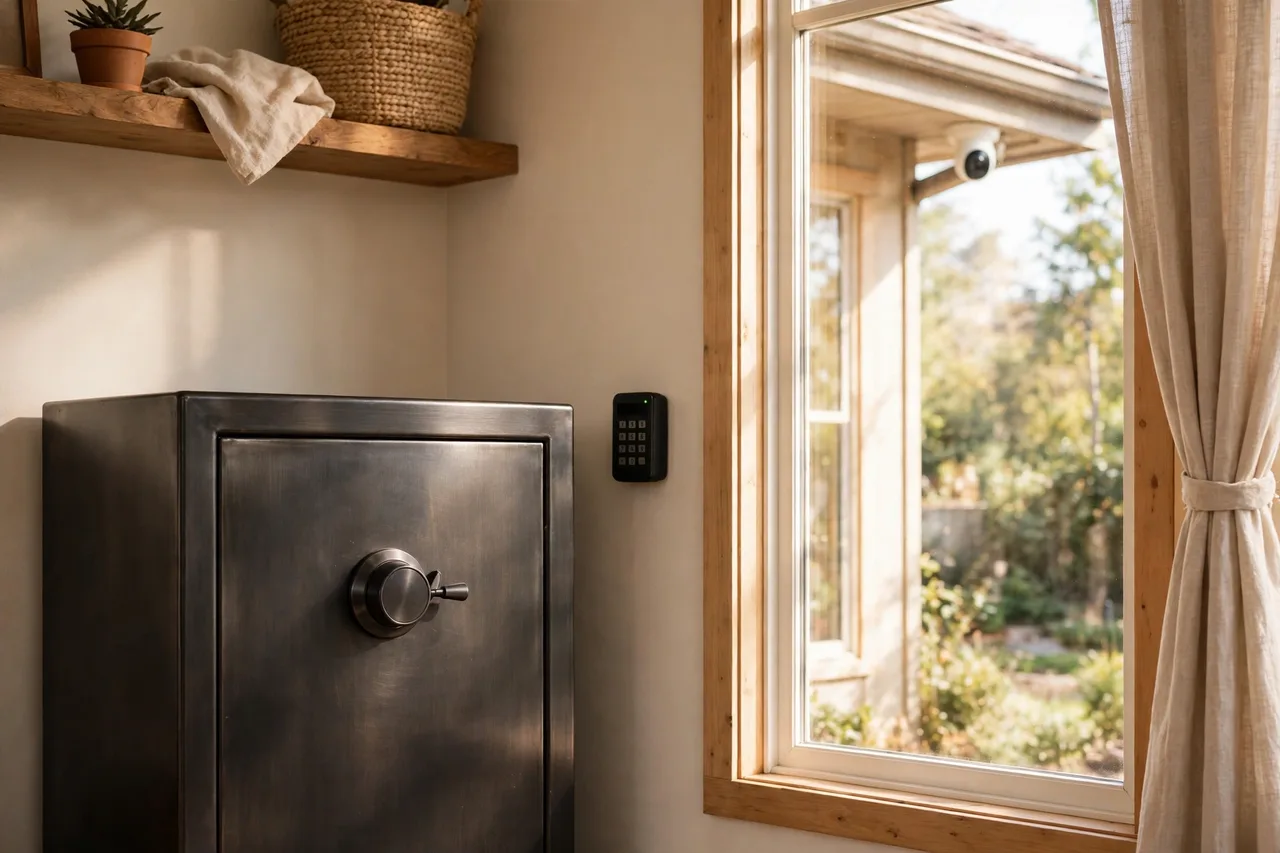
Keep the papers and valuables that are slow, expensive, or impossible to replace: passports, birth certificates, Social Security cards, property deeds, vehicle titles, wills, insurance policies, a little emergency cash, jewelry you do not wear daily, and a backup drive with family photos. Add a list of account numbers and emergency contacts.
Leave out anything that hates heat or moisture. A paper-rated safe can still get too hot inside for hard drives, USB sticks, and discs: those need a media rating (UL 72 Class 125, interior under 125°F) or a copy stored somewhere else. Never store the only copy of anything in a safe with no backup. And keep the original will in the safe but tell your executor where it is.
A home safe holds a handgun or two, but long guns need racks and height: a gun safe is a different purchase. For rings and watches with drawers and lining, look for a safe with a lined interior and a drawer, or keep jewelry in a lined box inside the safe.
Home Safe vs. Safety Deposit Box
A home safe gives you access any hour of the day, and a bank safety deposit box gives you a vault you cannot carry away. A bank box is stronger against theft and fire, but you can only reach it during bank hours, and the bank does not insure the contents. Most households do best with both: the home safe for the papers and cash you may need tonight, and the bank box for the originals you rarely touch, such as a will, a deed, or heirloom jewelry. Keep a copy of what sits in the bank box at home, and keep a note in the home safe saying what is in the box and where the key lives.
Mistakes to Avoid When Buying a Home Safe

- Trusting the word “fireproof” alone. No safe is truly fireproof. Demand a lab, a time, and a temperature.
- Buying by cubic feet, not inside size. Fire insulation eats space. Check inside dimensions against your folders and valuables.
- Skipping the bolt-down. A safe that is never anchored is a box a burglar carries away and opens later.
- Storing the backup key inside the safe. Keep it somewhere else entirely, or it is useless when you need it.
- Putting all your eggs in one box. A safe protects against fire and theft, not against forgetting the combination or losing the only copy of a document.
Related Guides
A safe is one layer of home security. Our guide to the best home security camera system shows how cameras cover what a safe cannot see, and our HomeKit alarm system guide explains alarms that work with an Apple home. For the room the safe sits in, see our garage security camera guide.
Frequently Asked Questions
What is the best home safe?
The SentrySafe SFW123GDC. It is UL Classified for 1 hour at 1,700°F, ETL Verified for 24 hours in 8 inches of water, has a digital keypad with a backup key and four live-locking bolts, and costs $286.99 on Amazon as of November 18, 2026. It covers fire, water, and theft in one box.
What size home safe do I need?
Lay out what goes in: passports, the house deed, cash, jewelry, a laptop, a backup drive. Letter papers lie flat in about 9 by 11.5 inches, and binders standing up need about 12 inches of height. Check the inside size, not the capacity line, and buy one size larger than today’s pile.
Do I need a fireproof safe for documents?
If you keep originals you cannot easily replace, like deeds, wills, titles, or passports, yes. Check for a lab rating with a time, such as UL Classified for 30 minutes or 1 hour. If everything you store has a cloud backup and a paper copy elsewhere, a locking steel box may be enough.
What should I keep in a home safe?
Passports, birth certificates, Social Security cards, property deeds, vehicle titles, wills, insurance policies, a little emergency cash, jewelry you do not wear daily, and a backup drive with family photos. Add a list of account numbers and emergency contacts.
Should I bolt my home safe to the floor?
Yes, always. None of the safes on this list carries a burglary rating, and anything two people can lift, a burglar can carry off and open later. Concrete floors hold best; on a wooden floor, bolt into a joist. Every pick here is pre-drilled for bolt-down hardware.
The Bottom Line
Buy the SentrySafe SFW123GDC at $286.99 if you want fire, water, and theft protection in one safe. Buy the SFW123DSB at $224.99 if you prefer a dial lock that never needs batteries. Buy the Amazon Basics steel safe at $129.99 if theft is your main worry and your papers already live in a fire box. Whatever you buy, measure first, bolt it down, and keep the backup key outside the safe.