The best jewelry safe for home is the SentrySafe STW123GDC: it is UL Classified for 1 hour at 1,700°F, ETL Verified waterproof for 24 hours in up to 8 inches of water, and it bolts to the floor so a burglar cannot carry it away. It cost $243.92 at Amazon when checked on 21 November 2026. A jewelry safe has two jobs, and most small safes only do one of them well: they either organize jewelry or they protect it, and the right pick does both.
Most “jewelry safes” sold online are plain steel boxes with a new name. They have no lining, no hooks, and no fire rating, so necklaces tangle, rings scratch, and a house fire destroys everything inside. This guide fixes that. You will see four picks that were checked against live November 2026 listings, what each one protects against, and how to size, place, and bolt a safe so it actually works.
The 4 best jewelry safes for home
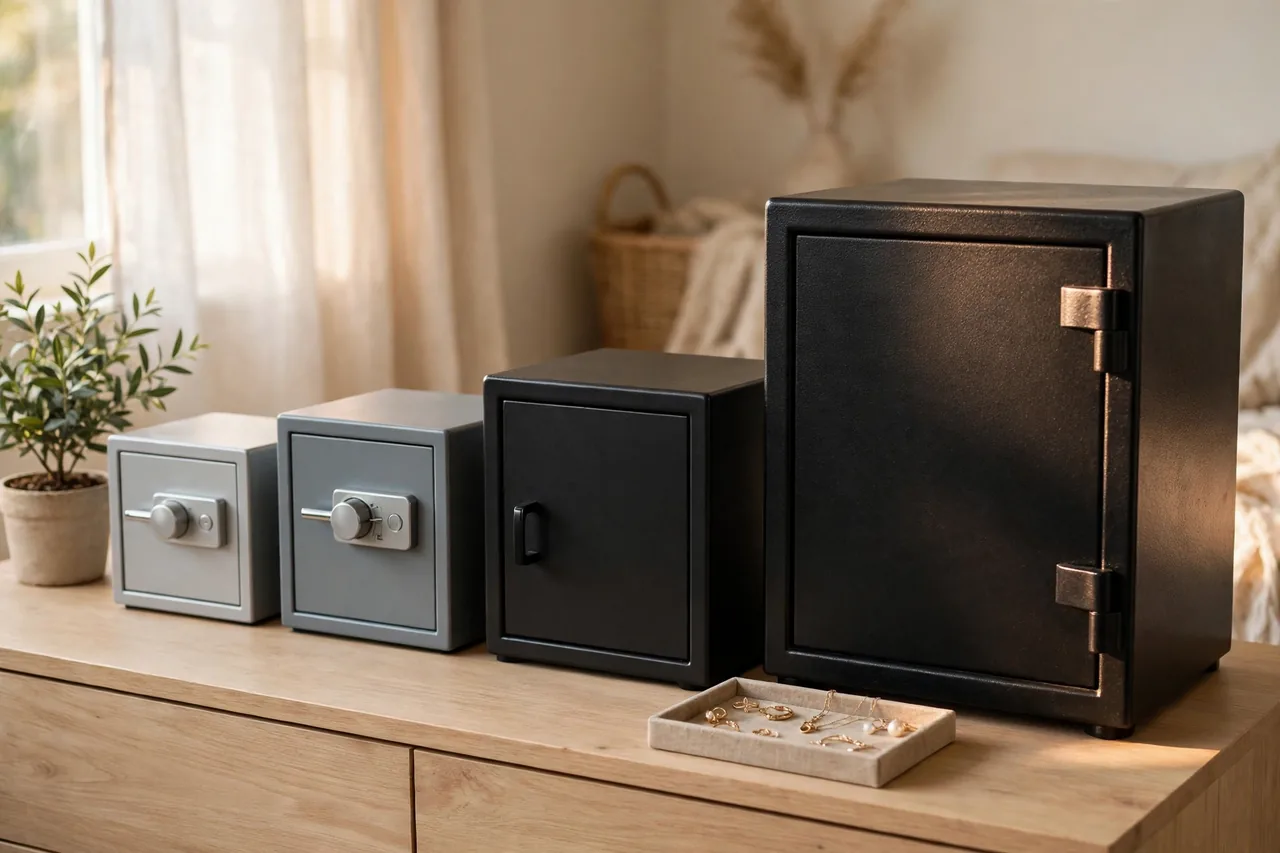
These four picks cover the four real needs: fire and water protection, a jewelry-first interior, a drawer layout for a big collection, and a low price for a small collection. Every price below was checked on 21 November 2026 and will change, so treat it as a snapshot, not a promise.
Quick comparison of the four picks:
| Pick | Best for | Fire rating | Lock | Price checked 21 Nov 2026 |
|---|---|---|---|---|
| SentrySafe STW123GDC | Overall protection | 1 hour at 1,700°F (UL) | Keypad + key | $243.92 at Amazon |
| VALINIRT 2-Drawer Biometric | Big collections, drawers | None published | Fingerprint + Bluetooth | $169.99 at VALINIRT |
| VALINIRT 0.6 Cu Ft Fingerprint | Jewelry-first interior | None published | Fingerprint + key | $89.99 at VALINIRT |
| Bonsaii Small Safe 0.23 Cu Ft | Small collections, budget | None published | Keypad + key | $25–$50 bucket |
Best overall: SentrySafe STW123GDC
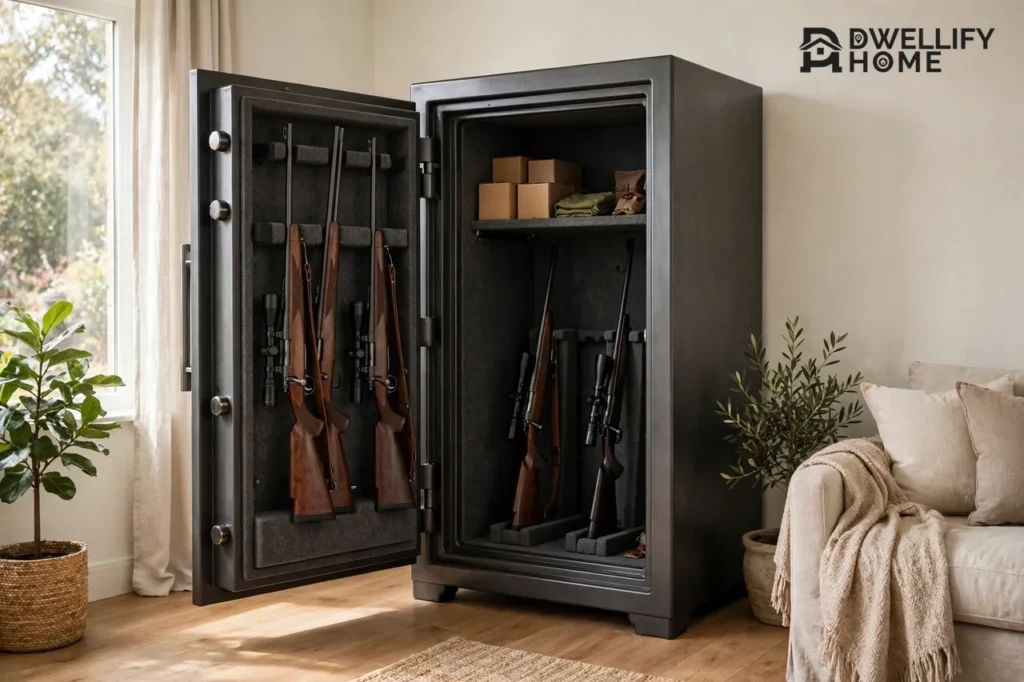
The SentrySafe STW123GDC is the only pick here with a real, lab-tested fire rating, and that is why it leads. Prepared States lists it at $243.92 at Amazon as of 21 November 2026, with a 2-hour figure on the maker’s technical sheet and a 1-hour UL Classification on the Amazon title, so treat the 1-hour UL figure as the safe claim. It holds 1.23 cubic feet, weighs 128.2 pounds, and has a backlit digital keypad plus a tubular key backup.
| Spec | Detail |
|---|---|
| Fire rating | 1 hour at 1,700°F, UL Classified |
| Water rating | 24 hours in up to 8 inches, ETL Verified |
| Capacity | 1.23 cu ft |
| Weight | 128.2 lb |
| Lock | Backlit digital keypad + tubular key |
| Price checked 21 Nov 2026 | $243.92 at Amazon |
It has no velvet jewelry drawers, so add a lined tray or small pouches inside. Owners rate it 4.4 out of 5 in the SafesGeek roundup, and the common owner point is simple: it is heavy, it bolts down, and it survives the things a small box cannot. Buy this one when your jewelry shares the safe with passports, cash, and papers, because it protects all of them from fire and water at once.
Best for drawers: VALINIRT 2-Drawer Biometric Jewelry Safe
The VALINIRT 2-Drawer safe is the pick for a collection that needs order. Its drawers slide out on a fingerprint, so rings, watches, and necklaces each get their own lined space instead of piling in one steel box. VALINIRT lists it at $169.99 on its own store, checked 21 November 2026, with fingerprint and Bluetooth access, an alarm, and auto-open drawers.
| Spec | Detail |
|---|---|
| Fire rating | None published — treat as theft protection only |
| Interior | Two auto-open drawers, leather and steel build |
| Lock | Fingerprint + Bluetooth + backup keys |
| Price checked 21 Nov 2026 | $169.99 at VALINIRT |
Owner consensus from the Primea roundup puts this style of slide-away drawer safe in the $100–$200 bucket and praises the drawer layout, while warning that none of these jewelry-first safes carries a fire rating. Buy it when you open the safe every day and want each piece in its own slot, and pair it with a fireproof pouch for irreplaceable papers.
Best jewelry-first interior: VALINIRT 0.6 Cu Ft Fingerprint Jewelry Safe
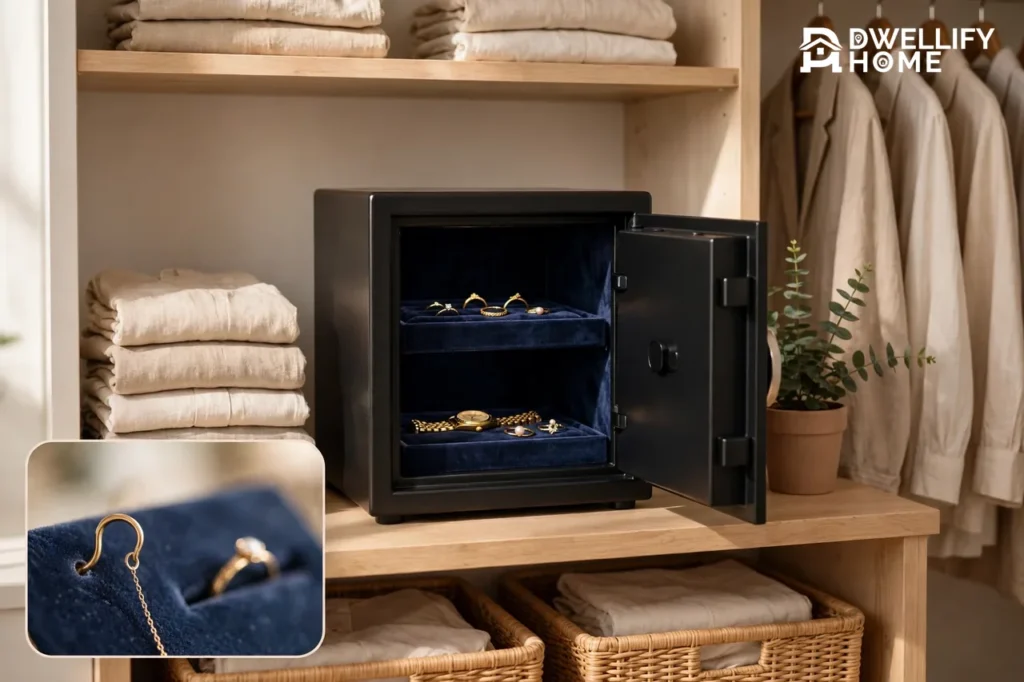
This is the only pick built around jewelry from the start: a leather-wrapped steel body, a fingerprint lock, a hidden keyhole, and a lined interior that keeps gold and pearls from scratching. VALINIRT lists the 0.6 cu ft model at $89.99 on its own store, checked 21 November 2026, with white and grey at $99.99.
| Spec | Detail |
|---|---|
| Fire rating | None published — treat as theft protection only |
| Interior | Leather-wrapped, lined, jewelry tray |
| Lock | Fingerprint + hidden keyhole |
| Price checked 21 Nov 2026 | $89.99 at VALINIRT |
It is small, light, and easy to hide in a closet, which is also its weakness: bolt it down or hide it well, because a burglar can carry a light safe away. Buy it when your collection is modest and you want a safe that looks like a jewelry box, not a gun-metal box.
Best budget: Bonsaii Small Safe Box 0.23 Cu Ft
The Bonsaii 0.23 cu ft keypad safe is the cheapest honest pick: a steel box with pre-drilled mounting holes, a keypad, and a key backup. The Primea roundup places it in the $25–$50 bucket, checked November 2026, and notes its felt-lined bottom as the minimum a jewelry owner should accept.
| Spec | Detail |
|---|---|
| Fire rating | None published — treat as theft protection only |
| Capacity | 0.23 cu ft — rings and small pieces only |
| Lock | Electronic keypad + key backup |
| Price checked Nov 2026 | $25–$50 bucket |
It holds a few rings, a watch, and emergency cash, and nothing more. Buy it as a first safe or a second safe for daily-wear pieces, and keep heirlooms in a fire-rated safe or a bank box instead.
Theft first, then fire
A jewelry safe fails in two ways, and the order matters. Bolting down beats a fire rating when a burglar finds the safe first. Jewelry is small, light, and easy to sell, which is why the Insurance Information Institute notes that standard homeowners policies generally cap jewelry theft at about $1,500. A safe a thief can carry out is a gift box, not security.
Ask two questions about any safe, in this order. First, can someone carry it out? If it weighs under 40 pounds and has no bolt-down holes, the answer is yes. Second, can someone open it fast? A thin steel box with a simple key lock opens in minutes with basic tools. Fire protection comes third, because fire is the rarer risk for most homes, and only a UL or ETL rated safe proves it.
That order explains the picks above. The SentrySafe is heavy and bolts down, then adds fire and water ratings. The VALINIRT safes organize jewelry beautifully but carry no fire rating, so they protect against theft and scratches, not flames. Neither job is wrong, but you must know which job you bought.
How to choose the right size
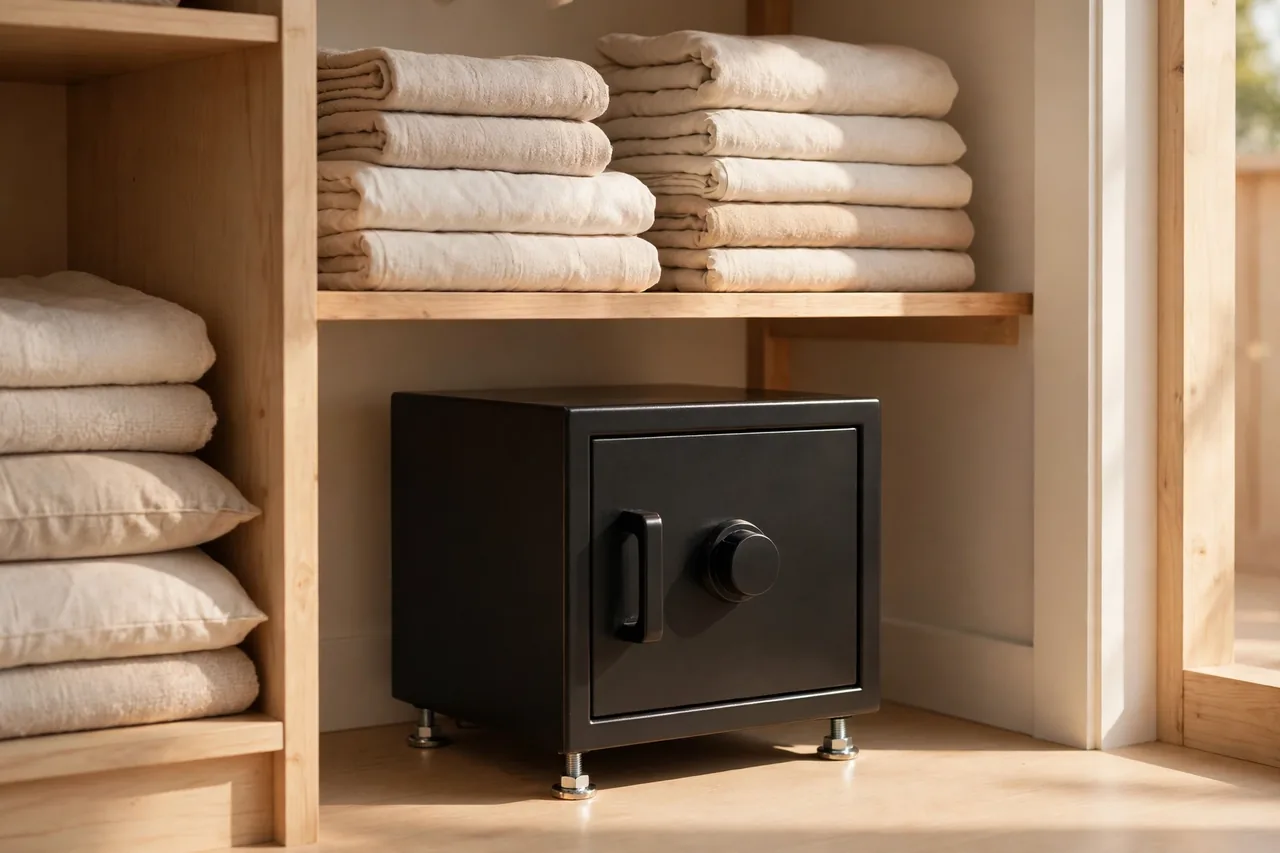
Size a jewelry safe by what you own today plus room to grow. Buy one size larger than your collection needs right now. Collections grow, watches multiply, and documents pile up faster than anyone expects. A safe that is full on day one forces pieces into a drawer, which defeats the point.
Use these rough guides. A 0.2–0.6 cubic foot safe holds daily-wear rings, a few watches, and a small jewelry box. A 1.0–2.0 cubic foot safe holds a full jewelry box plus watches, documents, and cash. Above 2 cubic feet, you are buying a home safe that happens to hold jewelry, and you should check that it has drawers or trays, not just shelves.
Measure the spot before you buy. Check the door swing, the closet depth, and the path from the front door to the final spot, because a 128-pound safe does not turn corners easily. Leave room above the safe for your hand and a light, because you will open it in the dark more often than you think.
How to organize the inside so jewelry stays safe
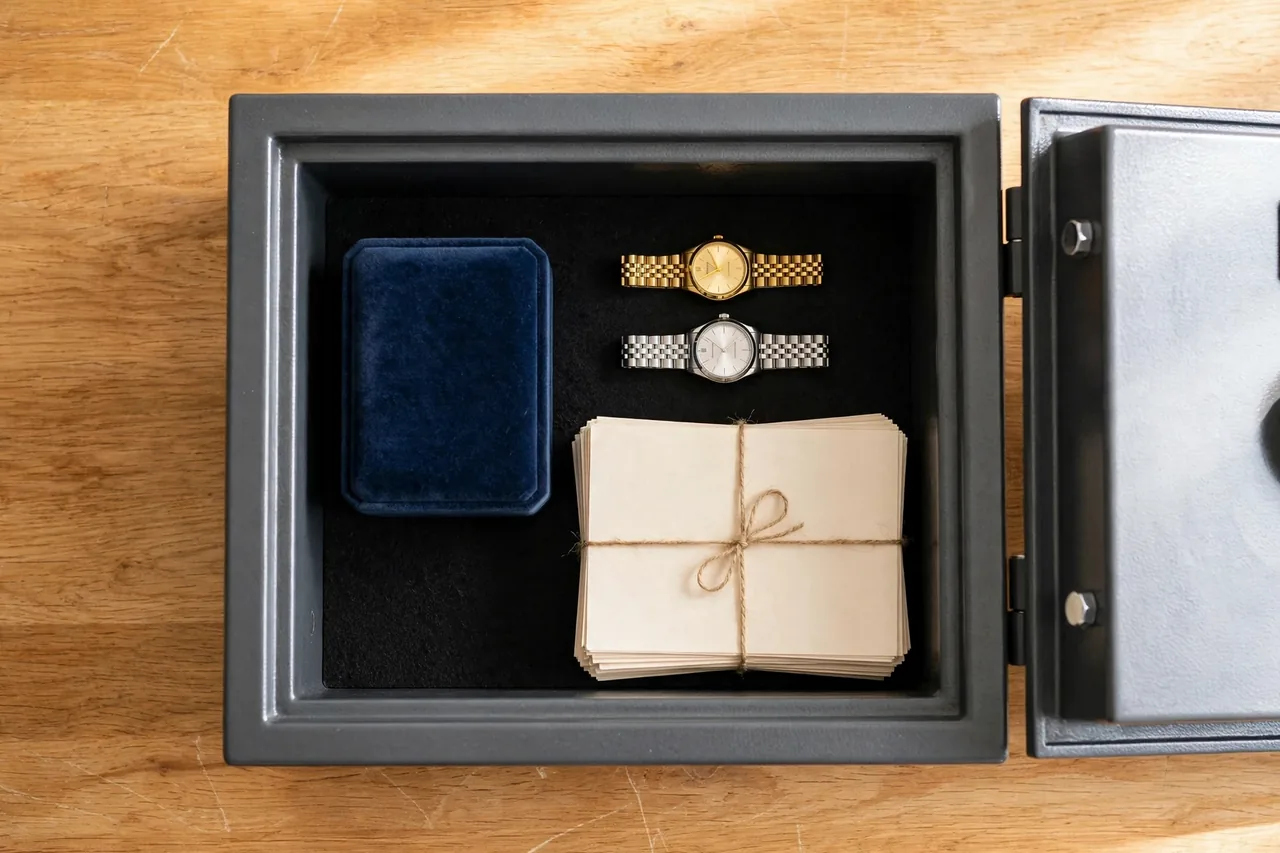
A safe protects jewelry from thieves, but the inside protects jewelry from itself. Gold scratches gold, pearls chip, and chains knot into a mess when pieces share one bare shelf. Line every surface the jewelry touches: velvet trays for rings, a roll for necklaces, and individual pouches for pieces you rarely wear. Hang necklaces on hooks instead of coiling them, because a coiled chain tangles in days, and keep earrings in pairs in a divided tray so you never hunt for a match.
Give watches their own space too. A watch winder is worth it only for automatic watches you wear in rotation; a quartz watch just needs a soft slot and a still place. Keep silver in anti-tarnish pouches or strips, because silver tarnishes fastest in damp air, and a safe that is opened daily lets humid air in every time. A small silica gel pack, checked twice a year, does more for your jewelry than a bigger safe does.
Label nothing on the outside. Do not write “jewelry” on the safe, the tray, or the closet shelf. If a burglar opens the closet, a plain safe buys you time, and a labeled one tells them exactly where to look.
Locks: fingerprint, keypad, dial, or key
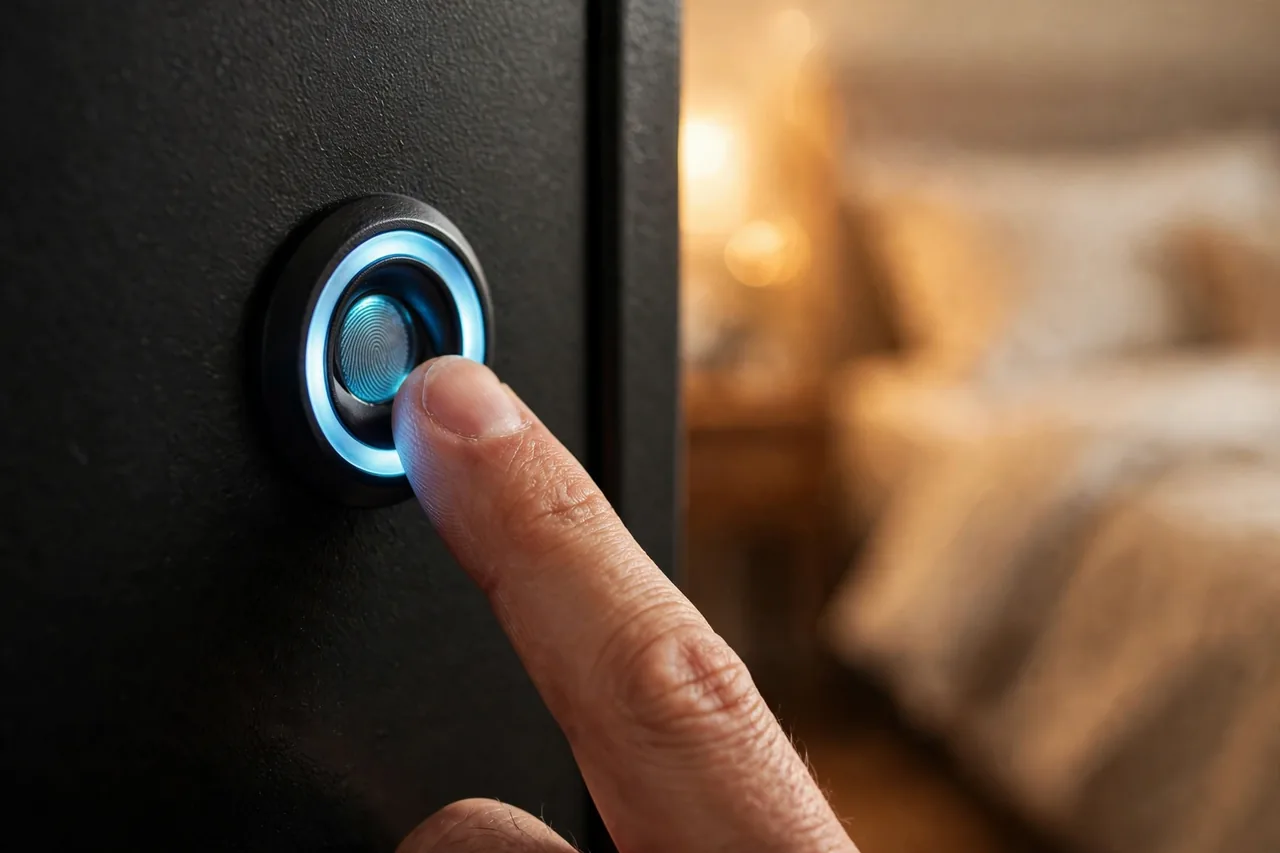
Each lock type trades speed for reliability. A fingerprint lock opens in about two seconds and suits daily wear, but it needs power and a backup key. A keypad is fast and lets you change the code, but you must remember it. A dial never needs batteries and never forgets, but it is slow. A key is simple and cheap, but anyone who finds the key opens the safe.
For jewelry, fingerprint or keypad wins for most people, because a safe you open daily must open fast or you will stop using it. Enroll every household member’s finger twice, keep the backup key somewhere other than the bedroom, and test the backup route once a year. Change the keypad code when someone who knew it moves out.
Where to put a jewelry safe (and where not to)
The master bedroom is the worst hiding spot, because burglars search it first. They check the closet, the dresser, and the nightstand within minutes. A better spot is a room they search less: a home office closet, a pantry wall, or a guest room closet, bolted to the floor or the wall studs.
Keep the safe off the floor in damp rooms, away from exterior walls that sweat, and out of the garage, where heat and humidity damage jewelry and tools are close at hand. Add a small silica gel pack inside and check it twice a year. If you pair the safe with a camera, place the camera so it watches the approach, not the safe itself: you want a face on record, not a video of your own code. See our guide to the best home security camera system for camera placement that covers entries without pointing at valuables.
Hide the safe, then bolt it. Hiding slows a burglar down, and bolting stops the grab-and-go. Use the bolt holes the maker drilled, drive lag screws into floor joists or wall studs, and never rely on drywall alone. A safe screwed only to drywall comes out with the drywall.
What to store in a jewelry safe — and what to keep out
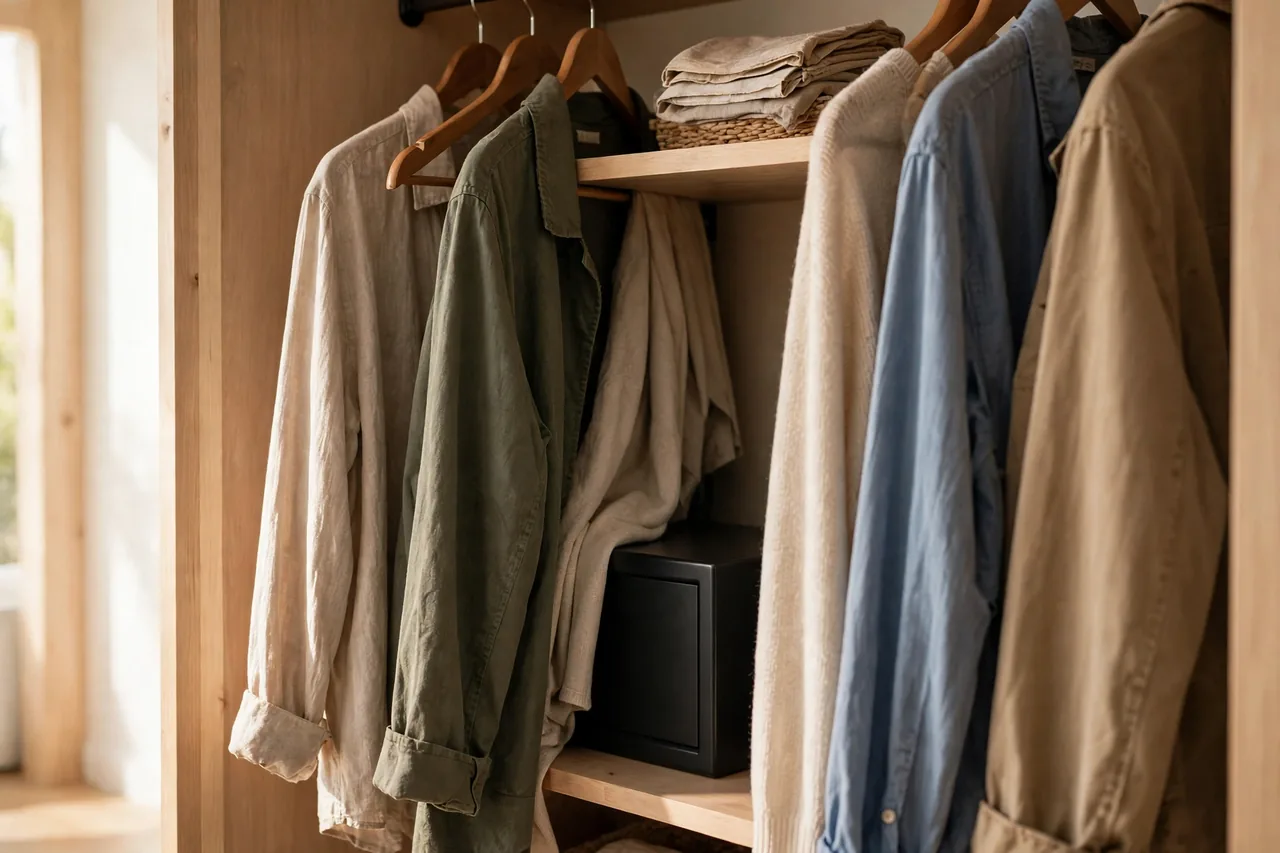
Store daily-wear jewelry, watches, heirlooms you wear often, emergency cash, and copies of appraisals. Keep original appraisals and photos of each piece in the safe too, because an insurer needs proof of what you owned, and a photo with a date is the fastest proof.
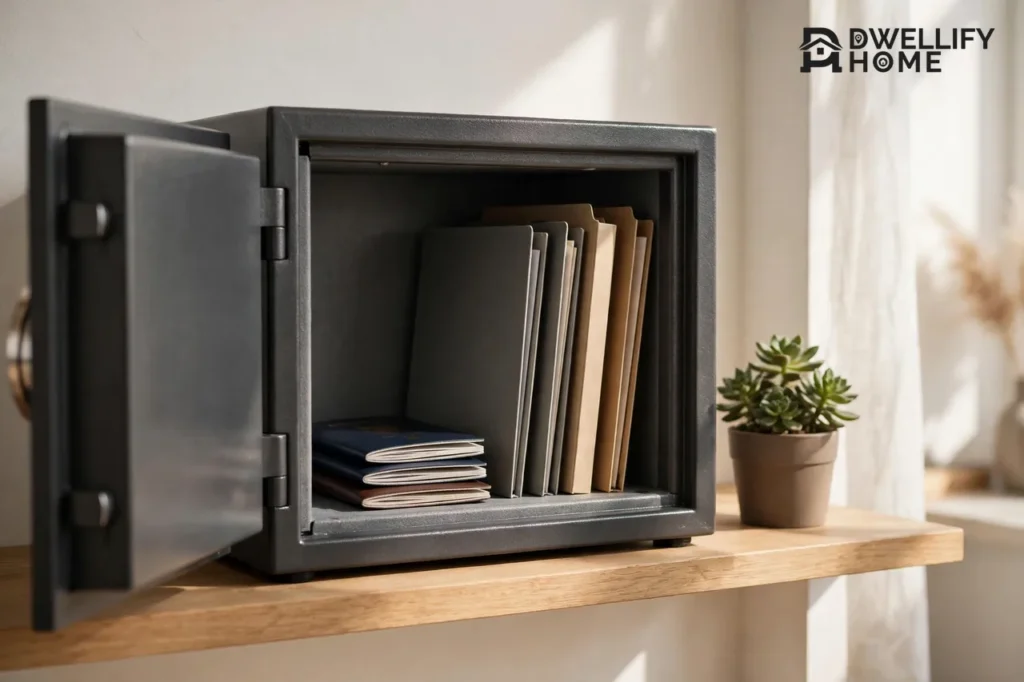
Keep out anything you might need in a hurry at 2 a.m. in an emergency, like a passport you travel with weekly, and anything irreplaceable that has no copy, like the only photo of a lost relative. Those belong in a fire-rated safe or a bank safe deposit box, with a copy at home. The rule is simple: if you need it fast, keep it at home; if you cannot replace it, keep it in the bank.
Check your insurance before you buy. Homeowners insurance often caps jewelry theft at a low figure, so a valuable collection may need a separate rider or floater. Photograph every piece, save receipts and appraisals, and tell your insurer the safe’s rating, because a rated, bolted safe can lower the cost of that extra cover.
Related Guides
If you are building a fuller home security plan, these guides help next: the best home security camera system for watching entries, glass break alarms for windows near the safe room, and homeowners insurance for covering what a safe cannot.
Frequently asked questions
What is the best way to store jewelry at home?
Store it in a lined safe that is bolted down, with each piece in its own slot, pouch, or tray so nothing scratches or tangles. Add a fire rating if the pieces are irreplaceable, and keep photos and appraisals with them for insurance.
What size safe do I need for jewelry?
Most collections fit in 0.5 to 1.2 cubic feet, which holds a jewelry box, several watches, and documents. Buy one size larger than today’s collection, because jewelry grows and a full safe pushes pieces back into a drawer.
Are jewelry safes fireproof?
Most are not. Only safes with a UL or ETL fire rating, like the SentrySafe STW123GDC at 1 hour and 1,700°F, are tested against fire. Leather and velvet jewelry safes are theft and scratch protection, not fire protection.
Should I bolt down a jewelry safe?
Yes. A light safe is easy to carry away, so bolt it through the maker’s holes into floor joists or wall studs. Drywall alone will not hold it, and a hidden but unbolted safe is only a hiding spot.
Is a jewelry safe better than a safe deposit box?
It depends on access. A home safe wins when you wear the jewelry often and need it fast. A bank box wins for heirlooms you rarely wear, because the vault protects them better. Most owners use both: daily pieces at home, irreplaceable pieces at the bank.
💡 Practical Home Tip: Photograph every piece of jewelry next to a ruler and a dated note before it goes in the safe, and store those photos outside the safe. If anything is ever stolen, those photos are the proof your insurer asks for first.
Start with the SentrySafe STW123GDC if you want one safe that covers fire, water, and theft, or the VALINIRT 2-drawer safe if daily organization matters more. Either way, bolt it down the day it arrives — a safe that is not bolted is a box waiting to be carried away.