A glass break alarm is a small sensor that listens for the sound of breaking glass and sets off your alarm the moment a window or glass door shatters. It fills the gap that door and window sensors leave open: those sensors only notice when a window opens, so a burglar who smashes the glass instead of opening it can slip past them. A glass break sensor catches that smash and alerts you at once.
Most homes need one sensor per ground-floor room with windows, not one per window. Acoustic sensors hear breaking glass from up to 25 feet away, so a single unit can cover a whole living room. This guide explains how the sensor works, where to put it, what sets it off by mistake, and what it costs.
What a Glass Break Alarm Actually Does
A glass break alarm watches over the glass in your windows and glass doors. It stays quiet all day and all night, and it only reacts when glass actually breaks. When it hears or feels that break, it triggers your alarm siren, sends an alert to your phone, and, if you pay for professional monitoring, tells your monitoring company too.
Think of it as a guard for the one way into your home that locks cannot protect. A locked window stops someone from lifting the sash, but it does nothing if someone picks up a brick. The glass itself is the weak point, and this sensor guards exactly that weak point.
The sensor does not watch the room the way a camera does, and it does not sense movement the way a motion detector does. It has one job: notice broken glass. That narrow focus is what makes it fast. It can raise the alarm while the intruder is still outside, before anyone steps into your home.
How a Glass Break Sensor Works
Breaking glass makes a sound pattern that almost nothing else in a home makes. Engineers studied that pattern for years and built sensors that look for it. The sensor waits for two things to happen in the right order, within a split second of each other. That two-step check is the whole trick, and it is why modern sensors rarely cry wolf.
There are two main kinds of sensors, plus a third kind that combines them. Each one detects the break in a different way, and each one suits a different kind of room.
Acoustic Glass Break Sensors Listen for the Sound
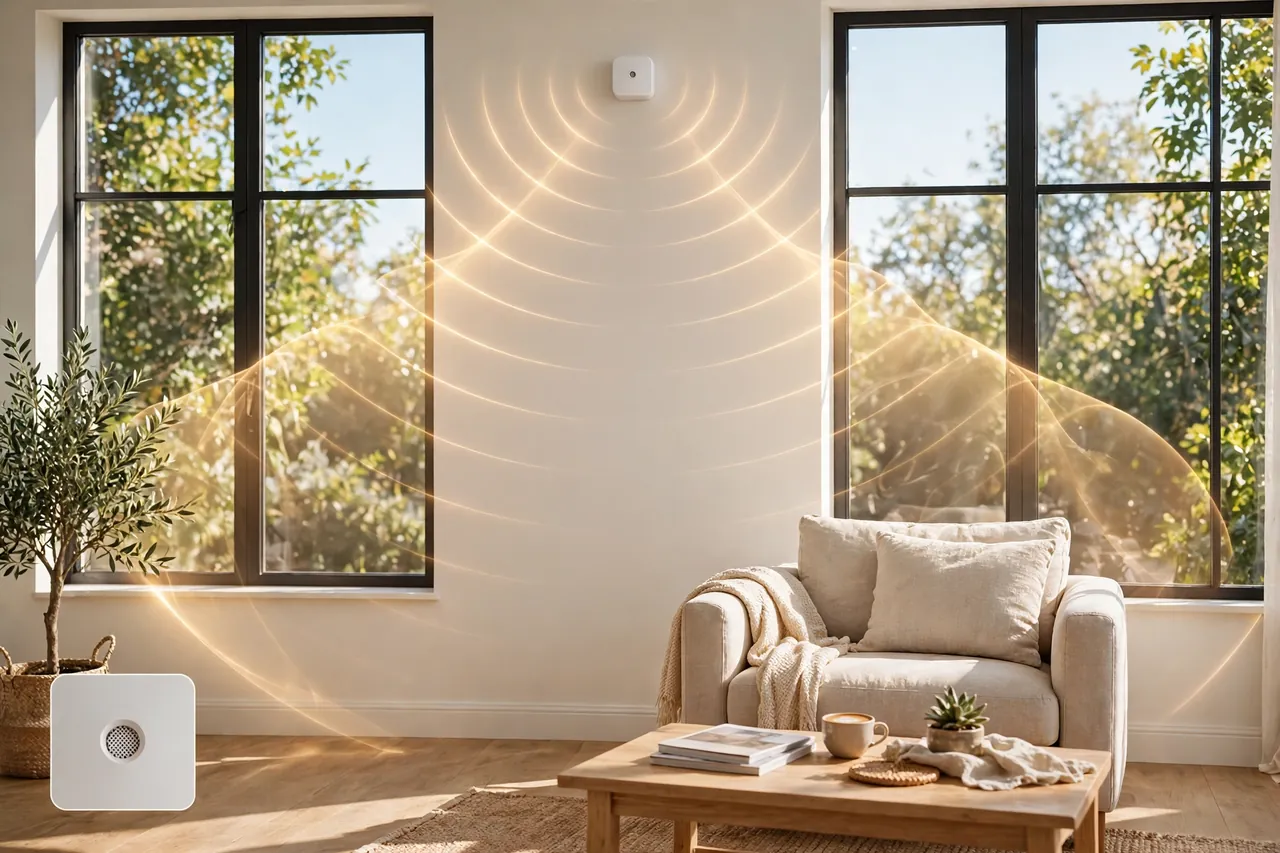
An acoustic sensor has a small microphone that listens all the time. When glass breaks, it first hears a low thud as something strikes the pane, and then it hears the high-pitched shatter as the glass cracks and falls. The sensor only triggers when it hears both sounds in the right order and within a tiny window of time.
This two-stage check matters. A dropped plate makes a crash, but it does not make the low thud of an impact on a windowpane first. A barking dog is loud, but it never sounds like shattering glass. The sensor compares what it hears against the pattern of real breaking glass, and it stays quiet unless the match is close enough.
One acoustic sensor can cover several windows at once, because it listens to the whole room. Good detectors pick up breaking glass from 20 to 25 feet away, in a full circle around the sensor, according to Security.org. That range is why most rooms need only one sensor, placed where it can hear every window.
Shock Sensors Feel the Vibration
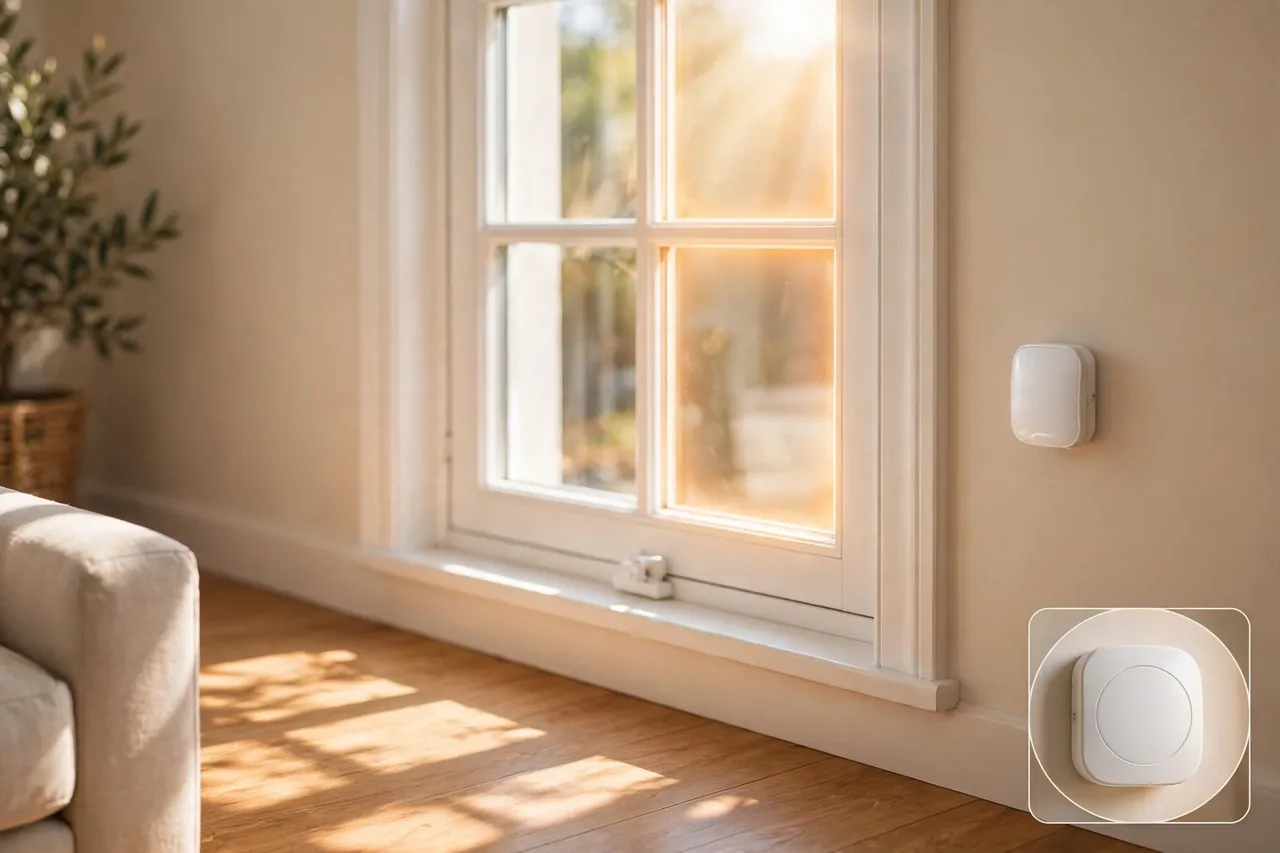
A shock sensor works in a completely different way. You stick it right on the glass pane, and it feels the vibration when something hits or breaks the glass. A small element inside the sensor turns the shaking of the glass into an electrical signal, and that signal sets off the alarm.
Because it sits on the glass, a shock sensor can even notice someone banging hard on the window without breaking it. You can tune its sensitivity so a light tap does not set it off, but a hard blow does.
The trade-off is coverage. A shock sensor protects only the pane it sits on, so you need one for every window and glass door you want to guard. In a room with four windows, that means four sensors, which costs more than one acoustic sensor covering the whole room.
Dual Sensors Use Both Methods at Once
A dual sensor combines a microphone and a vibration sensor in one unit. It waits for both the sound of breaking glass and the shake of the impact before it triggers. That double check gives it the lowest false-alarm rate of the three kinds.
Dual sensors cost the most, and the vibration part still needs to sit on or near the glass. They suit rooms where false alarms would be a real problem, such as a bedroom above a noisy street, or a home where the alarm company charges for false call-outs. For most living rooms, a plain acoustic sensor does the job well enough.
What Sounds Trigger a Glass Break Alarm, and What Does Not
A good sensor triggers on breaking glass and almost nothing else, but no sensor is perfect. Sensitivity settings, room size, and placement all change how picky the sensor is. A sensor set too sensitive will shout at sounds that only resemble broken glass, while one set too dull may miss a real break.
| Sound | Usually triggers the alarm? |
|---|---|
| Window glass smashed by a burglar | Yes — this is what the sensor is built to hear |
| A drinking glass dropped on a hard floor | Sometimes, if the sensor is set very sensitive |
| Two wine glasses clinking in a toast | Almost never |
| A dog barking | No |
| Thunder or fireworks | Rarely, and mostly with shock sensors |
| A door slamming hard | Rarely for acoustic sensors; sometimes for shock sensors |
| Loud television or music | No, unless the TV plays breaking glass loudly |
| A ball bouncing off the window | No — dual sensors are built to ignore this |
Dropped dishes deserve a special note, because they are the most common false alarm in a kitchen. A glass that falls and shatters on tile sounds a lot like a broken window to a simple sensor. That is why makers warn against putting acoustic sensors in small kitchens, garages, and small bathrooms. Those rooms are small, noisy, and full of hard surfaces that bounce sound around.
Thunder and sirens can also fool a shock sensor, because the vibration travels through the frame. ADT’s own help pages list sirens, thunder, doorbell chimes, loud audio systems, slamming doors, birds, and barking dogs as sounds that can cause false alarms when a sensor sits too close to the noise or its sensitivity runs too high. Good placement fixes most of this, which is why the next section matters so much.
Where to Place a Glass Break Sensor
Placement decides whether your sensor protects you or annoys you. The rules are simple, and they come straight from the makers’ own installation guides.
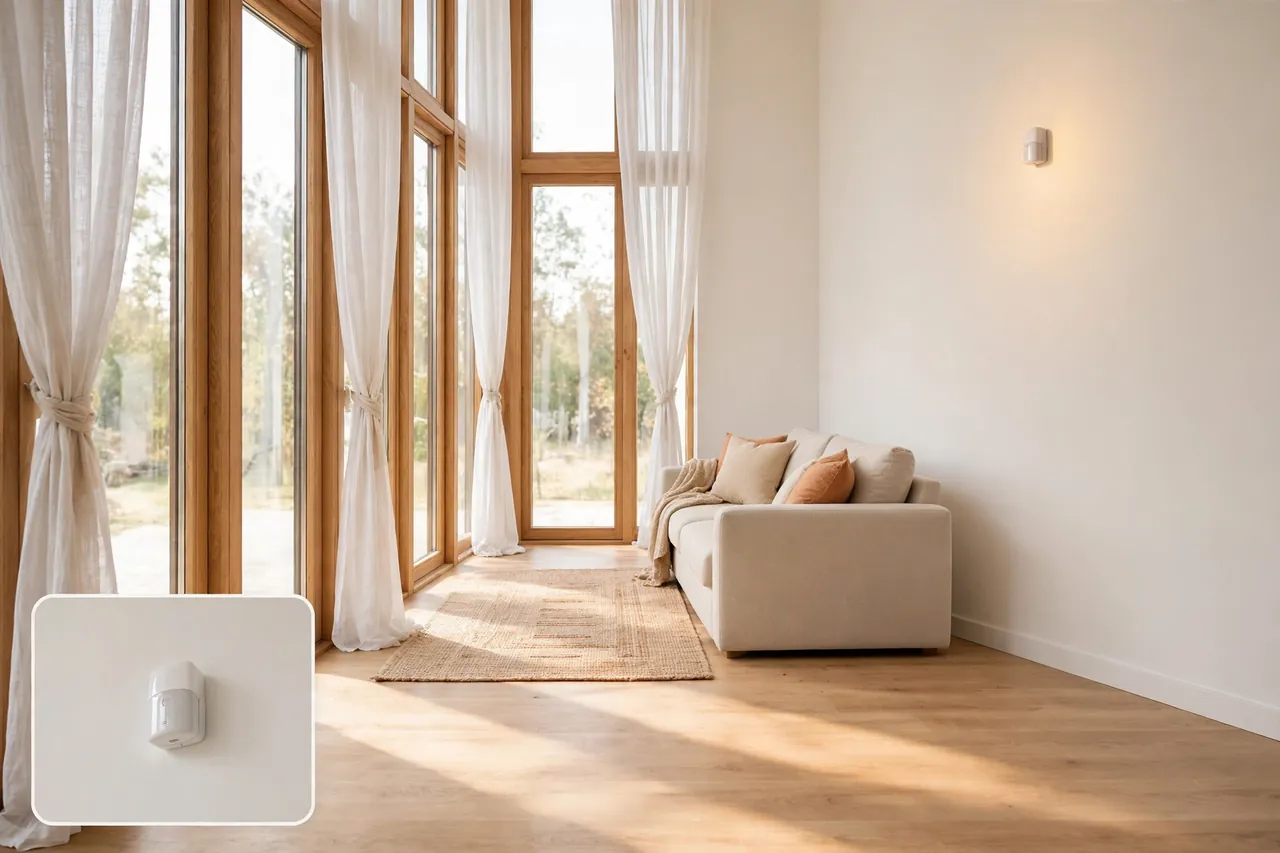
Mount the sensor on the wall opposite the windows it protects, or on the ceiling, at least 6.5 feet above the floor. ADT gives that height in its glass break sensor guide, and its detection range runs from 2 to 25 feet from the glass. Ring gives the same idea in plainer words: mount about 7 feet up, within 25 feet of the glass, with a clear line of sight. The sensor needs a straight path for the sound to travel, so heavy curtains between the sensor and the window can muffle the sound and weaken detection.
Keep the sensor away from noise. Do not mount it near air vents, speakers, televisions, or doors that slam. Bosch’s installation guide for its acoustic sensor says to keep it at least 4 feet from noise sources such as televisions, speakers, sinks, and doors, and to mount it at least 3 feet from the window it monitors.
Do not mount the sensor on the same wall as the windows it guards. Sound from a breaking pane travels outward into the room, so a sensor on that same wall sits in the worst spot to hear it. The opposite wall or the adjoining wall works far better, and the ceiling works well too, especially in a room with windows on two walls.
Skip small, noisy rooms. Makers agree on this point: rooms smaller than 10 by 10 feet, small kitchens, garages, and small bathrooms are poor spots for acoustic sensors. The sounds bounce, the noise sources sit close together, and false alarms follow. For those rooms, a shock sensor on the window itself is the better choice, because it feels the glass instead of listening to the room.
One more rule: an acoustic sensor cannot hear through walls. It protects only the room it sits in. A sensor in the living room will not hear a bedroom window break down the hall, so plan one sensor per room, not one per home.
How Many Glass Break Sensors Do You Need?
Count rooms, not windows. For acoustic sensors, start with one per ground-floor room that has windows a burglar could reach. That usually means the living room, the family room, a large and quiet kitchen, and any ground-floor bedroom. Add the basement if it has windows, and any room with a sliding glass door.
Upper floors need less coverage. A second-floor window with no balcony, porch roof, or tree nearby is hard to reach, so most homeowners skip those rooms. But if a porch roof sits under a bedroom window, treat that window like a ground-floor one and protect its room.
For shock sensors, count windows instead. You need one sensor on every pane you want to guard, so a room with three windows needs three sensors. That adds up fast, which is why most people choose acoustic sensors for rooms with several windows and save shock sensors for one or two windows that matter most.
A quick way to plan is to walk your home at night and look at each window from outside. If you can reach it easily from the ground, a balcony, or a flat roof, its room needs a sensor. If you would need a tall ladder to reach it, you can leave it out.
Standalone Glass Break Alarm vs. a Sensor in a Full Alarm System
You can buy a glass break alarm two ways: as a standalone unit that screams on its own, or as a sensor that talks to a full alarm system. They look alike, but they behave very differently when glass breaks.
A standalone glass break alarm is a single device with its own siren. When it hears breaking glass, it sounds a loud alarm right there in the room. That noise may scare off an intruder, and it will wake you up at night. But it does nothing else. It cannot call you when you are away, it cannot alert a monitoring company, and it cannot tell your other smart home devices what happened.
A sensor in a full system does far more. When it trips, the base station sounds the siren, sends a push alert to your phone, and, if you have monitoring, alerts the monitoring center, which can call the police. It can also trigger other devices: turn on the lights, start a camera recording, or lock the smart lock.
Most homeowners are better off with the system sensor. A standalone alarm only helps when someone is home to hear it, and a break-in while you are away is exactly when you most need an alert on your phone. Standalone units still have a place: a renter who cannot install a full system, a single glass door in a small flat, or a shed or workshop away from the house.
If you already own a Ring Alarm, SimpliSafe, ADT, or Vivint system, buy the sensor made for that system. Sensors from one brand rarely talk to another brand’s base station, and a sensor that cannot reach your panel is useless. Check compatibility before you buy, not after the box arrives.
If you are still choosing a whole system, our guide to the best home security systems with cameras compares the main options, including which ones offer glass break sensors and how their monitoring works.
Wired vs. Wireless Glass Break Sensors
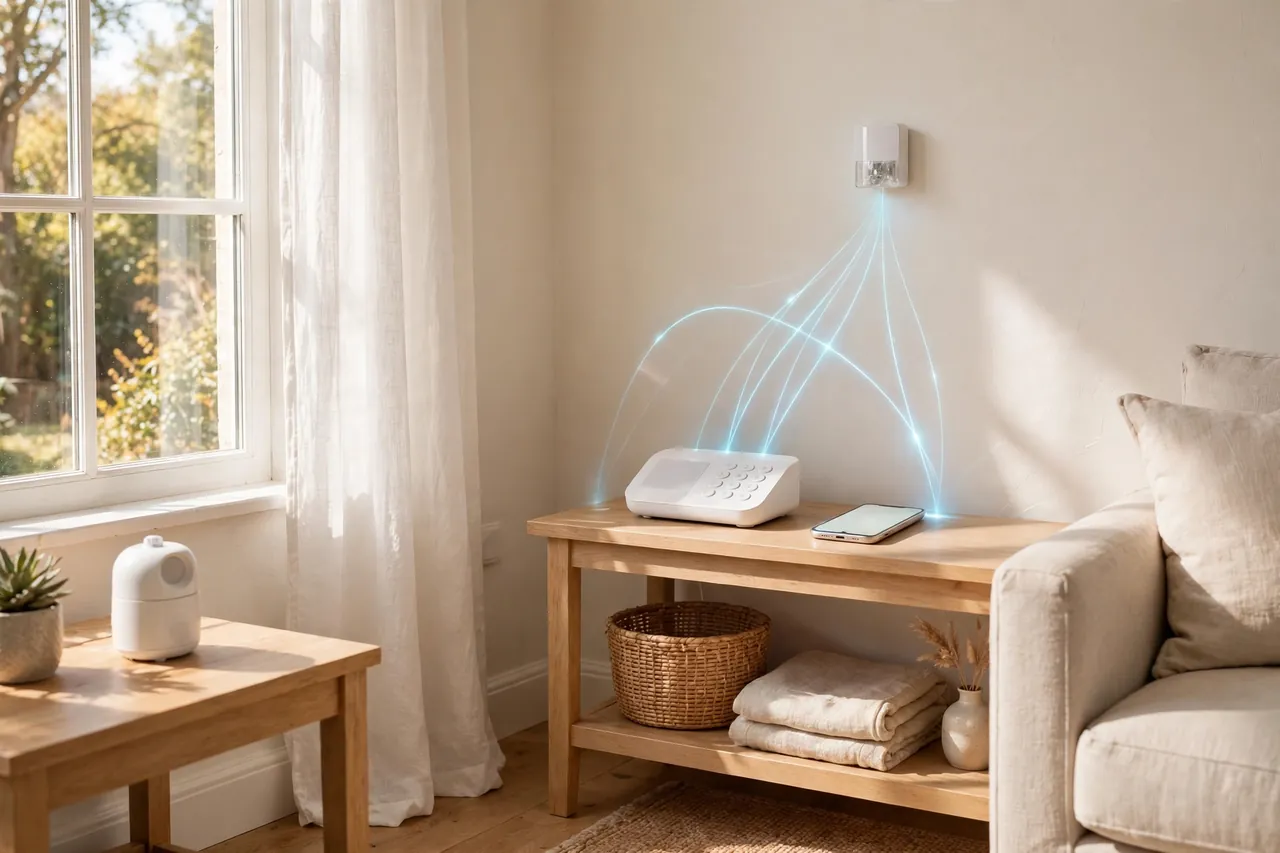
Wireless sensors dominate home security today, and for good reason. They run on batteries, stick to the wall with adhesive or a couple of screws, and talk to the base station by radio. You can install one in ten minutes with no wires to hide. When you move, you peel it off and take it with you.
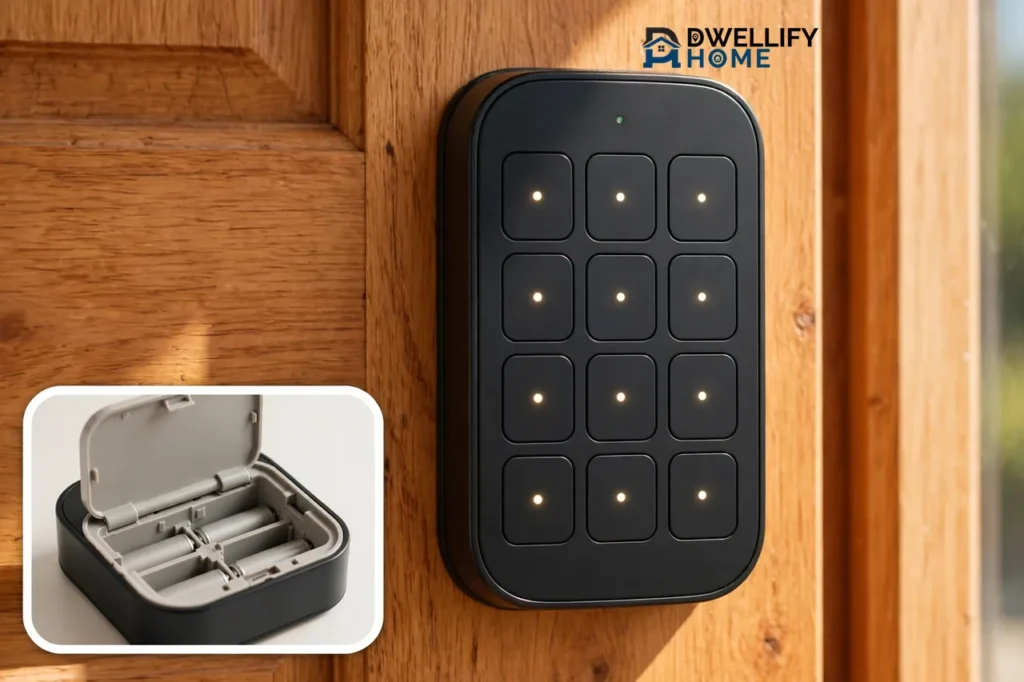
Wireless sensors need new batteries now and then. The Ring Alarm glass break sensor, for example, runs on three AA alkaline batteries that come in the box, according to Ring’s own specifications. Most wireless sensors report a low battery in the app long before they die, so you get a warning instead of a silent failure.
Wired sensors connect to the alarm panel with a cable and draw power from the panel, so they never need batteries. They suit new builds and full renovations, where the wires can run inside the walls before the drywall goes up. The downside is obvious: adding a wired sensor to a finished home means opening walls or running visible cable, which most homeowners would rather avoid.
For a home that already has walls up, wireless wins. It costs less to install, moves easily, and works just as well at hearing glass break. Choose wired only when you are building, renovating, or installing a full professional system anyway.
What a Glass Break Sensor Costs
Glass break sensors are among the cheapest parts of a home security system. Most system sensors cost between $35 and $70 each, and you usually need only a few of them. The sensor itself is a one-time purchase, but the full cost depends on whether you already own a system and whether you pay for monitoring.
| Sensor | Price | Detection range |
|---|---|---|
| Ring Alarm Glass Break Sensor (newest model) | $39.99 | Up to 25 feet |
| Ring Alarm Glass Break Sensor, 2-pack | $69.99 | Up to 25 feet |
| SimpliSafe Glass Break Sensor | $39.99 | Up to 20 feet |
The Ring prices come from Ring’s own store, and the SimpliSafe price comes from Security.org’s equipment pricing, both checked on November 7, 2026. Ring’s two-pack at $69.99 saves about $10 over two single sensors, which helps when you need to cover two rooms. Prices change with sales, so check the maker’s store before you buy.
Remember what the sensor price does not include. A system sensor needs a base station and a keypad to work, so if you own no system yet, the real cost is the starter kit plus the sensors. Professional monitoring adds a monthly fee, usually $20 to $30 a month depending on the company and plan. A standalone alarm has no monthly fee, but it also has no phone alerts and no monitoring.
How to Test Your Glass Break Sensor
A sensor you never test is a guess, not protection. Test each sensor after you install it, and test again every few months. Testing is simple, and it takes less than ten minutes per sensor. Never test by actually breaking a window — you do not need real broken glass to check the sensor.
- Put the sensor in test mode first. Many systems have a test mode that lets the sensor report without setting off the full alarm. Check your system’s app or manual for the test setting, and turn it on before you play any sound.
- Play a breaking-glass sound within range. Use a glass-break simulator app, or a video of breaking glass, played from your phone. Stand within 20 feet of the sensor, inside the same room, and play the sound at a normal volume.
- Check that the sensor trips. The app should show an alert, or the sensor’s light should flash. If nothing happens, move closer and try again, or check that the sensor is paired and armed.
- Test the sounds that should not trip it. Slam a door, clink two drinking glasses together, and play the television at its usual volume. If any of these set the sensor off, its sensitivity is too high, so turn it down a notch and test again.
- Adjust the sensitivity and repeat. A good setting hears the breaking-glass sound every time and ignores the everyday sounds. If your sensor has three sensitivity levels, like the Vivint glass break sensor does, start in the middle and move up or down based on your test results.
Test after any change to the room. New curtains, a moved bookshelf, or a new television can change how sound travels, and a sensor that worked in January may hear less well after a summer rearrangement. A quick test after moving furniture keeps the coverage honest.
When a Door or Window Sensor Is Not Enough
Door and window sensors, also called contact sensors, are the most common sensors in a home security system. They have two parts: one on the frame and one on the door or window. When the two parts separate, the sensor trips. They are cheap, reliable, and excellent at catching someone who opens a window.
But they have one blind spot, and it is a big one. A burglar who breaks the glass and climbs through the frame never opens the window at all. The two parts of the contact sensor never separate, so the sensor stays silent while the intruder steps inside. Security.org puts it plainly: window contact sensors do not detect a window break-in if the thief breaks the window’s glass, and for that you need a glass break sensor.
Motion detectors have the opposite problem. They catch an intruder, but only after the person is already inside the room. A glass break sensor catches the attempt at the window, before anyone gets in. That early warning is its whole value. It also works at night while you sleep, when most people turn their motion detectors off so they can walk to the kitchen without setting off the alarm.
The three sensors work best together. Contact sensors guard the opening, glass break sensors guard the glass, and motion detectors guard the room itself. A layered setup like this is also why strong door locks security matters: a good lock slows an intruder down, and the sensors raise the alarm while the lock is still holding.
Do You Need a Glass Break Alarm?
Most ground-floor homes benefit from one, and the decision comes down to three questions. First, do you have windows or glass doors that someone can reach from the ground, a porch, or a flat roof? Second, do you already own an alarm system the sensor can join? Third, would a break-in while you are away or asleep go unnoticed until morning?
If you answered yes to the first question, a sensor earns its place. If you live in an upper-floor flat with no balcony, you can skip it — nobody can reach your windows. If your home is small enough that you would hear a window smash from any room, the sensor adds less, though it still helps when you are away.
Start with the rooms that matter most: the living room, the family room, and any room with a sliding glass door. Add one sensor per room, test each one, and set the sensitivity so everyday sounds stay quiet. For most homes, two or three sensors cover the ground floor for around $80 to $120, plus the system they join.
A glass break alarm will not stop every break-in. It cannot hear a thief who cuts the glass quietly with a glass cutter, and it cannot protect glass it cannot hear. But it closes the most common gap in home security: the smashed window that no contact sensor notices. Paired with good locks and a system that alerts your phone, it turns a silent break-in into a loud one.
Related Guides
If you are building out your home security, these guides pick up where this one leaves off. Start with the best home security systems with cameras to choose the system your sensor will join, then read our door locks security guide to see how locks and sensors work together. Our best smart lock for your front door guide covers the lock itself, and our cellular home security systems guide explains how your alarm stays connected when the Wi-Fi goes down.
Frequently Asked Questions
Are glass-break detectors effective?
Yes. Both acoustic and shock glass break detectors alert you when a burglar breaks the glass in a door or window, and they warn you earlier than motion detectors, which only trip once the intruder is already inside. They also cover the gap that window contact sensors leave, since a smashed window never opens.
What can trigger a glass-break alarm?
Breaking glass should trigger it, and that is the main cause. If the sensitivity is set too high, other sounds can also set it off, including rattling glass, a dropped drinking glass, television noise, slamming doors, thunder, and barking dogs. Lowering the sensitivity and moving the sensor away from noise sources usually stops these false alarms.
How do you test an acoustic glass-break sensor?
Use an app or video that plays the sound of breaking glass. Put the sensor in test mode first if it has one, then play the sound within 20 feet of the sensor. Then test sounds that should not trip it, such as slamming doors and clinking glasses, and adjust sensitivity until it hears breaking glass and ignores the rest.
Do acoustic glass-break detectors work through walls?
No. Acoustic glass break detectors pick up sound in a 360-degree radius of about 20 to 25 feet, but walls distort the sound’s frequency, so the sensor cannot read it as breaking glass. The sensor needs a direct line of sight to the windows it protects, which is why it guards only the room it sits in.
Should I get an acoustic or vibration glass-break sensor?
Choose an acoustic sensor for a room with three or more windows, since one unit can hear them all. Choose shock, or vibration, sensors for a room with one or two windows, since each unit guards only the pane it sits on. For small, noisy rooms such as kitchens and garages, a shock sensor is usually the better pick.
A glass break alarm is a small, cheap sensor that guards the one entry point your locks and contact sensors cannot see. Pick the right type for each room, mount it where it can hear the glass, test it with real sounds, and it will stand watch every night — quiet until the one moment it matters.