A garage door has to do more than open and close. It protects vehicles and stored belongings, helps secure an entry point to the house, and often serves as the family’s main route in and out. Denver’s snow, bright sun, dust, and quick temperature changes can make small problems more noticeable, so local support matters. One trusted option is Overhead Door Company of Denver, available through Overhead Door Denver, which provides residential garage door installation, repair, maintenance, and opener services.
Reliable performance starts with a suitable door, early attention to warning signs, and skilled service when a task is unsafe for a homeowner. Knowing what to check—and when to step away—can prevent a minor fault from becoming a major interruption.
Why Denver Weather Can Be Hard on a Garage Door
Garage doors sit at the boundary between a protected indoor space and changing outdoor conditions. In Denver, winter snow and freezing temperatures may be followed by sunny, milder periods. Moisture can collect near the bottom seal, then freeze overnight. Dirt, road treatment residue, and grit may also be carried into the garage by vehicles.
Summer sunlight can fade some finishes and dry aging seals, while dust may settle on photo-eye sensors near the floor. Weather does not automatically cause failure, but it can expose worn parts or poor alignment. The first clue is often a change in sound or movement.
Warning Signs That Deserve Attention
A garage door does not have to stop completely before it needs service. Smaller changes can reveal developing wear.
New or Increasing Noise
Some operating sound is normal; a change from the door’s usual sound is what matters. Grinding, scraping, popping, or repeated squealing may point to wear or interference. A sudden bang followed by an extremely heavy door can indicate a spring problem. Do not keep cycling the system to “see if it clears.”
Uneven, Jerky, or Slow Movement
Watch from inside the garage while standing well clear. A door that shudders, tilts, pauses, or rises unevenly may have a cable, track, roller, spring, or alignment problem. Stop using it if movement looks unstable.
Failure to Open or Close Normally
A door that closes and then reverses may have an obstruction, dirty or misaligned sensors, or an opener fault. If the opener runs but the door barely moves, avoid repeated attempts that may worsen the damage.
Visible Wear or Damage
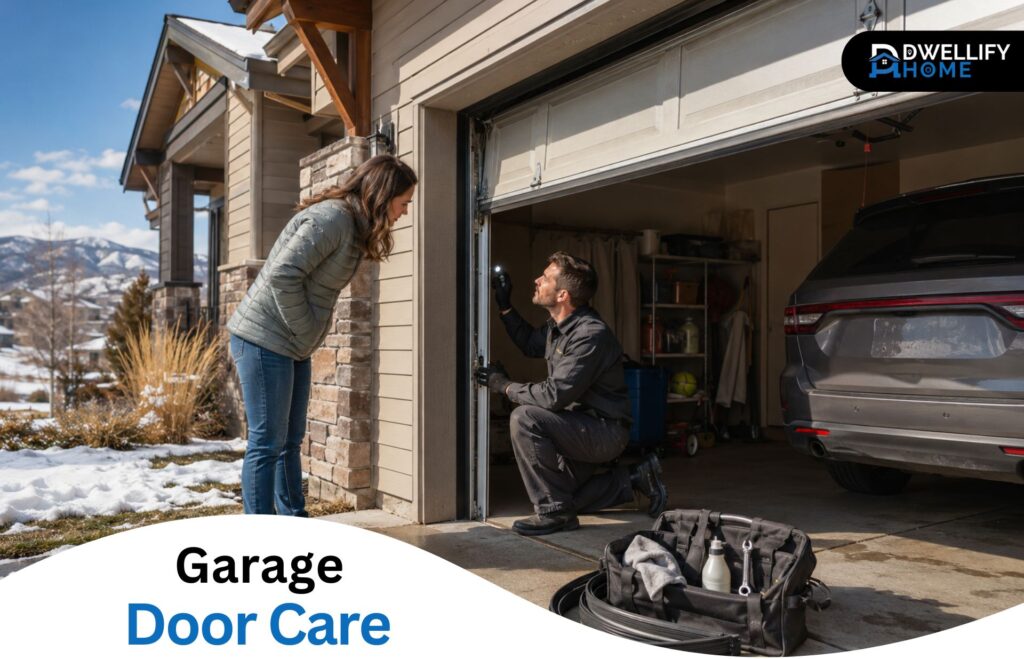
Look for frayed cables, seal gaps, bent tracks, loose hinges, cracked rollers, or damaged panels. Make this a visual check only. Springs and cables operate under high tension, so their repair or adjustment belongs to a trained technician.
Maintenance Homeowners Can Safely Handle
Simple upkeep can help you notice problems early, but every task should follow the instructions for your specific door and opener. If the owner’s manual differs from general advice, follow the manual.
Keep the floor and track area clear. Bicycles, bins, and tools can interfere with the door or block its sensors. Wipe sensor lenses with a soft, dry cloth without moving the brackets. If a light blinks or the door still reverses without an obstruction, arrange an inspection rather than bypassing the safety system.
Check the bottom seal and weatherstripping for brittle areas, tears, or gaps. Clear leaves and packed snow from the threshold, and never force the opener if the seal appears frozen to the ground. Call for help if the door will not release without strain.
Lubrication requirements vary. Use only the product and application points identified by the manufacturer; do not coat tracks with general-purpose oil.
Test safety functions as directed in the opener manual. If the door does not reverse when required, stop using the opener and schedule service. Keep controls away from children, and never leave the door partly raised.
A Practical Seasonal Care Schedule
Spring: Check for Winter Wear
After freezing weather eases, inspect the seal, panels, and hardware for visible damage. Clean the surface as directed and listen for new sounds during a complete cycle.
Summer: Protect the Finish and Sensors
Wash off dust with products approved for the door’s finish. Clean the sensor lenses and check weatherstripping for splits. Remember that an insulated door may reduce heat transfer, but it will not cool a hot garage by itself.
Fall: Prepare Before the First Freeze
Consider a fall tune-up if the door has become noisy or inconsistent. Confirm that seals make even contact, check remote batteries, and move stored items away from the tracks. Fixing wear in mild weather is easier than facing a stuck door on a snowy morning.
Winter: Keep the Threshold Clear
Remove snow and ice from the door’s path without striking the panels or seal. If the opener strains, movement becomes uneven, or the system stops unexpectedly, discontinue use. Repeatedly pressing the remote may add stress without fixing the problem.
Should You Repair or Replace the Door?
Repair is often sensible when the problem is isolated and the rest of the system is in good condition. A technician may be able to correct a sensor issue, replace worn rollers, service an opener, or address a damaged section without replacing the complete door. The right choice depends on the door’s design, condition, parts availability, and the cause of the failure.
Replacement becomes more reasonable when problems are recurring, several sections are damaged, the door no longer fits the opening properly, or the homeowner wants better insulation, quieter operation, updated safety features, or a different appearance. An inspection should separate essential repairs from optional upgrades. For homeowners researching garage door repair Denver service options, a clear written assessment can make it easier to compare repair costs, replacement benefits, and the likely condition of the remaining components.
Avoid deciding by age alone. A well-maintained older door may still be serviceable, while a newer door can need replacement after significant impact damage or a poor installation. Ask the technician to explain what failed, whether other parts show related wear, what work is being recommended, and what warranty applies.
Choosing a New Garage Door for a Denver Home
A new door should fit the house, the garage, and the way the space is used. Begin with professional measurements and a review of the opening, tracks, headroom, and opener compatibility. Garage doors are heavy systems with carefully balanced components, so accurate sizing and installation affect both performance and safety.
For an attached garage, insulation and perimeter sealing may help reduce temperature transfer and make rooms beside or above the garage more comfortable. The result will still depend on insulated walls, ceilings, shared doors, and air leaks elsewhere in the structure. If the garage is detached and used mainly for parking, a simpler door may meet the homeowner’s needs.
Material, finish, panel design, and windows also deserve practical thought. Consider how much direct sunlight the door receives, how often the surface will need cleaning, and whether windows would affect privacy. A style that complements the home can improve curb appeal, but appearance should not replace proper fit, durable hardware, safe operation, and realistic maintenance needs.
The opener should be selected as part of the complete system rather than as an afterthought. Door weight, size, construction, and usage all matter. Ask about manual release operation, safety features, controls, available backup options, and maintenance requirements before installation.
How to Choose a Garage Door Service Provider
A dependable provider should inspect the system before recommending major work and should be willing to explain the diagnosis in plain language. Look for clear contact information, experience with residential doors and openers, appropriate insurance and credentials, written estimates, and understandable warranty terms. Ask whether the company services your door and opener brand, what the visit includes, and whether emergency availability changes the rate.
Be cautious if someone pressures you to approve an immediate full replacement without explaining the failed parts or discussing safe alternatives. It is reasonable to ask for an itemized estimate and clarification of which work is urgent. A professional should also recognize the limits of homeowner repairs and should not encourage untrained customers to adjust springs, cables, or other high-tension components.
Keep Small Changes From Becoming Big Problems
The best garage door care is usually uneventful: keep the opening clear, notice changes in sound and movement, check seals and sensors, follow the owner’s manual, and schedule professional service when something looks unsafe or unfamiliar. These habits can reduce inconvenient surprises and help the door remain a reliable part of the home.
Denver homeowners should pay particular attention before winter and after periods of heavy use or severe weather. A timely inspection can identify whether the answer is simple maintenance, a focused repair, an opener update, or a new door chosen for the property’s needs. The goal is not to repair everything yourself; it is to recognize trouble early and make a safe, informed decision.
We hope you found this article useful. Before you leave, explore more helpful posts from Dwellifyhome.com. Certain links may be affiliate or sponsored, and purchases made through them could earn us a small commission. These commissions support the operation and growth of our website. All opinions expressed are the author’s own and are not necessarily shared by Dwellifyhome.com.