
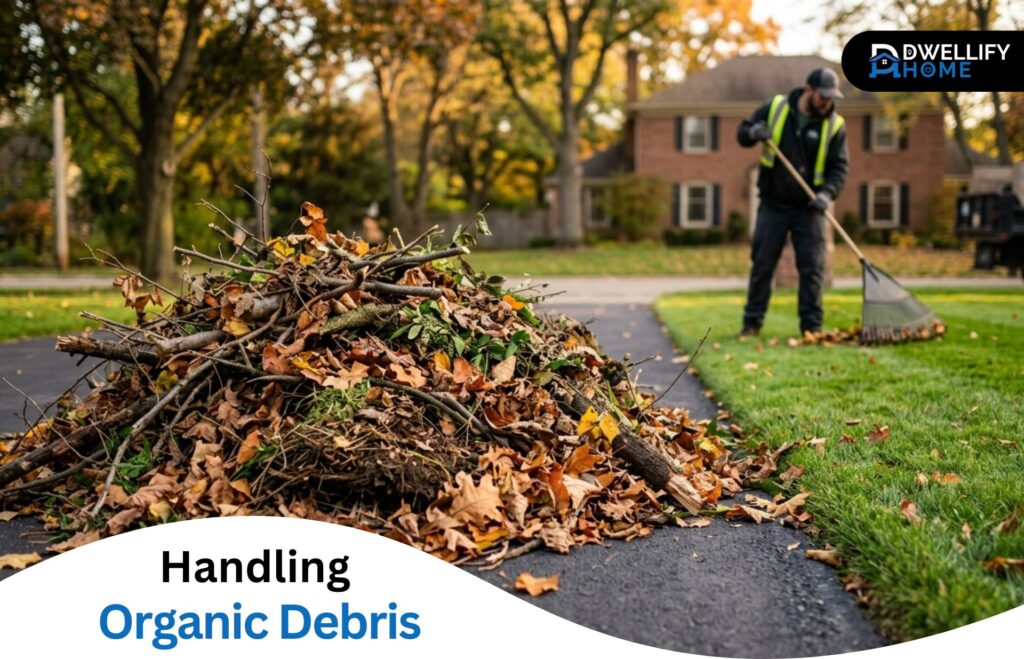
Every change of season puts a different kind of pressure on a property, and most of that pressure shows up as material that has to go somewhere. A spring cleanup, a summer redesign, a fall leaf haul, or a fresh round of planting all leave behind piles of cut, pulled, and pruned material. The finished yard gets the attention, but the work behind the scenes is largely about moving that material out of the way fast enough to keep going.
Crews that treat debris removal as part of the job, rather than an afterthought, tend to finish sooner and leave behind a cleaner site. A steady system for handling organic debris keeps workspaces open, lowers the risk of injury, and gives clients a job that looks managed from the first hour to the last.
Why Seasonal Projects Produce Large Volumes of Organic Waste
Seasonal work clears out the old before installing the new, and that clearing stage is what fills a property with green waste. Routine mowing barely registers next to a full renovation, where entire beds, shrubs, and lawns come out at once.
A single project can include trimming or pulling shrubs, pruning trees, emptying flower beds, stripping sod, and cutting back overgrowth. Each task on its own feels small. Together they leave behind leaves, branches, clippings, brush, roots, and stray wood that add up far faster than crews expect.
Estimating that volume before the first tool comes out is what separates a smooth day from a clogged one. Knowing roughly how many loads a property will produce lets a crew line up the right containers and removal schedule ahead of time.
Planning Debris Management Before Arriving on Site
Strong crews settle the question of where waste goes before a single branch hits the ground. Removal gets built into the plan next to crew scheduling and equipment, not bolted on once piles appear.
In practice, that means walking or reviewing the property size, noting what’s being torn out, and putting a rough number on how much material will come off the site. From there, the crew can pick collection spots and decide how often loads need to leave.
This bit of forethought keeps cleanup from turning into the slow part of the afternoon, when crews end up shuffling piles instead of installing the new design.
Creating Designated Collection Areas
A handful of fixed drop points does more for site flow than almost anything else. Instead of letting brush and cuttings scatter wherever they fall, the crew carries everything to one or two set locations as the work moves along.
The payoff shows up in two ways. Active work zones stay open and walkable, and the back-and-forth during final cleanup shrinks because the material is already gathered. A supervisor can also glance at a collection pile and judge when it’s time to call for removal.
I’ve seen jobs where a single well-placed staging spot near the driveway cut the end-of-day cleanup nearly in half, simply because nobody was crossing the whole yard with an armful of brush.
Separating Different Types of Organic Materials
Green waste isn’t one thing, and treating it that way slows a crew down. A seasonal job usually turns up several distinct materials, each easier to move when it’s kept with its own kind:
- Tree limbs and branches
- Brush and shrubs
- Grass clippings
- Leaves
- Garden plants
- Sod
- Root systems
- Small logs and wood sections
Sorting where it’s practical pays off at loading time. Heavy branches stack and travel differently than loose leaves, so keeping them apart makes a trailer easier to pack and a load easier to haul. A little sorting during the day spares a lot of sorting at the end of it.
Managing Brush Throughout the Workday
Brush is the material most likely to take over a site. Cut branches spread across a lawn in minutes, and a few unattended hours can leave a property looking buried.
The crews that stay ahead of it move brush as they cut it. Each section gets carried to a collection area right away rather than left to grow into a sprawling pile that someone has to wrestle apart later.
Working brush continuously does more than tidy up. It clears the ground for the next phase, so planting or grading can start the moment the cutting in that zone is done.
Handling Leaves and Light Vegetation
Leaves, ornamental grasses, and other light material look harmless and then quietly coat half the yard. Their lack of weight is exactly the problem.
A gust of wind can scatter a tidy heap across freshly worked beds, undoing earlier cleanup and forcing a redo. Gathering this material in passes through the day keeps it from drifting and keeps the site looking handled rather than abandoned mid-job.
Staying on top of light debris is mostly about timing. Collect it before the wind does, and the same pile only gets cleaned once.
Managing Sod and Root Removal
Lawn replacement, bed expansion, and regrading all bring up sod and roots, and these need their own plan because of sheer weight and bulk. They behave nothing like leaves.
Fresh sod sets up and compacts in a pile if it sits too long, turning easy slabs into a stubborn mass. Roots carry clinging soil that can double what a section actually weighs, which catches crews off guard at loading time.
Moving these materials out in a steady rhythm, rather than letting them mound up, keeps work areas open and spares the crew from hauling a heavy, packed pile all at once near the end of the day.
Maintaining Clear Equipment Access
Wheelbarrows, trailers, compact machines, and utility carts are how material actually leaves a property, and they need open lanes to do it. A branch pile across a travel path forces extra lifting and extra trips.
Keeping routes clear lets a crew move loads in a straight line between phases instead of detouring around their own mess. It also protects finished sections, since traffic stays on planned paths rather than cutting across new turf or beds.
Smooth movement across the site quietly drives the whole pace of the job.
Coordinating Disposal Throughout the Project
Big jobs don’t produce waste in one burst. Clearing, pruning, planting, and final trimming each send up their own wave of material, sometimes across several days.
Because of that, experienced landscapers schedule removal across the whole job rather than saving it for the final push. Homeowners and contractors often pair a provider such as Temporary Dumpster with local disposal services to keep material leaving the site as it piles up during larger renovations.
Removing waste in stages keeps it from crowding the equipment, the staging areas, and the new landscape features that need room to be installed cleanly.
Supporting Safety and Professional Presentation
Loose organic material is a safety issue before it’s a tidiness issue. Brush piles hide footing, branches block sightlines, and uneven cuttings turn a flat lawn into a tripping risk for a crew carrying tools.
Cleaning up often lowers those risks and, at the same time, shows clients a site that’s under control. People notice how a crew treats a property mid-project, not only how the finished yard looks, and a managed site builds trust while the work is still underway.
A clean job site reads as careful planning, and clients tend to read it exactly that way.
Seasonal work will always generate a lot of green waste, but planning keeps that waste from slowing the job down. Estimating volume early, setting up central collection points, sorting where it helps, keeping access open, and removing material in stages all let a crew work faster while handing the client a cleaner experience.
When debris removal is built into the overall plan instead of squeezed in at the end, seasonal landscaping projects stay organized, safer, and far better positioned to finish well.
Before you head off, why not explore more of our content? We think you’ll love it! Please be advised that some links in this post may be affiliate links, and we may earn a small commission from qualifying purchases at no extra cost to you. The views and opinions expressed are the author’s own and are not necessarily those of Dwellifyhome.com.