
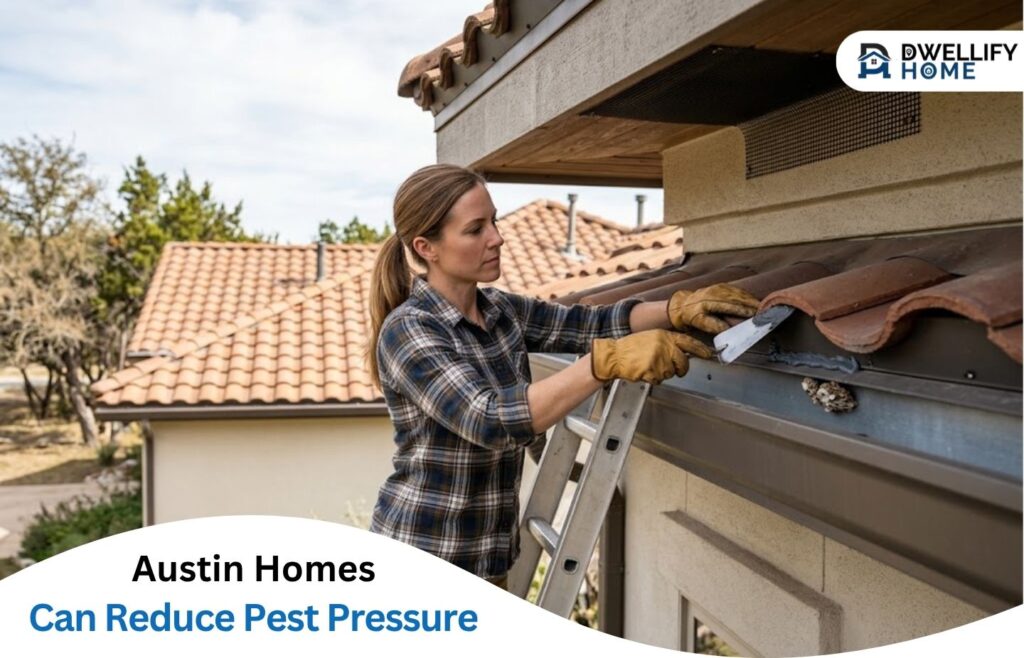
A roof rat needs an opening about the size of a quarter. A paper wasp needs even less, just a dry, shaded crevice under an eave. Most Austin homes have dozens of spots that fit those descriptions, and the owners rarely know about them until a scratching sound drifts down from the attic or a wasp nest appears above the porch light.
Pests do not break into a house so much as find the places where the building has quietly come apart. Heat, weather, and ordinary movement do that work over the years. The sections below explain where the gaps tend to open, what they let in, and how a short routine of checks keeps them closed.
How Heat, Weather, and Movement Open Small Gaps
Central Texas is hard on building materials. Summer roof surfaces can reach temperatures far above the air temperature, and the daily swing from hot afternoon to cool night makes materials expand and contract again and again. Caulk dries out and splits, rubber gaskets turn brittle, and plastic vent covers crack under years of sun. Paint, which hides small defects, lets them widen unnoticed.
Soil adds another source of movement. Much of the Austin area sits on clay that swells when wet and shrinks during drought, so foundations shift slightly through the seasons. Walls and trim move with them. A joint that was tight when the house was built can open by a sixteenth of an inch, then an eighth, then more.
Pests take advantage of each stage. Ants can use a hairline crack, mice can squeeze through a gap of about a quarter inch, and rats need roughly a half inch. Because the changes arrive slowly, no single day shows the problem, which is why scheduled inspection works better than waiting for a sign.
Roof Edges, Soffits, and Attic Vents
The roofline holds the most openings on any house. Where shingles meet the fascia board, a small gap can form if the drip edge lifts or the board warps. Soffits, the panels under the eaves, often contain vent slots, and a missing or sagging panel leaves a direct route into the attic. Ridge vents, gable vents, and turbine vents all depend on screening that has to survive sun and wind.
Roof rats are common in Texas cities and climb easily along tree limbs, fences, and power lines to reach these spots. Squirrels, wasps, and bats also use roof gaps, and once animals settle in, droppings and chewed insulation follow. Fire-prone wiring damage is a further concern, since rodents gnaw constantly.
Homeowners who keep finding droppings, hear noises at dusk, or see the same gap reopen after repairs sometimes ask the Reliant Pest Management pest control team to look at the roofline, because an entry point hidden behind a fascia board or under a ridge cap is hard to see from the ground. A trained inspector can also tell which animal is using it, and that decides how the repair should be done.
Siding Joints, Utility Lines, and the Foundation Edge
Lower on the house, the gaps look different. Siding panels meet at seams, trim boards meet window frames, and brick veneer ends at the slab. Each seam depends on sealant that wears out. Cracks in stucco and loose corner boards give ants, scorpions, and cockroaches a route into the wall cavity.
Utility penetrations deserve special attention. Pipes, gas lines, electrical conduits, air conditioning line sets, and hose bibs all pass through the wall, and the holes drilled for them are often larger than the pipe. Foam or a thin bead of caulk may have been the only filler. Rodents chew foam easily, so metal mesh or a metal collar packed into the gap, finished with exterior-grade sealant, lasts much longer.
The foundation edge matters too. A gap where the slab meets the siding, a missing weep hole screen on brick, or a cracked dryer vent flap can all open a path. Garage doors add one more weak point, since a worn bottom seal lets in everything from ants to mice. Checking these spots on a sunny afternoon, when light shows through leaks, makes the job easier.
A Seasonal Walk-Around That Catches Gaps Early
A twice-a-year walk around the house, in spring and autumn, finds most developing problems. Bring a flashlight, a small mirror, and a notepad, and photograph anything that looks questionable so you can compare next season.
Work through the house in the same order each time:
- Look along the eaves and fascia for lifted edges, missing soffit panels, and wasp nests
- Check every attic, ridge, and gable vent for intact metal screening
- Run your eyes along siding seams, trim joints, and window frames for cracked caulk
- Inspect each pipe, cable, and conduit where it enters the wall
- Test the garage door seal and look for daylight at the bottom and sides
- Examine roof transitions, such as chimneys, dormers, and wall-to-roof joints
Small repairs can be done at home with exterior-grade sealant, hardware cloth, and weatherstripping. Anything near the roof edge, or any job that requires a ladder on a steep slope, belongs to a professional. When activity keeps returning despite good upkeep, the Reliant Pest Management pest control team can trace the pathway and suggest where a contractor should focus the repair.
Screens, Seals, and Plants That Undo Good Repairs
Even tight repairs fail if the surroundings invite pests back. Window and door screens tear, and a pinhole-sized rip is enough for small insects. Replace damaged mesh and check that frames fit snugly. Door sweeps flatten over time, so look for daylight under each exterior door.
Vegetation can bridge the gap you just closed. Branches that touch the roof give rats and squirrels a direct path, so trimming them several feet back from the roofline removes it. Shrubs and vines pressed against siding hold moisture and shelter ants and roaches. A strip of bare ground or gravel along the foundation dries quickly and makes new trails easy to spot.
Moisture is the final piece. Leaking gutters, irrigation spray against the wall, and downspouts that empty at the foundation keep the wall damp, which softens trim and opens fresh gaps. Fixing those leaks protects both the building and the repairs.
Key Takeaways
Pests enter homes through the places where materials meet and move. Heat and shifting clay soil open small gaps over years, and rooflines, vents, siding seams, and utility penetrations are the usual weak points. Metal screening, flexible exterior sealants, tight door seals, and trimmed plants keep those spots closed. A seasonal walk-around, with photos and notes, catches changes while they are still small. When the same signs keep returning, a professional inspection can find the entry point that a homeowner cannot reach.
For full transparency, certain links in this article may be affiliate or sponsored links. Dwellifyhome.com may earn a small commission from qualifying purchases, which helps us maintain the site and continue sharing useful information.



