
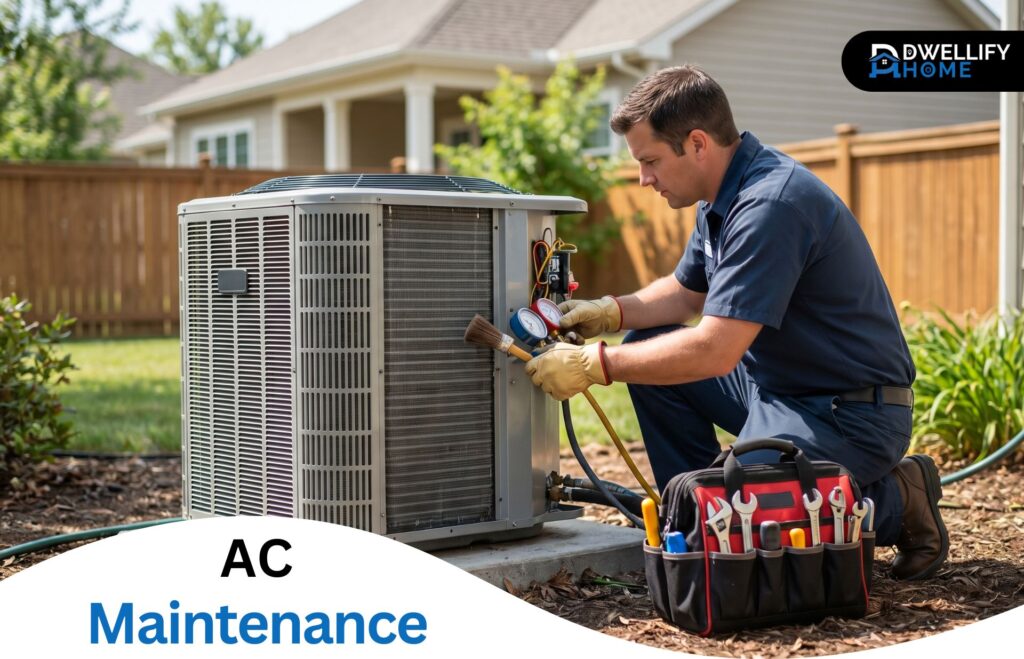
A cooling system that runs reliably through a long, hot summer doesn’t happen by accident. Behind that consistent comfort is a machine with dozens of components working in coordination — and like any mechanical system, it needs attention to keep performing well.
Most homeowners don’t think about their AC until the house starts feeling warm or something stops working entirely. By the time they call for air conditioning repair, the problem has often been building for weeks. Catching issues early through routine maintenance is what separates a quick, affordable fix from a major, expensive one.
Why AC Maintenance Matters
An air conditioner isn’t a single component — it’s a system. The compressor, evaporator coil, condenser coil, blower motor, capacitor, drain line, thermostat, refrigerant lines, and electrical connections all depend on each other. When one part starts to fail or underperform, the rest of the system compensates, and that added strain accelerates wear across the board.
A professional maintenance visit gives a trained technician the chance to inspect each of those parts, test system performance, and address anything that looks off. That kind of hands-on review is something no app or smart thermostat can replace.
Without it, the system may continue running but not running well. It might cool unevenly, consume more energy, or operate under stress it wasn’t designed to handle — quietly degrading until something finally gives out.
Dirty Filters Can Cause Bigger Problems
A clogged air filter is one of the most common causes of AC performance issues, and it’s also one of the most preventable. When the filter is blocked with dust, pet dander, or debris, airflow through the system drops significantly. The blower motor has to work harder, and the evaporator coil doesn’t get the airflow it needs to function correctly.
That reduced airflow can cause the coil to drop below freezing, forming ice that blocks cooling entirely. A frozen coil might look like a serious mechanical failure — but in many cases, it traces back to a filter that was overdue for replacement.
Replacing filters every one to three months is an easy maintenance habit that protects the entire system. The right interval depends on your home’s size, whether you have pets, and the type of filter you’re using.
Clean Coils Improve Efficiency
The evaporator coil inside your home and the condenser coil outside work together to transfer heat out of your indoor air. That heat exchange process depends on clean surfaces. When either coil is coated in dirt, pollen, or debris, heat transfer becomes less effective and the system has to run longer to reach your set temperature.
Longer run times mean higher energy consumption and more mechanical wear. If dirty coils are left unchecked over multiple seasons, the compressor can begin to overheat — which leads to much more serious problems.
During a maintenance visit, a technician inspects both coils and cleans them when needed. It’s a straightforward step that has a direct impact on how efficiently and how long the system operates.
Maintenance Helps Protect the Compressor
The compressor is the heart of an air conditioning system. It circulates refrigerant and drives the entire cooling process. It’s also one of the most expensive components to replace — and when a compressor fails in an older system, full replacement often becomes the more practical option.
Here’s what many homeowners don’t realize: compressor failures rarely happen in isolation. They’re usually the result of other unresolved problems — low refrigerant, restricted airflow, dirty coils, or electrical stress. By the time the compressor gives out, those underlying issues have been quietly doing damage for a while.
Routine maintenance finds those issues first. A technician can identify low refrigerant, clean the coils, check the electrical components, and verify airflow — all of which directly protect the compressor from unnecessary strain.
Electrical Issues Can Be Found Early
Air conditioners rely on capacitors, contactors, relays, control boards, and wiring to start up and run safely. These components don’t last forever. Over time, connections loosen, capacitors weaken, and wiring can show signs of heat damage or corrosion.
When electrical problems are ignored, the system may short-cycle, struggle to start, trip breakers repeatedly, or stop working without warning. Some electrical faults also create safety hazards that go beyond simple inconvenience.
A trained technician can test these components during maintenance, check for loose connections, and identify anything that’s approaching the end of its useful life. Replacing a failing capacitor proactively costs far less than an emergency service call on a weekend in July.
Drain Line Problems Can Cause Water Damage
As your AC removes humidity from the air, that moisture has to go somewhere. It collects in a drip pan and exits through the condensate drain line. Over time, algae, dirt, and debris can build up inside that line and cause a blockage.
When the drain line clogs, water backs up into the system. It can overflow the drip pan, leak through ceilings or floors, and cause damage to walls, insulation, or nearby belongings. Some units have a safety float switch that shuts the system down when water levels rise too high — which means a clogged drain line can also leave you without cooling on a hot day.
Maintenance includes inspecting and clearing the drain system. It’s a simple task during a scheduled visit that can prevent a surprisingly expensive and frustrating water damage situation.
Maintenance Reduces Emergency Breakdowns
AC systems tend to fail when they’re under the most stress — typically during the hottest stretch of the year, when the unit is running continuously and every component is working at full capacity. That’s also the worst time to be without cooling and the busiest time for HVAC technicians.
Preventive maintenance prepares the system for that demand before it arrives. When a technician inspects the unit in spring, they’re looking for worn parts, weak components, and anything that’s likely to fail under heavy load. Addressing those issues in advance means the system is far less likely to fail when you need it most.
Emergency service calls often involve higher costs, longer wait times, and the added stress of dealing with a breakdown in peak heat. Maintenance is the more controlled and predictable alternative.
Better Airflow Means Better Comfort
An air conditioner might be cooling perfectly in the mechanical sense and still leave your home feeling uncomfortable. Airflow problems are often the reason. Blocked vents, dirty filters, issues with the blower motor, or duct leaks can all reduce the volume of cooled air reaching your living spaces.
The result is uneven temperatures from room to room, humidity that lingers, and a thermostat that never seems to settle. The system runs longer trying to reach the target temperature, adding wear and increasing energy costs.
Maintenance identifies airflow restrictions and helps restore balanced distribution. When air moves through the system and into your home the way it should, comfort improves and the equipment operates more efficiently.
Lower Energy Bills
A neglected air conditioner almost always uses more electricity than it needs to. Dirty coils, restricted airflow, refrigerant issues, and worn components all force the system to work harder and run longer to deliver the same amount of cooling.
That inefficiency shows up on your energy bill. If your cooling costs have been creeping up year over year without any obvious explanation, the condition of your AC is worth examining.
Regular maintenance keeps the system closer to its rated efficiency. It won’t eliminate your energy costs, but it can prevent the kind of waste that comes from a system struggling to do its job.
Longer System Lifespan
An air conditioner is a significant investment. Getting the most out of that investment means keeping the system in good condition throughout its service life — not just reacting when something breaks.
A neglected system ages faster. Constant strain on overworked components accelerates wear, and parts that might have lasted years longer give out ahead of time. A well-maintained system, on the other hand, operates under less stress and has a much better chance of reaching or exceeding its expected lifespan.
Every maintenance visit is, in part, an investment in delaying the cost of replacement.
Fewer Strange Noises and Odors
Grinding, rattling, buzzing, or squealing sounds from an AC unit are almost never normal. They typically indicate loose hardware, worn bearings, a failing motor, or debris that’s found its way into the system. Musty or burning odors can point to mold in the drain system, dirty coils, or overheating electrical components.
Maintenance catches these early warning signs before they develop into larger problems. A system that runs quietly and without unusual smells is one that’s operating the way it should.
If your AC starts making unfamiliar noises, don’t wait for the next scheduled visit. Reach out to a technician and have it looked at promptly.
Maintenance Helps Maintain Warranty Coverage
Many HVAC manufacturers require documented annual maintenance as a condition of keeping the warranty valid. If a major component fails and there’s no maintenance record, the warranty claim may be denied — leaving the full cost of repair or replacement on the homeowner.
Keeping professional service records is a straightforward way to protect that coverage. For newer systems especially, it’s worth making sure those records are accurate and accessible.
Even after a warranty has expired, maintenance records can add value when selling a home, showing potential buyers that the HVAC system has been properly cared for.
What Happens During an AC Maintenance Visit?
A professional maintenance visit is more thorough than most homeowners expect. A qualified technician will typically inspect and clean both coils, check refrigerant levels, test and tighten electrical connections, inspect the blower motor and belts, test the capacitor, verify thermostat accuracy, flush the condensate drain, check the filter, and run the system through a full performance cycle.
They’re also looking for things that aren’t always obvious — signs of corrosion, refrigerant leaks, unusual wear patterns, and airflow irregularities. If a repair is needed, a good technician will explain what they found and what the options are, without pressure.
The goal is a system that’s clean, properly adjusted, and ready to handle the demands of the season ahead.
How Often Should AC Maintenance Be Scheduled?
For most residential systems, once a year is the standard recommendation — ideally in spring before cooling season gets underway. That timing gives you a chance to address any issues while the weather is still mild and HVAC schedules are more flexible.
Homes with older systems, high usage, multiple pets, or residents with allergies may benefit from more frequent service. Commercial systems that run longer hours typically follow a more frequent maintenance schedule as well.
Between professional visits, homeowners should stay on top of filter changes, keep the area around the outdoor unit clear of debris, and pay attention to any changes in how the system sounds or performs.
Maintenance vs. Repair
These two things are often confused, but they serve very different purposes. Maintenance is proactive — it’s done on a schedule to keep the system healthy and catch small problems before they grow. Repair is reactive — it’s done after something has already stopped working.
Both are necessary, but regular maintenance reduces how often repairs become necessary. It also tends to make repairs less complicated when they do occur, because problems are caught earlier and haven’t had time to affect other components.
A worn capacitor replaced during a maintenance visit is a straightforward, low-cost fix. The same capacitor left in place until it fails can strand the system and potentially stress the compressor in the process.
Final Thoughts
Regular AC maintenance is one of the most practical ways to protect your cooling system and avoid the kind of costly surprises that come from neglect. Dirty coils, blocked drains, failing electrical components, and restricted airflow all start as small issues — but left unaddressed, they compound into much bigger problems.
Homeowners who schedule routine service stay ahead of that curve. They get more efficient performance, fewer breakdowns, and a system that’s more likely to last through its full intended lifespan.
Your cooling system handles a lot of demand every season. With consistent care and professional inspections, you can count on it to perform reliably — and avoid the stress and expense of unexpected air conditioning repair when the heat is at its worst.
Before you head out, make sure to explore more of our content! A quick note — this article may contain affiliate or sponsored links. If you decide to make a purchase through these links, we may earn a small commission that goes toward supporting our website. The opinions shared in this post are entirely the author’s own and do not reflect the official views of Dwellifyhome.com.