What Does Borax Do for Laundry — And Is It Worth Using?
Borax is a natural mineral compound (sodium tetraborate) that works as a laundry booster — not a standalone detergent. It raises the pH of your wash water, softens hard water minerals, enhances your detergent’s cleaning power, fights odors, removes stains, and brightens white fabrics. Used correctly, it genuinely improves laundry results, especially in hard water households.
It’s been around for well over a century, and there’s a reason it hasn’t disappeared. In a world full of products that overpromise and underdeliver, borax is one of the few that actually does what the label says — as long as you understand what it does and when to use it.
The honest truth is that most people either use it wrong or don’t realize how much they’d benefit from it. This guide covers both.
The Short Answer
Borax is a natural mineral (sodium tetraborate) that boosts laundry detergent performance by softening hard water, neutralizing odors, lifting tough stains, and brightening white fabrics — without the harshness of chlorine bleach.
Mission Statement
At Dwellify Home, we help homeowners cut through the noise and make practical, well-informed decisions — whether it’s about maintaining their home, improving their routines, or creating spaces that actually work for real life. Every guide we publish is written to be genuinely useful, not just easy to find.
What Is Borax, Exactly?
Where Does Borax Come From?
Borax — scientifically known as sodium tetraborate or sodium borate — is a naturally occurring mineral salt. It forms in dry lake beds where water evaporates over thousands of years, leaving behind concentrated deposits of boron compounds. The largest commercially mined deposits are in California’s Mojave Desert, though significant sources also exist in Turkey and South America.
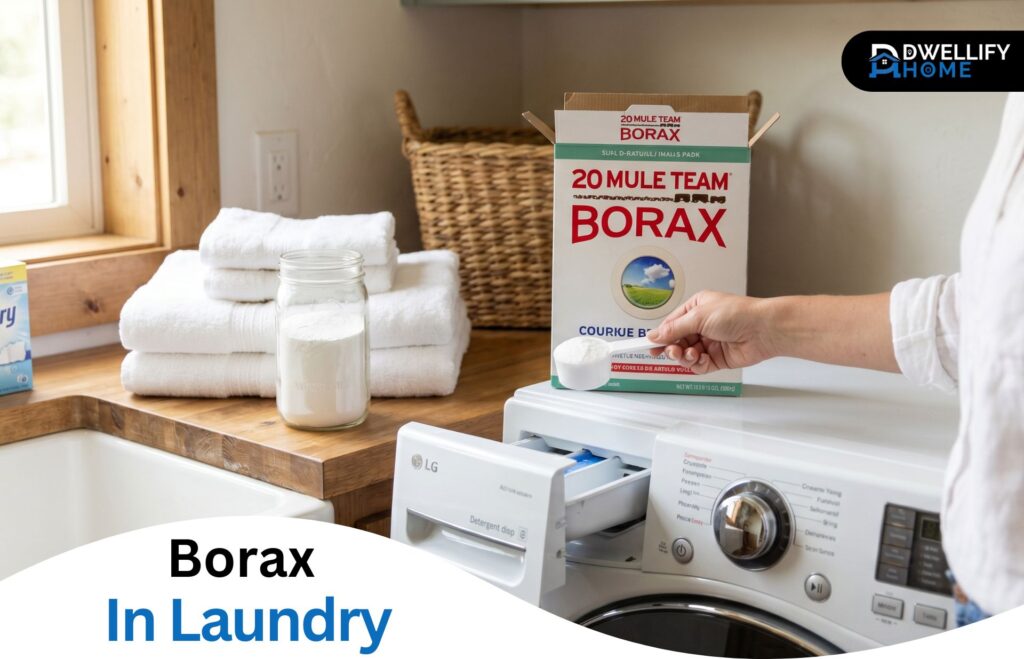
It’s mined, refined, and sold as a fine white powder. You’ll most commonly find it under the 20 Mule Team Borax label, which has been a household name since the 1880s. That history matters — it means this isn’t a trendy ingredient. It’s something that has been tested across generations of real laundry.
Is Borax the Same as Baking Soda or Washing Soda?
No — and this is one of the most common points of confusion. Borax (sodium tetraborate) is a borate mineral with a pH around 9.5. Baking soda (sodium bicarbonate) has a much lower pH of around 8 and works mainly as a mild deodorizer. Washing soda (sodium carbonate) is more alkaline than borax at around pH 11 and is a stronger cleaner but harsher on fabrics. They’re related in usefulness but chemically distinct.
Borax and washing soda are often used together in laundry stripping for good reason — they complement each other. But they’re not interchangeable. If someone tells you to substitute baking soda for borax in a cleaning recipe, the results will be noticeably weaker.
Quick Comparison: Borax vs. Common Laundry Boosters
| Booster | Best For | pH Level | Safe on Colors? |
| Borax | Stains, odors, hard water | ~9.5 | Yes (diluted) |
| Baking Soda | Light deodorizing | ~8 | Yes |
| Washing Soda | Heavy-duty cleaning | ~11 | Use with care |
| OxiClean | Deep stain removal | Varies | Yes |
| Chlorine Bleach | Whitening only | Very high | No |
Key Benefits of Using Borax in Laundry
- Boosts your detergent’s cleaning power without switching products
- Softens hard water so detergent actually works as intended
- Neutralizes stubborn odors in gym clothes, towels, and pet bedding
- Brightens white fabrics through mild, fabric-safe hydrogen peroxide conversion
- Removes tough stains including grease, mildew, and protein-based stains
- Helps deep-clean fabrics through laundry stripping when paired with washing soda
- Protects your washing machine from mineral buildup over time
How Does Borax Actually Work in Laundry?
It Raises the pH of Your Wash Water
When borax dissolves in water, it breaks down into borate ions that create an alkaline environment with a pH around 9.5. This matters because most common stains — sweat, grease, food residue, and body oils — are acidic in nature. An alkaline wash environment neutralizes those acids, which is what makes stains easier to lift.
This is also why borax works well alongside your regular detergent. Detergents already prefer an alkaline environment to work efficiently, and borax helps maintain that condition throughout the entire wash cycle.
It Fights Hard Water Minerals at the Source
Hard water contains elevated levels of calcium and magnesium ions. These minerals interfere directly with your detergent — they bind with the active cleaning agents before those agents can do their job on your clothes. The result is clothes that feel stiff, look dull, and often retain a faint residue even after washing.
Borax counteracts this by binding with those calcium and magnesium ions, effectively neutralizing them so your detergent can focus on the actual cleaning. If you live in an area with hard water and have never used a laundry booster, this single benefit alone is worth trying.
It Makes Your Detergent Work Harder
Here’s something most articles don’t mention: borax functions as an enzyme stabilizer in laundry detergents. Modern detergents contain enzymes that target specific types of stains — proteins, fats, starches. These enzymes can actually degrade each other over time in the wash cycle. Borax helps stabilize them, which means your detergent stays active longer and cleans more effectively throughout the full wash.
It also helps prevent soil from redepositing on fabric once it’s been lifted — a process called soil suspension. Without it, loosened dirt can settle back onto clothes during the wash. Borax keeps it suspended in the water so it rinses away cleanly.
What Does Borax Do for Laundry? Here Are the 6 Key Benefits
1. Boosts Your Detergent’s Cleaning Power
Adding ¼ to ½ cup of borax to a regular load enhances what your detergent already does. It’s particularly useful for heavily soiled loads — workwear, kids’ clothes after outdoor play, or anything that’s been sitting in a hamper a little too long. Think of it as turning your regular detergent up a notch without switching products.
2. Removes Tough Stains More Effectively
Borax excels at acidic stains — grease, oil, mildew, wine, tomato sauce, sweat, and blood. Its alkaline nature neutralizes these stains at the chemical level, making them easier for your detergent to lift completely. For deep-set stains, using borax as a pre-treatment paste (covered below) dramatically improves results compared to detergent alone.
3. Neutralizes Odors in Gym Clothes, Towels, and Pet Bedding
Borax doesn’t just mask odors — it changes the pH environment that odor-causing bacteria thrive in. Bacteria responsible for that sour gym-clothes smell or musty towel odor tend to be acid-tolerant. Borax’s alkalinity disrupts that environment, which is why soaking problem items in a borax solution before washing works so well.
Pet bedding in particular benefits from this approach. The ammonia compounds in pet urine are especially stubborn, and borax is one of the few natural laundry additions that actively neutralizes them rather than simply covering them up.
4. Brightens White Fabrics Without the Harshness of Bleach
When borax mixes with warm water, a portion of the water molecules convert to hydrogen peroxide — a mild, fabric-safe bleaching agent. This is what brightens white fabrics and removes the dull, grey film that builds up on towels and shirts over time.
The key word here is mild. Unlike chlorine bleach, this reaction is gentle enough that it doesn’t strip fabric fibers or weaken the material with repeated use. It’s a better long-term option for white cotton items you want to keep in good condition.
5. Softens Hard Water So Your Clothes Actually Come Clean
As covered above, hard water is a significant reason why laundry doesn’t come out as clean as it should. If your clothes feel rough after washing, lack brightness, or your whites have turned slightly yellow despite regular washing, hard water is likely the culprit. Borax acts as a natural water softener, and in hard water areas this is one of its most visible benefits.
6. Deep Cleans Through Laundry Stripping
Laundry stripping is a method for removing the buildup of detergent residue, body oils, fabric softener, and hard water minerals that accumulates on fabrics over months and years. Towels that have lost absorbency, workout clothes that still smell after washing, and bed sheets that feel slightly waxy are all good candidates.
The standard stripping recipe combines borax, washing soda, and powdered laundry detergent in hot water. The borax handles water softening and pH maintenance, the washing soda provides deep alkaline cleaning, and the detergent lifts and suspends the loosened buildup. Items soak for several hours, and the water often turns visibly grey or brown — which is what makes this process both effective and eye-opening.
How to Use Borax in Laundry the Right Way
How Much Borax Should You Add Per Load?
For a standard load of laundry, add ¼ to ½ cup of borax directly into the washing machine drum before loading your clothes. Use the higher end (½ cup) for heavily soiled items, hard water conditions, or odor-heavy loads. Always add borax along with your regular laundry detergent — it’s a booster, not a replacement.
How to Dissolve Borax So It Doesn’t Leave Residue on Clothes
This is the step most guides skip, and it’s the source of most complaints about borax causing spots or staining. Borax doesn’t dissolve well in cold water, and undissolved powder that comes into direct contact with fabric can leave white marks or, in some cases, lighten the area it sits on.
The fix is simple: dissolve borax in a cup or two of hot or warm water first, then add the solution to the drum or the wash water before adding your clothes. If your machine fills with water before you add laundry, pour the borax in during the fill cycle so it has time to fully dissolve. Never sprinkle dry borax powder directly on top of clothes already in the drum.
How to Pre-Treat Stains with a Borax Paste
For targeted stain treatment, mix 1 tablespoon of borax with 2 tablespoons of warm water to form a thick paste. Apply the paste directly to the stained area, work it gently into the fabric with a soft brush or your fingers, and let it sit for at least 30 minutes before laundering as usual. For older or set-in stains, you can leave it for up to an hour.
This method works particularly well for grease, mildew, wine, and biological stains. Rinse with warm water before putting the item in the wash.
How to Pre-Soak Heavily Soiled or Musty Items
Fill a bucket, sink, or bathtub with warm water and dissolve ½ cup of borax in it. Submerge the items and let them soak for 30 to 60 minutes. For particularly stubborn odors — like mildew on towels that have been left damp — an overnight soak gives the best results. Transfer to the washing machine and launder as usual afterward.
How to Do Laundry Stripping with Borax (Step-by-Step)
- Fill a bathtub with the hottest water your fabrics can handle.
- Add ¼ cup borax, ¼ cup washing soda, and ½ cup powdered laundry detergent.
- Stir until fully dissolved.
- Submerge clean (already washed) items — towels, bed sheets, and activewear work best.
- Let soak for 4 to 6 hours, stirring every hour or so.
- The water will likely turn murky or discolored — that’s the buildup coming off.
- Transfer to the washing machine and run a rinse-only cycle, then dry as normal.
Strip laundry no more than a few times per year. It’s a deep clean, not a routine wash.
Is Borax Safe on Colored and Dark Clothes?
Does Borax Bleach or Fade Black Clothes?
Borax does not bleach black or dark clothes under normal use conditions. It produces a very mild amount of hydrogen peroxide when dissolved in water, but the concentration is far too low to strip fabric dye with a standard wash cycle. Used correctly — dissolved in water, not applied as dry powder — borax is safe for dark fabrics.
The cases where fading occurs are almost always due to undissolved borax powder sitting directly on fabric, or to highly concentrated borax paste being left on dark fabric for an extended period. Both situations are preventable.
Can You Use Borax on Colored Clothes?
Yes, you can use borax on colored clothes safely. Unlike chlorine bleach, borax doesn’t break down fabric dyes. It brightens by removing residue and buildup rather than by stripping color. The practical condition is to use it with warm water — which ensures full dissolution — and to add it to the wash water before loading your clothes.
For delicate or brightly dyed items, using ¼ cup rather than ½ cup is a sensible precaution, especially the first time.
The One Mistake That Can Cause Spotting or Fading
Adding dry borax powder directly onto clothes in the drum is the root cause of most damage complaints. Undissolved crystals can sit against the fabric and create concentrated contact points — and that’s where spotting, texture changes, or localized lightening can occur. Always dissolve borax in water first. That single habit change eliminates virtually all the risk.
Which Fabrics Should You Be Careful Using Borax On?
Borax is safe for most everyday fabrics — cotton, polyester, linen, and synthetic blends. However, some natural fibers warrant more caution.
Wool and silk are protein-based fibers and are sensitive to alkaline environments. A high-pH solution can cause these fibers to weaken, felt, or lose their texture over time. If you need to treat a wool or silk item, dilute the borax significantly and keep the contact time short. When in doubt, test on a hidden seam first.
Delicate items labeled “hand wash only” or “dry clean only” should be handled carefully regardless of what product you’re using. Borax isn’t uniquely harsh — but it’s not designed for specialty fabrics either.
Borax vs. Other Laundry Boosters — What’s the Difference?
Borax vs. Baking Soda
Baking soda has a pH of around 8, making it mildly alkaline. It works well as a deodorizer and gentle fabric softener but doesn’t have the stain-fighting or water-softening strength of borax. For light freshening of everyday loads, baking soda is a reasonable choice. For harder cleaning tasks, borax is considerably more effective.
Borax vs. Washing Soda
Washing soda (sodium carbonate) is more alkaline than borax — around pH 11 — which makes it a stronger cleaner but also harder on fabrics and skin. It’s excellent for heavy-duty loads and is the other key ingredient in laundry stripping. Borax and washing soda are often used together because their strengths complement each other: borax stabilizes and softens, washing soda provides the alkaline muscle.
Borax vs. OxiClean
OxiClean is an oxygen-based cleaner that relies on sodium percarbonate — a compound that releases hydrogen peroxide when dissolved. It’s highly effective at stain removal and brightening, particularly on colors. Borax is more natural, less processed, and typically less expensive. OxiClean is the stronger stain fighter of the two; borax has the broader set of additional benefits (water softening, enzyme stabilization, odor control). They’re not identical, but they can be interchanged for stain removal purposes in many situations.
Borax vs. Chlorine Bleach
Chlorine bleach works by chemically breaking down the molecular structure of stains and bacteria — and it does the same to fabric fibers over time. It’s powerful but destructive with repeated use, and it can’t be used on colors. Borax achieves brightening through a much gentler mechanism and is safe for nearly all washable fabrics. For routine brightening and cleaning, borax is the more fabric-friendly choice.
Does Borax Disinfect Laundry?
Borax has antifungal and antibacterial properties — it disrupts the environment that mold, mildew, and certain bacteria need to survive. For items with visible mildew growth or a persistent musty smell, a borax pre-soak will address the biological source of the problem, not just the surface symptoms.
That said, borax is not a hospital-grade disinfectant. It won’t sterilize items the way high-temperature washing or dedicated sanitizing products can. For everyday laundry — gym clothes, towels, pet items — it’s more than adequate. For anything requiring true sanitation (cloth diapers, sick-room linens), combine borax with a hot wash cycle for the best result.
Does Borax Also Protect Your Washing Machine?
One benefit that rarely gets mentioned: borax helps protect your washing machine over time. The same mineral-binding action that softens hard water in your wash also prevents calcium and magnesium from building up inside the drum, pipes, and heating elements. Hard water scale is one of the leading causes of washing machine deterioration.
Additionally, the enzyme-stabilizing effect means detergent residue is less likely to accumulate inside the machine itself. Machines that are washed regularly with borax tend to stay cleaner and rinse more thoroughly between cycles.
Is Borax Safe to Use at Home?
Keep It Away from Children and Pets
Borax is a naturally occurring mineral, but that doesn’t mean it’s harmless. Ingestion — even in small amounts — can cause nausea, vomiting, and in significant quantities, kidney stress. Keep it stored well out of reach of children and pets, and don’t leave open boxes or spilled powder accessible.
Skin and eye contact with dry borax can cause irritation. Wearing gloves when handling it directly is a straightforward precaution, particularly if you have sensitive skin.
Never Mix Borax with Chlorine Bleach or Vinegar
Mixing borax with chlorine bleach is not recommended. Both are effective on their own, but combining them creates a chemical environment that can generate harmful compounds and reduce the effectiveness of both products. Use one or the other, not both in the same load.
Borax and vinegar are also a poor combination. Vinegar is acidic; borax is alkaline. Mixing them neutralizes both, rendering them ineffective and wasting both products.
How to Store and Handle Borax Properly
Store borax in a cool, dry location away from moisture. A sealed container or resealable bag keeps it from clumping. The cardboard boxes most borax products come in are adequate if kept dry, but transferring to an airtight container extends shelf life in humid environments. Properly stored, borax has an indefinite shelf life.
Frequently Asked Questions About Borax in Laundry
Can I use borax in a front-load or HE washing machine?
Yes. Add borax directly to the drum before loading your clothes — not in the detergent dispenser drawer. HE machines use less water, so make sure the borax dissolves fully. Pre-dissolving it in a cup of warm water before adding it to the drum is the most reliable approach for HE machines.
Can borax be used in cold water?
It can, but it’s less effective. Borax dissolves poorly in cold water, which means it won’t fully activate and is more likely to leave residue. If you need to wash in cold water, pre-dissolve borax in hot water first, then add the solution to the cold wash. Warm water is always preferred for full effectiveness.
Does borax stain clothes?
Borax itself doesn’t stain clothes. The white spots or marks sometimes reported are caused by undissolved borax powder making direct contact with fabric. This is entirely preventable by dissolving borax in water before it touches your laundry. Once dissolved and rinsed, it leaves no residue.
What is the best borax for laundry?
20 Mule Team Borax is the most widely available and consistently reviewed option in the US market. Harris Borax is another common choice, often available at hardware stores. Both are pure sodium tetraborate with no added fillers or fragrances — the product is simple enough that brand differences are minimal. What matters more is that you’re buying pure borax, not a blended “borax-based” cleaning product that may contain other ingredients.
Can I make my own laundry detergent with borax?
Yes. A basic DIY laundry detergent typically combines borax, washing soda, and grated bar soap (often Fels-Naptha or Zote). This combination covers cleaning, water softening, and soil suspension. The result is a low-cost, low-packaging alternative to commercial detergent. It works best in warm or hot water and may need a full cup per load in hard water areas. It’s worth testing on a full load before committing to a large batch.
When Is Borax Worth Adding to Your Laundry Routine?
Borax earns its place in a few specific situations: you live in a hard water area and your clothes never quite come out clean or soft, you deal with persistent odors in towels or workout gear, you want to brighten whites without resorting to chlorine bleach, or you have items overdue for a proper laundry strip.
For the average household doing light loads with soft water and modern detergent, borax is a nice addition but not a necessity. For anyone dealing with any of the above conditions, it’s one of the most cost-effective laundry improvements available.
Understanding what does borax do for laundry comes down to this: it’s a pH-adjusting, water-softening, enzyme-stabilizing mineral that makes everything in your wash cycle work better. It doesn’t replace your detergent — it makes your detergent work the way it’s supposed to.
Used correctly, it’s a straightforward, honest product that delivers real results.
Disclaimer
The content on Dwellify Home is provided for general informational purposes only. Results may vary depending on your water type, fabric, detergent brand, and individual household conditions. Always check product labels and test on a small area before full use. This article is not a substitute for manufacturer guidance.