Every porous rock facing urban environments tells a story of slow degradation. Limestone exterior surfaces absorb pollutants, moisture, and everyday dirt, quietly losing structural integrity while homeowners overlook early warning signs on weathered walls.
Centuries before modern cement replaced sedimentary rock, builders trusted calcium carbonate blocks shaped from ancient sea creatures. Those versatile material choices still frame classic homes today, though harsh climates quietly stain natural stone facades worldwide.
Getting cleaning wrong costs more than dirt itself. Harsh cleaners, acidic solutions, and aggressive pressure washing trigger surface damage, discoloration, and cracked masonry nobody wants repairing. Understanding why less aggressive cleaning preserves appearance genuinely matters.
Snippet-Ready Definition
Cleaning outside limestone and concrete walls involves using pH-neutral cleaners, soft brushes, and gentle rinsing to remove dirt, mildew, algae, and stains without damaging the porous surface, helping preserve the stone’s appearance and structural integrity.
Mission Statement:
At Dwellify Home, we help homeowners make practical, stylish, and informed décor decisions through trustworthy guidance, expert-backed insights, and real-world solutions for everyday living.
Why Limestone Needs A Gentle Approach / Challenges Of Caring For Limestone
Most homeowners underestimate how porous limestone genuinely is. This soft stone quietly drinks moisture, organic material, and pollutants through microscopic pores, creating dark streaks and mold colonies within 2 years old installations across urban environments.
Skip any annual inspection and water infiltration silently triggers masonry deterioration, spalling, and cracked masonry. Defective roofing, compromised flashing, failing joints, and missing limestone sealer invite water filtration straight into the face of the stone.
Key Benefits of Proper Limestone & Concrete Wall Cleaning:
- Prevents permanent staining and discoloration before it sets in
- Removes mildew, algae, and black mold from porous surfaces
- Protects structural integrity and extends wall lifespan
- Maintains property value and curb appeal year-round
- Reduces costly professional restoration in the future
How To Clean Limestone Without Damaging It (Basic Method)
Skip vinegar, bleach, lemon juice, and any acid-based household cleaners immediately. Acidic formulas etch the surface, leaving limestone permanently dull. Even ammonia or abrasive cleaners silently scratch stone, causing harm basic rinse and dry cycles cannot reverse.
Grab warm water, a mild detergent, plus a soft brush and work small sections carefully. Test any commercial cleaning agent on a scrap piece first, following manufacturer’s recommendations and instructions religiously before treating outdoor limestone walls.
Step-By-Step Guide To Cleaning Outdoor Limestone
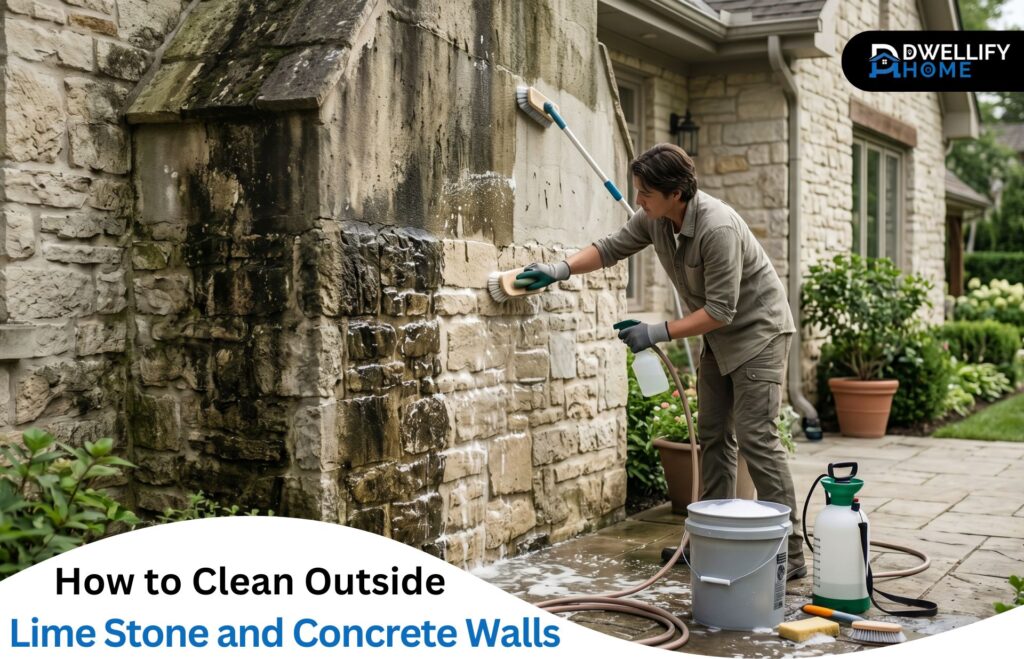
Start by clearing loose dirt, fallen leaves, and debris using a broom or soft-bristled brush. Skip high-pressure washers since that force keeps eroding pores and widening existing cracks across your exterior limestone facade quickly.
Mix your cleaning solution inside a bucket using warm water plus pH-neutral detergent, respecting the dilution ratio carefully. Always patch-test an inconspicuous area first, checking for discolouration or surface damage before wider application happens confidently.
Apply with a non-abrasive sponge, working small sections under light pressure to avoid scratching. For stubborn stains and heavy dirt build-up, skip aggressive tools or chemical cleaners, then rinse thoroughly removing soap residue and streaks.
Historic restoration crews favored glass bead blasting over sand blasting because glass beads shatter gently against tower facade stonework. A biocide treatment paired with controlled high pressure washing cleaned the Capitol’s base using the least invasive technique.
Removing Mildew, Algae And Organic Growth
Those ugly black spots creeping across your limestone patio are typically mildew, algae, or deep-rooted mold feeding on moisture trapped inside pores. Damp areas and shaded areas accelerate future growth, demanding targeted intervention rather than passive scrubbing attempts.
Before hitting landscaping stone hard, always run a test spot first. A 50/50 hw mix sometimes proves too aggressive, while weaker 2% dilutions fail entirely on limestone bricks. Stubborn surface junk often requires repeat applications patiently.
Apply SH as straights directly rather than attempting down stream methods, since weak mixes barely touch embedded stain colonies. Reach for a soft brush, work heavy areas through gentle scrubbing, then finish using a soft rinse.
Always neutralize afterward with citric acid, acetic acid, or oxalic acid (OA) to prevent iron reactions turning limestone orange. For honed finishes resembling sand paper, letting 50/50 mixes soak worked across 4 applications restoring white-ish/gray tones.
For historical statues and priceless architecture, professionals choose a poultice approach instead. Mix 20% hydrogen peroxide with diatomaceous earth creating peanut butter mud, cover with saran wrap, wait 24 hours, then gently lift dried mud away.
Long-Term Maintenance & Sealing Limestone
Most homeowners chase aggressive solutions when their exterior walls show trouble, yet routine maintenance consistently outperforms reactive panic. Occasional cleaning catches stains before discoloration sets deep, preserving both aesthetic value and economic value across any building facade.
A breathable stone sealer allows moisture trapped inside stonework to escape naturally, while blocking absorption from outside threats. Skip generic coatings and choose a limestone-specific sealant instead, following application instructions precisely without improvising treatment quantities or drying times.
Every cleaning scenario differs, so experimenting matters more than any rulebook suggests. Consider the complexity, the amount of soil, the actual type of soil, plus your acceptable degree of cleanliness before committing resources toward extensive cleaning and sealing workflows.
A quality stone sealant doubles as protection against future staining, effectively reducing the cleaning required throughout each season. Think of sealing like insurance; limestone surfaces left bare age naturally, absorbing grime, leaks, and airborne grit relentlessly.
When stubborn discoloration resists household attempts, calling a natural stone professional saves money long-term versus costly replacements. Properly sealed limestone surfaces stay durable for decades with minimal upkeep, helping prevent staining while handling bad weather and seasonal elements.
How To Remove Rust Stains From Limestone
Those orange streaks bleeding across your wall almost always trace back to metal fixtures, irrigation systems, or nearby steel elements. Rainwater drips carry oxidized particles onto natural stone, where porous limestone surfaces silently trap them inside tight microscopic channels.
Skip regular cleaners entirely since they rarely touch rust stains embedded that deeply. Grab a dedicated rust remover formulated specifically for stone chemistry, avoiding harsh acids which risk reacting violently with calcium compounds lurking beneath that weathered limestone finish.
Always test any product across a small hidden area first, observing reactions for twenty-four hours minimum. Once you confirm color fastness, expand coverage onto the larger surface gradually, working small patches before any visible facade receives actual treatment.
What You’ll Need (Supplies)
Gathering proper supplies before starting saves hours of frustration later. Skip anything abrasive since wire brushes aggressively scratch the surface, leaving permanent damage. Instead, grab a quality soft bristle brush alongside a dependable non-abrasive sponge for delicate outdoor work.
Keep a sturdy bucket full of clean water nearby, plus a garden hose for rinsing off loose debris. For weekly maintenance, mix a mild detergent or pH-neutral cleaning product crafted specifically for natural stones with warm water.
Skip acidic cleaners, never pour vinegar or lemon juice onto limestone. Choose a multipurpose detergent, dedicated natural stone cleaner, protective gloves, soft microfibre cleaning cloth, plus a breathable stone sealant blocking future staining during wet months.
History Of Limestone’s Use And Properties
Long before cement dominated modern construction, ancient cultures trusted limestone as their primary choice for building materials. The Egyptian pyramids stand today as irrefutable evidence of this versatile material engineering across countless centuries worldwide.
This sedimentary rock forms quietly across millions of years inside warm marine waters and clear marine waters, gradually compacting shells plus skeletal remains from ancient sea creatures. Roughly 50% calcium carbonate defines its signature mineral composition chemically.
Architects love limestone because each quarried block offers distinctive textures and colors. From the Empire State Building facade to humble countryside cottages, its appearance, quiet strength, and handsome character earn enduring value across global architecture.
Beyond classic buildings, limestone fuels roofing applications, agriculture soil amendments, industrial smelting processes, and various mining operations. Masons shape it into blocks, slabs, paving stones, walkways, or sculptural garden ornaments enhancing any outdoor property.
Cleaning Interior Limestone Walls (Different Soiling Types)
Most homeowners focus entirely on outdoor grime, yet interior walls carry their own complicated story. Inside heritage spaces like the Capitol, soiling falls into three kinds, each demanding completely different chemistry rather than universal scrubbing techniques.
The first culprit involves mineral staining caused by silent roof or plumbing leaks. These leave rust-colored mineral deposits blooming across porous limestone surfaces, slowly causing visible discoloration which ordinary soap cannot touch effectively.
The second category stems from indoor air pollution settling onto walls across decades. Cigarette smoke, cooking residues, and combustion byproducts quietly grey the limestone finish, requiring careful techniques rather than blunt, abrasive, rushed household cleaning sprays.
The third pattern nobody discusses openly involves human contact itself. Visitors touch walls constantly; humans shed oils, natural acids, and skin debris which get absorbed through microscopic pores, leaving hand soiling patterns permanently.
Notice how hands, elbows, backpacks, or any brushing body part creates darker zones near doorways and corners. These smudges have distinct chemical compositions compared with airborne pollutants, demanding targeted intervention rather than generalized cleaning approaches.
For decades, experienced conservation staff relied on traditional soap and water scrubbing, followed by careful clay poulticing drawing contaminants outward. Both methods demand patience, protecting surrounding surfaces, and generous water plus thorough rinsing afterward consistently.
Modern cleanup now favors an integrated latex/detergent poultice product, which delivers cleaning power with minimal impact. During restoration of the George W. Norris Legislative Chamber, this technology removed generations of stains without disturbing adjacent architectural elements significantly.
Treat every interior limestone wall as forensic evidence first, diagnosis second, cleaning third. Identifying whether you face oil transfer, airborne buildup, or water-driven mineral staining determines whether chemistry succeeds or compounds existing cosmetic limestone damage permanently.
FAQ: Why Is It Important To Clean Outdoor Limestone?
Why does cleaning limestone matter beyond cosmetic appearance?
Most property owners underestimate how quickly neglected outdoor limestone turns from timeless beauty into an eyesore. Regular care preserves the entire aesthetic appeal while protecting structural integrity hidden beneath.
What happens when you ignore early staining?
Every stain you ignore today becomes tomorrow’s permanent damage. Limestone’s exposure to rain, pollutants, and airborne grit accelerates weathering, shortening overall lifespan. Consistent cleaning and sealing routines genuinely double visual longevity significantly.
How often should routine surface cleaning happen?
Light weekly cleaning handles everyday dirt, leaves, pollen, plus loose debris before embedding deeper inside porous channels. Skip this, and ordinary dirt buildup morphs into tough stains requiring aggressive chemistry, abrasive tools, eventually.
When should deeper seasonal cleanings be scheduled?
Schedule a proper deep clean at least twice a year minimum, anchoring those sessions around spring and autumn transitions. Each seasonal reset removes accumulated dirt build-up, preparing exterior walls for upcoming colder months properly.
Why is spring cleaning particularly critical?
Spring cleaning targets staining that winter quietly delivered through freeze-thaw cycles. Ice expands microscopic pores, trapping debris deeper. Addressing this early prevents tough stains from migrating across outdoor limestone surfaces, walkways, connecting patios permanently.
Does fall preparation really make a difference?
Fall preparation matters equally, since limestone entering winter unclean suffers worst. Organic residues freeze onto natural stone, cementing themselves until colder months release their grip. Thorough autumn cleaning protects facades during harsh storms reliably.
What financial payoff comes from consistent cleaning?
Beyond visual wins, proper care maintains your home’s property investment value significantly. Buyers inspect hardscaping materials, patios, limestone walls carefully. A maintained, well-preserved exterior signals the quality every commercial building deserves always.
Disclaimer:
This article is for informational purposes only. Always test cleaning products on a small, hidden area first and consult a professional stone specialist for valuable, historic, or large-scale limestone surfaces.