Glue on walls is one of those problems that looks simple until you try to fix it. After spending over 15 years doing interior repairs, renovations, and paint touch-ups, I can tell you that more damage happens during the removal process than from the glue itself. People grab whatever cleaner is nearby, scrub too hard, and end up with a bigger mess — or worse, bare drywall where paint used to be.
The good news is that with the right approach, you can remove almost any adhesive from a painted wall and leave the surface looking exactly as it did before. The key is matching your method to the type of glue you’re dealing with.
Short Definition
Removing glue from walls means softening and lifting adhesive residue — from stickers, tape, Command strips, or wallpaper — without stripping the paint or damaging the wall surface underneath. The right method depends on the glue type and wall finish.
Mission Statement
At Dwellify Home, we help homeowners handle real home challenges with practical, reliable guidance — so every decision you make around your home is informed, confident, and built to last.
Why Removing Glue from Walls Is Trickier Than It Looks
Fresh adhesive and dried adhesive are completely different problems. Fresh glue is still pliable and responds well to simple cleaning. Dried or cured adhesive, on the other hand, has bonded with the paint and sometimes with the wall surface underneath. Pulling at it without softening it first almost always takes paint with it.
The other risk people underestimate is the wall material itself. Drywall has a paper facing that absorbs moisture quickly. Soak it too long with water or solvent and you’re not just dealing with a glue problem anymore — you’re dealing with a soft, damaged surface that needs patching before it can be repainted.
Quick Method Guide by Glue Type
| Glue Type | Best Removal Method | Safe For |
| Tape / sticker residue | Hair dryer + plastic scraper | Painted drywall |
| Wallpaper paste | Warm soapy water + sponge | Painted drywall |
| Command strips / 3M adhesive | Pull-tab + rubbing alcohol | Painted drywall |
| Construction adhesive | Mineral spirits + scraper | Drywall (carefully) |
| Tile / shower adhesive | Acetone or Goo Gone | Ceramic, porcelain tile |
| Stubborn dried residue | White vinegar solution | Most painted surfaces |
Key Things to Keep in Mind
- Always test any cleaner or solvent on a hidden spot before applying it to the visible area
- Never oversaturate drywall — moisture weakens the paper facing underneath
- Use a plastic scraper, not metal, on painted surfaces to avoid gouging
- Matte and flat paint finishes are the most vulnerable to solvent damage
- If paint lifts, spackle, prime, and touch up — it’s a simple fix
Know Your Glue First — It Changes Everything
Before reaching for any product or tool, take a moment to identify what type of adhesive you’re actually dealing with. This one step will save you a lot of trial and error.
Wallpaper paste and water-based glues break down easily with warm water and a little soap. They’re the most forgiving to remove.
Tape residue and sticker adhesive respond well to heat or rubbing alcohol, depending on how long they’ve been sitting on the wall.
Command strips and 3M adhesive products have their own removal method built into the design, but once the strip is gone and residue remains, you’ll need a gentle solvent.
Construction adhesive is in a different category entirely. It’s designed for permanent bonding, so removing it from drywall takes patience, the right solvent, and careful mechanical work.
Tile and shower wall adhesives are typically applied to non-porous surfaces, which actually makes solvent removal easier — but grout joints can complicate things.
Tools and Supplies to Have Ready Before You Start
You don’t need a lot. Most of what works best is already in your home.
- Plastic putty knife or a 6-inch drywall scraper
- Microfiber cloths and non-scratch sponges
- A spray bottle
- Hair dryer
- Dish soap and warm water
- White vinegar
- Rubbing alcohol
- Commercial remover like Goo Gone or WD-40 for tougher jobs
One thing worth mentioning: always use a plastic scraper on painted drywall. Metal scrapers work faster, but one wrong angle and you’re gouging the surface.
Always Test a Small Area First
This is the step most people skip, and it’s the one that causes the most regret. Before applying anything — even warm soapy water — test it on a hidden spot, like behind a door or inside a closet.
Apply a small amount, wait a few minutes, then blot it off and check the surface. Look for paint lifting, color change, or any dullness in the finish. Matte and flat paint finishes are particularly sensitive. They absorb moisture and solvents more than satin or semi-gloss surfaces, and even gentle cleaners can leave a dull patch.
If the test area looks fine, proceed. If not, choose a milder method.
How to Remove Glue from Walls: The Right Method for Every Situation
Heat Method — Best for Tape Residue and Sticker Glue
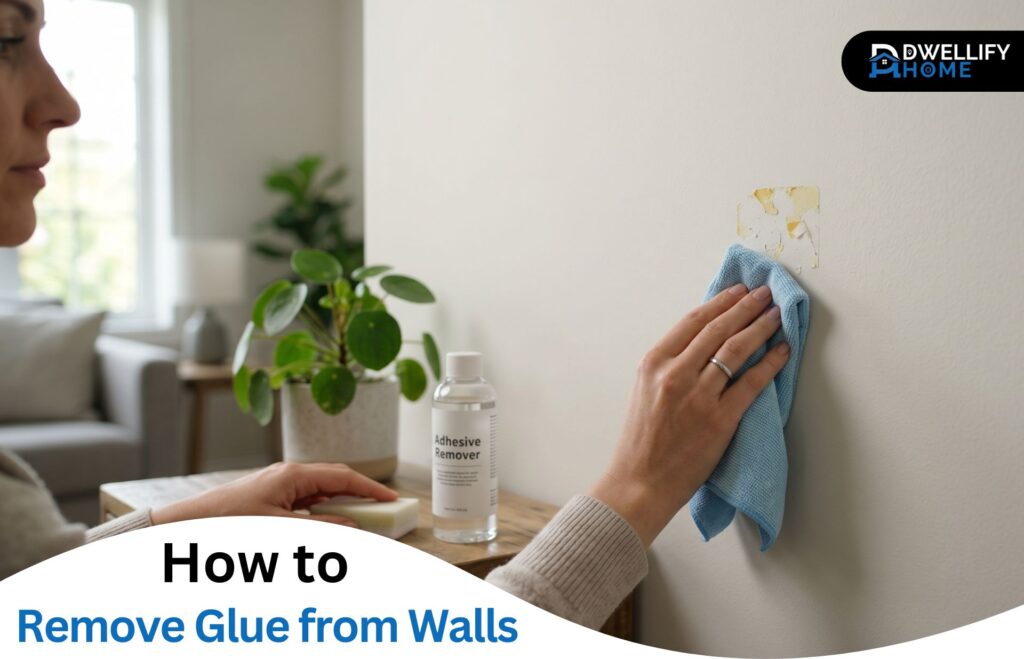
Set your hair dryer to a low or medium setting and hold it about 4 to 6 inches from the adhesive. Move it slowly in a circular motion for 20 to 30 seconds. The glue will soften and start to lift at the edges.
Once it’s warm, use a plastic scraper or your fingernail to gently peel it away. Don’t rush it. If it starts pulling the paint, apply more heat rather than more force.
Warm Soapy Water — Best for Wallpaper Paste and Light Residue
Mix a few drops of dish soap into warm water and apply it to the affected area with a sponge. Let it sit for about 3 to 5 minutes. The moisture softens water-based adhesive and makes it easy to wipe away.
The important thing here is not to oversaturate the wall. Apply enough to soften the glue, then wipe. Don’t keep the wall wet for extended periods — drywall absorbs moisture fast, and once the paper layer is compromised, you’re looking at a repair job.
White Vinegar Solution — For Stubborn Dried-On Residue
Mix equal parts white vinegar and warm water in a spray bottle. Spray it directly onto the residue, let it sit for 3 to 5 minutes, then scrub gently with a non-scratch sponge.
Vinegar is mild enough to be safe on most painted walls but strong enough to break down adhesive bonds that water alone won’t touch. It also works well on wallpaper glue that’s been sitting for a while.
Rubbing Alcohol — For Strong Adhesive on Semi-Gloss or Hard Surfaces
Rubbing alcohol is effective on stronger adhesives, but use it carefully. It’s safe on semi-gloss and satin paint finishes, and works well on tile and other non-porous surfaces. On flat or matte paint, though, it can leave a dull spot.
Apply a small amount to a cloth — don’t spray it directly on the wall — and dab it onto the residue. Let it sit for a minute, then wipe in one direction. Repeat as needed.
Commercial Removers: Goo Gone and WD-40
Both products are effective at dissolving adhesive residue that household methods can’t handle. Apply a small amount to a cloth, press it against the glue for a minute or two, and then wipe away. Always follow up with warm soapy water to remove any oily residue left behind.
Goo Gone is generally the safer choice for painted walls. WD-40 works well too, but its oily formula can sometimes leave a faint stain on flat or porous surfaces. Again, test first.
Scraping — For Thick, Layered, or Dried Adhesive
For adhesive that has built up in thick layers — old wallpaper glue, for example — scraping is necessary. Hold the plastic scraper at a low angle, around 15 to 20 degrees, and use light, consistent pressure. You’re trying to slide under the glue, not dig into the surface.
After scraping off the bulk, switch to one of the solution methods above to clean up the remaining residue.
How to Remove Construction Adhesive from Drywall
Construction adhesive is the hardest type to deal with, and it requires the most patience. It’s designed for permanent bonding, so don’t expect any one application to dissolve it completely.
Start with a commercial adhesive remover or mineral spirits applied to a cloth. Press it against the adhesive and let it sit for 5 to 10 minutes. Then use a plastic scraper to carefully chip away softened sections. Work in small areas and re-apply solvent as needed.
The real danger here is the drywall paper layer. Construction adhesive often grips this layer tightly, and aggressive scraping can tear it away. Take your time, keep the solvent working, and let the chemical do most of the work rather than physical force.
How to Remove 3M Adhesive Strips and Command Hooks from Walls
Command strips are designed to be removed by pulling the tab straight down along the wall — slowly and steadily. If you rush it, the strip breaks and leaves the adhesive block stuck to the wall.
If the tab is already gone, soften the remaining adhesive with a hair dryer, then use a plastic scraper to work it free from the edges inward. Once the bulk is off, a small amount of rubbing alcohol on a cloth will clean up what’s left.
After removal, check the area closely. Sometimes the paint looks fine at first but becomes dull or slightly tacky once it dries. A quick wipe with a clean damp cloth usually sorts this out.
How to Remove Adhesive from Tile and Shower Walls
Tile surfaces are more forgiving than drywall because they’re non-porous. Solvents like rubbing alcohol, acetone, or commercial adhesive removers work well here without the risk of paint damage.
Apply the solvent, let it sit for a few minutes, then scrub with a non-scratch pad. For grout lines where adhesive has seeped in, use an old toothbrush to work the solvent into the joint. Be patient — adhesive in grout lines takes a few applications to fully clear.
For shower wall adhesive left behind by soap dishes, shelves, or grab bars, a razor scraper used at a low angle is effective and safe on ceramic or porcelain tile.
How to Protect Your Paint While Removing Adhesive
The most common mistake is using too much force too early. Adhesive needs to be softened before it’s removed — not scraped dry. Scraping before softening almost always damages the paint.
A few other things to keep in mind: don’t let solvents run down the wall and collect at the baseboard, keep the area ventilated when using alcohol or commercial removers, and work in small sections so you can monitor the surface closely.
What to Do If the Paint Gets Damaged
Small areas of lifted or scuffed paint are common and easy to fix. Start by cleaning the spot thoroughly and letting it dry completely. Then apply a thin coat of spackling compound if there’s any texture damage or indentation. Sand it lightly once dry, prime the area, and touch up with matching paint.
Matching sheen level matters. If your wall has a satin finish, using flat paint for the touch-up will leave a visible dull patch. Always use paint with the same finish as the original.
Still Seeing Residue or Staining? Here’s What to Do
Sometimes a faint outline or haze remains even after cleaning. This usually means a thin layer of adhesive is still bonded to the surface. Go back with a fresh application of your solvent, let it sit a little longer, and try again.
A white or dull patch after solvent use typically means the paint finish has been slightly affected. Lightly buff the area with a dry microfiber cloth. If it persists, a fresh coat of paint in the matching sheen is your best option.
Patchy discoloration after cleaning is usually surface-level and resolves with a light touch-up paint application over a primed spot.
FAQs
Q: What removes glue residue from walls?
The best option depends on the adhesive type. Warm soapy water handles light residue and wallpaper paste. Rubbing alcohol works well on tape and sticker adhesive. For stronger glues, Goo Gone or a white vinegar solution are reliable choices that are safe on most painted surfaces.
Q: What dissolves glue easily?
White vinegar, rubbing alcohol, and commercial removers like Goo Gone are the most effective at dissolving common adhesives. Heat from a hair dryer also softens glue quickly without using any chemicals, which makes it a good first step on painted walls.
Q: Is Goo Gone safe for painted walls?
Generally, yes — Goo Gone is safe on most satin and semi-gloss painted surfaces when used as directed. Apply it to a cloth rather than directly to the wall, limit the dwell time to 1 to 2 minutes, and always follow up with warm soapy water to remove the oily residue. Test it first on flat or matte finishes, as those are more sensitive.
Q: How do professionals remove wall adhesive?
Professionals typically start by identifying the adhesive type, then use a combination of a heat gun or hair dryer to soften the bond and a plastic scraper to lift it cleanly. For heavy-duty adhesives, mineral spirits or commercial removers are used in controlled amounts, followed by a surface clean-up and touch-up paint if needed.
Q: Does Dawn dish soap remove adhesive?
Dawn mixed with warm water is effective on light, water-based adhesives like wallpaper paste and fresh sticker residue. It won’t cut through strong or dried adhesives on its own, but it’s a good starting point and one of the safest options for delicate wall finishes.
Conclusion
Removing glue from walls without damaging the paint comes down to two things: knowing what type of adhesive you’re dealing with and choosing the right method for it. Rushing the process or using the wrong product is what causes most of the damage people run into.
Test before you treat, work gently, and let the softening agents do the heavy lifting. And if something does go wrong with the paint surface, a simple spackle-prime-paint repair will bring the wall back to how it looked before. It’s not a difficult process — it just requires a little patience and the right sequence of steps.
Disclaimer
The information provided on Dwellify Home is intended for general guidance only. Results may vary depending on wall surface, paint type, adhesive brand, and application method. Always test any product or technique in a small, inconspicuous area before full application. For significant wall damage or structural concerns, consult a qualified professional.