
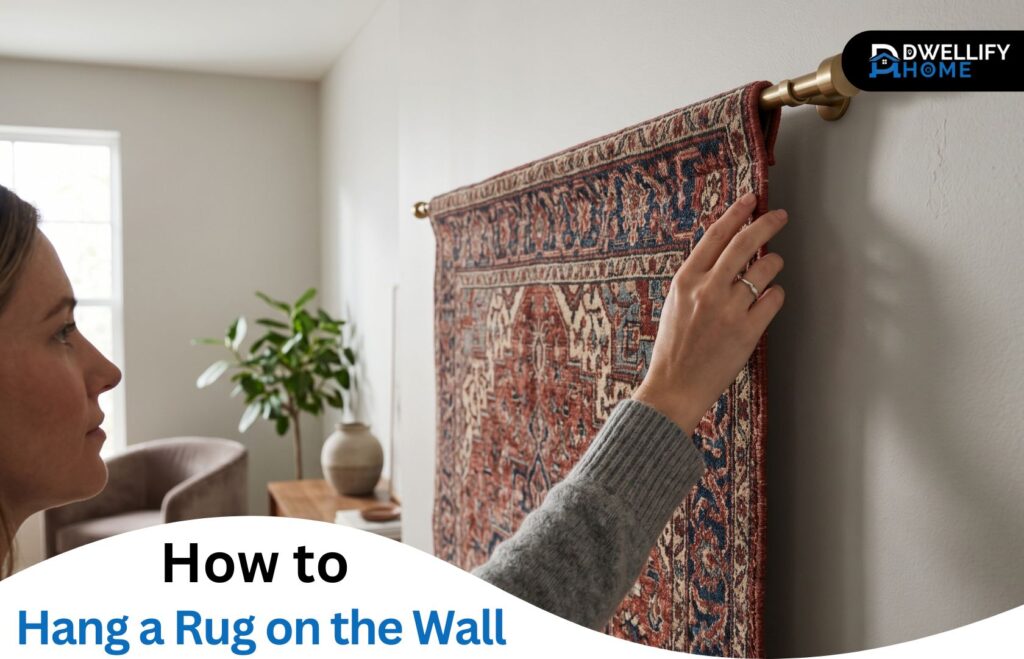
Rugs are one of those things that people walk over every day without a second thought — until they see one hanging on a wall and realize it changes a room entirely. Over the years, working with dozens of home setups, I’ve hung everything from light cotton kilims to heavy hand-knotted Persian pieces. The question I hear most isn’t “can you hang a rug on the wall?” — it’s “how do you do it without wrecking the rug or the wall?”
This guide walks you through exactly that.
Short Definition
Hanging a rug on the wall means mounting a floor rug vertically as wall décor. People do it to display valuable textiles, add warmth to bare walls, and protect rugs from floor wear — using methods like Velcro, rod sleeves, or rug clamps.
Mission Statement
At Dwellify Home, we help homeowners make practical, well-informed décor decisions — without the guesswork. Every guide we publish is built around real situations, honest advice, and solutions that actually hold up at home.
Why Hang a Rug on the Wall? (More Reasons Than You Think)
It brings texture and warmth that framed art simply can’t match
A rug on a wall does something a painting never will — it adds physical depth. The weave, the pile, the pattern up close — it creates a sensory layer in a room that flat prints can’t replicate. In rooms that feel cold or echo-heavy, a wall-hung textile genuinely changes the atmosphere.
It’s a practical solution for bare, awkward, or imperfect walls
Not every wall is worth showcasing. Cracks, stains, uneven plaster — a rug covers all of it without renovation. It’s also one of the better ways to fill an unusually tall or wide wall that no single piece of artwork could occupy properly.
It protects valuable, antique, or sentimental rugs from floor damage
A rug with real value — monetary or personal — shouldn’t be walked on daily. Displaying it on the wall keeps it away from foot traffic, dirt, and wear. Museums hang textiles this way for the same reason. It’s preservation, not decoration.
Quick Method Comparison Guide
| Method | Best For | Damage Risk | Difficulty |
| Velcro + Batten | Most rug types | Very low | Easy |
| Curtain Rod + Sleeve | Large, heavy rugs | Very low | Moderate |
| Wooden Dowel + Hooks | Small to medium rugs | Very low | Easy |
| Rug Clamps | Any rug, no sewing needed | Low | Easy |
| Command Strips | Lightweight rugs only | Low (if used correctly) | Very easy |
Key Benefits of Hanging a Rug on the Wall
- Adds texture and visual depth that flat wall art can’t replicate
- Protects antique or valuable rugs from foot traffic and daily wear
- Covers damaged, patchy, or plain walls without any renovation
- Improves room acoustics by absorbing sound
- Works as a statement piece in rooms that lack a natural focal point
Not Every Rug Belongs on a Wall — Here’s How to Know
Size and weight — what your wall can realistically hold
A small to medium rug is generally easy to manage. Once you get into large, dense, hand-knotted rugs — particularly wool ones — weight becomes a serious concern. A heavy rug pulling on an inadequate mount won’t just fall; it can tear the fibers at the hanging point over time.
Rug types that display well vs. ones to avoid
Flat-weave rugs, kilims, Moroccan styles, Persian pieces, and cotton tapestries all hang well. Thick shag rugs are a different story — they’re heavy, hard to keep flat, and the pile doesn’t display cleanly on a vertical surface. If you’re unsure, lay the rug flat on the floor and check whether it sits evenly without curling at the edges. If it does, it’ll hang cleanly.
Choosing the right wall — studs, light exposure, and surface type
Direct sunlight is the biggest long-term threat to a wall-hung rug. Dyes fade unevenly, and you often don’t notice until it’s too late. Choose a wall with indirect or diffused light. Also, avoid hanging rugs near radiators or fireplaces — heat dries out fibers over time.
For mounting, always locate the wall studs before you drill. A heavy rug anchored only into drywall will eventually pull loose.
Choosing the Right Hanging Method for Your Rug
Before going into the specific methods, here’s a simple way to decide:
- Lightweight rug (under 5 lbs): Velcro or Command strips work fine.
- Medium-weight rug: Velcro with a wooden batten, or a curtain rod with a sewn sleeve.
- Heavy or oversized rug: Curtain rod with a fabric sleeve anchored into studs, or rug clamps with multiple wall anchors.
That’s the core decision. Everything else is about how you want it to look.
Method 1 — The Velcro Method (Best for Most Rugs)
What you’ll need
Heavy-duty Velcro tape (at least 2 inches wide), a wooden batten cut to the rug’s width, carpet thread, a staple gun, a drill, and screws.
Step-by-step instructions
Sew the soft loop side of the Velcro along the top edge of the rug’s back using carpet thread. Staple the hook side of the Velcro onto the wooden batten. Mount the batten to the wall — into studs if possible. Press the rug firmly against the batten and it holds securely.
Using a wooden batten with Velcro for heavier rugs
For anything medium to heavy, skip attaching Velcro directly to the wall. The batten distributes the load evenly and gives the Velcro a firm backing to grip against. Without it, the hook side can shift or peel from the wall over time.
Can you use Command strips instead? (What works and what doesn’t)
Command strips are fine for very lightweight rugs — think small flat-weave pieces or decorative mats under two pounds. For anything heavier, they’re not reliable. The adhesive loosens over time, especially in humid rooms, and the rug will eventually shift or fall.
Method 2 — Curtain Rod with a Fabric Sleeve (Best for Large and Heavy Rugs)
What you’ll need
A sturdy curtain rod, wall brackets, screws, heavy-duty cotton fabric, and carpet thread.
How to sew a rod pocket onto the back of your rug
Cut a strip of heavy cotton fabric the same width as the rug and about 4 inches tall. Fold it into a loop and hand-sew it along the top edge of the rug’s back, leaving enough space inside the loop for the rod to slide through freely. For antique or delicate rugs, always hand-sew — machine stitching puts uneven stress on the fibers.
Step-by-step hanging instructions
Slide the curtain rod through the fabric sleeve. Mount the wall brackets at your desired height, making sure they’re level and anchored into studs. Hang the rod on the brackets. The rod distributes the rug’s weight evenly across the full width, which is what makes this the right choice for heavier pieces.
Hiding the rod vs. making it part of the look
A rod cut slightly shorter than the rug’s width stays hidden behind it. A rod extended a few inches past each side, capped with decorative finials, becomes a design detail. Both work — it just depends on whether you want the hardware visible or invisible.
Method 3 — Wooden Dowel and Decorative Wall Hooks
What you’ll need
A wooden dowel (or metal bar), decorative wall hooks, and either a sewn fabric sleeve or rope threaded through the rug.
Step-by-step instructions
Thread the dowel through a fabric sleeve sewn onto the back of the rug, or loop rope over the dowel ends and knot them. Mount two wall hooks at equal heights, spaced slightly inside the rug’s width. Hang the dowel on the hooks.
When this works better than a curtain rod
This method suits smaller rugs and works well aesthetically when the hooks and dowel are meant to be visible as part of the display — particularly in boho or rustic interiors where the hardware is part of the styling.
Method 4 — Rug Clamps and Hanging Bars
How rug clamps work and what to look for
Rug clamps are bars with evenly spaced grip points that hold the top edge of the rug without penetrating the fibers. Look for clamps with rubber-lined grips — metal-on-fiber clamps can cause fraying over time.
Step-by-step instructions
Attach the clamp evenly across the top edge of the rug. Mount the bar to the wall using screws and anchors. For wide rugs, use two or three anchor points along the bar’s length to prevent bowing in the middle.
Best situations to use this method
Rug clamps are the most practical choice when you can’t or don’t want to sew anything onto the rug. They’re also easy to remove and reuse, which makes them worth considering for renters or anyone likely to rearrange things.
How to Hang a Rug on the Wall Without Nails or Holes
For renters or anyone avoiding wall damage, the Velcro batten method with adhesive-backed mounting strips is the most reliable no-drill option for lightweight rugs. The key is using wide, industrial-grade Velcro rather than standard adhesive strips — and keeping the rug’s weight realistic for what adhesive can hold.
Command strips work for very small pieces. For anything larger, a tension rod mounted in a doorway or between two walls is an underused option that requires zero drilling and leaves no marks.
How to Hang a Heavy Wool Rug on the Wall Safely
Why weight distribution is the real challenge
Heavy wool rugs don’t just stress the mount — they stress the rug itself. If the weight isn’t distributed evenly across the full top edge, the fibers at the hanging point will stretch and eventually distort. A rug that hangs from two small points will warp within months.
Anchoring into wall studs vs. using drywall anchors
Wall studs are always the better option for anything heavy. Drywall anchors work for medium-weight pieces, but they have limits — and those limits are often discovered after the rug has already fallen.
Adding extra support points to prevent sagging and fiber stress
For very wide rugs, run Velcro or an additional support strip along the sides and occasionally the bottom. This isn’t always necessary, but for oversized or particularly dense pieces, edge support prevents the center from pulling forward and the rug from gradually bowing outward.
Getting It Level, Flat, and Looking Intentional
How to measure and mark before committing to holes
Use a level and mark all your anchor points with painter’s tape before drilling anything. Hold the rug or the batten up against the wall first and step back — what looks level on the wall while you’re standing close often isn’t. Taking five extra minutes here saves a lot of patching later.
Keeping the rug flush and wrinkle-free against the wall
If the rug develops wrinkles after hanging, it usually means the hanging line isn’t perfectly level or the weight isn’t distributed evenly across the mount. Re-check the level and adjust before assuming the rug itself is the problem. Most wrinkles resolve once the mount is corrected.
Special Situations That Need a Different Approach
Hanging a rug on the wall when you have cats (and how to secure it properly)
Cats are drawn to hanging textiles. The best approach is to mount the rug flush to the wall with no gap for paws to get behind, and to use a method like Velcro or a tightly sewn sleeve rather than clips or clamps that a cat could dislodge. A batten anchored into studs also adds resistance against any tugging from below.
Antique, delicate, or hand-knotted rugs — when to hand-sew and when to call a professional
For everyday rugs, any of these methods works. For antique, hand-knotted, or high-value pieces, the rule is simple: only hand-sew the hanging attachment, never machine-sew, never glue, and never use any hardware that punctures the pile. If the rug is genuinely valuable, a textile conservator can advise on the safest display method — it’s worth the consultation.
How to hang a round rug on the wall
Round rugs need extra attention to balance. The attachment needs to span the widest horizontal point, and the rug should be checked for even hang on both sides before the mount is finalized. A full-width batten approach works better here than clips or two-point hooks.
Creating a gallery wall with multiple rugs
The same principles apply, just repeated. Plan the spacing on the floor first — lay all the rugs out flat in the arrangement you want before committing anything to the wall. Keep consistent spacing between pieces and make sure the mounting height for each one is measured independently rather than assumed to match.
Mistakes That Damage Rugs and Walls (And How to Avoid Them)
A few things consistently cause problems. Driving nails directly through rug pile damages the fibers and creates stress points that worsen over time. Sticky adhesives applied directly to the back of a rug are difficult to remove and often pull fibers loose when they come away.
Hanging a rug near a radiator or heat source dries out the fibers — wool especially — and causes brittleness and color shifts. Leaving a rug in direct sunlight does similar damage to dyes, sometimes within a single summer.
And hanging a heavy rug by its corners only — without full-width support — causes the piece to warp and stretch. It’s one of the most common mistakes, and unfortunately one of the slower ones to show up, which means people often don’t realize the cause until the rug has already distorted.
Caring for a Rug That’s Displayed on the Wall
How to dust and vacuum a wall-hung rug without taking it down
Use a soft brush attachment on a low-suction vacuum, working gently from top to bottom. You don’t need to take the rug down for routine cleaning — a light brush-over every few months keeps dust from embedding into the pile. Heavier cleaning can wait for when you take it down seasonally.
Protecting color from fading over time
Rotating the rug’s orientation once or twice a year helps even out any light exposure. If the room gets significant natural light through part of the day, UV-filtering window film is worth considering — it’s less noticeable than curtains and does a solid job of protecting textiles.
Checking and re-securing mounting hardware periodically
Velcro loses grip gradually, especially in humid conditions. Screws in drywall anchors can loosen over time as the anchor shifts. Every six months or so, give the hardware a quick check — press the Velcro back together firmly, check that wall screws are snug, and make sure the rug is still sitting level. It takes a few minutes and prevents a lot of damage.
FAQs
What’s the best way to hang a rug on a wall?
The Velcro method with a wooden batten is the most reliable choice for most rugs. It distributes weight evenly across the full top edge, causes no damage to the rug or wall, and holds securely over time. For larger or heavier rugs, a curtain rod with a hand-sewn fabric sleeve is the stronger option.
Is it okay to hang a rug on the wall?
Yes, and it’s actually one of the better ways to preserve a quality rug. Kept off the floor, a rug avoids foot traffic, dirt, and daily wear. The key is using the right hanging method for the rug’s weight — improper mounting is what causes damage, not wall display itself.
How do you hang a heavy rug on the wall without damaging it?
Use a curtain rod threaded through a hand-sewn fabric sleeve on the back of the rug. Mount the rod brackets directly into wall studs — not just drywall — and add extra support points across the width for very wide pieces. This spreads the load evenly and avoids fiber stress at any single point.
Do rugs help with allergies when hung on the wall?
Wall-hung rugs can actually be easier to manage than floor rugs for allergy sufferers. They collect less tracked-in dirt and debris, and a gentle vacuum with a soft brush attachment keeps dust from building up. That said, any textile accumulates dust over time, so regular light cleaning still matters.
Can renters hang a rug on the wall without losing their deposit?
Yes. Adhesive Velcro strips or a no-drill tension system work for lightweight rugs. For anything heavier, a wooden batten mounted with removable adhesive anchors is a reasonable middle ground. The important thing is not exceeding the weight limit of whatever adhesive system you use — that’s when walls get damaged.
Conclusion
Learning how to hang a rug on the wall properly isn’t complicated, but the details matter more than most guides admit. The right method depends on your rug’s weight, the wall’s structure, and how much you’re willing to work with the rug itself. Get those three things right, and the result looks deliberate, sits securely, and stays that way.
Whether it’s a simple flat-weave on Velcro or a heavy wool piece mounted on a rod and sleeve, the approach is the same: support the weight evenly, protect the fibers, and take the extra time to get it level before anything goes into the wall.
Disclaimer
The information on Dwellify Home is intended for general guidance only. Wall structures, rug weights, and surface conditions vary. For heavy, antique, or high-value rugs, consult a professional before mounting. Always follow manufacturer instructions for any hardware or adhesive products used.