After nearly fifteen years of sourcing furniture for clients, walking through workshops, and watching both the best and worst sides of the industry up close, I’ve seen how much confusion exists around what genuinely counts as sustainable. People want to do the right thing, but the labels get murky fast. A “green” sofa sometimes isn’t. A natural wood dresser can still off-gas chemicals for years.
This guide cuts through that fog. You’ll learn what eco-friendly furniture actually means, the materials that matter, the benefits worth paying attention to, and the small but important things most buyers overlook until it’s too late.
The Short Answer
Eco-friendly furniture is made from sustainably sourced, non-toxic, and ethically produced materials designed to last. People choose it to reduce environmental impact, improve indoor air quality, and avoid the harmful chemicals found in conventional furniture.
Mission Statement
Dwellify Home helps everyday homeowners make practical, stylish, and informed décor decisions — without the guesswork, hype, or overwhelm.
Key Benefits at a Glance
- Healthier indoor air thanks to low-VOC finishes and non-toxic glues
- Longer-lasting, heirloom-quality construction
- Reduces deforestation and landfill waste
- Supports ethical labor and fair wages
- Better long-term value than cheap, disposable pieces
Quick Reference: What to Look For vs. What to Avoid
| Look For | Avoid |
| FSC-certified or reclaimed wood | Unspecified “wood” or particleboard |
| GREENGUARD Gold, GOTS, OEKO-TEX labels | Vague “eco-conscious” claims |
| Water-based, low-VOC finishes | Strong chemical smell on delivery |
| Natural latex or CertiPUR-US foam | Cheap polyurethane foam |
| Transparent supply chain | Hidden or missing sourcing info |
What Is Eco-Friendly Furniture?
Eco-friendly furniture is any piece made with the planet and your health in mind — from the raw materials and glues used, to how workers are treated, to how long the piece is built to last. The goal is a smaller environmental footprint across its entire life, not just a recycled tag on the box.
Conventional mass-produced furniture, by contrast, is often made from particleboard held together with formaldehyde-based adhesives, wrapped in synthetic finishes, and designed to fall apart in five years. That’s the gap eco-friendly pieces are trying to close.
What Makes Furniture Truly Eco-Friendly?
This is where marketing language usually outpaces reality. In my experience, a genuinely eco-friendly piece will tick most — ideally all — of the following boxes.
Sustainably sourced materials
The wood comes from well-managed forests, the cotton is organic, and the metals are recycled. Nothing in the piece should leave a trail of destruction behind it.
Non-toxic, low-VOC finishes
Stains, lacquers, and glues release volatile organic compounds into your air. Good pieces use water-based finishes and formaldehyde-free adhesives.
Ethical manufacturing and fair labor
A cheap dining table made under unfair conditions doesn’t qualify, no matter how “natural” the wood looks. Ethics matter as much as materials.
Built-to-last durability
Solid joinery, real hardwood, quality upholstery. Heirloom-quality pieces keep the planet cleaner simply by not ending up in a landfill after a few years.
Responsible end-of-life design
The best makers think ahead — pieces can be repaired, disassembled, recycled, or composted when their life is truly over.
Eco-Friendly vs. Sustainable vs. Non-Toxic vs. Ethical Furniture — What’s the Difference?
These terms get tossed around like they mean the same thing. They don’t, and knowing the difference protects you from buying the wrong piece.
Sustainable refers to the environmental impact — how the materials are sourced and whether resources are renewed. Non-toxic is about your health inside the home — no harmful chemicals, finishes, or off-gassing. Ethical focuses on the people behind the piece — fair wages, safe conditions, no exploitation.
Eco-friendly is the umbrella term that ideally covers all three. A truly eco-friendly piece is sustainable, non-toxic, and ethically made. If any one of those is missing, the label is half-earned at best.
Common Materials Used in Eco-Friendly Furniture
Materials are where you can actually verify a claim. Here’s what genuinely responsible makers tend to use.
FSC-certified and reclaimed wood
FSC-certified lumber comes from responsibly managed forests. Reclaimed wood — pulled from old barns, factories, or boats — is even better because no new trees were cut.
Bamboo, rattan, and cork
Bamboo grows fast and regenerates quickly. Rattan is a lightweight climbing plant that’s harvested without killing the vine. Cork is stripped from trees that keep growing for decades afterward.
Recycled metal and recycled plastic
Steel, aluminum, and some plastics can be melted down and reused almost indefinitely. This keeps mining and new plastic production at bay.
Organic cotton, linen, hemp, and wool upholstery
These natural fibers grow with far less water and fewer chemicals than conventional cotton. Wool is also naturally flame-resistant, which removes the need for toxic flame retardants.
Natural latex and soy-based foam
Most cheap cushions use petroleum-based polyurethane foam. Natural latex (from rubber trees) and soy-based foams are cleaner alternatives.
Emerging materials
Keep an eye on mycelium (mushroom-based composites), ocean-bound recycled plastics, and eco-boards made from agricultural waste. These are shaping the next generation of sustainable furniture.
Certifications That Signal a Genuinely Eco-Friendly Piece
Certifications aren’t everything, but when a piece carries the right ones, you can stop second-guessing it. These are the ones I actually trust:
- FSC (Forest Stewardship Council) — responsibly sourced wood
- GREENGUARD Gold — low chemical emissions for indoor air quality
- GOTS (Global Organic Textile Standard) — organic textiles from farm to finish
- OEKO-TEX — fabrics tested for harmful substances
- CertiPUR-US — foam made without harmful chemicals
- Fair Trade Certified — ethical labor practices
- Climate Neutral Certified — brand offsets its total carbon emissions
A single certification isn’t proof of everything, but stacking two or three together tells you the brand is serious.
Key Benefits of Choosing Eco-Friendly Furniture
Beyond the environmental angle, there are real, tangible reasons to invest in these pieces.
Healthier indoor air quality
Most people don’t realise how much their furniture affects the air they breathe. Low-VOC finishes and non-toxic glues cut down on that invisible chemical load, which matters especially for kids and anyone with allergies.
Less deforestation and landfill waste
Every reclaimed or FSC-certified piece is one less tree pulled from an unmanaged forest. Every durable piece is one less sofa rotting in a landfill.
Longer-lasting, heirloom-quality construction
Real wood joinery and quality upholstery hold up for decades. I still have clients using tables their grandparents bought.
Support for ethical labor
Your money goes toward artisans earning a living wage, not overseas sweatshops.
Better long-term value
It costs more upfront, but replacing cheap furniture every five years adds up fast. Quality pieces usually pay for themselves within a decade.
What to Look For When Buying Eco-Friendly Furniture
This is the part I wish every buyer read before stepping into a showroom.
Verify materials, not just marketing claims
“Wood-look” isn’t wood. Ask what’s underneath the veneer. A real retailer will tell you.
Check for certifications and third-party verification
Don’t take a brand’s word for it. If they claim FSC or GREENGUARD, the paperwork should be easy to find.
Ask about finishes, glues, and flame retardants
These are the hidden culprits behind most indoor air issues. Water-based finishes and formaldehyde-free glues are what you want.
Signs of a credible eco-friendly furniture brand
They publish their supply chain, name their factories, list their certifications, and don’t hide behind vague language like “thoughtfully made.”
What to check before buying from an eco-friendly furniture store
Whether online or local, look for clear material breakdowns, return policies that allow inspection, and staff who can actually answer technical questions — not just repeat a tagline.
Questions worth asking
Where is this made? What finish is on the wood? Is the foam CertiPUR-US certified? Can it be repaired? If they stall, that’s your answer.
Red Flags and Greenwashing to Watch Out For
This is where I’ve seen the most buyer regret. The industry is full of green-washed claims that don’t survive a closer look.
- Vague words like “eco-conscious” or “earth-friendly” with nothing backing them up
- No material transparency on the product page
- Suspiciously low prices on “handcrafted, sustainable” items
- Zero third-party certifications
- “Natural” framing paired with synthetic fills, plastic-based fabrics, or MDF cores
- Heavy chemical smell when you unbox it — a real telltale sign
A credible brand welcomes questions. A green-washed one changes the subject.
Eco-Friendly Furniture Ideas for Every Room
Here’s how this looks in practice across a real home.
Living room
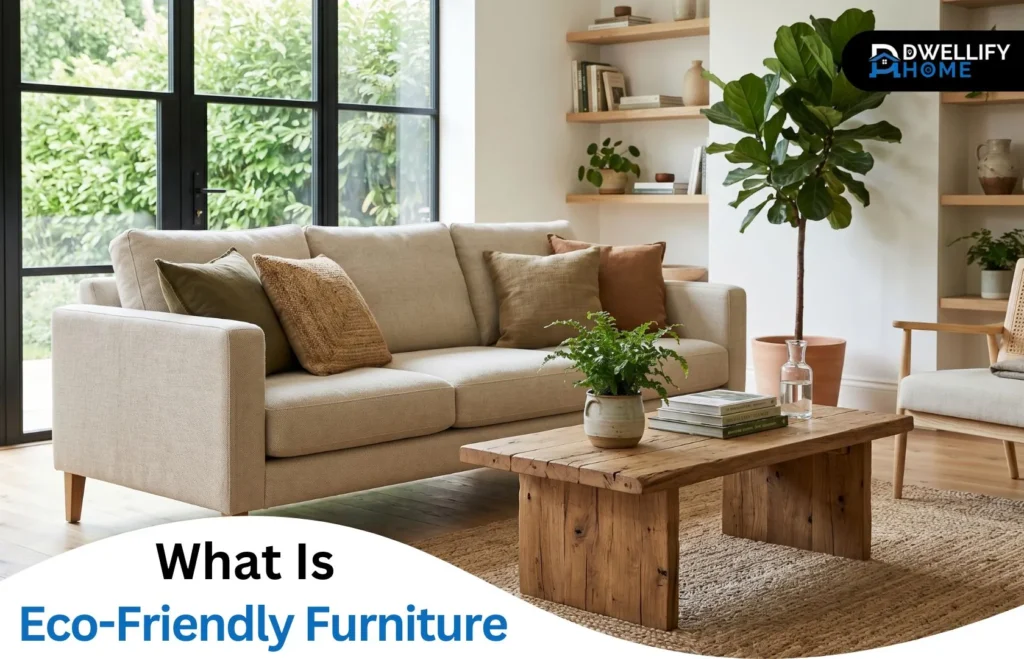
A sofa with a hardwood frame, CertiPUR-US or natural latex cushions, and organic linen upholstery. Coffee tables made from reclaimed oak or walnut.
Bedroom
A solid wood bed frame (not particleboard), a natural latex or organic cotton mattress, and dressers finished with low-VOC stains. This room matters most — you spend a third of your life breathing its air.
Kitchen and dining
FSC-certified hardwood dining tables, bamboo counter stools, and recycled-metal bar chairs. Bamboo also handles moisture well, which is a bonus in kitchens.
Outdoor spaces
Teak, cedar, or FSC-certified acacia for durability. Reclaimed rattan and recycled aluminum work well for lounge pieces that need to handle the weather.
Is Eco-Friendly Furniture More Expensive? The Real Cost Picture
The short answer: sometimes yes upfront, almost always no over time.
A $2,000 solid wood sofa that lasts 20 years costs less per year than a $600 synthetic one replaced every 4 years. Do the math and the “cheap” option is rarely cheap.
That said, sustainability doesn’t have to mean premium prices. Secondhand, vintage, and upcycled pieces are some of the greenest options available — and often the most affordable. A refinished mid-century dresser is usually better built, cheaper, and more sustainable than anything new.
How to Care for Eco-Friendly Furniture So It Lasts Longer
Buying the piece is only half the job. How you treat it decides how long it actually lasts.
Clean with gentle, non-toxic solutions — plain soap and water handle most jobs. Re-oil natural wood finishes once or twice a year to prevent drying and cracking. Repair small damage early instead of letting it spread. And when a piece has truly reached its end, donate, resell, or recycle it rather than tossing it out. Most hardwood can live several lifetimes if you let it.
Frequently Asked Questions About Eco-Friendly Furniture
Is IKEA furniture eco-friendly?
Partially. IKEA uses a lot of FSC-certified wood and recycled materials, but many pieces still rely on particleboard and synthetic finishes. They’re better than most big-box brands, but not at the level of specialised sustainable makers.
What’s the most sustainable type of wood furniture?
Reclaimed wood is the clear winner — no new trees, lower energy input, and often more character. FSC-certified hardwoods come a close second.
Is bamboo really eco-friendly?
Yes, when it’s responsibly processed. Bamboo grows quickly without pesticides, but some manufacturers use harsh glues when laminating it. Look for formaldehyde-free bamboo products.
Can secondhand furniture be considered eco-friendly?
Absolutely. Giving a piece a second life keeps it out of landfills and avoids new resource use. It’s one of the greenest choices you can make.
Are eco-friendly sofas as comfortable as regular ones?
Yes. Natural latex and soy-based foams actually hold their shape better than cheap polyurethane, and organic fabrics feel softer over time, not worse.
What is eco-friendly furniture made of?
It’s typically made from FSC-certified or reclaimed wood, bamboo, rattan, cork, recycled metal, organic cotton, linen, hemp, wool, and natural latex. Finishes are water-based and low-VOC, with non-toxic glues replacing formaldehyde-based adhesives.
What is the most eco-friendly furniture?
Secondhand and vintage pieces top the list because they require no new resources. After that, reclaimed wood furniture is the most sustainable new option, followed by FSC-certified hardwood and bamboo pieces with non-toxic finishes.
What are examples of eco-friendly furniture?
A reclaimed oak dining table, a sofa with a hardwood frame and natural latex cushions, a bamboo bookshelf, organic cotton upholstered chairs, and outdoor pieces made from FSC-certified teak are all common examples.
Is eco-friendly furniture good or bad?
It’s genuinely good when the claims hold up. It improves indoor air, lasts longer, and supports ethical practices. The only downside is the upfront cost, which is usually offset by durability. Greenwashed pieces are the real problem, not the category itself.
Final Thoughts: Making Smarter, Greener Furniture Choices
Choosing furniture thoughtfully isn’t about chasing labels — it’s about slowing down, asking better questions, and buying pieces that earn their place in your home. The best eco-friendly furniture isn’t always the most expensive or the most branded. It’s the piece made from honest materials, built to last, and sourced from people who care about the work.
Start with one room, one purchase, one informed decision. That’s how real change begins — quietly, one piece at a time.
Disclaimer
This article is for informational purposes only. Product claims, certifications, and availability may change over time, so always verify details directly with the brand or retailer before purchasing.