Most people who walk into a furniture showroom wanting a leather look end up asking the same question within ten minutes — what exactly is leatherette, and can it really stand in for the real thing? After years of helping families and first-time homeowners pick sofas, I’ve noticed leatherette keeps winning over buyers for one clear reason. It delivers the appearance people want at a price their living room budget can actually handle.
This guide walks you through what’s worth knowing before you spend on a leatherette sofa set — what it’s made of, where it holds up, where it doesn’t, and how to pick one that’ll still look good three years from now. No sales pitch, just honest observations from the showroom floor.
The Short Answer
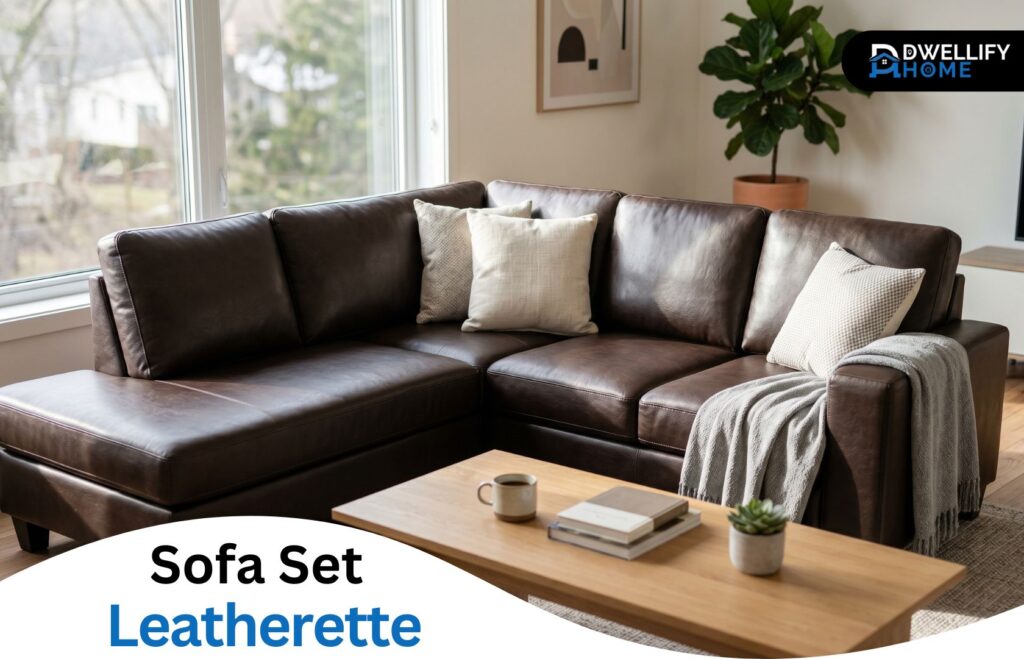
A leatherette sofa set is a polyurethane-coated synthetic furniture piece that mimics real leather. It offers easy cleaning, affordable pricing, and a modern look — making it a practical choice for families and first-time homeowners.
Mission Statement
At Dwellify Home, we help homeowners cut through the noise — offering practical, honest guidance so every décor decision feels confident, not confusing.
Quick Comparison: Leatherette vs Leather vs Fabric
| Feature | Leatherette | Genuine Leather | Fabric |
| Price | Budget-friendly | Premium | Mid-range |
| Lifespan | 3–7 years | 15–20 years | 5–10 years |
| Spill Resistance | High | Medium | Low |
| Breathability | Low | High | High |
| Maintenance | Wipe clean | Annual conditioning | Regular vacuuming |
Key Benefits
- Wipes clean in seconds — ideal for kids and pets
- Costs up to 3x less than genuine leather
- Available in a wide range of colors and configurations
- No animal products — suits vegan households
- Lightweight and easy to move or rearrange
What Exactly Is a Leatherette Sofa Set?
Leatherette is a synthetic material made by coating a fabric base — usually polyester or a cotton blend — with layers of polyurethane. The PU is what gives it that smooth, leather-like finish. You’ll also see it sold as faux leather, PU leather, or synthetic leather, which are all pointing to the same thing.
It sits in a middle space between genuine leather and fabric. Not as breathable or long-lived as real leather, but far more forgiving on the wallet and much easier to wipe clean than upholstered fabric. Understanding this is where most good buying decisions start.
Why Leatherette Sofa Sets Appeal to Modern Homeowners
Price is usually the first reason. A leatherette three-piece set often costs a third of what you’d pay for genuine leather, and the visual difference from across the room is minimal.
Beyond price, there’s the practical side. Spilled tea, sticky fingers from kids, the occasional pet paw — all of it wipes off with a damp cloth. No soaking in, no staining. Add to that the range of colours available (black, tan, beige, grey, muted blues), the lightweight build compared to thick leather, and the animal-free production that appeals to vegan buyers, and you can see why it’s become a default option in so many modern homes.
The Honest Disadvantages of a Leatherette Sofa Set
Leatherette isn’t flawless, and I’d rather you know the weak points now than discover them two years in.
The biggest issue is cracking and peeling. Once the PU coating starts to break down — usually after heavy use or prolonged sun exposure — it can flake off in small patches, and there’s no easy way to reverse it.
It’s also less breathable than fabric or real leather, which means it can feel warm or slightly sticky during humid summers. The lifespan is shorter, and if you’re thinking of resale value, leatherette doesn’t hold any. It’s a use-and-replace product, not an heirloom piece.
How Durable Is a Leatherette Sofa? A Realistic Look at Lifespan
The honest answer most sellers won’t give you: a leatherette sofa typically lasts three to seven years with regular use. Good quality PU, a strong frame, and careful maintenance can push it toward the upper end. Cheap coating and rough daily use can cut it down to two.
What shortens life most? Direct sunlight, dry heat from radiators or AC vents blowing straight onto it, harsh cleaners, and sharp objects like belt buckles or pet claws. What extends it? Placing it away from windows, keeping the room’s humidity reasonable, and wiping it down with nothing harsher than a slightly damp cloth. Treat it like a piece that needs care and it’ll reward you with a longer run.
Leather vs Leatherette Sofa: Which One Actually Fits Your Lifestyle?
Genuine leather will almost always outlast leatherette — we’re talking fifteen to twenty years against five to seven. It also softens with use, develops character, and feels warmer to the touch. But it costs three to five times more, scratches more visibly, and needs conditioning once or twice a year.
Leatherette skips the conditioning ritual, comes in more colours, and handles spills better because liquid sits on the surface instead of soaking in. For families with young kids, rental homes, or anyone updating their living room every few years, leatherette makes practical sense. For a long-term investment piece in a forever home, genuine leather wins on longevity. The right answer depends on how long you actually plan to keep it.
Fabric vs Leatherette Sofa: Making the Right Choice for Your Home
Fabric sofas feel softer, warmer, and more inviting — that classic sink-in comfort. They also come in endless patterns and textures. The trade-off is maintenance. Fabric traps dust, holds odours, and turns a spilled curry into a memory you’ll see for months.
Leatherette is the opposite. Firmer feel, limited texture variety, but wipes clean in seconds. In humid cities, fabric can grow musty over time, whereas leatherette just needs a wipe. If your household includes toddlers, pets, or casual eaters on the couch, leatherette usually wins on practicality. If you value cozy feel and visual warmth more, fabric is worth the extra upkeep.
Who Should (and Shouldn’t) Buy a Leatherette Sofa Set
Leatherette is a strong pick if you want the leather aesthetic without the price tag, if you’re setting up a first home or rental, if you have small children or pets and need a wipe-clean surface, or if you prefer animal-free furniture.
It’s less ideal in very humid climates with little air circulation, if the sofa will face direct afternoon sunlight, if the household uses the sofa heavily for daily lounging, or if you view furniture as a long-term investment piece you want to pass down. Knowing which camp you’re in saves a lot of regret later.
Popular Leatherette Sofa Set Configurations and Which Room Each Fits
The configuration shapes how your living room actually functions. Here are the common ones worth knowing:
- Leatherette sofa set 3+1+1: A three-seater paired with two single seats. Works well in medium living rooms and for households that host a few guests regularly. The single seats add flexibility without crowding the space.
- Leatherette sofa set 3+2: A three-seater with a two-seater. This is the balanced, streamlined layout most Indian living rooms default to — enough seating for five, clean lines, no bulk.
- 3+2+1 combinations: Full coverage for larger rooms and bigger families. Needs roughly a 14 by 12 foot room to avoid feeling tight.
- L-shape and sectional leatherette sofas: Best for corner placement and open-plan spaces. They maximize seating without eating up wall area.
Measure your room first, then pick the configuration. Doing it the other way around is the mistake I see most often.
Design Styles and Color Choices That Work in Real Homes
Modern minimalist designs — clean lines, low profile, slim armrests — age the best visually. Tufted and Chesterfield-inspired styles look rich but can feel heavy in smaller rooms. Low-profile contemporary shapes suit apartments and younger decor.
On colour, neutrals win on longevity. Tan, camel, graphite grey, and beige rarely go out of style and pair easily when you repaint walls or change cushions. Bolder tones like deep blue or burgundy make statements but lock you into a decor palette that’s harder to refresh. A simple rule I share with clients: pick the colour you’d still be happy with five years from now.
How to Judge Leatherette Quality Before You Pay
This is where most people get caught out. Two leatherette sofas can look identical in the showroom and perform completely differently two years in. Here’s what to actually check:
- PU coating thickness: Run your thumbnail lightly along an inside seam. A thin coating gives way easily; a quality multi-layer coating resists.
- Fabric backing: Polyester-cotton blends last longer than pure polyester. Ask what’s underneath the PU layer.
- Frame material: Solid hardwood (teak, sheesham, pinewood) beats engineered board every time. Tap the armrest — solid wood gives a dense thud, not a hollow sound.
- Foam density: Press the cushion firmly and release. It should bounce back within a few seconds. Slow recovery or a permanent dent means low-density foam that’ll sag within months.
- Stitching: Double-stitched seams on edges and armrests signal a maker who cares about longevity. Loose threads or uneven lines are early warning signs.
- Warranty length: A one-year frame warranty is bare minimum. Three years suggests the brand actually stands behind their build.
Spend ten extra minutes doing these checks in the showroom. It’s the single most useful thing you can do.
The Smart Buyer’s Checklist Before You Order
Before placing an order, run through this:
- Measure your living room, doorways, and lift or staircase width — a surprising number of sofas get returned because they don’t fit through the entry
- Confirm the seat depth and height suit your family’s comfort (kids and shorter adults prefer 18 to 20 inch seat height)
- Read the return policy carefully, especially for online orders
- Check warranty terms separately for frame, upholstery, and cushioning
- Verify delivery and assembly are included, not added later as extras
- Look up recent buyer reviews — third-party comments, not brand-written ones
Ten minutes on this saves a lot of stress later.
How to Care for Your Leatherette Sofa Set
Care doesn’t need to be complicated. A weekly wipe with a soft dry cloth removes dust and prevents build-up in the seams. For spills, blot immediately — don’t rub — using a slightly damp cloth.
Once a month, go over the surface with a leatherette-safe conditioner or a mild soap solution. Avoid ammonia, bleach, and alcohol-based cleaners; they strip the coating. Keep the sofa at least two feet from direct sunlight and away from heater vents. These small habits quietly add two to three years to its life.
Using Leatherette Sofa Covers for Protection and a Fresh Look
Covers are underrated. A good stretch-fit cover protects the coating from daily friction, pet claws, and sun damage, and lets you refresh the look without replacing the sofa. They come in stretch fits, loose slipcovers, and individual cushion covers — pick based on your use case.
Stretch fits suit homes with pets or toddlers. Slipcovers work for seasonal style changes. Cushion-only covers help when just the seat areas show wear. Washable cotton or polyester blends are the easiest to maintain.
Common Problems and How to Prevent Them Early
Most issues start small and grow quietly. Cracking usually begins in high-contact areas — armrests, front seat edges — and spreads if ignored. Peeling often follows cracking. Fading shows up first in sun-exposed patches. Summer stickiness is mostly a ventilation issue.
Prevention is simpler than repair. Rotate cushions every couple of months, keep the sofa out of direct sunlight, avoid sitting on it in damp clothes, and deal with minor cracks using a PU repair kit before they widen. Once peeling sets in over a large area, replacement is usually more cost-effective than repair.
What Real Buyers Highlight in Leatherette Sofa Reviews
Reading through hundreds of buyer reviews over the years, the patterns are consistent. Praise usually centres on value for money, easy cleaning, modern look, and comfort during the first year or two.
The concerns that show up most often involve peeling after two to three years in low-quality units, summer stickiness in non-ventilated rooms, and cushion sagging where foam density was compromised. Buyers who rated the same sofa highly three years later almost always mentioned one thing — they followed a basic care routine from day one.
Quick Answers to Common Leatherette Sofa Set Questions
How long does a leatherette sofa typically last?
Three to seven years depending on quality and care. Premium variants with thicker coating and solid wood frames reach the upper end.
Can peeling or cracked leatherette be repaired?
Small cracks can be patched with PU repair kits. Large peeling areas are difficult to fix and usually need reupholstering or replacement.
Is leatherette safe for pets and children?
Yes, the surface itself is non-toxic and easy to clean. Sharp claws can damage the coating though, so covers help in pet households.
Is leatherette waterproof?
Water-resistant, not fully waterproof. Liquids sit on the surface long enough to wipe off, but prolonged soaking will damage the backing.
Does leatherette feel hot or sticky in summer?
It can, especially in non-ventilated rooms. Fabric covers or light throws solve most of it.
Is leatherette the same as PU leather or faux leather?
Essentially yes. The terms overlap. All refer to synthetic materials coated with polyurethane to mimic real leather.
Final Thoughts: Is a Leatherette Sofa Set Right for Your Living Room?
A leatherette sofa set earns its place when you know exactly what you’re getting — a stylish, practical, affordable piece that needs reasonable care and will likely be replaced in five to seven years rather than passed down. For first homes, rentals, family rooms, and anyone who refreshes decor every few years, that’s a fair trade.
Pick a quality build, match the configuration to your actual room size, and follow a simple care routine. Do those three things and your sofa will hold up comfortably for years, looking almost as good as the day it arrived.
Disclaimer
The information in this article is for general guidance only. Product lifespan and performance may vary depending on brand, usage, and care. Always verify specifications directly with the manufacturer or retailer before purchasing.